



17360-35-9
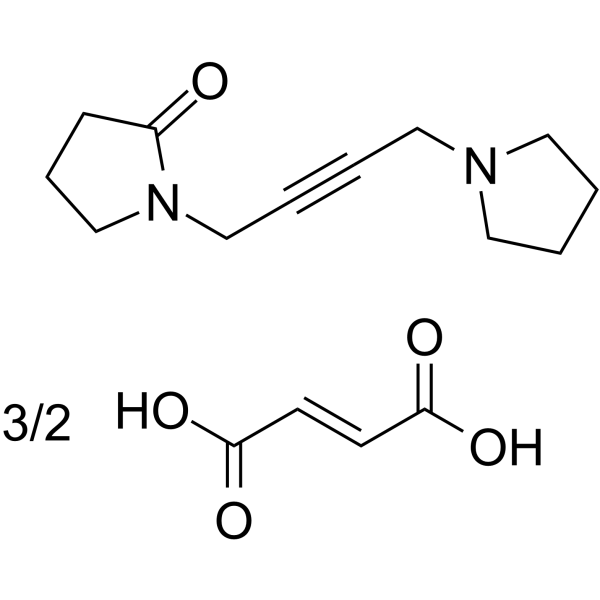
Chemical Structure
Oxotremorine sesquifumarate
- CAS No.: 17360-35-9
- Formula:C12H18N2O.3/2C4H4O4
- Molecular Weight:380.38
SMILES: O=C1N(CC#CCN2CCCC2)CCC1.O=C(O)/C=C/C(O)=O
Biological Activity: Oxotremorine sesquifumarate is a potent muscarinic acetylcholine receptor (mAChR) agonist capable of crossing the blood-brain barrier. Oxotremorine sesquifumarate specifically binds to and activates mAChR, mediating synaptic transmission, influencing the survival and differentiation of nerve cells, and inducing symptoms associated with cholinergic overactivation in animals. Oxotremorine sesquifumarate can be used as a pharmacological agent to induce symptoms such as tremors, hypothermia, and salivation in experimental animals. Oxotremorine sesquifumarate is utilized in research on neurological disorders, including Parkinson’s disease and depression[1][2][3][4][5][6][7][8][9][10][11][12][13].
| Cat. No. | Product Name | Purity | Description | Pricing | |||||||||||||||||||
|---|---|---|---|---|---|---|---|---|---|---|---|---|---|---|---|---|---|---|---|---|---|---|---|
|
|
Oxotremorine sesquifumarate | 98.0% | Oxotremorine sesquifumarate is a potent muscarinic acetylcholine receptor (mAChR) agonist capable of crossing the blood-brain barrier. Oxotremorine sesquifumarate specifically binds to and activates mAChR, mediating synaptic transmission, influencing the survival and differentiation of nerve cells, and inducing symptoms associated with cholinergic overactivation in animals. Oxotremorine sesquifumarate can be used as a pharmacological agent to induce symptoms such as tremors, hypothermia, and salivation in experimental animals. Oxotremorine sesquifumarate is utilized in research on neurological disorders, including Parkinson’s disease and depression. | ||||||||||||||||||||
|
loading...
/
|
|||||||||||||||||||||||
-
Similarity Score 0.65
 HY-148603Dupracetam
-
Similarity Score 0.64
 HY-148604Imuracetam
-
Similarity Score 0.59
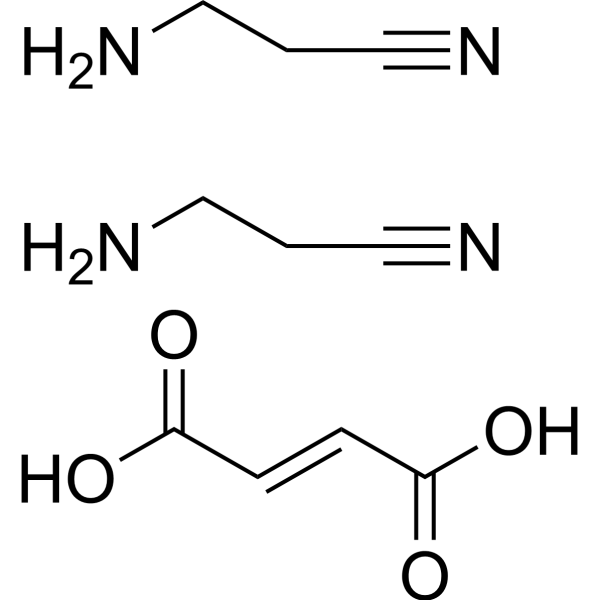 HY-1078293-Aminopropionitrile fumarate (2:1)
-
Similarity Score 0.59
 HY-180153Piperidine-CO-C8-COOH
-
Similarity Score 0.59
 HY-100375RDiroximel fumarate (Standard)
-
Similarity Score 0.59
 HY-101861RMiridesap (Standard)
-
Similarity Score 0.58
 HY-W4603153,3'-Piperazine-1,4-diyldipropanoic acid
-
Similarity Score 0.58
 HY-W013814Gabapentin acid impurity 1
-
Similarity Score 0.58
 HY-17455RPramiracetam (Standard)
-

Explore the MedChemAI to find more analogs


References
- [1]. Wang N, et al. Nicotinic acetylcholine receptor alpha5 subunits modulate oxotremorine-induced salivation and tremor. J Neurol Sci. 2004 Jul 15;222(1-2):87-91. [Content Brief]
- [2]. Overstreet DH, et al. Genetic animal models of depression and ethanol preference provide support for cholinergic and serotonergic involvement in depression and alcoholism. Biol Psychiatry. 1992 May 1;31(9):919-36. [Content Brief]
- [3]. Dulu TD, et al. The effects of oxotremorine, epibatidine, atropine, mecamylamine and naloxone in the tail-flick, hot-plate, and formalin tests in the naked mole-rat (Heterocephalus glaber). In Vivo. 2014 Jan-Feb;28(1):39-48. [Content Brief]
- [4]. Barar FS, et al. Tremorine-oxotremorine-induced tremor, hypothermia and analgesia, and physostigmine toxicity, in mice after pretreatment with beta-adrenoceptor antagonists. J Pharm Pharmacol. 1976 Apr;28(4):286-9. [Content Brief]
- [5]. Veena J, et al. Oxotremorine treatment restores hippocampal neurogenesis and ameliorates depression-like behaviour in chronically stressed rats. Psychopharmacology (Berl). 2011 Sep;217(2):239-53. [Content Brief]
- [6]. Lindenboim L, et al. Activation of muscarinic receptors inhibits apoptosis in PC12M1 cells. J Neurochem. 1995 Jun;64(6):2491-9. [Content Brief]
- [7]. Howell G 3rd, et al. In vivo antimuscarinic actions of the third generation antihistaminergic agent, desloratadine. BMC Pharmacol. 2005 Aug 18;5:13. [Content Brief]
- [8]. Jones CK, et al. Novel selective allosteric activator of the M1 muscarinic acetylcholine receptor regulates amyloid processing and produces antipsychotic-like activity in rats. J Neurosci. 2008 Oct 8;28(41):10422-33. [Content Brief]
- [9]. Overstreet DH, et al. Stress-induced immobility in rats with cholinergic supersensitivity. Biol Psychiatry. 1986 Jun;21(7):657-64. [Content Brief]
- [10]. Martin JR, et al. Drug induced hypothermia in adult and senescent rats. Neurobiol Aging. 1985 Summer;6(2):121-4. [Content Brief]
- [11]. Pratt WE, et al. Nucleus accumbens acetylcholine and food intake: decreased muscarinic tone reduces feeding but not food-seeking. Behav Brain Res. 2009 Mar 2;198(1):252-7. [Content Brief]
- [12]. Rosenberger LB, et al. Cardiac muscarinic cholinergic receptor binding is regulated by Na+ and guanyl nucleotides. J Biol Chem. 1980 Feb 10;255(3):820-3. [Content Brief]
- [13]. Deng H, et al. Label-free cell phenotypic assessment of the biased agonism and efficacy of agonists at the endogenous muscarinic M3 receptors. J Pharmacol Toxicol Methods. 2013 Nov-Dec;68(3):323-33. [Content Brief]



