



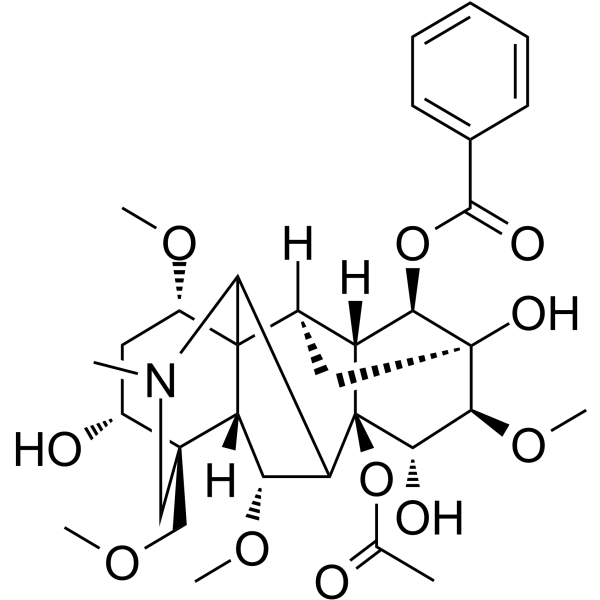
Mesaconitine
Based on 2 publication(s) in Google Scholar
Mesaconitine is a nitric oxide synthase activator. Mesaconitine drives extracellular Na+ and Ca2+ influx into endothelial cells, increases intracellular Na+ and Ca2+ concentrations, and triggers nitric oxide release. Mesaconitine is applicable for pain-related research.
Nur für Forschungszwecke. Wir verkaufen nicht an Patienten.
- Reinheit : 99.19%
- CAS. Nr.: 2752-64-9
- Formel: C33H45NO11
- Molecular Weight:631.71
-
Speicherung:Powder -20°C, 3 years , 4°C, 2 years ; In solvent -80°C, 2 years , -20°C, 1 year

To place orders, for customer services and technical support, please contact: MedChemExpress USA
Tel: 609-228-6898 E-mail: [email protected] [email protected]


-
 Biologische Aktivität
-
Chemical Information
-
Lösungsmittel & Löslichkeit
- Protokoll
- Reinheit & Dokumentation
- Verweise
-
 Help & FAQs


-
HY-N0267
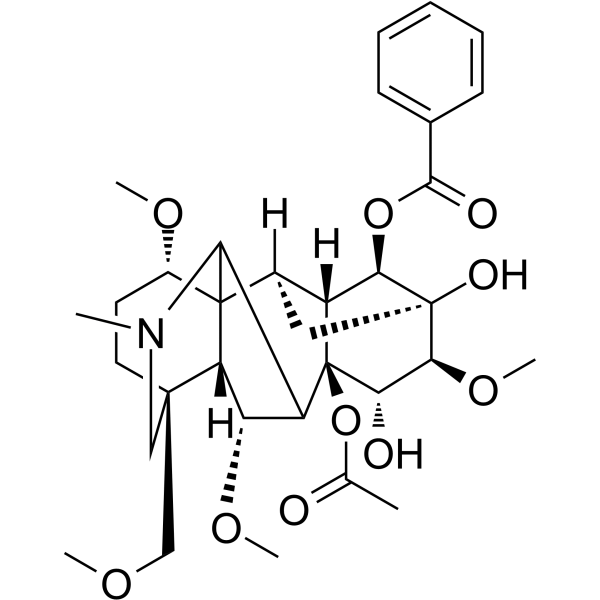
HypaconitineTNF Receptor Inhibitor -
HY-110203
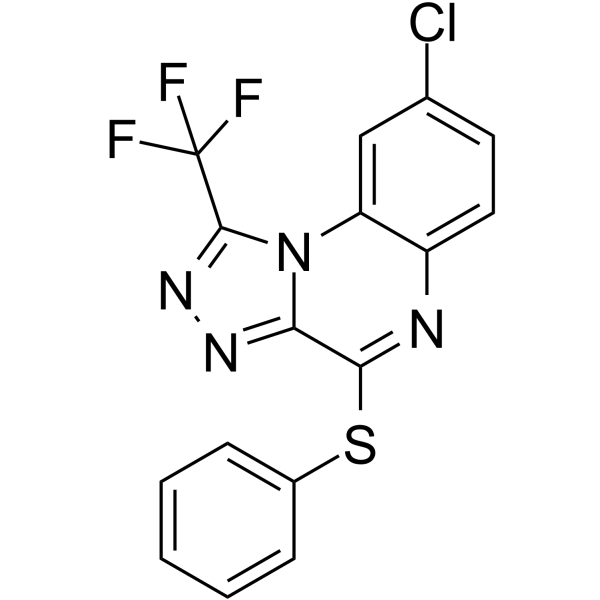
R-7050TNF Receptor Antagonist -

HY-N0724R
Mesaconitine (Standard)Reference Standard -
HY-111255
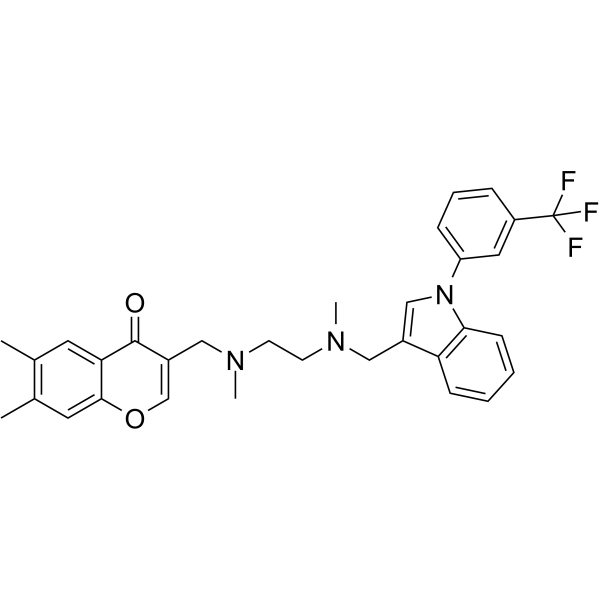
SPD304TNFα Inhibitor -
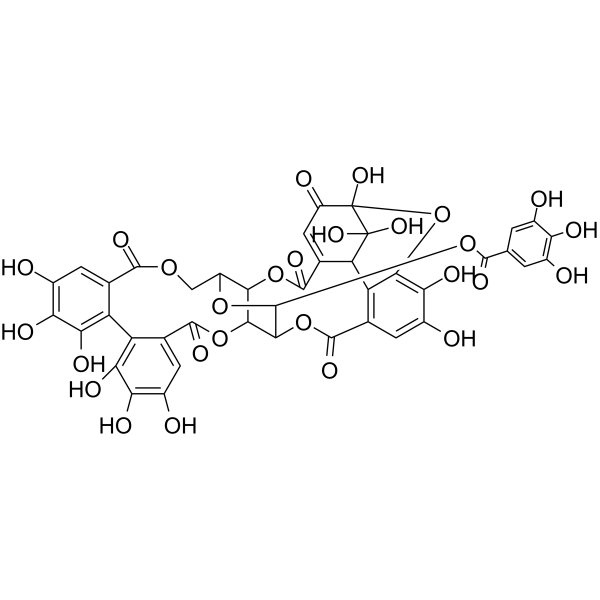
HY-N0472
GeraniinTNF Receptor Inhibitor -
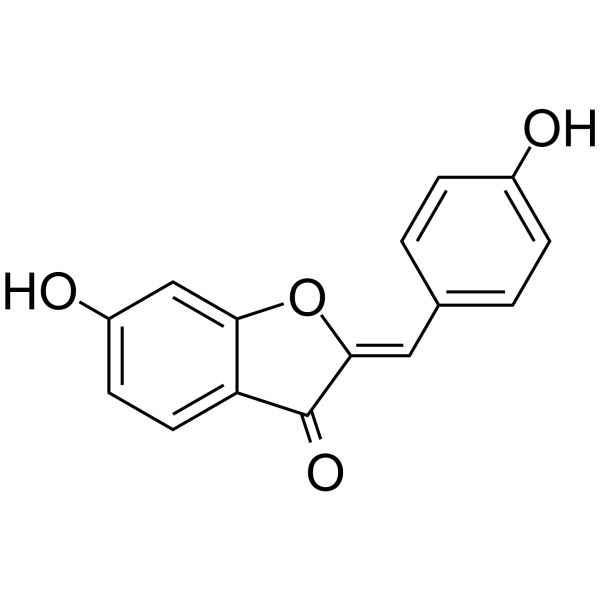
HY-102040
HispidolTNF-α Inhibitor -
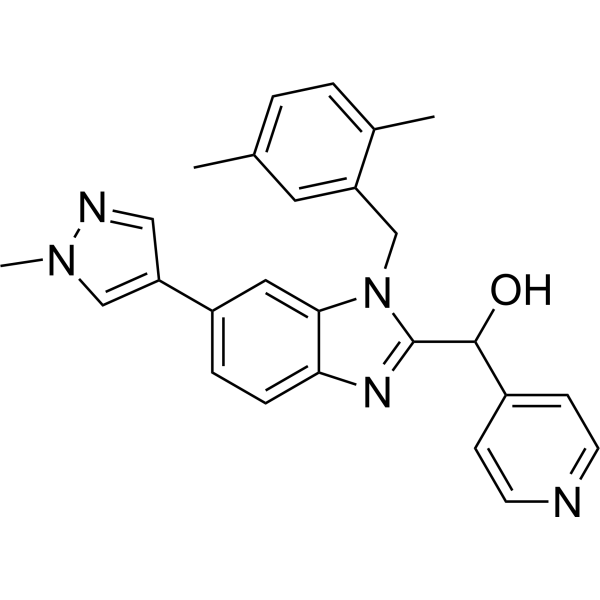
HY-133122
UCB-9260TNF Signaling Inhibitor -
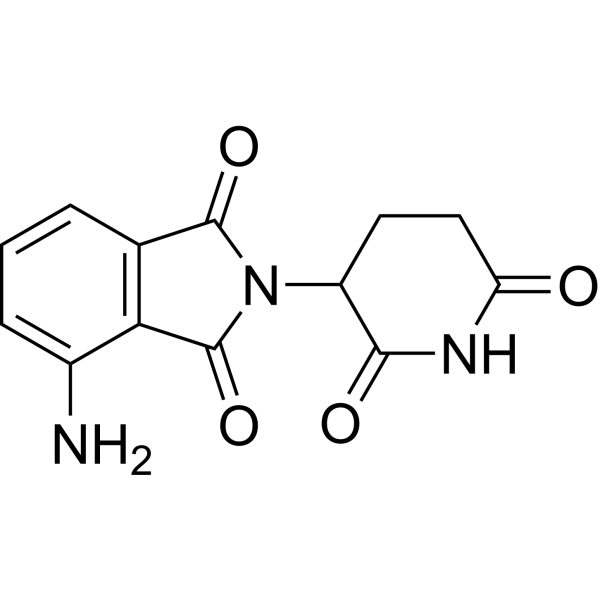
HY-10984
PomalidomideImmunomodulatory Agent -
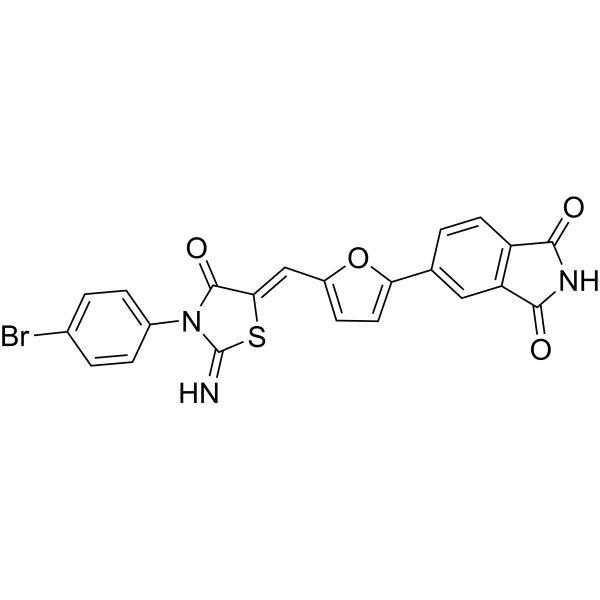
HY-18377
BioymifiDR5 Activator -
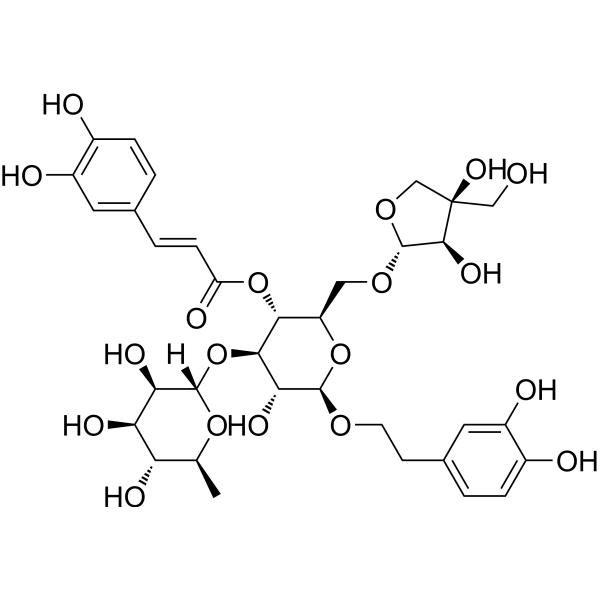
HY-N0029
Forsythoside BTNF Inhibitor -
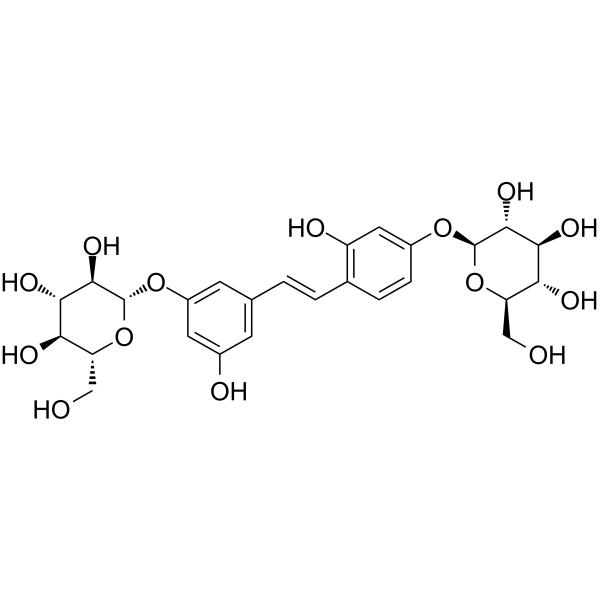
HY-N0619
Mulberroside ATyrosinase Inhibitor -
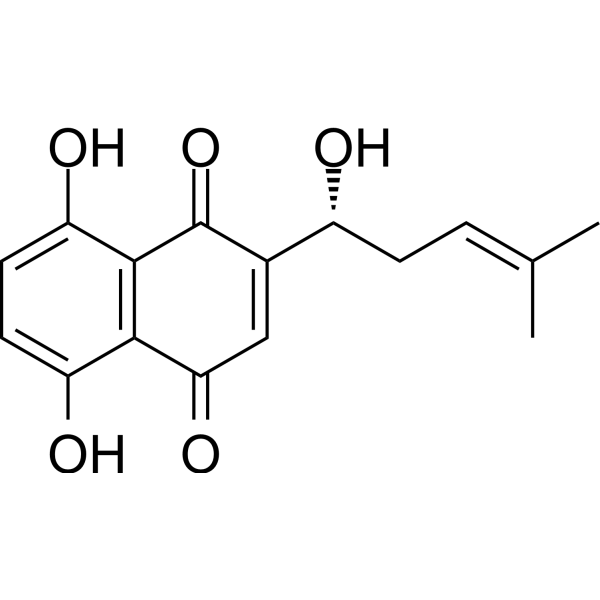
HY-N0822
ShikoninChloride Channel Inhibitor
Publications Citing Use of MedChemExpress (MCE) Mesaconitine
More

Biologische Aktivität
Beschreibung
Cellular Effect
|
Cell Line

|
Type | Value | Description | References |
|---|---|---|---|---|
| A549 | GI50 |
>20 μM
Compound: 8
|
Antiproliferative activity against human A549 cells by sulforhodamine B assay
Antiproliferative activity against human A549 cells by sulforhodamine B assay
|
[PMID: 25770782] |
| DU-145 | GI50 |
>20 μM
Compound: 8
|
Antiproliferative activity against human DU145 cells by sulforhodamine B assay
Antiproliferative activity against human DU145 cells by sulforhodamine B assay
|
[PMID: 25770782] |
| KB | GI50 |
>20 μM
Compound: 8
|
Antiproliferative activity against human KB cells by sulforhodamine B assay
Antiproliferative activity against human KB cells by sulforhodamine B assay
|
[PMID: 25770782] |
In Vitro
Mesaconitine (30 μM) induces a sustained increase in [Ca2+]ᵢ in HUVECs with a net increase of 361 nM in normal buffer, which is dependent on extracellular Ca2+ and Na+, inhibited by the reverse-mode Na+/Ca2+ exchanger inhibitor KBR7943 and the nicotinic acetylcholine receptor inhibitor D-tubocurarine, and unaffected by the Na+/H+ exchanger inhibitor Cimetidine (HY-14289)[2].
Mesaconitine (100 μM) induces a small increase in [Na+]i in HUVECs, which is inhibited by the nicotinic acetylcholine receptor inhibitor D-tubocurarine[2].
MedChemExpress (MCE) has not independently confirmed the accuracy of these methods. They are for reference only. Further protocols information, click here.
In Vivo
Mesaconitine (11 μg/kg; s.c.; single dose) produces dose-dependent central analgesia in the tail flick model with an ED50 of 11 μg/kg[3].
Mesaconitine (60 μg/kg; s.c.; single dose) modulates central catecholamine levels and turnover in rats, specifically accelerating norepinephrine depletion in select brain and spinal cord regions and dopamine depletion in the striatum when combined with α-methyl-p-tyrosine[3].
MedChemExpress (MCE) has not independently confirmed the accuracy of these methods. They are for reference only.
-
Animal Model:Std:ddY (male, 20-24 g)[3]
-
Dosage:20 μg/kg; 60 μg/kg
-
Administration:s.c.; single dose
-
Result:Exhibited dose-dependent analgesic activity with an ED50 of 28 μg/kg.
Reached maximum analgesic activity 40 minutes after s.c.
administration, with significant activity persisting for 4 hours at 20 μg/kg and 7 hours at 60 μg/kg.
Showed significantly reduced analgesia when co-administered with α-methyl-p-tyrosine, 6-hydroxydopamine, diethyldithiocarbamate, disulfiram, or reserpine.
-
Animal Model:Wistar (male, 200-220 g)[3]
-
Dosage:60 μg/kg
-
Administration:s.c.; single dose
-
Result:Increased dopamine levels in the diencephalon, and norepinephrine and 5-hydroxytryptamine levels in the mesencephalon.
Accelerated the α-methyl-p-tyrosine-induced reduction of norepinephrine levels in the hippocampus, medulla oblongata plus pons, and spinal cord, and of dopamine levels in the striatum.


Chemical Information
-
CAS. Nr. 2752-64-9
-
Appearance Solid
-
Molecular Weight 631.71
-
Formel C33H45NO11
-
Color White to off-white
-
SMILES
CO[C@@H]1C2([C@@](C[C@@]3(O)[C@@H]4OC(C5=CC=CC=C5)=O)([H])[C@@]4([H])[C@](OC(C)=O)([C@@H](O)[C@@H]3OC)C6C2N(C)C7)[C@@]([C@H]6OC)([H])[C@@]7(COC)[C@H](O)C1
-
Structure Classification
-
Initial Source
-
Versand
Room temperature in continental US; may vary elsewhere.
-
Speicherung
Powder -20°C 3 years 4°C 2 years In solvent -80°C 2 years -20°C 1 year


Publications (2)
-
Journal Impact Factor
-
Most Recent


Lösungsmittel & Löslichkeit
In Vitro:
Ethanol : 4.62 mg/mL (7.31 mM; Need ultrasonic)
DMSO : < 1 mg/mL (insoluble or slightly soluble)
H2O : < 0.1 mg/mL (insoluble)
Please refer to the solubility information to select the appropriate solvent. Once prepared, please aliquot and store the solution to prevent product inactivation from repeated freeze-thaw cycles.
Storage method and period of stock solution: -80°C, 2 years; -20°C, 1 year. When stored at -80°C, please use it within 2 years. When stored at -20°C, please use it within 1 year.
Please refer to the solubility information to select the appropriate solvent. Once prepared, please aliquot and store the solution to prevent product inactivation from repeated freeze-thaw cycles.
Storage method and period of stock solution: -80°C, 2 years; -20°C, 1 year. When stored at -80°C, please use it within 2 years. When stored at -20°C, please use it within 1 year.
Konzentration (Stammlösung) × Volumen (Stammlösung) = Konzentration (Ziellösung) × Volumen (Ziellösung)

Protokoll
-
Endothelial Tube Formation Assay
Endothelial tube formation assay evaluates the ability of endothelial cells to attach, migrate, align, and organize into capillary-like networks when cultured on gelled basement membrane extract or Matrigel; the readout is the morphology and quantity of tube-like networks, which reflects an in vitro endothelial morphogenesis step related to angiogenesis. Basement membrane extract/Matrigel provides laminin-rich extracellular matrix cues that support endothelial differentiation into capillary-like structures, but it can contain biologically active growth factors, so growth-factor-reduced matrix is preferred when testing defined angiogenic stimulators or inhibitors.
-
Ca2+ Staining Technique
Ca2+ staining is an experimental technique that utilizes specific fluorescent probes (such as Fluo-4 AM, Fura-2, etc.) to qualitatively or quantitatively detect dynamic changes in intracellular Ca2+ concentrations; this is achieved by monitoring the changes in fluorescent signals generated when these probes bind to free intracellular calcium ions. The underlying principle relies primarily on the presence of chelating groups within the probe's molecular structure that possess high affinity for calcium ions.


Reinheit & Dokumentation
-
Data Sheet (292 KB)
-
SDS (479 KB)
- English - EN (479 KB)
- Français - FR (479 KB)
- Deutsch - DE (479 KB)
- Norwegian - NO (479 KB)
- Español - ES (479 KB)
- Swedish - SV (479 KB)
- Italian - IT (479 KB)
- Korean - KR (479 KB)
- Portuguese - PT (479 KB)
-
Handling Instructions (2659 KB)
Verweise
[1]. Mitamura M,ei al. Mesaconitine-induced relaxation in rat aorta: involvement of Ca2+ influx and nitric-oxide synthase in the endothelium. Eur J Pharmacol. 2002 Feb 2;436(3):217-25. [Content Brief]
[2]. Ogura J, et al. Mesaconitine-induced relaxation in rat aorta: role of Na+/Ca2+ exchangers in endothelial cells. Eur J Pharmacol. 2004;483(2-3):139-146. [Content Brief]
[3]. Murayama M, et al. Mechanism of analgesic action of mesaconitine. I. Relationship between analgesic effect and central monoamines or opiate receptors. Eur J Pharmacol. 1984;101(1-2):29-36. [Content Brief]


Complete Stock Solution Preparation Table
Please refer to the solubility information to select the appropriate solvent. Once prepared, please aliquot and store the solution to prevent product inactivation from repeated freeze-thaw cycles.
Storage method and period of stock solution: -80°C, 2 years; -20°C, 1 year. When stored at -80°C, please use it within 2 years. When stored at -20°C, please use it within 1 year.
| Optional Solvent | Concentration Solvent Mass | 1 mg | 5 mg | 10 mg | 25 mg |
|---|---|---|---|---|---|
| Ethanol | 1 mM | 1.5830 mL | 7.9150 mL | 15.8300 mL | 39.5751 mL |
| 5 mM | 0.3166 mL | 1.5830 mL | 3.1660 mL | 7.9150 mL |


Mesaconitine Related Classifications
HY-N0724 Related Classifications
 Powered by Bioz