



SRT 1720 monohydrochloride
Based on 59 publication(s) in Google Scholar
SRT 1720 monohydrochloride is a selective and orally active activator of SIRT1 with an EC50 of 0.10 μM, and shows less potent activities on SIRT2 and SIRT3.
Nur für Forschungszwecke. Wir verkaufen nicht an Patienten.
- Reinheit: 99.37%
- CAS. Nr.: 2060259-60-9
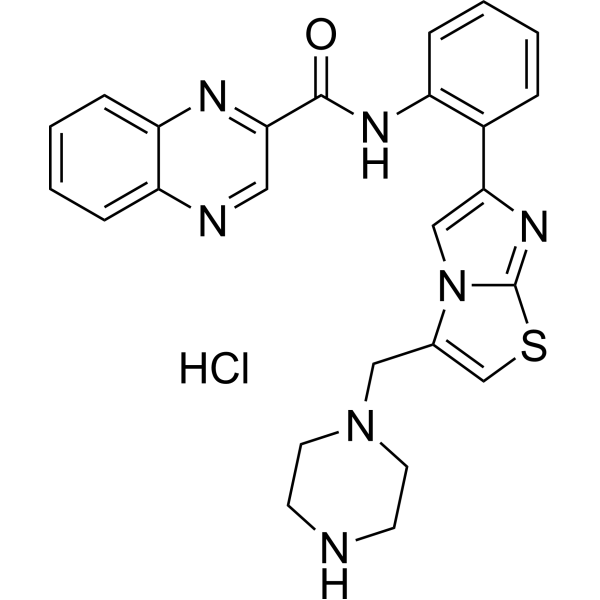
- Formel: C25H24ClN7OS
- Molecular Weight:506.02
-
Speicherung:
4°C, stored under nitrogen, away from moisture
* In solvent : -80°C, 6 months; -20°C, 1 month (stored under nitrogen, away from moisture)


-
 Biologische Aktivität
-
Chemical Information
-
Lösungsmittel & Löslichkeit
- Protokoll
- Reinheit & Dokumentation
- Verweise
-
 Help & FAQs
-

Cell Cycle/DNA Damage Compound Library
HY-L004
-
Epigenetics Compound Library
HY-L005
-
Histone Modification Research Compound Library
HY-L024
-
Autophagy Compound Library
HY-L029
-
Anti-Aging Compound Library
HY-L034
-
Antioxidant Compound Library
HY-L037
-
Anti-diabetic Compound Library
HY-L040
-
Oxygen Sensing Compound Library
HY-L045
-
Orally Active Compound Library
HY-L061
-
Glutamine Metabolism Compound Library
HY-L064
-
Anti-Obesity Compound Library
HY-L087
-
Targeted Diversity Library
HY-L099
-
Human Metabolite Library
HY-L123
-
Heterocyclic Compound Library
HY-L138
-
Metabolic Enzyme Compound Library
HY-L146
-
Highly Selective Activators Library
HY-L159
-
Cell Death Library
HY-L162
-
Multi-Target Compound Library
HY-L176
-
Radioprotector Library
HY-L178
-
Bioactive Compound Library Max
HY-L181
-
MCE Bioactive Compound Library
HY-L001V
-
Bioactive Compound Library
HY-L001
-
Non-Alcoholic Fatty Liver Disease (NAFLD) Compound Library
HY-L199
-
Cell Proliferation Compound Library
HY-L201
-
High-Throughput Bioactive Compound Library
HY-L205
-
Mass Spectrometry Human Metabolite Library
HY-L215


Publications Citing Use of MedChemExpress (MCE) SRT 1720 monohydrochloride
More- Cell Mol Immunol. 2022 Aug;19(8):872-882. [Abstract]
- Nat Commun. 2024 Aug 14;15(1):7000. [Abstract]
- Acta Pharm Sin B. 2023 Feb;13(2):559-576. [Abstract]
- Adv Sci (Weinh). 2026 Feb;13(11):e10188. [Abstract]
- Adv Sci (Weinh). 2025 Apr;12(15):e2412109. [Abstract]
- J Adv Res. 2025 Mar 31:S2090-1232(25)00218-8. [Abstract]
- Sci Adv. 2022 Apr 8;8(14):eabj7110. [Abstract]
- J Hazard Mater. 2025 Sep 15:496:139407. [Abstract]
- J Neuroinflammation. 2021 Dec 10;18(1):287. [Abstract]
- Cell Death Dis. 2024 Jun 28;15(6):462. [Abstract]
- J Cachexia Sarcopenia Muscle. 2025 Feb;16(1):e13693. [Abstract]
- Proc Natl Acad Sci U S A. 2019 Feb 19;116(8):2961-2966. [Abstract]
- Phytomedicine. 2022 Sep:104:154289. [Abstract]
- Free Radic Biol Med. 2026 Mar 25:250:153-167. [Abstract]
- Hypertension. 2016 Nov;68(5):1191-1199. [Abstract]
- Sci Total Environ. 2024 Jan 1:906:167636. [Abstract]
- J Transl Med. 2024 Feb 15;22(1):155. [Abstract]
- J Transl Med. 2023 Jul 20;21(1):486. [Abstract]
- Biomed Pharmacother. 2023 Aug:164:114987. [Abstract]
- Biomed Pharmacother. 2023 Aug:164:114925. [Abstract]
- Environ Pollut. 2021 Jun 1:278:116840. [Abstract]
- Aging Cell. 2021 Oct 3;e13491. [Abstract]
- Elife. 2025 Apr 29:13:RP100406. [Abstract]
- Ecotoxicol Environ Saf. 2025 Sep 1:302:118629. [Abstract]
- Int J Mol Med. 2019 Feb;43(2):839-849. [Abstract]
- Am J Chin Med. 2020;48(7):1693-1713. [Abstract]
- Food Funct. 2021 Jul 5;12(13):5821-5836. [Abstract]
- Toxicology. 2024 Jun 10:153861. [Abstract]
- J Clin Transl Hepatol. 2025 Jun 28;13(6):456-468. [Abstract]
- FASEB J. 2024 Jun;38(11):e23681. [Abstract]
- Environ Toxicol Pharmacol. 2024 Mar:106:104393. [Abstract]
- Toxicol Sci. 2019 Aug 1;170(2):476-488. [Abstract]
- Biomedicines. 2023 Jun 1;11(6):1615. [Abstract]
- Cell Signal. 2026 Jun:142:112396. [Abstract]
- Brain Res Bull. 2024 Nov:218:111101. [Abstract]
- Cell Signal. 2024 Dec:124:111478. [Abstract]
- Biol Trace Elem Res. 2025 Sep 18. [Abstract]
- Biol Trace Elem Res. 2025 Sep;203(9):4789-4806. [Abstract]
- Heliyon. 2024 May 22;10(11):e31654. [Abstract]
- Mol Med Rep. 2021 Jan;23(1):20. [Abstract]
- Mol Med Rep. 2019 Feb;19(2):1040-1048. [Abstract]
- Cell Biol Int. 2025 Mar;49(3):262-276. [Abstract]
- Biochimie. 2020 Mar;170:10-20. [Abstract]
- Toxicol Lett. 2016 Dec 15:264:1-11. [Abstract]
- J Orthop Surg Res. 2025 Aug 22;20(1):786. [Abstract]
- Mol Biol Rep. 2025 Mar 15;52(1):314. [Abstract]
- Mol Biol Rep. 2020 Mar;47(3):2149-2159. [Abstract]
- Exp Eye Res. 2023 Jun:231:109464. [Abstract]
- Tissue Cell. 2025 Apr 2:95:102903. [Abstract]
- BMC Neurosci. 2025 Aug 30;26(1):56. [Abstract]
- Biochem Biophys Res Commun. 2026 Apr 30:811:153436. [Abstract]
- Biochem Biophys Res Commun. 2023 Jan 29:642:11-20. [Abstract]
- Toxicol Res (Camb). 2022 Jul 22;11(4):673-682. [Abstract]
- Biol Pharm Bull. 2025;48(11):1741-1752. [Abstract]
- Res Sq. 2024 May 31.
- Research Square Preprint. 2024 Mar 19.
- Authorea. September 07, 2022.
- Research Square Print. 2022 Jul.
- Oxid Med Cell Longev. 2021 Feb 27:2021:6659240. [Abstract]
 Customer Validation & Images

-
WB
-
IF
-
Cell Imaging/Staining
-
RT-PCR
-
WB


Biologische Aktivität
|
SIRT1 0.10 μM (EC50) |
SIRT1 0.16 μM (EC1.5) |
SIRT2 37 μM (EC1.5) |
SRT 1720 effectively decreases the acetylation of p53 in cells even in the absence of SIRT1, and this is attributed to inhibition of histone acetyltransferase p300[2].
MedChemExpress (MCE) has not independently confirmed the accuracy of these methods. They are for reference only.
MedChemExpress (MCE) has not independently confirmed the accuracy of these methods. They are for reference only.


Chemical Information
-
CAS. Nr. 2060259-60-9
-
Appearance Solid
-
Molecular Weight 506.02
-
Formel C25H24ClN7OS
-
Color Brown to reddish brown
-
SMILES
O=C(C1=NC2=CC=CC=C2N=C1)NC3=C(C=CC=C3)C4=CN5C(CN6CCNCC6)=CSC5=N4.Cl
-
Versand
Room temperature in continental US; may vary elsewhere.
-
Speicherung
4°C, stored under nitrogen, away from moisture
* In solvent : -80°C, 6 months; -20°C, 1 month (stored under nitrogen, away from moisture)


Publications (59)
-
Journal Impact Factor
-
Most Recent
-
Cell Mol Immunol
2022 Aug;19(8):872-882. PMID: 35732914
SRT 1720 monohydrochloride purchased from MedChemExpress. Usage Cited in: Cell Mol Immunol. 2022 Aug;19(8):872-882. [Abstract]
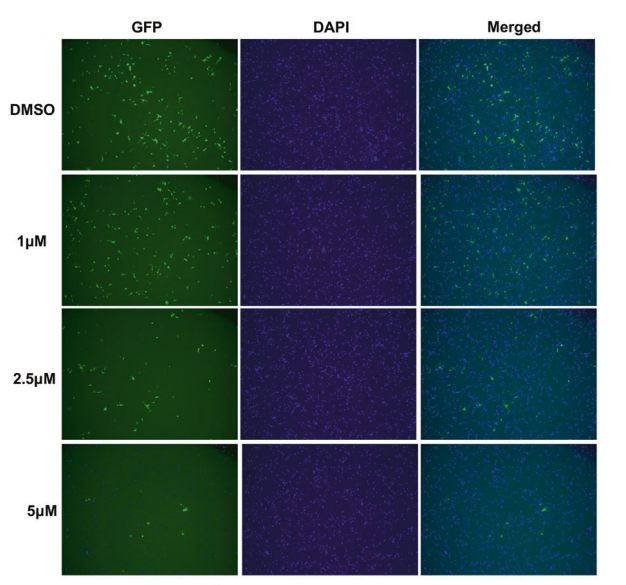
Huh7 cells were incubated with GFP-SARS-CoV-2 at an MOI of 0.01 for 1 h and then treated with the SIRT1 agonist SRT1720 at the indicated doses for 48 h. Microscopy imaging was performed to analyze SARS-CoV-2 replication. Blue: DAPI (nuclear staining).
SRT 1720 monohydrochloride purchased from MedChemExpress. Usage Cited in: Cell Mol Immunol. 2022 Aug;19(8):872-882. [Abstract]
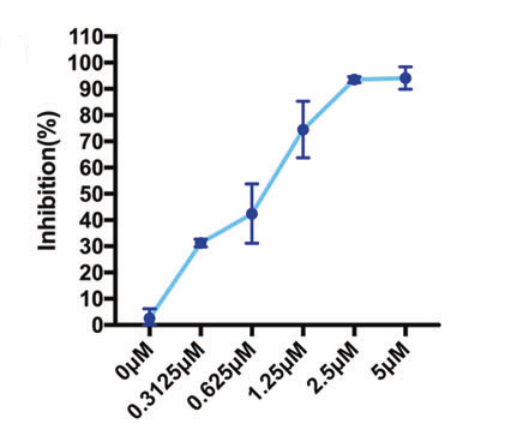
The dose response curves of SRT1720 against SARS-CoV-2. Huh7 cells were infected with GFP-SARS-CoV-2 for 1 h and then treated with the SIRT1 agonist SRT1720 at the indicated doses for 24 h. Cells were harvested for total RNA extraction. Viral NP expression was quantified by real-time PCR and then normalized to the expression of the 36B4 gene. Asterisks represent statistical significance based on two-tailed unpaired Student’s t test (*P < 0.05, **P < 0.01)
-
Nat Commun
Lamin A/C deficiency-mediated ROS elevation contributes to pathogenic phenotypes of dilated cardiomyopathy in iPSC model. [Abstract]2024 Aug 14;15(1):7000. PMID: 39143095 -
Acta Pharm Sin B
SIRT1 activation synergizes with FXR agonism in hepatoprotection via governing nucleocytoplasmic shuttling and degradation of FXR. [Abstract]2023 Feb;13(2):559-576. PMID: 36873184 -
Adv Sci (Weinh)
HRS Degradation-Induced Nicotinamide Deficiency in Placental Extracellular Vesicles Triggers Preeclampsia by Disrupting Maternal-Fetal Immune Homeostasis. [Abstract]2026 Feb;13(11):e10188. PMID: 41532650 -
Adv Sci (Weinh)
NAD+ Metabolism Reprogramming Drives SIRT1-Dependent Deacetylation Inducing PD-L1 Nuclear Localization in Cervical Cancer. [Abstract]2025 Apr;12(15):e2412109. PMID: 39988985 -
J Adv Res
Metformin attenuates colitis via blocking STAT3 acetylation by reducing acetyl-CoA production. [Abstract]2025 Mar 31:S2090-1232(25)00218-8. PMID: 40174640 -
Sci Adv
2022 Apr 8;8(14):eabj7110. PMID: 35385300 -
J Hazard Mater
Excessive mitochondrial stress response triggers neuronal injury through the persistent eIF2α phosphorylation in mice exposed to manganese. [Abstract]2025 Sep 15:496:139407. PMID: 40763529 -
J Neuroinflammation
MicroRNA-155-5p promotes neuroinflammation and central sensitization via inhibiting SIRT1 in a nitroglycerin-induced chronic migraine mouse model. [Abstract]2021 Dec 10;18(1):287. PMID: 34893074 -
Cell Death Dis
S100A8/A9hi neutrophils induce mitochondrial dysfunction and PANoptosis in endothelial cells via mitochondrial complex I deficiency during sepsis. [Abstract]2024 Jun 28;15(6):462. PMID: 38942784 -
J Cachexia Sarcopenia Muscle
Nicotinamide Phosphoribosyltransferase Acetylation Mediating Muscle Dysfunction Contributes to Sleep Apnoea in Obesity. [Abstract]2025 Feb;16(1):e13693. PMID: 39901373 -
Proc Natl Acad Sci U S A
2019 Feb 19;116(8):2961-2966. PMID: 30718431 -
Phytomedicine
Atractylenolide III from Atractylodes macrocephala Koidz promotes the activation of brown and white adipose tissue through SIRT1/PGC-1α signaling pathway. [Abstract]2022 Sep:104:154289. PMID: 35785561 -
Free Radic Biol Med
SIRT1 activation restores PINK1-dependent mitophagy to reverse airway barrier dysfunction in Acinetobacter baumannii infection. [Abstract]2026 Mar 25:250:153-167. PMID: 41895413 -
Hypertension
Activation of SIRT1 Attenuates Klotho Deficiency-Induced Arterial Stiffness and Hypertension by Enhancing AMP-Activated Protein Kinase Activity. [Abstract]2016 Nov;68(5):1191-1199. PMID: 27620389
SRT 1720 monohydrochloride purchased from MedChemExpress. Usage Cited in: Hypertension. 2016 Nov;68(5):1191-1199. [Abstract]
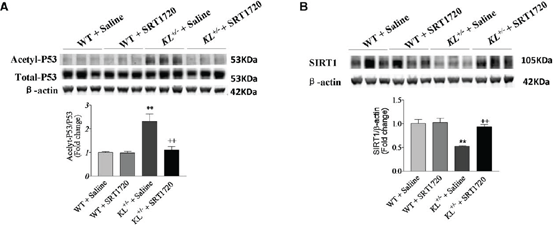
SRT1720 rescues the downregulation of SIRT1 activity and protein expression in the aortas of KL+/– mice. A, Representative Western blot bands of Acetyl-P53 and total P53 and the quantification of SIRT1 activity. Data are expressed as the ratio of acetyl-p53/total P53. B, Representative Western blot bands and quantitative analysis of SIRT1 protein expression in aortas. Protein expression is normalized to β-actin, and the relative expression calculated as the fold change relative
-
Sci Total Environ
2024 Jan 1:906:167636. PMID: 37806592 -
J Transl Med
Fucoidan modulates SIRT1 and NLRP3 to alleviate hypertensive retinopathy: in vivo and in vitro insights. [Abstract]2024 Feb 15;22(1):155. PMID: 38360728 -
J Transl Med
An Fgr kinase inhibitor attenuates sepsis-associated encephalopathy by ameliorating mitochondrial dysfunction, oxidative stress, and neuroinflammation via the SIRT1/PGC-1α signaling pathway. [Abstract]2023 Jul 20;21(1):486. PMID: 37475042 -
Biomed Pharmacother
Alternative pathway of bile acid biosynthesis contributes to ameliorate NASH after induction of NAMPT/NAD+/SIRT1 axis. [Abstract]2023 Aug:164:114987. PMID: 37315437 -
Biomed Pharmacother
p53 deacetylation alleviates calcium oxalate deposition-induced renal fibrosis by inhibiting ferroptosis. [Abstract]2023 Aug:164:114925. PMID: 37236026 -
Environ Pollut
Perfluorooctane sulfonate continual exposure impairs glucose-stimulated insulin secretion via SIRT1-induced upregulation of UCP2 expression. [Abstract]2021 Jun 1:278:116840. PMID: 33689947 -
Aging Cell
Advanced Maternal Age-associated SIRT1 Deficiency Compromises Trophoblast Epithelial-Mesenchymal Transition through an Increase in Vimentin Acetylation. [Abstract]2021 Oct 3;e13491. PMID: 34605151 -
Elife
2025 Apr 29:13:RP100406. PMID: 40299922 -
Ecotoxicol Environ Saf
Activation of Sirt1 protects from single-walled carbon nanotubes-induced pulmonary fibrosis by inhibiting alveolar macrophage senescence. [Abstract]2025 Sep 1:302:118629. PMID: 40627914 -
Int J Mol Med
MicroRNA-140-5p aggravates hypertension and oxidative stress of atherosclerosis via targeting Nrf2 and Sirt2. [Abstract]2019 Feb;43(2):839-849. PMID: 30483753 -
Am J Chin Med
Using Network Pharmacology for Systematic Understanding of Geniposide in Ameliorating Inflammatory Responses in Colitis Through Suppression of NLRP3 Inflammasome in Macrophage by AMPK/Sirt1 Dependent Signaling. [Abstract]2020;48(7):1693-1713. PMID: 33202149 -
Food Funct
L-Threonine upregulates the expression of β-defensins by activating the NF-κB signaling pathway and suppressing SIRT1 expression in porcine intestinal epithelial cells. [Abstract]2021 Jul 5;12(13):5821-5836. PMID: 34047325 -
Toxicology
Toxicity mechanism of acrolein on energy metabolism disorder and apoptosis in human ovarian granulosa cells. [Abstract]2024 Jun 10:153861. PMID: 38866128 -
J Clin Transl Hepatol
Investigation of HO-1 Regulation of Liver Fibrosis Related to Nonalcoholic Fatty Liver Disease Through the SIRT1/TGF-ß/Smad3 Pathway. [Abstract]2025 Jun 28;13(6):456-468. PMID: 40474887 -
FASEB J
Ghrelin alleviates intestinal ischemia-reperfusion injury by activating the GHSR-1α/Sirt1/FOXO1 pathway. [Abstract]2024 Jun;38(11):e23681. PMID: 38814725 -
Environ Toxicol Pharmacol
2024 Mar:106:104393. PMID: 38367920 -
Toxicol Sci
Acetaminophen Responsive miR-19b Modulates SIRT1/Nrf2 Signaling Pathway in Drug-Induced Hepatotoxicity. [Abstract]2019 Aug 1;170(2):476-488. PMID: 31077331 -
Biomedicines
Medical Prospect of Melatonin in the Intervertebral Disc Degeneration through Inhibiting M1-Type Macrophage Polarization via SIRT1/Notch Signaling Pathway. [Abstract]2023 Jun 1;11(6):1615. PMID: 37371708 -
Cell Signal
SIRT1 agonist SRT1720 alleviates cerebral ischemia-reperfusion injury by inhibiting lactate-mediated SOD2 Lactylation and suppressing NCOA4-mediated ferritinophagy-ferroptosis. [Abstract]2026 Jun:142:112396. PMID: 41687840 -
Brain Res Bull
SIRT1 modulates microglia phenotypes via inhibiting drp1 phosphorylation reduces neuroinflammation in heatstroke. [Abstract]2024 Nov:218:111101. PMID: 39396713 -
Cell Signal
Sirt1-mediated deacetylation of PGC-1α alleviated hepatic steatosis in type 2 diabetes mellitus via improving mitochondrial fatty acid oxidation. [Abstract]2024 Dec:124:111478. PMID: 39428026 -
Biol Trace Elem Res
Disruption of the SIRT1/PI3K/AKT Signaling Axis Mediates Fluoride-Induced Cardiotoxicity: Evidence from in Vitro and Zebrafish Models. [Abstract]2025 Sep 18. PMID: 40963040 -
Biol Trace Elem Res
The Role of SIRT1-BDNF Signaling Pathway in Fluoride-Induced Toxicity for Glial BV-2 Cells. [Abstract]2025 Sep;203(9):4789-4806. PMID: 39825065 -
Heliyon
ROS-induced imbalance of the miR-34a-5p/SIRT1/p53 axis triggers chronic chondrocyte injury and inflammation. [Abstract]2024 May 22;10(11):e31654. PMID: 38828289 -
Mol Med Rep
Role of the SIRT1/p53 regulatory axis in oxidative stress‑mediated granulosa cell apoptosis. [Abstract]2021 Jan;23(1):20. PMID: 33179088 -
Mol Med Rep
A SIRT1 agonist reduces cognitive decline in type 2 diabetic rats through antioxidative and anti‑inflammatory mechanisms. [Abstract]2019 Feb;19(2):1040-1048. PMID: 30483738 -
Cell Biol Int
The potential role of the SIRT1-Nrf2 signaling pathway in alleviating hidden hearing loss via antioxidant stress. [Abstract]2025 Mar;49(3):262-276. PMID: 39618038 -
Biochimie
SIRT1/PGC-1 pathway activation triggers autophagy/mitophagy and attenuates oxidative damage in intestinal epithelial cells. [Abstract]2020 Mar;170:10-20. PMID: 31830513 -
Toxicol Lett
Protective effects of SRT1720 via the HNF1α/FXR signalling pathway and anti-inflammatory mechanisms in mice with estrogen-induced cholestatic liver injury. [Abstract]2016 Dec 15:264:1-11. PMID: 27818225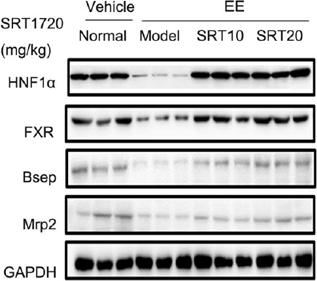
SRT 1720 monohydrochloride purchased from MedChemExpress. Usage Cited in: Toxicol Lett. 2016 Dec 15:264:1-11. [Abstract]
The HNF1α, FXR, Mrp2 and Bsep protein levels are decreased after EE administration and significantly increased by SRT1720 in a dose dependent manner, which is in accordance with the mRNA levels.
-
J Orthop Surg Res
Pure platelet-rich plasma delays intervertebral disc degeneration by activating SIRT1-mediated autophagy in nucleus pulposus cells. [Abstract]2025 Aug 22;20(1):786. PMID: 40846953 -
Mol Biol Rep
MicroRNA-124a/Sirtuin 1 pathway inhibits autophagy to promote hepatocyte apoptosis in acute-on-chronic liver failure. [Abstract]2025 Mar 15;52(1):314. PMID: 40088364 -
Mol Biol Rep
SIRT1 protects against aortic dissection by regulating AP-1/decorin signaling-mediated PDCD4 activation. [Abstract]2020 Mar;47(3):2149-2159. PMID: 32072402 -
Exp Eye Res
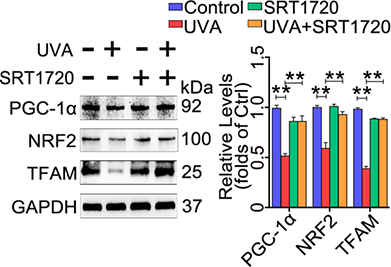
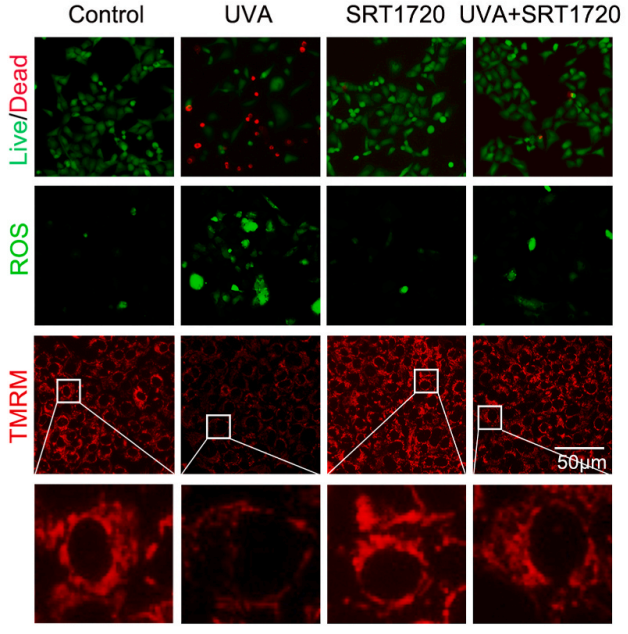
SRT1720 attenuates UVA-induced corneal endothelial damage via inhibition of oxidative stress and cellular apoptosis. [Abstract]2023 Jun:231:109464. PMID: 37015319
SRT 1720 monohydrochloride purchased from MedChemExpress. Usage Cited in: Exp Eye Res. 2023 Jun:231:109464. [Abstract]
SRT1720 (1 μM; 1 h) reverses UVA (Using ultraviolet A)-inhibited expression of PGC-1α, NRF2 and TFAM in B4G12 cells.
SRT 1720 monohydrochloride purchased from MedChemExpress. Usage Cited in: Exp Eye Res. 2023 Jun:231:109464. [Abstract]
SRT1720 (1 μM; 1 h) effectively decreases the levels of cell death and ROS accumulation in the UVA (Using ultraviolet A)-irradiated B4G12 cells.
-
Tissue Cell
2025 Apr 2:95:102903. PMID: 40203682 -
BMC Neurosci
SRT1720 ameliorates LPS-induced depressive-like behaviors in mice and activates Parkin-mediated mitophagy. [Abstract]2025 Aug 30;26(1):56. PMID: 40885954 -
Biochem Biophys Res Commun
Sirt1-eIF2α axis drives pro-inflammatory macrophage activation through ER stress aggravating liver IRI in aged mice. [Abstract]2026 Apr 30:811:153436. PMID: 41775225 -
Biochem Biophys Res Commun
Andrographolide improves the dysfunction of endothelial progenitor cells from angiotensin II-induced hypertensive mice through SIRT1 signaling. [Abstract]2023 Jan 29:642:11-20. PMID: 36543019 -
Toxicol Res (Camb)
Tamoxifen induced hepatic steatosis in high-fat feeding rats through SIRT1-Foxo1 suppression and LXR-SREBP1c activation. [Abstract]2022 Jul 22;11(4):673-682. PMID: 36051666 -
Biol Pharm Bull
Ginsenoside Rb1 Alleviates Asthma Inflammation by Regulating Mitochondrial Dysfunction through SIRT1/PGC-1α and PI3K/AKT Pathways. [Abstract]2025;48(11):1741-1752. PMID: 41242748 -
-
-
-
-
Oxid Med Cell Longev
Puerarin Attenuates LPS-Induced Inflammatory Responses and Oxidative Stress Injury in Human Umbilical Vein Endothelial Cells through Mitochondrial Quality Control. [Abstract]2021 Feb 27:2021:6659240. PMID: 33728025


Lösungsmittel & Löslichkeit
DMSO : 62.5 mg/mL (123.51 mM; Need ultrasonic; Hygroscopic DMSO has a significant impact on the solubility of product, please use newly opened DMSO)
Please refer to the solubility information to select the appropriate solvent. Once prepared, please aliquot and store the solution to prevent product inactivation from repeated freeze-thaw cycles.
Storage method and period of stock solution: -80°C, 6 months; -20°C, 1 month (stored under nitrogen, away from moisture). When stored at -80°C, please use it within 6 months. When stored at -20°C, please use it within 1 month.
Please refer to the solubility information to select the appropriate solvent. Once prepared, please aliquot and store the solution to prevent product inactivation from repeated freeze-thaw cycles.
Storage method and period of stock solution: -80°C, 6 months; -20°C, 1 month (stored under nitrogen, away from moisture). When stored at -80°C, please use it within 6 months. When stored at -20°C, please use it within 1 month.
Konzentration (Stammlösung) × Volumen (Stammlösung) = Konzentration (Ziellösung) × Volumen (Ziellösung)
Select the appropriate dissolution method based on your experimental animal and administration route.
- For the following dissolution methods, please ensure to first prepare a clear stock solution using an In Vitro approach and then sequentially add co-solvents:
- To ensure reliable experimental results, the clarified stock solution can be appropriately stored based on storage conditions. As for the working solution for In Vivo experiments, it is recommended to prepare freshly and use it on the same day.
- The percentages shown for the solvents indicate their volumetric ratio in the final prepared solution. If precipitation or phase separation occurs during preparation, heat and/or sonication can be used to aid dissolution.
Add each solvent one by one: 10% DMSO 40% PEG300 5% Tween-80 45% Saline
Solubility: ≥ 2.08 mg/mL (4.11 mM); Clear solution
This protocol yields a clear solution of ≥ 2.08 mg/mL (saturation unknown).
Taking 1 mL working solution as an example, add 100 μL DMSO stock solution (20.8 mg/mL) to 400 μL PEG300, and mix evenly; then add 50 μL Tween-80 and mix evenly; then add 450 μL Saline to adjust the volume to 1 mL.
Preparation of Saline: Dissolve 0.9 g sodium chloride in ddH₂O and dilute to 100 mL to obtain a clear Saline solution.
Add each solvent one by one: 10% DMSO 90% (20% SBE-β-CD in Saline)
Solubility: ≥ 2.08 mg/mL (4.11 mM); Clear solution
This protocol yields a clear solution of ≥ 2.08 mg/mL (saturation unknown).
Taking 1 mL working solution as an example, add 100 μL DMSO stock solution (20.8 mg/mL) to 900 μL 20% SBE-β-CD in Saline, and mix evenly.
Preparation of 20% SBE-β-CD in Saline (4°C, storage for one week): 2 g SBE-β-CD powder is dissolved in 10 mL Saline, completely dissolve until clear.
For the following dissolution methods, please prepare the working solution directly:
It is recommended to prepare fresh solutions and use them promptly within a short period of time.
The percentages shown for the solvents indicate their volumetric ratio in the final prepared solution. If precipitation or phase separation occurs during preparation, heat and/or sonication can be used to aid dissolution.
Add each solvent one by one: 0.5% HPMC/0.2% Tween-80 in Saline water
Solubility: 10 mg/mL (19.76 mM); Suspened solution; Need ultrasonic
Please enter the basic information of animal experiments:
-
-
-
-
Recommended: Prepare an additional quantity of animals to account for potential losses during experiments.
Please enter your animal formula composition:
-
%DMSO +
Recommended: Keep the proportion of DMSO in working solution below 2% if your animal is weak.
-
%+
-
+%Tween-80 + +
-
%Saline +
The co-solvents required include: DMSO, . All of co-solvents are available by MedChemExpress (MCE). , Tween 80. All of co-solvents are available by MedChemExpress (MCE).
Working solution concentration: 0.22 mg/mL
Method for preparing stock solution: mg drug dissolved in μL DMSO. Stock solution concentration: mg/mL. * In solvent : -80°C, 6 months; -20°C, 1 month (stored under nitrogen, away from moisture)
1. Take μL DMSO stock solution;
2. Add μL .
μL , mix evenly;
3. Then add μL Tween 80, mix evenly;
4. Then add μL
Please ensure that the stock solution in the first step is dissolved to a clear state, and add co-solvents in sequence. You can use ultrasonic heating (ultrasonic cleaner, recommended frequency 20-40 kHz), vortexing, etc. to assist dissolution.

Protokoll
Mice: Nine week old C57BL/6 male mice are fed a high fat diet (60% calories from fat) until their mean body weight reach approximately 40 g. The mice are then divided into test groups (6-10 per group). SRT1460 (100 mg/kg), SRT 1720 (100 mg/kg), SRT501 (500 mg/kg) and BRL49653 (5 mg/kg) are administered once daily via oral gavage. The vehicle used is 2% HPMC + 0.2% DOSS. Individual mouse body weights are measured twice weekly. At 2, 4, 6, 8 and 10 weeks of dosing a fed blood glucose measure is taken and after 5 weeks of treatment an IPGTT is conducted on all mice from each of the groups. After 10 weeks of treatment, an ITT is conducted. Statistical analysis is completed using the JMP program. Data are analyzed by a one way ANOVA with comparison to control using a Dunnett’s Test. A p value < 0.05 indicates a significant difference between groups.
MedChemExpress (MCE) has not independently confirmed the accuracy of these methods. They are for reference only.


Reinheit & Dokumentation
-
Data Sheet (284 KB)
-
SDS (393 KB)
- English - EN (393 KB)
- Français - FR (393 KB)
- Deutsch - DE (393 KB)
- Norwegian - NO (393 KB)
- Español - ES (393 KB)
- Swedish - SV (393 KB)
- Italian - IT (393 KB)
- Portuguese - PT (393 KB)
-
Handling Instructions (2659 KB)
Verweise
[1]. Milne JC et al. Small molecule activators of SIRT1 as therapeutics for the treatment of type 2 diabetes. Nature. 2007 Nov 29;450(7170):712-6 [Content Brief]
[2]. Baur JA, et al. Are sirtuins viable targets for improving healthspan and lifespan?,Nat Rev Drug Discov. 2012 Jun 1;11(6):443-61 [Content Brief]
[3]. Yao H, et al. SIRT1 protects against emphysema via FOXO3-mediated reduction of premature senescence in mice.,J Clin Invest. 2012 Jun 1;122(6):2032-45. [Content Brief]
[4]. Gao D, et al. Activation of SIRT1 Attenuates Klotho Deficiency-Induced Arterial Stiffness and Hypertension by Enhancing AMP-Activated Protein Kinase Activity. Hypertension. 2016 Nov;68(5):1191-1199. [Content Brief]
[5]. Lahusen TJ, et al. SRT1720 induces lysosomal-dependent cell death of breast cancer cells. Mol Cancer Ther. 2015 Jan;14(1):183-92. [Content Brief]


Complete Stock Solution Preparation Table
Please refer to the solubility information to select the appropriate solvent. Once prepared, please aliquot and store the solution to prevent product inactivation from repeated freeze-thaw cycles.
Storage method and period of stock solution: -80°C, 6 months; -20°C, 1 month (stored under nitrogen, away from moisture). When stored at -80°C, please use it within 6 months. When stored at -20°C, please use it within 1 month.
| Optional Solvent | Concentration Solvent Mass | 1 mg | 5 mg | 10 mg | 25 mg |
|---|---|---|---|---|---|
| DMSO | 1 mM | 1.9762 mL | 9.8810 mL | 19.7621 mL | 49.4052 mL |
| 5 mM | 0.3952 mL | 1.9762 mL | 3.9524 mL | 9.8810 mL | |
| 10 mM | 0.1976 mL | 0.9881 mL | 1.9762 mL | 4.9405 mL | |
| 15 mM | 0.1317 mL | 0.6587 mL | 1.3175 mL | 3.2937 mL | |
| 20 mM | 0.0988 mL | 0.4941 mL | 0.9881 mL | 2.4703 mL | |
| 25 mM | 0.0790 mL | 0.3952 mL | 0.7905 mL | 1.9762 mL | |
| 30 mM | 0.0659 mL | 0.3294 mL | 0.6587 mL | 1.6468 mL | |
| 40 mM | 0.0494 mL | 0.2470 mL | 0.4941 mL | 1.2351 mL | |
| 50 mM | 0.0395 mL | 0.1976 mL | 0.3952 mL | 0.9881 mL | |
| 60 mM | 0.0329 mL | 0.1647 mL | 0.3294 mL | 0.8234 mL | |
| 80 mM | 0.0247 mL | 0.1235 mL | 0.2470 mL | 0.6176 mL | |
| 100 mM | 0.0198 mL | 0.0988 mL | 0.1976 mL | 0.4941 mL |


 Powered by Bioz