



Utidelone
Based on 4 publication(s) in Google Scholar
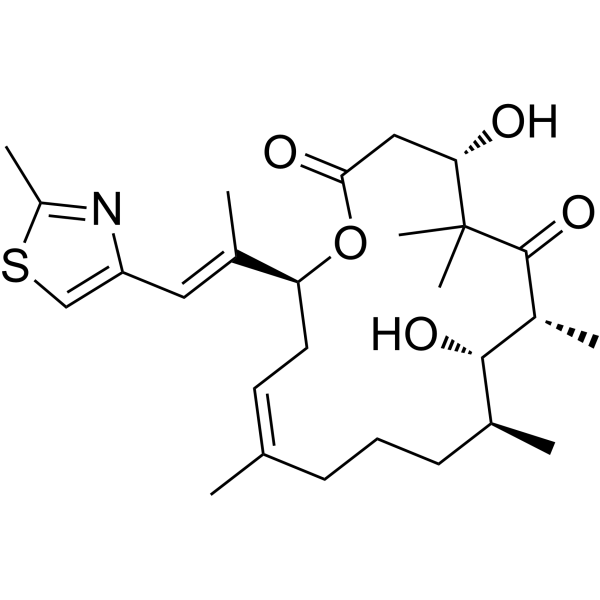
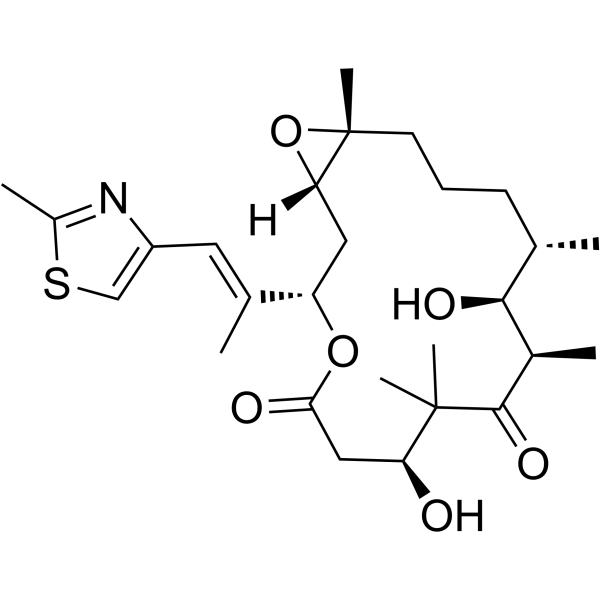
Utidelone (Epothilone D) is a potent microtubule stabilizer.
For research use only. We do not sell to patients.
- Purity: 99.67%
- CAS No.: 189453-10-9
- Formula: C27H41NO5S
- Molecular Weight:491.68
-
Storage:Powder -20°C, 3 years ; In solvent -80°C, 6 months , -20°C, 1 month

To place orders, for customer services and technical support, please contact: MedChemExpress USA
Tel: 609-228-6898 E-mail: [email protected] [email protected]


-
 Biological Activity
-
Chemical Information
-
Solvent & Solubility
- Protocol
- Purity & Documentation
- References
-
 Help & FAQs


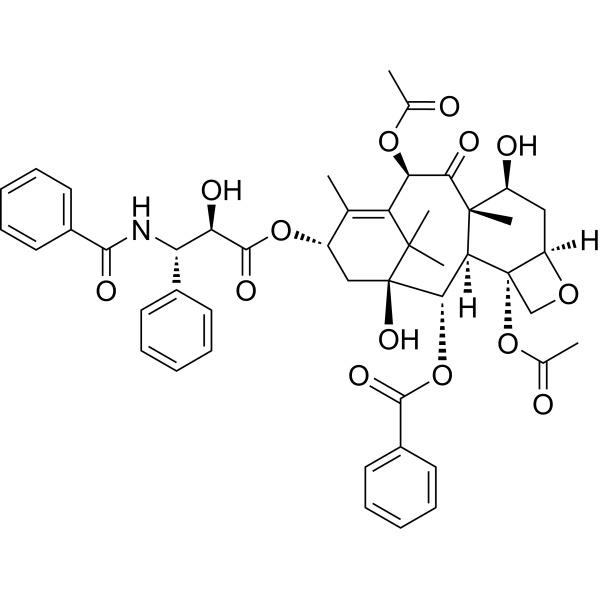
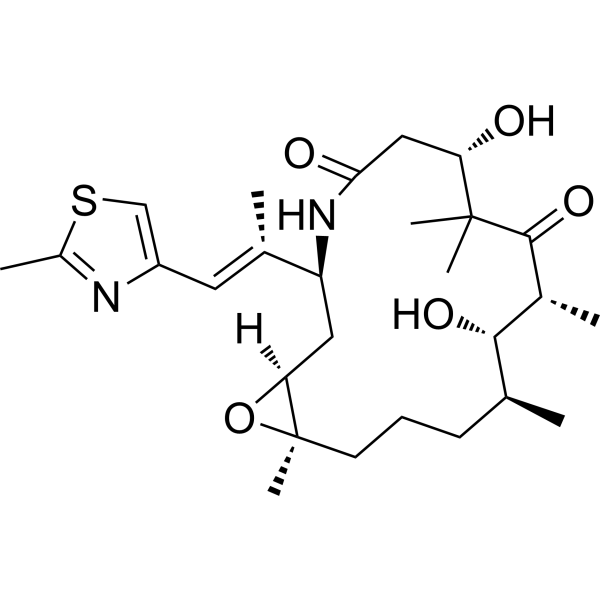
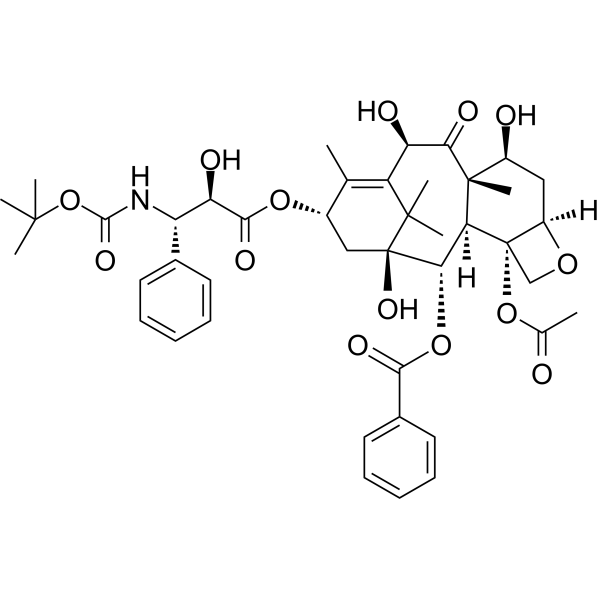


Publications Citing Use of MedChemExpress (MCE) Utidelone
MoreAll Antibiotic Isoforms
More

Biological Activity
Description
IC50 & Target
Microtubule/Tubulin[1]
Cellular Effect
|
Cell Line

|
Type | Value | Description | References |
|---|---|---|---|---|
| CCRF-CEM | IC50 |
15 nM
Compound: 4
|
Cytotoxicity against camptothecin-resistant human CCRF-CEM cells after 3 days by SRB assay
Cytotoxicity against camptothecin-resistant human CCRF-CEM cells after 3 days by SRB assay
|
[PMID: 12141877] |
| CCRF-CEM | IC50 |
22 nM
Compound: 4
|
Cytotoxicity against human CCRF-CEM cells after 3 days by SRB assay
Cytotoxicity against human CCRF-CEM cells after 3 days by SRB assay
|
[PMID: 12141877] |
| HL-60 | IC50 |
10 nM
Compound: 4
|
Cytotoxicity against mitoxantrone-resistant human HL60 cells after 3 days by SRB assay
Cytotoxicity against mitoxantrone-resistant human HL60 cells after 3 days by SRB assay
|
[PMID: 12141877] |
| HL-60 | IC50 |
8 nM
Compound: 4
|
Cytotoxicity against human HL60 cells after 3 days by SRB assay
Cytotoxicity against human HL60 cells after 3 days by SRB assay
|
[PMID: 12141877] |
| KB | IC50 |
1.44 nM
Compound: Epothilone D
|
Concentration required to inhibit the growth of paclitaxel-resistant human epidermoid carcinoma cells KB-8511 by 50 percent (72 hr exposure)
Concentration required to inhibit the growth of paclitaxel-resistant human epidermoid carcinoma cells KB-8511 by 50 percent (72 hr exposure)
|
[PMID: 11133086] |
| KB 3-1 | IC50 |
2.7 nM
Compound: Epothilone D
|
Concentration required to inhibit the growth of paclitaxel-sensitive human epidermoid carcinoma cells KB-31 by 50 percent (72 hr exposure)
Concentration required to inhibit the growth of paclitaxel-sensitive human epidermoid carcinoma cells KB-31 by 50 percent (72 hr exposure)
|
[PMID: 11133086] |
| L929 | IC50 |
20 ng/mL
Compound: 15
|
Cytotoxicity against mouse L929 cells
Cytotoxicity against mouse L929 cells
|
[PMID: 11473410] |
| MCF7 | IC50 |
0.014 μM
Compound: Epo D
|
Cytotoxicity against human MCF7 cells after 72 hrs
Cytotoxicity against human MCF7 cells after 72 hrs
|
[PMID: 23994325] |
| MCF7 | IC50 |
16 nM
Compound: 4
|
Cytotoxicity against human MCF7 cells after 3 days by SRB assay
Cytotoxicity against human MCF7 cells after 3 days by SRB assay
|
[PMID: 14575429] |
| MCF7 | IC50 |
8 nM
Compound: 4
|
Cytotoxicity against human MCF7 cells after 3 days by SRB assay
Cytotoxicity against human MCF7 cells after 3 days by SRB assay
|
[PMID: 12141877] |
| NCI/ADR-RES | IC50 |
0.01 μM
Compound: Epo D
|
Cytotoxicity against human MCF7/ADR cells after 72 hrs
Cytotoxicity against human MCF7/ADR cells after 72 hrs
|
[PMID: 23994325] |
| NCI/ADR-RES | IC50 |
30 nM
Compound: 4
|
Cytotoxicity against human NCI/ADR-RES cells after 3 days by SRB assay
Cytotoxicity against human NCI/ADR-RES cells after 3 days by SRB assay
|
[PMID: 12141877] |
| NCI-H460 | IC50 |
30 nM
Compound: 4
|
Cytotoxicity against human NCI-H460 cells after 3 days by SRB assay
Cytotoxicity against human NCI-H460 cells after 3 days by SRB assay
|
[PMID: 14575429] |
| NCI-H460 | IC50 |
8 nM
Compound: 4
|
Cytotoxicity against human NCI-H460 cells after 3 days by SRB assay
Cytotoxicity against human NCI-H460 cells after 3 days by SRB assay
|
[PMID: 12141877] |
| SF-268 | IC50 |
14 nM
Compound: 4
|
Cytotoxicity against human SF268 cells after 3 days by SRB assay
Cytotoxicity against human SF268 cells after 3 days by SRB assay
|
[PMID: 12141877] |
| SF-268 | IC50 |
18 nM
Compound: 4
|
Cytotoxicity against human SF268 cells after 3 days by SRB assay
Cytotoxicity against human SF268 cells after 3 days by SRB assay
|
[PMID: 14575429] |
In Vitro
Utidelone (Epothilone D) is a more potent microtubule stabilizer in vitro than epothilone A or B. In vitro, Utidelone has shown potent cytotoxicity in a panel of human tumor cell lines, with similar potency to paclitaxel. Utidelone also shows a definite advantage over paclitaxel in drug-resistant cell lines, and retained its cytotoxicity against a multidrug resistant cell line over-expressing P-glycoprotein[1].
Utidelone is a microtubules (MTs)-stabilizing agent[2].
MedChemExpress (MCE) has not independently confirmed the accuracy of these methods. They are for reference only.
In Vivo
MedChemExpress (MCE) has not independently confirmed the accuracy of these methods. They are for reference only.
Clinical Trial
| NCT Number | Sponsor | Condition | Start Date |
Phase
|
|---|---|---|---|---|
| NCT01329991 | Plexxikon| | 2011-05 | PHASE1 |


Chemical Information
-
CAS No. 189453-10-9
-
Appearance Solid
-
Molecular Weight 491.68
-
Formula C27H41NO5S
-
Color White to light yellow
-
SMILES
O=C1C[C@H](O)C(C)(C)C([C@H](C)[C@@H](O)[C@@H](C)CCC/C(C)=C/C[C@@H](/C(C)=C/C2=CSC(C)=N2)O1)=O
-
Synonyms
Epothilone D; UTD1; KOS 862
-
Shipping
Room temperature in continental US; may vary elsewhere.
-
Storage
Powder -20°C 3 years In solvent -80°C 6 months -20°C 1 month


Publications (4)
-
Journal Impact Factor
-
Most Recent
-
Sci Rep
Enhancing microtubule stabilization rescues cognitive deficits and ameliorates pathological phenotype in an amyloidogenic Alzheimer's disease model. [Abstract]2020 Sep 8;10(1):14776. PMID: 32901091 -
Front Mol Neurosci
Deleterious and protective effects of epothilone-D alone and in the context of amyloid β- and tau-induced alterations. [Abstract]2023 Oct 12:16:1198299. PMID: 37900942 -
-


Solvent & Solubility
In Vitro:
DMSO : ≥ 100 mg/mL (203.38 mM; Hygroscopic DMSO has a significant impact on the solubility of product, please use newly opened DMSO)
* "≥" means soluble, but saturation unknown.
Please refer to the solubility information to select the appropriate solvent. Once prepared, please aliquot and store the solution to prevent product inactivation from repeated freeze-thaw cycles.
Storage method and period of stock solution: -80°C, 6 months; -20°C, 1 month. When stored at -80°C, please use it within 6 months. When stored at -20°C, please use it within 1 month.
Please refer to the solubility information to select the appropriate solvent. Once prepared, please aliquot and store the solution to prevent product inactivation from repeated freeze-thaw cycles.
Storage method and period of stock solution: -80°C, 6 months; -20°C, 1 month. When stored at -80°C, please use it within 6 months. When stored at -20°C, please use it within 1 month.
Concentration (start) × Volume (start) = Concentration (final) × Volume (final)
In Vivo:
Select the appropriate dissolution method based on your experimental animal and administration route.
- For the following dissolution methods, please ensure to first prepare a clear stock solution using an In Vitro approach and then sequentially add co-solvents:
- To ensure reliable experimental results, the clarified stock solution can be appropriately stored based on storage conditions. As for the working solution for In Vivo experiments, it is recommended to prepare freshly and use it on the same day.
- The percentages shown for the solvents indicate their volumetric ratio in the final prepared solution. If precipitation or phase separation occurs during preparation, heat and/or sonication can be used to aid dissolution.
Add each solvent one by one: 10% DMSO 40% PEG300 5% Tween-80 45% Saline
Solubility: ≥ 2.5 mg/mL (5.08 mM); Clear solution
This protocol yields a clear solution of ≥ 2.5 mg/mL (saturation unknown).
Taking 1 mL working solution as an example, add 100 μL DMSO stock solution (25.0 mg/mL) to 400 μL PEG300, and mix evenly; then add 50 μL Tween-80 and mix evenly; then add 450 μL Saline to adjust the volume to 1 mL.
Preparation of Saline: Dissolve 0.9 g sodium chloride in ddH₂O and dilute to 100 mL to obtain a clear Saline solution.
In Vivo Dissolution Calculator
Please enter the basic information of animal experiments:
-
-
-
-
Recommended: Prepare an additional quantity of animals to account for potential losses during experiments.
Please enter your animal formula composition:
-
%DMSO +
Recommended: Keep the proportion of DMSO in working solution below 2% if your animal is weak.
-
%+
-
+%Tween-80 + +
-
%Saline +
The co-solvents required include: DMSO, . All of co-solvents are available by MedChemExpress (MCE). , Tween 80. All of co-solvents are available by MedChemExpress (MCE).
Working solution concentration: 0.22 mg/mL
Method for preparing stock solution: mg drug dissolved in μL DMSO. Stock solution concentration: mg/mL.
1. Take μL DMSO stock solution;
2. Add μL .
μL , mix evenly;
3. Then add μL Tween 80, mix evenly;
4. Then add μL
Please ensure that the stock solution in the first step is dissolved to a clear state, and add co-solvents in sequence. You can use ultrasonic heating (ultrasonic cleaner, recommended frequency 20-40 kHz), vortexing, etc. to assist dissolution.

Protocol
Animal Administration[2]
Mice[2]
Groups of mice (n=3) receive intraperitoneal (i.p.) injections of 3.7 mg/kg of Epothilone D (epoD) dissolved in 100% DMSO, followed by euthanization using approved at times ranging from 0.25 h to 24 h. In another study, groups of mice (n=3) receive injections of 3 mg/kg of epoD in 100% DMSO followed by euthanization 4, 6 and 10 days later. The Epothilone D (epoD) levels in brain and blood samples are determined using LC-MS/MS protocols. Groups (n=10-13) of 3-month old PS19 tau Tg mice or 3-month old non-Tg littermates are administered weekly i.p. injections of 1 mg/kg epoD, 3 mg/kg of Epothilone D (epoD) or vehicle (DMSO), for a total of 3 months. Animals are monitored for signs of abnormal behavior or distress, and are weighed weekly. After final dosing, the mice undergo motor function and cognitive testing. After euthanization, brains and optic nerve (ON) are recovered for immunohistochemical analyses. A subset of mice from each group also undergo necropsy evaluation with organ weights recorded.
MedChemExpress (MCE) has not independently confirmed the accuracy of these methods. They are for reference only.


Purity & Documentation
-
Data Sheet (279 KB)
-
SDS (252 KB)
- English - EN (252 KB)
- Français - FR (252 KB)
- Deutsch - DE (252 KB)
- Norwegian - NO (252 KB)
- Español - ES (252 KB)
- Swedish - SV (252 KB)
- Italian - IT (252 KB)
- Korean - KR (252 KB)
- Portuguese - PT (252 KB)
-
Handling Instructions (2659 KB)
References
[1]. Konner J, et al. Phase I clinical, pharmacokinetic, and pharmacodynamic study of KOS-862 (Epothilone D) in patients with advanced solid tumors and lymphoma. Invest New Drugs. 2012 Dec;30(6):2294-302. [Content Brief]
[2]. Brunden KR, et al. Epothilone D improves microtubule density, axonal integrity, and cognition in a transgenic mouse model of tauopathy. J Neurosci. 2010 Oct 13;30(41):13861-6. [Content Brief]


Complete Stock Solution Preparation Table
Please refer to the solubility information to select the appropriate solvent. Once prepared, please aliquot and store the solution to prevent product inactivation from repeated freeze-thaw cycles.
Storage method and period of stock solution: -80°C, 6 months; -20°C, 1 month. When stored at -80°C, please use it within 6 months. When stored at -20°C, please use it within 1 month.
| Optional Solvent | Concentration Solvent Mass | 1 mg | 5 mg | 10 mg | 25 mg |
|---|---|---|---|---|---|
| DMSO | 1 mM | 2.0338 mL | 10.1692 mL | 20.3384 mL | 50.8461 mL |
| 5 mM | 0.4068 mL | 2.0338 mL | 4.0677 mL | 10.1692 mL | |
| 10 mM | 0.2034 mL | 1.0169 mL | 2.0338 mL | 5.0846 mL | |
| 15 mM | 0.1356 mL | 0.6779 mL | 1.3559 mL | 3.3897 mL | |
| 20 mM | 0.1017 mL | 0.5085 mL | 1.0169 mL | 2.5423 mL | |
| 25 mM | 0.0814 mL | 0.4068 mL | 0.8135 mL | 2.0338 mL | |
| 30 mM | 0.0678 mL | 0.3390 mL | 0.6779 mL | 1.6949 mL | |
| 40 mM | 0.0508 mL | 0.2542 mL | 0.5085 mL | 1.2712 mL | |
| 50 mM | 0.0407 mL | 0.2034 mL | 0.4068 mL | 1.0169 mL | |
| 60 mM | 0.0339 mL | 0.1695 mL | 0.3390 mL | 0.8474 mL | |
| 80 mM | 0.0254 mL | 0.1271 mL | 0.2542 mL | 0.6356 mL | |
| 100 mM | 0.0203 mL | 0.1017 mL | 0.2034 mL | 0.5085 mL |


Utidelone Related Classifications
HY-15278 Related Classifications
 Powered by Bioz