



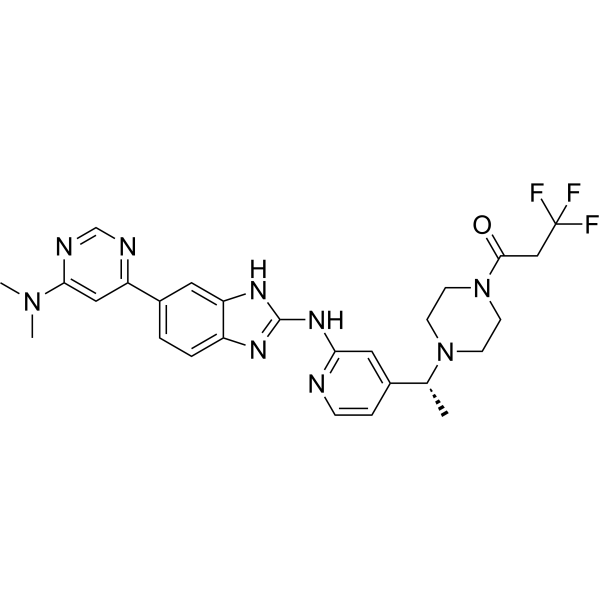
BAY-985
Based on 4 publication(s) in Google Scholar
BAY-985, a chemical probe, is a highly potent, orally active and selective ATP-competitive dual inhibitor of TBK1 and IKKε with IC50s of 2/30 and 2 nM for TBK1 (low/high ATP) and IKKε, respectively. Antitumor efficacy.
Nur für Forschungszwecke. Wir verkaufen nicht an Patienten.
- Reinheit : 99.69%
- CAS. Nr.: 2409479-29-2
- Formel: C27H30F3N9O
- Molecular Weight:553.58
-
Speicherung:Powder -20°C, 3 years , 4°C, 2 years ; In solvent -80°C, 2 years , -20°C, 1 year

To place orders, for customer services and technical support, please contact: MedChemExpress USA
Tel: 609-228-6898 E-mail: [email protected] [email protected]


-
 Biologische Aktivität
-
Chemical Information
-
Lösungsmittel & Löslichkeit
- Protokoll
- Reinheit & Dokumentation
- Verweise
-
 Help & FAQs


-
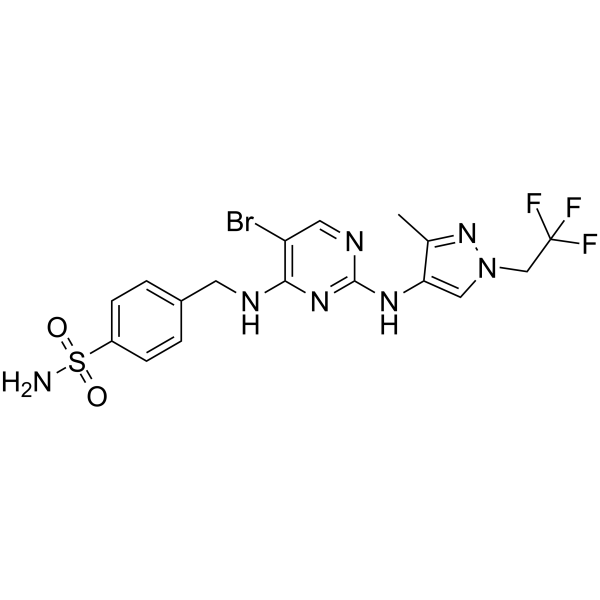
HY-111941
GSK8612TBK1 Inhibitor -
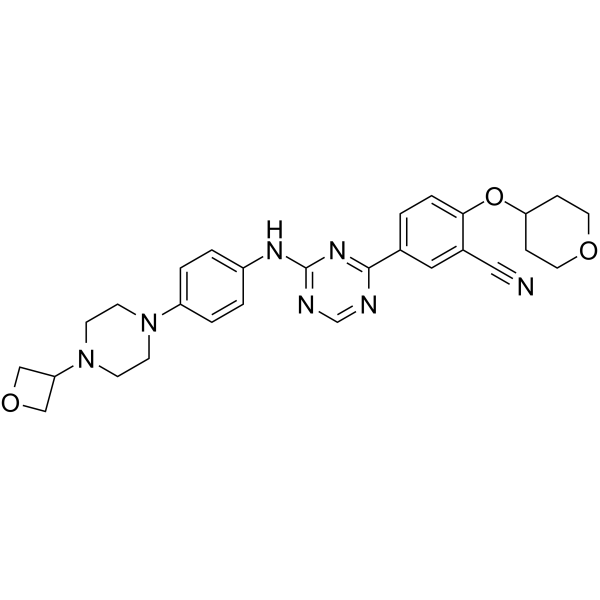
HY-128679
TBK1/IKKε-IN-5TBK1/IKKε Inhibitor -
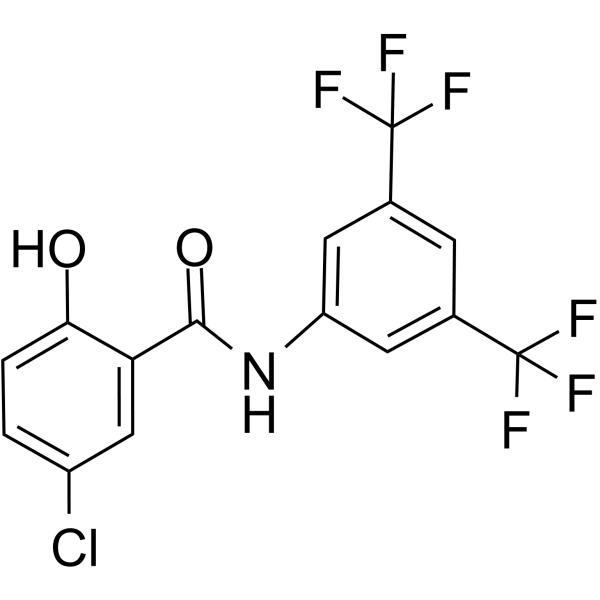
HY-10172
IMD-0354IKKβ Inhibitor -
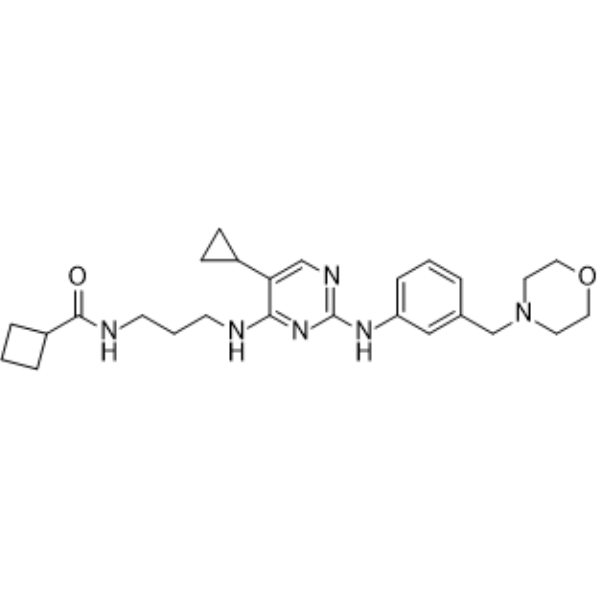
HY-13018
MRT67307IKKε/TBK-1 Inhibitor -
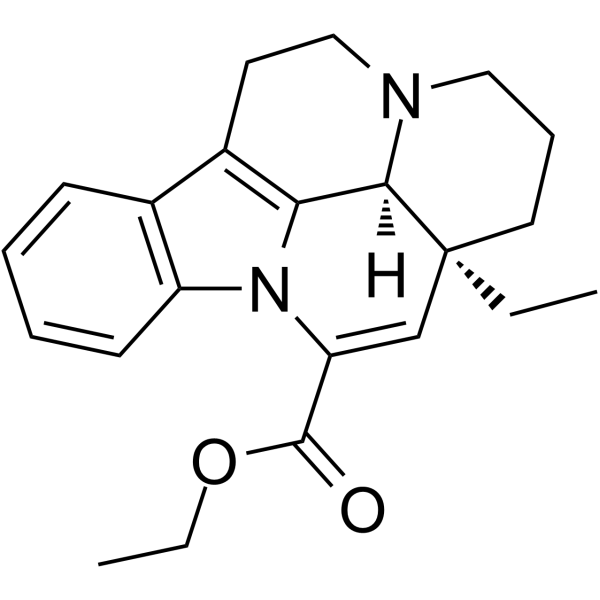
HY-13295
VinpocetinePDE1/Na+ Channel Inhibitor -
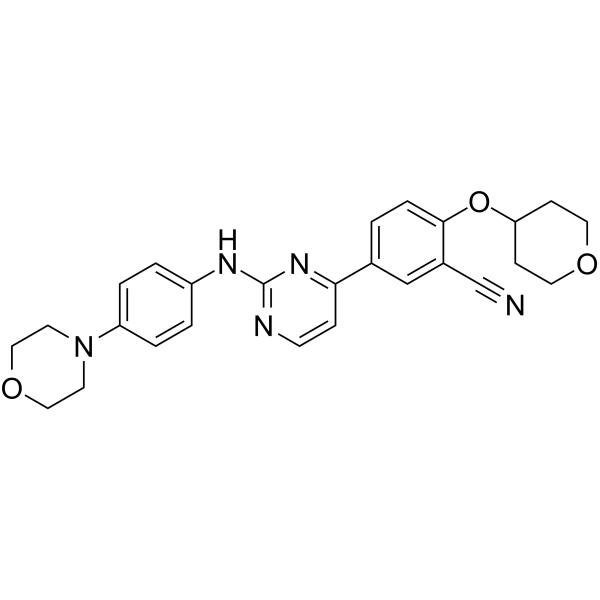
HY-12453
TBK1/IKKε-IN-2TBK1/IKKε Inhibitor -
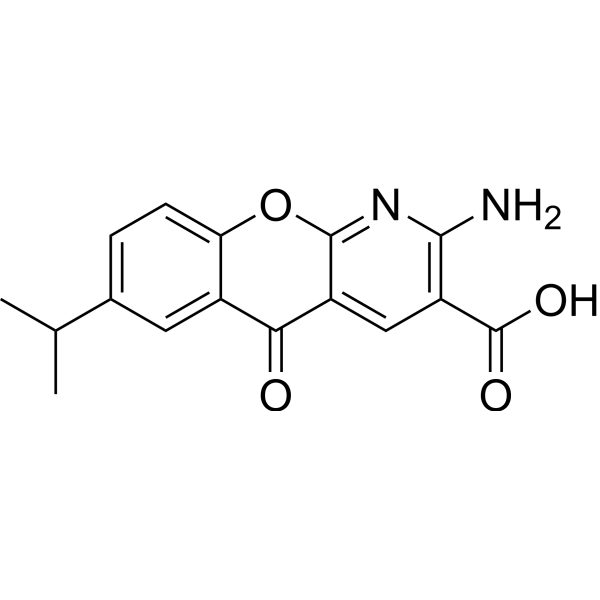
HY-B0713
AmlexanoxIKK Inhibitor -
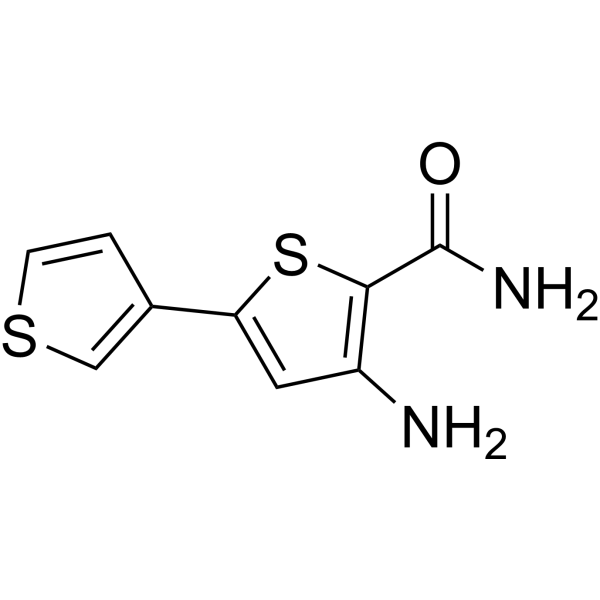
HY-13802
SC-514IKK Inhibitor -
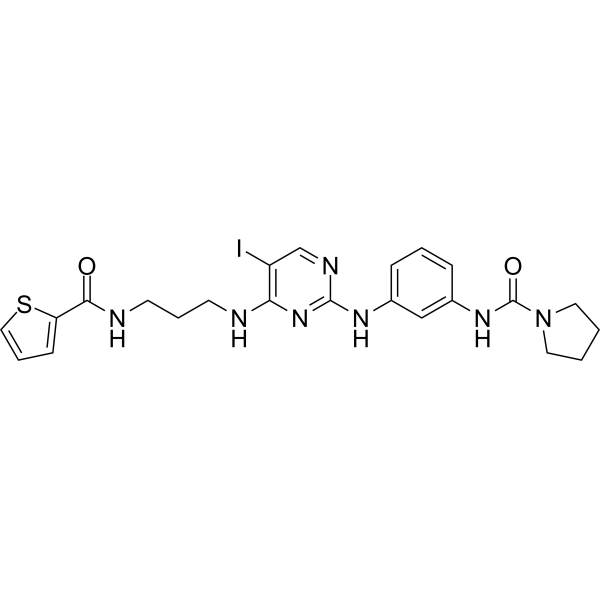
HY-10514
BX795PDK-1 Inhibitor -
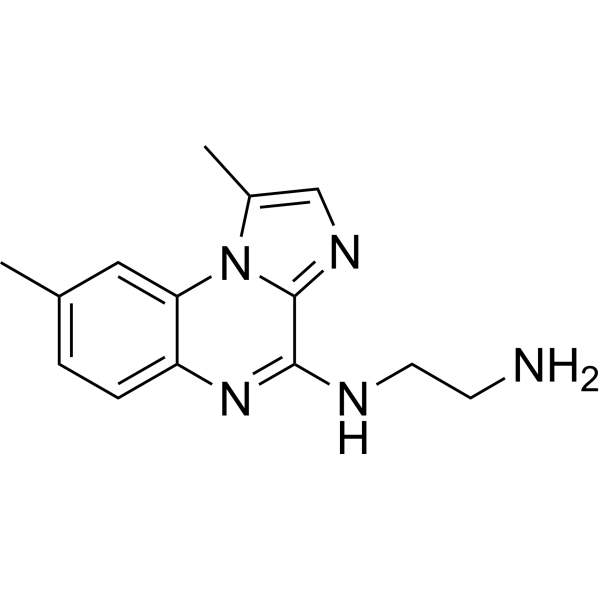
HY-10519
BMS-345541IKK-1/IKK-2 Inhibitor -
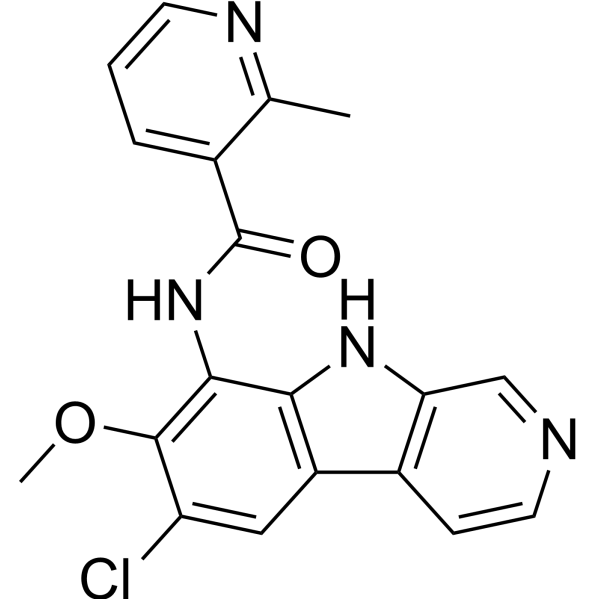
HY-15473
MLN120BIKKβ Inhibitor -
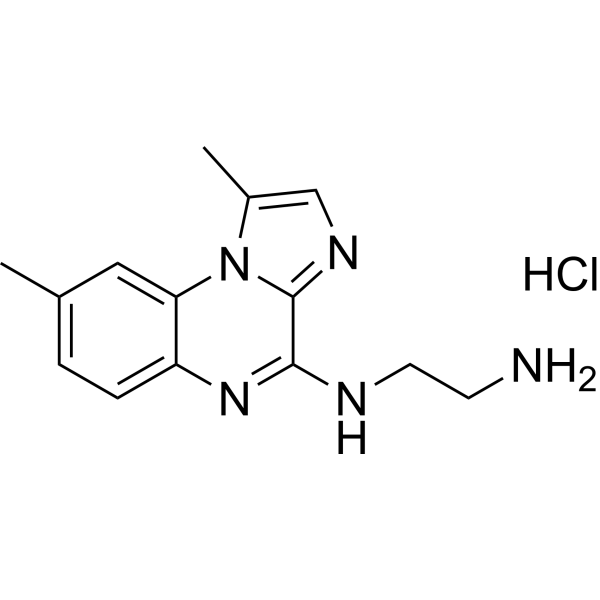
HY-10518
BMS-345541 hydrochlorideIKK-1/IKK-2 Inhibitor
Publications Citing Use of MedChemExpress (MCE) BAY-985
More

Biologische Aktivität
Beschreibung
IC50 & Target
[1]|
TBK1 2 nM (IC50, low ATP) |
TBK1 30 nM (IC50, high ATP) |
IKKε 2 nM (IC50) |
Cellular Effect
|
Cell Line

|
Type | Value | Description | References |
|---|---|---|---|---|
| ACHN | IC50 |
7260 nM
Compound: 34; BAY-985
|
Antiproliferative activity against human ACHN cells harboring CDKN2A mutation assessed as reduction in cell viability after 96 hrs by CellTiter-Glo luminescence assay
Antiproliferative activity against human ACHN cells harboring CDKN2A mutation assessed as reduction in cell viability after 96 hrs by CellTiter-Glo luminescence assay
|
[PMID: 31859507] |
| Sf21 | IC50 |
123 nM
Compound: 34; BAY-985
|
Inhibition of recombinant human N-terminal GST-tagged FLT3 (564 to end residues) expressed in sf21 cells using biotin labelled Ahx-GGEEEEYFELVKKKK peptide as substrate preincubated with enzyme for 15 mins followed by substrate addition and further incubat
Inhibition of recombinant human N-terminal GST-tagged FLT3 (564 to end residues) expressed in sf21 cells using biotin labelled Ahx-GGEEEEYFELVKKKK peptide as substrate preincubated with enzyme for 15 mins followed by substrate addition and further incubat
|
[PMID: 31859507] |
| Sf21 | IC50 |
276 nM
Compound: 34; BAY-985
|
Inhibition of recombinant full length human His6-tagged RSK4 expressed in baculovirus infected sf21 cells using biotin labelled Ahx-KKLNRTLSFAEPG peptide as substrate preincubated with enzyme for 15 mins followed by substrate addition and further incubate
Inhibition of recombinant full length human His6-tagged RSK4 expressed in baculovirus infected sf21 cells using biotin labelled Ahx-KKLNRTLSFAEPG peptide as substrate preincubated with enzyme for 15 mins followed by substrate addition and further incubate
|
[PMID: 31859507] |
| SK-MEL-2 | IC50 |
900 nM
Compound: 34; BAY-985
|
Antiproliferative activity against human SK-MEL-2 cells harboring NRAS/TP53 mutation assessed as reduction in cell viability after 96 hrs by CellTiter-Glo luminescence assay
Antiproliferative activity against human SK-MEL-2 cells harboring NRAS/TP53 mutation assessed as reduction in cell viability after 96 hrs by CellTiter-Glo luminescence assay
|
[PMID: 31859507] |
In Vitro
BAY-985 inhibits FLT3, RSK4, DRAK1, and ULK1 with IC50s of 123, 276, 311, and 7930 nM, respectively[1].
BAY-985 inhibits the cellular phosphorylation of interferon regulatory factor 3 (IRF3) with an IC50 of 74 nM[1].
BAY-985 is active in cellular mechanistic assay and shows anti-proliferative activity in a few cancer cell lines with IC50s of 900 and 7260 nM for SK-MEL2 (NRAS and TP53 mutated) and ACHN (CDKN2A mutated) cells, respectively[1].
MedChemExpress (MCE) has not independently confirmed the accuracy of these methods. They are for reference only.
-
Cell Line:ACHN and SK-MEL-2 cell lines
-
Concentration:
-
Incubation Time:96 hours
-
Result:Inhibited proliferation in SK-MEL2 and ACHN cells with IC50s of 900 and 7260 nM, respectively.
In Vivo
BAY-985 shows high clearance (CLb= 4.0 L/h/kg, ca. 95% hepatic extraction), large volume of distribution at steady state (Vss=2.9 L/kg) and a short terminal half-life (t1/2=0.79 h)[1].
MedChemExpress (MCE) has not independently confirmed the accuracy of these methods. They are for reference only.
-
Animal Model:Female NMRI nude mice bearing SK-MEL-2 human melanoma xenograft model[1]
-
Dosage:200 mg/kg
-
Administration:Applied p.o.; twice daily (b.i.d.) continuously 111 days
-
Result:Treatment resulted in weak antitumor efficacy with a T/Ctumor weight ratio of 0.6.
The treatment was well tolerated, with a maximum body weight loss of less than 10%.


Chemical Information
-
CAS. Nr. 2409479-29-2
-
Appearance Solid
-
Molecular Weight 553.58
-
Formel C27H30F3N9O
-
Color Light yellow to yellow
-
SMILES
O=C(N1CCN([C@@H](C2=CC(NC3=NC4=CC=C(C5=NC=NC(N(C)C)=C5)C=C4N3)=NC=C2)C)CC1)CC(F)(F)F
-
Versand
Room temperature in continental US; may vary elsewhere.
-
Speicherung
Powder -20°C 3 years 4°C 2 years In solvent -80°C 2 years -20°C 1 year


Publications (4)
-
Journal Impact Factor
-
Most Recent
-
Nat Commun
Human iPSC-based Modeling of Pulmonary Fibrosis Reveals p300/CBP Inhibition Suppresses Alveolar Transitional Cell State. [Abstract]2026 Feb 12;17(1):1214. PMID: 41680175 -
Arthritis Rheumatol
Promotion of Knee Cartilage Degradation by IκB Kinase ε in the Pathogenesis of Osteoarthritis in Human and Murine Models. [Abstract]2023 Jun;75(6):937-949. PMID: 36530063 -
Bone Joint Res
Therapeutic potential of IκB kinase epsilon inhibition in preventing meniscal degeneration of early osteoarthritis. [Abstract]2025 Nov 1;14(11):927-940. PMID: 41173032 -


Lösungsmittel & Löslichkeit
In Vitro:
DMSO : 50 mg/mL (90.32 mM; Need ultrasonic; Hygroscopic DMSO has a significant impact on the solubility of product, please use newly opened DMSO)
Please refer to the solubility information to select the appropriate solvent. Once prepared, please aliquot and store the solution to prevent product inactivation from repeated freeze-thaw cycles.
Storage method and period of stock solution: -80°C, 2 years; -20°C, 1 year. When stored at -80°C, please use it within 2 years. When stored at -20°C, please use it within 1 year.
Please refer to the solubility information to select the appropriate solvent. Once prepared, please aliquot and store the solution to prevent product inactivation from repeated freeze-thaw cycles.
Storage method and period of stock solution: -80°C, 2 years; -20°C, 1 year. When stored at -80°C, please use it within 2 years. When stored at -20°C, please use it within 1 year.
Konzentration (Stammlösung) × Volumen (Stammlösung) = Konzentration (Ziellösung) × Volumen (Ziellösung)
In Vivo:
Select the appropriate dissolution method based on your experimental animal and administration route.
- For the following dissolution methods, please ensure to first prepare a clear stock solution using an In Vitro approach and then sequentially add co-solvents:
- To ensure reliable experimental results, the clarified stock solution can be appropriately stored based on storage conditions. As for the working solution for In Vivo experiments, it is recommended to prepare freshly and use it on the same day.
- The percentages shown for the solvents indicate their volumetric ratio in the final prepared solution. If precipitation or phase separation occurs during preparation, heat and/or sonication can be used to aid dissolution.
Add each solvent one by one: 10% DMSO 40% PEG300 5% Tween-80 45% Saline
Solubility: ≥ 2.08 mg/mL (3.76 mM); Clear solution
This protocol yields a clear solution of ≥ 2.08 mg/mL (saturation unknown).
Taking 1 mL working solution as an example, add 100 μL DMSO stock solution (20.8 mg/mL) to 400 μL PEG300, and mix evenly; then add 50 μL Tween-80 and mix evenly; then add 450 μL Saline to adjust the volume to 1 mL.
Preparation of Saline: Dissolve 0.9 g sodium chloride in ddH₂O and dilute to 100 mL to obtain a clear Saline solution.
Add each solvent one by one: 10% DMSO 90% (20% SBE-β-CD in Saline)
Solubility: ≥ 2.08 mg/mL (3.76 mM); Clear solution
This protocol yields a clear solution of ≥ 2.08 mg/mL (saturation unknown).
Taking 1 mL working solution as an example, add 100 μL DMSO stock solution (20.8 mg/mL) to 900 μL 20% SBE-β-CD in Saline, and mix evenly.
Preparation of 20% SBE-β-CD in Saline (4°C, storage for one week): 2 g SBE-β-CD powder is dissolved in 10 mL Saline, completely dissolve until clear.
In Vivo Dissolution Calculator
Please enter the basic information of animal experiments:
-
-
-
-
Recommended: Prepare an additional quantity of animals to account for potential losses during experiments.
Please enter your animal formula composition:
-
%DMSO +
Recommended: Keep the proportion of DMSO in working solution below 2% if your animal is weak.
-
%+
-
+%Tween-80 + +
-
%Saline +
The co-solvents required include: DMSO, . All of co-solvents are available by MedChemExpress (MCE). , Tween 80. All of co-solvents are available by MedChemExpress (MCE).
Working solution concentration: 0.22 mg/mL
Method for preparing stock solution: mg drug dissolved in μL DMSO. Stock solution concentration: mg/mL.
1. Take μL DMSO stock solution;
2. Add μL .
μL , mix evenly;
3. Then add μL Tween 80, mix evenly;
4. Then add μL
Please ensure that the stock solution in the first step is dissolved to a clear state, and add co-solvents in sequence. You can use ultrasonic heating (ultrasonic cleaner, recommended frequency 20-40 kHz), vortexing, etc. to assist dissolution.


Reinheit & Dokumentation
-
Data Sheet (273 KB)
-
SDS (251 KB)
- English - EN (251 KB)
- Français - FR (251 KB)
- Deutsch - DE (251 KB)
- Norwegian - NO (251 KB)
- Español - ES (251 KB)
- Swedish - SV (251 KB)
- Italian - IT (251 KB)
- Korean - KR (251 KB)
- Portuguese - PT (251 KB)
-
Handling Instructions (2659 KB)
Verweise


Complete Stock Solution Preparation Table
Please refer to the solubility information to select the appropriate solvent. Once prepared, please aliquot and store the solution to prevent product inactivation from repeated freeze-thaw cycles.
Storage method and period of stock solution: -80°C, 2 years; -20°C, 1 year. When stored at -80°C, please use it within 2 years. When stored at -20°C, please use it within 1 year.
| Optional Solvent | Concentration Solvent Mass | 1 mg | 5 mg | 10 mg | 25 mg |
|---|---|---|---|---|---|
| DMSO | 1 mM | 1.8064 mL | 9.0321 mL | 18.0642 mL | 45.1606 mL |
| 5 mM | 0.3613 mL | 1.8064 mL | 3.6128 mL | 9.0321 mL | |
| 10 mM | 0.1806 mL | 0.9032 mL | 1.8064 mL | 4.5161 mL | |
| 15 mM | 0.1204 mL | 0.6021 mL | 1.2043 mL | 3.0107 mL | |
| 20 mM | 0.0903 mL | 0.4516 mL | 0.9032 mL | 2.2580 mL | |
| 25 mM | 0.0723 mL | 0.3613 mL | 0.7226 mL | 1.8064 mL | |
| 30 mM | 0.0602 mL | 0.3011 mL | 0.6021 mL | 1.5054 mL | |
| 40 mM | 0.0452 mL | 0.2258 mL | 0.4516 mL | 1.1290 mL | |
| 50 mM | 0.0361 mL | 0.1806 mL | 0.3613 mL | 0.9032 mL | |
| 60 mM | 0.0301 mL | 0.1505 mL | 0.3011 mL | 0.7527 mL | |
| 80 mM | 0.0226 mL | 0.1129 mL | 0.2258 mL | 0.5645 mL |


BAY-985 Related Classifications
HY-133117 Related Classifications
 Powered by Bioz