



Ro 61-8048
Based on 5 publication(s) in Google Scholar
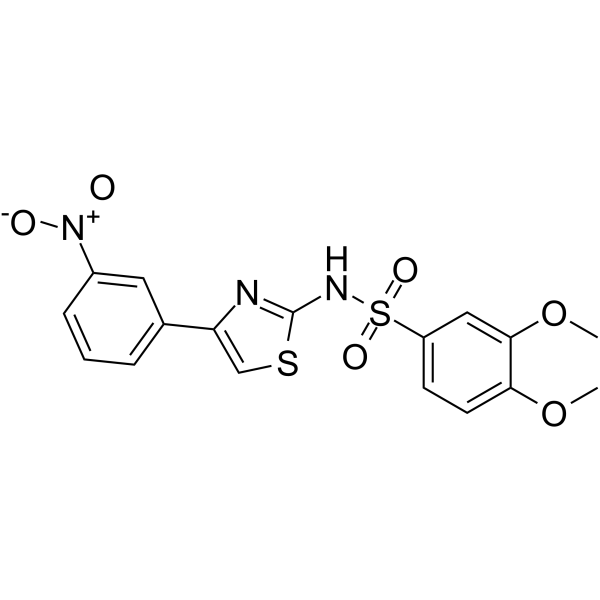
Ro 61-8048 is an orally active and selective inhibitor of kynurenine 3-hydroxylase, with an IC50 of 37 nM. Ro 61-8048 provokes a significant increase of extracellular kynurenic acid concentrations.
Nur für Forschungszwecke. Wir verkaufen nicht an Patienten.
- Reinheit: 99.93%
- CAS. Nr.: 199666-03-0
- Formel: C17H15N3O6S2
- Molecular Weight:421.45
-
Speicherung:Powder -20°C, 3 years , 4°C, 2 years ; In solvent -80°C, 2 years , -20°C, 1 year

To place orders, for customer services and technical support, please contact: MedChemExpress USA
Tel: 609-228-6898 E-mail: [email protected] [email protected]


-
 Biologische Aktivität
-
Chemical Information
-
Lösungsmittel & Löslichkeit
- Reinheit & Dokumentation
- Verweise
-
 Help & FAQs


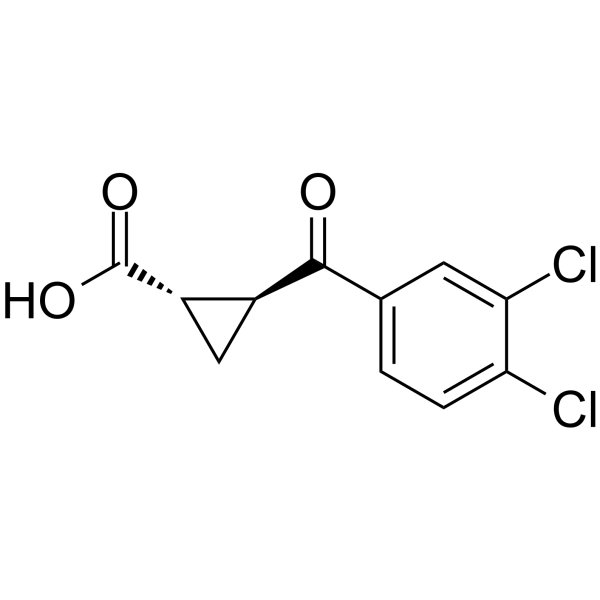
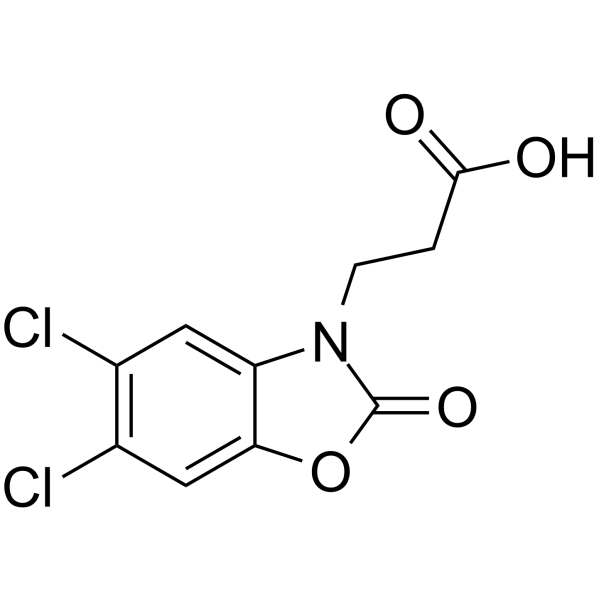
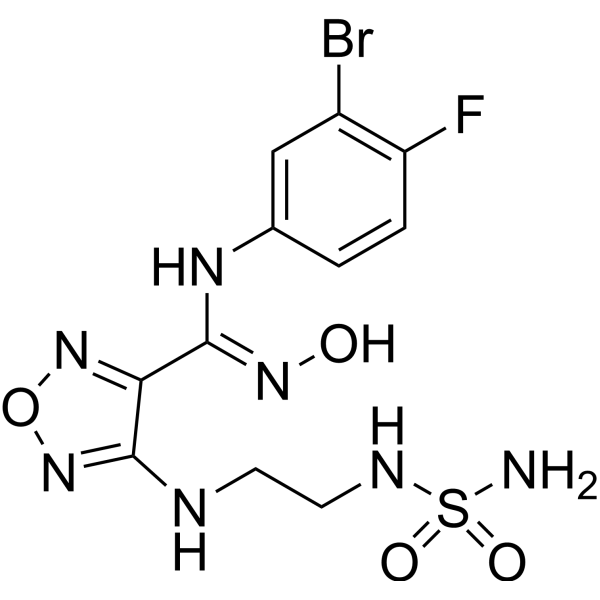
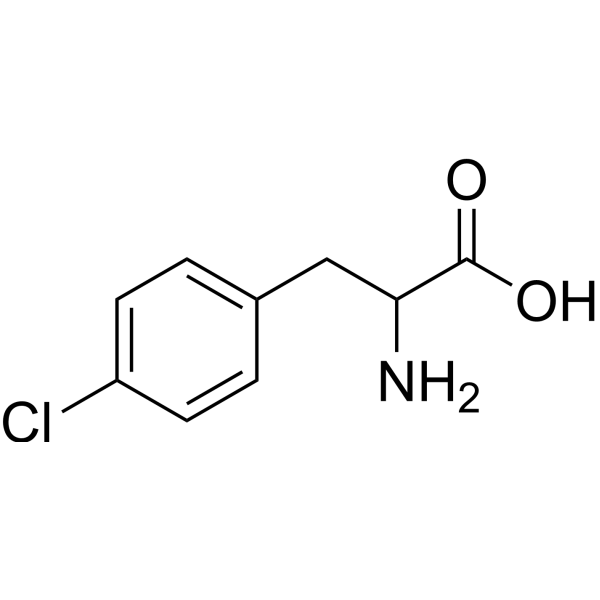
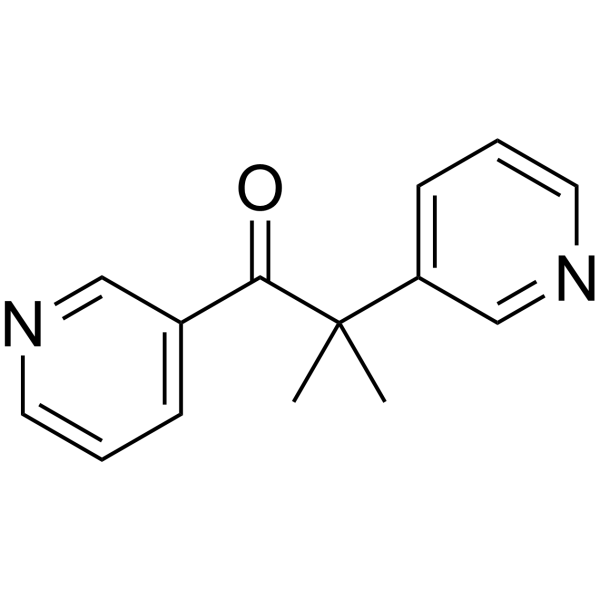
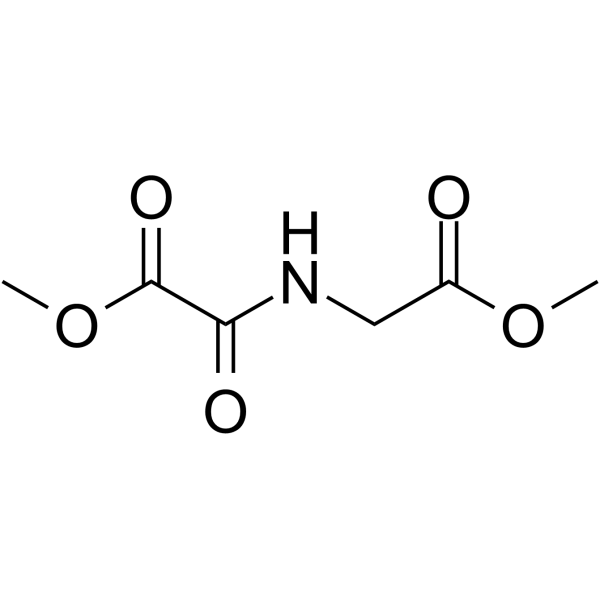
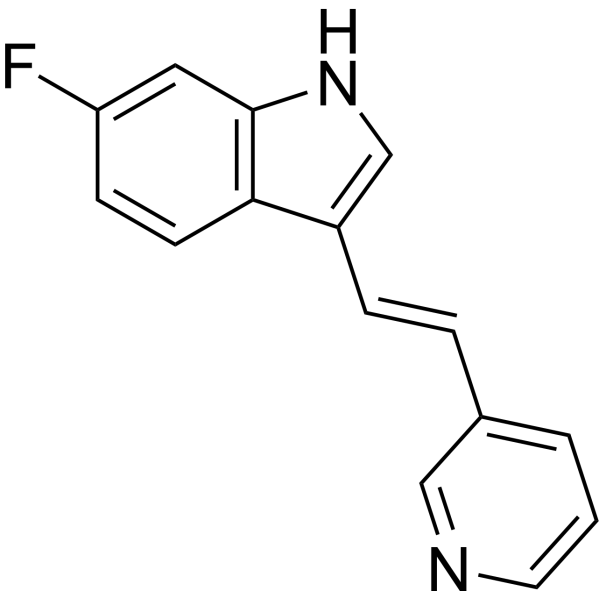

Publications Citing Use of MedChemExpress (MCE) Ro 61-8048
More

Biologische Aktivität
In gerbils, a dose of 30 μmol/kg po (12.64 μg/kg Ro 61-8048, compound 16) leads to inhibition of the cerebral enzyme which peaked after 2h (~85% inhibition) and persisted for up to 8 h[1].
Ro 61-8048 (0.1-100 μM) strongly reduces QUIN neo-formation, suggesting that, in vitro, kynurenine hydroxylase activity is required for QUIN neosynthesis[3].
MedChemExpress (MCE) has not independently confirmed the accuracy of these methods. They are for reference only.
Ro 61-8048 (100 mg/kg i.p.) provokes a two- to threefold increase of the endogeneous broad spectrum glutamate receptor antagonist kynurenic acid in the striatum, cerebellum and brainstem of mutant hamsters[2].
MedChemExpress (MCE) has not independently confirmed the accuracy of these methods. They are for reference only.
-
Animal Model:Male and female dtsz mutant Syrian golden hamsters[2].
-
Dosage:50, 100 and 150 mg/kg.
-
Administration:I.P., one dose.
-
Result:Significantly reduced the individual maximum severity of dystonia reached at the end of the observation period of 3 h at doses of 50, 100 and 150 mg/kg i.p..
100 and 150 mg/kg significantly decreased the severity, indicating a fast onset of action. A delayed onset of dystonic attacks was observed after treatment with 150 mg/kg but not after administration of 50 and 100 mg/kg.
At lower doses of 10 and 25 mg/kg, the compound failed to exert any antidystonic effects.
Caused a moderate sedation and hypolocomotion 5 to 70 min after administration of 100 and 150 mg/kg, while no central adverse effects were observable at a dose of 50 mg/kg or lower doses.


Chemical Information
-
CAS. Nr. 199666-03-0
-
Appearance Solid
-
Molecular Weight 421.45
-
Formel C17H15N3O6S2
-
Color Off-white to light yellow
-
SMILES
O=S(C1=CC=C(OC)C(OC)=C1)(NC2=NC(C3=CC=CC([N+]([O-])=O)=C3)=CS2)=O
-
Versand
Room temperature in continental US; may vary elsewhere.
-
Speicherung
Powder -20°C 3 years 4°C 2 years In solvent -80°C 2 years -20°C 1 year


Publications (5)
-
Journal Impact Factor
-
Most Recent
-
ACS Environ Au
Machine Learning-Assisted Recognition of Environmental Sulfur-Containing Chemicals in Nontargeted Mass Spectrometry Analysis of Inadequate Mass Resolution. [Abstract]2025 Aug 5;5(6):573-582. PMID: 41277996 -
Anal Chem
Exposome-Scale Investigation of Cl-/Br-Containing Chemicals Using High-Resolution Mass Spectrometry, Multistage Machine Learning, and Cloud Computing. [Abstract]2025 Jun 3;97(21):11099-11109. PMID: 40401576 -
Int Immunopharmacol
Paeoniflorin attenuates neuropathic Pain-associated depression by modulating microglial M1 polarization and correcting kynurenine pathway dysregulation. [Abstract]2025 Oct 30:164:115351. PMID: 40803216 -
J Reprod Immunol
Kynurenine promotes the cytotoxicity of NK cells through aryl hydrocarbon receptor in early pregnancy. [Abstract]2021 Feb:143:103270. PMID: 33421663 -
Drug Discov Ther
Elevated indoleamine 2,3-dioxygenase activity is associated with endothelial dysfunction in people living with HIV and ROS production in human aortic endothelial cells in vitro. [Abstract]2023 Nov 18;17(5):312-319. PMID: 37880104


Lösungsmittel & Löslichkeit
DMSO : 100 mg/mL (237.28 mM; Need ultrasonic; Hygroscopic DMSO has a significant impact on the solubility of product, please use newly opened DMSO)
Please refer to the solubility information to select the appropriate solvent. Once prepared, please aliquot and store the solution to prevent product inactivation from repeated freeze-thaw cycles.
Storage method and period of stock solution: -80°C, 2 years; -20°C, 1 year. When stored at -80°C, please use it within 2 years. When stored at -20°C, please use it within 1 year.
Please refer to the solubility information to select the appropriate solvent. Once prepared, please aliquot and store the solution to prevent product inactivation from repeated freeze-thaw cycles.
Storage method and period of stock solution: -80°C, 2 years; -20°C, 1 year. When stored at -80°C, please use it within 2 years. When stored at -20°C, please use it within 1 year.
Konzentration (Stammlösung) × Volumen (Stammlösung) = Konzentration (Ziellösung) × Volumen (Ziellösung)
Select the appropriate dissolution method based on your experimental animal and administration route.
- For the following dissolution methods, please ensure to first prepare a clear stock solution using an In Vitro approach and then sequentially add co-solvents:
- To ensure reliable experimental results, the clarified stock solution can be appropriately stored based on storage conditions. As for the working solution for In Vivo experiments, it is recommended to prepare freshly and use it on the same day.
- The percentages shown for the solvents indicate their volumetric ratio in the final prepared solution. If precipitation or phase separation occurs during preparation, heat and/or sonication can be used to aid dissolution.
Add each solvent one by one: 10% DMSO 40% PEG300 5% Tween-80 45% Saline
Solubility: ≥ 2.5 mg/mL (5.93 mM); Clear solution
This protocol yields a clear solution of ≥ 2.5 mg/mL (saturation unknown).
Taking 1 mL working solution as an example, add 100 μL DMSO stock solution (25.0 mg/mL) to 400 μL PEG300, and mix evenly; then add 50 μL Tween-80 and mix evenly; then add 450 μL Saline to adjust the volume to 1 mL.
Preparation of Saline: Dissolve 0.9 g sodium chloride in ddH₂O and dilute to 100 mL to obtain a clear Saline solution.
Add each solvent one by one: 10% DMSO 90% (20% SBE-β-CD in Saline)
Solubility: 2.5 mg/mL (5.93 mM); Suspended solution; Need ultrasonic
This protocol yields a suspended solution of 2.5 mg/mL. Suspended solution can be used for oral and intraperitoneal injection.
Taking 1 mL working solution as an example, add 100 μL DMSO stock solution (25.0 mg/mL) to 900 μL 20% SBE-β-CD in Saline, and mix evenly.
Preparation of 20% SBE-β-CD in Saline (4°C, storage for one week): 2 g SBE-β-CD powder is dissolved in 10 mL Saline, completely dissolve until clear.
For the following dissolution methods, please prepare the working solution directly:
It is recommended to prepare fresh solutions and use them promptly within a short period of time.
The percentages shown for the solvents indicate their volumetric ratio in the final prepared solution. If precipitation or phase separation occurs during preparation, heat and/or sonication can be used to aid dissolution.
Add each solvent one by one: 50% PEG300 50% Saline
Solubility: 20 mg/mL (47.46 mM); Suspended solution; Need ultrasonic
Please enter the basic information of animal experiments:
-
-
-
-
Recommended: Prepare an additional quantity of animals to account for potential losses during experiments.
Please enter your animal formula composition:
-
%DMSO +
Recommended: Keep the proportion of DMSO in working solution below 2% if your animal is weak.
-
%+
-
+%Tween-80 + +
-
%Saline +
The co-solvents required include: DMSO, . All of co-solvents are available by MedChemExpress (MCE). , Tween 80. All of co-solvents are available by MedChemExpress (MCE).
Working solution concentration: 0.22 mg/mL
Method for preparing stock solution: mg drug dissolved in μL DMSO. Stock solution concentration: mg/mL.
1. Take μL DMSO stock solution;
2. Add μL .
μL , mix evenly;
3. Then add μL Tween 80, mix evenly;
4. Then add μL
Please ensure that the stock solution in the first step is dissolved to a clear state, and add co-solvents in sequence. You can use ultrasonic heating (ultrasonic cleaner, recommended frequency 20-40 kHz), vortexing, etc. to assist dissolution.


Reinheit & Dokumentation
-
Data Sheet (279 KB)
-
SDS (394 KB)
- English - EN (394 KB)
- Français - FR (394 KB)
- Deutsch - DE (394 KB)
- Norwegian - NO (394 KB)
- Español - ES (394 KB)
- Swedish - SV (394 KB)
- Italian - IT (394 KB)
- Korean - KR (394 KB)
- Portuguese - PT (394 KB)
-
Handling Instructions (2659 KB)
Verweise
[1]. S Röver, et al. Synthesis and biochemical evaluation of N-(4-phenylthiazol-2-yl)benzenesulfonamides as high-affinity inhibitors of kynurenine 3-hydroxylase. J Med Chem. 1997 Dec 19;40(26):4378-85. [Content Brief]
[2]. Melanie Hamann, et al. Effects of the kynurenine 3-hydroxylase inhibitor Ro 61-8048 after intrastriatal injections on the severity of dystonia in the dt sz mutant. Eur J Pharmacol. 2008 May 31;586(1-3):156-9. [Content Brief]


Complete Stock Solution Preparation Table
Please refer to the solubility information to select the appropriate solvent. Once prepared, please aliquot and store the solution to prevent product inactivation from repeated freeze-thaw cycles.
Storage method and period of stock solution: -80°C, 2 years; -20°C, 1 year. When stored at -80°C, please use it within 2 years. When stored at -20°C, please use it within 1 year.
| Optional Solvent | Concentration Solvent Mass | 1 mg | 5 mg | 10 mg | 25 mg |
|---|---|---|---|---|---|
| DMSO | 1 mM | 2.3728 mL | 11.8638 mL | 23.7276 mL | 59.3190 mL |
| 5 mM | 0.4746 mL | 2.3728 mL | 4.7455 mL | 11.8638 mL | |
| 10 mM | 0.2373 mL | 1.1864 mL | 2.3728 mL | 5.9319 mL | |
| 15 mM | 0.1582 mL | 0.7909 mL | 1.5818 mL | 3.9546 mL | |
| 20 mM | 0.1186 mL | 0.5932 mL | 1.1864 mL | 2.9660 mL | |
| 25 mM | 0.0949 mL | 0.4746 mL | 0.9491 mL | 2.3728 mL | |
| 30 mM | 0.0791 mL | 0.3955 mL | 0.7909 mL | 1.9773 mL | |
| 40 mM | 0.0593 mL | 0.2966 mL | 0.5932 mL | 1.4830 mL | |
| 50 mM | 0.0475 mL | 0.2373 mL | 0.4746 mL | 1.1864 mL | |
| 60 mM | 0.0395 mL | 0.1977 mL | 0.3955 mL | 0.9887 mL | |
| 80 mM | 0.0297 mL | 0.1483 mL | 0.2966 mL | 0.7415 mL | |
| 100 mM | 0.0237 mL | 0.1186 mL | 0.2373 mL | 0.5932 mL |


Ro 61-8048 Related Classifications
HY-12347 Related Classifications
 Powered by Bioz