



SB 242084
Based on 6 publication(s) in Google Scholar
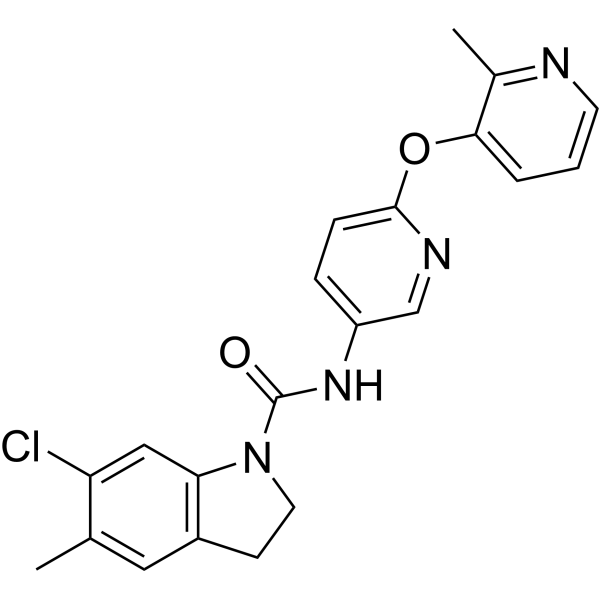
SB 242084 is a selective, competitive and high-affinity (pKi=9.0) 5-HT2C receptor antagonist (crosses the blood-brain barrier). SB 242084 increases basal activity of dopaminergic neurons in the ventral tegmental area (VTA) of the midbrain and dopamine release in the vomeronasal nucleus. SB 242084 also increases mitochondrial gene expression and oxidative metabolism via 5-HT2A receptor. SB 242084 has good research potential in the negative symptoms of anxiety, depression and schizophrenia, as well as in acute organ damage.
Nur für Forschungszwecke. Wir verkaufen nicht an Patienten.
- Reinheit : 99.96%
- CAS. Nr.: 181632-25-7
- Formel: C21H19ClN4O2
- Molecular Weight:394.85
-
Speicherung:Powder -20°C, 3 years , 4°C, 2 years ; In solvent -80°C, 2 years , -20°C, 1 year

To place orders, for customer services and technical support, please contact: MedChemExpress USA
Tel: 609-228-6898 E-mail: [email protected] [email protected]


-
 Biologische Aktivität
-
Chemical Information
-
Lösungsmittel & Löslichkeit
- Protokoll
- Reinheit & Dokumentation
- Verweise
-
 Help & FAQs


-
HY-15419A
RS-1274455-HT2B Antagonist -
HY-10562
Ketanserin -
HY-14940
Volinanserin5-HT2 Receptor Antagonist -
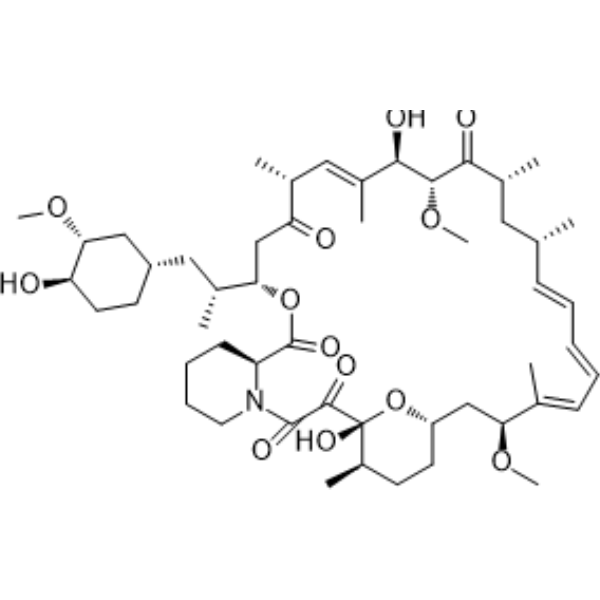
HY-10219
RapamycinmTOR Inhibitor -
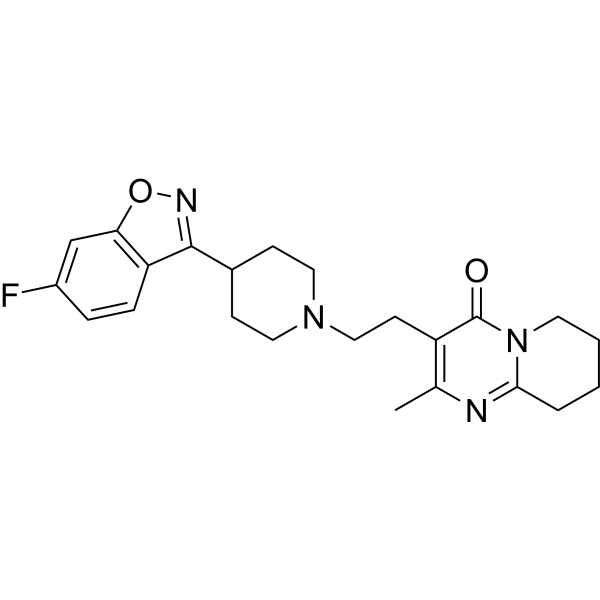
HY-11018
Risperidone5-HT2 Receptor Blocker -
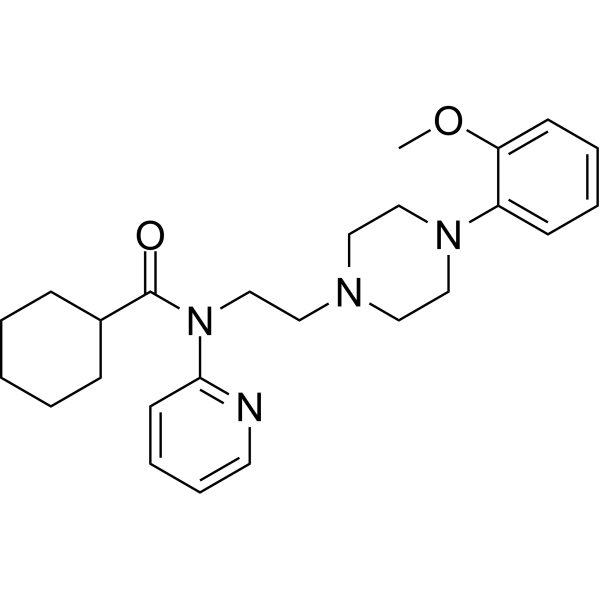
HY-10349
WAY-1006355-HT1A Antagonist -
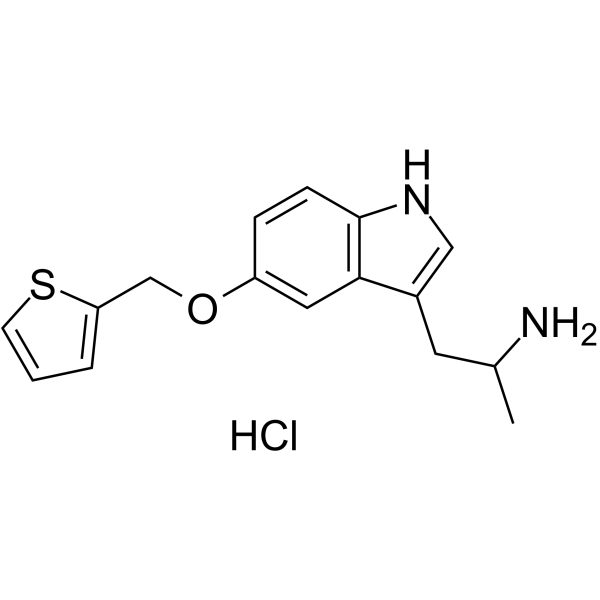
HY-101369
BW-723C865-HT2B Agonist -
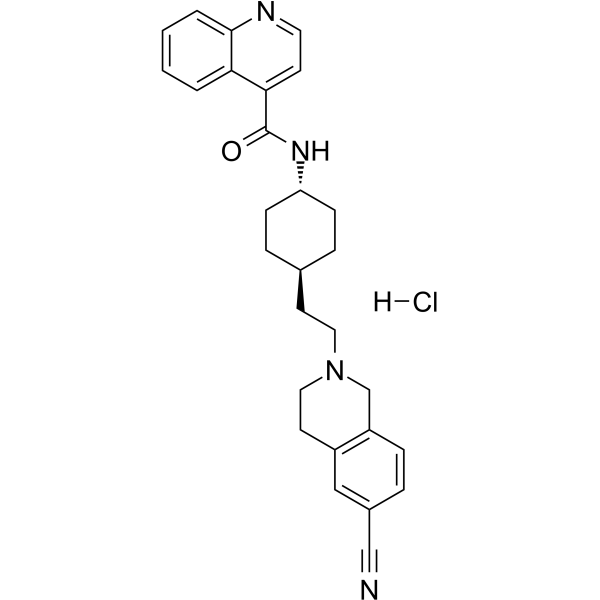
HY-10847B
SB-277011 hydrochlorideDopamine D3 Receptor Antagonist -
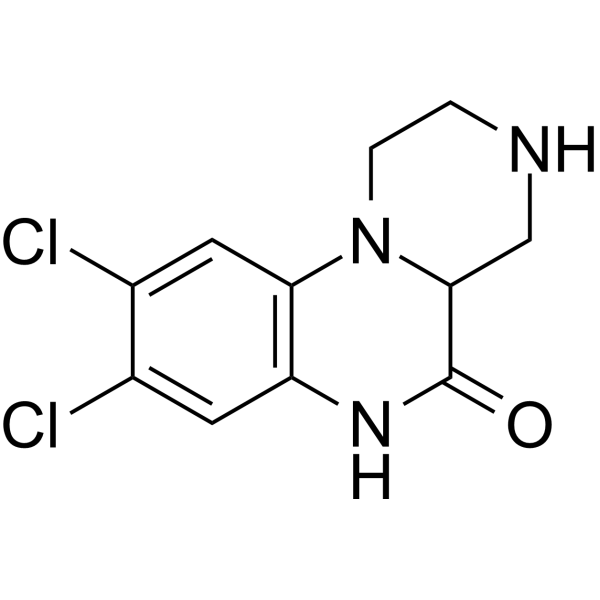
HY-103138A
(Rac)-WAY-1615035-HT2C Receptor Agonist -

HY-13409R
SB 242084 (Standard)5-HT2C Inhibitor
Publications Citing Use of MedChemExpress (MCE) SB 242084
MoreAlle 5-HT Receptor Isoform-spezifische Produkte anzeigen
More

Biologische Aktivität
Beschreibung
IC50 & Target
|
5-HT2A Receptor |
5-HT2C Receptor |
5-HT2C Receptor 9.0 (pKi) |
Cellular Effect
|
Cell Line

|
Type | Value | Description | References |
|---|---|---|---|---|
| U2OS | IC50 |
0.33 nM
Compound: SB 242,084
|
Antagonist activity at recombinant human 5-HT2C expressed in human U2OS cells by pathhunter beta-arrestin assay
Antagonist activity at recombinant human 5-HT2C expressed in human U2OS cells by pathhunter beta-arrestin assay
|
[PMID: 32631554] |
In Vitro
SB 242084 (100 nM; 45 min) exhibits antagonism of the 5-HT stimulated increase in phosphatidylinositol hydrolysis at the human 5-HT2C receptor in SH-SY5Y cells[1].
SB 242084 (1-100 Nm; 24 h) increases RPTC respiration and PGC-1α mRNA expression in RPTC[2].
MedChemExpress (MCE) has not independently confirmed the accuracy of these methods. They are for reference only. Further protocols information, click here.
-
Cell Line:SH-SY5Y cells
-
Concentration:100 nM
-
Incubation Time:45 min
-
Result:Antagonized 5-HT induced concentration-related increase in PI hydrolysis.
-
Cell Line:RPTC cells
-
Concentration:1-100 nM
-
Incubation Time:24 h
-
Result:Increased FCCP-uncoupled respiration and PGC-1α mRNA expression.
In Vivo
SB 242084 (5 mg/kg; i.p.; single; 20 min pre-test) improves mCPP-induced hypophagia in rats[1].
SB 242084 (5, 10 mg/kg; i.p.; single) increases the levels of basal dialysate dopamine (DA) and dihydroxyphenylacetic acid (DOPAC) in the nucleus accumbens of rats[3].
SB 242084 (160-640 μg/kg; i.v.; single) dose-dependently and significantly increases the basal firing rate of VTA (ventral tegmental area) dopaminergic neurons, and the bursting activity is also enhanced in the same area, in vivo[3].
MedChemExpress (MCE) has not independently confirmed the accuracy of these methods. They are for reference only.
-
Animal Model:Male Sprague-Dawley (CD) rats[1].
-
Dosage:0.1-1 mg/kg
-
Administration:Intraperitoneal injection; single; 20 min pre-test
-
Result:Significantly increased the amount of time rats spent in social interaction over 15 min under brightly lit conditions and in an unfamiliartest box.
-
Animal Model:Male Sprague-Dawley (CD) rats(mCPP-induced hypophagia model)[1].
-
Dosage:5 mg/kg
-
Administration:Intraperitoneal injection; single; 20 min pre-test
-
Result:Significantly reduced the amount of food consumed by 23 h food-deprivedrats over a 1hr test period from the time of food presentation.
-
Animal Model:Rats[2].
-
Dosage:5, 10 mg/kg
-
Administration:Intraperitoneal injection; single
-
Result:Significantly increased basal dialysate dopamine (DA) and dihydroxyphenylacetic acid (DOPAC) in the nucleus accumbens.


Chemical Information
-
CAS. Nr. 181632-25-7
-
Appearance Solid
-
Molecular Weight 394.85
-
Formel C21H19ClN4O2
-
Color Off-white to pink
-
SMILES
O=C(N1CCC2=C1C=C(Cl)C(C)=C2)NC3=CC=C(OC4=CC=CN=C4C)N=C3
-
Versand
Room temperature in continental US; may vary elsewhere.
-
Speicherung
Powder -20°C 3 years 4°C 2 years In solvent -80°C 2 years -20°C 1 year


Publications (6)
-
Journal Impact Factor
-
Most Recent
-
Brain
Hippocampal excitation-inhibition balance underlies the 5-HT2C receptor in modulating depressive behaviours. [Abstract]2024 Nov 4;147(11):3764-3779. PMID: 38701344 -
Biochem Pharmacol
Complement C3/C3a-CCL9 feedback loop orchestrates inflammatory crosstalk to accelerate aortic dissection. [Abstract]2025 Oct 13:117421. PMID: 41093012 -
Eur J Pharmacol
2,5-Dimethoxy-4-methylamphetamine (DOM)-induced gait alterations in mice: Dissecting the role of 5-HT2A/2C receptor-mediated mechanisms. [Abstract]2025 Nov 5:1006:178170. PMID: 40962017 -
Biochem Biophys Res Commun
AMPA receptor potentiation alleviates NLRP3 knockout-induced fear generalization in mice. [Abstract]2024 Aug 30:722:150074. PMID: 38805785 -
Neuroendocrinology
Peripheral 5-HT mediates GnIH-induced feeding behavior and energy metabolism disorder in chickens via the 5-HT2C receptor. [Abstract]2024;114(8):749-774. PMID: 38718758 -


Lösungsmittel & Löslichkeit
In Vitro:
DMSO : ≥ 44 mg/mL (111.43 mM; Hygroscopic DMSO has a significant impact on the solubility of product, please use newly opened DMSO)
* "≥" means soluble, but saturation unknown.
Please refer to the solubility information to select the appropriate solvent. Once prepared, please aliquot and store the solution to prevent product inactivation from repeated freeze-thaw cycles.
Storage method and period of stock solution: -80°C, 2 years; -20°C, 1 year. When stored at -80°C, please use it within 2 years. When stored at -20°C, please use it within 1 year.
Please refer to the solubility information to select the appropriate solvent. Once prepared, please aliquot and store the solution to prevent product inactivation from repeated freeze-thaw cycles.
Storage method and period of stock solution: -80°C, 2 years; -20°C, 1 year. When stored at -80°C, please use it within 2 years. When stored at -20°C, please use it within 1 year.
Konzentration (Stammlösung) × Volumen (Stammlösung) = Konzentration (Ziellösung) × Volumen (Ziellösung)
In Vivo:
Select the appropriate dissolution method based on your experimental animal and administration route.
- For the following dissolution methods, please ensure to first prepare a clear stock solution using an In Vitro approach and then sequentially add co-solvents:
- To ensure reliable experimental results, the clarified stock solution can be appropriately stored based on storage conditions. As for the working solution for In Vivo experiments, it is recommended to prepare freshly and use it on the same day.
- The percentages shown for the solvents indicate their volumetric ratio in the final prepared solution. If precipitation or phase separation occurs during preparation, heat and/or sonication can be used to aid dissolution.
Add each solvent one by one: 10% DMSO 40% PEG300 5% Tween-80 45% Saline
Solubility: ≥ 2.5 mg/mL (6.33 mM); Clear solution
This protocol yields a clear solution of ≥ 2.5 mg/mL (saturation unknown).
Taking 1 mL working solution as an example, add 100 μL DMSO stock solution (25.0 mg/mL) to 400 μL PEG300, and mix evenly; then add 50 μL Tween-80 and mix evenly; then add 450 μL Saline to adjust the volume to 1 mL.
Preparation of Saline: Dissolve 0.9 g sodium chloride in ddH₂O and dilute to 100 mL to obtain a clear Saline solution.
In Vivo Dissolution Calculator
Please enter the basic information of animal experiments:
-
-
-
-
Recommended: Prepare an additional quantity of animals to account for potential losses during experiments.
Please enter your animal formula composition:
-
%DMSO +
Recommended: Keep the proportion of DMSO in working solution below 2% if your animal is weak.
-
%+
-
+%Tween-80 + +
-
%Saline +
The co-solvents required include: DMSO, . All of co-solvents are available by MedChemExpress (MCE). , Tween 80. All of co-solvents are available by MedChemExpress (MCE).
Working solution concentration: 0.22 mg/mL
Method for preparing stock solution: mg drug dissolved in μL DMSO. Stock solution concentration: mg/mL.
1. Take μL DMSO stock solution;
2. Add μL .
μL , mix evenly;
3. Then add μL Tween 80, mix evenly;
4. Then add μL
Please ensure that the stock solution in the first step is dissolved to a clear state, and add co-solvents in sequence. You can use ultrasonic heating (ultrasonic cleaner, recommended frequency 20-40 kHz), vortexing, etc. to assist dissolution.

Protokoll
-
RT-PCR
Reverse transcription technology uses RNA as a template to synthesize DNA. RT-PCR is simple, specific and sensitive, and can be used to detect gene expression levels and expression differences in cells; detect RNA virus content; clone cDNA sequences of specific genes.
-
RNA extraction experimental
By lysing cells, releasing RNA, and removing impurities such as proteins and DNA, high-purity RNA products are finally obtained. The commonly used traditional method is the guanidine isothiocyanate/phenol/chloroform method (Trizol), which is suitable for a variety of animal materials including animal tissues, microorganisms, cultured cells, etc., and most plant materials.
-
Human pluripotent stem cell midbrain dopaminergic neuron differentiation
Human pluripotent stem cells are directed toward midbrain dopaminergic neurons by first inducing a neural floor-plate-like progenitor state, then patterning cells with ventralizing SHH signaling and midbrain/WNT-FGF cues, and finally maturing progenitors into neurons expressing dopaminergic markers such as TH, NURR1/NR4A2, PITX3, DAT/SLC6A3, VMAT2/SLC18A2, GIRK2/KCNJ6, FOXA2, LMX1A, and EN1. The main readouts are loss of pluripotency, acquisition of FOXA2+/LMX1A+ midbrain floor-plate progenitors, emergence of βIII-tubulin+/MAP2+ neurons, and production of TH+ dopaminergic neurons with molecular, dopamine-release, and electrophysiological features of midbrain dopaminergic identity.
-
Real Time qPCR (Q-PCR)
Real-time quantitative PCR (qPCR) quantifies an amplifiable nucleic-acid target by monitoring fluorescence during PCR cycling rather than measuring product only after amplification. The increase in fluorescence tracks accumulation of PCR product, and the quantification cycle (Cq; historically also Ct/CP) is related to the initial amount of target: samples containing more starting target generally reach the defined fluorescence threshold in fewer cycles.


Reinheit & Dokumentation
-
Data Sheet (283 KB)
-
SDS (392 KB)
- English - EN (392 KB)
- Français - FR (392 KB)
- Deutsch - DE (392 KB)
- Norwegian - NO (392 KB)
- Español - ES (392 KB)
- Swedish - SV (392 KB)
- Italian - IT (392 KB)
- Korean - KR (392 KB)
- Portuguese - PT (392 KB)
-
Handling Instructions (2659 KB)
Verweise
[1]. Kennett GA, et al. SB 242084, a selective and brain penetrant 5-HT2C receptor antagonist. Neuropharmacology. 1997 Apr-May;36(4-5):609-20. [Content Brief]
[2]. Harmon JL, et al. 5-HT2 Receptor Regulation of Mitochondrial Genes: Unexpected Pharmacological Effects of Agonists and Antagonists. J Pharmacol Exp Ther. 2016 Apr;357(1):1-9. [Content Brief]


Complete Stock Solution Preparation Table
Please refer to the solubility information to select the appropriate solvent. Once prepared, please aliquot and store the solution to prevent product inactivation from repeated freeze-thaw cycles.
Storage method and period of stock solution: -80°C, 2 years; -20°C, 1 year. When stored at -80°C, please use it within 2 years. When stored at -20°C, please use it within 1 year.
| Optional Solvent | Concentration Solvent Mass | 1 mg | 5 mg | 10 mg | 25 mg |
|---|---|---|---|---|---|
| DMSO | 1 mM | 2.5326 mL | 12.6630 mL | 25.3261 mL | 63.3152 mL |
| 5 mM | 0.5065 mL | 2.5326 mL | 5.0652 mL | 12.6630 mL | |
| 10 mM | 0.2533 mL | 1.2663 mL | 2.5326 mL | 6.3315 mL | |
| 15 mM | 0.1688 mL | 0.8442 mL | 1.6884 mL | 4.2210 mL | |
| 20 mM | 0.1266 mL | 0.6332 mL | 1.2663 mL | 3.1658 mL | |
| 25 mM | 0.1013 mL | 0.5065 mL | 1.0130 mL | 2.5326 mL | |
| 30 mM | 0.0844 mL | 0.4221 mL | 0.8442 mL | 2.1105 mL | |
| 40 mM | 0.0633 mL | 0.3166 mL | 0.6332 mL | 1.5829 mL | |
| 50 mM | 0.0507 mL | 0.2533 mL | 0.5065 mL | 1.2663 mL | |
| 60 mM | 0.0422 mL | 0.2111 mL | 0.4221 mL | 1.0553 mL | |
| 80 mM | 0.0317 mL | 0.1583 mL | 0.3166 mL | 0.7914 mL | |
| 100 mM | 0.0253 mL | 0.1266 mL | 0.2533 mL | 0.6332 mL |


SB 242084 Related Classifications
HY-13409 Related Classifications
 Powered by Bioz