



FMK
Based on 4 publication(s) in Google Scholar
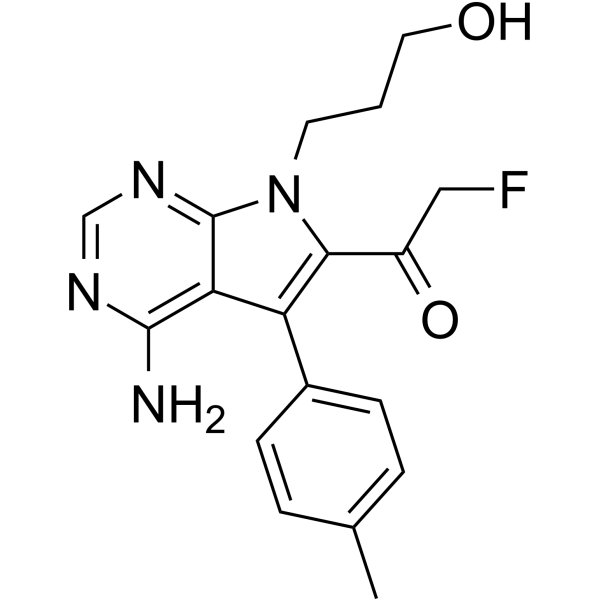
FMK is a an irreversible RSK2 kinase inhibitor, that covalently modifies the C-terminal kinase domain of RSK.
For research use only. We do not sell to patients.
- Purity : 99.83%
- CAS No.: 821794-92-7
- Formula: C18H19FN4O2
- Molecular Weight:342.37
-
Storage:
4°C, stored under nitrogen
* In solvent : -80°C, 6 months; -20°C, 1 month (stored under nitrogen)

To place orders, for customer services and technical support, please contact: MedChemExpress USA
Tel: 609-228-6898 E-mail: [email protected] [email protected]


-
 Biological Activity
-
Chemical Information
-
Solvent & Solubility
- Purity & Documentation
- References
-
 Help & FAQs


-
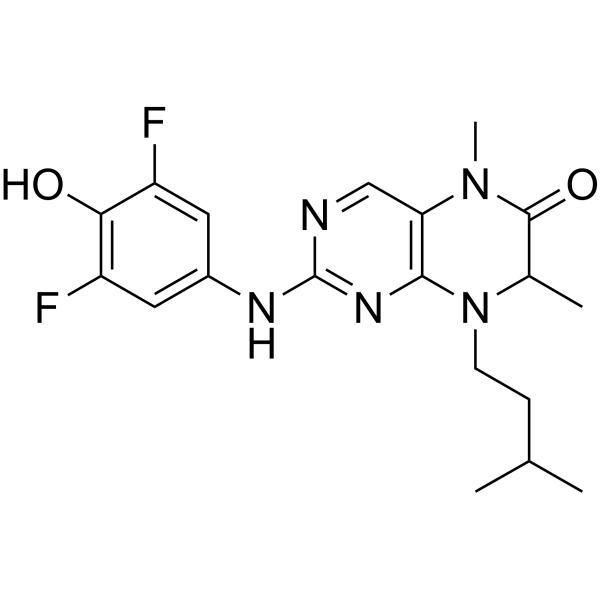
HY-10510
BI-D1870RSK Inhibitor -
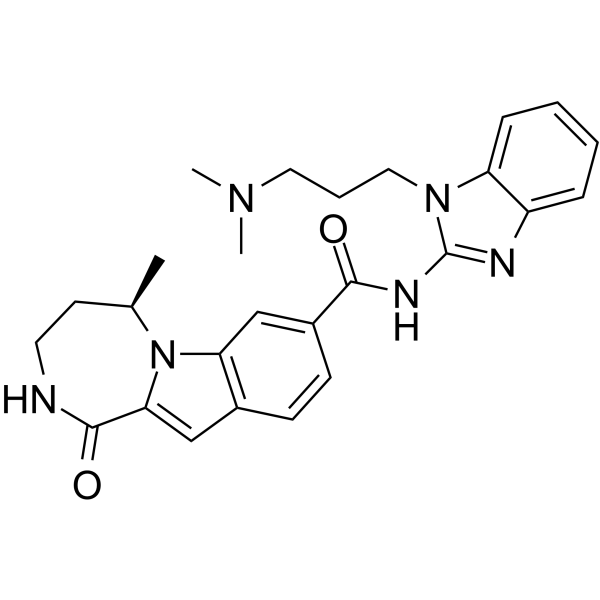
HY-16104
BIX 02565RSK2 Inhibitor -
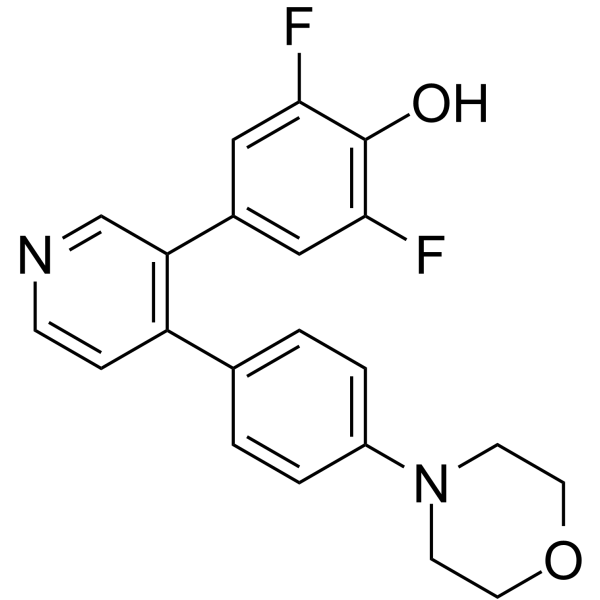
HY-19713
LJI308RSK Inhibitor -
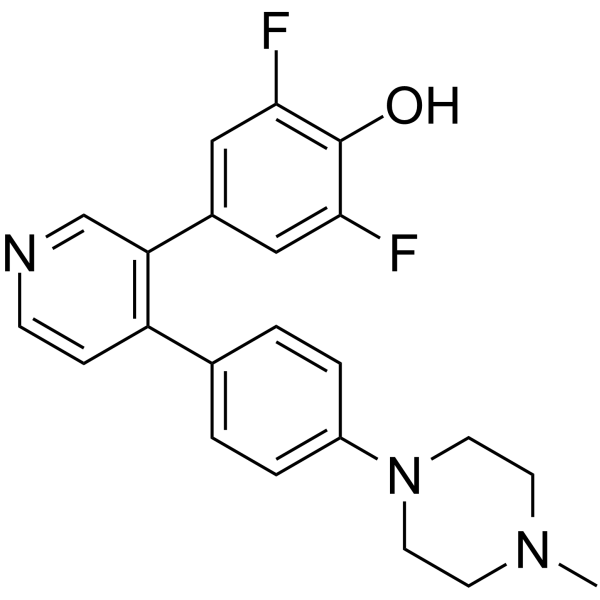
HY-19712
LJH685RSKI Inhibitor -
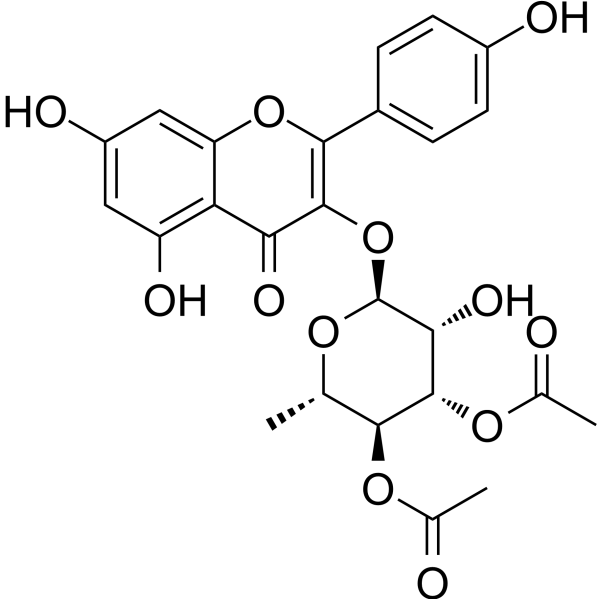
HY-15237
SL 0101-1RSK Inhibitor -
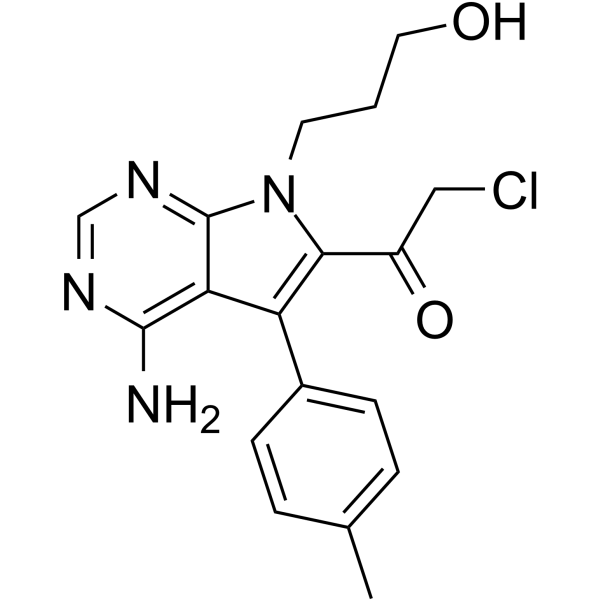
HY-52101
CMKRSK Inhibitor -
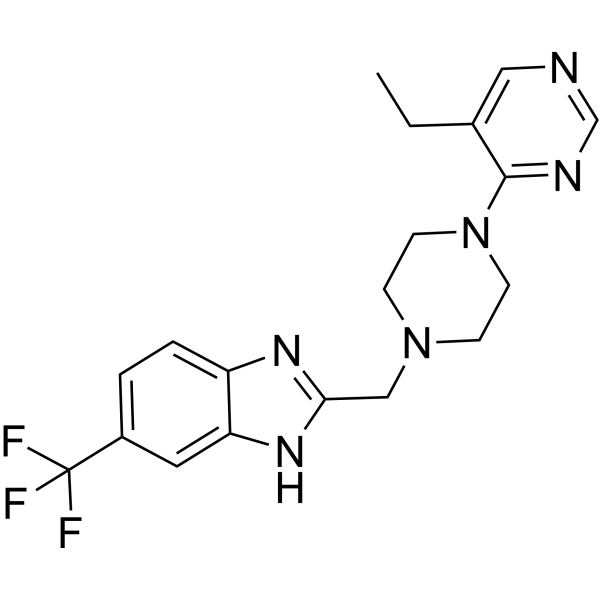
HY-15773
PF-4708671S6K1 Inhibitor -
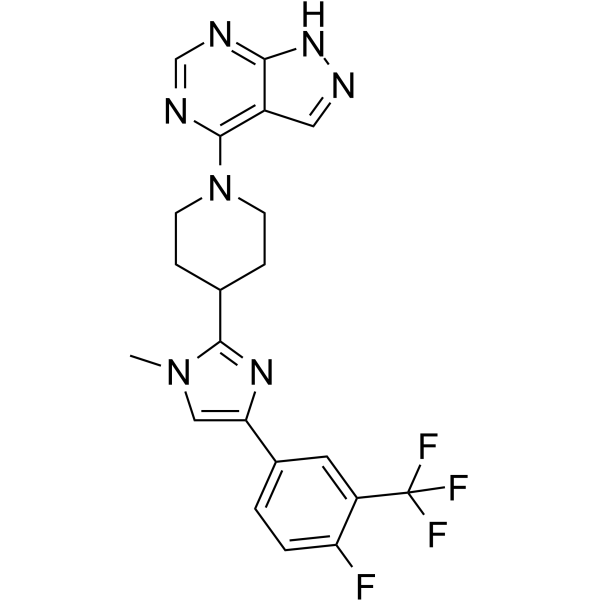
HY-12493
LY-2584702 free baseRSK Inhibitor -
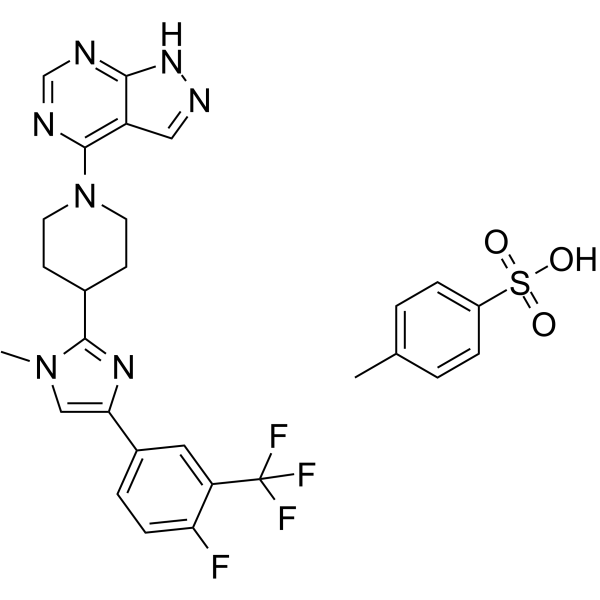
HY-12493A
LY-2584702 tosylate saltRSK Inhibitor -
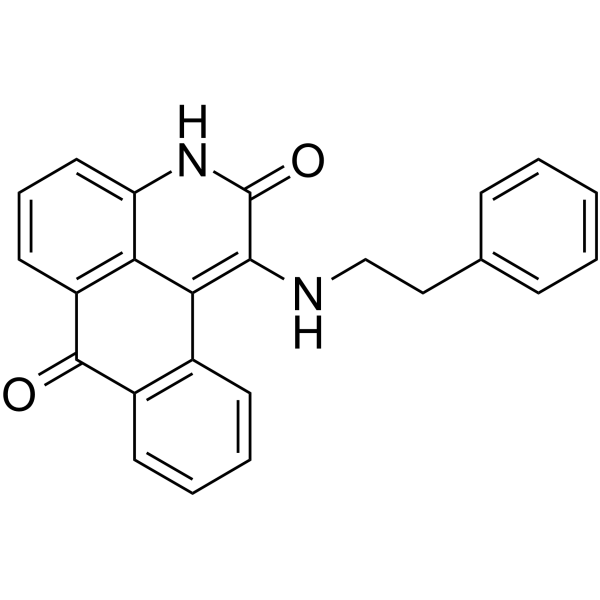
HY-12185
BRD7389RSK Inhibitor -
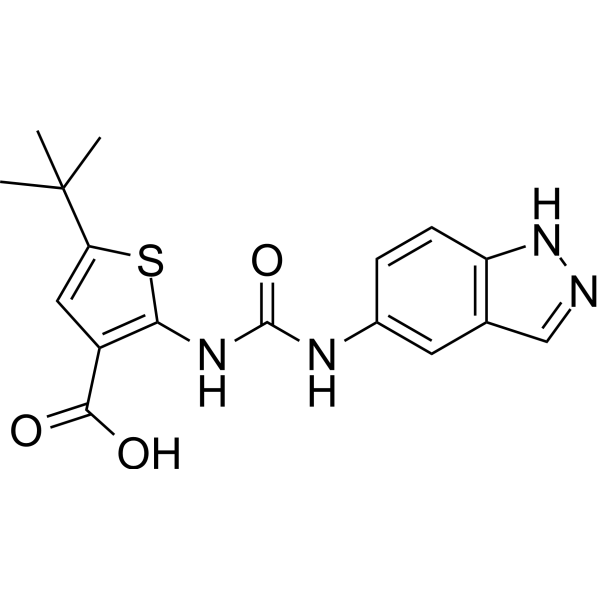
HY-18313
S6K1-IN-1S6K1 Inhibitor -
HY-100501
M2698p70S6K/Akt Inhibitor
Publications Citing Use of MedChemExpress (MCE) FMK
More

Biological Activity
Description
IC50 & Target
|
RSK2 |
Cellular Effect
|
Cell Line

|
Type | Value | Description | References |
|---|---|---|---|---|
| COS-7 | EC50 |
200 nM
Compound: fmk
|
Inhibition of EGF-stimulated RSK2 Ser386 autophosphorylation in serum starved african green monkey COS7 cells by immunoprecipitation and Western blot
Inhibition of EGF-stimulated RSK2 Ser386 autophosphorylation in serum starved african green monkey COS7 cells by immunoprecipitation and Western blot
|
[PMID: 15919995] |
| HEK293 | EC50 |
150 nM
Compound: 1, fmk
|
Inhibition of PMA-stimulated RSK2 phosphorylation in HEK293 cells after 1 hr by Western blotting analysis
Inhibition of PMA-stimulated RSK2 phosphorylation in HEK293 cells after 1 hr by Western blotting analysis
|
[PMID: 17259979] |
| HEK293 | IC50 |
15 nM
Compound: 5, FMK
|
Inhibition of RSK2 transfected in HEK293 cells
Inhibition of RSK2 transfected in HEK293 cells
|
[PMID: 22621397] |
| HeLa | IC50 |
39 μM
Compound: 5; fmk
|
Inhibition of proteasomal turnover of p97-independent ODD-luciferase reporter substrate in human HeLa cells incubated for 120 mins by luciferase reporter gene assay
Inhibition of proteasomal turnover of p97-independent ODD-luciferase reporter substrate in human HeLa cells incubated for 120 mins by luciferase reporter gene assay
|
[PMID: 33476933] |
In Vitro
Pretreatment of ARVMs with 3 μM fmk attenuates the increase in Ser386 phosphorylation, but it has no inhibitory effect on the increase in Thr577 phosphorylation[1]. FMK inhibits relatively few protein kinases in the panel, although it does inhibit protein tyrosine kinases, such as Src, Lck, Yes and Eph-A2, as well as S6K1. FMK will not inhibit RSK if the N-terminal kinase domain are activated by a mechanism that is independent of the C-terminal domain[2]. Fmk potently inactivates the CTD auto-kinase activity of RSK1 and RSK2 with high specificity in mammalian cells. Targeting RSK2 by a specific small molecule RSK inhibitor fmk attenuates FGFR3-induced cytokine-independent growth in Ba/F3 cells. FMK inhibits cytokine-independent proliferation of Ba/F3 cells conferred by FGFR3[3].
MedChemExpress (MCE) has not independently confirmed the accuracy of these methods. They are for reference only.


Chemical Information
-
CAS No. 821794-92-7
-
Appearance Solid
-
Molecular Weight 342.37
-
Formula C18H19FN4O2
-
Color White to light yellow
-
SMILES
FCC(C1=C(C2=C(N=CN=C2N1CCCO)N)C3=CC=C(C=C3)C)=O
-
Shipping
Room temperature in continental US; may vary elsewhere.
-
Storage
4°C, stored under nitrogen
* In solvent : -80°C, 6 months; -20°C, 1 month (stored under nitrogen)


Publications (4)
-
Journal Impact Factor
-
Most Recent
-
J Extracell Vesicles
ADAM Sheddase Activity Promotes the Detachment of Small Extracellular Vesicles From the Plasma Membrane. [Abstract]2025 Jul;14(7):e70114. PMID: 40673783 -
Mol Cell
2020 Oct 15;80(2):296-310.e6. PMID: 32979304 -
Cell Rep
EGFR-phosphorylated GDH1 harmonizes with RSK2 to drive CREB activation and tumor metastasis in EGFR-activated lung cancer. [Abstract]2022 Dec 13;41(11):111827. PMID: 36516759 -
Cancers
FLT3-ITD Activates RSK1 to Enhance Proliferation and Survival of AML Cells by Activating mTORC1 and eIF4B Cooperatively with PIM or PI3K and by Inhibiting Bad and BIM. [Abstract]2019 Nov 20;11(12):1827. PMID: 31756944


Solvent & Solubility
In Vitro:
DMSO : 50 mg/mL (146.04 mM; Need ultrasonic; Hygroscopic DMSO has a significant impact on the solubility of product, please use newly opened DMSO)
Please refer to the solubility information to select the appropriate solvent. Once prepared, please aliquot and store the solution to prevent product inactivation from repeated freeze-thaw cycles.
Storage method and period of stock solution: -80°C, 6 months; -20°C, 1 month (stored under nitrogen). When stored at -80°C, please use it within 6 months. When stored at -20°C, please use it within 1 month.
Please refer to the solubility information to select the appropriate solvent. Once prepared, please aliquot and store the solution to prevent product inactivation from repeated freeze-thaw cycles.
Storage method and period of stock solution: -80°C, 6 months; -20°C, 1 month (stored under nitrogen). When stored at -80°C, please use it within 6 months. When stored at -20°C, please use it within 1 month.
Concentration (start) × Volume (start) = Concentration (final) × Volume (final)
In Vivo:
Select the appropriate dissolution method based on your experimental animal and administration route.
- For the following dissolution methods, please ensure to first prepare a clear stock solution using an In Vitro approach and then sequentially add co-solvents:
- To ensure reliable experimental results, the clarified stock solution can be appropriately stored based on storage conditions. As for the working solution for In Vivo experiments, it is recommended to prepare freshly and use it on the same day.
- The percentages shown for the solvents indicate their volumetric ratio in the final prepared solution. If precipitation or phase separation occurs during preparation, heat and/or sonication can be used to aid dissolution.
Add each solvent one by one: 10% DMSO 40% PEG300 5% Tween-80 45% Saline
Solubility: ≥ 2.5 mg/mL (7.30 mM); Clear solution
This protocol yields a clear solution of ≥ 2.5 mg/mL (saturation unknown).
Taking 1 mL working solution as an example, add 100 μL DMSO stock solution (25.0 mg/mL) to 400 μL PEG300, and mix evenly; then add 50 μL Tween-80 and mix evenly; then add 450 μL Saline to adjust the volume to 1 mL.
Preparation of Saline: Dissolve 0.9 g sodium chloride in ddH₂O and dilute to 100 mL to obtain a clear Saline solution.
In Vivo Dissolution Calculator
Please enter the basic information of animal experiments:
-
-
-
-
Recommended: Prepare an additional quantity of animals to account for potential losses during experiments.
Please enter your animal formula composition:
-
%DMSO +
Recommended: Keep the proportion of DMSO in working solution below 2% if your animal is weak.
-
%+
-
+%Tween-80 + +
-
%Saline +
The co-solvents required include: DMSO, . All of co-solvents are available by MedChemExpress (MCE). , Tween 80. All of co-solvents are available by MedChemExpress (MCE).
Working solution concentration: 0.22 mg/mL
Method for preparing stock solution: mg drug dissolved in μL DMSO. Stock solution concentration: mg/mL. * In solvent : -80°C, 6 months; -20°C, 1 month (stored under nitrogen)
1. Take μL DMSO stock solution;
2. Add μL .
μL , mix evenly;
3. Then add μL Tween 80, mix evenly;
4. Then add μL
Please ensure that the stock solution in the first step is dissolved to a clear state, and add co-solvents in sequence. You can use ultrasonic heating (ultrasonic cleaner, recommended frequency 20-40 kHz), vortexing, etc. to assist dissolution.


Purity & Documentation
-
Data Sheet (281 KB)
-
SDS (394 KB)
- English - EN (394 KB)
- Français - FR (394 KB)
- Deutsch - DE (394 KB)
- Norwegian - NO (394 KB)
- Español - ES (394 KB)
- Swedish - SV (394 KB)
- Italian - IT (394 KB)
- Korean - KR (394 KB)
- Portuguese - PT (394 KB)
-
Handling Instructions (2659 KB)
References
[1]. Cuello F, et al. Evidence for direct regulation of myocardial Na+/H+ exchanger isoform 1 phosphorylation and activity by 90-kDa ribosomal S6 kinase (RSK): effects of the novel and specific RSK inhibitor fmk on responses to alpha1-adrenergic stimulation. [Content Brief]
[2]. Bain J, et al. The selectivity of protein kinase inhibitors: a further update. Biochem J. 2007 Dec 15;408(3):297-315. [Content Brief]
[3]. Kang S, et al. FGFR3 activates RSK2 to mediate hematopoietic transformation through tyrosine phosphorylation of RSK2 and activation of the MEK/ERK pathway. Cancer Cell. 2007 Sep;12(3):187-9. [Content Brief]


Complete Stock Solution Preparation Table
Please refer to the solubility information to select the appropriate solvent. Once prepared, please aliquot and store the solution to prevent product inactivation from repeated freeze-thaw cycles.
Storage method and period of stock solution: -80°C, 6 months; -20°C, 1 month (stored under nitrogen). When stored at -80°C, please use it within 6 months. When stored at -20°C, please use it within 1 month.
| Optional Solvent | Concentration Solvent Mass | 1 mg | 5 mg | 10 mg | 25 mg |
|---|---|---|---|---|---|
| DMSO | 1 mM | 2.9208 mL | 14.6041 mL | 29.2082 mL | 73.0204 mL |
| 5 mM | 0.5842 mL | 2.9208 mL | 5.8416 mL | 14.6041 mL | |
| 10 mM | 0.2921 mL | 1.4604 mL | 2.9208 mL | 7.3020 mL | |
| 15 mM | 0.1947 mL | 0.9736 mL | 1.9472 mL | 4.8680 mL | |
| 20 mM | 0.1460 mL | 0.7302 mL | 1.4604 mL | 3.6510 mL | |
| 25 mM | 0.1168 mL | 0.5842 mL | 1.1683 mL | 2.9208 mL | |
| 30 mM | 0.0974 mL | 0.4868 mL | 0.9736 mL | 2.4340 mL | |
| 40 mM | 0.0730 mL | 0.3651 mL | 0.7302 mL | 1.8255 mL | |
| 50 mM | 0.0584 mL | 0.2921 mL | 0.5842 mL | 1.4604 mL | |
| 60 mM | 0.0487 mL | 0.2434 mL | 0.4868 mL | 1.2170 mL | |
| 80 mM | 0.0365 mL | 0.1826 mL | 0.3651 mL | 0.9128 mL | |
| 100 mM | 0.0292 mL | 0.1460 mL | 0.2921 mL | 0.7302 mL |


FMK Related Classifications
HY-52101A Related Classifications
 Powered by Bioz