



Eugenol,98% (stabilized with TBC)
Based on 9 publication(s) in Google Scholar
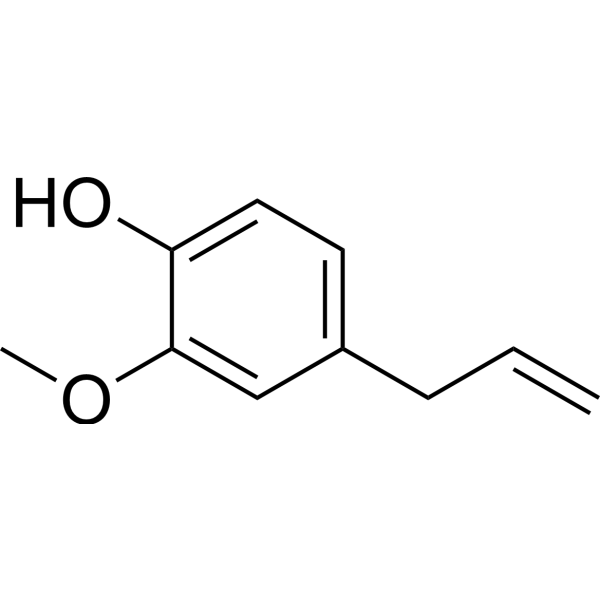
Eugenol is an essential oil found in cloves with antibacterial, anthelmintic and antioxidant activity. Eugenol is shown to inhibit lipid peroxidation.
Nos produits utilisent uniquement pour la recherche. Nous ne vendons pas aux patients.
- Pureté: 99.99%
- CAS No.: 97-53-0
- Formule: C10H12O2
- Masse moléculaire:164.20
-
Stockage:Pure form -20°C, 3 years , 4°C, 2 years ; In solvent -80°C, 6 months , -20°C, 1 month

To place orders, for customer services and technical support, please contact: MedChemExpress USA
Tel: 609-228-6898 E-mail: [email protected] [email protected]


-
 Activité biologique
-
Chemical Information
-
Solvant et solubilité
- Protocole
- Pureté et documentation
- Références
-
 Help & FAQs


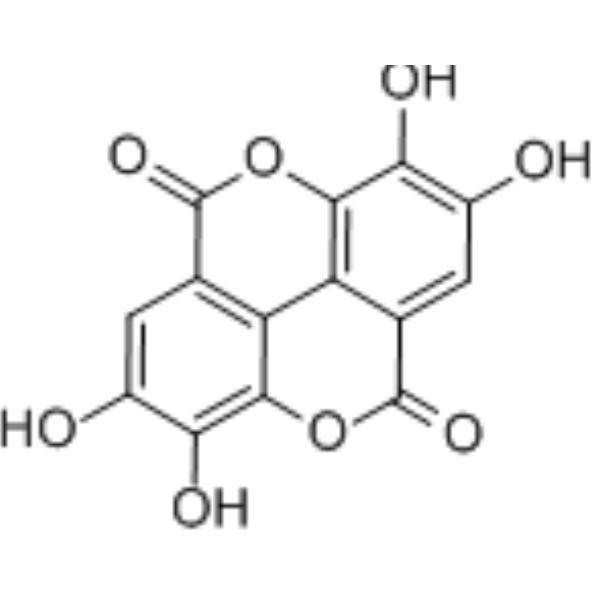
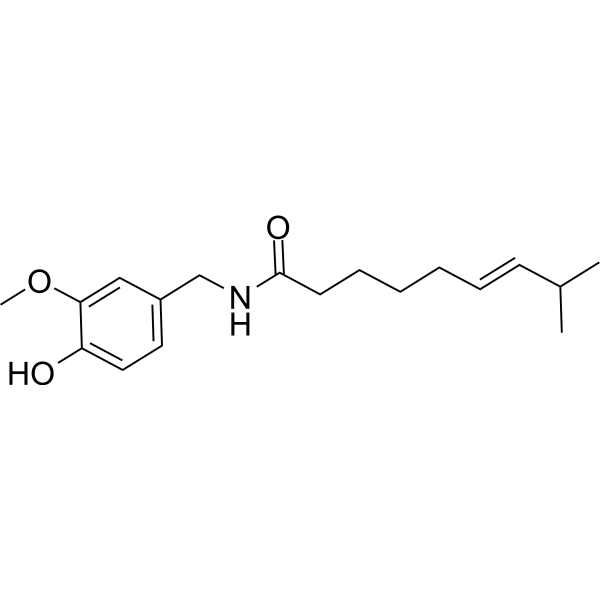

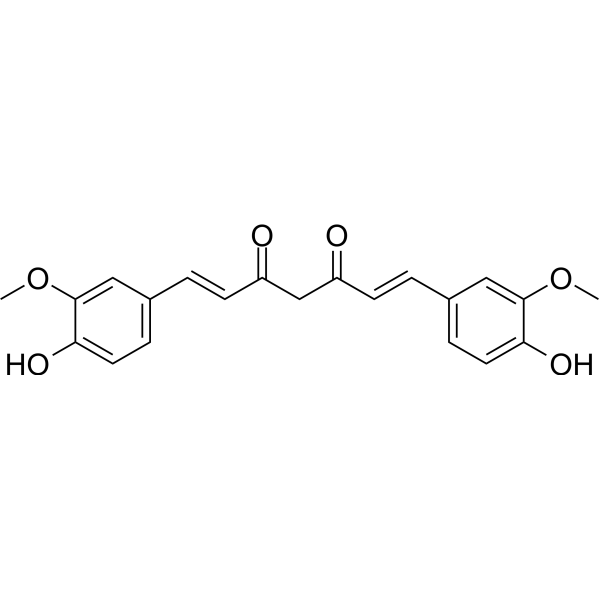
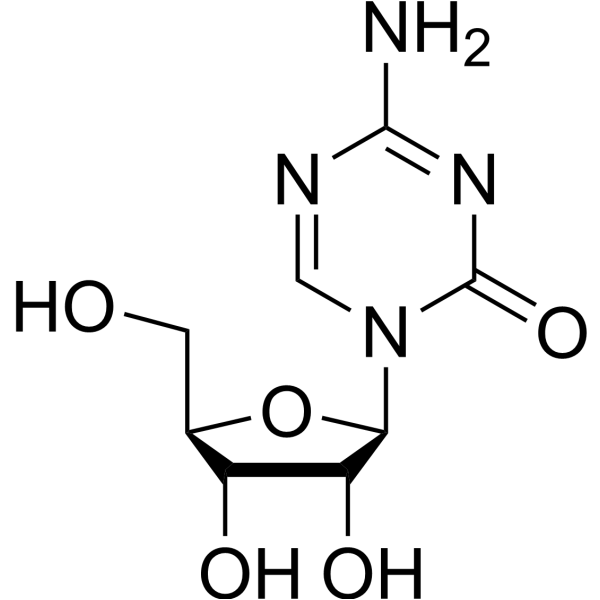
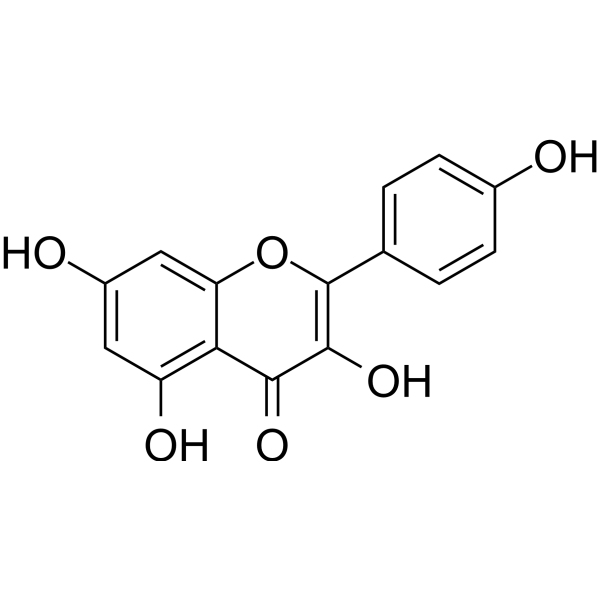
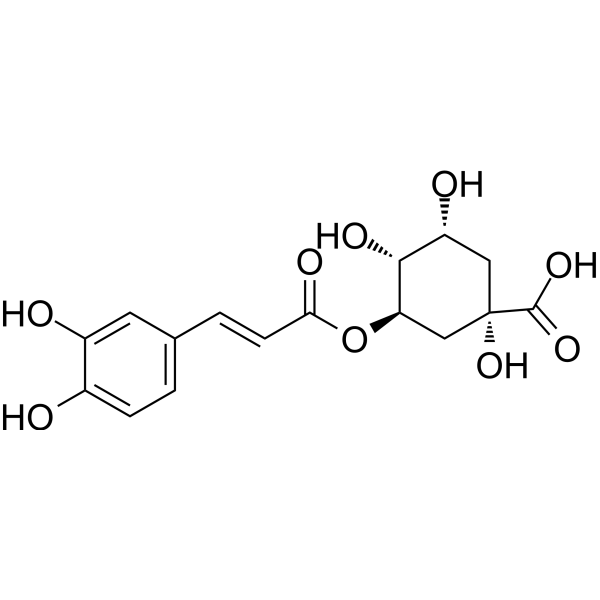
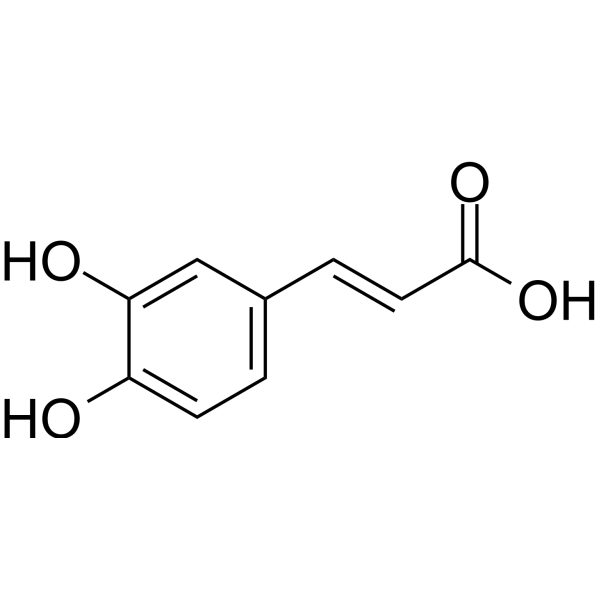
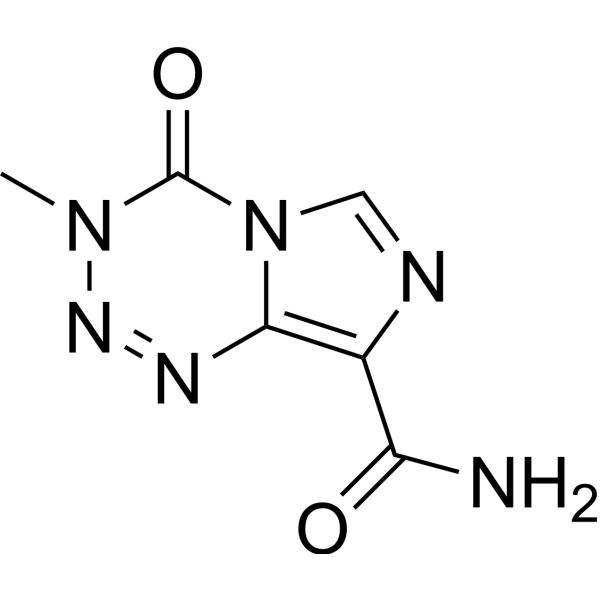
Publications Citing Use of MedChemExpress (MCE) Eugenol,98% (stabilized with TBC)
More- Autophagy. 2023 May;19(5):1533-1550. [Abstract]
- Eur J Pharmacol. 2022 Jun 5;924:174955. [Abstract]
- Int J Mol Sci. 2024 Feb 8;25(4):2098. [Abstract]
- Microchem J. 2026 Feb 9.
- ACS Omega. 2024 Feb 28;9(10):11870-11882. [Abstract]
- Sci Rep. 2025 Mar 26;15(1):10368. [Abstract]
- BMC Complement Med Ther. 2026 Apr 2;26(1):177. [Abstract]
- Microbiol Spectr. 2023 Sep 14;11(5):e0366622. [Abstract]
- bioRxiv. 2024 Mar 11.
Voir tous les produits spécifiques à Isoform Parasite
More

Activité biologique
Description
IC50 & Target
Bacterial, Parasite[1]
Cellular Effect
|
Cell Line

|
Type | Value | Description | References |
|---|---|---|---|---|
| HEK293 | EC50 |
168 μM
Compound: Eugenol
|
Agonist activity at human TRPA1 expressed in HEK293 cells assessed as increase in calcium influx by Fluo-4-AM dye based fluorescence assay
Agonist activity at human TRPA1 expressed in HEK293 cells assessed as increase in calcium influx by Fluo-4-AM dye based fluorescence assay
|
[PMID: 30878828] |
| HEK293 | EC50 |
261 μM
Compound: Eugenol
|
Agonist activity at human TRPA1 expressed in HEK293 assessed as increase in calcium influx by two electrode voltage clamp method
Agonist activity at human TRPA1 expressed in HEK293 assessed as increase in calcium influx by two electrode voltage clamp method
|
[PMID: 30878828] |
| HL-60 | IC50 |
23.7 mM
Compound: Eugenol
|
Antiproliferative activity against human HL60 cells after 2 days by MTT assay
Antiproliferative activity against human HL60 cells after 2 days by MTT assay
|
[PMID: 31195168] |
| MCF7 | IC50 |
>1500 μM
Compound: 28
|
Antitumor activity against human MCF7 cells assessed as cell growth inhibition incubated for 48 hrs
Antitumor activity against human MCF7 cells assessed as cell growth inhibition incubated for 48 hrs
|
[PMID: 36858050] |
| PC-3 | IC50 |
1 μM
Compound: Eugenol
|
Cytotoxicity against human PC3 cells after 72 hrs by CellTiter one aqueous solution assay
Cytotoxicity against human PC3 cells after 72 hrs by CellTiter one aqueous solution assay
|
[PMID: 31195168] |
| Peritoneal macrophage | EC50 |
475.76 μM
Compound: 1
|
Cytotoxicity against BALB/c mouse peritoneal macrophages after 48 hrs by MTT assay
Cytotoxicity against BALB/c mouse peritoneal macrophages after 48 hrs by MTT assay
|
[PMID: 28826085] |
| RAW264.7 | EC50 |
20.81 μg/mL
Compound: Eugenol
|
Antileishmanial activity against intracellular Leishmania infantum chagasi MHOM/BR/00/1669 amastigotes infected in mouse RAW264.7 cells assessed as inhibition of parasite growth after 48 hrs
Antileishmanial activity against intracellular Leishmania infantum chagasi MHOM/BR/00/1669 amastigotes infected in mouse RAW264.7 cells assessed as inhibition of parasite growth after 48 hrs
|
[PMID: 25281268] |
| RAW264.7 | EC50 |
56.13 μg/mL
Compound: Eugenol
|
Antileishmanial activity against axenically cultured Leishmania infantum chagasi MHOM/BR/00/1669 promastigotes infected in mouse RAW264.7 cells assessed as inhibition of parasite growth after 48 hrs
Antileishmanial activity against axenically cultured Leishmania infantum chagasi MHOM/BR/00/1669 promastigotes infected in mouse RAW264.7 cells assessed as inhibition of parasite growth after 48 hrs
|
[PMID: 25281268] |
| RAW264.7 | IC50 |
527.04 μM
Compound: 1
|
Cytotoxicity against mouse RAW264.7 cells after 48 hrs by MTT assay
Cytotoxicity against mouse RAW264.7 cells after 48 hrs by MTT assay
|
[PMID: 28826085] |
In Vitro
The essential oil of O. gratissimum, as well as eugenol, are efficient in inhibiting eclodibility of H. contortus eggs, showing possible utilizations in the treatment of gastrointestinal helmintosis of small ruminants. At 0.50% concentration, the essential oil and eugenol show a maximum eclodibility inhibition[1]. Eugenol inhibits superoxide anion generation in xanthine-xanthine oxidase system to an extent of 50% at concentrations of 250 μM. Eugenol also inhibits the generation of hydroxyl radicals to an extent of 70%. The OH-radical formation measured by the hydroxylation of salicylate to 2, 3-dihydroxy benzoate is inhibited to an extent of 46% by eugenol at 250 μM[2]. Eugenol protects against RS-induced development of IBS-like gastrointestinal dysfunction through modulation of HPA-axis and brain monoaminergic pathways apart from its antioxidant effect. Eugenol (50 mg/kg) reduces 80% of RS-induced increase in fecal pellets similar to that of ondansetron. Eugenol attenuates 80% of stress-induced increase in plasma corticosterone and modulates the serotonergic system in the PFC and amygdala. Eugenol attenuates stress-induced changes in norepinephrine and potentiates the antioxidant defense system in all brain regions[3].
MedChemExpress (MCE) has not independently confirmed the accuracy of these methods. They are for reference only.
In Vivo
MedChemExpress (MCE) has not independently confirmed the accuracy of these methods. They are for reference only.


Chemical Information
-
CAS No. 97-53-0
-
Appearance Liquid (Density: 1.067 g/cm3)
-
Masse moléculaire 164.20
-
Formule C10H12O2
-
Color Colorless to light yellow
-
SMILES
OC1=CC=C(CC=C)C=C1OC
-
Structure Classification
-
Initial Source
-
Livraison
Room temperature in continental US; may vary elsewhere.
-
Stockage
Pure form -20°C 3 years 4°C 2 years In solvent -80°C 6 months -20°C 1 month


Publications (9)
-
Journal Impact Factor
-
Most Recent
-
Autophagy
A/(H1N1) pdm09 NS1 promotes viral replication by enhancing autophagy through hijacking the IAV negative regulatory factor LRPPRC. [Abstract]2023 May;19(5):1533-1550. PMID: 36300799 -
Eur J Pharmacol
Eugenol protects against Aspergillus fumigatus keratitis by inhibiting inflammatory response and reducing fungal load. [Abstract]2022 Jun 5;924:174955. PMID: 35436473 -
Int J Mol Sci
Eugenol Suppresses Platelet Activation and Mitigates Pulmonary Thromboembolism in Humans and Murine Models. [Abstract]2024 Feb 8;25(4):2098. PMID: 38396774 -
-
ACS Omega
Identification of New Modulators and Inhibitors of Palmitoyl-Protein Thioesterase 1 for CLN1 Batten Disease and Cancer. [Abstract]2024 Feb 28;9(10):11870-11882. PMID: 38496939 -
Sci Rep
Uncovering Hippo pathway-related biomarkers in acute myocardial infarction via scRNA-seq binding transcriptomics. [Abstract]2025 Mar 26;15(1):10368. PMID: 40133574 -
BMC Complement Med Ther
Hepatotoxicity prediction for traditional Chinese medicine: a two-step in silico framework integrating network and machine learning approaches. [Abstract]2026 Apr 2;26(1):177. PMID: 41923057 -
Microbiol Spectr
Eugenol works synergistically with colistin against colistin-resistant Pseudomonas aeruginosa and Klebsiella pneumoniae isolates by enhancing membrane permeability. [Abstract]2023 Sep 14;11(5):e0366622. PMID: 37707450 -


Solvant et solubilité
In Vitro:
DMSO : ≥ 100 mg/mL (609.01 mM; Hygroscopic DMSO has a significant impact on the solubility of product, please use newly opened DMSO)
* "≥" means soluble, but saturation unknown.
Please refer to the solubility information to select the appropriate solvent. Once prepared, please aliquot and store the solution to prevent product inactivation from repeated freeze-thaw cycles.
Storage method and period of stock solution: -80°C, 6 months; -20°C, 1 month. When stored at -80°C, please use it within 6 months. When stored at -20°C, please use it within 1 month.
Please refer to the solubility information to select the appropriate solvent. Once prepared, please aliquot and store the solution to prevent product inactivation from repeated freeze-thaw cycles.
Storage method and period of stock solution: -80°C, 6 months; -20°C, 1 month. When stored at -80°C, please use it within 6 months. When stored at -20°C, please use it within 1 month.
Concentration (start) × Volume (start) = Concentration (final) × Volume (final)
In Vivo:
Select the appropriate dissolution method based on your experimental animal and administration route.
- For the following dissolution methods, please ensure to first prepare a clear stock solution using an In Vitro approach and then sequentially add co-solvents:
- To ensure reliable experimental results, the clarified stock solution can be appropriately stored based on storage conditions. As for the working solution for In Vivo experiments, it is recommended to prepare freshly and use it on the same day.
- The percentages shown for the solvents indicate their volumetric ratio in the final prepared solution. If precipitation or phase separation occurs during preparation, heat and/or sonication can be used to aid dissolution.
Add each solvent one by one: 10% DMSO 40% PEG300 5% Tween-80 45% Saline
Solubility: ≥ 3.25 mg/mL (19.79 mM); Clear solution
This protocol yields a clear solution of ≥ 3.25 mg/mL (saturation unknown).
Taking 1 mL working solution as an example, add 100 μL DMSO stock solution (32.5 mg/mL) to 400 μL PEG300, and mix evenly; then add 50 μL Tween-80 and mix evenly; then add 450 μL Saline to adjust the volume to 1 mL.
Preparation of Saline: Dissolve 0.9 g sodium chloride in ddH₂O and dilute to 100 mL to obtain a clear Saline solution.
Add each solvent one by one: 10% DMSO 90% (20% SBE-β-CD in Saline)
Solubility: ≥ 3.25 mg/mL (19.79 mM); Clear solution
This protocol yields a clear solution of ≥ 3.25 mg/mL (saturation unknown).
Taking 1 mL working solution as an example, add 100 μL DMSO stock solution (32.5 mg/mL) to 900 μL 20% SBE-β-CD in Saline, and mix evenly.
Preparation of 20% SBE-β-CD in Saline (4°C, storage for one week): 2 g SBE-β-CD powder is dissolved in 10 mL Saline, completely dissolve until clear.
In Vivo Dissolution Calculator
Please enter the basic information of animal experiments:
-
-
-
-
Recommended: Prepare an additional quantity of animals to account for potential losses during experiments.
Please enter your animal formula composition:
-
%DMSO +
Recommended: Keep the proportion of DMSO in working solution below 2% if your animal is weak.
-
%+
-
+%Tween-80 + +
-
%Saline +
The co-solvents required include: DMSO, . All of co-solvents are available by MedChemExpress (MCE). , Tween 80. All of co-solvents are available by MedChemExpress (MCE).
Working solution concentration: 0.22 mg/mL
Method for preparing stock solution: mg drug dissolved in μL DMSO. Stock solution concentration: mg/mL.
1. Take μL DMSO stock solution;
2. Add μL .
μL , mix evenly;
3. Then add μL Tween 80, mix evenly;
4. Then add μL
Please ensure that the stock solution in the first step is dissolved to a clear state, and add co-solvents in sequence. You can use ultrasonic heating (ultrasonic cleaner, recommended frequency 20-40 kHz), vortexing, etc. to assist dissolution.

Protocole
Cell Assay[1]
The essential oil and eugenol are diluted in aqueous solution of Tween 20 (0.5%) in the following concentrations: 0.0625, 0.12, 0.25, 0.5 and 1.0% to be used in the egg hatch test[1].
MedChemExpress (MCE) has not independently confirmed the accuracy of these methods. They are for reference only.
Animal Administration[4]
Rats: The treatment groups of arthritic rats are given either ingwerol (0.33 mL/kg or 33 mg/kg) or eugenol (0.33 mL/kg or 33 mg/kg) orally 1 day prior to the induction of arthritis. This treatment is continued for 26 days on a daily basis. Mycobaterium trated rats receive physiological saline orally[4].
MedChemExpress (MCE) has not independently confirmed the accuracy of these methods. They are for reference only.


Pureté et documentation
-
Fiche technique (278 KB)
-
SDS (393 KB)
- English - EN (393 KB)
- Français - FR (393 KB)
- Deutsch - DE (393 KB)
- Norwegian - NO (393 KB)
- Español - ES (393 KB)
- Swedish - SV (393 KB)
- Italian - IT (393 KB)
- Korean - KR (393 KB)
- Portuguese - PT (393 KB)
-
Instruction de manipulation (2659 KB)
Références
[1]. Pessoa LM, et al. Anthelmintic activity of essential oil of Ocimum gratissimum Linn. and eugenol against Haemonchus contortus. Vet Parasitol. 2002 Oct 16;109(1-2):59-63. [Content Brief]
[2]. Reddy AC, et al. Studies on the inhibitory effects of curcumin and eugenol on the formation of reactive oxygenspecies and the oxidation of ferrous iron. Mol Cell Biochem. 1994 Aug 17;137(1):1-8. [Content Brief]
[3]. Garabadu D, et al. Protective effect of eugenol against restraint stress-induced gastrointestinal dysfunction: Potential use in irritable bowel syndrome. Pharm Biol. 2015 Jul;53(7):968-74. [Content Brief]
[4]. Sharma JN, et al. Suppressive effects of eugenol and ginger oil on arthritic rats. Pharmacology. 1994 Nov;49(5):314-8. [Content Brief]


Complete Stock Solution Preparation Table
Please refer to the solubility information to select the appropriate solvent. Once prepared, please aliquot and store the solution to prevent product inactivation from repeated freeze-thaw cycles.
Storage method and period of stock solution: -80°C, 6 months; -20°C, 1 month. When stored at -80°C, please use it within 6 months. When stored at -20°C, please use it within 1 month.
| Optional Solvent | Concentration Solvent Mass | 1 mg | 5 mg | 10 mg | 25 mg |
|---|---|---|---|---|---|
| DMSO | 1 mM | 6.0901 mL | 30.4507 mL | 60.9013 mL | 152.2534 mL |
| 5 mM | 1.2180 mL | 6.0901 mL | 12.1803 mL | 30.4507 mL | |
| 10 mM | 0.6090 mL | 3.0451 mL | 6.0901 mL | 15.2253 mL | |
| 15 mM | 0.4060 mL | 2.0300 mL | 4.0601 mL | 10.1502 mL | |
| 20 mM | 0.3045 mL | 1.5225 mL | 3.0451 mL | 7.6127 mL | |
| 25 mM | 0.2436 mL | 1.2180 mL | 2.4361 mL | 6.0901 mL | |
| 30 mM | 0.2030 mL | 1.0150 mL | 2.0300 mL | 5.0751 mL | |
| 40 mM | 0.1523 mL | 0.7613 mL | 1.5225 mL | 3.8063 mL | |
| 50 mM | 0.1218 mL | 0.6090 mL | 1.2180 mL | 3.0451 mL | |
| 60 mM | 0.1015 mL | 0.5075 mL | 1.0150 mL | 2.5376 mL | |
| 80 mM | 0.0761 mL | 0.3806 mL | 0.7613 mL | 1.9032 mL | |
| 100 mM | 0.0609 mL | 0.3045 mL | 0.6090 mL | 1.5225 mL |


Eugenol,98% (stabilized with TBC) Related Classifications
HY-N0337 Related Classifications
 Powered by Bioz