



Ravuconazole

Based on 1 Customer Validation
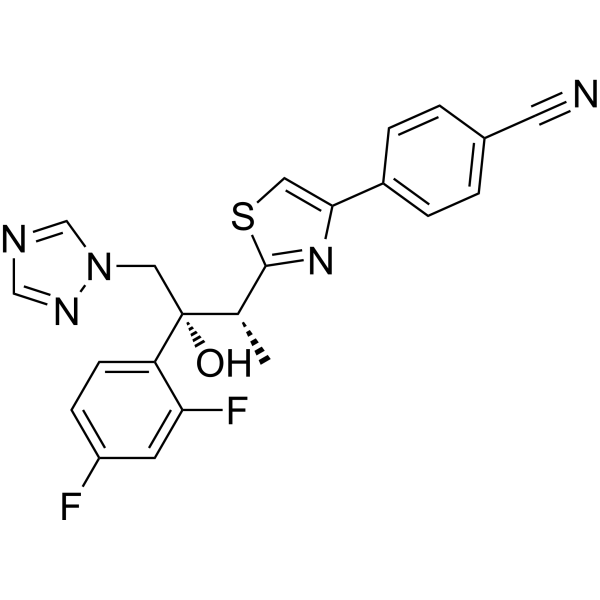
Ravuconazole (BMS-207147;ER-30346) is an orally available triazole antifungle agent that potently inhibits a wide range of fungi.
Nos produits utilisent uniquement pour la recherche. Nous ne vendons pas aux patients.
- Pureté: 99.94%
- CAS No.: 182760-06-1
- Formule: C22H17F2N5OS
- Masse moléculaire:437.47
-
Stockage:Powder -20°C, 3 years ; In solvent -80°C, 6 months , -20°C, 1 month

To place orders, for customer services and technical support, please contact: MedChemExpress USA
Tel: 609-228-6898 E-mail: [email protected] [email protected]


-
 Activité biologique
-
Chemical Information
-
Solvant et solubilité
- Protocole
- Pureté et documentation
- Références
-
 Help & FAQs


-
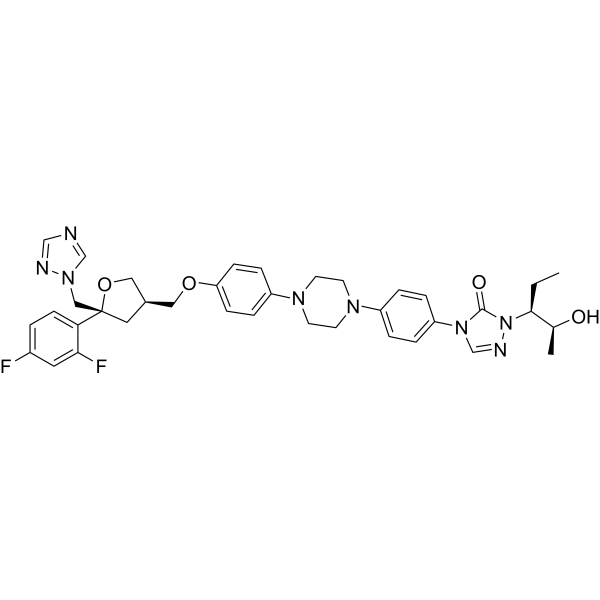
HY-17373
Posaconazole
-
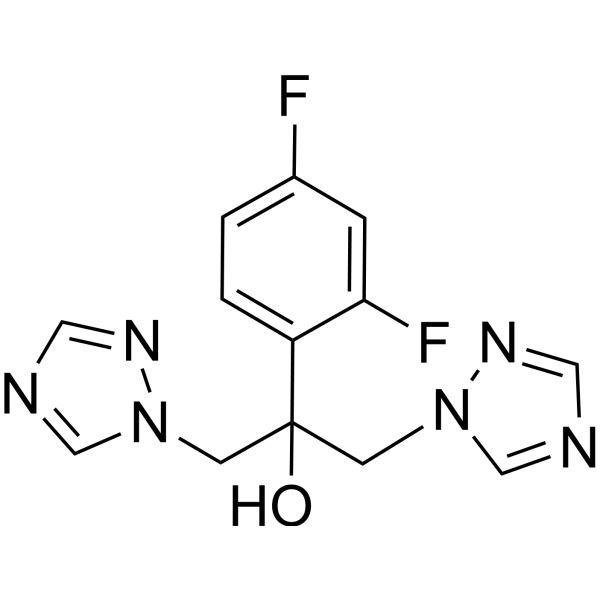
HY-B0101
Fluconazole
-
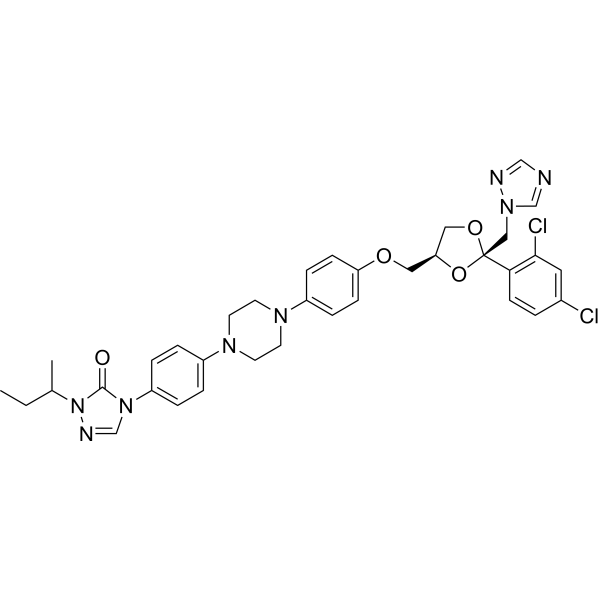
HY-17514
Itraconazole
-
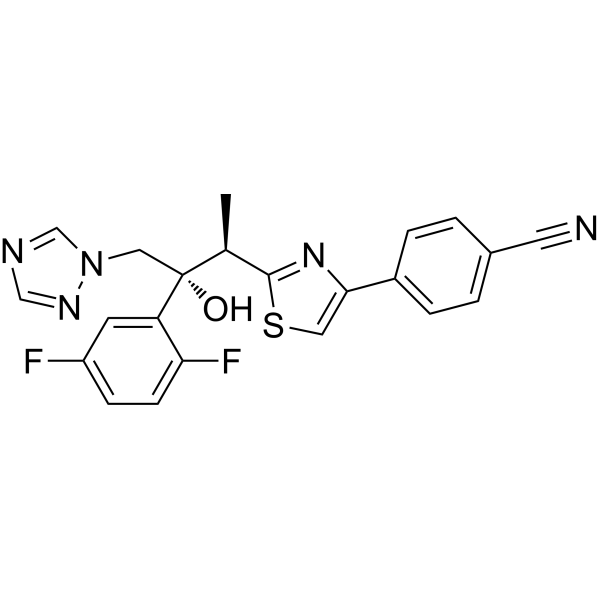
HY-14273
Isavuconazole
-

HY-14273R
Isavuconazole (Standard)
-

HY-14272R
Ravuconazole (Standard)
-
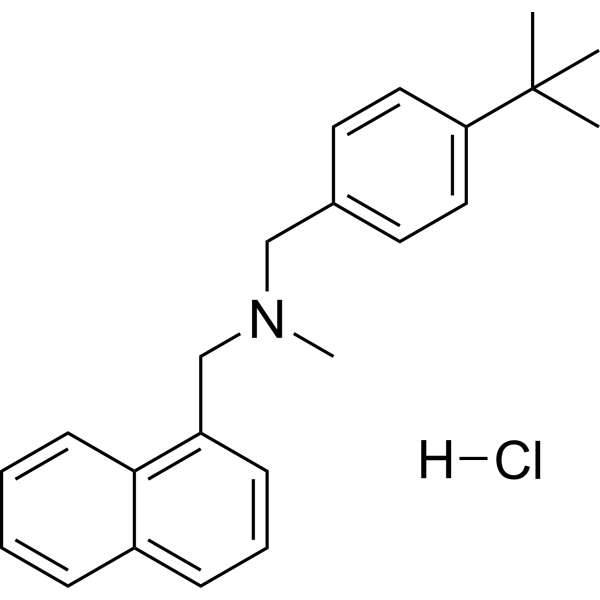
HY-17396
Butenafine Hydrochloride
-
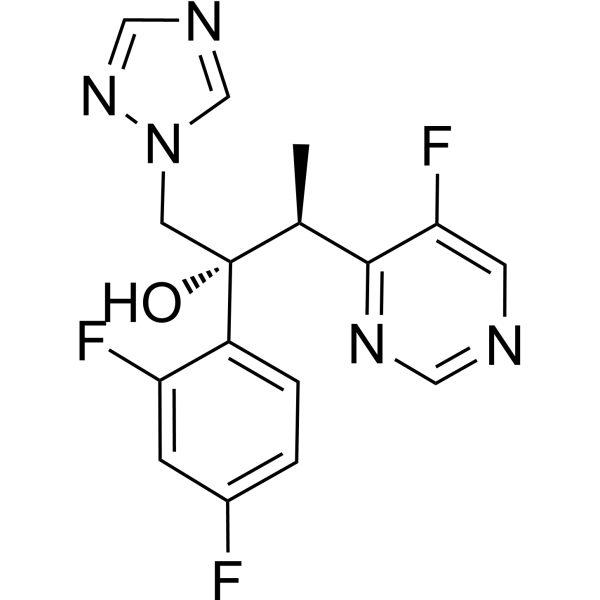
HY-76200
Voriconazole
-
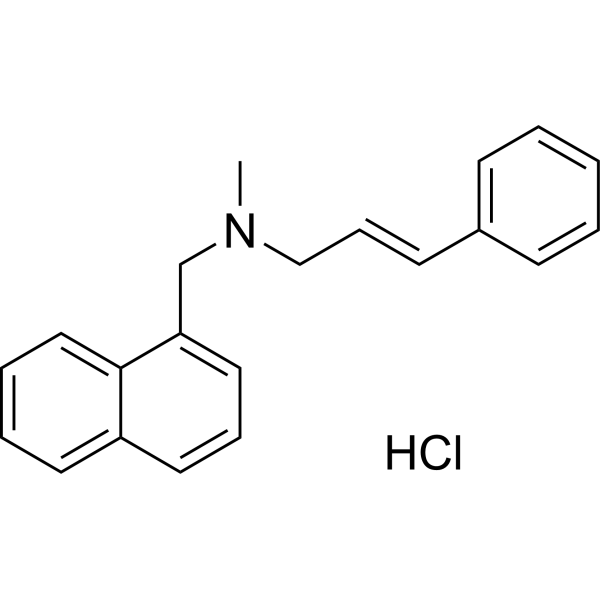
HY-B0518A
Naftifine hydrochloride
-
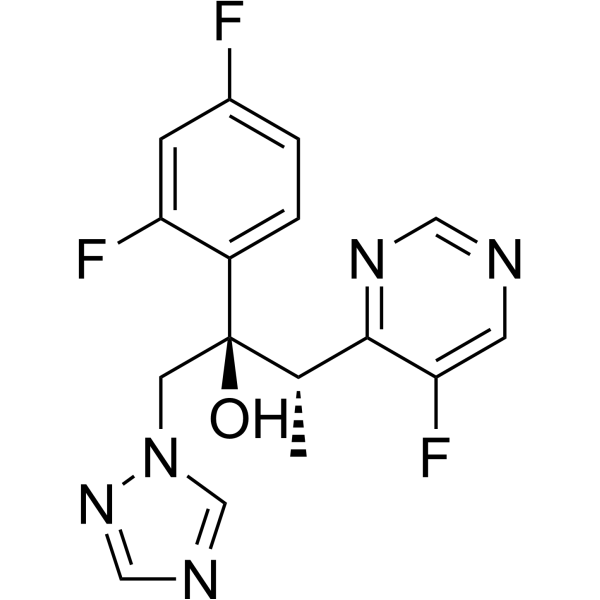
HY-76200R
Voriconazole (Standard)
-
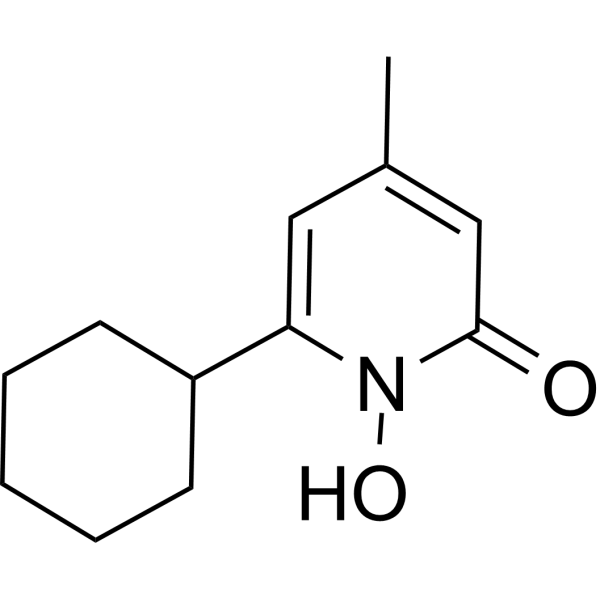
HY-B0450
Ciclopirox
-
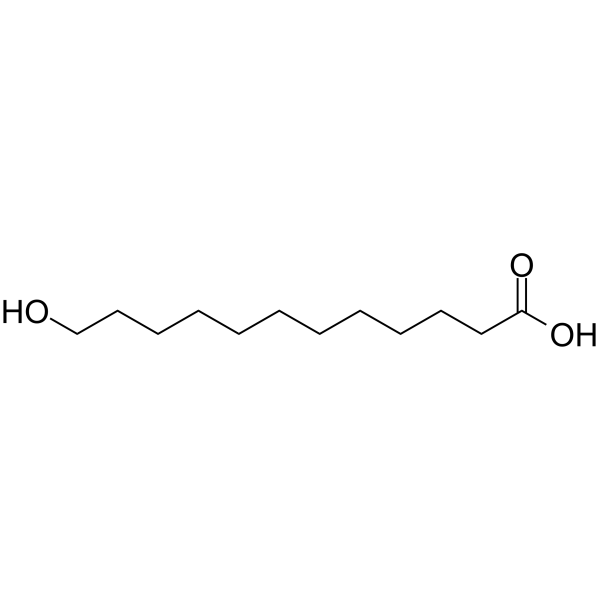
HY-128743
12-Hydroxydodecanoic acid


Activité biologique
Fungal[1]
|
Cell Line

|
Type | Value | Description | References |
|---|---|---|---|---|
| Caco-2 | CC50 |
12.75 μM
Compound: RAVUCONAZOLE
|
Toxicity against Caco-2 cells determined at 48 hours by intracellular ATP concentration using the CellTiter-Glo Luminescent Cell Viability Assay
Toxicity against Caco-2 cells determined at 48 hours by intracellular ATP concentration using the CellTiter-Glo Luminescent Cell Viability Assay
|
10.21203/rs.3.rs-23951/v1 |
| Caco-2 | IC50 |
2.76 μM
Compound: RAVUCONAZOLE
|
Determination of IC50 values for inhibition of SARS-CoV-2 induced cytotoxicity of Caco-2 cells after 48 hours by high content imaging
Determination of IC50 values for inhibition of SARS-CoV-2 induced cytotoxicity of Caco-2 cells after 48 hours by high content imaging
|
10.21203/rs.3.rs-23951/v1 |
| CHO | IC50 |
10.37 μM
Compound: 5
|
Inhibition of human ERG expressed in CHO cells by whole-cell patch clamp assay
Inhibition of human ERG expressed in CHO cells by whole-cell patch clamp assay
|
[PMID: 24564525] |
Ravuconazole shows a broad spectrum of activity against a wide range of fungi covering Candida spp., Trichosporon beigelii, C. neoformans and A. fumigatus. The MIC90 ranges from 0.025 to 0.39 mg/mL.Ravuconazoleshows relatively higher levels of activity against three strains of Candida krusei, with MICs ranging from 0.05 to 0.39 mg/mL.Ravuconazoleshows good activity against T. mentagrophytes, T. rubrum, M. gypseum and M. caniswith MICs ranging from 0.05 to 0.39 mg/mL[1]. Ravuconazoleis about two- to four fold more potent than itraconazole and about 40-fold more active than fluconazole against yeasts. Ravuconazoleand itraconazoleare inhibitory to most aspergilli, and against half of the isolates, the activity iscidal. Ravuconazoleand itraconazoleare active, though not cidal, against most hyaline Hyphomycetes, dermatophytes, and the dematiaceous fungi and inactive against Sporothrix schenckii and zygomycetes[2].
MedChemExpress (MCE) has not independently confirmed the accuracy of these methods. They are for reference only.
MedChemExpress (MCE) has not independently confirmed the accuracy of these methods. They are for reference only.
| NCT Number | Sponsor | Condition | Start Date |
Phase
|
|---|---|---|---|---|
| NCT01329991 | Plexxikon| | 2011-05 | PHASE1 |


Chemical Information
-
CAS No. 182760-06-1
-
Appearance Solid
-
Masse moléculaire 437.47
-
Formule C22H17F2N5OS
-
Color White to yellow
-
SMILES
FC1=CC(F)=CC=C1[C@](CN2C=NC=N2)(O)[C@@H](C)C3=NC(C4=CC=C(C#N)C=C4)=CS3
-
Synonyms
BMS-207147; ER-30346
-
Livraison
Room temperature in continental US; may vary elsewhere.
-
Stockage
Powder -20°C 3 years In solvent -80°C 6 months -20°C 1 month


Solvant et solubilité
DMSO : ≥ 50 mg/mL (114.29 mM; Hygroscopic DMSO has a significant impact on the solubility of product, please use newly opened DMSO)
* "≥" means soluble, but saturation unknown.
Please refer to the solubility information to select the appropriate solvent. Once prepared, please aliquot and store the solution to prevent product inactivation from repeated freeze-thaw cycles.
Storage method and period of stock solution: -80°C, 6 months; -20°C, 1 month. When stored at -80°C, please use it within 6 months. When stored at -20°C, please use it within 1 month.
Please refer to the solubility information to select the appropriate solvent. Once prepared, please aliquot and store the solution to prevent product inactivation from repeated freeze-thaw cycles.
Storage method and period of stock solution: -80°C, 6 months; -20°C, 1 month. When stored at -80°C, please use it within 6 months. When stored at -20°C, please use it within 1 month.
Concentration (start) × Volume (start) = Concentration (final) × Volume (final)
Select the appropriate dissolution method based on your experimental animal and administration route.
- For the following dissolution methods, please ensure to first prepare a clear stock solution using an In Vitro approach and then sequentially add co-solvents:
- To ensure reliable experimental results, the clarified stock solution can be appropriately stored based on storage conditions. As for the working solution for In Vivo experiments, it is recommended to prepare freshly and use it on the same day.
- The percentages shown for the solvents indicate their volumetric ratio in the final prepared solution. If precipitation or phase separation occurs during preparation, heat and/or sonication can be used to aid dissolution.
Add each solvent one by one: 10% DMSO 40% PEG300 5% Tween-80 45% Saline
Solubility: ≥ 2.5 mg/mL (5.71 mM); Clear solution
This protocol yields a clear solution of ≥ 2.5 mg/mL (saturation unknown).
Taking 1 mL working solution as an example, add 100 μL DMSO stock solution (25.0 mg/mL) to 400 μL PEG300, and mix evenly; then add 50 μL Tween-80 and mix evenly; then add 450 μL Saline to adjust the volume to 1 mL.
Preparation of Saline: Dissolve 0.9 g sodium chloride in ddH₂O and dilute to 100 mL to obtain a clear Saline solution.
Add each solvent one by one: 10% DMSO 90% (20% SBE-β-CD in Saline)
Solubility: ≥ 2.5 mg/mL (5.71 mM); Clear solution
This protocol yields a clear solution of ≥ 2.5 mg/mL (saturation unknown).
Taking 1 mL working solution as an example, add 100 μL DMSO stock solution (25.0 mg/mL) to 900 μL 20% SBE-β-CD in Saline, and mix evenly.
Preparation of 20% SBE-β-CD in Saline (4°C, storage for one week): 2 g SBE-β-CD powder is dissolved in 10 mL Saline, completely dissolve until clear.
Please enter the basic information of animal experiments:
-
-
-
-
Recommended: Prepare an additional quantity of animals to account for potential losses during experiments.
Please enter your animal formula composition:
-
%DMSO +
Recommended: Keep the proportion of DMSO in working solution below 2% if your animal is weak.
-
%+
-
+%Tween-80 + +
-
%Saline +
The co-solvents required include: DMSO, . All of co-solvents are available by MedChemExpress (MCE). , Tween 80. All of co-solvents are available by MedChemExpress (MCE).
Working solution concentration: 0.22 mg/mL
Method for preparing stock solution: mg drug dissolved in μL DMSO. Stock solution concentration: mg/mL.
1. Take μL DMSO stock solution;
2. Add μL .
μL , mix evenly;
3. Then add μL Tween 80, mix evenly;
4. Then add μL
Please ensure that the stock solution in the first step is dissolved to a clear state, and add co-solvents in sequence. You can use ultrasonic heating (ultrasonic cleaner, recommended frequency 20-40 kHz), vortexing, etc. to assist dissolution.

Protocole
Mouse[1]
Ravuconazole is prepared in 10% DMSO in 0.5% CMC.C. neoformans No. 3 is grown on an SDA plate at 30°Cfor 48 h, and challenge organisms are prepared in sterile saline. Mice (age, 5 weeks; n 5 10) are infected via the tail vein. Ravuconazole are orally administered, in a volume of 0.2 mL per dose, twice daily for 5 consecutive days starting 1 h after infection. Controls receive 10% DMSO in 0.5% CMC. Ravuconazole are administered at doses of 8 and 32 mg/kg. Mortality is recorded daily for 21 days of infection. Drug efficacy is assessed by determining the delay in mortality.
Rats[3]
The rats are orally infected three times at 48-h intervals with 0.1 mL of a saline suspension containing cells of C. albicansE81022. Ravuconazoleis orally administered, in a volume of 0.5 mL per dose, once daily for 3 consecutive days starting 2 days after the last infection. Control groups receive 10% DMSO in 0.5% CMC. Drugs are administered at doses of 1 and 4 mg/kg. Drug efficacy is assessed 5 days after the last infection by measuring the number of C. albicansorganisms in oral swabs.
MedChemExpress (MCE) has not independently confirmed the accuracy of these methods. They are for reference only.


Pureté et documentation
-
Fiche technique (278 KB)
-
SDS (394 KB)
- English - EN (394 KB)
- Français - FR (394 KB)
- Deutsch - DE (394 KB)
- Norwegian - NO (394 KB)
- Español - ES (394 KB)
- Swedish - SV (394 KB)
- Italian - IT (394 KB)
- Korean - KR (394 KB)
- Portuguese - PT (394 KB)
-
Instruction de manipulation (2659 KB)
Références
[1]. Hata K, et al. In vitro and in vivo antifungal activities of ER-30346, a novel oral triazole with a broad antifungal spectrum.Antimicrob Agents Chemother. 1996 Oct;40(10):2237-42. [Content Brief]
[2]. Fung-Tomc JC, et al. In vitro activity of a new oral triazole, BMS-207147 (ER-30346)Antimicrob Agents Chemother. 1998 Feb;42(2):313-8. [Content Brief]
[3]. Hata K, et al. Efficacy of ER-30346, a novel oral triazole antifungal agent, in experimental models of aspergillosis, candidiasis, and cryptococcosis.Antimicrob Agents Chemother. 1996 Oct;40(10):2243-7. [Content Brief]


Complete Stock Solution Preparation Table
Please refer to the solubility information to select the appropriate solvent. Once prepared, please aliquot and store the solution to prevent product inactivation from repeated freeze-thaw cycles.
Storage method and period of stock solution: -80°C, 6 months; -20°C, 1 month. When stored at -80°C, please use it within 6 months. When stored at -20°C, please use it within 1 month.
| Optional Solvent | Concentration Solvent Mass | 1 mg | 5 mg | 10 mg | 25 mg |
|---|---|---|---|---|---|
| DMSO | 1 mM | 2.2859 mL | 11.4294 mL | 22.8587 mL | 57.1468 mL |
| 5 mM | 0.4572 mL | 2.2859 mL | 4.5717 mL | 11.4294 mL | |
| 10 mM | 0.2286 mL | 1.1429 mL | 2.2859 mL | 5.7147 mL | |
| 15 mM | 0.1524 mL | 0.7620 mL | 1.5239 mL | 3.8098 mL | |
| 20 mM | 0.1143 mL | 0.5715 mL | 1.1429 mL | 2.8573 mL | |
| 25 mM | 0.0914 mL | 0.4572 mL | 0.9143 mL | 2.2859 mL | |
| 30 mM | 0.0762 mL | 0.3810 mL | 0.7620 mL | 1.9049 mL | |
| 40 mM | 0.0571 mL | 0.2857 mL | 0.5715 mL | 1.4287 mL | |
| 50 mM | 0.0457 mL | 0.2286 mL | 0.4572 mL | 1.1429 mL | |
| 60 mM | 0.0381 mL | 0.1905 mL | 0.3810 mL | 0.9524 mL | |
| 80 mM | 0.0286 mL | 0.1429 mL | 0.2857 mL | 0.7143 mL | |
| 100 mM | 0.0229 mL | 0.1143 mL | 0.2286 mL | 0.5715 mL |


Ravuconazole Related Classifications
HY-14272 Related Classifications
 Powered by Bioz