



Fangchinoline
Based on 12 publication(s) in Google Scholar
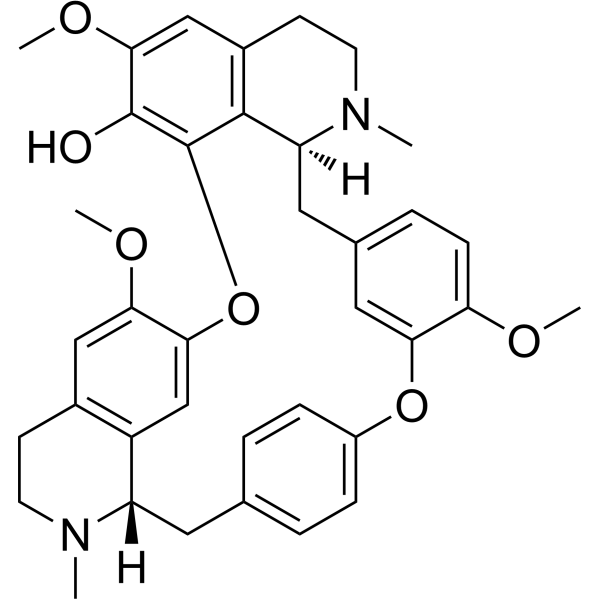
Fangchinoline is isolated from Stephania tetrandra with extensive biological activities, such as enhancing immunity, anti-inflammatory sterilization and anti-atherosclerosis. Fangchinoline, a novel HIV-1 inhibitor, inhibits HIV-1 replication by impairing gp160 proteolytic processing. Fangchinoline targets Focal adhesion kinase (FAK) and suppresses FAK-mediated signaling pathway in tumor cells which highly expressed FAK. Fangchinoline induces apoptosis and adaptive autophagy in bladder cancer.
For research use only. We do not sell to patients.
- Purity : 99.90%
- CAS No.: 436-77-1
- Formula: C37H40N2O6
- Molecular Weight:608.72
-
Storage:
4°C, protect from light
* In solvent : -80°C, 6 months; -20°C, 1 month (protect from light)

To place orders, for customer services and technical support, please contact: MedChemExpress USA
Tel: 609-228-6898 E-mail: [email protected] [email protected]


-
 Biological Activity
-
Chemical Information
-
Solvent & Solubility
- Protocols
- Purity & Documentation
- References
-
 Help & FAQs


-
HY-13764
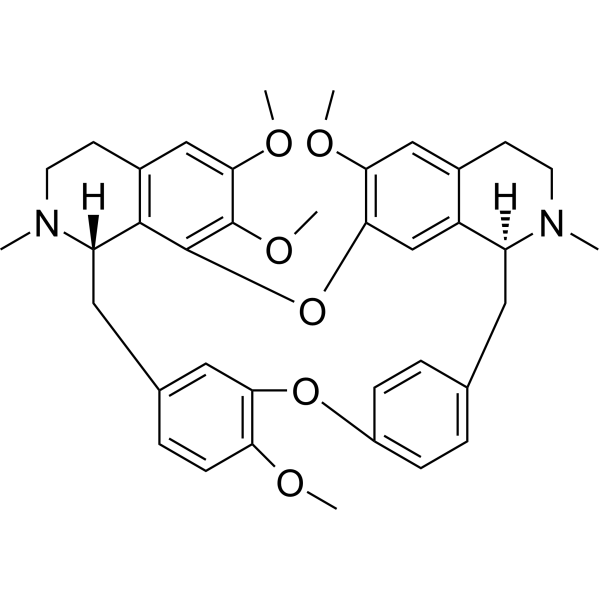
TetrandrineCalcium Channel Inhibitor -
HY-N6972
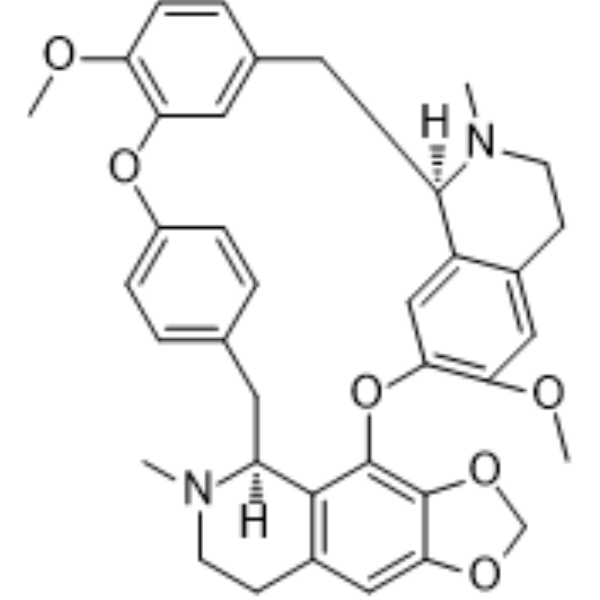
CepharanthineAnti-infection Agent -
HY-17502
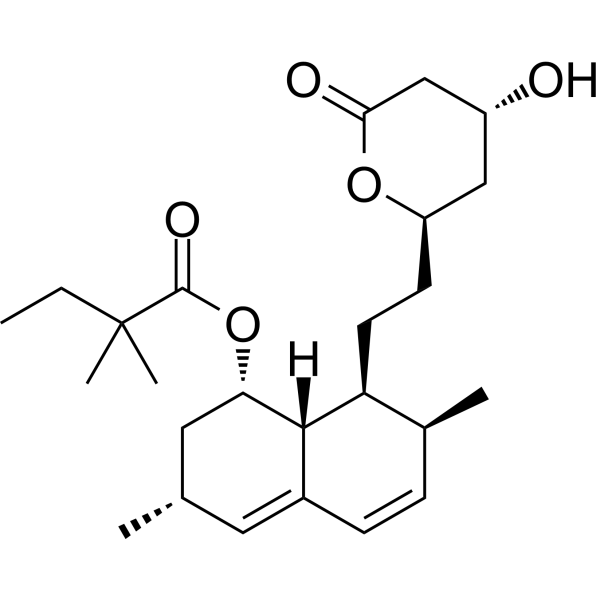
SimvastatinHMGCR Inhibitor -
HY-15142
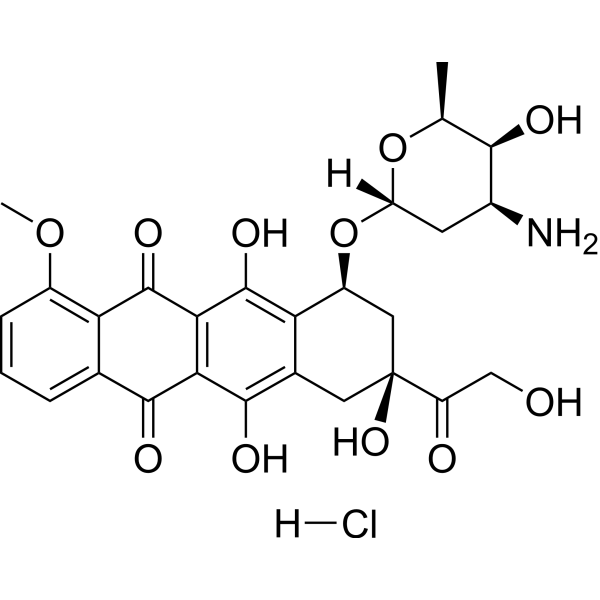
Doxorubicin hydrochlorideTopoisomerase Inhibitor -
HY-10227
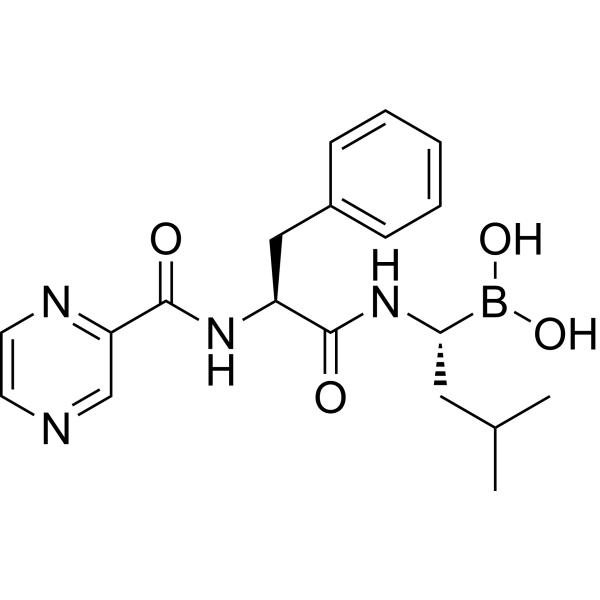
BortezomibProteasome Inhibitor -
HY-N0484
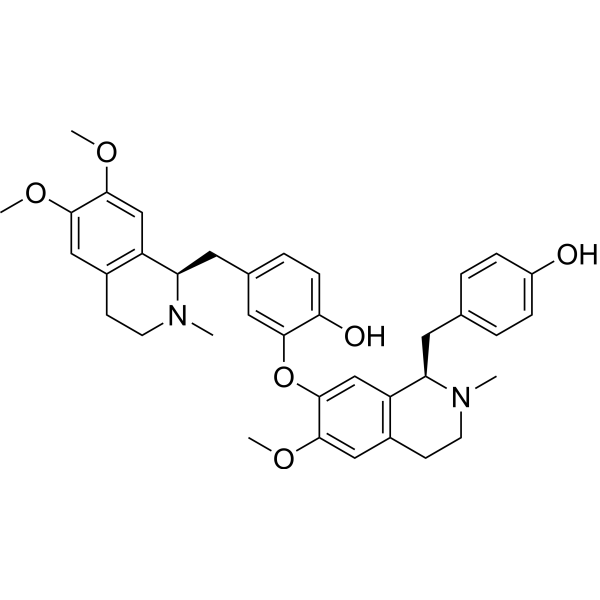
LiensininePI3K/AKT/MAPK/JAK2/STAT3 Inhibitor -
HY-10583
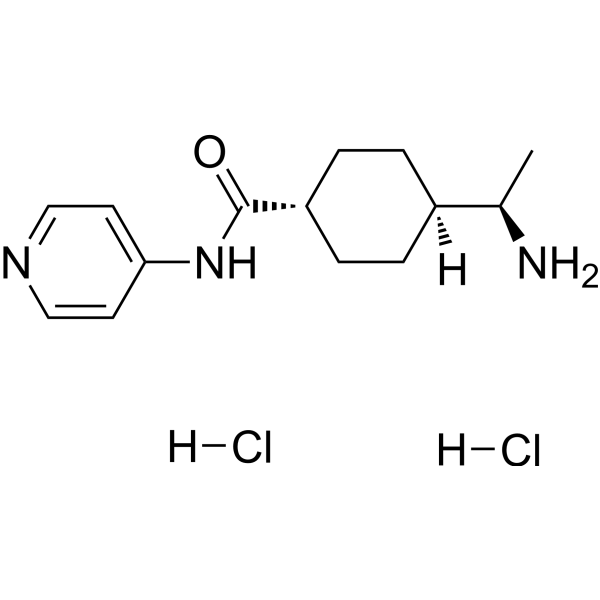
Y-27632 dihydrochlorideROCK Inhibitor -
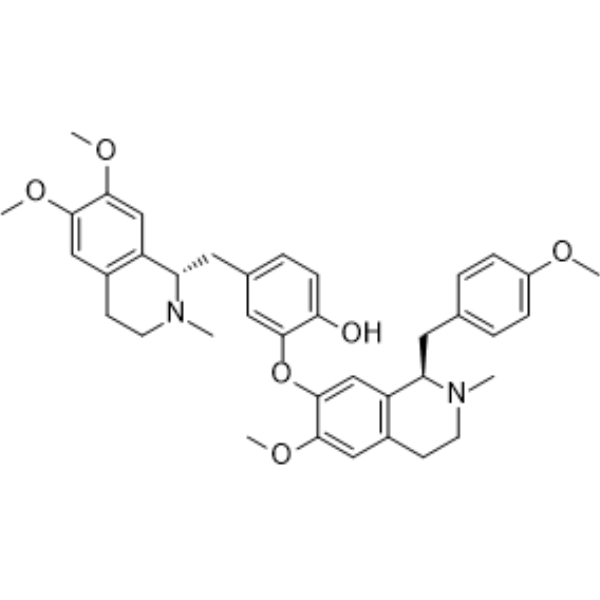
HY-N0441
NeferineAutophagy Modulator -
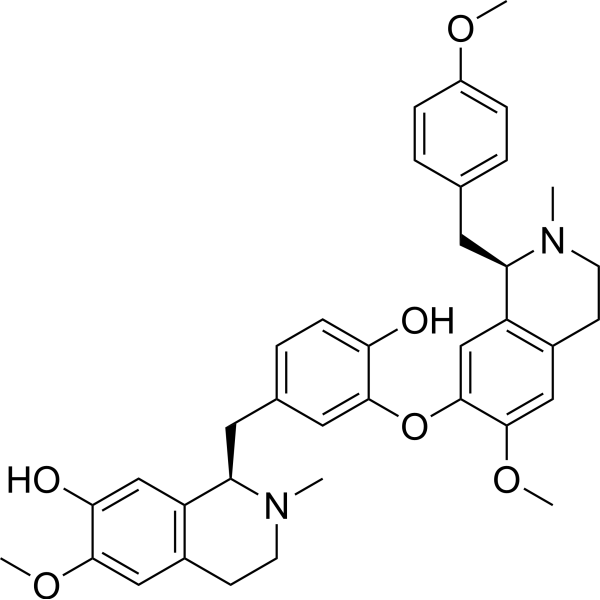
HY-N0770
IsoliensinineApoptosis Inducer -
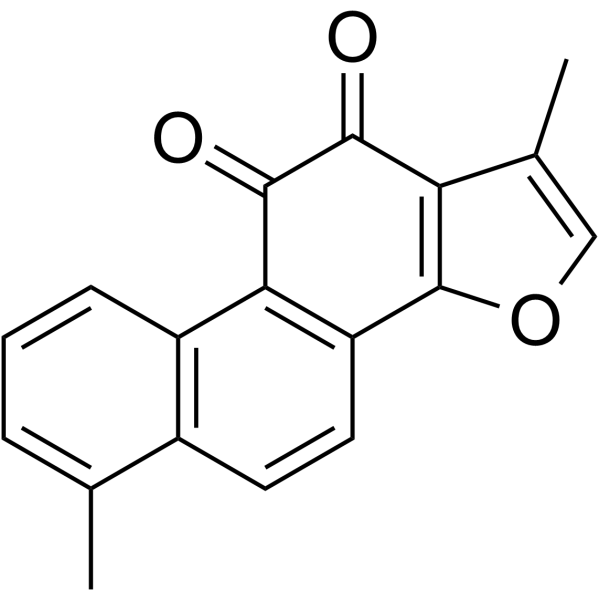
HY-N0134
Tanshinone IPhospholipase Inhibitor -
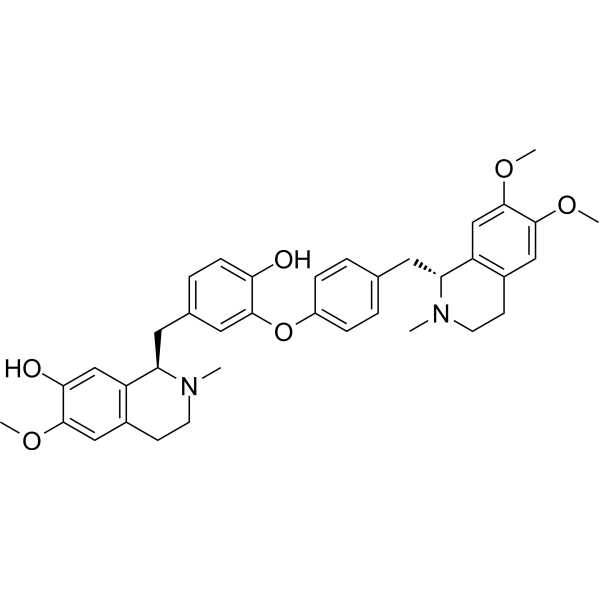
HY-N0221
DaurisolineAutophagy Blocker -
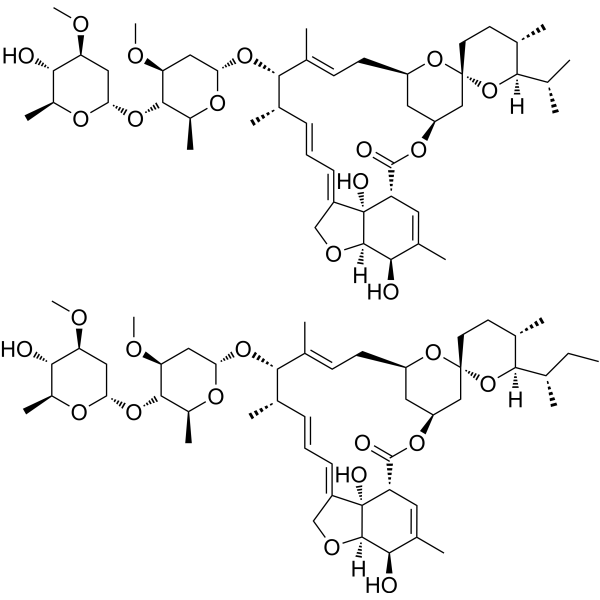
HY-15310
IvermectinAnti-parasite Agent
Publications Citing Use of MedChemExpress (MCE) Fangchinoline
More- J Adv Res. 2023 Sep:51:181-196. [Abstract]
- Cancer Lett. 2022 Sep 1:543:215783. [Abstract]
- Int J Biol Sci. 2026 May 18;22(10):5444-5458. [Abstract]
- Phytomedicine. 2026 Sep:159:158538.
- Phytomedicine. 2025 May:140:156484. [Abstract]
- Virol J. 2025 Jun 4;22(1):181. [Abstract]
- Toxicol Appl Pharmacol. 2025 Mar:496:117241. [Abstract]
- Front Oncol. 2021 Jun 14:11:666549. [Abstract]
- Integr Cancer Ther. 2025 Jan-Dec:24:15347354251396513. [Abstract]
- Vet Microbiol. 2026 May:316:110992. [Abstract]
- Biomed Pharmacother. 2025 Dec:193:118770. [Abstract]
- SSRN. 2023 Feb 14.
 Customer Validation & Images

-
Cell Proliferation/Viability Assay

-
Flow Cytometry
-
IF
-
WB
-
Cell Migration/Invasion Assay


Biological Activity
Description
IC50 & Target
|
HIV-1 |
Cellular Effect
|
Cell Line

|
Type | Value | Description | References |
|---|---|---|---|---|
| A549 | IC50 |
>10 μM
Compound: 14
|
Cytotoxicity against human A549 cells after 48 hrs by MTS assay
Cytotoxicity against human A549 cells after 48 hrs by MTS assay
|
[PMID: 23621840] |
| ECa-109 cell line | IC50 |
>10 μM
Compound: 14
|
Cytotoxicity against human ECA109 cells after 48 hrs by MTT assay
Cytotoxicity against human ECA109 cells after 48 hrs by MTT assay
|
[PMID: 23621840] |
| HEK-293T | CC50 |
>1 μM
Compound: 2; fan
|
Cytotoxicity against HEK293T cells assessed as reduction in cell viability by CellTiter-Glo assay
Cytotoxicity against HEK293T cells assessed as reduction in cell viability by CellTiter-Glo assay
|
[PMID: 37043739] |
| HEL | IC50 |
22.71 μM
Compound: Fangchinoline
|
Cytotoxicity against human HEL cells assessed as reduction in cell viability incubated for 48 hrs by MTT assay
Cytotoxicity against human HEL cells assessed as reduction in cell viability incubated for 48 hrs by MTT assay
|
[PMID: 31784186] |
| HepG2 | IC50 |
9.08 μM
Compound: Fangchinoline
|
Antiproliferative activity against human HepG2 cells after 48 hrs by MTT assay
Antiproliferative activity against human HepG2 cells after 48 hrs by MTT assay
|
[PMID: 28057423] |
| HL-60 | IC50 |
>10 μM
Compound: 14
|
Cytotoxicity against human HL60 cells after 48 hrs by MTS assay
Cytotoxicity against human HL60 cells after 48 hrs by MTS assay
|
[PMID: 23621840] |
| K562 | IC50 |
5.94 μM
Compound: Fangchinoline
|
Cytotoxicity against human K562 cells assessed as reduction in cell viability incubated for 48 hrs by MTT assay
Cytotoxicity against human K562 cells assessed as reduction in cell viability incubated for 48 hrs by MTT assay
|
[PMID: 31784186] |
| KB | ED50 |
9210 nM
Compound: 20
|
Cytotoxicity against human KB cells after 72 hrs by SRB assay
Cytotoxicity against human KB cells after 72 hrs by SRB assay
|
[PMID: 9917283] |
| MCF7 | IC50 |
10.1 μM
Compound: Fangchinoline
|
Antiproliferative activity against human MCF7 cells after 48 hrs by MTT assay
Antiproliferative activity against human MCF7 cells after 48 hrs by MTT assay
|
[PMID: 28057423] |
| MCF7 | IC50 |
17.41 μM
Compound: Fangchinoline
|
Cytotoxicity against human MCF-7 cells assessed as reduction in cell viability incubated for 48 hrs by MTT assay
Cytotoxicity against human MCF-7 cells assessed as reduction in cell viability incubated for 48 hrs by MTT assay
|
[PMID: 31784186] |
| MCF7 | IC50 |
5 μM
Compound: 14
|
Cytotoxicity against human MCF7 cells after 48 hrs by MTS assay
Cytotoxicity against human MCF7 cells after 48 hrs by MTS assay
|
[PMID: 23621840] |
| MDA-MB-231 | IC50 |
58.61 μM
Compound: Fangchinoline
|
Cytotoxicity against human MDA-MB-231 cells assessed as reduction in cell viability incubated for 48 hrs by MTT assay
Cytotoxicity against human MDA-MB-231 cells assessed as reduction in cell viability incubated for 48 hrs by MTT assay
|
[PMID: 31784186] |
| SMMC-7721 | IC50 |
>10 μM
Compound: 14
|
Cytotoxicity against human SMMC7721 cells after 48 hrs by MTS assay
Cytotoxicity against human SMMC7721 cells after 48 hrs by MTS assay
|
[PMID: 23621840] |
| SW480 | IC50 |
>10 μM
Compound: 14
|
Cytotoxicity against human SW480 cells after 48 hrs by MTS assay
Cytotoxicity against human SW480 cells after 48 hrs by MTS assay
|
[PMID: 23621840] |
| U-937 | IC50 |
>50 μM
Compound: 15, NSC 77036
|
Cytotoxicity against human U937 cells after 24 hrs by alamar blue assay
Cytotoxicity against human U937 cells after 24 hrs by alamar blue assay
|
[PMID: 22766217] |
In Vitro
Fangchinoline (2.5-40 μM; 24-96 hours) inhibits both T24 and 5637 cells in dose-dependent manner, the IC50 values of Fangchinoline in T24 cells are 19.0 μM (24 h), 12.0 μM (48 h) and 7.57 μM (72 h), and 11.9 μM (24 h), 9.92 μM (48 h) and 7.13 μM (72 h) in 5637 cells[1]. Fangchinoline (5 μM; 24 hours) induces a significant increase in the LC3-II/LC3-I ratio and a decrease in p62 in both T24 and 5637 cells, and causes a significant increase in the cleavage of caspase-3[1].
MedChemExpress (MCE) has not independently confirmed the accuracy of these methods. They are for reference only.
-
Cell Line:T24 and 5637 cells
-
Concentration:2.5 µM; 5 µM; 10 µM; 20 µM; 30 µM; 40 µM
-
Incubation Time:24 hours; 48 hours; 96 hours
-
Result:Inhibited both T24 and 5637 cells proliferation.
-
Cell Line:T24 and 5637 cells
-
Concentration:5 µM
-
Incubation Time:24 hours
-
Result:Incresed LC3-II/LC3-I ratio and the cleavage of caspase-3.
- Detection of Apoptosis
- TUNEL staining for apoptotic DNA fragmentation
- Annexin V plus membrane-impermeant dye apoptosis staining
- Autophagy
- Apoptosis Solutions
- Research Protocol for Cardiovascular Diseases
- Research Protocol for Inflammation-related Diseases
- Lysosome and acidic-vesicle live-cell staining
- Macroautophagy Solutions


Chemical Information
-
CAS No. 436-77-1
-
Appearance Solid
-
Molecular Weight 608.72
-
Formula C37H40N2O6
-
Color White to off-white
-
SMILES
OC1=C(OC2=CC([C@]3([H])CC(C=C4)=CC=C4O5)=C(CCN3C)C=C2OC)C([C@](N6C)([H])CC7=CC=C(OC)C5=C7)=C(CC6)C=C1OC
-
Structure Classification
-
Initial Source
-
Shipping
Room temperature in continental US; may vary elsewhere.
-
Storage
4°C, protect from light
* In solvent : -80°C, 6 months; -20°C, 1 month (protect from light)


Publications (12)
-
Journal Impact Factor
-
Most Recent
-
J Adv Res
Thioredoxin-interacting protein-activated intracellular potassium deprivation mediates the anti-tumour effect of a novel histone acetylation inhibitor HL23, a fangchinoline derivative, in human hepatocellular carcinoma. [Abstract]2023 Sep:51:181-196. PMID: 36351536 -
Cancer Lett
Fangchinoline inhibits non-small cell lung cancer metastasis by reversing epithelial-mesenchymal transition and suppressing the cytosolic ROS-related Akt-mTOR signaling pathway. [Abstract]2022 Sep 1:543:215783. PMID: 35700820
Fangchinoline purchased from MedChemExpress. Usage Cited in: Cancer Lett. 2022 Sep 1:543:215783. [Abstract]
CCK-8 examination of the viability of Fangchinoline (Fan)-treated NSCLC cells.
Fangchinoline purchased from MedChemExpress. Usage Cited in: Cancer Lett. 2022 Sep 1:543:215783. [Abstract]
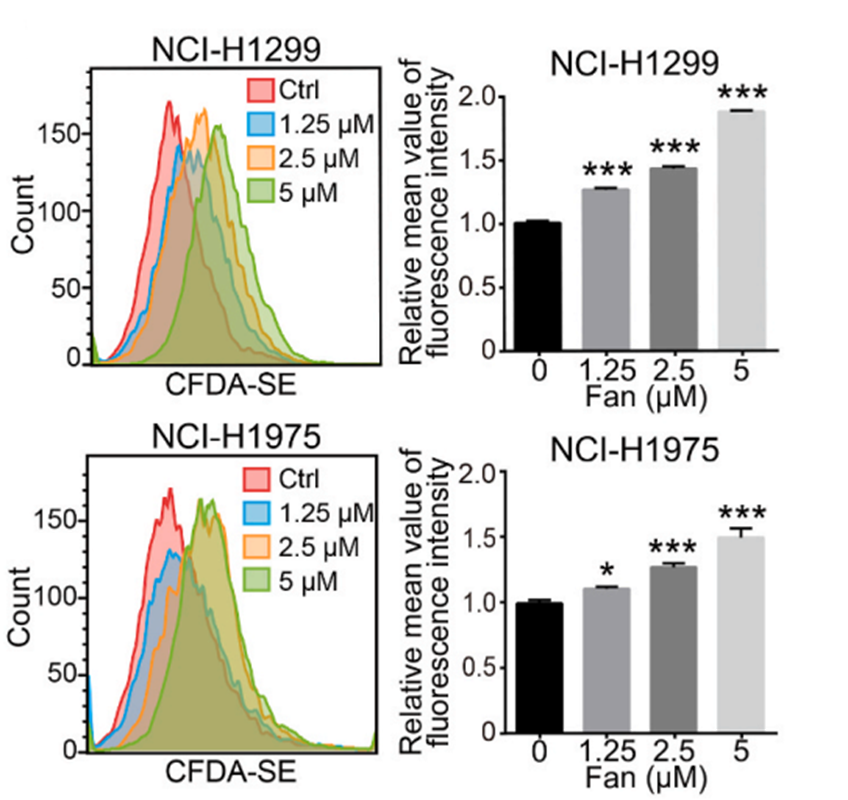
NSCLC cells were stained with CFDA-SE and treated with Fangchinoline (Fan) (1.25, 2.5, 5 μM) for 24 h. The mean fluorescence intensity was detected by flow cytometry in the FITC channel.
Fangchinoline purchased from MedChemExpress. Usage Cited in: Cancer Lett. 2022 Sep 1:543:215783. [Abstract]
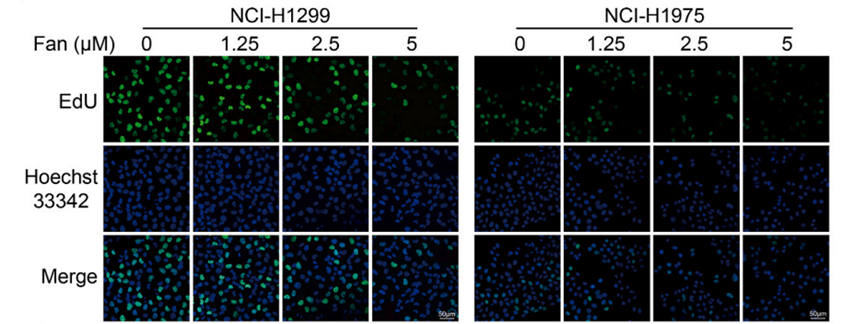
Cell viability was determined by the EdU assay treated with Fangchinoline (Fan) (1.25, 2.5, 5 μM).
Fangchinoline purchased from MedChemExpress. Usage Cited in: Cancer Lett. 2022 Sep 1:543:215783. [Abstract]
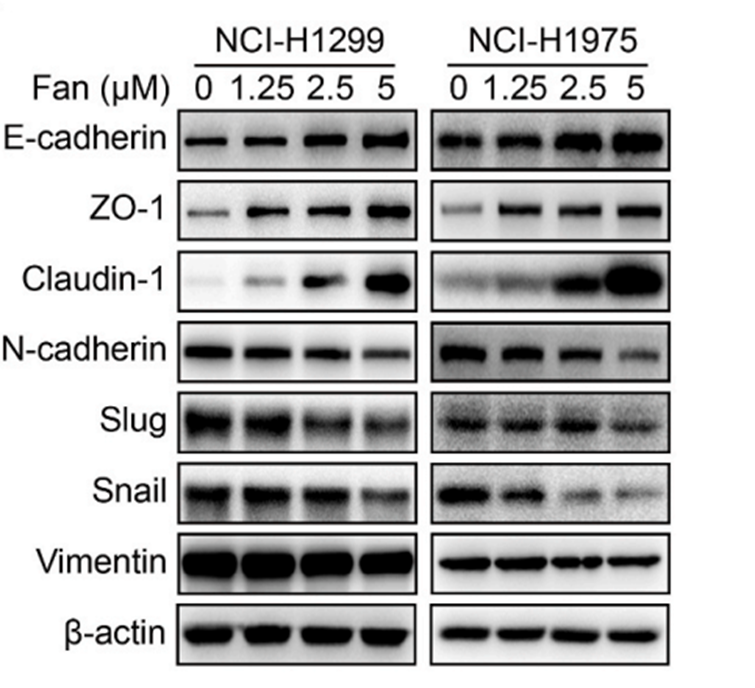
EMT-related biomarker detection revealed that Fangchinoline (Fan) (1.25, 2.5, 5 μM) significantly inhibited EMT dose-dependent.
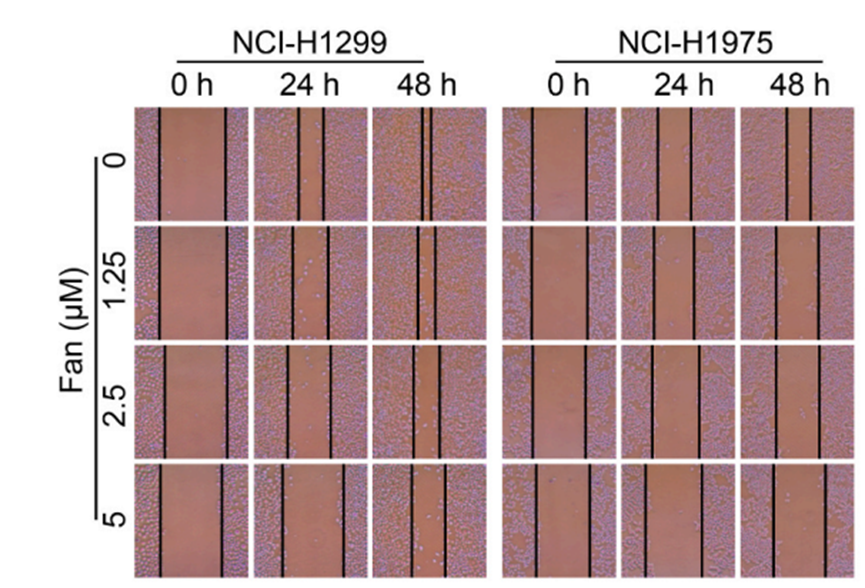
Fangchinoline purchased from MedChemExpress. Usage Cited in: Cancer Lett. 2022 Sep 1:543:215783. [Abstract]
The effect of Fangchinoline (Fan) (1.25, 2.5, 5 μM, 24, 48 h) on cell migration and invasion was assessed with the wound healing assay.
-
Int J Biol Sci
Fangchinoline Activates cGAS-STING to Promote Antitumor Immunity without Pathological Inflammation. [Abstract]2026 May 18;22(10):5444-5458. PMID: 42212320 -
-
Phytomedicine
Fangchinoline suppresses nasopharyngeal carcinoma progression by inhibiting SQLE to regulate the PI3K/AKT pathway dysregulation. [Abstract]2025 May:140:156484. PMID: 40090046 -
Virol J
Bisbenzylisoquinoline alkaloids inhibit influenza virus replication by disrupting endosomal acidification. [Abstract]2025 Jun 4;22(1):181. PMID: 40468427 -
Toxicol Appl Pharmacol
Fangchinoline alleviates the progression of osteoarthritis through the nuclear factor kappa B signaling pathway. [Abstract]2025 Mar:496:117241. PMID: 39894170 -
Front Oncol
Fangchinoline Inhibits Human Esophageal Cancer by Transactivating ATF4 to Trigger Both Noxa-Dependent Intrinsic and DR5-Dependent Extrinsic Apoptosis. [Abstract]2021 Jun 14:11:666549. PMID: 34195076 -
Integr Cancer Ther
Unveiling the Anticancer Potential and Molecular Mechanisms of Fangchinoline Against Cholangiocarcinoma Using FTIR Microspectroscopy, In Vitro and In Silico Approaches. [Abstract]2025 Jan-Dec:24:15347354251396513. PMID: 41261767 -
Vet Microbiol
The Chinese medicine monomer Schisandrin C inhibits PRRSV infection by regulating the OGT-PI3K/AKT/mTOR signaling pathway. [Abstract]2026 May:316:110992. PMID: 41865607 -
Biomed Pharmacother
Fangchinoline suppresses melanoma metastasis by inducing senescence of circulating tumor cells. [Abstract]2025 Dec:193:118770. PMID: 41242135 -


Solvent & Solubility
In Vitro:
DMSO : 50 mg/mL (82.14 mM; Need ultrasonic; Hygroscopic DMSO has a significant impact on the solubility of product, please use newly opened DMSO)
Please refer to the solubility information to select the appropriate solvent. Once prepared, please aliquot and store the solution to prevent product inactivation from repeated freeze-thaw cycles.
Storage method and period of stock solution: -80°C, 6 months; -20°C, 1 month (protect from light). When stored at -80°C, please use it within 6 months. When stored at -20°C, please use it within 1 month.
Please refer to the solubility information to select the appropriate solvent. Once prepared, please aliquot and store the solution to prevent product inactivation from repeated freeze-thaw cycles.
Storage method and period of stock solution: -80°C, 6 months; -20°C, 1 month (protect from light). When stored at -80°C, please use it within 6 months. When stored at -20°C, please use it within 1 month.
Concentration (start) × Volume (start) = Concentration (final) × Volume (final)
In Vivo:
Select the appropriate dissolution method based on your experimental animal and administration route.
- For the following dissolution methods, please ensure to first prepare a clear stock solution using an In Vitro approach and then sequentially add co-solvents:
- To ensure reliable experimental results, the clarified stock solution can be appropriately stored based on storage conditions. As for the working solution for In Vivo experiments, it is recommended to prepare freshly and use it on the same day.
- The percentages shown for the solvents indicate their volumetric ratio in the final prepared solution. If precipitation or phase separation occurs during preparation, heat and/or sonication can be used to aid dissolution.
Add each solvent one by one: 10% DMSO 40% PEG300 5% Tween-80 45% Saline
Solubility: ≥ 2.08 mg/mL (3.42 mM); Clear solution
This protocol yields a clear solution of ≥ 2.08 mg/mL (saturation unknown).
Taking 1 mL working solution as an example, add 100 μL DMSO stock solution (20.8 mg/mL) to 400 μL PEG300, and mix evenly; then add 50 μL Tween-80 and mix evenly; then add 450 μL Saline to adjust the volume to 1 mL.
Preparation of Saline: Dissolve 0.9 g sodium chloride in ddH₂O and dilute to 100 mL to obtain a clear Saline solution.
In Vivo Dissolution Calculator
Please enter the basic information of animal experiments:
-
-
-
-
Recommended: Prepare an additional quantity of animals to account for potential losses during experiments.
Please enter your animal formula composition:
-
%DMSO +
Recommended: Keep the proportion of DMSO in working solution below 2% if your animal is weak.
-
%+
-
+%Tween-80 + +
-
%Saline +
The co-solvents required include: DMSO, . All of co-solvents are available by MedChemExpress (MCE). , Tween 80. All of co-solvents are available by MedChemExpress (MCE).
Working solution concentration: 0.22 mg/mL
Method for preparing stock solution: mg drug dissolved in μL DMSO. Stock solution concentration: mg/mL. * In solvent : -80°C, 6 months; -20°C, 1 month (protect from light)
1. Take μL DMSO stock solution;
2. Add μL .
μL , mix evenly;
3. Then add μL Tween 80, mix evenly;
4. Then add μL
Please ensure that the stock solution in the first step is dissolved to a clear state, and add co-solvents in sequence. You can use ultrasonic heating (ultrasonic cleaner, recommended frequency 20-40 kHz), vortexing, etc. to assist dissolution.


Purity & Documentation
-
Data Sheet (285 KB)
-
SDS (392 KB)
- English - EN (392 KB)
- Français - FR (392 KB)
- Deutsch - DE (392 KB)
- Norwegian - NO (392 KB)
- Español - ES (392 KB)
- Swedish - SV (392 KB)
- Italian - IT (392 KB)
- Korean - KR (392 KB)
- Portuguese - PT (392 KB)
-
Handling Instructions (2659 KB)
References
[1]. Wan Z, et al. Fangchinoline inhibits human immunodeficiency virus type 1 replication by interfering with gp160 proteolytic processing. PLoS One. 2012;7(6):e39225. [Content Brief]
[2]. Guo B, et al. Fangchinoline as a kinase inhibitor targets FAK and suppresses FAK-mediated signaling pathway in A549. J Drug Target. 2015 Apr;23(3):266-74. [Content Brief]
[3]. Fan B, et al. Fangchinoline Induces Apoptosis, Autophagy and Energetic Impairment in Bladder Cancer. Cell Physiol Biochem. 2017;43(3):1003-1011. [Content Brief]


Complete Stock Solution Preparation Table
Please refer to the solubility information to select the appropriate solvent. Once prepared, please aliquot and store the solution to prevent product inactivation from repeated freeze-thaw cycles.
Storage method and period of stock solution: -80°C, 6 months; -20°C, 1 month (protect from light). When stored at -80°C, please use it within 6 months. When stored at -20°C, please use it within 1 month.
| Optional Solvent | Concentration Solvent Mass | 1 mg | 5 mg | 10 mg | 25 mg |
|---|---|---|---|---|---|
| DMSO | 1 mM | 1.6428 mL | 8.2140 mL | 16.4279 mL | 41.0698 mL |
| 5 mM | 0.3286 mL | 1.6428 mL | 3.2856 mL | 8.2140 mL | |
| 10 mM | 0.1643 mL | 0.8214 mL | 1.6428 mL | 4.1070 mL | |
| 15 mM | 0.1095 mL | 0.5476 mL | 1.0952 mL | 2.7380 mL | |
| 20 mM | 0.0821 mL | 0.4107 mL | 0.8214 mL | 2.0535 mL | |
| 25 mM | 0.0657 mL | 0.3286 mL | 0.6571 mL | 1.6428 mL | |
| 30 mM | 0.0548 mL | 0.2738 mL | 0.5476 mL | 1.3690 mL | |
| 40 mM | 0.0411 mL | 0.2053 mL | 0.4107 mL | 1.0267 mL | |
| 50 mM | 0.0329 mL | 0.1643 mL | 0.3286 mL | 0.8214 mL | |
| 60 mM | 0.0274 mL | 0.1369 mL | 0.2738 mL | 0.6845 mL | |
| 80 mM | 0.0205 mL | 0.1027 mL | 0.2053 mL | 0.5134 mL |


Fangchinoline Related Classifications
HY-N1372A Related Classifications
 Powered by Bioz