



Gardenoside
Based on 2 publication(s) in Google Scholar
Gardenoside is an orally active natural compound found in Gardenia fruits. Gardenoside reliefs chronic constriction injury (CCI)-induced neuropathic pain by regulating the P2X3 and P2X7 receptors. Gardenoside has an inhibitory effect on free fatty acids (FFA)-induced cellular steatosis. Gardenoside reduces reactive oxygen species (ROS). Gardenoside can be used for anti-inflammatory, antinociceptive and hepatoprotective study.
Nur für Forschungszwecke. Wir verkaufen nicht an Patienten.
- Reinheit : 99.85%
- CAS. Nr.: 24512-62-7
- Formel: C17H24O11
- Molecular Weight:404.37
-
Speicherung:
4°C, protect from light
* In solvent : -80°C, 6 months; -20°C, 1 month (protect from light)

To place orders, for customer services and technical support, please contact: MedChemExpress USA
Tel: 609-228-6898 E-mail: [email protected] [email protected]


-
 Biologische Aktivität
-
Chemical Information
-
Lösungsmittel & Löslichkeit
- Protokoll
- Reinheit & Dokumentation
- Verweise
-
 Help & FAQs


-
HY-N2094
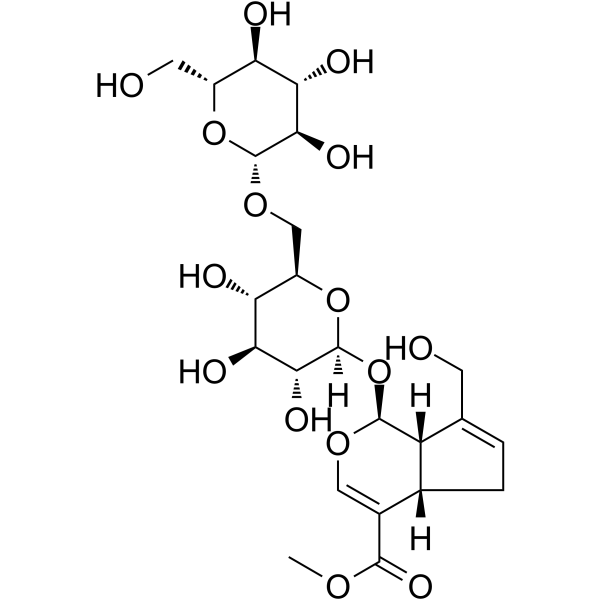
Genipin 1-β-D-gentiobiosideAnti-Inflammatory Agent -
HY-N0009
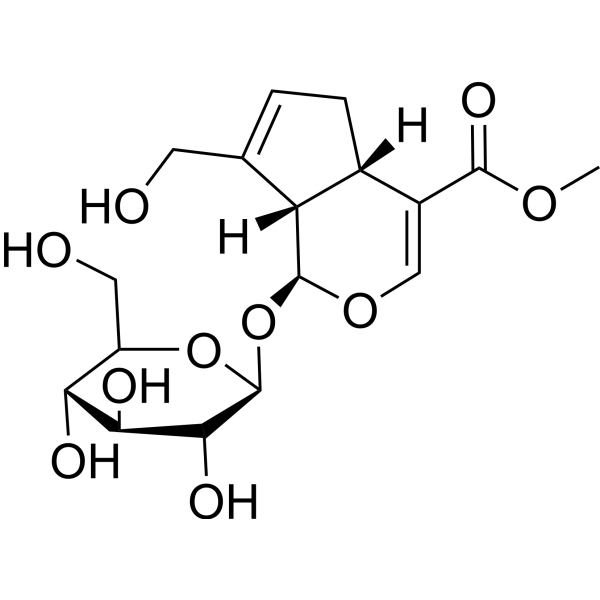
GeniposideInfluenza Virus Inhibitor -
HY-15488
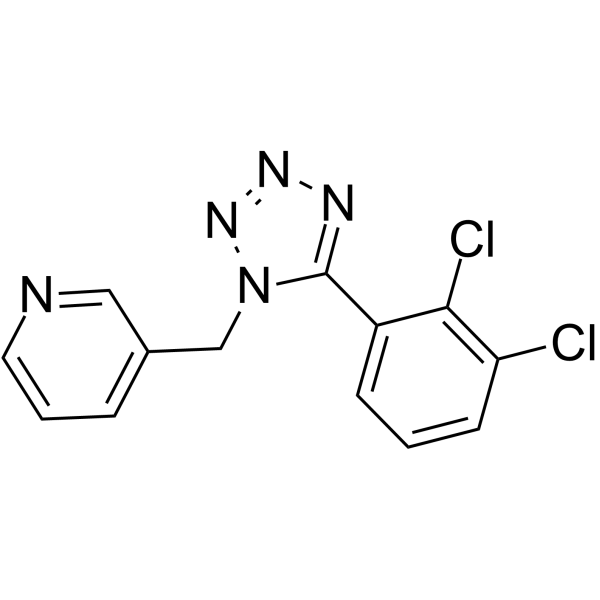
A 438079P2X Receptor Antagonist -
HY-15488A
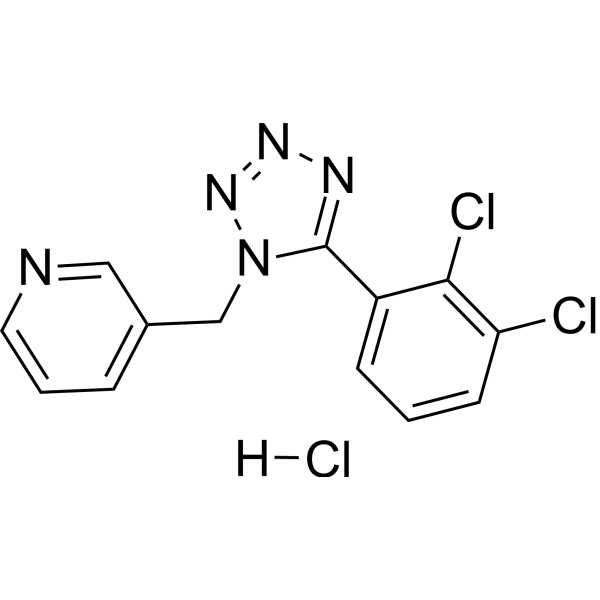
A 438079 hydrochlorideP2X7 Receptor Antagonist -

HY-N1478R
Gardenoside (Standard)Plant Ingredient -
HY-101911
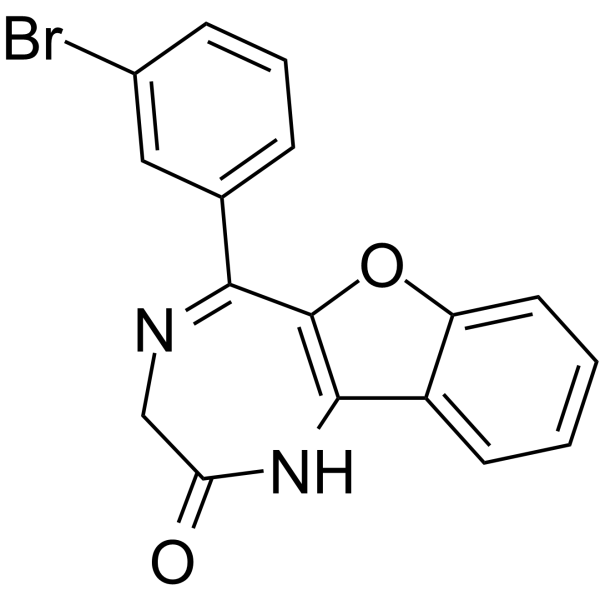
5-BDBDP2X4 Receptor Antagonist -
HY-136026
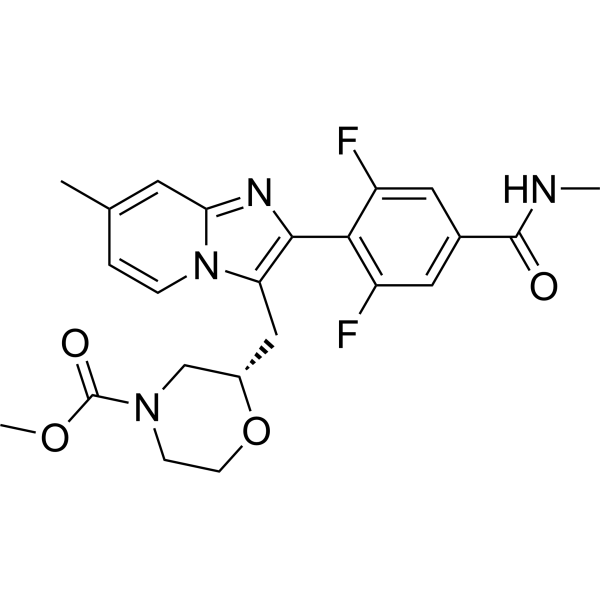
CamlipixantP2X3 Antagonist -
HY-108652
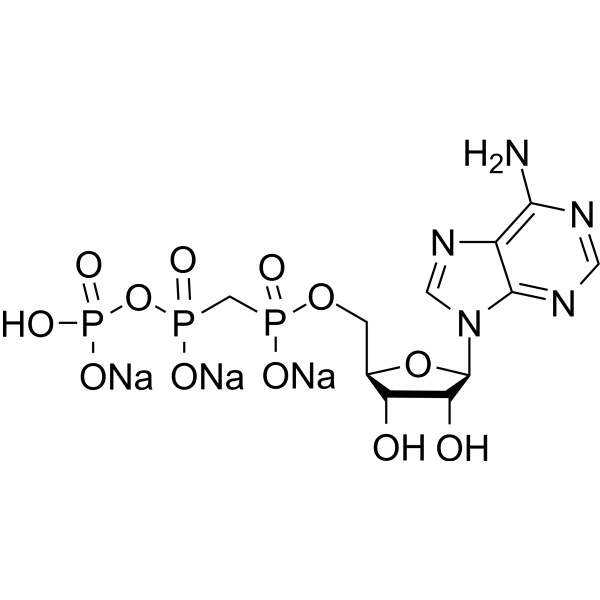
α,β-Methylene-ATP trisodiumP2X3/P2X7 Receptor Ligand -
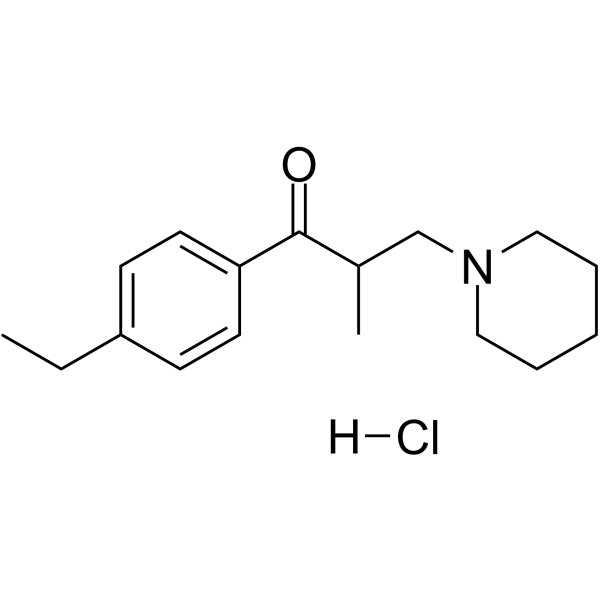
HY-B1901
Eperisone hydrochlorideAntispastic Agent, Muscle Relaxant, P2X7 Receptor Antagonist -

HY-B1901R
Eperisone hydrochloride (Standard)Antispastic Agent, Muscle Relaxant, P2X7 Receptor Antagonist -
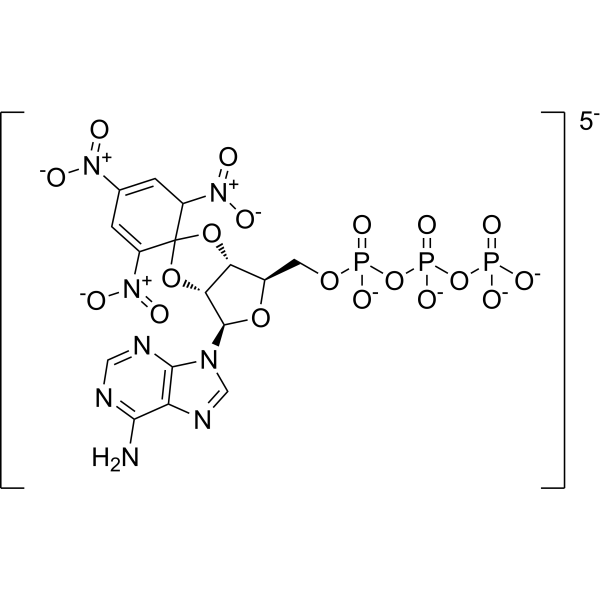
HY-108667
TNP-ATP triethylammoniumP2X Receptor Inhibitor -

HY-15488R
A 438079 (Standard)P2X Receptor Antagonist
Publications Citing Use of MedChemExpress (MCE) Gardenoside
MoreAlle P2X Receptor Isoform-spezifische Produkte anzeigen
More

Biologische Aktivität
Beschreibung
IC50 & Target
|
P2X3 Receptor |
P2X7 Receptor |
In Vitro
Gardenoside (10-20 μM, 24 h) can decrease the lipid droplets in HepG2 cells cultured with Palmitic acid (PA) (HY-N0830) and Oleic acid (OA) (HY-N1446)[2].
Gardenoside (10-20 μM, 24 h) decreases TNF-α, IL-6, IL-1βinduced by free fatty acids (FFAs) in HepG2 cells[2].
Gardenoside (10 μM) suppress the IL-1β-induced inflammatory reaction and ROS level in chondrocytes[3].
Gardenoside (10 μM) protects chondrocyte via inhibiting NF-κB/IκBα signaling pathways in chondrocytes[3].
MedChemExpress (MCE) has not independently confirmed the accuracy of these methods. They are for reference only.
-
Cell Line:HepG2 cells
-
Concentration:10, 20 μM
-
Incubation Time:24 h
-
Result:Decreased Phospho-NFκB p65 induced by FFAs in HepG2 cells.
In Vivo
Gardenoside (1 mg/kg; Intra-articular injections; daily for one week, then once every three days for another three weeks) attenuates osteoarthritis (OA) progression in rats[3].
MedChemExpress (MCE) has not independently confirmed the accuracy of these methods. They are for reference only.
-
Animal Model:Male Sprague-Dawley rats (200g)[3]
-
Dosage:1 mg/kg
-
Administration:Intra-articular injections; daily for one week, then once every three days for another three weeks.
-
Result:Attenuates OA progression in rats.
-
Animal Model:Male Sprague Dawley rats (8-10 weeks)[1]
-
Dosage:300 μM with 1% sodium carboxymethyl cellulose (5 mL)
-
Administration:Oral gavage (p.o.); daily for 14 d
-
Result:Partially restore the decrease of the MWT and TWL by sciatic nerve CCI.
Decreased the inflammation after sciatic nerve CCI.
Inhibited the up-expression of P2X3 and P2X7 receptors induced by sciatic nerve CCI.
Inhibited the expression of p-ERK and p-p38 induced by sciatic nerve CCI.


Chemical Information
-
CAS. Nr. 24512-62-7
-
Appearance Solid
-
Molecular Weight 404.37
-
Formel C17H24O11
-
Color Off-white to light yellow
-
SMILES
O=C(C1=CO[C@@H](O[C@H]2[C@@H]([C@H]([C@@H]([C@@H](CO)O2)O)O)O)[C@@]3([H])[C@]1([H])C=C[C@@]3(O)CO)OC
-
Structure Classification
-
Initial Source
-
Versand
Room temperature in continental US; may vary elsewhere.
-
Speicherung
4°C, protect from light
* In solvent : -80°C, 6 months; -20°C, 1 month (protect from light)


Publications (2)
-
Journal Impact Factor
-
Most Recent
-
Int Immunopharmacol
Rutin ameliorates hepatic ischemia-reperfusion injury by targeting CD36 to suppress hepatocyte ferroptosis. [Abstract]2026 Mar 1:172:116231. PMID: 41576568 -
Microbiol Spectr
Gardenoside attenuates Staphylococcus aureus-induced mastitis by inhibiting inflammation and ferroptosis through Nrf2/SLC7A11/GPX4 signaling pathway. [Abstract]2025 Jan 7;13(1):e0226224. PMID: 39612214


Lösungsmittel & Löslichkeit
In Vitro:
DMSO : 100 mg/mL (247.30 mM; Need ultrasonic; Hygroscopic DMSO has a significant impact on the solubility of product, please use newly opened DMSO)
Please refer to the solubility information to select the appropriate solvent. Once prepared, please aliquot and store the solution to prevent product inactivation from repeated freeze-thaw cycles.
Storage method and period of stock solution: -80°C, 6 months; -20°C, 1 month (protect from light). When stored at -80°C, please use it within 6 months. When stored at -20°C, please use it within 1 month.
Please refer to the solubility information to select the appropriate solvent. Once prepared, please aliquot and store the solution to prevent product inactivation from repeated freeze-thaw cycles.
Storage method and period of stock solution: -80°C, 6 months; -20°C, 1 month (protect from light). When stored at -80°C, please use it within 6 months. When stored at -20°C, please use it within 1 month.
Konzentration (Stammlösung) × Volumen (Stammlösung) = Konzentration (Ziellösung) × Volumen (Ziellösung)
In Vivo:
Select the appropriate dissolution method based on your experimental animal and administration route.
- For the following dissolution methods, please ensure to first prepare a clear stock solution using an In Vitro approach and then sequentially add co-solvents:
- To ensure reliable experimental results, the clarified stock solution can be appropriately stored based on storage conditions. As for the working solution for In Vivo experiments, it is recommended to prepare freshly and use it on the same day.
- The percentages shown for the solvents indicate their volumetric ratio in the final prepared solution. If precipitation or phase separation occurs during preparation, heat and/or sonication can be used to aid dissolution.
Add each solvent one by one: 10% DMSO 40% PEG300 5% Tween-80 45% Saline
Solubility: ≥ 2.5 mg/mL (6.18 mM); Clear solution
This protocol yields a clear solution of ≥ 2.5 mg/mL (saturation unknown).
Taking 1 mL working solution as an example, add 100 μL DMSO stock solution (25.0 mg/mL) to 400 μL PEG300, and mix evenly; then add 50 μL Tween-80 and mix evenly; then add 450 μL Saline to adjust the volume to 1 mL.
Preparation of Saline: Dissolve 0.9 g sodium chloride in ddH₂O and dilute to 100 mL to obtain a clear Saline solution.
Add each solvent one by one: 10% DMSO 90% (20% SBE-β-CD in Saline)
Solubility: ≥ 2.5 mg/mL (6.18 mM); Clear solution
This protocol yields a clear solution of ≥ 2.5 mg/mL (saturation unknown).
Taking 1 mL working solution as an example, add 100 μL DMSO stock solution (25.0 mg/mL) to 900 μL 20% SBE-β-CD in Saline, and mix evenly.
Preparation of 20% SBE-β-CD in Saline (4°C, storage for one week): 2 g SBE-β-CD powder is dissolved in 10 mL Saline, completely dissolve until clear.
In Vivo Dissolution Calculator
Please enter the basic information of animal experiments:
-
-
-
-
Recommended: Prepare an additional quantity of animals to account for potential losses during experiments.
Please enter your animal formula composition:
-
%DMSO +
Recommended: Keep the proportion of DMSO in working solution below 2% if your animal is weak.
-
%+
-
+%Tween-80 + +
-
%Saline +
The co-solvents required include: DMSO, . All of co-solvents are available by MedChemExpress (MCE). , Tween 80. All of co-solvents are available by MedChemExpress (MCE).
Working solution concentration: 0.22 mg/mL
Method for preparing stock solution: mg drug dissolved in μL DMSO. Stock solution concentration: mg/mL. * In solvent : -80°C, 6 months; -20°C, 1 month (protect from light)
1. Take μL DMSO stock solution;
2. Add μL .
μL , mix evenly;
3. Then add μL Tween 80, mix evenly;
4. Then add μL
Please ensure that the stock solution in the first step is dissolved to a clear state, and add co-solvents in sequence. You can use ultrasonic heating (ultrasonic cleaner, recommended frequency 20-40 kHz), vortexing, etc. to assist dissolution.


Reinheit & Dokumentation
-
Data Sheet (283 KB)
-
SDS (393 KB)
- English - EN (393 KB)
- Français - FR (393 KB)
- Deutsch - DE (393 KB)
- Norwegian - NO (393 KB)
- Español - ES (393 KB)
- Swedish - SV (393 KB)
- Italian - IT (393 KB)
- Korean - KR (393 KB)
- Portuguese - PT (393 KB)
-
Handling Instructions (2659 KB)
Verweise
[1]. Yu M, Su B, et al. Gardenoside suppresses the pain in rats model of chronic constriction injury by regulating the P2X3 and P2X7 receptors. J Recept Signal Transduct Res. 2018 Jun;38(3):198-203. [Content Brief]
[2]. Liang H, et al. Inhibitory Effect of Gardenoside on Free Fatty Acid-Induced Steatosis in HepG2 Hepatocytes. Int J Mol Sci. 2015 Nov 20;16(11):27749-56. [Content Brief]
[3]. Xia T, et al. Gardenoside ameliorates inflammation and inhibits ECM degradation in IL-1β-treated rat chondrocytes via suppressing NF-κB signaling pathways. Biochem Biophys Res Commun. 2023 Jan 15;640:164-172. [Content Brief]


Complete Stock Solution Preparation Table
Please refer to the solubility information to select the appropriate solvent. Once prepared, please aliquot and store the solution to prevent product inactivation from repeated freeze-thaw cycles.
Storage method and period of stock solution: -80°C, 6 months; -20°C, 1 month (protect from light). When stored at -80°C, please use it within 6 months. When stored at -20°C, please use it within 1 month.
| Optional Solvent | Concentration Solvent Mass | 1 mg | 5 mg | 10 mg | 25 mg |
|---|---|---|---|---|---|
| DMSO | 1 mM | 2.4730 mL | 12.3649 mL | 24.7298 mL | 61.8246 mL |
| 5 mM | 0.4946 mL | 2.4730 mL | 4.9460 mL | 12.3649 mL | |
| 10 mM | 0.2473 mL | 1.2365 mL | 2.4730 mL | 6.1825 mL | |
| 15 mM | 0.1649 mL | 0.8243 mL | 1.6487 mL | 4.1216 mL | |
| 20 mM | 0.1236 mL | 0.6182 mL | 1.2365 mL | 3.0912 mL | |
| 25 mM | 0.0989 mL | 0.4946 mL | 0.9892 mL | 2.4730 mL | |
| 30 mM | 0.0824 mL | 0.4122 mL | 0.8243 mL | 2.0608 mL | |
| 40 mM | 0.0618 mL | 0.3091 mL | 0.6182 mL | 1.5456 mL | |
| 50 mM | 0.0495 mL | 0.2473 mL | 0.4946 mL | 1.2365 mL | |
| 60 mM | 0.0412 mL | 0.2061 mL | 0.4122 mL | 1.0304 mL | |
| 80 mM | 0.0309 mL | 0.1546 mL | 0.3091 mL | 0.7728 mL | |
| 100 mM | 0.0247 mL | 0.1236 mL | 0.2473 mL | 0.6182 mL |


Gardenoside Related Classifications
HY-N1478 Related Classifications
 Powered by Bioz