



CCPA
Based on 2 publication(s) in Google Scholar
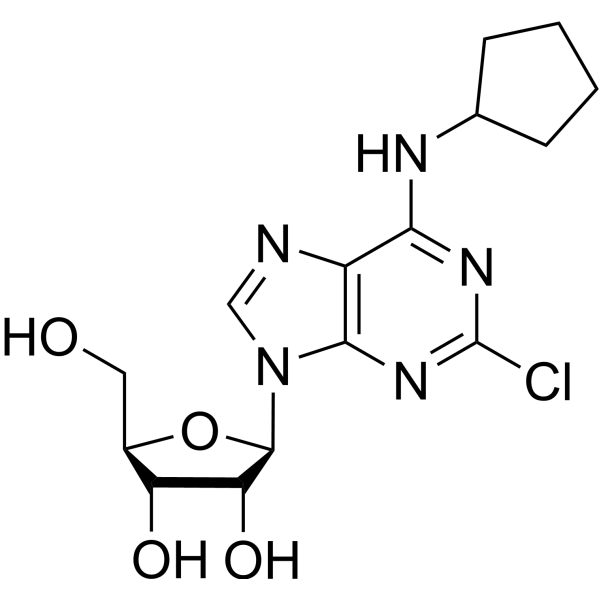
CCPA (2-Chloro-N6-cyclopentyladenosine) a highly selective A1 adenosine receptors agonist with a Ki of 0.4 nM. CCPA inhibits adenylate cyclase with an IC50 of 33 nM. CCPA exhibits anti-seizure and cardiacprotective activity. CCPA can be used for the research of seizure and myocardial infarction.
For research use only. We do not sell to patients.
- Purity : 99.77%
- CAS No.: 37739-05-2
- Formula: C15H20ClN5O4
- Molecular Weight:369.80
-
Storage:
4°C, protect from light
* In solvent : -80°C, 6 months; -20°C, 1 month (protect from light)

To place orders, for customer services and technical support, please contact: MedChemExpress USA
Tel: 609-228-6898 E-mail: [email protected] [email protected]


-
 Biological Activity
-
Chemical Information
-
Solvent & Solubility
- Protocols
- Purity & Documentation
- References
-
 Help & FAQs


-
HY-100937
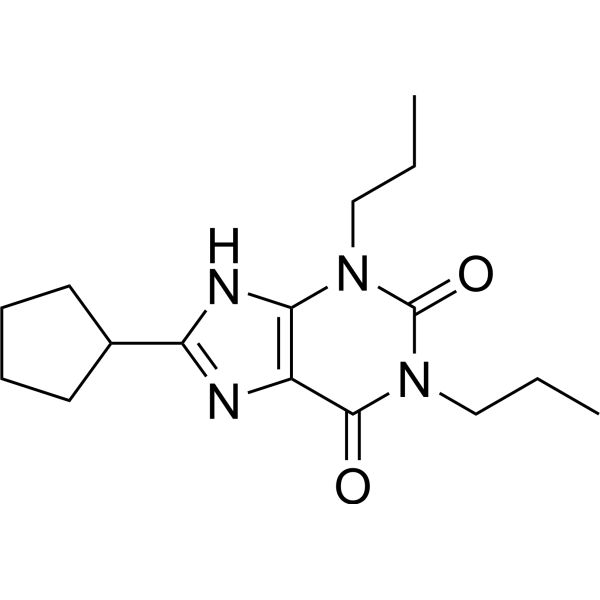
DPCPXA1 Receptor Antagonist -
HY-13591
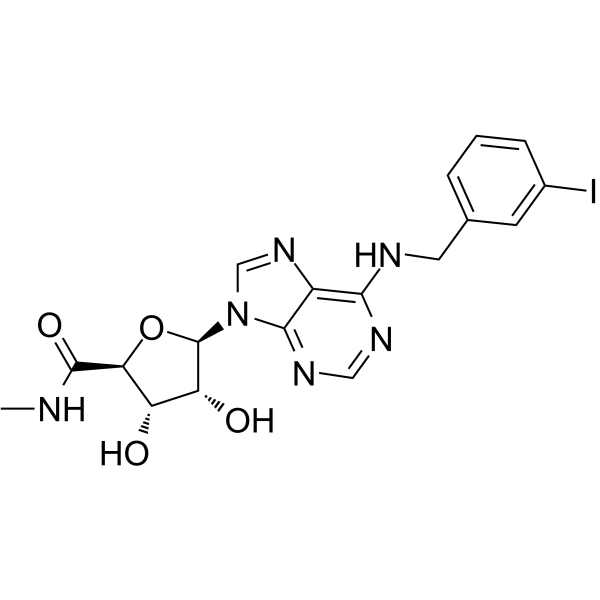
PiclidenosonA3AR Agonist -
HY-13201A
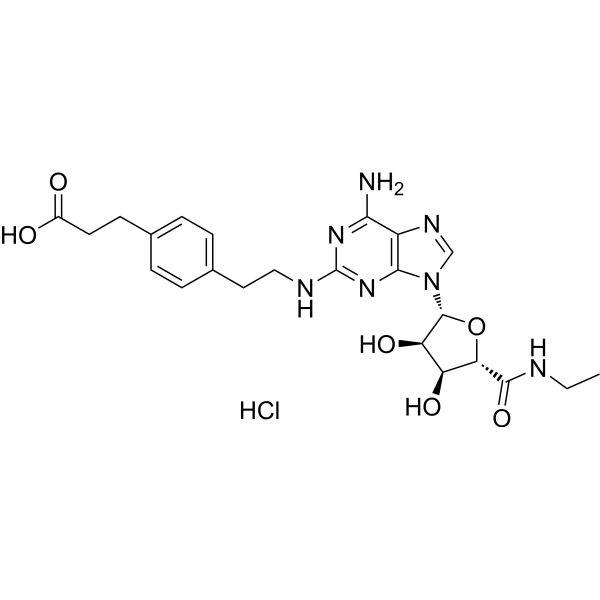
CGS 21680 HydrochlorideAdenosine A2A Receptor Agonist -
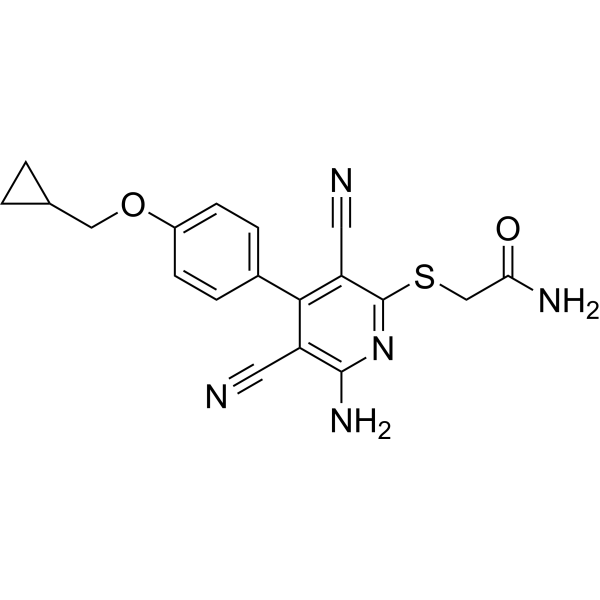
HY-103171
BAY 60-6583A2B Receptor Agonist -
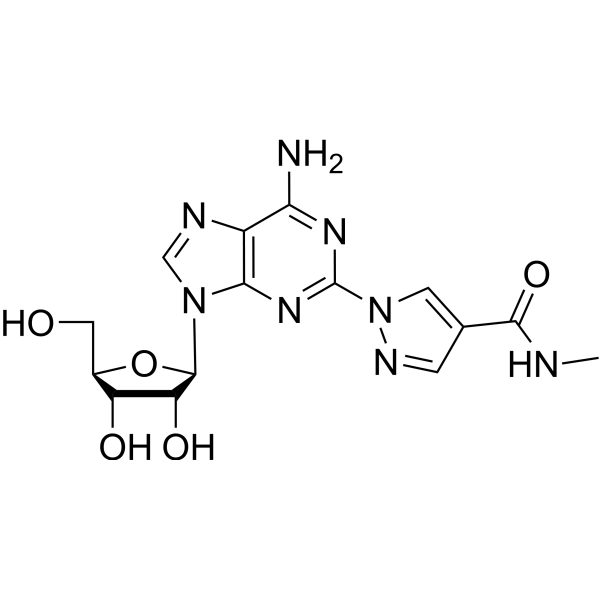
HY-A0168
RegadenosonVasodilator/A2A Adenosine Receptor Agonist -
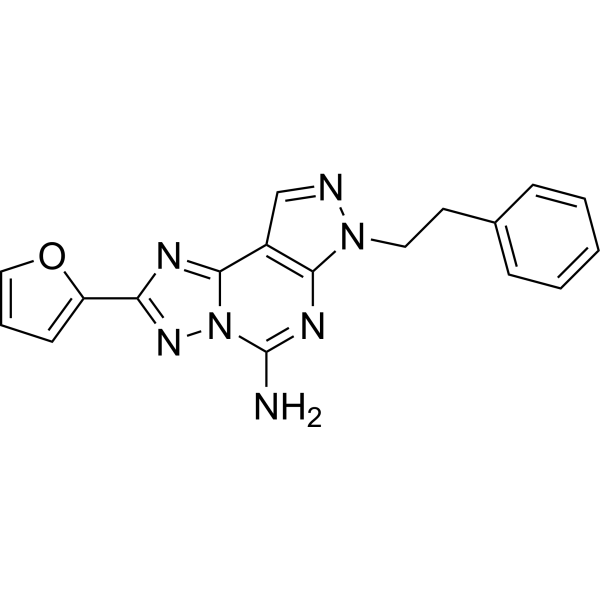
HY-19533
SCH 58261A2A Receptor Antagonist -
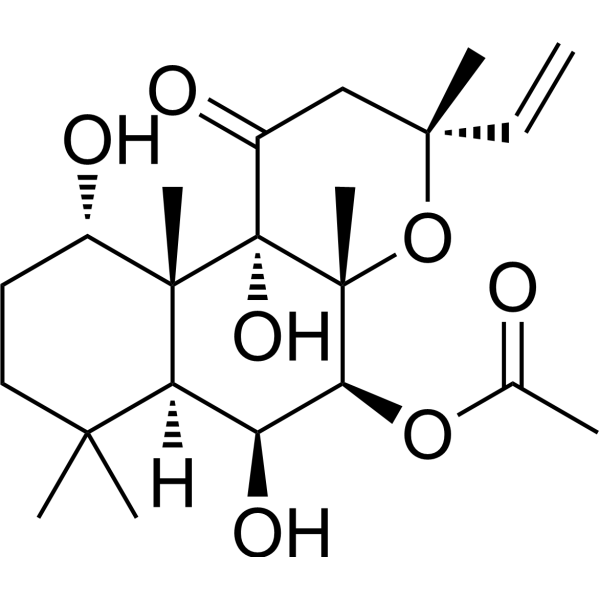
HY-15371
ForskolinAdenylate Cyclase Activator -
HY-12365
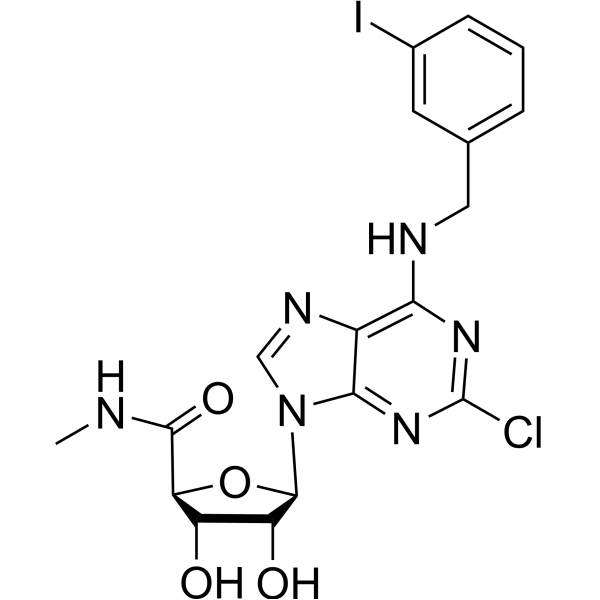
NamodenosonA3AR Agonist -
HY-103173
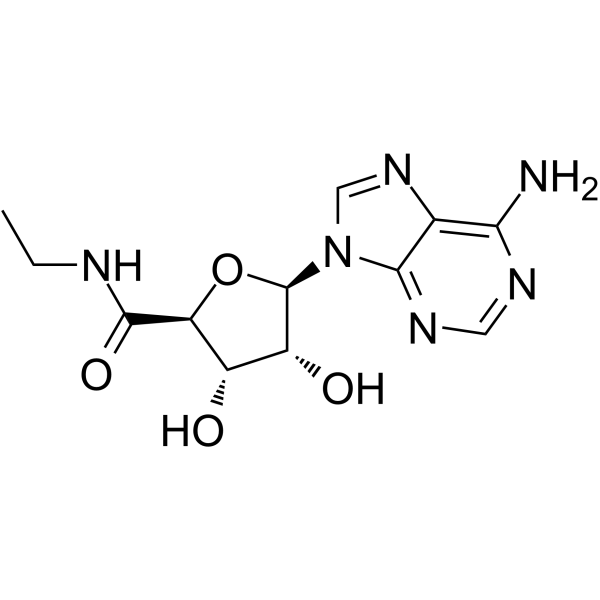
5'-N-EthylcarboxamidoadenosineAdenosine Receptor Agonist -
HY-10965
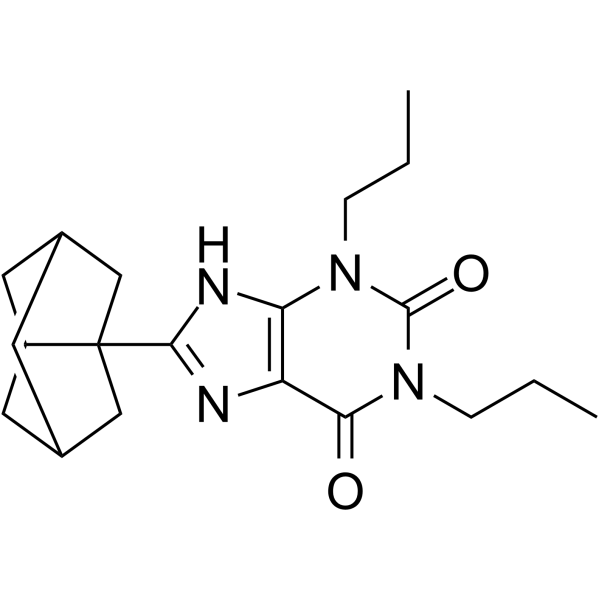
RolofyllineAdenosine A1 Receptor Antagonist -

HY-103185R
CCPA (Standard)Standard of CCPA -
HY-103181
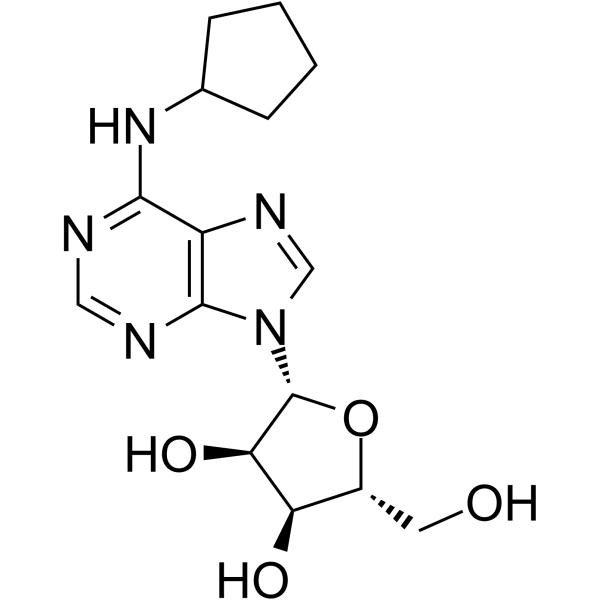
N6-CyclopentyladenosineAdenosine A1 Receptor Agonist
Publications Citing Use of MedChemExpress (MCE) CCPA
MoreAll Adenosine Receptor Isoforms
More

Biological Activity
Description
IC50 & Target
[1]|
A1AR 0.4 nM (Ki) |
Cellular Effect
|
Cell Line

|
Type | Value | Description | References |
|---|---|---|---|---|
| Caco-2 | GI50 |
>250 μM
Compound: 15, CCPA
|
Antitumor activity against human CaCo2 cells after 48 hrs by MTS assay
Antitumor activity against human CaCo2 cells after 48 hrs by MTS assay
|
[PMID: 18588281] |
| CHO | IC50 |
1.3 nM
Compound: CCPA
|
Inhibition of cAMP formation in CHO cells expressing adenosine A1 receptor
Inhibition of cAMP formation in CHO cells expressing adenosine A1 receptor
|
[PMID: 12672250] |
| CHO-K1 | EC50 |
1.65 nM
Compound: 2; CCPA
|
Agonist activity at rat A1A adenosine receptor expressed in CHO-K1 cell membranes incubated for 60 mins by [35S]GTPgammaS binding assay
Agonist activity at rat A1A adenosine receptor expressed in CHO-K1 cell membranes incubated for 60 mins by [35S]GTPgammaS binding assay
|
[PMID: 30605331] |
| HEK293 | EC50 |
17.7 nM
Compound: 44
|
Agonist activity at mouse adenosine A1 receptor expressed in HEK293 cell membranes assessed as inhibition of forskolin-stimulated cAMP production preincubated for 30 mins prior to forskolin-treatment measured after 15 mins by ELISA
Agonist activity at mouse adenosine A1 receptor expressed in HEK293 cell membranes assessed as inhibition of forskolin-stimulated cAMP production preincubated for 30 mins prior to forskolin-treatment measured after 15 mins by ELISA
|
[PMID: 23789857] |
| HEK-293T | EC50 |
0.0046 μM
Compound: 3
|
Agonist activity at human A1AR expressed in HEK293T/17 cells assessed as inhibition of forskolin-induced cAMP accumulation incubated for 10 mins by luciferase reporter assay
Agonist activity at human A1AR expressed in HEK293T/17 cells assessed as inhibition of forskolin-induced cAMP accumulation incubated for 10 mins by luciferase reporter assay
|
[PMID: 22738238] |
| HEK-293T | EC50 |
0.014 μM
Compound: 3
|
Agonist activity at human A1AR expressed in HEK293T/17 cells assessed as inhibition of isoproterenol-induced cAMP accumulation incubated for 10 mins by luciferase reporter assay
Agonist activity at human A1AR expressed in HEK293T/17 cells assessed as inhibition of isoproterenol-induced cAMP accumulation incubated for 10 mins by luciferase reporter assay
|
[PMID: 22738238] |
| HT-29 | GI50 |
>250 μM
Compound: 15, CCPA
|
Antitumor activity against human HT29 cells after 48 hrs by MTS assay
Antitumor activity against human HT29 cells after 48 hrs by MTS assay
|
[PMID: 18588281] |
| K562 | GI50 |
>250 μM
Compound: 15, CCPA
|
Antitumor activity against human K562 cells after 48 hrs by MTS assay
Antitumor activity against human K562 cells after 48 hrs by MTS assay
|
[PMID: 18588281] |
| MCF7 | GI50 |
>250 μM
Compound: 15, CCPA
|
Antitumor activity against human MCF7 cells after 48 hrs by MTS assay
Antitumor activity against human MCF7 cells after 48 hrs by MTS assay
|
[PMID: 18588281] |
In Vitro
CCPA potently binds to rat brain membrane A1 adenosine receptors with a Ki of 0.4 nM, demonstrating high A1 selectivity (Ki of 3900 nM for A2)[1].
CCPA acts as a full A1 adenosine receptor agonist to inhibit rat fat cell membrane adenylate cyclase with an IC50 of 33 nM, and shows an IC50 of 3500 nM for A2[1].
MedChemExpress (MCE) has not independently confirmed the accuracy of these methods. They are for reference only.
In Vivo
CCPA (0.125 mg/kg; i.v.; 30 min before induction) reduces infarct size in a rabbit model of coronary artery occlusion-induced myocardial infarction[3].
MedChemExpress (MCE) has not independently confirmed the accuracy of these methods. They are for reference only.
-
Animal Model:maximal electroshock (MES)-induced seizure mice[2]
-
Dosage:0.25, 0.5 mg/kg
-
Administration:i,p,; single dose
-
Result:Increased the electroconvulsive threshold.


Chemical Information
-
CAS No. 37739-05-2
-
Appearance Solid
-
Molecular Weight 369.80
-
Formula C15H20ClN5O4
-
Color White to off-white
-
SMILES
ClC(N=C1NC2CCCC2)=NC3=C1N=CN3[C@H]4[C@H](O)[C@H](O)[C@@H](CO)O4
-
Synonyms
2-Chloro-N6-cyclopentyladenosine
-
Shipping
Room temperature in continental US; may vary elsewhere.
-
Storage
4°C, protect from light
* In solvent : -80°C, 6 months; -20°C, 1 month (protect from light)


Publications (2)
-
Journal Impact Factor
-
Most Recent
-
Br J Pharmacol
An adenosinergic positive feedback loop extends pharmacological cardioprotection duration. [Abstract]2024 Dec;181(23):4920-4936. PMID: 39256947 -
bioRxiv
Molecular cloning of a novel, nervous system-specific RGS6 isoform lacking canonical G protein regulatory effects and with dominant negative actions. [Abstract]2026 May 12:2026.05.08.723811. PMID: 42182468


Solvent & Solubility
In Vitro:
DMSO : 100 mg/mL (270.42 mM; Need ultrasonic; Hygroscopic DMSO has a significant impact on the solubility of product, please use newly opened DMSO)
Please refer to the solubility information to select the appropriate solvent. Once prepared, please aliquot and store the solution to prevent product inactivation from repeated freeze-thaw cycles.
Storage method and period of stock solution: -80°C, 6 months; -20°C, 1 month (protect from light). When stored at -80°C, please use it within 6 months. When stored at -20°C, please use it within 1 month.
Please refer to the solubility information to select the appropriate solvent. Once prepared, please aliquot and store the solution to prevent product inactivation from repeated freeze-thaw cycles.
Storage method and period of stock solution: -80°C, 6 months; -20°C, 1 month (protect from light). When stored at -80°C, please use it within 6 months. When stored at -20°C, please use it within 1 month.
Concentration (start) × Volume (start) = Concentration (final) × Volume (final)
In Vivo:
Select the appropriate dissolution method based on your experimental animal and administration route.
- For the following dissolution methods, please ensure to first prepare a clear stock solution using an In Vitro approach and then sequentially add co-solvents:
- To ensure reliable experimental results, the clarified stock solution can be appropriately stored based on storage conditions. As for the working solution for In Vivo experiments, it is recommended to prepare freshly and use it on the same day.
- The percentages shown for the solvents indicate their volumetric ratio in the final prepared solution. If precipitation or phase separation occurs during preparation, heat and/or sonication can be used to aid dissolution.
Add each solvent one by one: 10% DMSO 40% PEG300 5% Tween-80 45% Saline
Solubility: ≥ 2.5 mg/mL (6.76 mM); Clear solution
This protocol yields a clear solution of ≥ 2.5 mg/mL (saturation unknown).
Taking 1 mL working solution as an example, add 100 μL DMSO stock solution (25.0 mg/mL) to 400 μL PEG300, and mix evenly; then add 50 μL Tween-80 and mix evenly; then add 450 μL Saline to adjust the volume to 1 mL.
Preparation of Saline: Dissolve 0.9 g sodium chloride in ddH₂O and dilute to 100 mL to obtain a clear Saline solution.
Add each solvent one by one: 10% DMSO 90% (20% SBE-β-CD in Saline)
Solubility: ≥ 2.5 mg/mL (6.76 mM); Clear solution
This protocol yields a clear solution of ≥ 2.5 mg/mL (saturation unknown).
Taking 1 mL working solution as an example, add 100 μL DMSO stock solution (25.0 mg/mL) to 900 μL 20% SBE-β-CD in Saline, and mix evenly.
Preparation of 20% SBE-β-CD in Saline (4°C, storage for one week): 2 g SBE-β-CD powder is dissolved in 10 mL Saline, completely dissolve until clear.
In Vivo Dissolution Calculator
Please enter the basic information of animal experiments:
-
-
-
-
Recommended: Prepare an additional quantity of animals to account for potential losses during experiments.
Please enter your animal formula composition:
-
%DMSO +
Recommended: Keep the proportion of DMSO in working solution below 2% if your animal is weak.
-
%+
-
+%Tween-80 + +
-
%Saline +
The co-solvents required include: DMSO, . All of co-solvents are available by MedChemExpress (MCE). , Tween 80. All of co-solvents are available by MedChemExpress (MCE).
Working solution concentration: 0.22 mg/mL
Method for preparing stock solution: mg drug dissolved in μL DMSO. Stock solution concentration: mg/mL. * In solvent : -80°C, 6 months; -20°C, 1 month (protect from light)
1. Take μL DMSO stock solution;
2. Add μL .
μL , mix evenly;
3. Then add μL Tween 80, mix evenly;
4. Then add μL
Please ensure that the stock solution in the first step is dissolved to a clear state, and add co-solvents in sequence. You can use ultrasonic heating (ultrasonic cleaner, recommended frequency 20-40 kHz), vortexing, etc. to assist dissolution.


Purity & Documentation
-
Data Sheet (279 KB)
-
SDS (394 KB)
- English - EN (394 KB)
- Français - FR (394 KB)
- Deutsch - DE (394 KB)
- Norwegian - NO (394 KB)
- Español - ES (394 KB)
- Swedish - SV (394 KB)
- Italian - IT (394 KB)
- Korean - KR (394 KB)
- Portuguese - PT (394 KB)
-
Handling Instructions (2659 KB)
References
[1]. Czuczwar S J. 2-Chloro-N 6-cyclopentyladenosine enhances the anticonvulsant action of carbamazepine in the mouse maximal electroshock-induced seizure model A[J]. Pharmacological reports, 2005, 57(787): 787-794. [Content Brief]
[2]. Tsuchida A, et al. Pretreatment with the adenosine A1 selective agonist, 2-chloro-N6-cyclopentyladenosine (CCPA), causes a sustained limitation of infarct size in rabbits[J]. Cardiovascular research, 1993, 27(4): 652-656. [Content Brief]
[3]. Lohse MJ, et al. 2-Chloro-N6-cyclopentyladenosine: a highly selective agonist at A1 adenosine receptors. Naunyn Schmiedebergs Arch Pharmacol. 1988;337(6):687-689. [Content Brief]


Complete Stock Solution Preparation Table
Please refer to the solubility information to select the appropriate solvent. Once prepared, please aliquot and store the solution to prevent product inactivation from repeated freeze-thaw cycles.
Storage method and period of stock solution: -80°C, 6 months; -20°C, 1 month (protect from light). When stored at -80°C, please use it within 6 months. When stored at -20°C, please use it within 1 month.
| Optional Solvent | Concentration Solvent Mass | 1 mg | 5 mg | 10 mg | 25 mg |
|---|---|---|---|---|---|
| DMSO | 1 mM | 2.7042 mL | 13.5208 mL | 27.0416 mL | 67.6041 mL |
| 5 mM | 0.5408 mL | 2.7042 mL | 5.4083 mL | 13.5208 mL | |
| 10 mM | 0.2704 mL | 1.3521 mL | 2.7042 mL | 6.7604 mL | |
| 15 mM | 0.1803 mL | 0.9014 mL | 1.8028 mL | 4.5069 mL | |
| 20 mM | 0.1352 mL | 0.6760 mL | 1.3521 mL | 3.3802 mL | |
| 25 mM | 0.1082 mL | 0.5408 mL | 1.0817 mL | 2.7042 mL | |
| 30 mM | 0.0901 mL | 0.4507 mL | 0.9014 mL | 2.2535 mL | |
| 40 mM | 0.0676 mL | 0.3380 mL | 0.6760 mL | 1.6901 mL | |
| 50 mM | 0.0541 mL | 0.2704 mL | 0.5408 mL | 1.3521 mL | |
| 60 mM | 0.0451 mL | 0.2253 mL | 0.4507 mL | 1.1267 mL | |
| 80 mM | 0.0338 mL | 0.1690 mL | 0.3380 mL | 0.8451 mL | |
| 100 mM | 0.0270 mL | 0.1352 mL | 0.2704 mL | 0.6760 mL |


CCPA Related Classifications
HY-103185 Related Classifications
 Powered by Bioz