



Zeaxanthin dipalmitate

Based on 1 Customer Validation
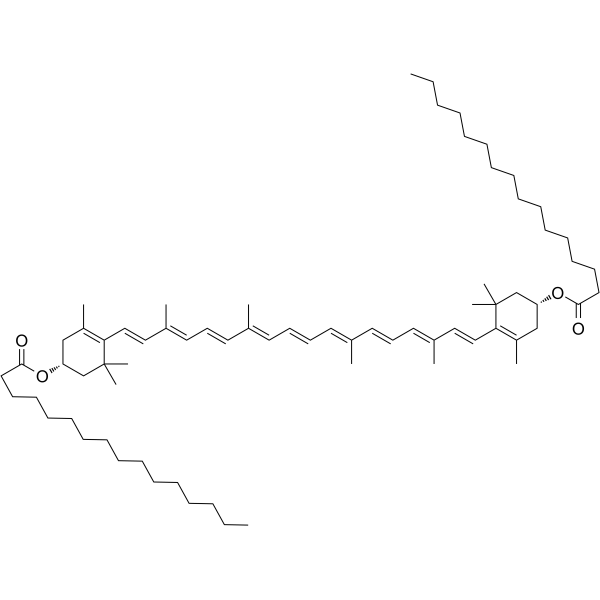
Zeaxanthin dipalmitate (Physalien) is a wolfberry-derived carotenoid, has anti-inflammatory and anti-oxidative stress effects. Zeaxanthin dipalmitate directly interact with p2X7 receptor (Kd=81.2 nM) and adiponectin receptor 1 (AdipoR1; Kd=533 nM) in a positive dose-dependent manner. Zeaxanthin dipalmitate restores mitochondrial autophagy functions suppressed by ethanol intoxication. Zeaxanthin dipalmitate can be used in the research of alcoholic fatty liver disease (AFLD) and retinitis pigmentosa (RP).
商品は「研究用試薬」です。人や動物の医療用・臨床診断用・食品用の製品ではありません。
研究用途以外に使用した場合、当社は一切の責任を負いかねます。
- 純度: 99.9%
- CAS 番号: 144-67-2
- 分子式: C72H116O4
- 分子量:1045.69
-
保管条件:Powder -20°C, 3 years ; In solvent -80°C, 6 months , -20°C, 1 month

To place orders, for customer services and technical support, please contact: MedChemExpress USA
Tel: 609-228-6898 E-mail: [email protected] [email protected]


-
 生物活性
生物活性
-
化学情報
-
溶剤 & 溶解度
- 純度とドキュメンテーション
- 参考文献
-
 Help & FAQs


-
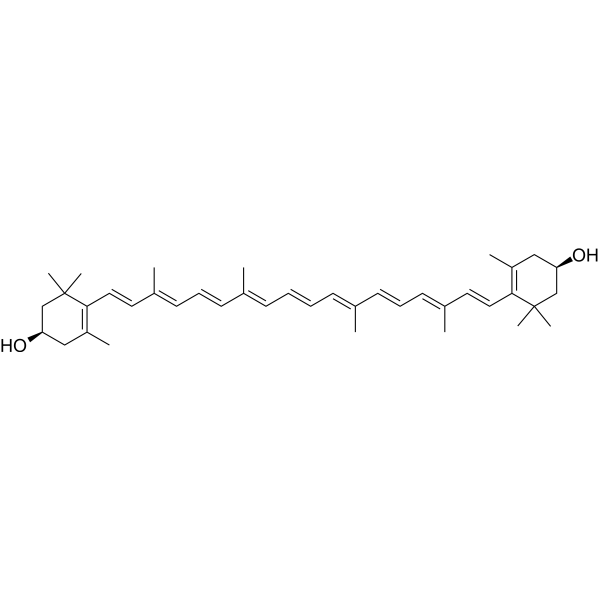
HY-120318
Zeaxanthin
-
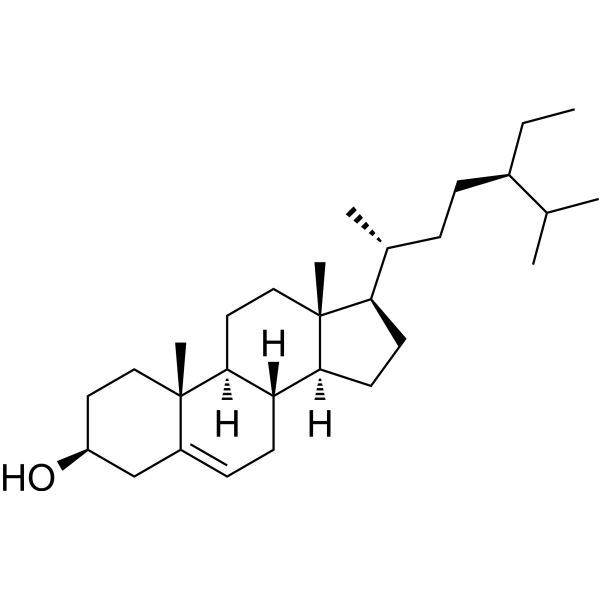
HY-N0171A
Beta-Sitosterol (purity>98%)
-
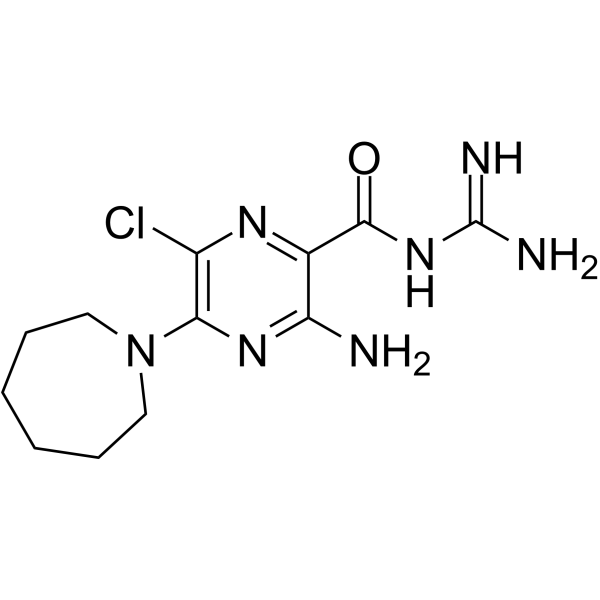
HY-128067
5-(N,N-Hexamethylene)-amiloride
-
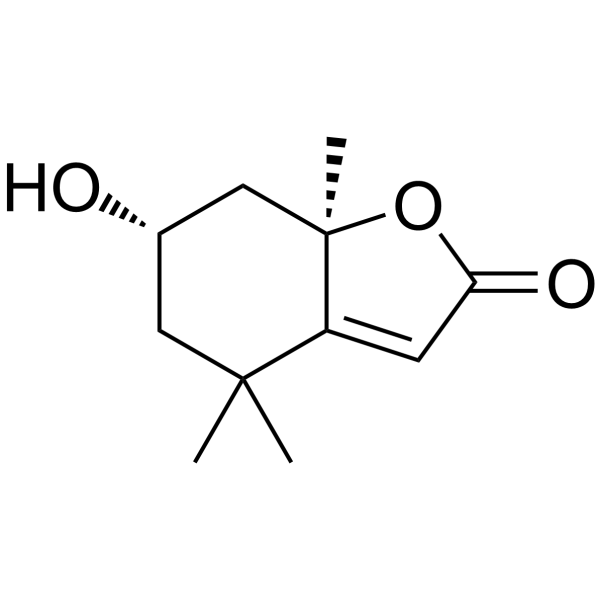
HY-118020A
Loliolide
-
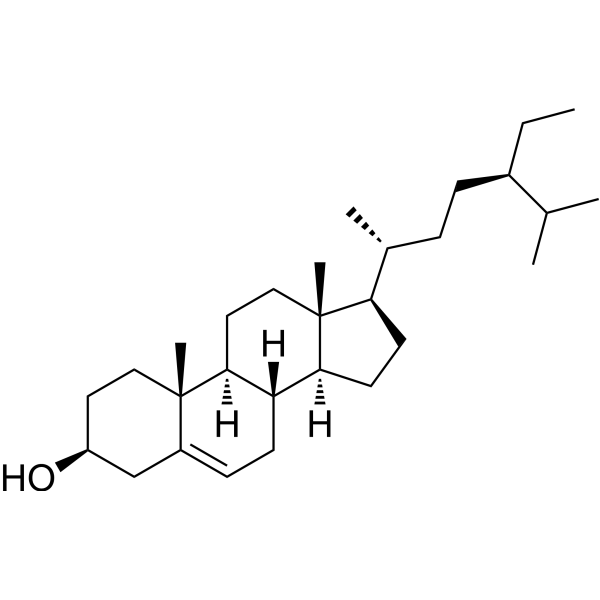
HY-N0171
Beta-Sitosterol (purity>80%)
-
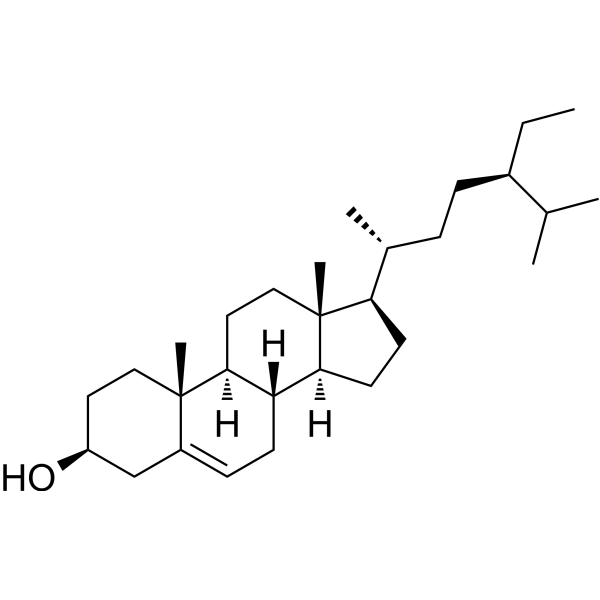
HY-N0171R
Beta-Sitosterol (Standard)
-
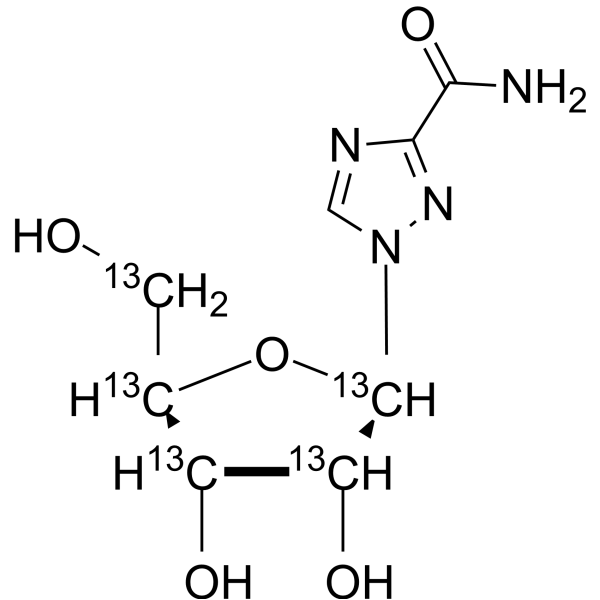
HY-B0434S
Ribavirin-13C5
-
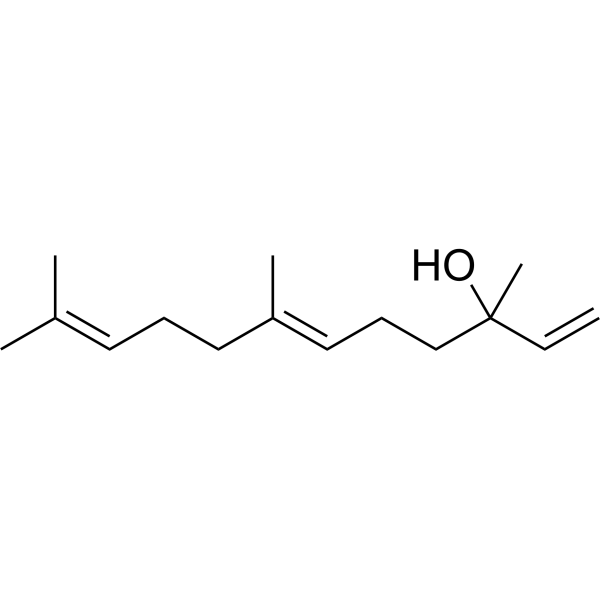
HY-N6635
trans-Nerolidol
-
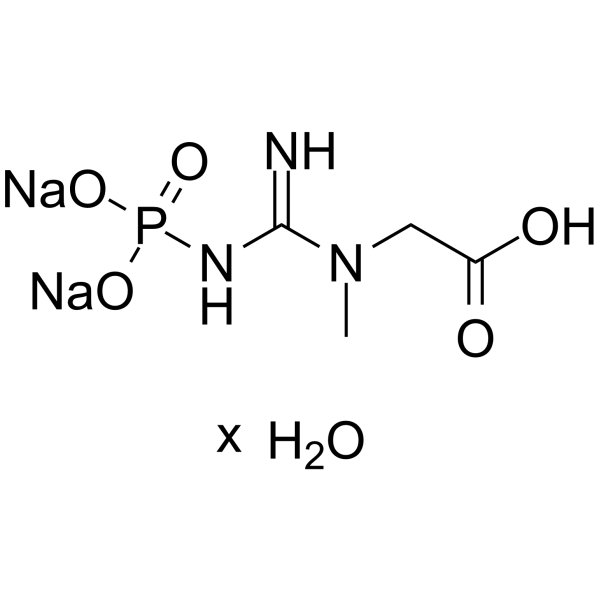
HY-D0885D
Phosphocreatine disodium hydrate
-
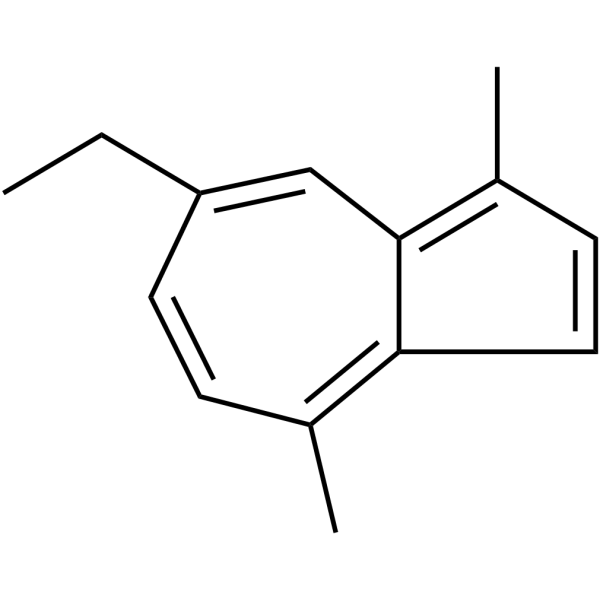
HY-121038
Chamazulene
-

HY-128067R
5-(N,N-Hexamethylene)-amiloride (Standard)
P2X Receptor アイソフォーム固有の製品をすべて表示
More

生物活性
|
P2X7 Receptor |
Zeaxanthin dipalmitate (1 μM; 2 h) totally or partially reverses the down-regulation of Atg5, beclin-1, and LC3A/B by ethanol (250 mM), and the up-regulation of p62 by ethanol in BRL-3A cells[1].
Zeaxanthin dipalmitate (1 μM; 2 h) partially recovers the ethanol-suppressed LC3B in BRL-3A cells[1].
Zeaxanthin dipalmitate (1 μM; 2 h) partially recovers the ethanol-suppressed cell viability and ethanol-induced aspase-3/7 activity of BRL-3A cells[1].
Zeaxanthin dipalmitate (1 μM; 2 h) recovers the ethanol-induced inhibition of mitophagy in BRL-3A cells[1].
MedChemExpress (MCE) has not independently confirmed the accuracy of these methods. They are for reference only.
Zeaxanthin dipalmitate (10 mg/kg; p.o.; daily for 2 weeks) effectively attenuates the histological injury[1].
Zeaxanthin dipalmitate (10 mg/kg; p.o.; daily for 2 weeks) attenuates the AFLD-induced hepatic apoptosis (reveal by caspase-3/7 activity) and inflammation (TNF-α) in rat[1].
Zeaxanthin dipalmitate (approximately 4 μM; intravitreal injection for once) improves the visual behavior of rd10 mice and delays the degeneration of retinal photoreceptors[2].
Zeaxanthin dipalmitate (approximately 4 μM; intravitreal injection for once) improves the light responses of photoreceptors, bipolar cells and retinal ganglion cells[2].
Zeaxanthin dipalmitate (approximately 4 μM; intravitreal injection for once) reduces the expression of genes that are involved in inflammation, apoptosis and oxidative stress in rd10 mice[2].
MedChemExpress (MCE) has not independently confirmed the accuracy of these methods. They are for reference only.


化学情報
-
CAS 番号 144-67-2
-
性状 Solid
-
分子量 1045.69
-
分子式 C72H116O4
-
Color Brown to reddish brown
-
SMILES
CC1(C)C(/C=C/C(C)=C/C=C/C(C)=C/C=C/C=C(C)/C=C/C=C(C)/C=C/C2=C(C)C[C@@H](OC(CCCCCCCCCCCCCCC)=O)CC2(C)C)=C(C)C[C@@H](OC(CCCCCCCCCCCCCCC)=O)C1
-
別名
Physalien
-
Structure Classification
-
Initial Source
-
輸送条件
Room temperature in continental US; may vary elsewhere.
-
保管条件
Powder -20°C 3 years In solvent -80°C 6 months -20°C 1 month


溶剤 & 溶解度
Ethanol : 1 mg/mL (0.96 mM; Need ultrasonic and warming)


純度とドキュメンテーション
-
データシート (270 KB)
-
SDS (251 KB)
- English - EN (251 KB)
- Français - FR (251 KB)
- Deutsch - DE (251 KB)
- Norwegian - NO (251 KB)
- Español - ES (251 KB)
- Swedish - SV (251 KB)
- Italian - IT (251 KB)
- Korean - KR (251 KB)
- Portuguese - PT (251 KB)
-
取扱説明書 (2659 KB)
参考文献
[1]. Gao H, et al. Wolfberry-Derived Zeaxanthin Dipalmitate Attenuates Ethanol-Induced Hepatic Damage. Mol Nutr Food Res. 2019 Jun;63(11):e1801339. [Content Brief]
[2]. Liu F, et al. Wolfberry-derived zeaxanthin dipalmitate delays retinal degeneration in a mouse model of retinitis pigmentosa through modulating STAT3, CCL2 and MAPK pathways. J Neurochem. 2021 Sep;158(5):1131-1150. [Content Brief]

Calculators
濃度 (開始) × 体積 (開始) = 濃度 (終了) × 体積 (終了)


Zeaxanthin dipalmitate 関連分類
HY-N9182 関連分類
 Powered by Bioz