



Methyllycaconitine
Based on 54 publication(s) in Google Scholar
Methyllycaconitine (MLA) is a blood-brain barrier-permeable antagonist of α7 nicotinic acetylcholine receptor (α7nAChR) with an IC50 of 2 nM. Methyllycaconitine inhibits Aβ25-35-induced autophagy by restoring the mTOR pathway, and prevents reactive oxygen species (ROS) production, microglial activation, reduced dopamine uptake, loss of dopaminergic terminals and catecholamine secretion. Methyllycaconitine induces hippocampal glutamate efflux, enhances long-term potentiation, and improves memory acquisition. Methyllycaconitine can be used in research related to Alzheimer's disease, cerebral palsy, Parkinson's disease and schizophrenia.
For research use only. We do not sell to patients.
- CAS No.: 21019-30-7
- Formula: C37H50N2O10
- Molecular Weight:682.80
-
Storage:
Please store the product under the recommended conditions in the Certificate of Analysis.


To place orders, for customer services and technical support, please contact: MedChemExpress USA
Tel: 609-228-6898 E-mail: [email protected] [email protected]


-
 Biological Activity
-
Chemical Information
- Protocols
- Purity & Documentation
- References
-
 Help & FAQs


Publications Citing Use of MedChemExpress (MCE) Methyllycaconitine
More- Adv Sci (Weinh). 2025 Aug 14:e00945. [Abstract]
- Cell Rep Med. 2026 Sep 15;7(9):102994.
- J Neuroinflammation. 2026 May 25. [Abstract]
- J Neuroinflammation. 2021 Dec 17;18(1):291. [Abstract]
- Diabetologia. 2025 Dec 15. [Abstract]
- Acta Pharmacol Sin. 2024 Jul;45(7):1349-1365. [Abstract]
- Cell Death Discov. 2022 Mar 30;8(1):141. [Abstract]
- Cell Death Discov. 2022 Feb 8;8(1):54. [Abstract]
- Cell Death Discov. 2021 Mar 29;7(1):63. [Abstract]
- Cell Rep. 2022 Aug 30;40(9):111308. [Abstract]
- Br J Pharmacol. 2025 Nov;182(21):5409-5429. [Abstract]
- Neurotherapeutics. 2024 Jul;21(4):e00369. [Abstract]
- PLoS Biol. 2026 Aug 3;24(8):e3003923.
- J Ethnopharmacol. 2024 Nov 15:334:118509. [Abstract]
- Biochem Pharmacol. 2021 Aug:190:114600. [Abstract]
- Life Sci. 2026 Mar 1:388:124199. [Abstract]
- Inflamm Res. 2023 Apr;72(4):879-892. [Abstract]
- Respir Res. 2026 Apr 1;27(1):206. [Abstract]
- Eur J Pharmacol. 2023 Feb 5:940:175478. [Abstract]
- Eur J Pharmacol. 2021 Jun 5:900:174067. [Abstract]
- Int Immunopharmacol. 2026 Oct 1:186:117098.
- Int Immunopharmacol. 2026 Oct 1:186:117153.
- Int J Mol Sci. 2024 Apr 12;25(8):4286. [Abstract]
- J Integr Med. 2026 May;24(3):429-442. [Abstract]
- J Integr Med. 2026 Jan 28.
- Eur J Pharm Sci. 2025 Aug 1:211:107143. [Abstract]
- Bioorg Chem. 2024 Nov:152:107716. [Abstract]
- Exp Gerontol. 2023 May:175:112139. [Abstract]
- Mediators Inflamm. 2026 Jan 21:2026:4652344. [Abstract]
- Mediators Inflamm. 2020 Sep 29:2020:1320278. [Abstract]
- Cell Signal. 2024 Sep:121:111275. [Abstract]
- J Inflamm Res. 2026 Aug 1:19:614851.
- Neurochem Res. 2025 Mar 29;50(2):131. [Abstract]
- iScience. 2025 Jan 17;28(2):111831. [Abstract]
- iScience. 2023 Jul 27;26(8):107477. [Abstract]
- Neurochem Res. 2021 Apr;46(4):888-904. [Abstract]
- Ren Fail. 2026 Dec;48(1):2657652. [Abstract]
- Cardiovasc Drugs Ther. 2025 Apr 7. [Abstract]
- Animal Model Exp Med. 2026 Aug 16:10.1002/ame2.70220.
- J Pain Res. 2021 Feb 15:14:441-452. [Abstract]
- Neurogastroenterol Motil. 2026 Jan;38(1):e14971. [Abstract]
- J Cell Biochem. 2024 Sep;125(9):e30630. [Abstract]
- Hereditas. 2025 Dec 29;162(1):239. [Abstract]
- Epilepsy Res. 2026 Jan:219:107712. [Abstract]
- Neurosci Lett. 2023 Jan 18:794:136995. [Abstract]
- Neurosci Lett. 2020 Jun 21:730:135031. [Abstract]
- bioRxiv. 2026 May 20.
- bioRxiv. 2025 Dec 21:2025.12.19.695021. [Abstract]
- bioRxiv. 2025 Sep 11.
- Heliyon. 2024 Apr 9;10(8):e29426. [Abstract]
- SSRN. 2023 Jul 25.
- Research Square Preprint. 2023 May 30.
- Research Square Print. September 22nd, 2022.
- Research Square Preprint. 2021 Apr.
 Customer Validation & Images

-
In Vivo Imaging
-
RT-PCR
-
WB
-
Histological Imaging/Staining
-
WB


Biological Activity
Description
IC50 & Target
α7nAChR[1]
In Vitro
Methyllycaconitine (2.5-20 μM; 24 h) shows no cytotoxicity against SH-SY5Y cells and alleviates Aβ25-35-induced cytotoxicity in SH-SY5Y cells[1].
Methyllycaconitine (5 μM) inhibits Aβ25-35-induced autophagy in SH-SY5Y cells by reducing LC3-II accumulation, autophagosome formation, and acidic vacuole formation[1].
Methyllycaconitine (5 μM) inhibits Aβ25-35-induced autophagy in SH-SY5Y cells by restoring mTOR pathway activity[1].
Methyllycaconitine (0.1 μM; 40 min) inhibits the methamphetamine-induced suppression of [3H]dopamine uptake in mouse striatal synaptosomes without altering the basal uptake level[2].
Methyllycaconitine (5 nM-50 μM; 3 min) does not alter vesicular uptake of [3H]dopamine in isolated mouse striatal synaptic vesicles[2].
Methyllycaconitine (1 nM; 2 min) potently inhibits agonist responses of human α7 nicotinic acetylcholine receptors heterologously expressed in Xenopus laevis oocytes, reducing the normalized response to 3.4% at a concentration of 1 nM[3].
Methyllycaconitine potently competes with [125I]α-Bungarotoxin (HY-P1264) for binding to α7 nicotinic acetylcholine receptors in rat brain, with an IC50 of 0.01 μM[3].
Methyllycaconitine inhibits nicotine-induced catecholamine secretion in bovine adrenal cells expressing α3β4 nicotinic acetylcholine receptors, with an inhibition rate of approximately 95%[3].
Methyllycaconitine (1-50 μM; 2.25 h) inhibits methamphetamine-induced reactive oxygen species production in mouse striatal synaptosomes in a dose-dependent manner[2].
MedChemExpress (MCE) has not independently confirmed the accuracy of these methods. They are for reference only.
-
Cell Line:human neuroblastoma SH-SY5Y cells
-
Concentration:2.5 μM, 5 μM, 10 μM, 20 μM (administered alone); 2.5 μM, 5 μM, 10 μM (pretreatment for Aβ25-35-induced cytotoxicity)
-
Incubation Time:24 h (administered alone)
-
Result:Did not reduce SH-SY5Y cell viability relative to control cells at concentrations of 2.5, 5, 10, and 20 μM when administered alone.
Significantly inhibited the decrease in cell viability induced by 10 μM Aβ25-35 at 5 and 10 μM pretreatment.
Showed a protective trend against Aβ25-35-induced cytotoxicity at 2.5 μM pretreatment.
In Vivo
Methyllycaconitine (0.003-0.1 mg/kg; i.p.; single administration) significantly enhances the long-term memory acquisition ability of healthy male Wistar rats in the object recognition task (ORT) with a 24 h retention period[4].
Methyllycaconitine (6 mg/kg; i.p.; administered 4 times total) attenuates Methamphetamine-induced loss of striatal dopaminergic terminals in male Swiss CD-1 mice by partially restoring the levels of dopamine transporter and tyrosine hydroxylase[2].
Methyllycaconitine (1.0 mg/kg; i.p.; single administration) significantly increases glutamate efflux in the hippocampus of healthy male Sprague Dawley rats, with the effect starting at 30 min post-injection and lasting for at least 2 h[4].
MedChemExpress (MCE) has not independently confirmed the accuracy of these methods. They are for reference only.
-
Animal Model:Swiss CD-1 (adult male, 20-26 g, climbing behavior study)[2]
-
Dosage:6 mg/kg
-
Administration:i.p.; single dose; 20 minutes prior to methamphetamine
-
Result:Did not induce climbing behavior.
Significantly inhibited methamphetamine-induced climbing behavior by approximately 50%.
-
Animal Model:Swiss CD-1 (adult male, 28-32 g)[2]
-
Dosage:6 mg/kg
-
Administration:i.p.; four total doses; 20 minutes prior to each methamphetamine dose, administered at 2-hour intervals
-
Result:Did not alter striatal dopamine transporter density, microglial activation, tyrosine hydroxylase levels, basal body temperature, or body weight.
Attenuated methamphetamine-induced loss of striatal dopamine transporters (from a 73% reduction in controls to a partial recovery to 250 fmol mg-1).
Fully prevented methamphetamine-induced microglial activation (blocking the 53% increase in [3H]PK 11195 binding).
Attenuated methamphetamine-induced loss of striatal tyrosine hydroxylase levels (from a 90% reduction in controls to a 45% reduction).
Did not modify methamphetamine-induced hyperthermia or body weight loss.
-
Animal Model:Sprague Dawley (3-month-old male)[4]
-
Dosage:0.01 mg/kg; 0.1 mg/kg; 1.0 mg/kg; 10 mg/kg
-
Administration:i.p.; single dose
-
Result:Significantly increased hippocampal glutamate efflux starting 30 minutes post-injection, with the effect lasting at least 2 hours.
Showed significantly higher glutamate efflux than the vehicle/control group starting 40 minutes post-injection.
Caused no significant glutamate efflux changes at doses of 0.01, 0.1, or 10 mg/kg.
-
Animal Model:Wistar (3-4-month-old male)[4]
-
Dosage:0.1 mg/kg (1h retention); 0.3 mg/kg (1h retention); 1.0 mg/kg (1h retention); 0.001 mg/kg (24h retention); 0.003 mg/kg (24h retention); 0.03 mg/kg (24h retention); 0.1 mg/kg (24h retention); 0.3 mg/kg (24h retention); 1.0 mg/kg (24h retention)
-
Administration:i.p.; single dose; 30 min pre-learning trial
-
Result:Significantly reduced object discrimination (d2 index) compared to vehicle at 1.0 mg/kg in the 1h retention interval, with discrimination performance no longer significantly different from zero.
Significantly increased object discrimination compared to vehicle at 0.003 mg/kg, 0.03 mg/kg, and 0.1 mg/kg in the 24h retention interval.
Showed discrimination performance significantly different from chance level for doses ranging from 0.003 to 0.3 mg/kg in the 24h retention interval.
Caused no differences in exploratory behavior between treatment conditions in either retention interval.
Clinical Trial
| NCT Number | Sponsor | Condition | Start Date |
Phase

|
|---|---|---|---|---|
| NCT01329991 | Plexxikon| | 2011-05 | PHASE1 |


Chemical Information
-
CAS No. 21019-30-7
-
Molecular Weight 682.80
-
Formula C37H50N2O10
-
SMILES
CO[C@@H]1[C@@]23[C@@]4([H])[C@](CN([C@]2([H])[C@]([C@H]4OC)([C@@]5([C@]6([H])[C@@]3([H])C[C@@]([C@H](C5)OC)([H])[C@@H]6OC)O)O)CC)(CC1)COC(C7=C(N8C(C[C@@H](C8=O)C)=O)C=CC=C7)=O
-
Synonyms
MLA
-
Structure Classification
-
Initial Source
-
Shipping
Room temperature in continental US; may vary elsewhere.
-
Storage
Please store the product under the recommended conditions in the Certificate of Analysis.


Publications (54)
-
Journal Impact Factor
-
Most Recent
-
Adv Sci (Weinh)
Sleep Deprivation Aggravates Periodontitis Through Trigeminal-Periodontal Neuroimmune Pathway Mediated by the AChE-ACh-α7nAChR Axis. [Abstract]2025 Aug 14:e00945. PMID: 40810704
Methyllycaconitine purchased from MedChemExpress. Usage Cited in: Adv Sci (Weinh). 2025 Aug 14:e00945. [Abstract]
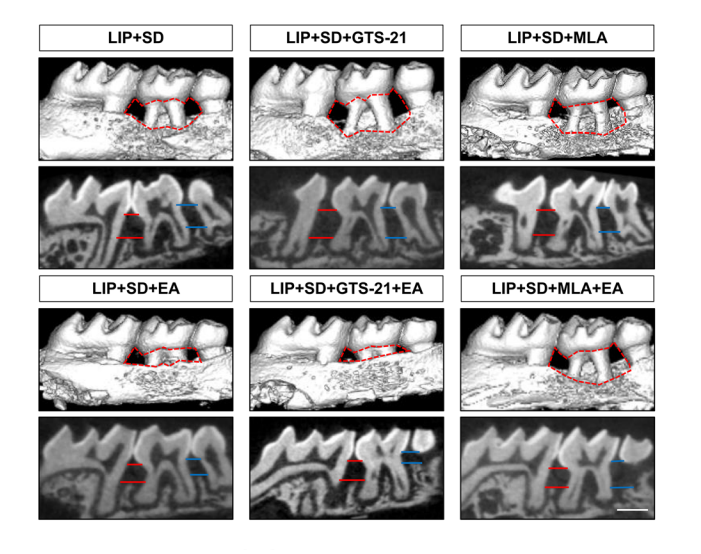
3D reconstruction of micro-CT scanned images of the mouse alveolar bone. GTS-21 or MLA were administered in combination with EA in the LIP + SD + EA group, GTS-21 inhibited the progression of bone resorption, whereas Methyllycaconitine (MLA; 6 mg/kg; i.p. daily for 7 d) exacerbated it.
Methyllycaconitine purchased from MedChemExpress. Usage Cited in: Adv Sci (Weinh). 2025 Aug 14:e00945. [Abstract]
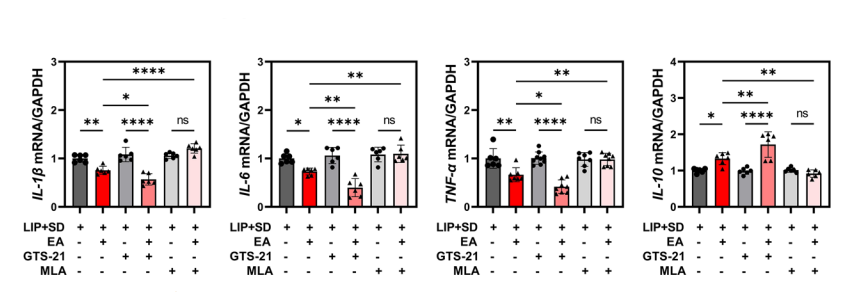
Mouse periodontal tissues mRNA expression of pro-inflammatory-related genes IL-1β), IL-6, TNF-α, and anti-inflammatory-related gene IL-10. LIP+SD (LIP with sleep deprivation); EA (10 Hz, 1 mA, square wave) ; GTS-21 (4 mg/kg; i.p. daily for 7 d); Methyllycaconitine (MLA; 6 mg/kg; i.p. daily for 7 d).
-
-
J Neuroinflammation
PVNOXT regulates acinar cell-mediated inflammatory response via DMVACh projections to the acinar cell. [Abstract]2026 May 25. PMID: 42186091 -
J Neuroinflammation
Mechanisms underlying antidepressant effect of transcutaneous auricular vagus nerve stimulation on CUMS model rats based on hippocampal α7nAchR/NF-κB signal pathway. [Abstract]2021 Dec 17;18(1):291. PMID: 34920740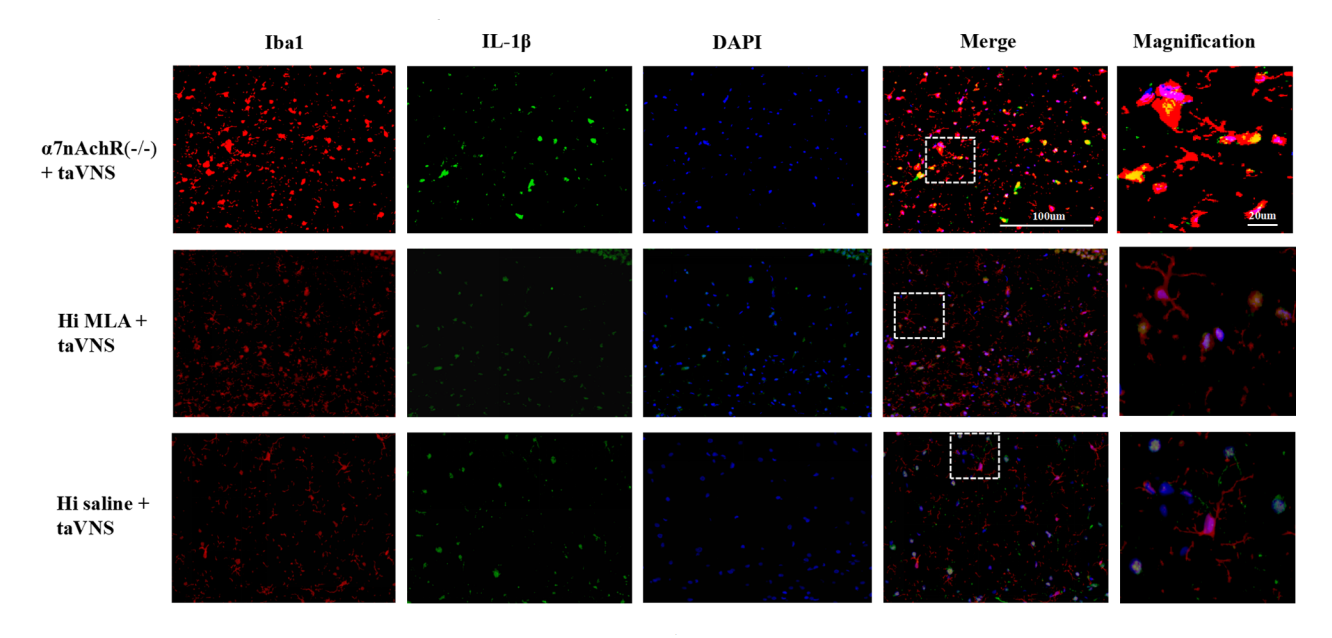
Methyllycaconitine purchased from MedChemExpress. Usage Cited in: J Neuroinflammation. 2021 Dec 17;18(1):291. [Abstract]
Immunofluorescence staining of hippocampal sections in each group rats (IL-1β). The microglia transform from ameboid form (α7nAchR(−/−) + taVNS group and Hi MLA (Methyllycaconitine; (80 μg/kg; 1-week continuous unilaterally local infusions)) + taVNS group) to ramified state (Hi saline + taVNS). Compared with α7nAchR(−/−) + taVNS group and Hi MLA + taVNS group, the co-expression between pro-inflammatory cytokine IL-1β (green) and microglia (red) decreased in Hi saline + taVNS group. IL-1β (green), Iba-1 (red), DAPI (blue), Merge (yellow).
Methyllycaconitine purchased from MedChemExpress. Usage Cited in: J Neuroinflammation. 2021 Dec 17;18(1):291. [Abstract]
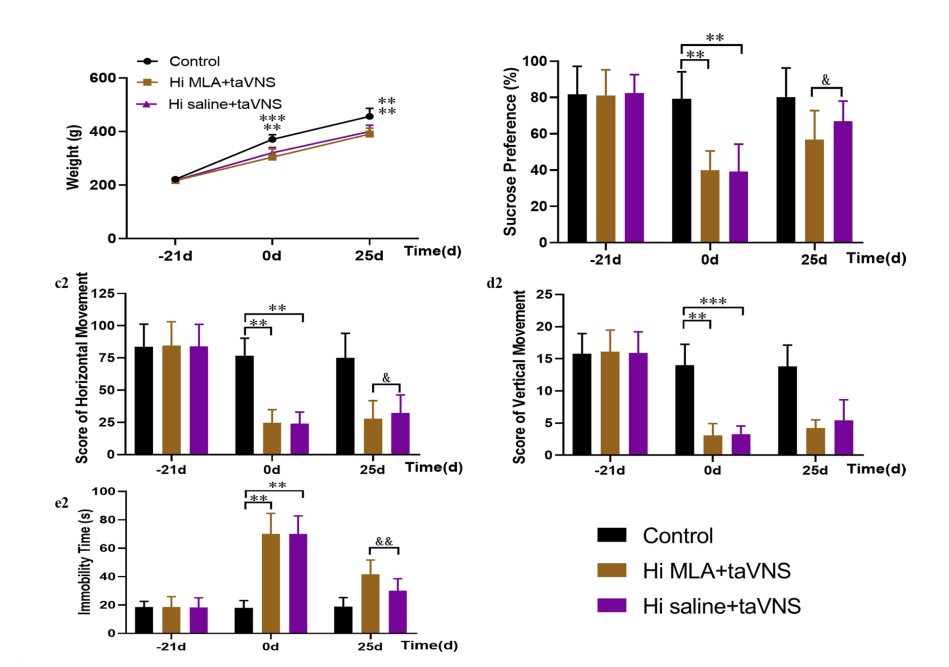
The effect of α7nAchR in the hippocampus on the body mass and behavioral experiments of CUMS rats intervened by taVNS at different time points. MLA (Methyllycaconitine; 80 μg/kg; 1-week continuous unilaterally local infusions); taVNS (transcutaneous auricular vagus nerve stimulation).
-
Diabetologia
α7 Nicotinic acetylcholine receptor activation rescues mitochondrial dysfunction in gestational diabetes mellitus by competing with p66Shc for VDAC1 binding. [Abstract]2025 Dec 15. PMID: 41396300
Methyllycaconitine purchased from MedChemExpress. Usage Cited in: Diabetologia. 2025 Dec 15. [Abstract]
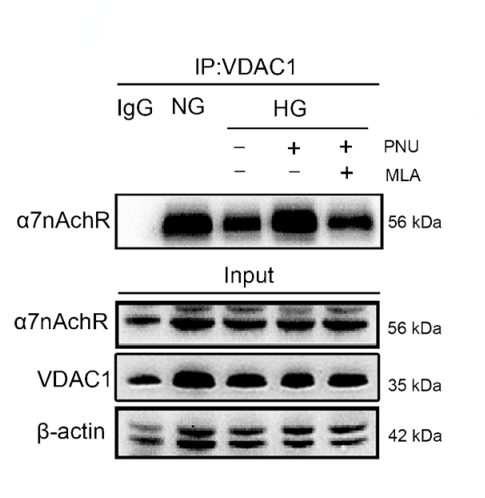
Immunoblot analysis of α7nAChR after co-IP with an anti-VDAC1 antibody in HTR8/SVneo cells treated with NG (Normal glucose), HG (High glucose), HG + PNU-282987 or HG + MLA (Methyllycaconitine; 24 h).
-
Acta Pharmacol Sin
Vagus nerve stimulation as a promising neuroprotection for ischemic stroke via α7nAchR-dependent inactivation of microglial NLRP3 inflammasome. [Abstract]2024 Jul;45(7):1349-1365. PMID: 38504011
Methyllycaconitine purchased from MedChemExpress. Usage Cited in: Acta Pharmacol Sin. 2024 Jul;45(7):1349-1365. [Abstract]
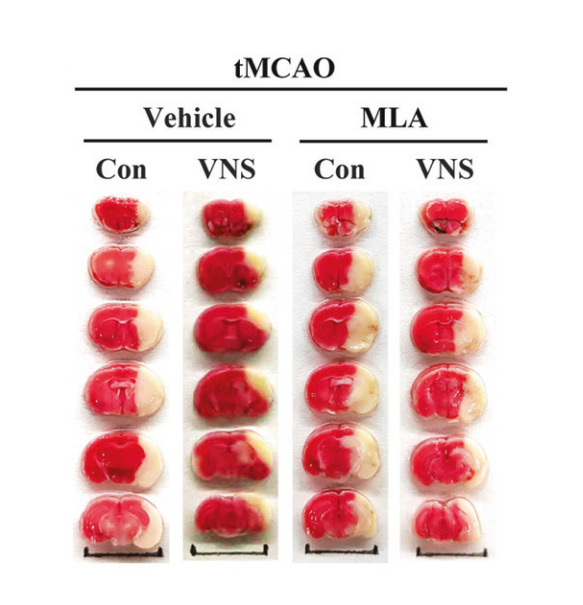
TTC staining and quantification showing the blockade of VNS-induced reduction in infarct volume in the MLA (Methyllycaconitine; 2.5 mg/kg; i.p. 1 h before tMCAO model)-treated mice subjected to tMCAO model. Scale bar: 1.0 cm, n = 6.
-
Cell Death Discov
Alpha-7 nicotinic acetylcholine receptor agonist alleviates psoriasis-like inflammation through inhibition of the STAT3 and NF-κB signaling pathway. [Abstract]2022 Mar 30;8(1):141. PMID: 35351863 -
Cell Death Discov
Vagus nerve stimulation alleviated cerebral ischemia and reperfusion injury in rats by inhibiting pyroptosis via α7 nicotinic acetylcholine receptor. [Abstract]2022 Feb 8;8(1):54. PMID: 35136042 -
Cell Death Discov
Vagus nerve stimulation enhances the cholinergic anti-inflammatory pathway to reduce lung injury in acute respiratory distress syndrome via STAT3. [Abstract]2021 Mar 29;7(1):63. PMID: 33782389 -
Cell Rep
Enterobacter ludwigii protects DSS-induced colitis through choline-mediated immune tolerance. [Abstract]2022 Aug 30;40(9):111308. PMID: 36044853 -
Br J Pharmacol
Cholinergic G protein-coupled bile acid receptor 1 (TGR5/GPBA) in the medial septal orchestrates adult hippocampal neurogenesis and cognition in Alzheimer's disease mice. [Abstract]2025 Nov;182(21):5409-5429. PMID: 40926398 -
Neurotherapeutics
Electroacupuncture improves gastrointestinal motility through a central-cholinergic pathway-mediated GDNF releasing from intestinal glial cells to protect intestinal neurons in Parkinson's disease rats. [Abstract]2024 Jul;21(4):e00369. PMID: 38744625 -
-
J Ethnopharmacol
α7nAChR-mediated astrocytic activation: a novel mechanism of Xiongzhi Dilong decoction in ameliorating chronic migraine. [Abstract]2024 Nov 15:334:118509. PMID: 38971346 -
Biochem Pharmacol
Cynandione A and PHA-543613 inhibit inflammation and stimulate macrophageal IL-10 expression following α7 nAChR activation. [Abstract]2021 Aug:190:114600. PMID: 33992630 -
Life Sci
Sinomenine ameliorates myocardial ischemia/reperfusion injury by inhibiting mitochondrial oxidative stress-mediated PANoptosis and ferroptosis via α7nAChR. [Abstract]2026 Mar 1:388:124199. PMID: 41520699 -
Inflamm Res
Activating α7nAChR helps post-myocardial infarction healing by regulating macrophage polarization via the STAT3 signaling pathway. [Abstract]2023 Apr;72(4):879-892. PMID: 36912917
Methyllycaconitine purchased from MedChemExpress. Usage Cited in: Inflamm Res. 2023 Apr;72(4):879-892. [Abstract]
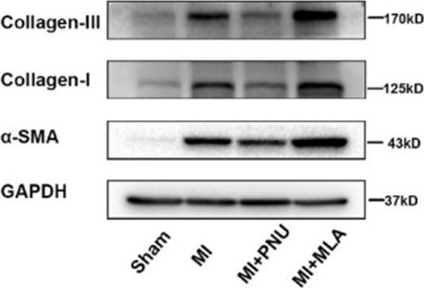
PNU-282987 (3 mg/kg; i.p.; single daily for consecutively 28 days) signifcantly decreases the expression levels of collagen I, collagen III, and α-SMA in myocardial infarction (MI) rats model, while Methyllycaconitine citrate (MLA; 3 mg/kg; i.p.; single daily for consecutively 28 days) increases these proteins levels.
-
Respir Res
Activation of α7nAChR prevents maladaptive right ventricular remodeling via inhibiting the recruitment of CCR2+ macrophages in experimental pulmonary arterial hypertension. [Abstract]2026 Apr 1;27(1):206. PMID: 41923075 -
Eur J Pharmacol
Administration of Huperzine A microspheres ameliorates myocardial ischemic injury via α7nAChR-dependent JAK2/STAT3 signaling pathway. [Abstract]2023 Feb 5:940:175478. PMID: 36563953 -
Eur J Pharmacol
Activation of alpha7 nicotinic acetylcholine receptor protects bovine endometrial tissue against LPS-induced inflammatory injury via JAK2/STAT3 pathway and COX-2 derived prostaglandin E2. [Abstract]2021 Jun 5:900:174067. PMID: 33811838 -
-
-
Int J Mol Sci
KYNA Ameliorates Glutamate Toxicity of HAND by Enhancing Glutamate Uptake in A2 Astrocytes. [Abstract]2024 Apr 12;25(8):4286. PMID: 38673879 -
J Integr Med
Acupuncture alleviates inflammatory pain by regulating microglial polarization through α7nAchR-mediated autophagy. [Abstract]2026 May;24(3):429-442. PMID: 41826216 -
-
Eur J Pharm Sci
Intra-aortic infusion of nicotine can induce a novel mouse model of abdominal aortic aneurysm. [Abstract]2025 Aug 1:211:107143. PMID: 40425130 -
Bioorg Chem
Identification of O-arylated huperzinines as novel cholinergic anti-inflammatory pathway agonists against gout arthritis. [Abstract]2024 Nov:152:107716. PMID: 39178707 -
Exp Gerontol
Activation of α7nAChR by PNU282987 improves cognitive impairment through inhibiting oxidative stress and neuroinflammation in D-galactose induced aging via regulating α7nAChR/Nrf2/HO-1 signaling pathway. [Abstract]2023 May:175:112139. PMID: 36898594 -
Mediators Inflamm
Nicotine Regulates LPS-Induced Inflammatory Responses in HMC3 Microglia and Exerts Neuronal Protection. [Abstract]2026 Jan 21:2026:4652344. PMID: 41583120 -
Mediators Inflamm
Exploring the Mechanism on the Medullary Visceral Zone Inhibiting the Cholinergic Anti-inflammatory Pathway Induced by Sepsis. [Abstract]2020 Sep 29:2020:1320278. PMID: 33061821 -
Cell Signal
2024 Sep:121:111275. PMID: 38942343 -
-
Neurochem Res
SAM Alleviates Neuroinflammation by Regulating M1/M2 Polarization of Microglia Through α7nAChR/Nrf2/HO-1 Signaling Pathway. [Abstract]2025 Mar 29;50(2):131. PMID: 40156718 -
iScience
Stimulation of TRPV1+ peripheral somatosensory nerves suppress inflammation via the somato-autonomic reflex. [Abstract]2025 Jan 17;28(2):111831. PMID: 39967868 -
iScience
Targeting CD36 determines nicotine derivative NNK-induced lung adenocarcinoma carcinogenesis. [Abstract]2023 Jul 27;26(8):107477. PMID: 37599821 -
Neurochem Res
S-oxiracetam Facilitates Cognitive Restoration after Ischemic Stroke by Activating α7nAChR and the PI3K-Mediated Pathway. [Abstract]2021 Apr;46(4):888-904. PMID: 33481205 -
Ren Fail
Curcumin regulates ferroptosis by activating α7 nicotinic acetylcholine receptor to improve sepsis-induced acute kidney injury. [Abstract]2026 Dec;48(1):2657652. PMID: 42015821 -
Cardiovasc Drugs Ther
Transcutaneous Auricular Vagus Nerve Stimulation Ameliorates Heart Failure with Preserved Ejection Fraction Through Regulating Macrophage Polarization Mediated by Alpha7nAChR. [Abstract]2025 Apr 7. PMID: 40193005 -
-
J Pain Res
The Spinal α7-Nicotinic Acetylcholine Receptor Contributes to the Maintenance of Cancer-Induced Bone Pain. [Abstract]2021 Feb 15:14:441-452. PMID: 33623426 -
Neurogastroenterol Motil
Electroacupuncture at Zusanli (ST36) Alleviate Intestinal Ischemia-Reperfusion Injury by Regulating the Cholinergic-miRNA 124 Pathway. [Abstract]2026 Jan;38(1):e14971. PMID: 39618028 -
J Cell Biochem
Activation of α7 Nicotinic Acetylcholine Receptor Improves Muscle Endurance by Upregulating Orosomucoid Expression and Glycogen Content in Mice. [Abstract]2024 Sep;125(9):e30630. PMID: 39014907 -
Hereditas
Involvement of α7nAChR in the hepatic-protective effect of remifentanil preconditioning in ischemia/reperfusion rats. [Abstract]2025 Dec 29;162(1):239. PMID: 41466476 -
Epilepsy Res
Long-term administration of EQU-001 (ivermectin) suppresses spasms in a rat model of infantile epileptic spasms syndrome. [Abstract]2026 Jan:219:107712. PMID: 41275582 -
Neurosci Lett
Inhibiting specificity protein 1 attenuated sevoflurane-induced mitochondrial stress and promoted autophagy in hippocampal neurons through PI3K/Akt/mTOR and α7-nAChR signaling. [Abstract]2023 Jan 18:794:136995. PMID: 36464148 -
Neurosci Lett
α7nAchR mediates transcutaneous auricular vagus nerve stimulation-induced neuroprotection in a rat model of ischemic stroke by enhancing axonal plasticity. [Abstract]2020 Jun 21:730:135031. PMID: 32416113 -
-
bioRxiv
2025 Dec 21:2025.12.19.695021. PMID: 41446203 -
-
Heliyon
Electroacupuncture ameliorates gastrointestinal dysfunction by modulating DMV cholinergic efferent signals to drive the vagus nerve in p-MCAO rats. [Abstract]2024 Apr 9;10(8):e29426. PMID: 38638995 -
-
-
-


Purity & Documentation
References
[1]. Zheng X, et al. Methyllycaconitine alleviates amyloid-β peptides-induced cytotoxicity in SH-SY5Y cells. PloS one. 2014;9(10):e111536. [Content Brief]
[2]. Escubedo E, et al. Methyllycaconitine prevents methamphetamine-induced effects in mouse striatum: involvement of alpha7 nicotinic receptors. The Journal of pharmacology and experimental therapeutics. 2005 Nov;315(2):658-67. [Content Brief]
[3]. Qasem AMA, et al. Synthesis and Antagonist Activity of Methyllycaconitine Analogues on Human α7 Nicotinic Acetylcholine Receptors. ACS bio & med chem Au. 2023 Apr 19;3(2):147-157. [Content Brief]
[4]. van Goethem NP, et al. Antagonizing α7 nicotinic receptors with methyllycaconitine (MLA) potentiates receptor activity and memory acquisition. Cellular signalling. 2019 Oct;62:109338. [Content Brief]

Calculators
Concentration (start) × Volume (start) = Concentration (final) × Volume (final)


Methyllycaconitine Related Classifications
HY-N2332 Related Classifications
 Powered by Bioz