



S100A9 Protein, Human
Based on 2 publication(s) in Google Scholar
S100A9 Protein is an acidic protein. S100A9 Protein activates pro-inflammatory signaling pathways by binding to TLR4/MD2 and RAGE receptors, regulating transcription factors such as NF-κB, CREB-1, STAT3/STAT5, etc. S100A9 Protein forms a heterodimer (calprotectin) with S100A8. S100A9 Protein enhances cytokine secretion under inflammatory stimulation, promotes immune cell migration, regulates vascular endothelial permeability, induces tumor cell apoptosis, and exerts antibacterial effects through metal ion chelation.
- Species: Human
- Source: E. coli
-
Storage:Stored at -20°C for 2 years from date of receipt. After reconstitution, it is stable at 4°C for 1 week or -20°C for longer (with carrier protein). It is recommended to freeze aliquots at -20°C or -80°C for extended storage.


To place orders, for customer services and technical support, please contact: MedChemExpress USA
Tel: 609-228-6898 E-mail: [email protected] [email protected]


-
 Biological Activity
-
Technical Parameters
-
Product Properties
- Documentation
- References
- Help & FAQs


-

HY-P70531A
S100A8 Protein, Human (N-His) -
HY-P71076
S100A8-S100A9 Heterodimer Protein, Human (His, solution) -
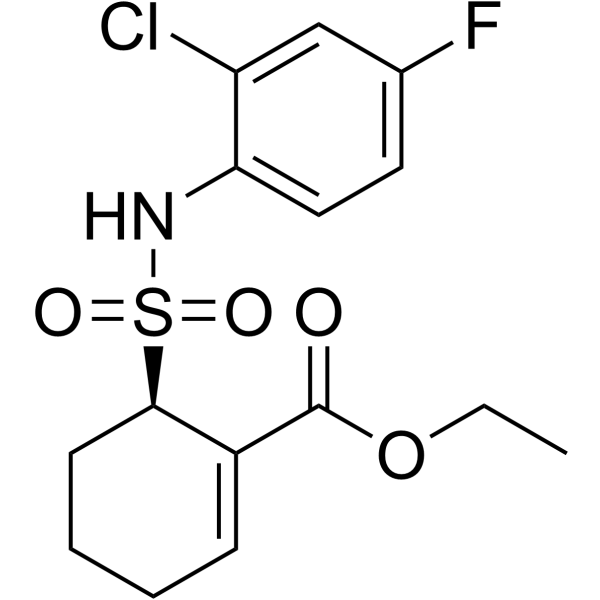
HY-11109
ResatorvidTLR4 Inhibitor -
HY-P74583
S100A9 Protein, Mouse (His) -
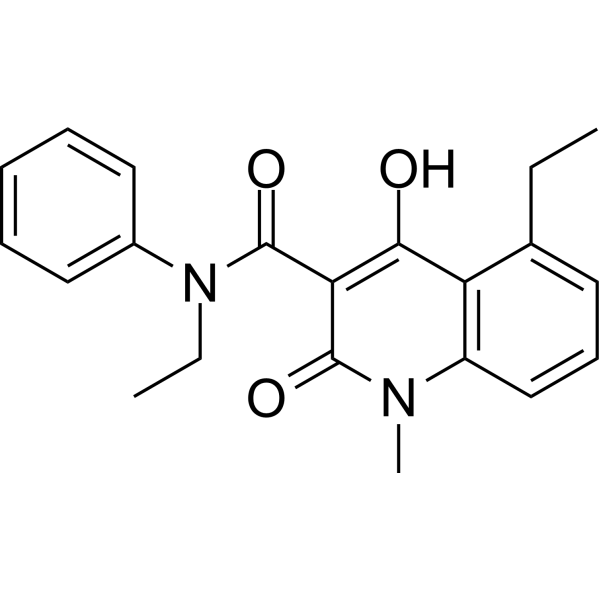
HY-100442
PaquinimodS100A8/A9 Inhibitor -
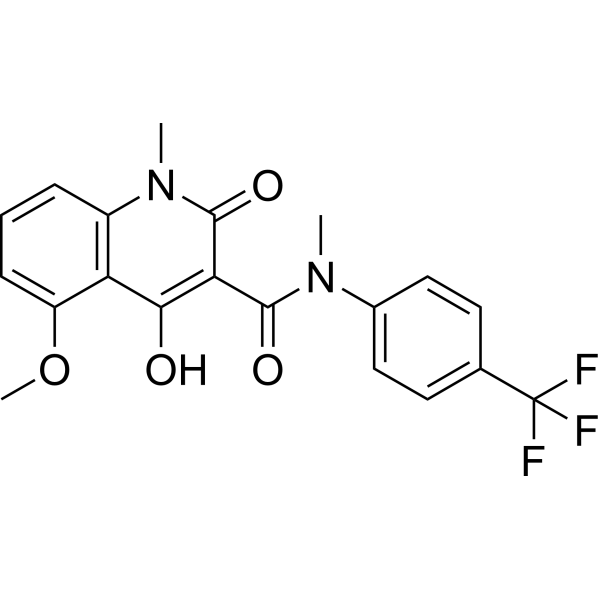
HY-10528
TasquinimodS100A9 Inhibitor -
HY-P7110A
VEGF165 Protein, Human (HEK293) -
HY-P73296
MMP-2 Protein, Human (HEK293) -
HY-P70445
IL-4 Protein, Human -
HY-P7237
MCP-1/CCL2 Protein, Human -
HY-P73671
S100A8 Protein, Mouse (sf9, His) -
HY-P70532A
S100A9 Protein, Human (His)


Biological Activity
Description
S100A9 Protein is an acidic protein. S100A9 Protein activates pro-inflammatory signaling pathways by binding to TLR4/MD2 and RAGE receptors, regulating transcription factors such as NF-κB, CREB-1, STAT3/STAT5, etc. S100A9 Protein forms a heterodimer (calprotectin) with S100A8. S100A9 Protein enhances cytokine secretion under inflammatory stimulation, promotes immune cell migration, regulates vascular endothelial permeability, induces tumor cell apoptosis, and exerts antibacterial effects through metal ion chelation.
Background
S100A9 protein belongs to the S100 calcium-binding protein family. The members of this family contain EF-hand domains and have calcium-dependent regulatory functions[3][7]. S100A9 protein is an acidic protein expressed by myeloid cells such as monocytes and neutrophils. It often forms a heterodimer with S100A8 (calprotectin) and participates in inflammation, immunity and host defense processes[1][2][5]. S100A9 Protein activates pro-inflammatory signaling pathways by binding to TLR4/MD2 and RAGE receptors, regulates transcription factors such as NF-κB, CREB-1, STAT3/STAT5, and affects the secretion of cytokines (such as IL-8); regulates cytoskeleton reorganization by interacting with tubulin, and promotes transendothelial migration of phagocytes; and can also exert antibacterial activity or induce tumor cell apoptosis by chelating zinc ions[1][4][5][6][7]. S100A9 Protein is mainly expressed in the cytoplasm of neutrophils and monocytes. It can be secreted outside the cells under inflammatory conditions and enriched on the surface of endothelial cells and in body fluids at the site of inflammation[1][5][7]. S100A9 Protein, Human is highly conserved in amino acid sequence and function with its homologous proteins in other species such as mice. Both proteins mediate biological effects through calcium/zinc ion-dependent conformational changes, but some regulatory sites (such as the lack of Thr113 phosphorylation site in mouse S100A9) differ[4][7]. S100A9 Protein, Human consists of 119 amino acids with a molecular weight of approximately 14 kDa. It contains two EF-hand calcium-binding domains and can form homodimers or heterodimers with S100A8. Its activity depends on the cooperative binding of calcium/zinc ions and phosphorylation modification by kinases such as p38 MAPK[1][4][7]. S100A9 Protein, Human Enhances cytokine secretion under inflammatory stimulation, promotes immune cell migration, regulates vascular endothelial permeability, induces tumor cell apoptosis, and exerts antibacterial effects through metal ion chelation[1][5][6][7].
In Vitro
S100A9 Protein, Human (10 μg/mL; 30 min) can enhance fMLP- or GM-CSF-stimulated IL-8 production by activating transcription factors such as NF-κB and CREB-1[1].
S100A9 Protein, Human (1.25-10 μM; 1-4 d) induces apoptosis in MM46 mouse breast cancer cells[6].
Verified Bioactivity
1.Measured by its ability to induce CXCL1/KC secretion by C3H/10T1/2 mouse embryonic fibroblast cells. The ED50 for this effect is 1.616 - 3.731 μg/mL.
2.Immobilized Recombinant Human S100A9 at 2 μg/mL (100 μL/well) can bind Anti-Human S100A9 Antibody. The ED50 of Anti-Human S100A9 Antibody is 0.5-1.0 μg/mL.
MCE Validation Data
-
Purity - SDS-PAGE
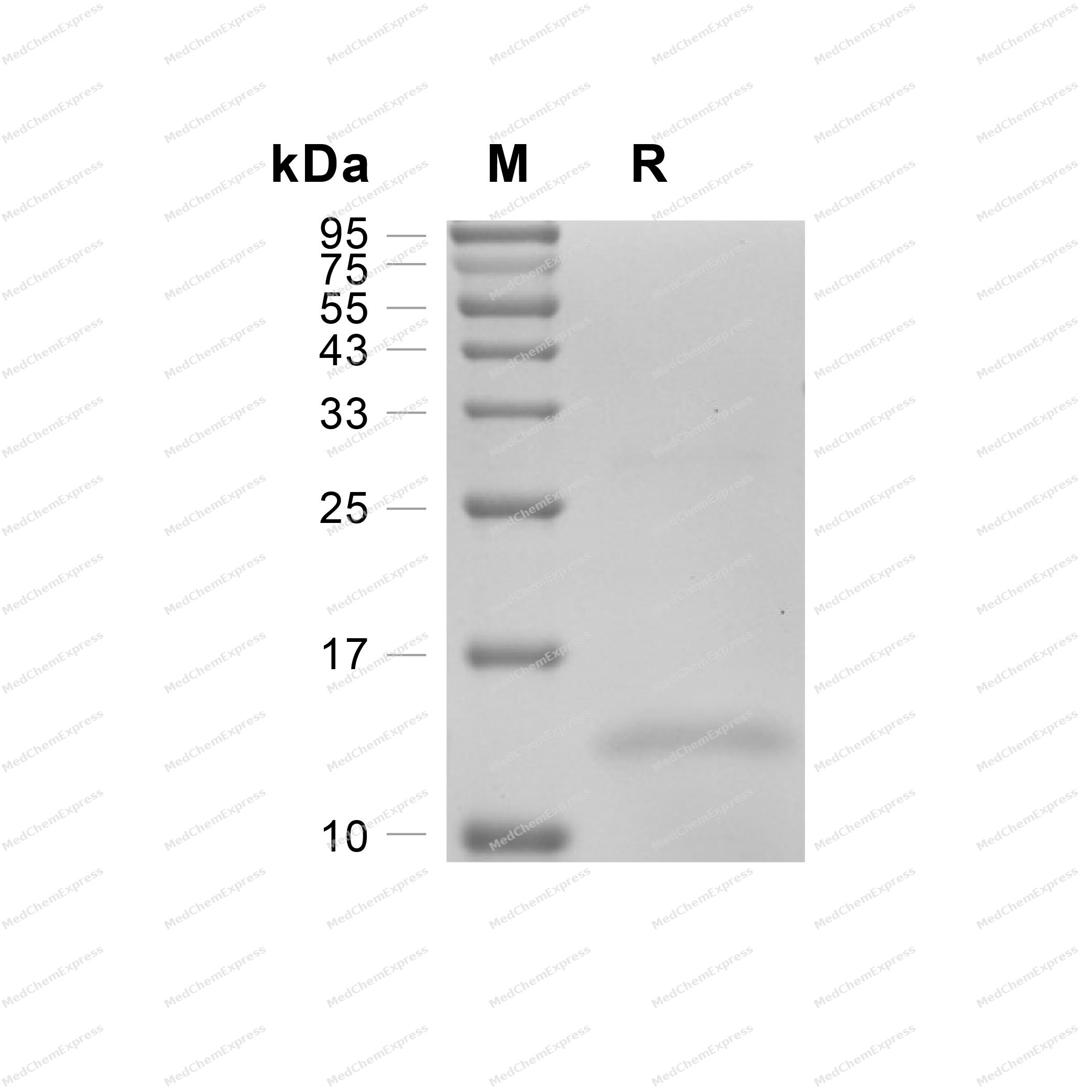
Purity - SDS-PAGE
-
Bioactivity - Cell-Based Assay
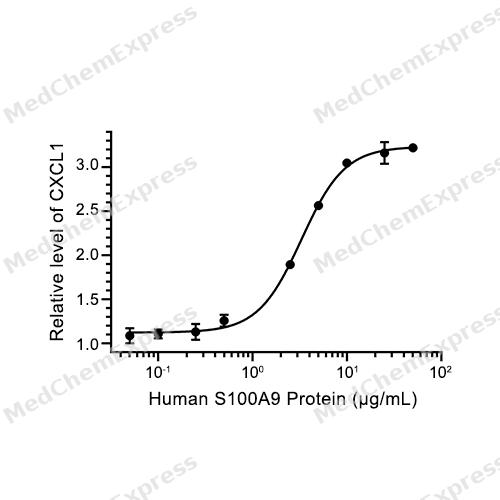
Bioactivity - Cell-Based Assay


Publications (2)
-
Journal Impact Factor
-
Most Recent
-
Cell Oncol (Dordr)
P2RY6+ tumor-associated macrophages as a therapeutic target: suppressing tumor growth and enhancing chemosensitivity in triple-negative breast cancer. [Abstract]2026 Jun 6. PMID: 42250059 -
Int Immunopharmacol
Targeting the S100A9/P38 MAPK/HSPB1 axis as a novel approach for aortic dissection therapy. [Abstract]2025 Mar 6:149:114225. PMID: 39904041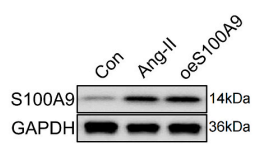
S100A9 Protein, Human purchased from MedChemExpress. Usage Cited in: Int Immunopharmacol. 2025 Mar 6:149:114225. [Abstract]
WB confirmed the overexpression of the S100A9 recombinant protein.


Technical Parameters
-
Species Human
-
Source E. coli
-
Tag Tag Free
-
Accession
P06702 (T2-P114)
-
Molecular Construction
-
N-term
-
S100A9 (T2-P114)
Accession # P06702 -
C-term
-
-
Protein Length
Full Length
-
Synonyms
S100A9; 60B8AG; Prev. CAGB; CGLB; Prev. CFAG; MIF; MRP-14; NIF; MRP14; Protein S100-A9; P14; Calgranulin B; Migration Inhibitory Factor-Related Protein 14; S100 Calcium-Binding Protein A9 (Calgranulin B); Leukocyte L1 Complex Heavy Chain; S100 Calcium-Binding Protein A9; Calprotectin L1H Subunit; Calgranulin-B; S100-A9; L1AG; MAC387; S100 Calcium Binding Protein A9; LIAG
-
AA Sequence
TCKMSQLERNIETIINTFHQYSVKLGHPDTLNQGEFKELVRKDLQNFLKKENKNEKVIEHIMEDLDTNADKQLSFEEFIMLMARLTWASHEKMHEGDEGPGHHHKPGLGEGTP
-
Molecular Weight
Approximately 14 kDa, based on SDS-PAGE under reducing conditions.
-
Purity
≥ 95%, as determined by reducing SDS-PAGE.


Product Properties
Lyophilized powder
1.Lyophilized from a 0.22 μm filtered solution of PBS, pH 7.4.
2.Lyophilized from a 0.22 μm filtered solution of 50 mM Tris-HCl, 300 mM NaCl, pH 8.0.
3.Lyophilized from a 0.22 μm filtered solution of PBS, pH 7.4, 5% trehalose, 5% mannitol, 0.01% Tween 80.
4.Lyophilized from a 0.22 μm filtered solution of PBS, pH 7.4, 8% trehalose.
Please refer to the lot-specific COA for specific buffer information.
Note: For SPR assay, please replace the buffer. Primary amine components (e.g., Tris, imidazole) can affect protein-coupled chips.
<1 EU/μg, determined by LAL method.
It is not recommended to reconstitute to a concentration less than 100 μg/mL in ddH2O. For long term storage it is recommended to add a carrier protein (0.1% BSA, 5% HSA, 10% FBS or 5% Trehalose).
Stored at -20°C for 2 years from date of receipt. After reconstitution, it is stable at 4°C for 1 week or -20°C for longer (with carrier protein). It is recommended to freeze aliquots at -20°C or -80°C for extended storage.
Room temperature in continental US; may vary elsewhere.


Documentation
-
Data Sheet (265 KB)
-
SDS (254 KB)
- English - EN (254 KB)
- Français - FR (254 KB)
- Deutsch - DE (254 KB)
- Norwegian - NO (254 KB)
- Español - ES (254 KB)
- Swedish - SV (254 KB)
- Italian - IT (254 KB)
- Korean - KR (254 KB)
- Portuguese - PT (254 KB)
-
Handling Instructions (2659 KB)


References
[1]. Simard JC, et al. Human S100A9 potentiates IL-8 production in response to GM-CSF or fMLP via activation of a different set of transcription factors in neutrophils. FEBS Lett. 2014 Jun 13;588(13):2141-6. [Content Brief]
[2]. Miyasaki KT, et al. In vitro antimicrobial activity of the human neutrophil cytosolic S-100 protein complex, calprotectin, against Capnocytophaga sputigena. J Dent Res. 1993 Feb;72(2):517-23. [Content Brief]
[3]. Fanò G, et al. The S-100: a protein family in search of a function. Prog Neurobiol. 1995 May;46(1):71-82. [Content Brief]
[4]. Vogl T, et al. MRP8 and MRP14 control microtubule reorganization during transendothelial migration of phagocytes. Blood. 2004 Dec 15;104(13):4260-8. [Content Brief]
[5]. Viemann D, et al. Myeloid-related proteins 8 and 14 induce a specific inflammatory response in human microvascular endothelial cells. Blood. 2005 Apr 1;105(7):2955-62. [Content Brief]
[6]. Nakatani Y, et al. Regulation of S100A8/A9 (calprotectin) binding to tumor cells by zinc ion and its implication for apoptosis-inducing activity. Mediators Inflamm. 2005 Oct 24;2005(5):280-92. [Content Brief]
[7]. Björk P, et al. Identification of human S100A9 as a novel target for treatment of autoimmune disease via binding to quinoline-3-carboxamides. PLoS Biol. 2009 Apr 28;7(4):e97. [Content Brief]

Calculators
Concentration (start) × Volume (start) = Concentration (final) × Volume (final)


 Powered by Bioz

