164 Results for "

surface functionalization

" in MedChemExpress (MCE) Product Catalog:
Products (164)

164 Results for "surface functionalization" in MCE Product Catalog:

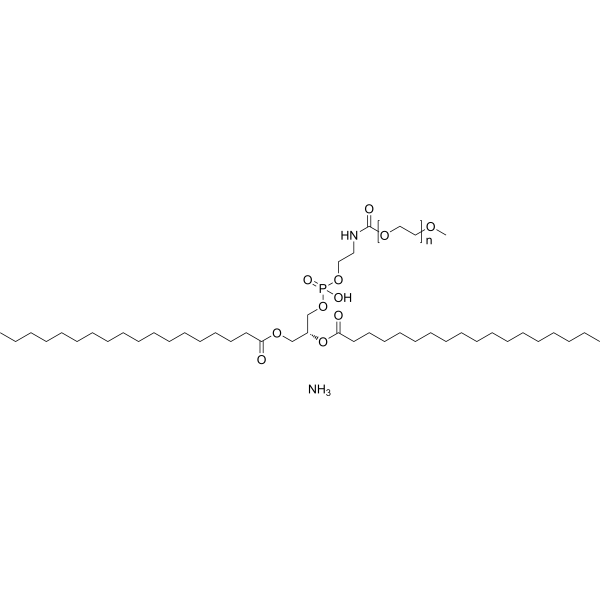
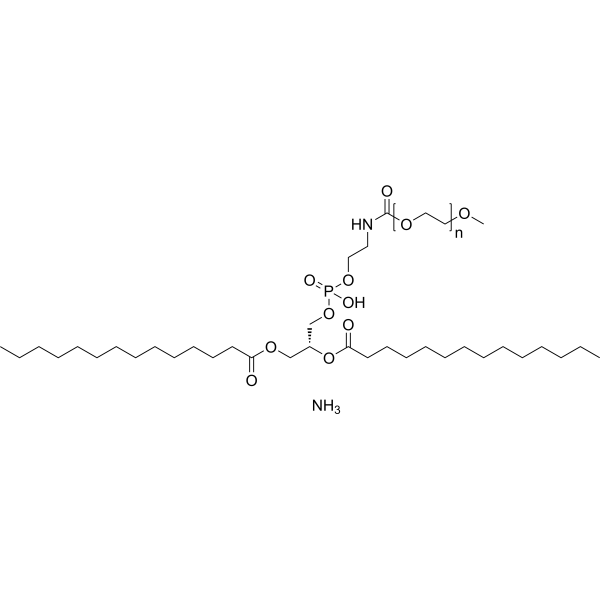
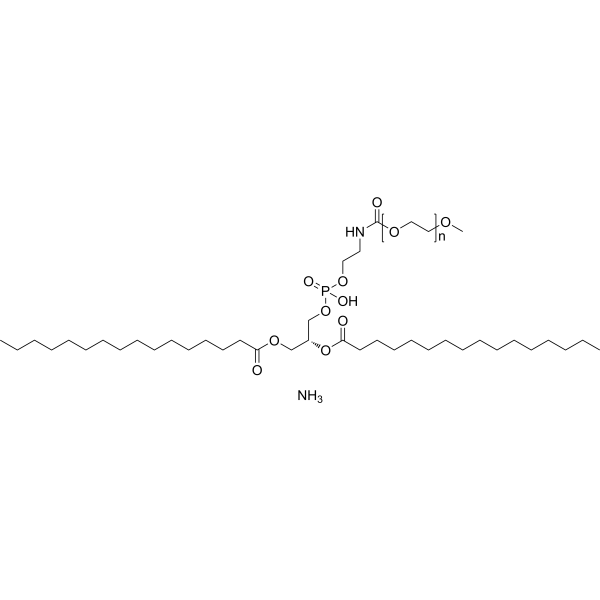
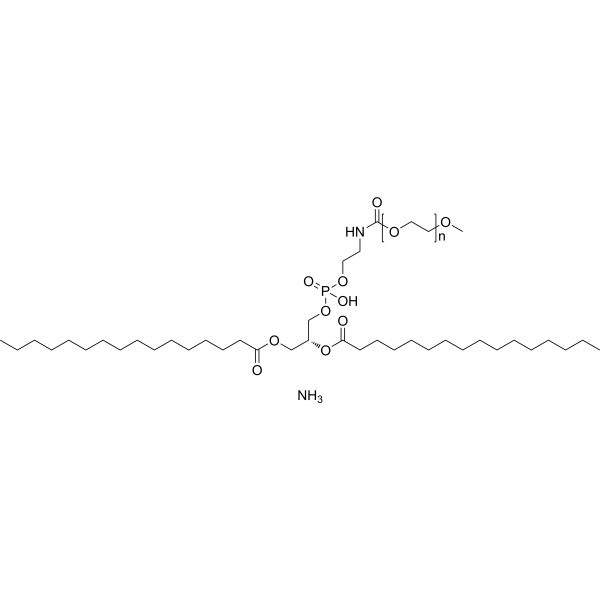
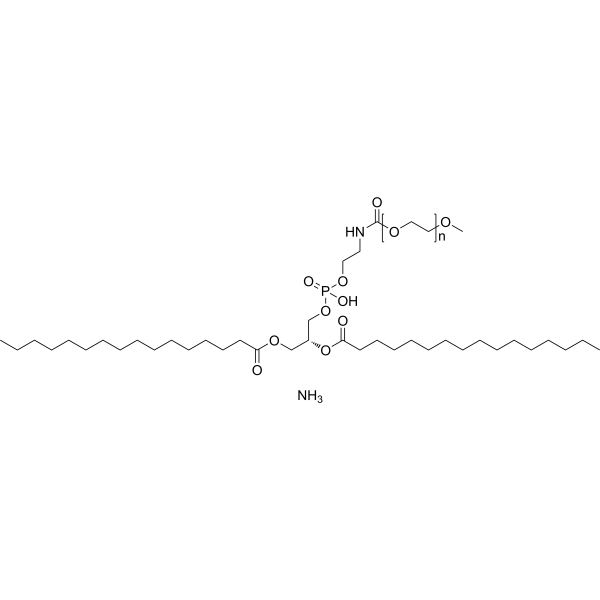
Cat. No.: HY-144013E
CAS No.: 474922-77-5
Synonyms: DSPE-mPEG3000 ammonium; 1,2-Distearoyl-sn-glycero-3-phosphoethanolamine-N-[methoxy(polyethylene glycol)-3000] ammonium
Target:  

Liposome

Research Areas:  

Others

18:0 mPEG3000 PE (ammonium) is a PEG lipid functional end group used in the synthesis of liposomes (LPs) for the design of conjugated polymeric nanoparticles. Through biotin modification and carboxyl terminus, lipid nanoparticles (LNPs) further coupling with other biomolecules can be achieved. Functionalized nanoparticles can be used for targeted labeling of specific cellular proteins. With streptavidin as a linker, biotinylated PEG lipid-conjugated polymer nanoparticles are able to bind to biotinylated antibodies on cell surface receptors, yielding the utility of fluorescence-based imaging and sensing.
loading...
    loading...
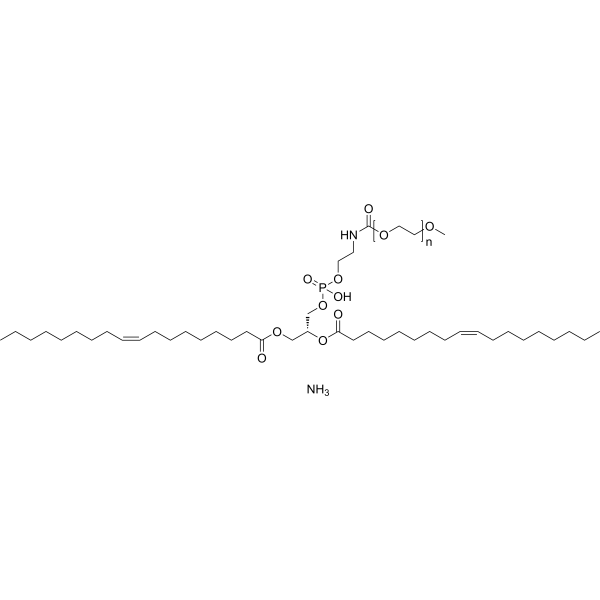
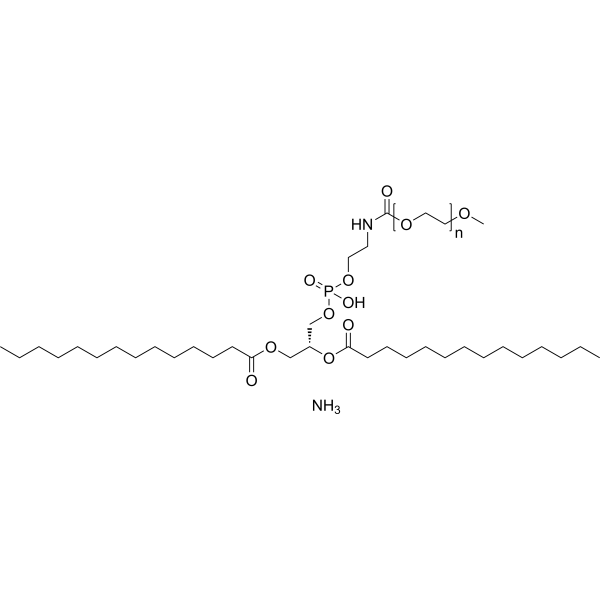
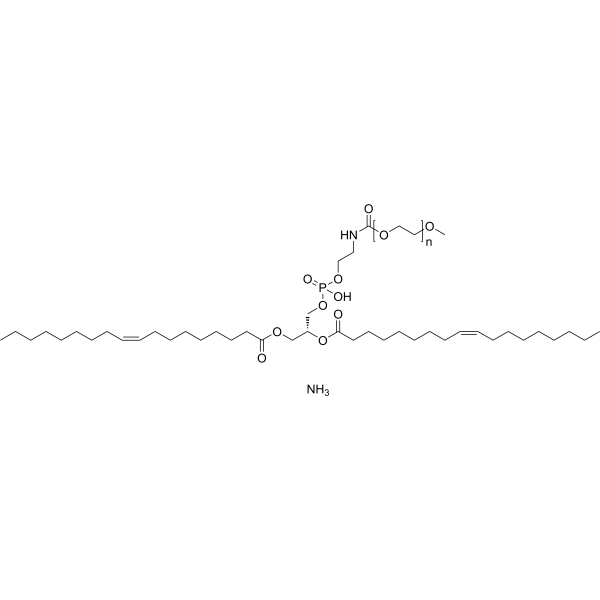
Cat. No.: HY-155934
CAS No.: 474922-90-2
Synonyms: DOPE-PEG5000 ammonium; 1,2-Dioleoyl-sn-glycero-3-phosphoethanolamine-N-[methoxy(polyethylene glycol)-5000] ammonium
Target:  

Liposome

Research Areas:  

Others

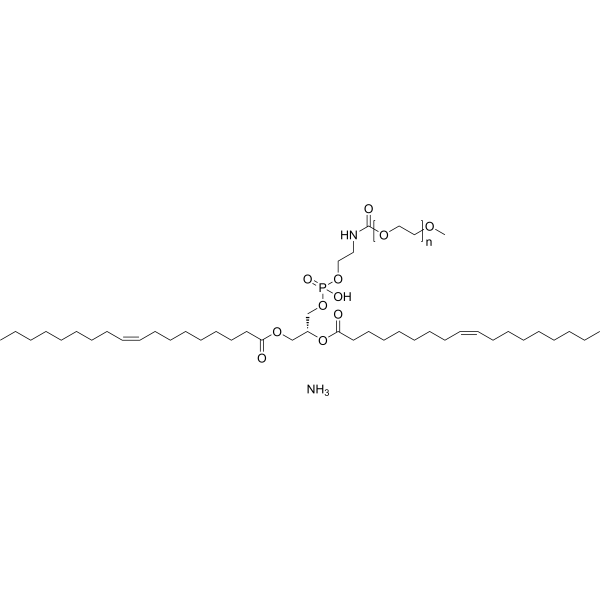
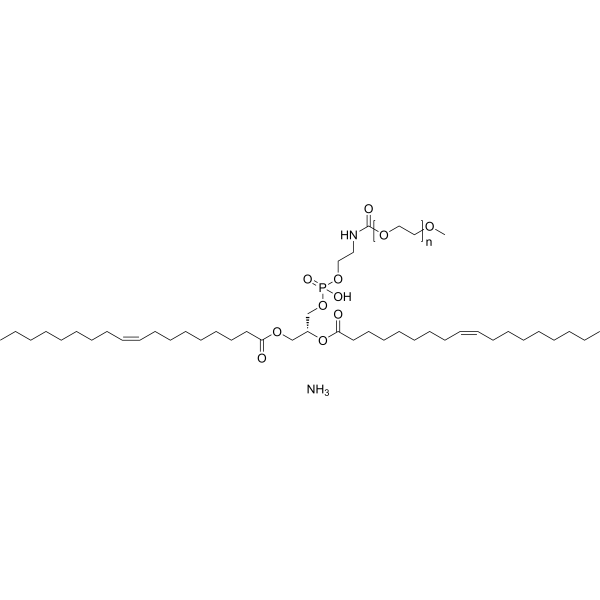
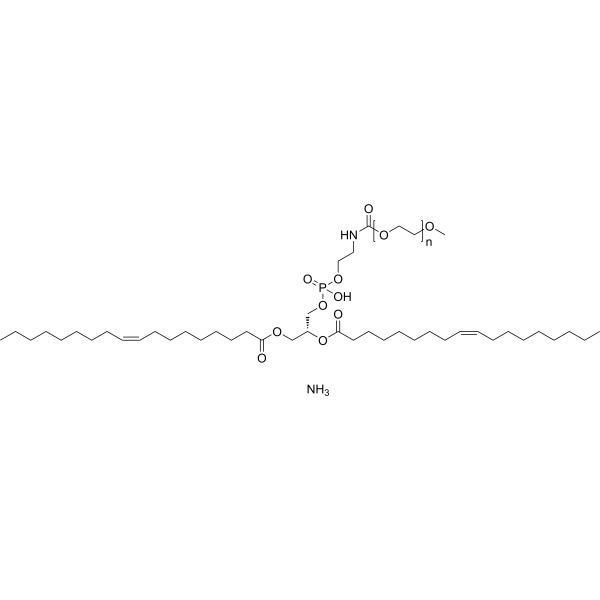
18:1 PEG5000 PE ammonium (DOPE-PEG5000 ammonium) is a PEG lipid functional end group used in the synthesis of liposomes (LPs) for the design of conjugated polymer nanoparticles. Through biotin modification and carboxyl terminus, lipid nanoparticles (LNPs) further coupling with other biomolecules can be achieved. Functionalized nanoparticles can be used for targeted labeling of specific cellular proteins. With streptavidin as a linker, biotinylated PEG lipid-conjugated polymer nanoparticles are able to bind to biotinylated antibodies on cell surface receptors, yielding the utility of fluorescence-based imaging and sensing.
loading...
    loading...
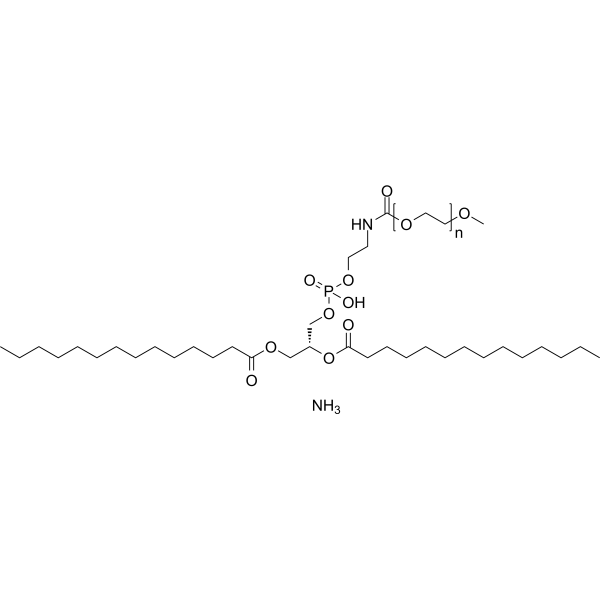
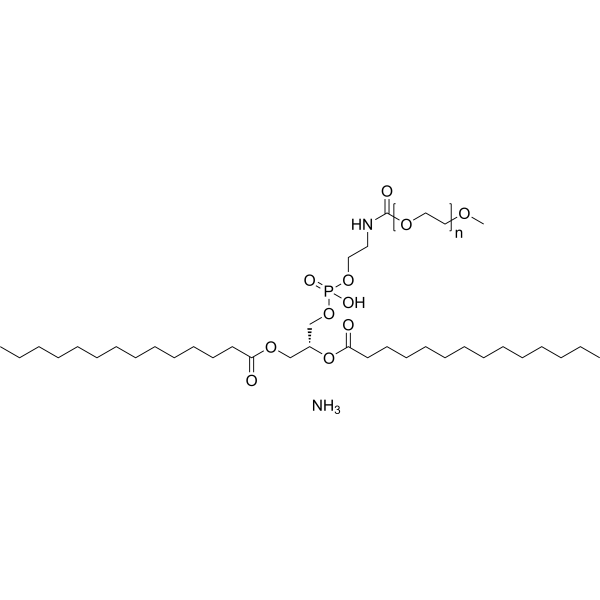
Cat. No.: HY-155924
CAS No.: 474922-82-2
Synonyms: 14:0 PEG350 PE ammonium; 1,2-Dimyristoyl-sn-glycero-3-phosphoethanolamine-N-[methoxy(polyethylene glycol)-350] ammonium
Target:  

Liposome

Research Areas:  

Others

DMPE-PEG350 ammonium (14:0 PEG350 PE ammonium) is a PEG lipid functional end group used in the synthesis of liposomes (LPs) for the design of conjugated polymer nanoparticles. Through biotin modification and carboxyl terminus, lipid nanoparticles (LNPs) further coupling with other biomolecules can be achieved. Functionalized nanoparticles can be used for targeted labeling of specific cellular proteins. With streptavidin as a linker, biotinylated PEG lipid-conjugated polymer nanoparticles are able to bind to biotinylated antibodies on cell surface receptors, yielding the utility of fluorescence-based imaging and sensing.
loading...
    loading...
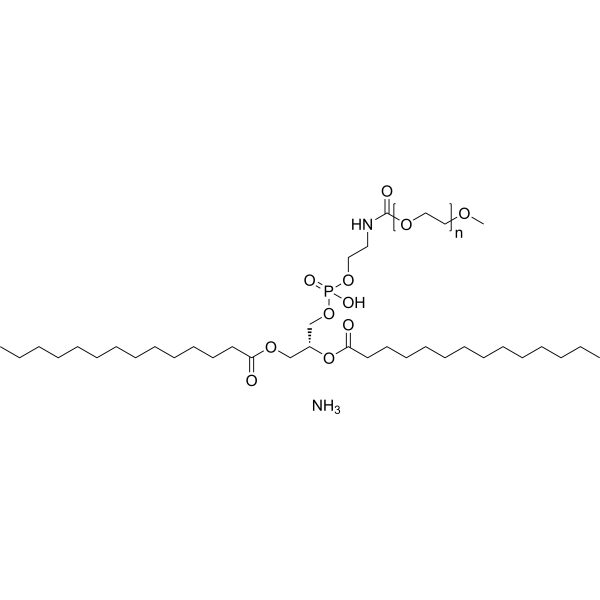
Cat. No.: HY-155925
CAS No.: 474922-82-2
Synonyms: 14:0 PEG550 PE ammonium; 1,2-Dimyristoyl-sn-glycero-3-phosphoethanolamine-N-[methoxy(polyethylene glycol)-550] ammonium
Target:  

Liposome

Research Areas:  

Others

DMPE-PEG550 ammonium (14:0 PEG550 PE ammonium) is a PEG lipid functional end group used in the synthesis of liposomes (LPs) for the design of conjugated polymeric nanoparticles. Through biotin modification and carboxyl terminus, lipid nanoparticles (LNPs) further coupling with other biomolecules can be achieved. Functionalized nanoparticles can be used for targeted labeling of specific cellular proteins. With streptavidin as a linker, biotinylated PEG lipid-conjugated polymer nanoparticles are able to bind to biotinylated antibodies on cell surface receptors, yielding the utility of fluorescence-based imaging and sensing.
loading...
    loading...
Cat. No.: HY-155926
CAS No.: 474922-82-2
Synonyms: 14:0 PEG750 PE ammonium; 1,2-Dimyristoyl-sn-glycero-3-phosphoethanolamine-N-[methoxy(polyethylene glycol)-750] ammonium
Target:  

Liposome

Research Areas:  

Others

DMPE-PEG750 ammonium (14:0 PEG750 PE ammonium) is a PEG lipid functional end group used in the synthesis of liposomes (LPs) for the design of conjugated polymeric nanoparticles. Through biotin modification and carboxyl terminus, lipid nanoparticles (LNPs) further coupling with other biomolecules can be achieved. Functionalized nanoparticles can be used for targeted labeling of specific cellular proteins. With streptavidin as a linker, biotinylated PEG lipid-conjugated polymer nanoparticles are able to bind to biotinylated antibodies on cell surface receptors, yielding the utility of fluorescence-based imaging and sensing.
loading...
    loading...
Cat. No.: HY-155928
CAS No.: 474922-82-2
Synonyms: 14:0 PEG3000 PE ammonium; 1,2-Dimyristoyl-sn-glycero-3-phosphoethanolamine-N-[methoxy(polyethylene glycol)-3000] ammonium
Target:  

Liposome

Research Areas:  

Others

DMPE-PEG3000 ammonium (14:0 PEG3000 PE ammonium) is a PEG lipid functional end group used in the synthesis of liposomes (LPs) for the design of conjugated polymer nanoparticles. Through biotin modification and carboxyl terminus, lipid nanoparticles (LNPs) further coupling with other biomolecules can be achieved. Functionalized nanoparticles can be used for targeted labeling of specific cellular proteins. With streptavidin as a linker, biotinylated PEG lipid-conjugated polymer nanoparticles are able to bind to biotinylated antibodies on cell surface receptors, yielding the utility of fluorescence-based imaging and sensing.
loading...
    loading...
Cat. No.: HY-155929
CAS No.: 474922-82-2
Synonyms: 14:0 PEG5000 PE ammonium; 1,2-Dimyristoyl-sn-glycero-3-phosphoethanolamine-N-[methoxy(polyethylene glycol)-5000] ammonium
Target:  

Liposome

Research Areas:  

Others

DMPE-PEG5000 ammonium (14:0 PEG5000 PE ammonium) is a PEG lipid functional end group used in the synthesis of liposomes (LPs) for the design of conjugated polymer nanoparticles. Through biotin modification and carboxyl terminus, lipid nanoparticles (LNPs) further coupling with other biomolecules can be achieved. Functionalized nanoparticles can be used for targeted labeling of specific cellular proteins. With streptavidin as a linker, biotinylated PEG lipid-conjugated polymer nanoparticles are able to bind to biotinylated antibodies on cell surface receptors, yielding the utility of fluorescence-based imaging and sensing.
loading...
    loading...
Cat. No.: HY-168940D
CAS No.: 139729-28-5
NH2-PEG400-COOH is a compound composed of an NH2 group, PEG units (MW = 400) and a carboxyl group (-COOH) . NH2-PEG-COOH is widely used for surface modification and functionalization of polymer carriers or nanoparticles .
loading...
    loading...
Cat. No.: HY-168940E
CAS No.: 139729-28-5
NH2-PEG600-COOH is a compound composed of an NH2 group, PEG units (MW = 600) and a carboxyl group (-COOH) . NH2-PEG-COOH is widely used for surface modification and functionalization of polymer carriers or nanoparticles .
loading...
    loading...
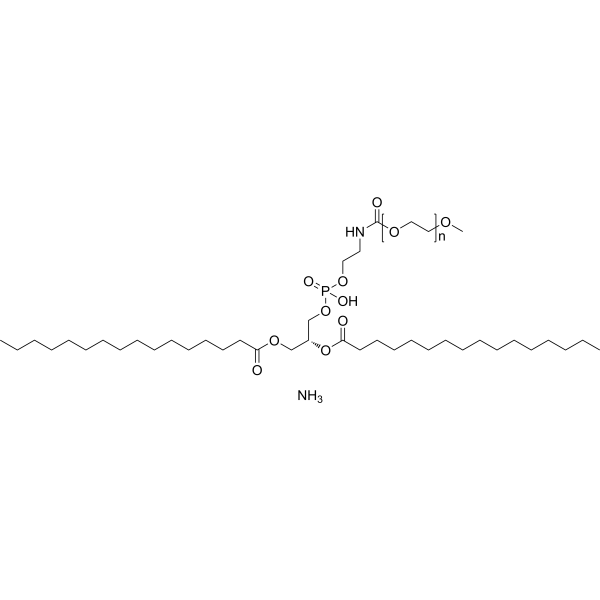
Cat. No.: HY-144012B
CAS No.: 474922-84-4
Synonyms: 16:0 PEG550 PE; 1,2-Dipalmitoyl-sn-glycero-3-phosphoethanolamine-N-[methoxy(polyethylene glycol)-550] ammonium
Target:  

Liposome

Research Areas:  

Others

DPPE-PEG550 is a PEG lipid functional end group used in the synthesis of liposomes (LPs) for the design of conjugated polymer nanoparticles. Through biotin modification and carboxyl terminus, lipid nanoparticles (LNPs) further coupling with other biomolecules can be achieved. Functionalized nanoparticles can be used for targeted labeling of specific cellular proteins. With streptavidin as a linker, biotinylated PEG lipid-conjugated polymer nanoparticles are able to bind to biotinylated antibodies on cell surface receptors, yielding the utility of fluorescence-based imaging and sensing.
loading...
    loading...
Cat. No.: HY-144012C
CAS No.: 474922-84-4
Synonyms: 16:0 PEG750 PE; 1,2-Dipalmitoyl-sn-glycero-3-phosphoethanolamine-N-[methoxy(polyethylene glycol)-750] ammonium
Target:  

Liposome

Research Areas:  

Others

DPPE-PEG750 is a PEG lipid functional end group used in the synthesis of liposomes (LPs) for the design of conjugated polymer nanoparticles. Through biotin modification and carboxyl terminus, lipid nanoparticles (LNPs) further coupling with other biomolecules can be achieved. Functionalized nanoparticles can be used for targeted labeling of specific cellular proteins. With streptavidin as a linker, biotinylated PEG lipid-conjugated polymer nanoparticles are able to bind to biotinylated antibodies on cell surface receptors, yielding the utility of fluorescence-based imaging and sensing.
loading...
    loading...
Cat. No.: HY-144012D
CAS No.: 474922-84-4
Synonyms: 16:0 PEG1000 PE; 1,2-Dipalmitoyl-sn-glycero-3-phosphoethanolamine-N-[methoxy(polyethylene glycol)-1000] ammonium
Target:  

Liposome

Research Areas:  

Others

DPPE-PEG1000 is a PEG lipid functional end group used in the synthesis of liposomes (LPs) for the design of conjugated polymer nanoparticles. Through biotin modification and carboxyl terminus, lipid nanoparticles (LNPs) further coupling with other biomolecules can be achieved. Functionalized nanoparticles can be used for targeted labeling of specific cellular proteins. With streptavidin as a linker, biotinylated PEG lipid-conjugated polymer nanoparticles are able to bind to biotinylated antibodies on cell surface receptors, yielding the utility of fluorescence-based imaging and sensing.
loading...
    loading...
Cat. No.: HY-144012E
CAS No.: 474922-84-4
Synonyms: 16:0 PEG3000 PE; 1,2-Dipalmitoyl-sn-glycero-3-phosphoethanolamine-N-[methoxy(polyethylene glycol)-3000] ammonium
Target:  

Liposome

Research Areas:  

Others

DPPE-PEG3000 is a PEG lipid functional end group used in the synthesis of liposomes (LPs) for the design of conjugated polymer nanoparticles. Through biotin modification and carboxyl terminus, lipid nanoparticles (LNPs) further coupling with other biomolecules can be achieved. Functionalized nanoparticles can be used for targeted labeling of specific cellular proteins. With streptavidin as a linker, biotinylated PEG lipid-conjugated polymer nanoparticles are able to bind to biotinylated antibodies on cell surface receptors, yielding the utility of fluorescence-based imaging and sensing.
loading...
    loading...
Cat. No.: HY-155930
CAS No.: 474922-90-2
Synonyms: DOPE-PEG350 ammonium; 1,2-Dioleoyl-sn-glycero-3-phosphoethanolamine-N-[methoxy(polyethylene glycol)-350] ammonium
Target:  

Liposome

Research Areas:  

Others

18:1 PEG350 PE ammonium (DOPE-PEG350 ammonium) is a PEG lipid functional end group used in the synthesis of liposomes (LPs) for the design of conjugated polymer nanoparticles. Through biotin modification and carboxyl terminus, lipid nanoparticles (LNPs) further coupling with other biomolecules can be achieved. Functionalized nanoparticles can be used for targeted labeling of specific cellular proteins. With streptavidin as a linker, biotinylated PEG lipid-conjugated polymer nanoparticles are able to bind to biotinylated antibodies on cell surface receptors, yielding the utility of fluorescence-based imaging and sensing.
loading...
    loading...
Cat. No.: HY-155931
CAS No.: 474922-90-2
Synonyms: DOPE-PEG550 ammonium; 1,2-Dioleoyl-sn-glycero-3-phosphoethanolamine-N-[methoxy(polyethylene glycol)-550] ammonium
Target:  

Liposome

Research Areas:  

Others

18:1 PEG550 PE ammonium (DOPE-PEG550 ammonium) is a PEG lipid functional end group used in the synthesis of liposomes (LPs) for the design of conjugated polymer nanoparticles. Through biotin modification and carboxyl terminus, lipid nanoparticles (LNPs) further coupling with other biomolecules can be achieved. Functionalized nanoparticles can be used for targeted labeling of specific cellular proteins. With streptavidin as a linker, biotinylated PEG lipid-conjugated polymer nanoparticles are able to bind to biotinylated antibodies on cell surface receptors, yielding the utility of fluorescence-based imaging and sensing.
loading...
    loading...
Cat. No.: HY-155932
CAS No.: 474922-90-2
Synonyms: DOPE-PEG1000 ammonium; 1,2-Dioleoyl-sn-glycero-3-phosphoethanolamine-N-[methoxy(polyethylene glycol)-1000] ammonium
Target:  

Liposome

Research Areas:  

Others

18:1 PEG1000 PE ammonium (DOPE-PEG1000 ammonium) is a PEG lipid functional end group used in the synthesis of liposomes (LPs) for the design of conjugated polymer nanoparticles. Through biotin modification and carboxyl terminus, lipid nanoparticles (LNPs) further coupling with other biomolecules can be achieved. Functionalized nanoparticles can be used for targeted labeling of specific cellular proteins. With streptavidin as a linker, biotinylated PEG lipid-conjugated polymer nanoparticles are able to bind to biotinylated antibodies on cell surface receptors, yielding the utility of fluorescence-based imaging and sensing.
loading...
    loading...
Cat. No.: HY-155933
CAS No.: 474922-90-2
Synonyms: DOPE-PEG3000 ammonium; 1,2-Dioleoyl-sn-glycero-3-phosphoethanolamine-N-[methoxy(polyethylene glycol)-3000] ammonium
Target:  

Liposome

Research Areas:  

Others

18:1 PEG3000 PE ammonium (DOPE-PEG3000 ammonium) is a PEG lipid functional end group used in the synthesis of liposomes (LPs) for the design of conjugated polymer nanoparticles. Through biotin modification and carboxyl terminus, lipid nanoparticles (LNPs) further coupling with other biomolecules can be achieved. Functionalized nanoparticles can be used for targeted labeling of specific cellular proteins. With streptavidin as a linker, biotinylated PEG lipid-conjugated polymer nanoparticles are able to bind to biotinylated antibodies on cell surface receptors, yielding the utility of fluorescence-based imaging and sensing.
loading...
    loading...
Cat. No.: HY-114776
CAS No.: 92924-45-3
Target:  

Fluorescent Dye

Research Areas:  

Others

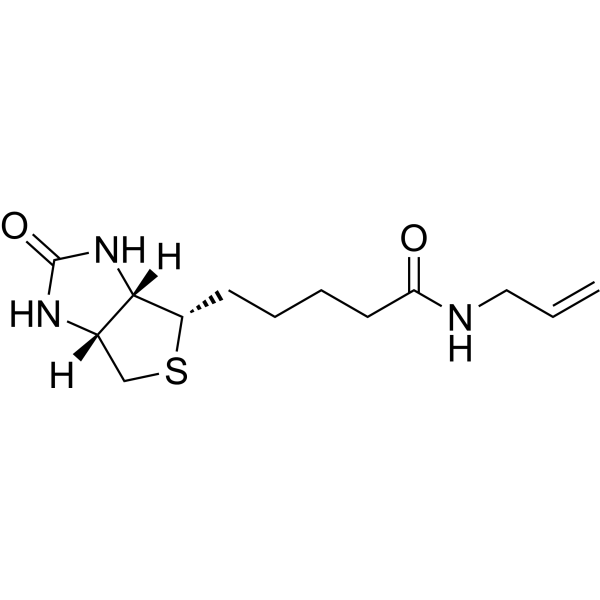
Biotin-olefin (Compound 1) is a biotin probe. Biotin-olefin can used for photoimmobilization on thiol-functionalized surfaces .
loading...
    loading...
Cat. No.: HY-116210
CAS No.: 1779-48-2
Research Areas:  

Others

Phenylphosphinic acid binds to metal oxide surfaces for a modification and functionalization. Phenylphosphinic acid can also be used for nanoparticles or sol-gel synthesis .
loading...
    loading...
Cat. No.: HY-168490
Poly(ethylene glycol)methyl ether thiol (MW 800) is a thiol-modified PEG that can be used to modify the surface of materials to enhance their hydrophilicity and functionality .
loading...
    loading...

