1. Search Result
Search Result
Results for "

α2C

" in MedChemExpress (MCE) Product Catalog:

40

Inhibitors & Agonists

1

Peptides

3

Isotope-Labeled Compounds

1

Antibodies

Cat. No. Product Name Target Research Areas Chemical Structure
  • HY-15780
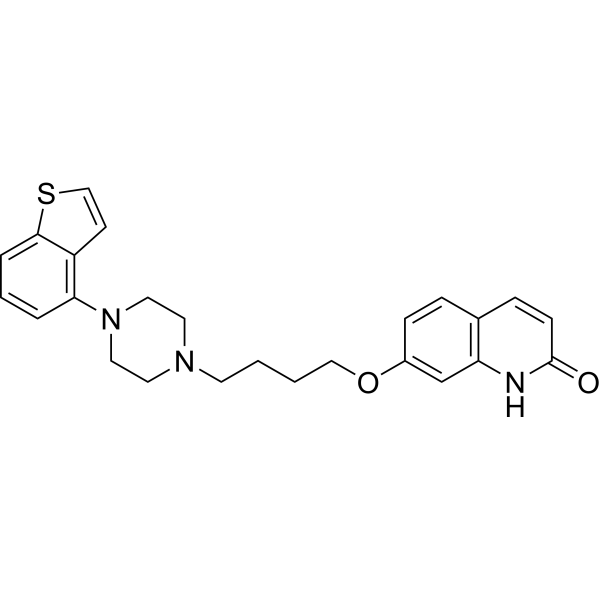
    Brexpiprazole
    Maximum Cited Publications
    6 Publications Verification

    OPC-34712

    5-HT Receptor Dopamine Receptor Adrenergic Receptor Neurological Disease
    Brexpiprazole (OPC-34712), an atypical orally active antipsychotic agent, is a partial agonist of human 5-HT1A and dopamine D2L receptor with Kis of 0.12 nM and 0.3 nM, respectively. Brexpiprazole is also a 5-HT2A receptor antagonist with a Ki of 0.47 nM. Brexpiprazole also shows potent antagonist activity at human noradrenergic α1B (Ki=0.17 nM) and α2C receptors (Ki=0.59 nM) [2].
    Brexpiprazole
  • HY-103213
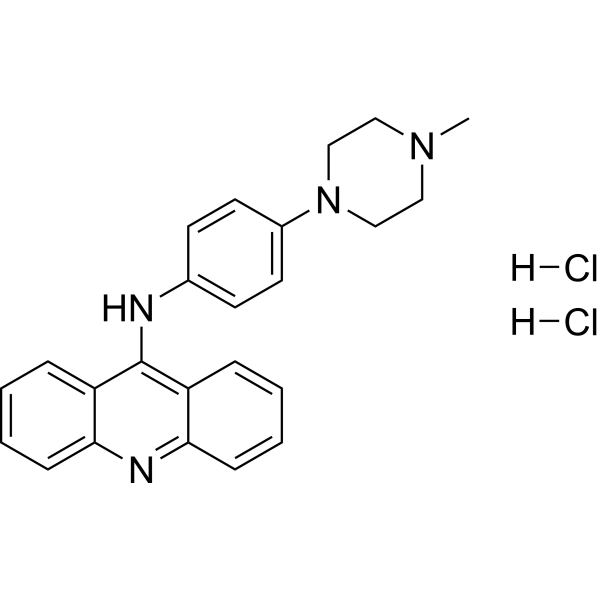
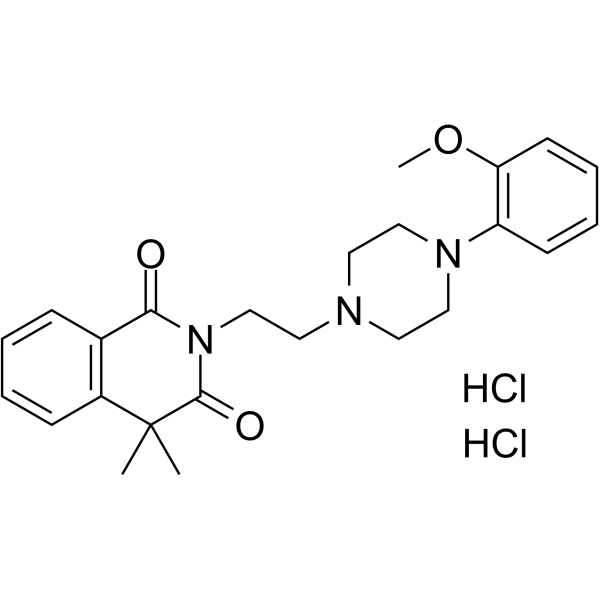
    JP1302 dihydrochloride
    2 Publications Verification

    Adrenergic Receptor Neurological Disease Endocrinology
    JP1302 dihydrochloride is a potent, selective, high affinity antagonist of the α2C-adrenoceptor, with a Kb of 16 nM and a Ki of 28 nM for the human α2C-receptor. JP1302 dihydrochloride shows antidepressant and antipsychotic-like effects. JP1302 dihydrochloride can be used for neuropsychiatric disorders and renal dysfunction research [2] .
    JP1302 dihydrochloride
  • HY-101198

    Histamine Receptor Apoptosis Neurological Disease Cancer
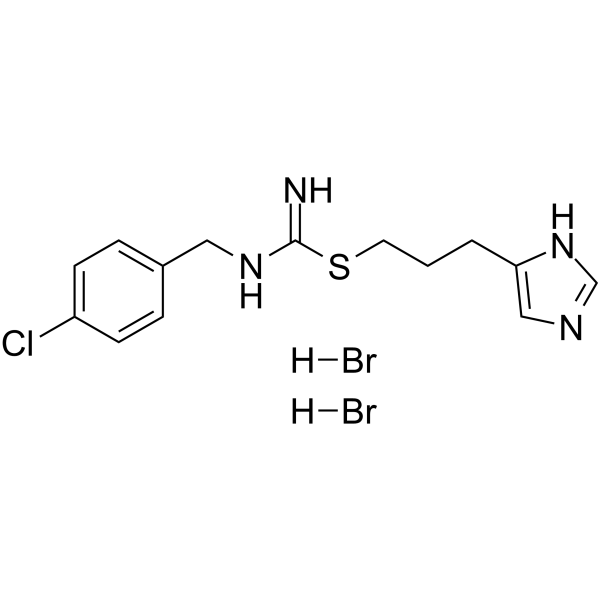
    Clobenpropit dihydrobromide is a potent histamine H3R antagonist/inverse agonist with a pEC50 of 8.07 for histamine H3LR . Clobenpropit dihydrobromide acts as partial agonist at histamine H4 receptors (Ki 13 nM). Clobenpropit dihydrobromide also binds to serotonin 5-HT3 receptors (Ki 7.4 nM) and α2A/α2C adrenoceptors (Ki 17.4/7.8 nM) [2]. Clobenpropit dihydrobromide increases apoptosis .
    Clobenpropit dihydrobromide
  • HY-159639

    Androgen Receptor Neurological Disease
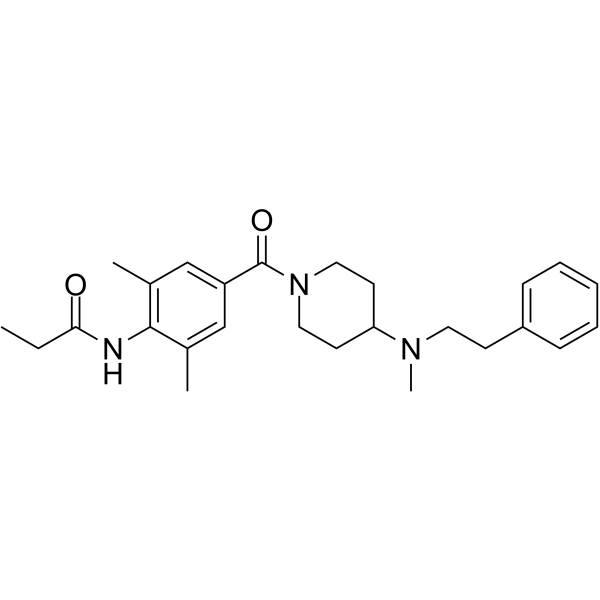
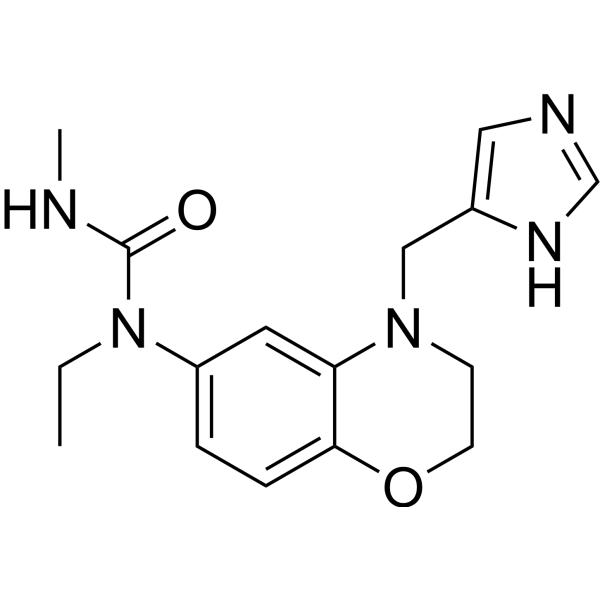
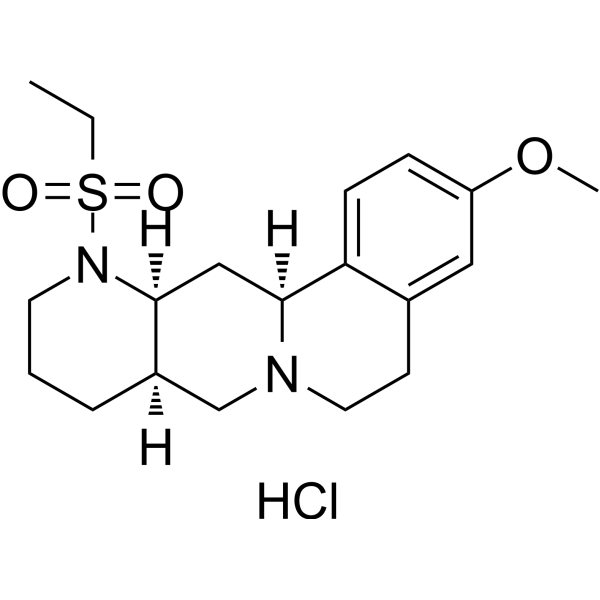
    BAY-2925976 is an α2C adrenergic receptor (ARα2C) antagonist that can be used for the study of obstructive sleep apnea (OSA) .
    BAY-2925976
  • HY-15780S1

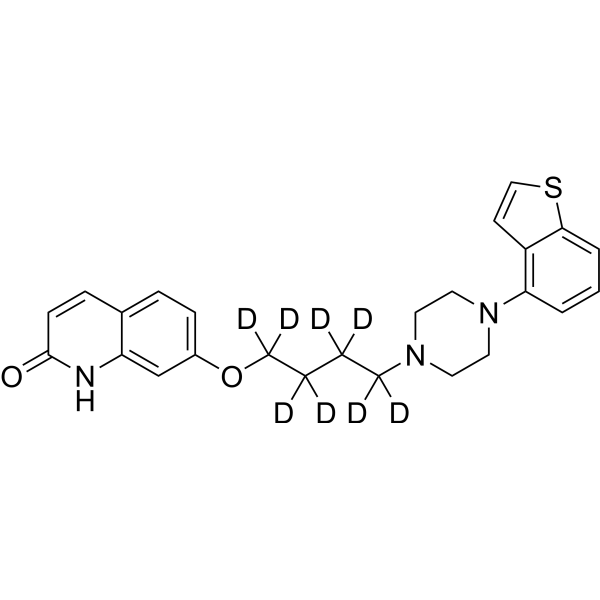
    OPC-34712-d8-1

    Isotope-Labeled Compounds Dopamine Receptor Adrenergic Receptor 5-HT Receptor Neurological Disease
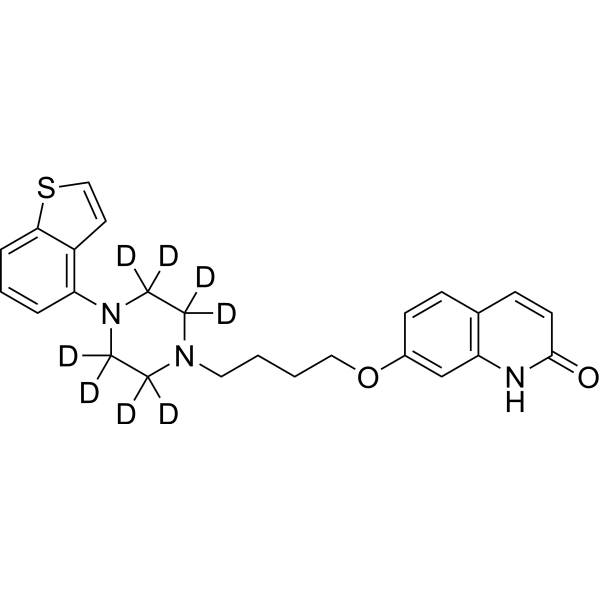
    Brexpiprazole-d8-1 (OPC-34712-d8-1) is the deuterium labeled Brexpiprazole (HY-15780) . Brexpiprazole (OPC-34712), an atypical orally active antipsychotic agent, is a partial agonist of human 5-HT1A and dopamine D2L receptor with Kis of 0.12 nM and 0.3 nM, respectively. Brexpiprazole is also a 5-HT2A receptor antagonist with a Ki of 0.47 nM. Brexpiprazole also shows potent antagonist activity at human noradrenergic α1B (Ki=0.17 nM) and α2C receptors (Ki=0.59 nM) [2] .
    Brexpiprazole-d8-1
  • HY-103213A
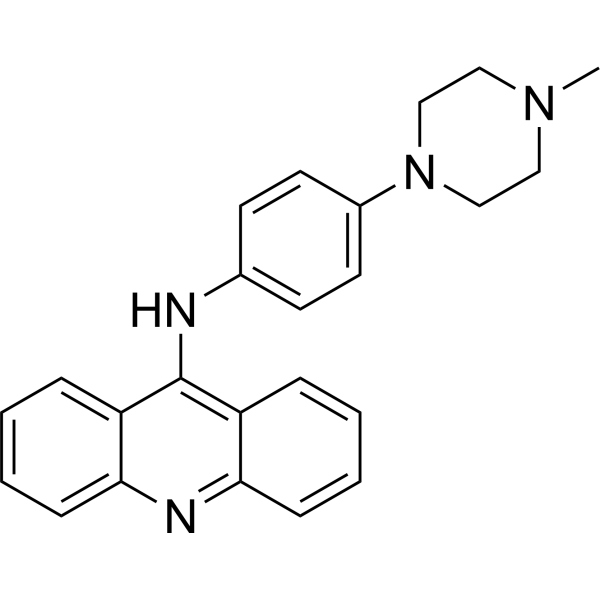
    JP1302
    2 Publications Verification

    Adrenergic Receptor Neurological Disease
    JP1302 is a potent, selective, high affinity antagonist of the α2C-adrenoceptor, with a Kb of 16 nM and a Ki of 28 nM for the human α2C-receptor. JP1302 shows antidepressant and antipsychotic-like effects. JP1302 can be used for neuropsychiatric disorders and renal dysfunction research [2] .
    JP1302
  • HY-101610

    Adrenergic Receptor Cardiovascular Disease Endocrinology
    OPC-28326 is a selective peripheral vasodilator and an angatonist of α2-adrenergic receptor, with Ki of 2040, 285, and 55 nM for α2A-, α2B- and α2C-adrenoceptors, respectively.
    OPC-28326
  • HY-103212A

    B-HT 933 hydrochloride; Oxazoloazepin hydrochloride

    Adrenergic Receptor Cardiovascular Disease
    Azepexole hydrochloride (B-HT 933 dihydrochloride; Oxazoloazepin dihydrochloride) is a selective agonist for α 2-adrenoceptor, with pKi of 8.3, 7.6, and 7.5 for α2A-, α2B- and α2C-adrenoceptor subtypes, resepctively. Azepexole dihydrochloride causes concentration-dependent inhibition of peristaltic contractions with IC50 of 78.72 nM. Azepexole hydrochloride exhibits antitussive and analgesic efficacy [2].
    Azepexole hydrochloride
  • HY-B0371D

    Adrenergic Receptor Endocrinology
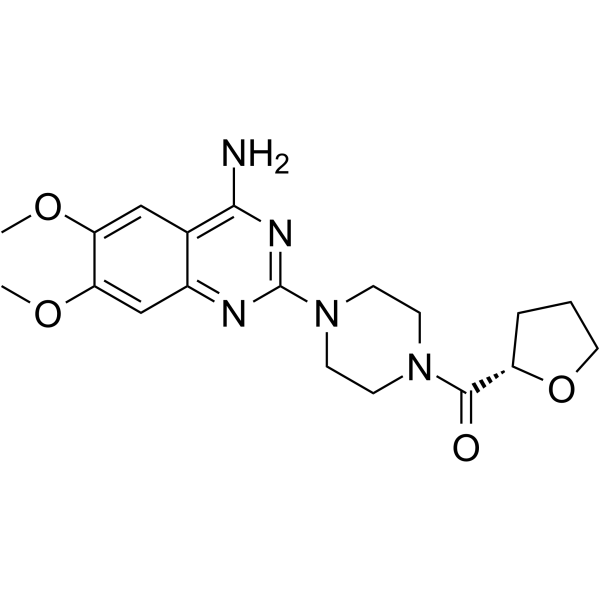
    (S)-Terazosin is an active S-enantiomer of Terazosin. (S)-Terazosin is a potent and high-affinity α-adrenoceptor antagonist with Ki values of 3.91 nM, 0.79 nM and 1.16 nM for α1a, α1b and α1d-adrenoceptor, respectively. (S)-Terazosin also has high-affinity for α2a, α2B and α2c-adrenoceptor with Ki values of 729 nM, 3.5 nM and 46.4 nM, respectively .
    (S)-Terazosin
  • HY-15780R

    OPC-34712 (Standard)

    Reference Standards 5-HT Receptor Dopamine Receptor Adrenergic Receptor Neurological Disease
    Brexpiprazole (Standard) is the analytical standard of Brexpiprazole. This product is intended for research and analytical applications. Brexpiprazole (OPC-34712), an atypical orally active antipsychotic agent, is a partial agonist of human 5-HT1A and dopamine D2L receptor with Kis of 0.12 nM and 0.3 nM, respectively. Brexpiprazole is also a 5-HT2A receptor antagonist with a Ki of 0.47 nM. Brexpiprazole also shows potent antagonist activity at human noradrenergic α1B (Ki=0.17 nM) and α2C receptors (Ki=0.59 nM) [2].
    Brexpiprazole (Standard)
  • HY-15780S

    OPC-34712-d8

    Isotope-Labeled Compounds 5-HT Receptor Dopamine Receptor Adrenergic Receptor Neurological Disease
    Brexpiprazole-d8 (OPC-34712-d8) is the deuterium labeled Brexpiprazole (HY-15780). Brexpiprazole (OPC-34712), an atypical orally active antipsychotic agent, is a partial agonist of human 5-HT1A and dopamine D2L receptor with Kis of 0.12 nM and 0.3 nM, respectively. Brexpiprazole is also a 5-HT2A receptor antagonist with a Ki of 0.47 nM. Brexpiprazole also shows potent antagonist activity at human noradrenergic α1B (Ki=0.17 nM) and α2C receptors (Ki=0.59 nM) [2] .
    Brexpiprazole-d8
  • HY-158194

    Adrenergic Receptor Cancer
    α2C adrenoceptor agonist 1 (Compound A) is an orally active, highly selective, and non-central nervous system penetrating agonist for the α2C-adrenoceptor, with EC50 and Ki values of 108 nM and 12 nM, respectively. α2C adrenoceptor agonist 1 can be used in the study of nasal congestion .
    α2C adrenoceptor agonist 1
  • HY-114814

    Adrenergic Receptor Neurological Disease
    ORM-10921 free base is a selective α-2C adrenergic receptor antagonist with a Ki of 1.4 nM. ORM-10921 free base displays potent antidepressant and antipsychotic-like effects .
    ORM-10921 free base
  • HY-101338A

    RS-79948 hydrochloride hemihydrate

    Adrenergic Receptor Neurological Disease
    RS-79948-197 hemihydrate is a non-imidazoline α2-adrenoceptor antagonist. RS-79948-197 hemihydrate shows Kd values of 0.42 nM, 0.18 nM, 0.19 nM, 0.60 nM, 0.46 nM, and 0.77 nM for rat α2A, rat α2B, rat α2C, human α2A, human α2B, and human α2C, respectively [2].
    RS-79948-197 hemihydrate
  • HY-101338

    RS-79948 hydrochloride

    Adrenergic Receptor Neurological Disease
    RS-79948-197 is a non-imidazoline α2-adrenoceptor antagonist. RS-79948-197 shows Kd values of 0.42 nM, 0.18 nM, 0.19 nM, 0.60 nM, 0.46 nM, and 0.77 nM for rat α2A, rat α2B, rat α2C, human α2A, human α2B, and human α2C, respectively [2].
    RS-79948-197
  • HY-W741575

    P95-12113

    5-HT Receptor Adrenergic Receptor Dopamine Receptor Neurological Disease
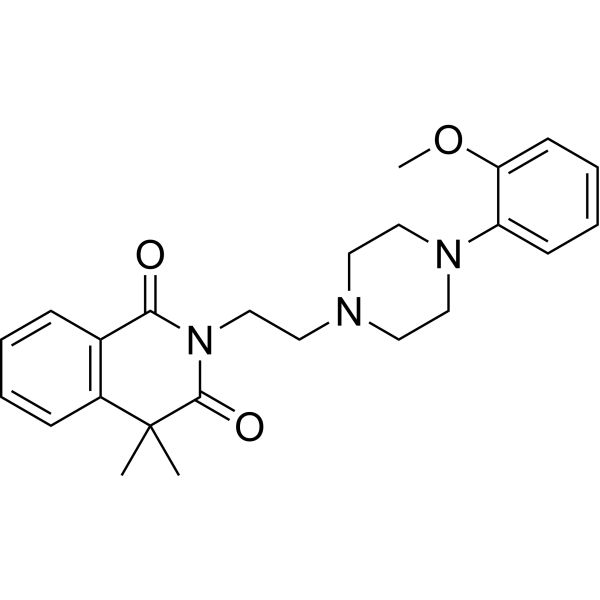
    Iloperidone carboxylic acid (P95-12113) is the metabolite of Iloperidone (HY-17410). Iloperidone carboxylic acid exhibits good affinity for 5-HT2A receptor with pKi of 8.15, and moderate affinity for adrenergic receptor α1/α2B/α2C .
    Iloperidone carboxylic acid
  • HY-15780A

    OPC-34712 hydrochloride

    5-HT Receptor Dopamine Receptor Adrenergic Receptor Neurological Disease
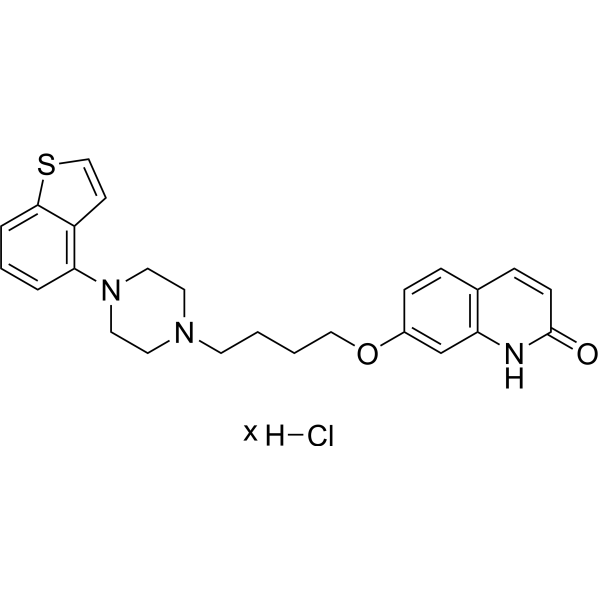
    Brexpiprazole (OPC-34712) hydrochloride, an atypical orally active antipsychotic agent, is a partial agonist of human 5-HT1A and dopamine D2L receptor with Kis of 0.12 nM and 0.3 nM, respectively. Brexpiprazole hydrochloride is also a 5-HT2A receptor antagonist with a Ki of 0.47 nM. Brexpiprazole hydrochloride also shows potent antagonist activity at human noradrenergic α1B (Ki=0.17 nM) and α2C receptors (Ki=0.59 nM) [2].
    Brexpiprazole hydrochloride
  • HY-U00117

    R107474

    Adrenergic Receptor Neurological Disease Endocrinology
    Lusaperidone (R107474) is an α2 adrenergic receptor antagonist with Kis of 0.13 and 0.15 nM for α2A and α2C, respectively.
    Lusaperidone
  • HY-109130

    BAY 1193397

    Adrenergic Receptor Metabolic Disease
    Fadaltran (BAY 1193397) is an orally active α2C-adrenoreceptor antagonist. Fadaltran can be used for the study of diabetic foot ulcers .
    Fadaltran
  • HY-B0032S

    SM-13496-d8 hydrochloride

    Isotope-Labeled Compounds Dopamine Receptor 5-HT Receptor Neurological Disease
    Lurasidone-d8 (hydrochloride) is the deuterium labeled Lurasidone, which is an inhibitor of Dopamine D2, 5-HT2A, 5-HT7, 5-HT1A and noradrenaline α2C.
    Lurasidone-d8 hydrochloride
  • HY-12709
    ARC 239
    1 Publications Verification

    Adrenergic Receptor 5-HT Receptor Neurological Disease
    ARC 239 is an α2B/C-adrenergic receptor antagonist with pKi of 7.06 and 6.95 for rat kidney α2B and human α2C, respectively. ARC 239 also inhibits 5-HT1A receptor with a Ki of 63.1 nM [2].
    ARC 239
  • HY-113918

    PTHR Metabolic Disease
    SW-106 is a selective antagonist of parathyroid hormone/parathyroid hormone-related peptide receptor (PPR) and PTHR1, with an IC50 value of 0.99 μM against PPR. SW-106 antagonizes cAMP responses. SW-106 can be used in the research of osteoporosis [2].
    SW-106
  • HY-12709A
    ARC 239 dihydrochloride
    1 Publications Verification

    Adrenergic Receptor Cardiovascular Disease Inflammation/Immunology
    ARC 239 dihydrochloride is a selective α2B/2C adrenoceptor antagonist (pKd values are 5.95, 7.41 and 7.56 at α2A, α2B, and α2C receptors respectively). ARC 239 dihydrochloride binds to CHO cell membranes expressing human recombinant a2A-, a2B- or a2C-adrenoceptor subtypes with pKis of 5.6, 8.4, and 7.08, respectively .
    ARC 239 dihydrochloride
  • HY-U00244

    P2647; BZQ; Benzoquinamide

    Adrenergic Receptor Dopamine Receptor Metabolic Disease
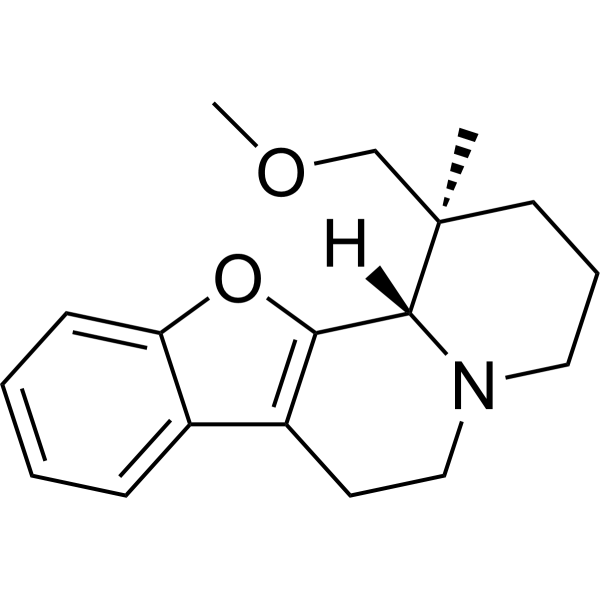
    Benzquinamide (P2647; BZQ; Benzoquinamide) is an orally active binder of dopamine receptors and adrenergic receptors. Benzquinamide specifically targets dopamine D2, D3, D4 receptors and α-2A, α-2B, α-2C adrenergic receptors. Benzquinamide regulates blood pressure and heart rate, attenuates the pressor effect of adrenaline, and exhibits activities such as antiemesis, anxiolysis, and reduction of histamine-induced bronchoconstriction. Benzquinamide has good safety and does not deplete serotonin or norepinephrine in the brain. Benzquinamide can be used in studies related to nausea/vomiting, mental disorders, anxiety states, neurosis, and psychosis [2].
    Benzquinamide
  • HY-172339

    4-Acetoxy DALT hydrochloride

    5-HT Receptor Adrenergic Receptor Dopamine Receptor Histamine Receptor mAChR Sigma Receptor Neurological Disease
    4-AcO-DALT hydrochloride is a tryptamine compound with psychoactive effects. 4-AcO-DALT hydrochloride inhibits 5-HT receptors, alpha receptors, dopamine receptors, histamine receptor 1 (H1), muscarinic M2 receptor and Sigma 2 receptor. 4-AcO-DALT hydrochloride shows Ki values of 582 nM, 2689 nM, 2099 nM, 2116 nM, 958 nM, 137 nM, 824 nM, 479 nM, 406 nM, 874 nM, 4190 nM, 482 nM, 214 nM, 803 nM, 4522 nM, 1907 nM for 5-HT1B, 5-HT1D, 5-HT1E, 5-HT2A, 5-HT2B, 5-HT2C, 5-HT6, 5-HT7A, H1, Sigma 2, α2A, α2B, α2C, D2, D3 receptors [2].
    4-AcO-DALT hydrochloride
  • HY-117046

    5-HT Receptor Histamine Receptor Adrenergic Receptor Neurological Disease
    AVN-101 is a potent, brain-penetrant and orally active 5-HT7 receptor antagonist (Ki of 153 pM), with slightly lesser potency toward 5-HT6, 5-HT2A, and 5HT-2C receptors (Ki values of 2.04 nM, 1.56  nM, and 1.17  nM, respectively). AVN-101 also exhibits a rather high affinity toward histamine H1 (Ki of 0.58 nM) and adrenergic α2A, α2B, and α2C (Ki= 0.41-3.6 nM) receptors. AVN-101 can be studied in such diseases as general anxiety disorders, depression, schizophrenia, Alzheimer’s disease, and multiple sclerosis .
    AVN-101
  • HY-103213R

    Reference Standards Adrenergic Receptor Neurological Disease Endocrinology
    JP1302 dihydrochloride (Standard) is the analytical standard of JP1302 dihydrochloride. This product is intended for research and analytical applications. JP1302 dihydrochloride is a potent, selective, high affinity antagonist of the α2C-adrenoceptor, with a Kb of 16 nM and a Ki of 28 nM for the human α2C-receptor. JP1302 dihydrochloride shows antidepressant and antipsychotic-like effects. JP1302 dihydrochloride can be used for neuropsychiatric disorders and renal dysfunction research [2] .
    JP1302 dihydrochloride (Standard)
  • HY-100300

    Adrenergic Receptor Cardiovascular Disease Endocrinology
    AGN 192836 is a potent and selective α2 adrenergic agonist with EC50s of 8.7, 41 and 6.6 nM for α2A, α2B and α2C receptor, respectively.
    AGN 192836
  • HY-138839

    Opioid Receptor Neurological Disease
    Allyphenyline oxalate (compound 9) can enhance the analgesic effect of Morphine. The pKi values ​​of Allyphenyline for α2A, α2B and α2C are 7.24, 6.47 and 7.07, respectively .
    Allyphenyline oxalate
  • HY-106400

    Adrenergic Receptor Neurological Disease
    EGIS 11150 is a adrenergic reporter antagonist that has high affinity for adrenergic α1, α2c, 5-HT2A reporters. EGIS 11150 is an antipsychotic compound with procognitive efficacy .
    EGIS 11150
  • HY-W042920A

    Adrenergic Receptor Neurological Disease
    TDIQ hydrochloride is an analog of Amphetamine with high affinity for α2-adrenergic receptor. TDIQ hydrochloride is a selective α2-adrenoceptor ligand with the Ki values of 75 nM, 95 nM, and 65 nM for α2A-, α2B-, and α2C-adrenergic receptors, respectively .
    TDIQ hydrochloride
  • HY-106444

    MPV 1730; JP-1730

    Adrenergic Receptor Neurological Disease
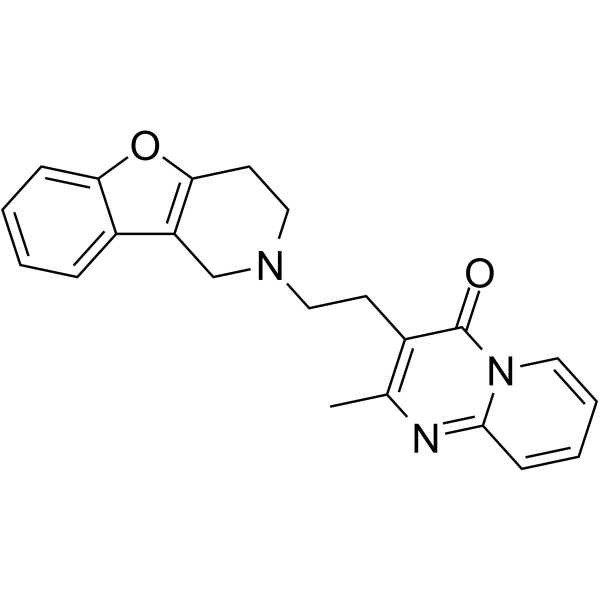
    Fipamezole (MPV 1730; JP-1730) is a potent and orally active α2-adrenergic receptor antagonist with Ki values of 9.2 nM, 17 nM, and 55 nM for human α2A, α2B, and α2C, receptors, respectively. Fipamezole is an anti-dyskinetic agent, and can be used for the study of Parkinson's disease .
    Fipamezole
  • HY-103212

    B-HT 933 dihydrochloride; Oxazoloazepin dihydrochloride

    Adrenergic Receptor Cardiovascular Disease Endocrinology
    Azepexole (B-HT 933) dihydrochloride is a potent and selective alpha 2-adrenoceptor agonist with pKis of 8.3, 7.6, and 7.5 for α2A-, α2B- and α2C-adrenoceptor subtypes, resepctively . Azepexole dihydrochloride causes concentration-dependent inhibition of peristaltic contractions (IC50= 78.72 nM) [2].
    Azepexole dihydrochloride
  • HY-12709R

    Adrenergic Receptor 5-HT Receptor Neurological Disease
    ARC 239 (Standard) is the analytical standard of ARC 239. This product is intended for research and analytical applications. ARC 239 is an α2B/C-adrenergic receptor antagonist with pKi of 7.06 and 6.95 for rat kidney α2B and human α2C, respectively. ARC 239 also inhibits 5-HT1A receptor with a Ki of 63.1 nM [2].
    ARC 239 (Standard)
  • HY-U00244A

    P2647 hydrochloride; BZQ hydrochloride; Benzoquinamide hydrochloride

    Adrenergic Receptor Dopamine Receptor Neurological Disease
    Benzquinamide (P2647; BZQ; Benzoquinamide) hydrochloride is an orally active binder of dopamine receptors and adrenergic receptors. Benzquinamide hydrochloride specifically targets dopamine D2, D3, D4 receptors and α-2A, α-2B, α-2C adrenergic receptors. Benzquinamide hydrochloride regulates blood pressure and heart rate, attenuates the pressor effect of adrenaline, and exhibits activities such as antiemesis, anxiolysis, and reduction of histamine-induced bronchoconstriction. Benzquinamide hydrochloride has good safety and does not deplete serotonin or norepinephrine in the brain. Benzquinamide hydrochloride can be used in studies related to nausea/vomiting, mental disorders, anxiety states, neurosis, and psychosis [2].
    Benzquinamide hydrochloride
  • HY-P5846

    MT3

    mAChR Adrenergic Receptor Neurological Disease
    Muscarinic toxin 3 (MT3) is a potent and non-competitive mAChR and adrenoceptors antagonist with pIC50s of 6.71, 8.79, 8.86, 7.57, 8.13, 8.49, <6.5, 7.29 against M1, M4, α1A, α1B, α1D2A2B and α2C receptors, respectively. Muscarinic toxin 3 displays prominent adrenoceptor activity .
    Muscarinic toxin 3
  • HY-117046A

    5-HT Receptor Histamine Receptor Adrenergic Receptor Neurological Disease
    AVN-101 hydrochloride is a potent, brain-penetrant and orally active 5-HT7 receptor antagonist (Ki of 153 pM), with slightly lesser potency toward 5-HT6, 5-HT2A, and 5HT-2C receptors (Ki values of 2.04 nM, 1.56  nM, and 1.17  nM, respectively). AVN-101 hydrochloride also exhibits a rather high affinity toward histamine H1 (Ki of 0.58 nM) and adrenergic α2A, α2B, and α2C (Ki= 0.41-3.6 nM) receptors. AVN-101 hydrochloride can be studied in such diseases as general anxiety disorders, depression, schizophrenia, Alzheimer’s disease, and multiple sclerosis .
    AVN-101 hydrochloride
  • HY-106444A

    MPV-1730 hydrochloride; JP-1730 hydrochloride

    Adrenergic Receptor Neurological Disease
    Fipamezole hydrochloride is a potent and orally active α2-adrenergic receptor antagonist with Ki values of 9.2 nM, 17 nM, and 55 nM for human α2A, α2B, and α2C, receptors, respectively. Fipamezole hydrochloride is an anti-dyskinetic agent, and can be used for the study of Parkinson's disease .
    Fipamezole hydrochloride
  • HY-100300R

    Adrenergic Receptor Reference Standards Cardiovascular Disease Endocrinology
    AGN 192836 (Standard) is the analytical standard of AGN 192836 (HY-100300). This product is intended for research and analytical applications. AGN 192836 is a potent and selective α2 adrenergic agonist with EC50s of 8.7, 41 and 6.6 nM for α2A, α2B and α2C receptor, respectively.
    AGN 192836 (Standard)
  • HY-121675A

    BOL-148 D-Tartrate; Bromolysergide D-Tartrate

    5-HT Receptor G protein-coupled Bile Acid Receptor 1 Neurological Disease
    2-Bromo-LSD D-Tartrate (BOL-148 D-Tartrate) is a blood-brain barrier-permeable 5-HT2A partial agonist and competitive partial antagonist. 2-Bromo-LSD D-Tartrate acts as both a potent partial agonist (with an EC50 of 0.81 nM for Gq dissociation) and a potent partial antagonist (with a KB of 0.18 nM for Gq dissociation) at the 5-HT2A receptor. 2-Bromo-LSD D-Tartrate exhibits partial agonist activity at multiple aminergic GPCRs, including 5-HT2A. 2-Bromo-LSD D-Tartrate lacks 5-HT2B agonist activity. 2-Bromo-LSD D-Tartrate induces dendritogenesis and spinogenesis. 2-Bromo-LSD D-Tartrate reverses the behavioral effects of chronic stress and increases active coping behaviors in mice [2].
    2-Bromo-LSD D-Tartrate

Inquiry Online

Your information is safe with us. * Required Fields.

Salutation


Country or Region *

Applicant Name *


Organization Name *

Department *


Email Address *


Product Name *

Cat. No.


Requested quantity *

Phone Number *


Remarks

Inquiry Online

Inquiry Information

Product Name:
Cat. No.:
Quantity:
MCE Japan Authorized Agent:

