
1. Search Result
Search Result
Results for "

β-amyloid aggregation

" in MedChemExpress (MCE) Product Catalog:

28

Inhibitors & Agonists

11

Peptides

2

Natural
Products

2

Isotope-Labeled Compounds

Targets Recommended:
Cat. No. Product Name Target Research Areas Chemical Structure
  • HY-117259
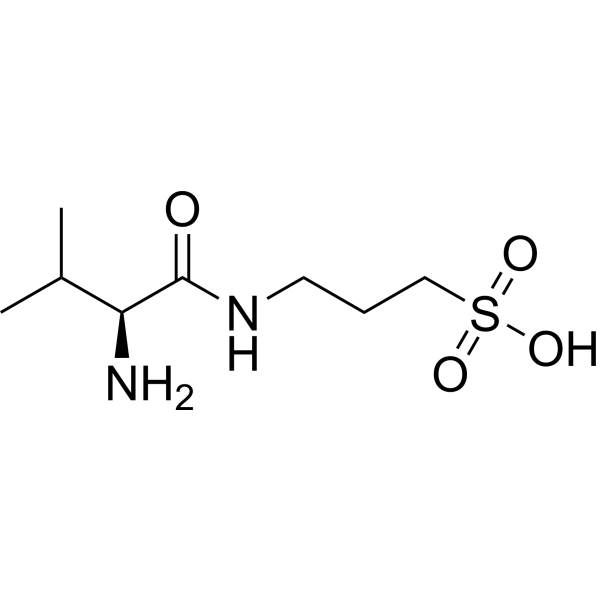
    Valiltramiprosate
    1 Publications Verification

    ALZ-801

    Amyloid-β Neurological Disease
    ALZ-801 is a potent and orally available small-molecule β-amyloid (Aβ) anti-oligomer and aggregation inhibitor, valine-conjugated proagent of Tramiprosate with substantially improved PK properties and gastrointestinal tolerability compared with the parent compound . ALZ-801 is an advanced and markedly improved candidate for the treatment of alzheimer’s disease .
    Valiltramiprosate
  • HY-W117986

    Amyloid-β Reactive Oxygen Species (ROS) Caspase Neurological Disease
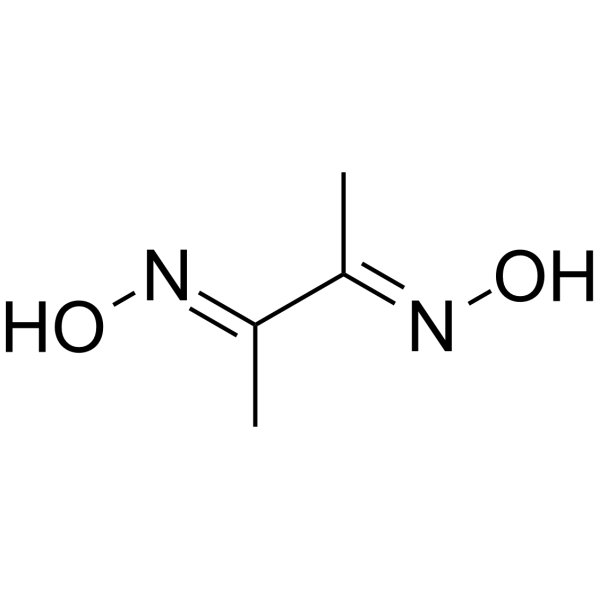
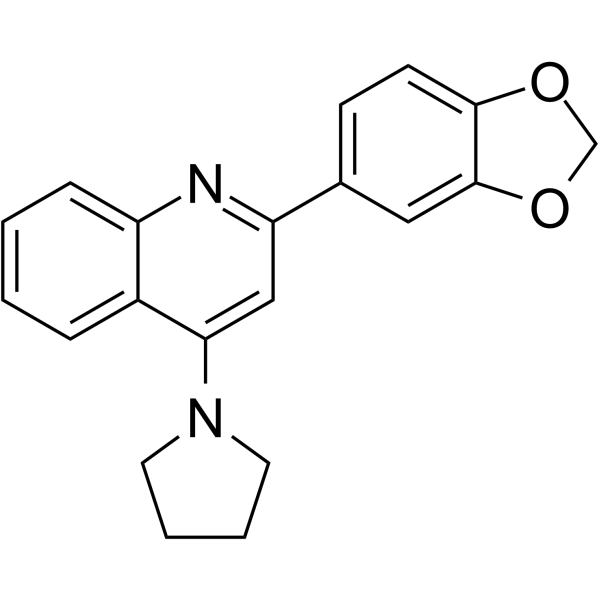
    aggregation-IN-1 (Compound 1b) is a β-amyloid aggregation inhibitor/depolymerizer, with IC50 values of 3.92 μM and 7.19 μM, respectively. Aβ aggregation-IN-1 inhibits the activation of preformed β-amyloid fibrils, reactive oxygen species (ROS) and Caspase-3. Aβ aggregation-IN-1 can be used in research related to Alzheimer's disease .
    Aβ aggregation-IN-1
  • HY-P1378A

    Amyloid-β Neurological Disease
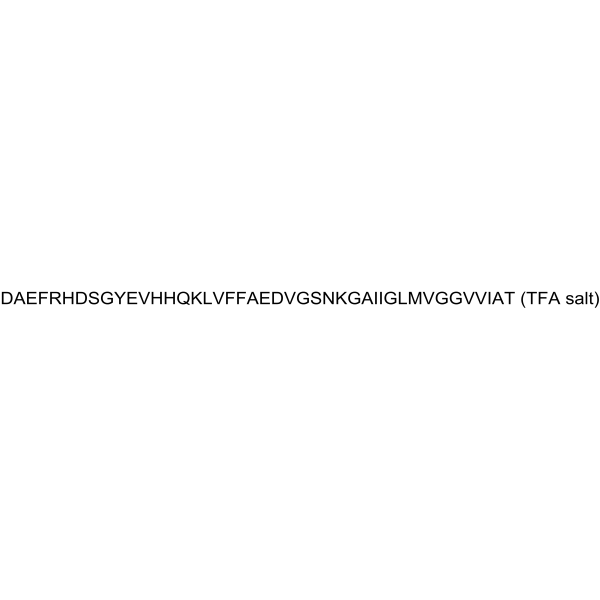
    β-Amyloid (1-43)(human) TFA is more prone to aggregation and has higher toxic properties than the long-known Aβ1-42. β-Amyloid (1-43)(human) TFA shows a correlation with both sAPPα and sAPPβ. β-Amyloid (1-43)(human) TFA could be considered an added Alzheimer's disease (AD) biomarker together with the others already in use .
    β-Amyloid (1-43)(human) TFA
  • HY-B1588
    Carbenoxolone
    5+ Cited Publications

    Amyloid-β Gap Junction Protein Neurological Disease Metabolic Disease
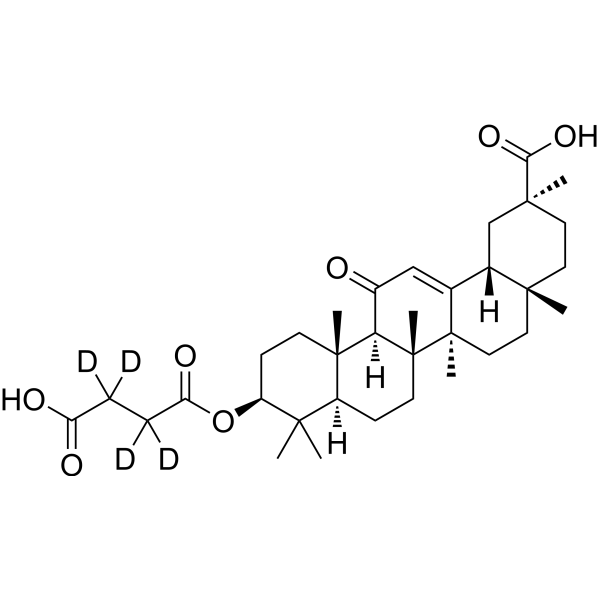
    Carbenoxolone is a blood-brain barrier-permeable Pannexin1 inhibitor, gap junction (Gap junction) blocker, and β-amyloid 42 inhibitor. Carbenoxolone modulates voltage-gated currents of wild-type and mutant Panx1, and inhibits stimulus-activated Panx1 channel function. Carbenoxolone interacts with stable residues of β-amyloid 42 peptides, fibrils and oligomers, thereby inhibiting their aggregation. Carbenoxolone alleviates liver fibrosis. Carbenoxolone exerts neuroprotective and nootropic effects. Carbenoxolone can be used in studies related to Alzheimer's disease and liver fibrosis .
    Carbenoxolone
  • HY-W004287

    Amyloid-β Cholinesterase (ChE) Parasite Infection Neurological Disease
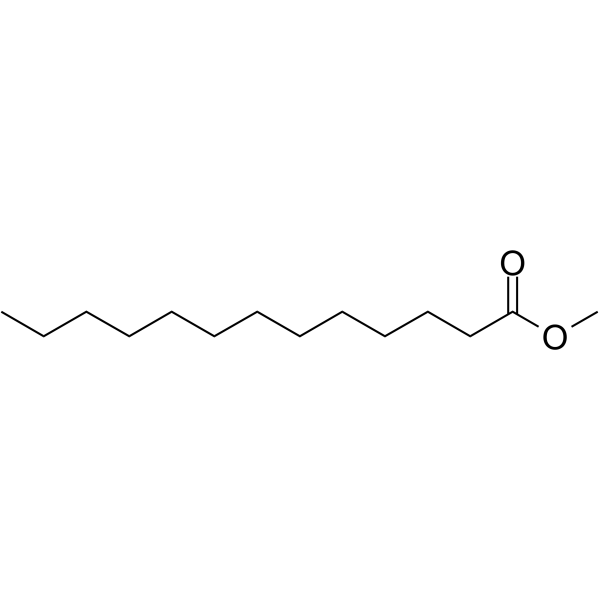
    Methyl tridecanoate is a fatty acid methyl ester. Methyl tridecanoate exhibits an IC50 of 3.26 μM and a Ki of 2.30 μM against AsOBP21f in Anopheles sinensis. Methyl tridecanoate induces electroantennographic responses in female Anopheles sinensis. Methyl tridecanoate shows a dose-dependent attractive effect on Anopheles sinensis. Methyl tridecanoate weakly inhibits β-amyloid aggregation and AChE activity. Methyl tridecanoate can be used in the research of malaria and Alzheimer's disease .
    Methyl tridecanoate
  • HY-P1378

    Amyloid-β Neurological Disease
    β-Amyloid (1-43)(human) is more prone to aggregation and has higher toxic properties than the long-known Aβ1-42. β-Amyloid (1-43)(human) shows a correlation with both sAPPα and sAPPβ. β-Amyloid (1-43)(human) could be considered an added Alzheimer's disease (AD) biomarker together with the others already in use .
    β-Amyloid (1-43)(human)
  • HY-148495

    Amyloid-β Neurological Disease
    Carnosine conjugated hyalyronate is a hyaluronic acid derivative functionalized with the dipeptide carnosine (Carnosine, Car) and has the ability to resist Aβ amyloid aggregation. Carnosine conjugated hyalyronate dissolves amyloid fibrils and reduces Aβ-induced toxicity in vitro. The effectiveness of Carnosine conjugated hyalyronate against amyloid aggregation is directly proportional to the Carnosine loading .
    Carnosine conjugated hyalyronate
  • HY-P1051

    amyloid β-Protein (12-28)

    Amyloid-β Neurological Disease
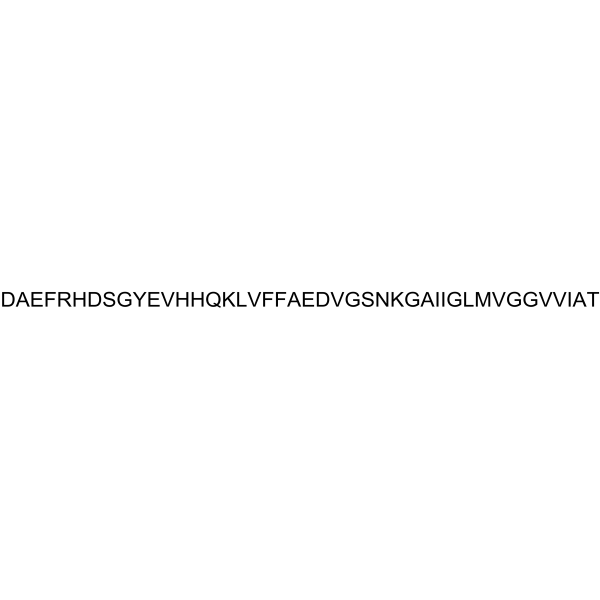
    β-Amyloid (12-28) (Amyloid β-Protein (12-28)) is a peptide fragment of β-amyloid protein (β1-42). β1-42, a 42 amino acid protein , is the major component of senile plaque cores. β-Amyloid (12-28) shows aggregation properties. β-Amyloid (12-28) has the potential for Alzheimer’s disease research .
    β-Amyloid (12-28)
  • HY-P1388F

    FITC-Ahx-amyloid β-peptide (1-42) (rat/mouse) tris

    Amyloid-β Neurological Disease
    FITC-Ahx-β-Amyloid (1-42), (rat/mouse) (tris) is a fluorescently labeled (FITC) form of β-Amyloid (1-42), (rat/mouse) (HY-P1388), which can be used in Alzheimer's disease-related research, such as aggregation, fiber formation, cellular uptake or imaging experiments. This product is provided in the form of Tris salt.
    FITC-Ahx-β-Amyloid (1-42), (rat/mouse) tris
  • HY-146142

    Cholinesterase (ChE) Amyloid-β Neurological Disease
    AChE/BuChE-IN-2 (Compound 5f) is an orally active AChE and BuChE inhibitor with IC50 values of 0.72 μM and 0.16 μM, respectively. AChE/BuChE-IN-2 shows a non-competitive inhibition with AChE and shows potent self-induced β-amyloid (Aβ) aggregation inhibition with an IC50 of 62.52 μM. AChE/BuChE-IN-2 can cross the BBB .
    AChE/BuChE-IN-2
  • HY-P5968A

    β(25-35)KA TFA

    Amyloid-β Neurological Disease
    [Ala28]-β Amyloid(25-35) (β(25-35)KA) TFA is an electrically neutral mutant peptide of Aβ(25-35) that accelerates the aggregation of Firefly Luciferase .
    [Ala28]-β Amyloid(25-35) TFA
  • HY-P1051A

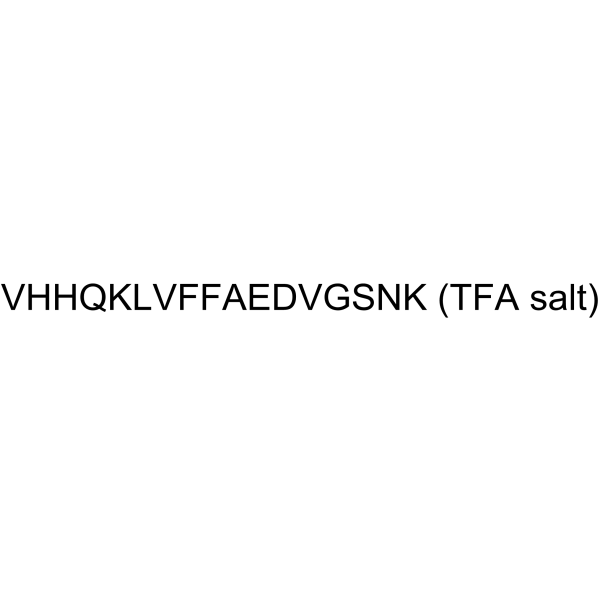
    amyloid β-Protein (12-28) TFA; amyloid Beta-Peptide (12-28) (human) TFA; β-amyloid protein fragment(12-28) TFA

    Amyloid-β Neurological Disease
    β-Amyloid (12-28) (TFA) (Amyloid β-Protein (12-28) (TFA)) is a peptide fragment of β-amyloid protein (β1-42). β1-42, a 42 amino acid protein , is the major component of senile plaque cores. β-Amyloid (12-28) (TFA) shows aggregation properties. β-Amyloid (12-28) (TFA) has the potential for Alzheimer’s disease research .
    β-Amyloid (12-28) TFA
  • HY-P10037

    Amyloid-β Neurological Disease
    β Amyloid(17-28) human is a β-amyloid peptide (Abeta), a lipid-induced amyloid core fragment. β Amyloid(17-28) human enhances aggregation of full-length β Amyloid40, producing toxic aggregates in Alzheimer's disease (AD) .
    β Amyloid(17-28) human
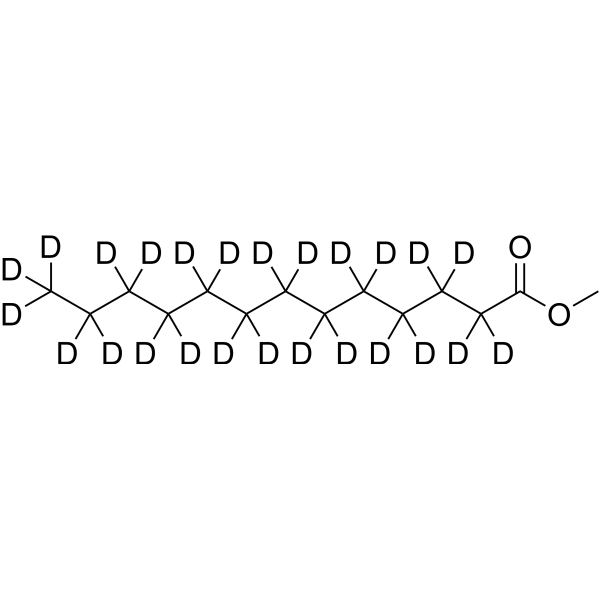
  • HY-W004287S

    Isotope-Labeled Compounds Amyloid-β Cholinesterase (ChE) Neurological Disease
    Methyl tridecanoate-d25 is the deuterium labeled Methyl tridecanoate. Methyl tridecanoate moderately inhibits β-amyloid aggregation. Methyl tridecanoate weakly inhibits acetylcholinesterase (AChE) .
    Methyl tridecanoate-d25
  • HY-W004287R

    Reference Standards Amyloid-β Cholinesterase (ChE) Neurological Disease
    Methyl tridecanoate (Standard) is the analytical standard of Methyl tridecanoate. This product is intended for research and analytical applications. Methyl tridecanoate moderately inhibits β-amyloid aggregation. Methyl tridecanoate weakly inhibits acetylcholinesterase (AChE) .
    Methyl tridecanoate (Standard)
  • HY-157441

    Cholinesterase (ChE) Amyloid-β Neurological Disease
    AChE/Aβ-IN-4 is a dual inhibitor of acetylcholinesterase (AChE) and β-amyloid (Aβ) aggregation, with the IC50 values of 1.72 ± 0.18 μM and 1.42 ± 0.3 μM, respectively. AChE/Aβ-IN-4 plays an impotant role in neurological disorders, such as Alzheimer’s disease .
    AChE/Aβ-IN-4
  • HY-P5370

    Amyloid-β Others
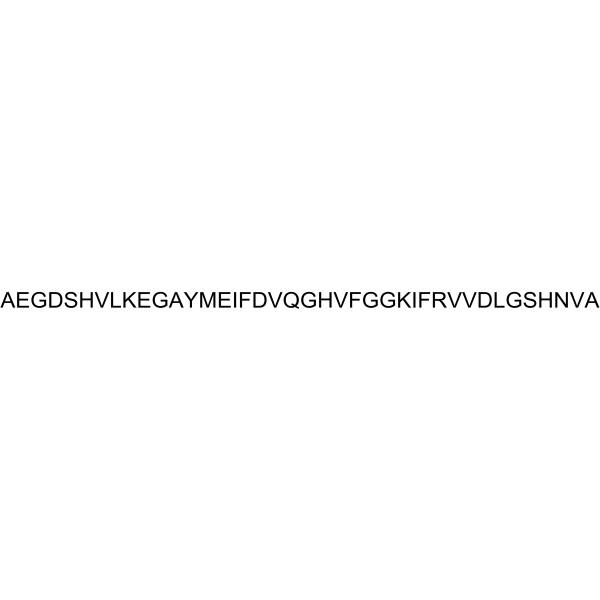
    Scrambled β-amyloid (1-40) is a biological active peptide. (Aβ (1-40) together with Aβ (1-42) are two major C-terminal variants of the Aβ protein constituting the majority of Aβs. These undergo post-secretory aggregation and deposition in the Alzheimer’s disease brain. This peptide is the scrambled sequence of Abeta 1-40 HY-P0265)
    Scrambled β-amyloid (1-40)
  • HY-117259S

    ALZ-801-d6

    Isotope-Labeled Compounds Amyloid-β Neurological Disease
    Valiltramiprosate-d6 (ALZ-801-d6) is deuterium labeled Valiltramiprosate. ALZ-801 is a potent and orally available small-molecule β-amyloid (Aβ) anti-oligomer and aggregation inhibitor, valine-conjugated proagent of Tramiprosate with substantially improved PK properties and gastrointestinal tolerability compared with the parent compound . ALZ-801 is an advanced and markedly improved candidate for the treatment of alzheimer’s disease .
    Valiltramiprosate-d6
  • HY-152110

    Cholinesterase (ChE) Monoamine Oxidase Neurological Disease
    Dual AChE-MAO B-IN-5, indanone derivative, is a potent dual AChE/MAO-B inhibitior with IC50 values of 0.0224, 0.0412, and 0.1116 μM for AChE, MAO-B and MAO-A, respectively. Dual AChE-MAO B-IN-5 has antioxidant activity and prevents β-amyloid plaque aggregation. Dual AChE-MAO B-IN-5 can be used for Alzheimer’s disease (AD) research .
    AChE/MAO-IN-2
  • HY-P10824

    Amyloid-β Neurological Disease
    RI-OR2-TAT is a brain-penetrant inhibitor of β-Amyloid oligomerization, which is produced by adding the HIV protein transduction domain TAT to RI-OR2. RI-OR2-TAT binds to Aβ42 fibrils with a Kd value of 58-125 nM. RI-OR2-TAT reduces aggregation and plaque levels, reduces activation of microglia and oxidative damage, and increases the number of young neurons in the dentate gyrus .
    RI-OR2-TAT
  • HY-163746

    Cholinesterase (ChE) Neurological Disease
    BuChE-IN-11 (Compound 3b-1) is an selective BuChE inhibitor with an IC50 of 0.44 μM for hBuChE. BuChE-IN-11 has high blood-brain barrier permeability and exhibits strong antioxidant activity due to its free radical scavenging properties. BuChE-IN-11 interacts with the choline binding site, acetyl binding site, and peripheral anionic site, exhibiting submicromolar BuChE inhibitory activity and preventing β-amyloid (Aβ) self-aggregation. BuChE-IN-11 holds promise for research in the field of Alzheimer's disease .
    BuChE-IN-11
  • HY-152114

    Monoamine Oxidase Cholinesterase (ChE) Neurological Disease
    AChE/BChE/MAO-B-IN-4, an indan-1-one derivative, is a potent MAO-B inhibitor with an IC50 of 0.0393 μM for human MAO-B. AChE/BChE/MAO-B-IN-4 is a potent AChE and BChE enzyme inhibitor, with IC50s of 0.0458 μM and 0.075 μM for human AChE and BChE enzyme, respectively. AChE/BChE/MAO-B-IN-4 shows significant antioxidant activity and prevent β-amyloid plaque aggregation. AChE/BChE/MAO-B-IN-4 has the potential for Alzheimer's disease (AD) research .
    AChE/BChE/MAO-B-IN-4
  • HY-P5968

    β(25-35)KA

    Amyloid-β Neurological Disease
    [Ala28]-β Amyloid(25-35) (β(25-35)KA) is an electrically neutral mutant peptide of Aβ(25-35) that accelerates the aggregation of Firefly Luciferase .
    [Ala28]-β Amyloid(25-35)
  • HY-163320

    Cholinesterase (ChE) Amyloid-β Neurological Disease
    AChE/Aβ-IN-5 (compound AV-2) is a bifunctional inhibitor that targets AChE and auto-induced Aβ (Amyloid-β) aggregation. AChE/Aβ-IN-5 can significantly improve scopolamine- and Aβ-induced cognitive impairment in mice .
    AChE/Aβ-IN-5
  • HY-P3845

    Amyloid-β Neurological Disease
    (Gly22)-Amyloid β-Protein (1-42) is a peptide fragment of amyloid β-protein (Aβ). Amyloid β-protein is the primary component of both vascular and parenchymal amyloid deposits in Alzheimer's disease. Mutation of Glu22 to Gly22 in Aβ can increase aggregation .
    (Gly22)-Amyloid β-Protein (1-42)
  • HY-146347

    Monoamine Oxidase Amyloid-β Neurological Disease
    MAO-B-IN-10 (compound 4f) is a potent, selective, BBB-penetrated MAO-B (monoamine oxidase-B) inhibitor, with IC50 of 5.3 μM. MAO-B-IN-10 can inhibit (58.2%) and disaggregate (43.3%) self-mediated Aβ (amyloid β) aggregation. MAO-B-IN-10 can be use for Alzheimer’s disease research .
    MAO-B-IN-10
  • HY-183375

    Neurological Disease
    AChE/BuChE/BACE-1-IN-1 is a blood-brain barrier-permeable multi-target inhibitor of AChE/BuChE/BACE, with IC50 values of 0.387 μM, 0.430 μM, and 0.531 μM against AChE, BuChE, and BACE-1, respectively. AChE/BuChE/BACE-1-IN-1 reduces the aggregation of β-amyloid protein () and hyperphosphorylated tau protein (p-tau). AChE/BuChE/BACE-1-IN-1 can be used for the research of Alzheimer's disease .
    AChE/BuChE/BACE-1-IN-1
  • HY-175523

    Monoamine Oxidase Cholinesterase (ChE) Amyloid-β Neurological Disease
    MAO-B-IN-48 is a selective MAO-B inhibitor (IC50 = 0.09 μM, Ki = 0.02 μM). MAO-B-IN-48 exhibits inhibitory activity against hBChE (IC50 = 1.10 μM, Ki = 0.43 μM) and AChE (IC50 = 0.56 μM, Ki = 0.14 μM). MAO-B-IN-48 suppresses self-induced aggregation of toxic β-amyloid peptides and exerts antioxidant activity, including DPPH radical scavenging, CUPRAC copper ion reduction, and superoxide anion scavenging. MAO-B-IN-48 can be used for the study of Alzheimer's disease (AD) .
    MAO-B-IN-48

Inquiry Online

Your information is safe with us. * Required Fields.

Salutation


Country or Region *

Applicant Name *


Organization Name *

Department *


Email Address *


Product Name *

Cat. No.


Requested quantity *

Phone Number *


Remarks

Inquiry Online

Inquiry Information

Product Name:
Cat. No.:
Quantity:
MCE Japan Authorized Agent: