1. Search Result
Search Result
Results for "

hyperuricemia mice

" in MedChemExpress (MCE) Product Catalog:

12

Inhibitors & Agonists

3

Natural
Products

Cat. No. Product Name Target Research Areas Chemical Structure
  • HY-139585

    LC350189

    Xanthine Oxidase Metabolic Disease
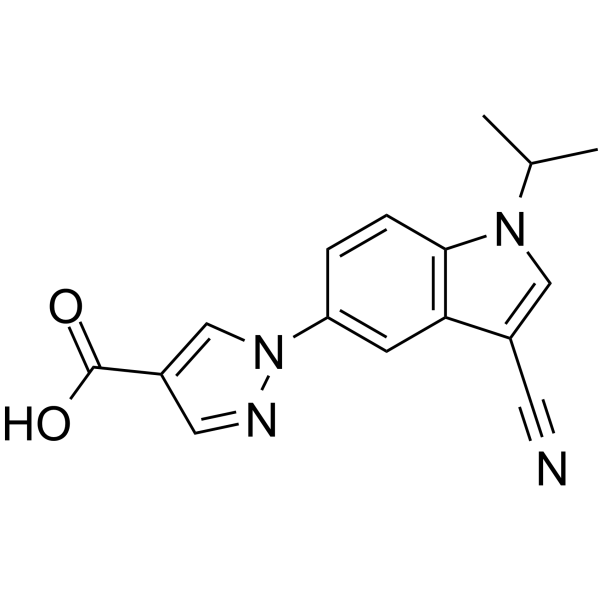
    Tigulixostat (LC350189) is an orally active non-purine selective xanthine oxidase inhibitor. Tigulixostat has IC50 values of 0.003 µM and 0.073 µM in bovine milk and rat plasma, respectively. Tigulixostat can effectively reduce serum uric acid levels and can be used in the research of gout and hyperuricemia .
    Tigulixostat
  • HY-135319

    Bacterial Antibiotic ERK JNK NF-κB ROR Apoptosis Caspase GSK-3 Akt PI3K Infection Metabolic Disease Inflammation/Immunology Cancer
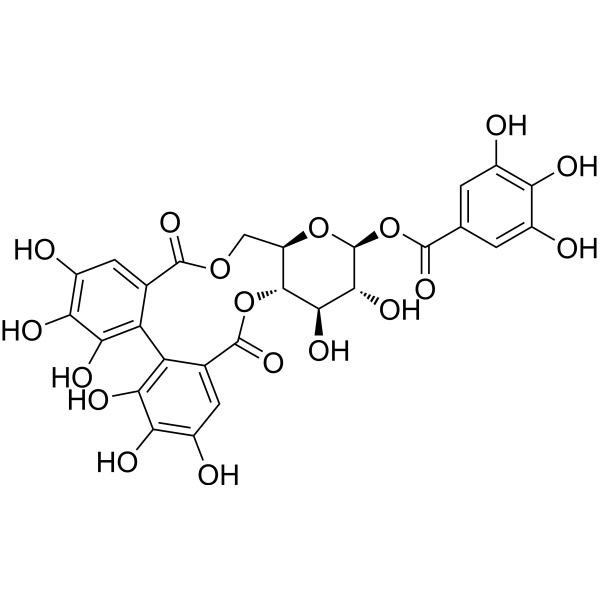
    Strictinin is an orally active phenolic compound. Strictinin reduces xanthine oxidase activity, uric acid production, and the activation of ERK1/2, JNK, NF-κB, and NLRP3 inflammasome components in hepatocytes treated with Xanthine (HY-W017389). Strictinin decreases elevated serum uric acid levels and enhanced xanthine oxidase activity in mice treated with potassium oxonate. Strictinin acts as a ROR1 inhibitor and exhibits anticancer activity against highly aggressive non-androgen-dependent prostate cancer. Strictinin induces cancer cell apoptosis (apoptosis), arrests cell cycle, and inhibits cancer cell migration, invasion, and epithelial-mesenchymal transition. Strictinin modulates gut microbiota, inhibits bacterial growth and biofilm formation, accelerates small intestinal transit, and blocks viral entry and replication. Strictinin can be used in research related to hyperuricemia, androgen receptor-negative non-androgen-dependent prostate cancer, triple-negative breast cancer, bacterial infections, constipation, coronavirus infections, dental caries, and infections caused by influenza A, influenza B, and human parainfluenza virus type 1 .
    Strictinin
  • HY-Y0106

    mTOR Xanthine Oxidase Apoptosis Cardiovascular Disease Metabolic Disease Inflammation/Immunology
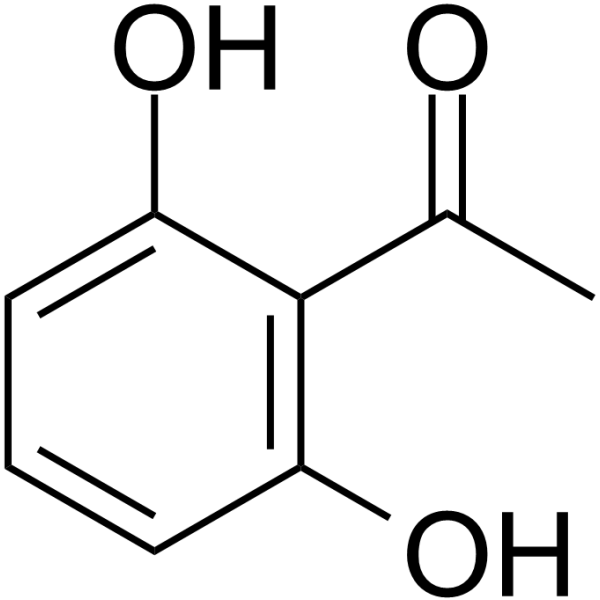
    2,6-Dihydroxyacetophenone, a polyphenolic derivative of Acetophenone (HY-Y0989), is an orally active mTOR inhibitor. 2,6-Dihydroxyacetophenone shows antioxidant activity. 2,6-Dihydroxyacetophenone inhibits cell growth and proliferation in CRC cells. 2,6-Dihydroxyacetophenone arrests at G0/G1 phase of cell cycle, induces apoptosis and suppresses cell migration in CRC cells. 2,6-Dihydroxyacetophenone inhibits xanthine oxidase (XOD) with an IC50 of 1.24 mM. 2,6-dihydroxyacetophenone improves uric acid metabolism in hyperuricemia mice, reduces plasma cholesterol in hypercholesterolemic rats, and inhibits lipid accumulation in HFD-induced obese mice. 2,6-Dihydroxyacetophenone can be used for the study of colorectal cancer (CRC), hyperuricemia and hypercholesterolemia .
    2,6-Dihydroxyacetophenone
  • HY-175645

    NOD-like Receptor (NLR) URAT1 Interleukin Related OAT GLUT Metabolic Disease Inflammation/Immunology
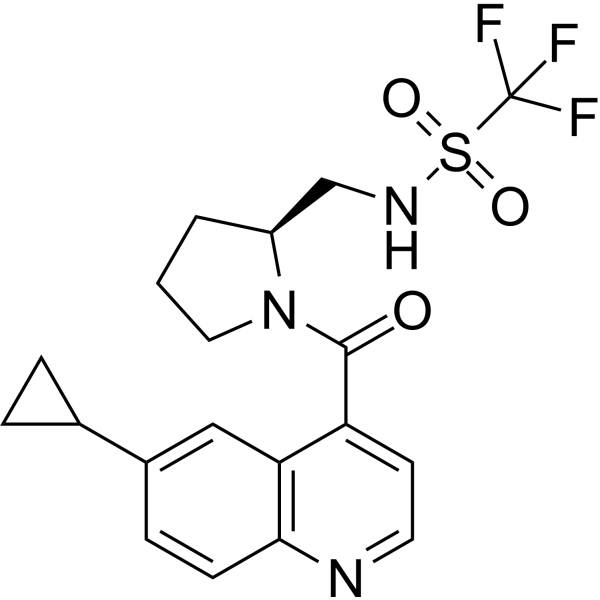
    NLRP3/URAT1-IN-1 is an orally active double inhibitor of NLRP3 and URAT1 (IC50 = 3.81 μM). NLRP3/URAT1-IN-1 inhibits IL-1β release in LPS (HY-D1056) and ATP-stimulated mouse bone marrow-derived macrophages (BMDMs), with an IC50 of 2.61 μM. NLRP3/URAT1-IN-1 reduces serum uric acid (SUA) and alleviates liver/kidney damage in mice with acute hyperuricemia (HUA). NLRP3/URAT1-IN-1can be used for the study of gout and hyperuricemia .
    NLRP3/URAT1-IN-1
  • HY-174318

    Xanthine Oxidase Metabolic Disease
    NARS-3′ is an orally active reversible xanthine oxidase (XO) inhibitor with the IC50 of 21.01 μM. NARS-3′ can competitively inhibit XO activity and reduce uric acid production. NARS-3′ can reduce renal damage in hyperuricemia mice. NARS-3′ can be used for the study of hyperuricemia.
    NARS-3′
  • HY-163431

    URAT1 Inflammation/Immunology
    URAT1 inhibitor 10 (Compound 23a) is a URAT1 inhibitor. URAT1 inhibitor 10 has oral efficacy and low cytotoxicity. URAT1 inhibitor 10 has high selectivity for OAT1 .
    URAT1 inhibitor 10
  • HY-Y0106R

    Reference Standards mTOR Xanthine Oxidase Apoptosis Cardiovascular Disease Metabolic Disease Inflammation/Immunology
    2,6-Dihydroxyacetophenone (Standard) is the analytical standard of 2,6-Dihydroxyacetophenone (HY-Y0106). This product is intended for research and analytical applications. 2,6-Dihydroxyacetophenone, a polyphenolic derivative of Acetophenone (HY-Y0989), is an orally active mTOR inhibitor. 2,6-Dihydroxyacetophenone shows antioxidant activity. 2,6-Dihydroxyacetophenone inhibits cell growth and proliferation in CRC cells. 2,6-Dihydroxyacetophenone arrests at G0/G1 phase of cell cycle, induces apoptosis and suppresses cell migration in CRC cells. 2,6-Dihydroxyacetophenone inhibits xanthine oxidase (XOD) with an IC50 of 1.24 mM. 2,6-dihydroxyacetophenone improves uric acid metabolism in hyperuricemia mice, reduces plasma cholesterol in hypercholesterolemic rats, and inhibits lipid accumulation in HFD-induced obese mice. 2,6-Dihydroxyacetophenone can be used for the study of colorectal cancer (CRC), hyperuricemia and hypercholesterolemia .
    2,6-Dihydroxyacetophenone (Standard)
  • HY-153972

    URAT1 Xanthine Oxidase Metabolic Disease Inflammation/Immunology
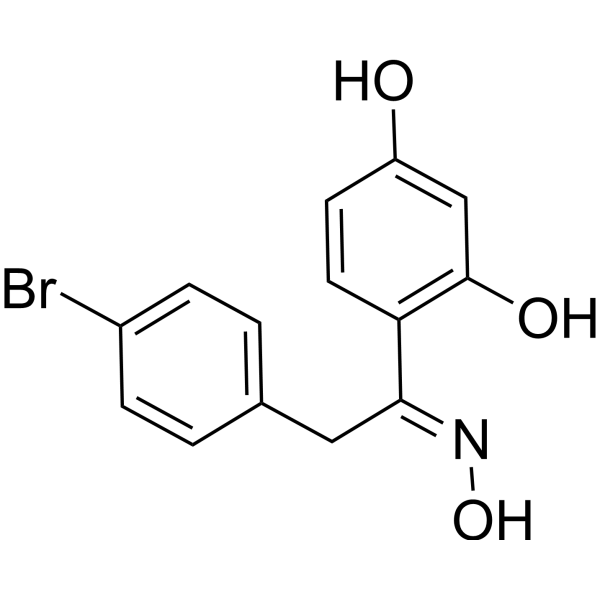
    URAT1&XO inhibitor 2 (Compound BDEO) is a dual inhibitor of xanthine oxidase and URAT1, with IC50 of 3.3 μM for xanthine oxidase. URAT1&XO inhibitor 2 blocks uptake of uric acid in HEK293 cells expressing URAT1, with a Ki value of 0.145 μM. URAT1&XO inhibitor 2 decreases serum urate level and uric acid excretion in hyperuricemic mice. URAT1&XO inhibitor 2 can be used for research of hyperuricemia .
    URAT1&XO inhibitor 2
  • HY-183658

    URAT1 GLUT Metabolic Disease Inflammation/Immunology
    URAT1/GLUT9-IN-3 is an orally active URAT1/GLUT9 dual inhibitor with IC50 values of 4.01 and 1.60 μM. URAT1/GLUT9-IN-3 inhibits URAT1-mediated uric acid uptake and GLUT9-mediated uric acid transport, reducing renal urate reabsorption. URAT1/GLUT9-IN-3 reduces serum uric acid levels in hyperuricemic mice. URAT1/GLUT9-IN-3 can be used for the researches of gout and hyperuricemia .
    URAT1/GLUT9-IN-3
  • HY-182294

    URAT1 Metabolic Disease Inflammation/Immunology
    HYJ-2 is a URAT1 inhibitor and urate-lowering agent. HYJ-2 inhibits URAT1-mediated urate transport and interacts with key residues within the URAT1 binding pocket. HYJ-2 reduces serum urate levels in hyperuricemic mice without inducing liver or kidney injury. HYJ-2 shows low cytotoxicity to hepatocytes and renal cells. HYJ-2 does not significantly induce hepatocyte apoptosis or mitochondrial dysfunction. HYJ-2 can be used in studies related to hyperuricemia and gout .
    HYJ-2
  • HY-182000

    Xanthine Oxidase BCRP GLUT Metabolic Disease
    Xanthine oxidase-IN-23 (Compound BPF) is an orally active, reversible, mixed-type Xanthine oxidase inhibitor with an IC50 of 3.33 μM. Xanthine oxidase-IN-23 directly binds to XOD in a reversible mixed-type manner to inhibit its catalytic activity. Xanthine oxidase-IN-23 upregulates ABCG2 and downregulates GLUT9 to promote renal urate excretion. Xanthine oxidase-IN-23 reduces serum urate levels and improves renal function in hyperuricemic mice. Xanthine oxidase-IN-23 can be used in the research of hyperuricemia .
    Xanthine oxidase-IN-23
  • HY-181095

    Xanthine Oxidase Metabolic Disease Inflammation/Immunology
    Xanthine oxidase-IN-22 is an orally active inhibitor of xanthine oxidase (XO) (IC50: 0.0034 μM). Xanthine oxidase-IN-22 exhibits a mixed-type inhibition mode against XO. Xanthine oxidase-IN-22 reduces serum uric acid levels in mice. Xanthine oxidase-IN-22 can be used in research related to hyperuricemia and gout .
    Xanthine oxidase-IN-22

Inquiry Online

Your information is safe with us. * Required Fields.

Salutation


Country or Region *

Applicant Name *


Organization Name *

Department *


Email Address *


Product Name *

Cat. No.


Requested quantity *

Phone Number *


Remarks

Inquiry Online

Inquiry Information

Product Name:
Cat. No.:
Quantity:
MCE Japan Authorized Agent:

