1. Search Result
Search Result
Results for "

stereotypes

" in MedChemExpress (MCE) Product Catalog:

19

Inhibitors & Agonists

3

Isotope-Labeled Compounds

Cat. No. Product Name Target Research Areas Chemical Structure
  • HY-A0081
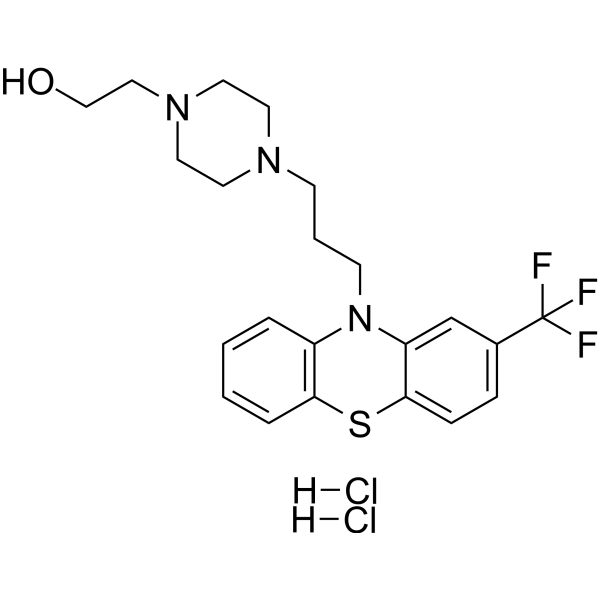
    Fluphenazine dihydrochloride
    3 Publications Verification

    Dopamine Receptor SARS-CoV Sodium Channel Neurological Disease Cancer
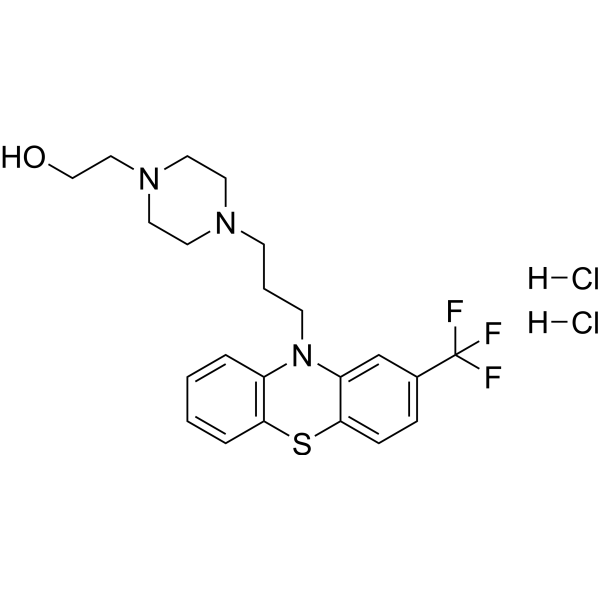
    Fluphenazine dihydrochloride is a potent, orally active phenothiazine-based dopamine receptor antagonist. Fluphenazine dihydrochloride blocks neuronal voltage-gated sodium channels. Fluphenazine dihydrochloride acts primarily through antagonism of postsynaptic dopamine-2 receptors in mesolimbic, nigrostriatal, and tuberoinfundibular neural pathways. Fluphenazine dihydrochloride can antagonize Methylphenidate-induced stereotyped gnawing and inhibit climbing behaviour in mice. Fluphenazine dihydrochloride can be used for researching psychosis and painful peripheral neuropathy associated with diabetes and has potential to inhibit SARS-CoV-2 .
    Fluphenazine dihydrochloride
  • HY-119980
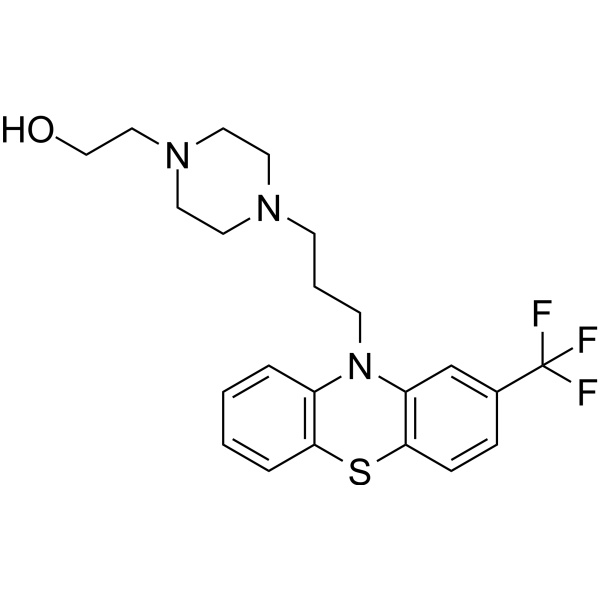
    Fluphenazine
    3 Publications Verification

    Sodium Channel Dopamine Receptor SARS-CoV Infection Neurological Disease Cancer
    Fluphenazine is a potent, orally active phenothiazine-based dopamine receptor antagonist. Fluphenazine blocks neuronal voltage-gated sodium channels. Fluphenazine acts primarily through antagonism of postsynaptic dopamine-2 receptors in mesolimbic, nigrostriatal, and tuberoinfundibular neural pathways. Fluphenazine can antagonize Methylphenidate-induced stereotyped gnawing and inhibit climbing behaviour in mice. Fluphenazine can be used for researching psychosis and painful peripheral neuropathy associated with diabetes and has potential to inhibit SARS-CoV-2 .
    Fluphenazine
  • HY-B1752
    Quinpirole
    4 Publications Verification

    LY 171555; (-)-LY 141865

    Dopamine Receptor Calcium Channel Bcl-2 Family iGluR Apoptosis Neurological Disease
    Quinpirole (LY 171555; (-)-LY 141865) is a D2/D3 dopamine receptor agonist and a CaV1.3 calcium channel modulator. Quinpirole normalizes dendritic spine density in dopamine-depleted striatum, upregulates the protein expression of BCL2 and GluR2, downregulates the protein expression of BAX, and delays the onset of seizures. Quinpirole enhances learning and memory, inhibits neuronal apoptosis (apoptosis), and induces anxiety-like, stereotyped, and compulsive behaviors. Quinpirole disrupts prepulse inhibition in rhesus monkeys, enhances the activity of paraventricular thalamic neurons to promote recovery from Isoflurane anesthesia, and alters the composition of the gut microbiota in rats. Quinpirole can be used in research related to dyskinesia, pain, epilepsy, and neurological disorders including anxiety disorder, obsessive-compulsive disorder, and schizophrenia .
    Quinpirole
  • HY-119980S

    Isotope-Labeled Compounds Sodium Channel Dopamine Receptor SARS-CoV Others
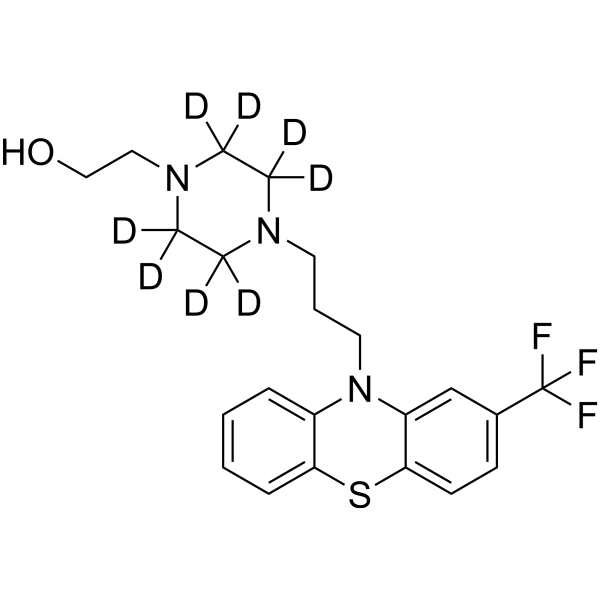
    Fluphenazine-d8 is the deuterium labeled Fluphenazine. Fluphenazine is a potent, orally active phenothiazine-based dopamine receptor antagonist. Fluphenazine blocks neuronal voltage-gated sodium channels. Fluphenazine acts primarily through antagonism of postsynaptic dopamine-2 receptors in mesolimbic, nigrostriatal, and tuberoinfundibular neural pathways. Fluphenazine can antagonize Methylphenidate-induced stereotyped gnawing and inhibit climbing behaviour in mice. Fluphenazine can be used for researching psychosis and painful peripheral neuropathy associated with diabetes and has potential to inhibit SARS-CoV-2 .
    Fluphenazine-d8
  • HY-136786

    Dopamine Receptor Opioid Receptor Neurological Disease
    RU-24213 hydrochloride is a selective D-2 dopamine receptor agonist. RU-24213 hydrochloride is also a KAPPA-opioid receptor antagonist. RU-24213 hydrochloride induces stereotyped behaviors .
    RU-24213 hydrochloride
  • HY-127120

    Dopamine Receptor Neurological Disease
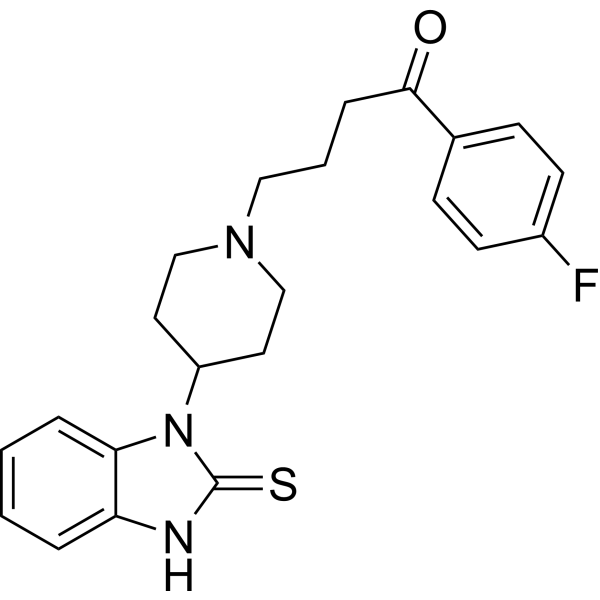
    Timiperone has a strong affinity for cerebral dopamine D2 receptor. Timiperone has antipsychotic activity, and inhibits stereotyped behaviour. Timiperone can be used for research of schizophrenia .
    Timiperone
  • HY-106781

    Dopamine Receptor Neurological Disease
    OPC-4392 is a orally active presynaptic dopamine autoreceptor agonist and postsynaptic D2 receptor antagonist. OPC 4392 reverses the Reserpine (HY-N0480)-induced dopamine accumulation, inhibits Apomorphine (HY-12723)-induced stereotypic and climbing behaviors in mouse models. OPC-4392 can be used as antipsychotic agent .
    OPC-4392
  • HY-107718

    SDZ-EAA 494

    iGluR Neurological Disease
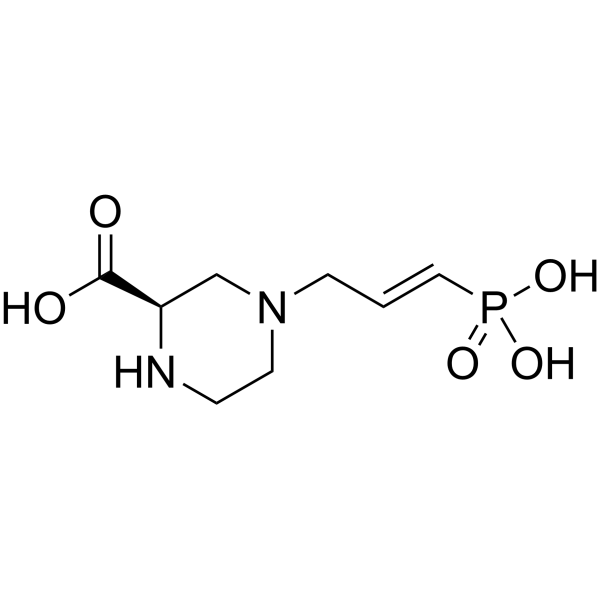
    Midafotel (SDZ-EAA 494) is a potent and comprtitive NMDA antagonist with an ED50 value of 39 nM. Midafotel causes intense stereotyped behaviors. Midafotel shows neuroprotective effects .
    Midafotel
  • HY-105774

    Serotonin Transporter Neurological Disease
    Oxaflozane is a non-tricyclic antidepressant with serotoninergic action. Oxaflozane has anti-cataleptic and anti-aggressive actions with a weak potentiation of the stereotypes provoked by Amphetamin .
    Oxaflozane
  • HY-B1573A

    AY-23,028; dl-Butaclamol hydrochloride

    Adrenergic Receptor Dopamine Receptor Neurological Disease
    (±)-Butaclamol hydrochloride (AY-23,028) is the antagonist for adrenergic receptor and dopamine receptor. (±)-Butaclamol hydrochloride antagonizes amphetamine or Apomorphine (HY-12723)-induced stereotyped behaviors and emesis, inhibits discriminative avoidance behavior, and induces catalepsy in rats models .
    (±)-Butaclamol hydrochloride
  • HY-106781A

    Dopamine Receptor Neurological Disease
    OPC 4392 hydrochloride is an agonist for presynaptic dopamine receptor and an antagonist for postsynaptic D2 receptor. OPC 4392 reverses the Reserpine (HY-N0480)-induced dopamine accumulation, inhibits Apomorphine (HY-12723)-induced stereotypic and climbing behaviors in mouse models .
    OPC 4392 hydrochloride
  • HY-W704749

    Drug Metabolite Dopamine Receptor Neurological Disease
    7-Hydroxychlorpromazine hydrochloride is the active metabolite of Chlorpromazine (HY-12708). 7-Hydroxychlorpromazine hydrochloride can increase prolactin levels in rats. 7-Hydroxychlorpromazine hydrochloride can increase dopamine turnover and has a sedative effect. In addition, 7-Hydroxychlorpromazine hydrochloride can effectively inhibit amphetamine-induced stereotyped behavior in rats and is used in the study of psychosis .
    7-Hydroxychlorpromazine hydrochloride
  • HY-W704752

    Isotope-Labeled Compounds Dopamine Receptor Drug Metabolite Neurological Disease
    Z-Doxepin-d3 hydrochloride is the deuterium labeled 7-Hydroxychlorpromazine hydrochloride (HY-W704749). 7-Hydroxychlorpromazine hydrochloride is the active metabolite of Chlorpromazine (HY-12708). 7-Hydroxychlorpromazine hydrochloride can increase prolactin levels in rats. 7-Hydroxychlorpromazine hydrochloride can increase dopamine turnover and has a sedative effect. In addition, 7-Hydroxychlorpromazine hydrochloride can effectively inhibit amphetamine-induced stereotyped behavior in rats and is used in the study of psychosis .
    Z-Doxepin-d3 Hydrochloride
  • HY-119980B

    Dopamine Receptor Sodium Channel SARS-CoV Neurological Disease Cancer
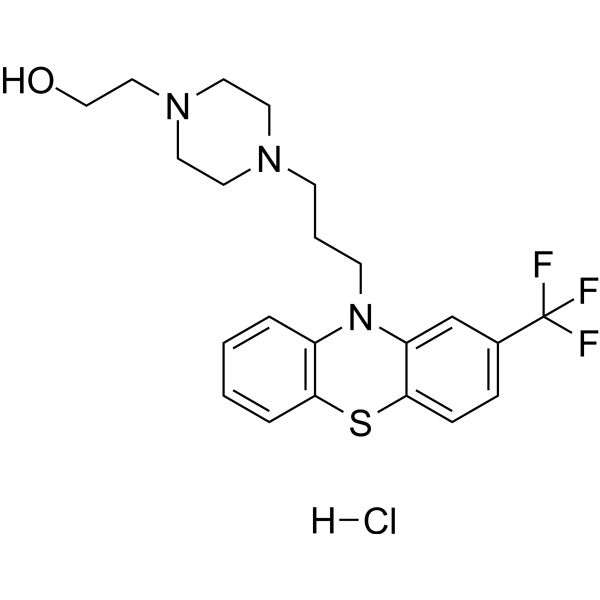
    Fluphenazine hydrochloride is a potent, orally active phenothiazine-based dopamine receptor antagonist. Fluphenazine hydrochloride blocks neuronal voltage-gated sodium channels. Fluphenazine hydrochloride acts primarily through antagonism of postsynaptic dopamine-2 receptors in mesolimbic, nigrostriatal, and tuberoinfundibular neural pathways. Fluphenazine hydrochloride can antagonize Methylphenidate-induced stereotyped gnawing and inhibit climbing behaviour in mice. Fluphenazine hydrochloride can be used for researching psychosis and painful peripheral neuropathy associated with diabetes and has potential to inhibit SARS-CoV-2 .
    Fluphenazine hydrochloride
  • HY-119980A

    Dopamine Receptor Sodium Channel SARS-CoV Infection Neurological Disease Cancer
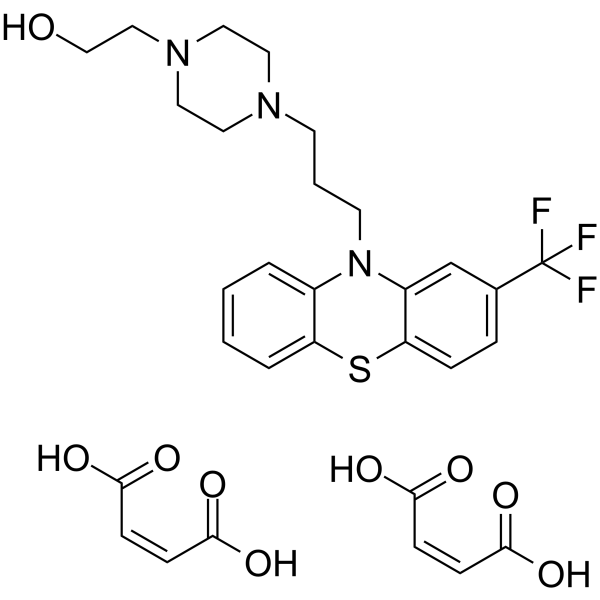
    Fluphenazine dimaleate is a potent, orally active phenothiazine-based dopamine receptor antagonist. Fluphenazine dimaleate blocks neuronal voltage-gated sodium channels. Fluphenazine dimaleate acts primarily through antagonism of postsynaptic dopamine-2 receptors in mesolimbic, nigrostriatal, and tuberoinfundibular neural pathways. Fluphenazine dimaleate can antagonize Methylphenidate-induced stereotyped gnawing and inhibit climbing behaviour in mice. Fluphenazine dimaleate can be used for researching psychosis and painful peripheral neuropathy associated with diabetes and has potential to inhibit SARS-CoV-2 .
    Fluphenazine dimaleate
  • HY-119980BS

    Isotope-Labeled Compounds Dopamine Receptor Sodium Channel SARS-CoV Neurological Disease Cancer
    Fluphenazine-d6 (hydrochloride) is deuterium labeled Fluphenazine (hydrochloride). Fluphenazine hydrochloride is a potent, orally active phenothiazine-based dopamine receptor antagonist. Fluphenazine hydrochloride blocks neuronal voltage-gated sodium channels. Fluphenazine hydrochloride acts primarily through antagonism of postsynaptic dopamine-2 receptors in mesolimbic, nigrostriatal, and tuberoinfundibular neural pathways. Fluphenazine hydrochloride can antagonize Methylphenidate-induced stereotyped gnawing and inhibit climbing behaviour in mice. Fluphenazine hydrochloride can be used for researching psychosis and painful peripheral neuropathy associated with diabetes and has potential to inhibit SARS-CoV-2 .
    Fluphenazine-d6 hydrochloride
  • HY-A0081R

    Reference Standards Dopamine Receptor SARS-CoV Sodium Channel Neurological Disease Cancer
    Fluphenazine (dihydrochloride) (Standard) is the analytical standard of Fluphenazine (dihydrochloride). This product is intended for research and analytical applications. Fluphenazine dihydrochloride is a potent, orally active phenothiazine-based dopamine receptor antagonist. Fluphenazine dihydrochloride blocks neuronal voltage-gated sodium channels. Fluphenazine dihydrochloride acts primarily through antagonism of postsynaptic dopamine-2 receptors in mesolimbic, nigrostriatal, and tuberoinfundibular neural pathways. Fluphenazine dihydrochloride can antagonize Methylphenidate-induced stereotyped gnawing and inhibit climbing behaviour in mice. Fluphenazine dihydrochloride can be used for researching psychosis and painful peripheral neuropathy associated with diabetes and has potential to inhibit SARS-CoV-2 .
    Fluphenazine dihydrochloride (Standard)
  • HY-167973

    GABA Receptor Neurological Disease
    GABA-palmitamide is a GABA-responsive compound. GABA-palmitamide exhibits a dose-dependent bidirectional regulatory effect on the stereotyped behavior induced by Apomorphine (HY-12723): high doses inhibit motor behavior, while low doses enhance stereotyped behaviors in the oral cavity. GABA-palmitamide can be used in research on behavior regulation .
    GABA-palmitamide
  • HY-123332

    Drug Derivative Neurological Disease
    YM-08050 is a new anti-psychotic and Benzamide (HY-Z0283) derivative. YM-08050 inhibits stereotyped behaviors, conditioned avoidance responses, or spontaneous movements induced by Apomorphine (HY-12723) or Methamphetamine .
    YM-08050

Inquiry Online

Your information is safe with us. * Required Fields.

Salutation


Country or Region *

Applicant Name *


Organization Name *

Department *


Email Address *


Product Name *

Cat. No.


Requested quantity *

Phone Number *


Remarks

Inquiry Online

Inquiry Information

Product Name:
Cat. No.:
Quantity:
MCE Japan Authorized Agent:

