12 Results for "

2-deoxyglucose

" in MedChemExpress (MCE) Product Catalog:
Products (12)

12 Results for "2-deoxyglucose" in MCE Product Catalog:

16
16 Cited Publications
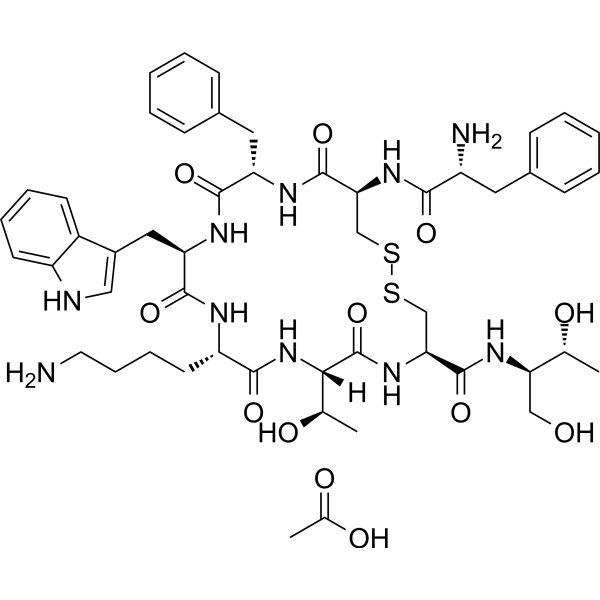
Cat. No.: HY-17365
CAS No.: 79517-01-4
Synonyms: SMS 201-995 acetate
Octreotide acetate, a long-acting synthetic analog of native somatostatin, inhibits growth hormone, glucagon, and insulin more potently.
loading...
    loading...
5
5 Cited Publications
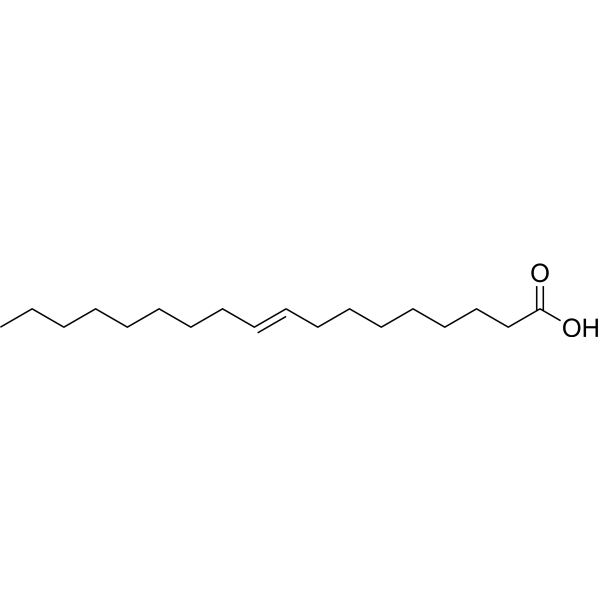
Cat. No.: HY-113016
CAS No.: 112-79-8
Purity:  99.49%
Elaidic acid is an orally active trans fatty acid. Elaidic acid enhances the stemness of colorectal cancer cells by activating the Wnt/ERK1/2 pathway, thereby promoting cell proliferation, invasion and metastasis, and inhibiting apoptosis. Elaidic acid also inhibits the growth of Lactobacillus and alters the cell surface hydrophobicity of Lactobacillus. Elaidic acid reduces basal 2-deoxyglucose uptake in muscle cells and adipocytes. Elaidic acid can be used in research on colorectal cancer, insulin and other related areas [2] .
loading...
    loading...
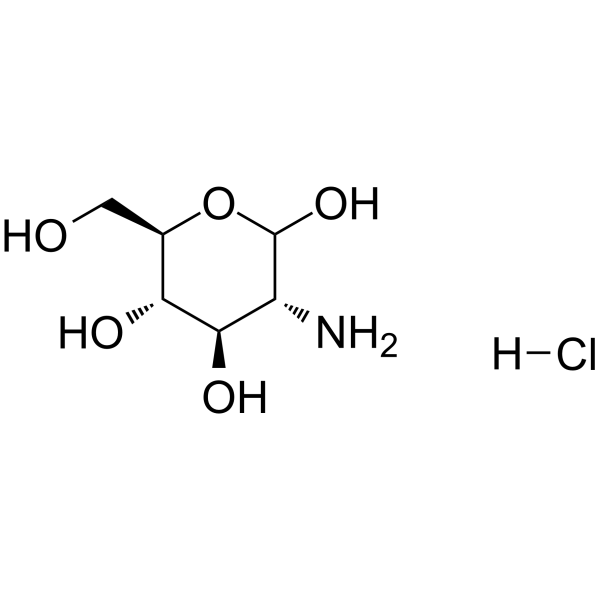
Cat. No.: HY-N9459
CAS No.: 1078691-95-8
Synonyms: D-Glucosamine Hydrochloride
2-Amino-2-deoxyglucose hydrochloride (D-Glucosamine Hydrochloride) is a glucose analog that is specifically recognized and transported by the cell membrane GLUT1. 2-Amino-2-deoxyglucose hydrochloride acts as a tumor-targeting ligand and a guiding molecule for the synthesis of prodrug conjugates, thus delivering drugs precisely to tumor cells. 2-Amino-2-deoxyglucose hydrochloride is applicable to diagnostic imaging and therapeutic efficacy monitoring of solid tumors and various cancers (e.g., breast cancer, glioblastoma). 2-Amino-2-deoxyglucose hydrochloride also helps bacteria resist lysozyme digestion by integrating into the non-N-acetylated residues of Streptococcus pneumoniae peptidoglycan. 2-Amino-2-deoxyglucose hydrochloride is used in studies on tumor metabolism and the exploration of bacterial drug resistance mechanisms [2].
loading...
    loading...
Cat. No.: HY-P2776A
CAS No.: 9001-51-8
Target:  

Hexokinase

Research Areas:  

Metabolic Disease

Hexokinase, Yeast is a hexokinase derived from yeast. Hexokinase, Yeast can be isolated from both fresh and dried baker's yeast. Hexokinases are evolutionarily conserved enzymes that phosphorylate six-carbon sugars (hexoses). Hexokinase prepares glucose for intracellular utilization. Hexokinase, Yeast is inhibited by 6-Deoxy-6-fluoroglucos [2] .
loading...
    loading...
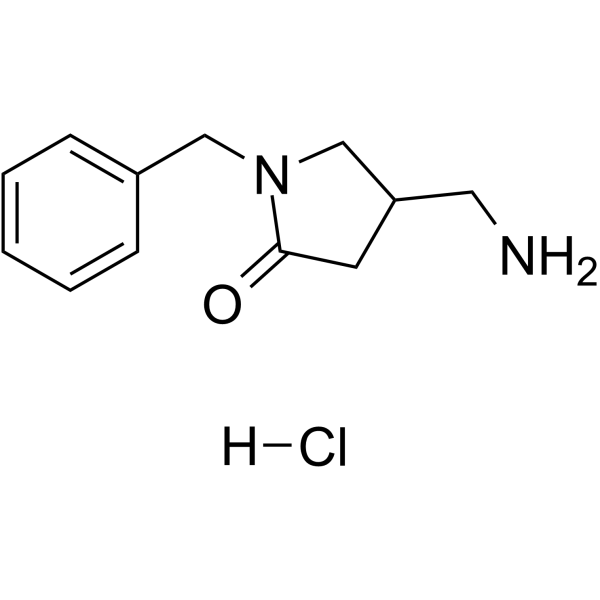
Cat. No.: HY-113970A
CAS No.: 1177279-49-0
Purity:  ≥99.0%
Synonyms: WEB 1881 FU hydrochloride
Target:  

mAChR Calcium Channel

Research Areas:  

Neurological Disease

Nebracetam (WEB 1881 FU) hydrochloride is an orally active M1 muscarinic receptor agonist. Nebracetam hydrochloride can induce an increase in intracellular Ca 2+ concentration, with an EC50 value of 1.59 mM. Nebracetam hydrochloride exhibits neuroprotective activity and the ability to improve cognitive impairment. Nebracetam hydrochloride can be used in the research of neurological diseases such as Alzheimer's disease [2].
loading...
    loading...
Cat. No.: HY-P5443
CAS No.: 224569-84-0
Target:  

Bacterial

Research Areas:  

Others

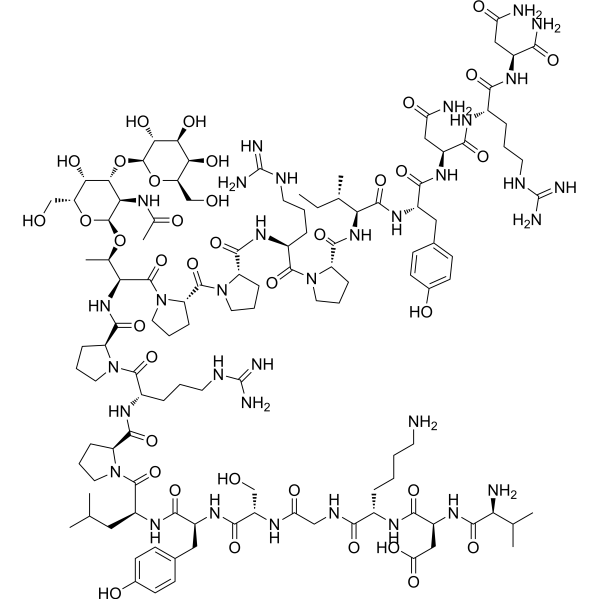
Pyrrhocoricin is a biological active peptide. (Antimicrobial activity against Gram-negative bacteria)
loading...
    loading...
Cat. No.: HY-W768178
Synonyms: D-Glucosamine Hydrochloride-1,2-13C2
2-Amino-2-deoxyglucose hydrochloride- 13C2 (D-Glucosamine Hydrochloride-1,2- 13C2) is the 13C-labeled 2-Amino-2-deoxyglucose hydrochloride (HY-N9459). 2-Amino-2-deoxyglucose hydrochloride is a hexosamine hydrochloride can be used in the synthesis of cyclopropene-modified hexosamine derivative Ac4GlcNCyoc and Ac4GalNCyoc .
loading...
    loading...
Cat. No.: HY-171793
CAS No.: 195604-21-8
Target:  

PPAR

Research Areas:  

Metabolic Disease

DN-108, a thiazolidinedione derivative, is an orally active peroxisome proliferator-activated receptor γ (PPARγ) agonist with antidiabetic effects. DN-108 improves hyperglycemia, hypertriglyceridemia and hyperinsulinemia in diabetic mouse models. DN-108 enhances tissue glucose uptake (e.g., increasing 2-deoxyglucose uptake in L6 muscle cells) and inhibits fatty acid synthase activity. DN-108 is promising for research of type 2 diabetes .
loading...
    loading...
Cat. No.: HY-E71517
Research Areas:  

Others

2-Deoxyglucose-6-phosphatase (EC 3.1.3.68) is active towards fructose 1-phosphate.
loading...
    loading...
Cat. No.: HY-N9459R
CAS No.: 1078691-95-8
Synonyms: D-Glucosamine Hydrochloride (Standard)
2-Amino-2-deoxyglucose (hydrochloride) (Standard) is (D-Glucosamine Hydrochloride (Standard)) the analytical standard of 2-Amino-2-deoxyglucose (hydrochloride) (HY-N9459). This product is intended for research and analytical applications. 2-Amino-2-deoxyglucose hydrochloride is a hexosamine hydrochloride can be used in the synthesis of cyclopropene-modified hexosamine derivative Ac4GlcNCyoc and Ac4GalNCyoc .
loading...
    loading...
Cat. No.: HY-W766388
Synonyms: D-Glucosamine Hydrochloride-13C6
2-Amino-2-deoxyglucose hydrochloride- 13C6 (D-Glucosamine Hydrochloride- 13C6) is the 13C-labeled 2-Amino-2-deoxyglucose hydrochloride (HY-N9459). 2-Amino-2-deoxyglucose hydrochloride is a hexosamine hydrochloride can be used in the synthesis of cyclopropene-modified hexosamine derivative Ac4GlcNCyoc and Ac4GalNCyoc .
loading...
    loading...
Cat. No.: HY-179631
Target:  

Apoptosis

Research Areas:  

Cancer

2DG-ODDA is a 2-deoxyglucose (2-DG) (HY-13966) derivative with potent antitumor activity. 2DG-ODDA induces apoptosis, and reduces ATP production. 2DG-ODDA is taken up through both fatty acid and glucose transporters and is cleaved by α-Mannosidase (HY-P2950), releases 2DG to inhibit N-glycosylation and disrupt cellular metabolism. 2DG-ODDA inhibits tumor growth in a 4T1 mouse model. 2DG-ODDA can be used for the research of triple-negative breast cancer (TNBC) .
loading...
    loading...
  • 1

