Search Result
Results for "
4.96
" in MedChemExpress (MCE) Product Catalog:
1
Biochemical Assay Reagents
| Cat. No. |
Product Name |
Target |
Research Areas |
Chemical Structure |
-
- HY-80002
-
|
BMX kinase inhibitor
|
Btk
BMX Kinase
|
Cancer
|
|
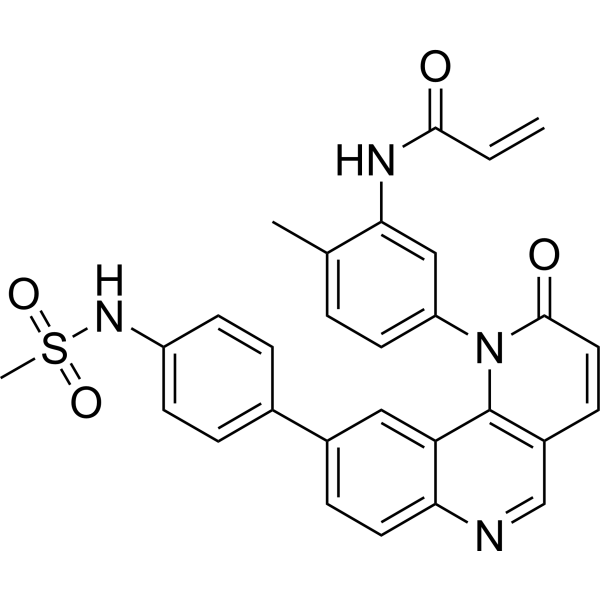
BMX-IN-1 is a selective, irreversible inhibitor of bone marrow tyrosine kinase on chromosome X (BMX) that targets Cys 496 in the BMX ATP binding domain with an IC50 of 8 nM, also targets the related Bruton’s tyrosine kinase (BTK) with an IC50 value of 10.4 nM, but is more than 47-656-fold less potent against Blk, JAK3, EGFR, Itk, or Tec activity.
|
-
-
- HY-D1078
-
|
|
Fluorescent Dye
Reactive Oxygen Species (ROS)
P-glycoprotein
|
Others
|
|
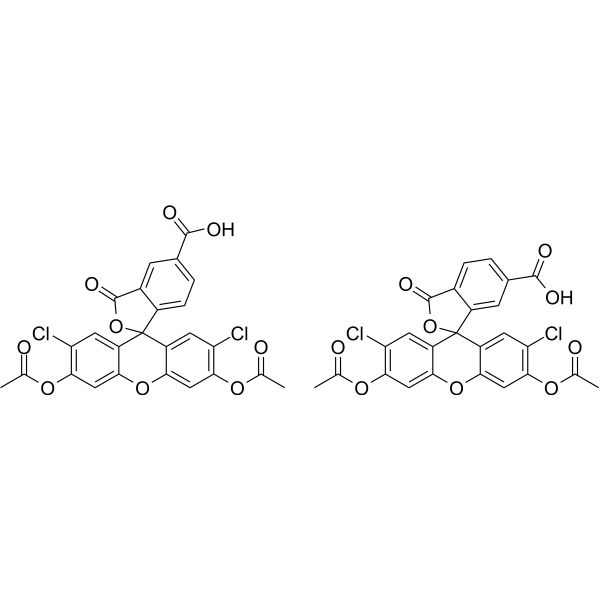
5 (6)-Carboxy-2',7'-dichlorofluorescein diacetate is a fluorescein-based reactive oxygen species (ROS) probe and also a MRP2 substrate. 5 (6)-Carboxy-2',7'-dichlorofluorescein diacetate serves as a substrate for intracellular esterases, which cleave its acetate groups to generate a fluorescent product capable of detecting intracellular ROS. 5 (6)-Carboxy-2',7'-dichlorofluorescein diacetate is ATP-dependent and is transported via a single MRP2 binding site; it competes with LTC4 for MRP2 binding sites and inhibits MRP2-mediated LTC4 transport (Ex/Em = 496/525 nm) .
|
-
-
- HY-158039
-
|
|
Deubiquitinase
Apoptosis
|
Cancer
|
|
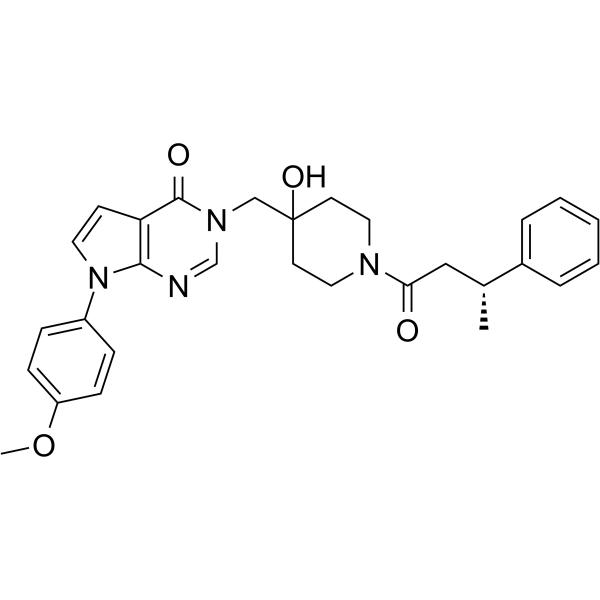
YCH2823 is an inhibitor of USP7 (IC50 = 49.6 nM; Kd = 0.117 μM). YCH2823 shows significant efficacy in inhibiting TP53 wild-type and mutant tumors, with approximately 5-fold higher potency than FT671. YCH2823 induce apoptosis. YCH2823 synergistic effects with mTOR inhibitors .
|
-
-
- HY-131010
-
|
|
Fluorescent Dye
Microtubule/Tubulin
|
Cancer
|
|
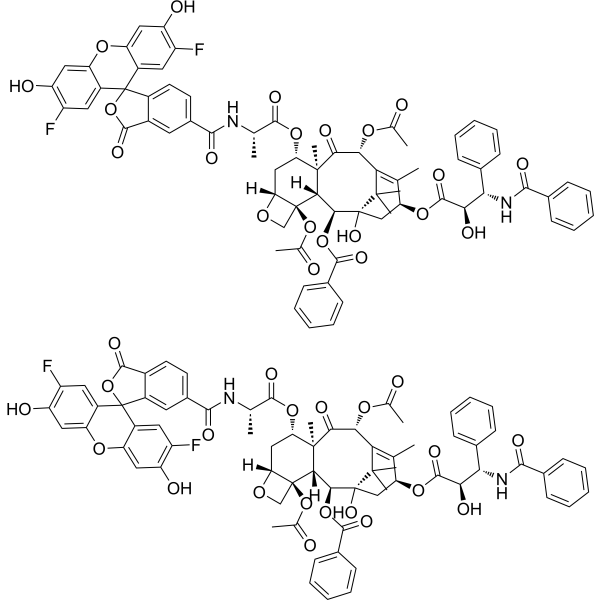
Flutax-2 (5/6-mixture) is an active fluorescent derivative of paclitaxel. Flutax-2 (5/6-mixture) binds to a polymerized α,β tubulin dimer. Excitation/emission wavelength: 496/524 nm. Paclitaxel, a diterpenoid secondary metabolite produced by Taxus species, can be used for the research of a variety of cancers .
|
-
-
- HY-163372
-
|
|
PROTACs
MAP4K
|
Cancer
|
|
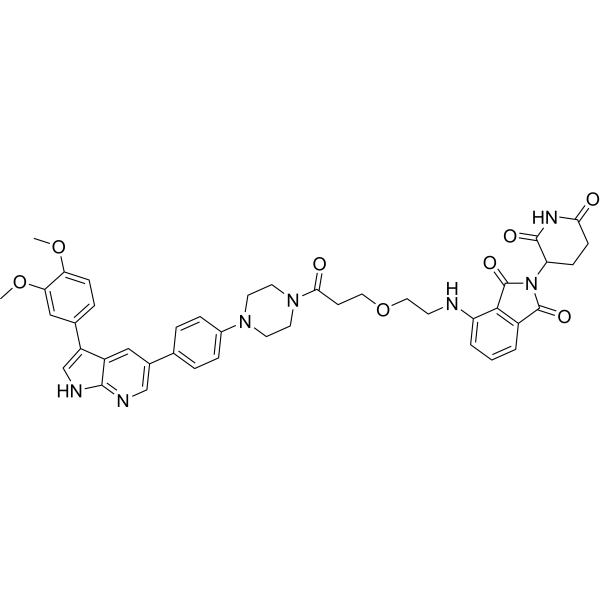
PROTAC HPK1 Degrader-1 (Compound B1) is a potent HPK1 degrader with DC50 value of 1.8 nM. PROTAC HPK1 Degrader-1 inhibits phosphorylation of the SLP76 protein with IC50 value of 496.1 nM. PROTAC HPK1 Degrader-1 is a bona fide HPK1-PROTAC degrader, which provided a potential tool for further HPK1 investigation in TCR signaling .
|
-
-
- HY-16637D
-
|
Vitamin B9 disodium; Vitamin M disodium
|
Endogenous Metabolite
DNA/RNA Synthesis
|
Others
Neurological Disease
Cancer
|
|
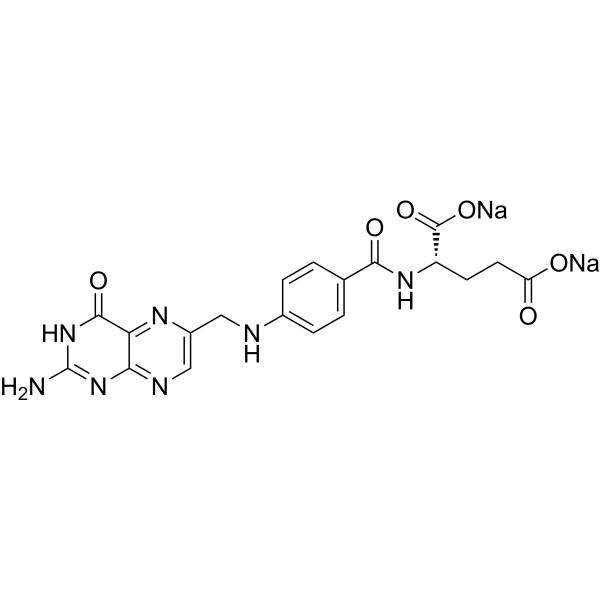
Folic acid disodium (Vitamin B9 disodium; Vitamin M disodium) is an orally active disodium salt form of Folic acid (HY-16637) with an intrinsic dissolution rate (IDR) of 4.96·10 5 g/s . Folic acid disodium serves as cofactor in single-carbon transfer reactions and exhibits protective effects against neural tube defects, ischemic events, and cancer. Folate acid disodium overload leads to impaired brain development in embryogenesis and promotes growth of precancerous altered cells. Folic acid deficiency leads to megaloblastic anemia .
|
-
-
- HY-D2874
-
|
|
Fluorescent Dye
|
Others
|
|
6-AF488 tyramide is a bright, green fluorescent dye (Ex=496 nm, Em=524 nm). 6-AF488 tyramide is utilized as reporter fluorescent substrate of horseradish peroxidase (HRP)-catalyzed deposition for tyramide signal amplification (TSA). 5-FITC tyramide can be used for multiplex immunohistochemistry (mIHC) .
|
-
-
- HY-162161
-
|
|
Fluorescent Dye
Microtubule/Tubulin
|
Cancer
|
|
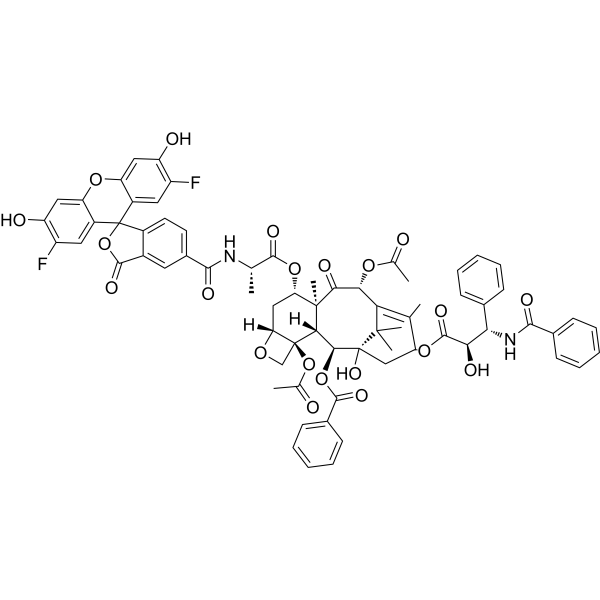
Flutax-2 is an active fluorescent derivative of Paclitaxel (HY-B0015) that binds to polymerized αβ-tubulin dimers. Flutax-2 is applicable for imaging microtubules in live cells, isolated cytoskeletons and parasites (Ex/Em=496/526 nm) .
|
-
-
- HY-122140
-
|
|
Cholinesterase (ChE)
|
Neurological Disease
|
|
ACG548B (compound 24) is a potent inhibitor of acetyl- and butyrylcholinesterase (AChE and BChE) with IC50s of 1.78 and 0.496 μM, respectively. ACG548B has higher AChE affinity and selectivity over BChE and ChoK (choline kinase). ACG548B can be uesd for the study of myasthenia gravis and neuromuscular blockade .
|
-
-
- HY-19432
-
|
|
iGluR
|
Neurological Disease
|
|
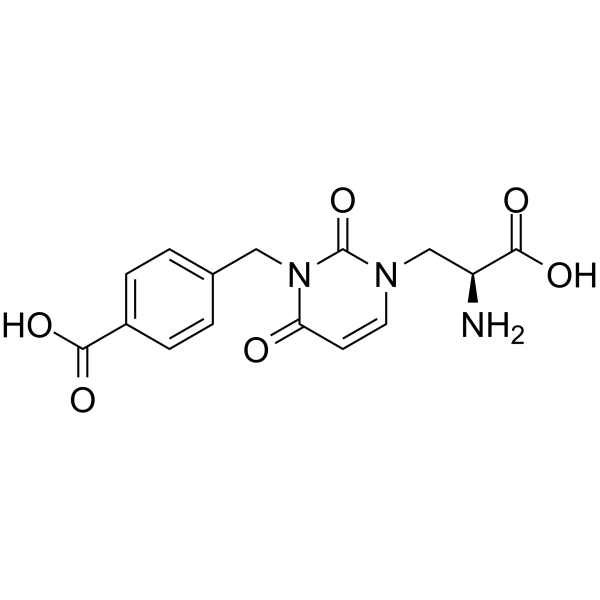
UBP-282 is a potent, selective and competitive AMPA and kainate receptor antagonist. UBP-282 inhibits the fast component of the dorsal root-evoked ventral root potential (fDR-VRP) with an IC50 value of 10.3 μM. UBP-282 antagonizes kainate-induced depolarisations of dorsal roots with a pA2 value of 4.96 .
|
-
-
- HY-149666
-
|
|
DGK
|
Cancer
|
|
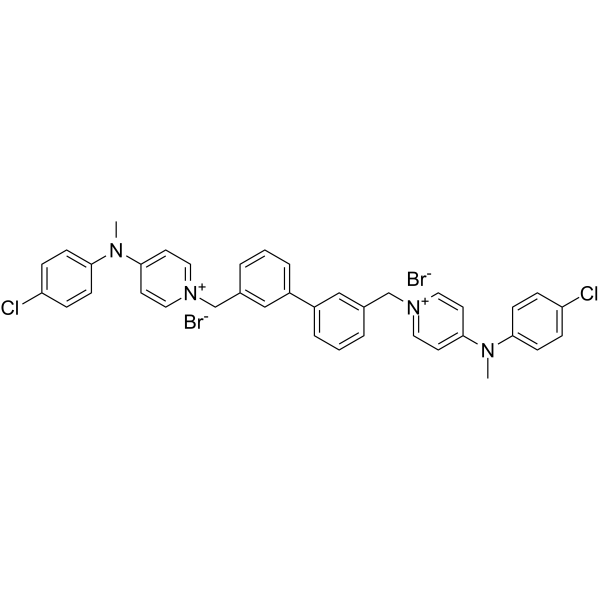
BMS-496 is adualDGKα/ζlipid kinase inhibitor, with theIC50of 0.09 (DGKα) and 0.006 μM (DGKζ) .
|
-
-
- HY-U00253
-
-
-
- HY-178191
-
|
|
Guanylate Cyclase
Autophagy
AMPK
TGF-β Receptor
|
Cardiovascular Disease
|
|
sGC stimulator 1 is a carbonyl sulfide (COS)/H2S-donor hybrid soluble guanylyl cyclase (sGC) stimulator (EC50 = 496 nM). sGC stimulator 1 exhibits a well-characterized H2S-releasing property. sGC stimulator 1 reduces fibrosis in TGF-β1-treated cardiac fibroblasts by increasing cGMP and H2S levels. sGC stimulator 1 can exert anti-fibrotic effects by activating sGC and increasing H2S. sGC stimulator 1 can be used for the study of heart failure (HF) .
|
-
-
- HY-R01474
-
|
|
MicroRNA
|
Cancer
|
|
hsa-miR-496 mimics are small, chemically synthesized double-stranded RNAs that mimic endogenous miRNAs and enable miRNA functional analysis by up-regulation of miRNA activity.
|
-
hsa-miR-496 mimic
hsa-miR-496 mimic
-
- HY-R03227
-
|
|
MicroRNA
|
Cancer
|
|
mmu-miR-496b mimics are small, chemically synthesized double-stranded RNAs that mimic endogenous miRNAs and enable miRNA functional analysis by up-regulation of miRNA activity.
|
-
mmu-miR-496b mimic
mmu-miR-496b mimic
-
- HY-R03226
-
|
|
MicroRNA
|
Cancer
|
|
mmu-miR-496a-5p mimics are small, chemically synthesized double-stranded RNAs that mimic endogenous miRNAs and enable miRNA functional analysis by up-regulation of miRNA activity.
|
-
mmu-miR-496a-5p mimic
-
- HY-R01474A
-
|
|
MicroRNA
|
Cancer
|
|
hsa-miR-496 agomirs are chemically-modified double-strand miRNA mimics with modified mature miRNA strand: 2 phosphorothioates at the 5' end, 4 phosphorothioates at the 3' end, 3' end cholesterol group, and full-length nucleotide 2'-methoxy modification. They are designed to mimic endogenous miRNAs and recommended for miRNA functional studies. Compared with miRNA mimics, they exhibits enhanced cellular uptake, stability and regulatory activity in vivo.
|
-
hsa-miR-496 agomir
hsa-miR-496 agomir
-
- HY-R04496
-
|
|
MicroRNA
|
Cancer
|
|
rno-miR-496-5p mimics are small, chemically synthesized double-stranded RNAs that mimic endogenous miRNAs and enable miRNA functional analysis by up-regulation of miRNA activity.
|
-
rno-miR-496-5p mimic
-
- HY-R04495
-
|
|
MicroRNA
|
Cancer
|
|
rno-miR-496-3p mimics are small, chemically synthesized double-stranded RNAs that mimic endogenous miRNAs and enable miRNA functional analysis by up-regulation of miRNA activity.
|
-
rno-miR-496-3p mimic
-
- HY-16729A
-
|
YKP10811 hydrochloride
|
5-HT Receptor
|
Inflammation/Immunology
|
|
Relenopride (YKP10811) hydrochloride is a specific and selective 5-HT4 receptor agonist (Ki=4.96 nM). Relenopride hydrochloride has 120-fold and 6-fold lower affinity, respectively, for 5-HT2A (Ki=600 nM) and 5-HT2B receptors (Ki=31 nM) than for 5-HT4. Relenopride hydrochloride increases gastrointestinal (GI) motility .
|
-
-
- HY-146294
-
|
|
COX
|
Inflammation/Immunology
|
|
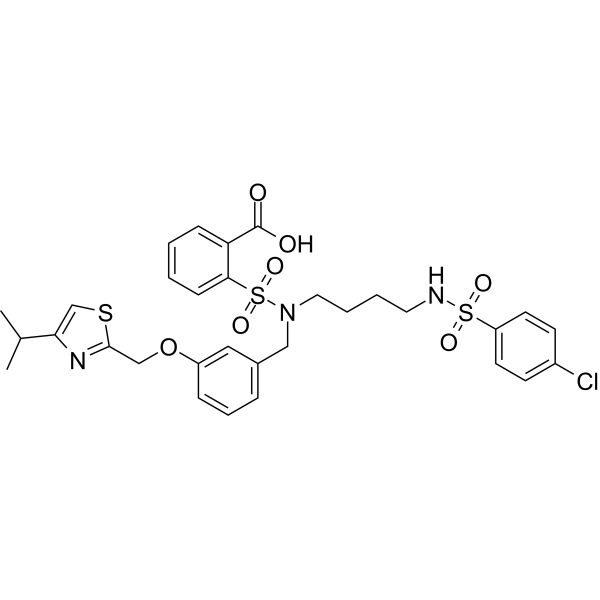
COX-2/5-LOX-IN-1 (compound 3a) is a potent and dual inhibitor of COX-2/5-LOX. COX-2/5-LOX-IN-1 is a benzothiophen-2-yl pyrazole carboxylic acid derivative. COX-2/5-LOX-IN-1 shows the most potent analgesic and anti-inflammatory activities surpassing that of Celecoxib and Indomethacin. COX-2/5-LOX-IN-1 shows potent COX-1, COX-2 and 5-LOX inhibitory activity with IC50s of 12.13, 0.4 and 4.96 μM, respectively .
|
-
-
- HY-W953524
-
|
|
Ligands for E3 Ligase
|
Cancer
|
|
CRBN ligand-496 is an E3 ubiquitin ligase cereblon (CRBN) ligand used to recruit the cereblon protein. CRBN ligand-496 can be linked to a target protein ligand via a linker to form a PROTAC.
|
-
-
- HY-168081
-
|
|
PD-1/PD-L1
|
Cancer
|
|
PD-1/PD-L1-IN-52 (Compound III-5) is an orally active PD-1/PD-L1 inhibitor that blocks the interaction between PD-1 and PD-L1, with an IC50 of 109.9 nM. PD-1/PD-L1-IN-52 exhibits antitumor activity in a C57BL/6 mouse xenograft model implanted with human PD-1-expressing MC38 colon cancer cells, with a TGI of 49.6% .
|
-
-
- HY-147826
-
|
|
EGFR
Apoptosis
|
Cancer
|
|
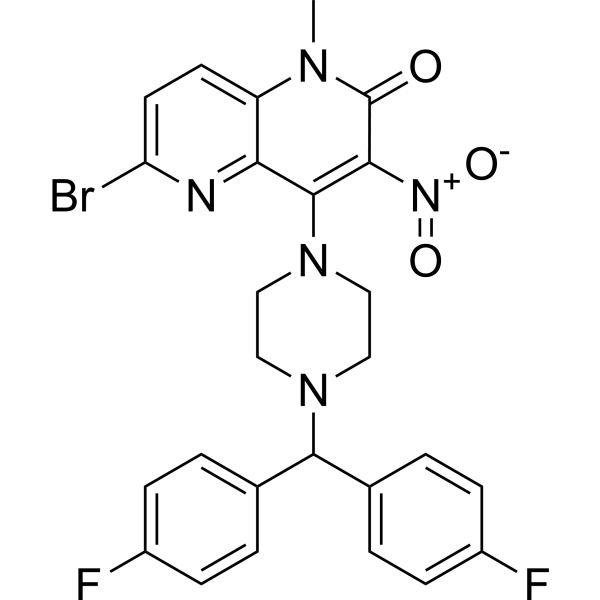
EGFR-IN-60 (Compound 7d) shows obvious inhibition of EGFR WT, EGFR T790M, EGFR L858R and JAK3 with IC50s of 83, 26, 53, and 69 nM, respectively. EGFR-IN-60 potently inhibits the growth of H1975 cells harboring EGFR T790M mutation (IC50=1.32 µM) over A431 cells overexpressing EGFR WT (IC50=4.96 µM). EGFR-IN-60 exhibits good oral absorption, potent and safe antitumor activity. EGFR-IN-60 induces cell death through apoptosis supported by increased Bax/Bcl-2 ratio .
|
-
-
- HY-145258
-
|
|
GABA Receptor
|
Neurological Disease
|
|
GABAA receptor agent 6 (compound 2027) is a potent γ-GABAAR antagonist with an Ki of 0.56 µM. GABAA receptor agent 6 shows γ-GABAAR antagonist activity with low cellular membrane permeability .
|
-
-
- HY-RI01474
-
|
|
MicroRNA
|
Cancer
|
|
hsa-miR-496 inhibitors are chemically-modified oligonucleotides that hybridize with mature miRNAs. The miRNA inhibitors have full-length nucleotide 2'-methoxy modification. The miRNA inhibitors strongly compete with mature miRNAs to prevent the complementary pairing of miRNAs and their target genes, thereby inhibiting miRNAs from functioning.
|
-
hsa-miR-496 inhibitor
-
- HY-RI03227
-
|
|
MicroRNA
|
Cancer
|
|
mmu-miR-496b inhibitors are chemically-modified oligonucleotides that hybridize with mature miRNAs. The miRNA inhibitors have full-length nucleotide 2'-methoxy modification. The miRNA inhibitors strongly compete with mature miRNAs to prevent the complementary pairing of miRNAs and their target genes, thereby inhibiting miRNAs from functioning.
|
-
mmu-miR-496b inhibitor
-
- HY-RI03226
-
|
|
MicroRNA
|
Cancer
|
|
mmu-miR-496a-5p inhibitors are chemically-modified oligonucleotides that hybridize with mature miRNAs. The miRNA inhibitors have full-length nucleotide 2'-methoxy modification. The miRNA inhibitors strongly compete with mature miRNAs to prevent the complementary pairing of miRNAs and their target genes, thereby inhibiting miRNAs from functioning.
|
-
mmu-miR-496a-5p inhibitor
-
- HY-R03227A
-
|
|
MicroRNA
|
Cancer
|
|
mmu-miR-496b agomirs are chemically-modified double-strand miRNA mimics with modified mature miRNA strand: 2 phosphorothioates at the 5' end, 4 phosphorothioates at the 3' end, 3' end cholesterol group, and full-length nucleotide 2'-methoxy modification. They are designed to mimic endogenous miRNAs and recommended for miRNA functional studies. Compared with miRNA mimics, they exhibits enhanced cellular uptake, stability and regulatory activity in vivo.
|
-
mmu-miR-496b agomir
mmu-miR-496b agomir
-
- HY-RI01474A
-
|
|
MicroRNA
|
Cancer
|
|
hsa-miR-496 antagomirs are chemically-modified oligonucleotides that hybridize with mature miRNAs. The miRNA antagomirs have 2 phosphorothioates at the 5' end, 4 phosphorothioates at the 3' end, 1 cholesterol group at the 3' end, and full-length nucleotide 2'-methoxy modification. The miRNA antagomirs strongly compete with mature miRNAs to prevent the complementary pairing of miRNAs and their target genes, thereby inhibiting miRNAs from functioning. Stability of miRNA antagomirs appears to be significantly higher than miRNA inhibitors, they exhibits enhanced cellular uptake, stability and regulatory activity in vivo.
|
-
hsa-miR-496 antagomir
-
- HY-RI03227A
-
|
|
MicroRNA
|
Cancer
|
|
mmu-miR-496b antagomirs are chemically-modified oligonucleotides that hybridize with mature miRNAs. The miRNA antagomirs have 2 phosphorothioates at the 5' end, 4 phosphorothioates at the 3' end, 1 cholesterol group at the 3' end, and full-length nucleotide 2'-methoxy modification. The miRNA antagomirs strongly compete with mature miRNAs to prevent the complementary pairing of miRNAs and their target genes, thereby inhibiting miRNAs from functioning. Stability of miRNA antagomirs appears to be significantly higher than miRNA inhibitors, they exhibits enhanced cellular uptake, stability and regulatory activity in vivo.
|
-
mmu-miR-496b antagomir
-
- HY-R03226A
-
|
|
MicroRNA
|
Cancer
|
|
mmu-miR-496a-5p agomirs are chemically-modified double-strand miRNA mimics with modified mature miRNA strand: 2 phosphorothioates at the 5' end, 4 phosphorothioates at the 3' end, 3' end cholesterol group, and full-length nucleotide 2'-methoxy modification. They are designed to mimic endogenous miRNAs and recommended for miRNA functional studies. Compared with miRNA mimics, they exhibits enhanced cellular uptake, stability and regulatory activity in vivo.
|
-
mmu-miR-496a-5p agomir
-
- HY-RI03226A
-
|
|
MicroRNA
|
Cancer
|
|
mmu-miR-496a-5p antagomirs are chemically-modified oligonucleotides that hybridize with mature miRNAs. The miRNA antagomirs have 2 phosphorothioates at the 5' end, 4 phosphorothioates at the 3' end, 1 cholesterol group at the 3' end, and full-length nucleotide 2'-methoxy modification. The miRNA antagomirs strongly compete with mature miRNAs to prevent the complementary pairing of miRNAs and their target genes, thereby inhibiting miRNAs from functioning. Stability of miRNA antagomirs appears to be significantly higher than miRNA inhibitors, they exhibits enhanced cellular uptake, stability and regulatory activity in vivo.
|
-
mmu-miR-496a-5p antagomir
-
- HY-RI04496
-
|
|
MicroRNA
|
Cancer
|
|
rno-miR-496-5p inhibitors are chemically-modified oligonucleotides that hybridize with mature miRNAs. The miRNA inhibitors have full-length nucleotide 2'-methoxy modification. The miRNA inhibitors strongly compete with mature miRNAs to prevent the complementary pairing of miRNAs and their target genes, thereby inhibiting miRNAs from functioning.
|
-
rno-miR-496-5p inhibitor
-
- HY-RI04495
-
|
|
MicroRNA
|
Cancer
|
|
rno-miR-496-3p inhibitors are chemically-modified oligonucleotides that hybridize with mature miRNAs. The miRNA inhibitors have full-length nucleotide 2'-methoxy modification. The miRNA inhibitors strongly compete with mature miRNAs to prevent the complementary pairing of miRNAs and their target genes, thereby inhibiting miRNAs from functioning.
|
-
rno-miR-496-3p inhibitor
-
- HY-R04495A
-
|
|
MicroRNA
|
Cancer
|
|
rno-miR-496-3p agomirs are chemically-modified double-strand miRNA mimics with modified mature miRNA strand: 2 phosphorothioates at the 5' end, 4 phosphorothioates at the 3' end, 3' end cholesterol group, and full-length nucleotide 2'-methoxy modification. They are designed to mimic endogenous miRNAs and recommended for miRNA functional studies. Compared with miRNA mimics, they exhibits enhanced cellular uptake, stability and regulatory activity in vivo.
|
-
rno-miR-496-3p agomir
-
- HY-R04496A
-
|
|
MicroRNA
|
Cancer
|
|
rno-miR-496-5p agomirs are chemically-modified double-strand miRNA mimics with modified mature miRNA strand: 2 phosphorothioates at the 5' end, 4 phosphorothioates at the 3' end, 3' end cholesterol group, and full-length nucleotide 2'-methoxy modification. They are designed to mimic endogenous miRNAs and recommended for miRNA functional studies. Compared with miRNA mimics, they exhibits enhanced cellular uptake, stability and regulatory activity in vivo.
|
-
rno-miR-496-5p agomir
-
- HY-RI04495A
-
|
|
MicroRNA
|
Cancer
|
|
rno-miR-496-3p antagomirs are chemically-modified oligonucleotides that hybridize with mature miRNAs. The miRNA antagomirs have 2 phosphorothioates at the 5' end, 4 phosphorothioates at the 3' end, 1 cholesterol group at the 3' end, and full-length nucleotide 2'-methoxy modification. The miRNA antagomirs strongly compete with mature miRNAs to prevent the complementary pairing of miRNAs and their target genes, thereby inhibiting miRNAs from functioning. Stability of miRNA antagomirs appears to be significantly higher than miRNA inhibitors, they exhibits enhanced cellular uptake, stability and regulatory activity in vivo.
|
-
rno-miR-496-3p antagomir
-
- HY-RI04496A
-
|
|
MicroRNA
|
Cancer
|
|
rno-miR-496-5p antagomirs are chemically-modified oligonucleotides that hybridize with mature miRNAs. The miRNA antagomirs have 2 phosphorothioates at the 5' end, 4 phosphorothioates at the 3' end, 1 cholesterol group at the 3' end, and full-length nucleotide 2'-methoxy modification. The miRNA antagomirs strongly compete with mature miRNAs to prevent the complementary pairing of miRNAs and their target genes, thereby inhibiting miRNAs from functioning. Stability of miRNA antagomirs appears to be significantly higher than miRNA inhibitors, they exhibits enhanced cellular uptake, stability and regulatory activity in vivo.
|
-
rno-miR-496-5p antagomir
-
- HY-D3050
-
|
|
Fluorescent Dye
|
Others
|
|
5(6)-carbonylated rhodamine 110 X NHS ester is a reactive ester fluorescent reagent based on 5(6)-carbonylated rhodamine 110 X. NHS ester is a highly reactive ester capable of covalently coupling with primary amine groups in molecules such as proteins, peptides, amino sugars, and nucleic acids to form stable amide bonds (Ex/Em = 496/522 nm).
|
-
-
- HY-D0988A
-
|
R-PE (concentrated solution)
|
Fluorescent Dye
Apoptosis
|
Others
|
|
R-Phycoerythrin (R-PE) (concentrated solution) is found in Heterosiphonia japonica. R-Phycoerythrin (concentrated solution) is an orange-red fluorescent probe with α, β, and γ subunits. R-Phycoerythrin (concentrated solution) can be used in photodynamic therapy (PDT) to induce apoptosis in tumor cells. R-Phycoerythrin (concentrated solution) can be used in fluorescence microscopy, flow cytometry, and immunofluorescence analysis (Ex/Em = 496/578 nm) .
|
-
-
- HY-D0988B
-
|
R-PE ammonium sulfate precipitate
|
Fluorescent Dye
Apoptosis
|
Others
|
|
R-Phycoerythrin (R-PE) (ammonium sulfate precipitate) is found in Heterosiphonia japonica. R-Phycoerythrin (ammonium sulfate precipitate) is an orange-red fluorescent probe with α, β, and γ subunits. R-Phycoerythrin (concentrated solution) can be used in photodynamic therapy (PDT) to induce apoptosis in tumor cells. R-Phycoerythrin (ammonium sulfate precipitate) can be used in fluorescence microscopy, flow cytometry, and immunofluorescence analysis (Ex/Em = 496/578 nm) .
|
-
-
- HY-182902
-
|
|
BMX Kinase
Apoptosis
|
Cancer
|
|
IHMT-15137 is a BMX inhibitor with an IC50 of 26.97 nM. IHMT-15137 covalently binds to BMX Cys496 within the ATP-binding pocket, inhibits BMX phosphorylation at Tyr566, and disrupts the BMX-ERK1/2-Cyclin D1/CDK4/6-E2F1 signaling axis. IHMT-15137 reduces E2F1 protein stability via decreased Ser332/337 phosphorylation, increased ubiquitination, and ubiquitin-proteasome pathway degradation. IHMT-15137 induces cell cycle arrest, apoptosis, DNA damage, and suppresses cell migration and invasion. IHMT-15137 can be used for the research of small cell lung cancer .
|
-
| Cat. No. |
Product Name |
Type |
-
- HY-D1078
-
|
|
Fluorescent Dyes
|
|
5 (6)-Carboxy-2',7'-dichlorofluorescein diacetate is a fluorescein-based reactive oxygen species (ROS) probe and also a MRP2 substrate. 5 (6)-Carboxy-2',7'-dichlorofluorescein diacetate serves as a substrate for intracellular esterases, which cleave its acetate groups to generate a fluorescent product capable of detecting intracellular ROS. 5 (6)-Carboxy-2',7'-dichlorofluorescein diacetate is ATP-dependent and is transported via a single MRP2 binding site; it competes with LTC4 for MRP2 binding sites and inhibits MRP2-mediated LTC4 transport (Ex/Em = 496/525 nm) .
|
-
- HY-131010
-
|
|
Fluorescent Dyes
|
|
Flutax-2 (5/6-mixture) is an active fluorescent derivative of paclitaxel. Flutax-2 (5/6-mixture) binds to a polymerized α,β tubulin dimer. Excitation/emission wavelength: 496/524 nm. Paclitaxel, a diterpenoid secondary metabolite produced by Taxus species, can be used for the research of a variety of cancers .
|
-
- HY-D2874
-
|
|
Fluorescent Dyes
|
|
6-AF488 tyramide is a bright, green fluorescent dye (Ex=496 nm, Em=524 nm). 6-AF488 tyramide is utilized as reporter fluorescent substrate of horseradish peroxidase (HRP)-catalyzed deposition for tyramide signal amplification (TSA). 5-FITC tyramide can be used for multiplex immunohistochemistry (mIHC) .
|
-
- HY-D3050
-
|
|
Fluorescent Dyes
|
|
5(6)-carbonylated rhodamine 110 X NHS ester is a reactive ester fluorescent reagent based on 5(6)-carbonylated rhodamine 110 X. NHS ester is a highly reactive ester capable of covalently coupling with primary amine groups in molecules such as proteins, peptides, amino sugars, and nucleic acids to form stable amide bonds (Ex/Em = 496/522 nm).
|
-
- HY-D0988A
-
|
R-PE (concentrated solution)
|
Fluorescent Dyes
|
|
R-Phycoerythrin (R-PE) (concentrated solution) is found in Heterosiphonia japonica. R-Phycoerythrin (concentrated solution) is an orange-red fluorescent probe with α, β, and γ subunits. R-Phycoerythrin (concentrated solution) can be used in photodynamic therapy (PDT) to induce apoptosis in tumor cells. R-Phycoerythrin (concentrated solution) can be used in fluorescence microscopy, flow cytometry, and immunofluorescence analysis (Ex/Em = 496/578 nm) .
|
-
- HY-D0988B
-
|
R-PE ammonium sulfate precipitate
|
Fluorescent Dyes
|
|
R-Phycoerythrin (R-PE) (ammonium sulfate precipitate) is found in Heterosiphonia japonica. R-Phycoerythrin (ammonium sulfate precipitate) is an orange-red fluorescent probe with α, β, and γ subunits. R-Phycoerythrin (concentrated solution) can be used in photodynamic therapy (PDT) to induce apoptosis in tumor cells. R-Phycoerythrin (ammonium sulfate precipitate) can be used in fluorescence microscopy, flow cytometry, and immunofluorescence analysis (Ex/Em = 496/578 nm) .
|
| Cat. No. |
Product Name |
Type |
-
- HY-D1078
-
|
|
Biochemical Assay Reagents
|
|
5 (6)-Carboxy-2',7'-dichlorofluorescein diacetate is a fluorescein-based reactive oxygen species (ROS) probe and also a MRP2 substrate. 5 (6)-Carboxy-2',7'-dichlorofluorescein diacetate serves as a substrate for intracellular esterases, which cleave its acetate groups to generate a fluorescent product capable of detecting intracellular ROS. 5 (6)-Carboxy-2',7'-dichlorofluorescein diacetate is ATP-dependent and is transported via a single MRP2 binding site; it competes with LTC4 for MRP2 binding sites and inhibits MRP2-mediated LTC4 transport (Ex/Em = 496/525 nm) .
|
| Cat. No. |
Product Name |
Category |
Target |
Chemical Structure |
| Cat. No. |
Product Name |
|
Classification |
-
- HY-R01474
-
|
|
|
MicroRNAs
miRNA mimics
|
|
hsa-miR-496 mimics are small, chemically synthesized double-stranded RNAs that mimic endogenous miRNAs and enable miRNA functional analysis by up-regulation of miRNA activity.
|
-
- HY-R03227
-
|
|
|
MicroRNAs
miRNA mimics
|
|
mmu-miR-496b mimics are small, chemically synthesized double-stranded RNAs that mimic endogenous miRNAs and enable miRNA functional analysis by up-regulation of miRNA activity.
|
-
- HY-R03226
-
|
|
|
MicroRNAs
miRNA mimics
|
|
mmu-miR-496a-5p mimics are small, chemically synthesized double-stranded RNAs that mimic endogenous miRNAs and enable miRNA functional analysis by up-regulation of miRNA activity.
|
-
- HY-R01474A
-
|
|
|
MicroRNAs
miRNA agomirs
|
|
hsa-miR-496 agomirs are chemically-modified double-strand miRNA mimics with modified mature miRNA strand: 2 phosphorothioates at the 5' end, 4 phosphorothioates at the 3' end, 3' end cholesterol group, and full-length nucleotide 2'-methoxy modification. They are designed to mimic endogenous miRNAs and recommended for miRNA functional studies. Compared with miRNA mimics, they exhibits enhanced cellular uptake, stability and regulatory activity in vivo.
|
-
- HY-R04496
-
|
|
|
MicroRNAs
miRNA mimics
|
|
rno-miR-496-5p mimics are small, chemically synthesized double-stranded RNAs that mimic endogenous miRNAs and enable miRNA functional analysis by up-regulation of miRNA activity.
|
-
- HY-R04495
-
|
|
|
MicroRNAs
miRNA mimics
|
|
rno-miR-496-3p mimics are small, chemically synthesized double-stranded RNAs that mimic endogenous miRNAs and enable miRNA functional analysis by up-regulation of miRNA activity.
|
-
- HY-RI01474
-
|
|
|
MicroRNAs
miRNA inhibitors
|
|
hsa-miR-496 inhibitors are chemically-modified oligonucleotides that hybridize with mature miRNAs. The miRNA inhibitors have full-length nucleotide 2'-methoxy modification. The miRNA inhibitors strongly compete with mature miRNAs to prevent the complementary pairing of miRNAs and their target genes, thereby inhibiting miRNAs from functioning.
|
-
- HY-RI03227
-
|
|
|
MicroRNAs
miRNA inhibitors
|
|
mmu-miR-496b inhibitors are chemically-modified oligonucleotides that hybridize with mature miRNAs. The miRNA inhibitors have full-length nucleotide 2'-methoxy modification. The miRNA inhibitors strongly compete with mature miRNAs to prevent the complementary pairing of miRNAs and their target genes, thereby inhibiting miRNAs from functioning.
|
-
- HY-RI03226
-
|
|
|
MicroRNAs
miRNA inhibitors
|
|
mmu-miR-496a-5p inhibitors are chemically-modified oligonucleotides that hybridize with mature miRNAs. The miRNA inhibitors have full-length nucleotide 2'-methoxy modification. The miRNA inhibitors strongly compete with mature miRNAs to prevent the complementary pairing of miRNAs and their target genes, thereby inhibiting miRNAs from functioning.
|
-
- HY-R03227A
-
|
|
|
MicroRNAs
miRNA agomirs
|
|
mmu-miR-496b agomirs are chemically-modified double-strand miRNA mimics with modified mature miRNA strand: 2 phosphorothioates at the 5' end, 4 phosphorothioates at the 3' end, 3' end cholesterol group, and full-length nucleotide 2'-methoxy modification. They are designed to mimic endogenous miRNAs and recommended for miRNA functional studies. Compared with miRNA mimics, they exhibits enhanced cellular uptake, stability and regulatory activity in vivo.
|
-
- HY-RI01474A
-
|
|
|
MicroRNAs
miRNA antagomirs
|
|
hsa-miR-496 antagomirs are chemically-modified oligonucleotides that hybridize with mature miRNAs. The miRNA antagomirs have 2 phosphorothioates at the 5' end, 4 phosphorothioates at the 3' end, 1 cholesterol group at the 3' end, and full-length nucleotide 2'-methoxy modification. The miRNA antagomirs strongly compete with mature miRNAs to prevent the complementary pairing of miRNAs and their target genes, thereby inhibiting miRNAs from functioning. Stability of miRNA antagomirs appears to be significantly higher than miRNA inhibitors, they exhibits enhanced cellular uptake, stability and regulatory activity in vivo.
|
-
- HY-RI03227A
-
|
|
|
MicroRNAs
miRNA antagomirs
|
|
mmu-miR-496b antagomirs are chemically-modified oligonucleotides that hybridize with mature miRNAs. The miRNA antagomirs have 2 phosphorothioates at the 5' end, 4 phosphorothioates at the 3' end, 1 cholesterol group at the 3' end, and full-length nucleotide 2'-methoxy modification. The miRNA antagomirs strongly compete with mature miRNAs to prevent the complementary pairing of miRNAs and their target genes, thereby inhibiting miRNAs from functioning. Stability of miRNA antagomirs appears to be significantly higher than miRNA inhibitors, they exhibits enhanced cellular uptake, stability and regulatory activity in vivo.
|
-
- HY-R03226A
-
|
|
|
MicroRNAs
miRNA agomirs
|
|
mmu-miR-496a-5p agomirs are chemically-modified double-strand miRNA mimics with modified mature miRNA strand: 2 phosphorothioates at the 5' end, 4 phosphorothioates at the 3' end, 3' end cholesterol group, and full-length nucleotide 2'-methoxy modification. They are designed to mimic endogenous miRNAs and recommended for miRNA functional studies. Compared with miRNA mimics, they exhibits enhanced cellular uptake, stability and regulatory activity in vivo.
|
-
- HY-RI03226A
-
|
|
|
MicroRNAs
miRNA antagomirs
|
|
mmu-miR-496a-5p antagomirs are chemically-modified oligonucleotides that hybridize with mature miRNAs. The miRNA antagomirs have 2 phosphorothioates at the 5' end, 4 phosphorothioates at the 3' end, 1 cholesterol group at the 3' end, and full-length nucleotide 2'-methoxy modification. The miRNA antagomirs strongly compete with mature miRNAs to prevent the complementary pairing of miRNAs and their target genes, thereby inhibiting miRNAs from functioning. Stability of miRNA antagomirs appears to be significantly higher than miRNA inhibitors, they exhibits enhanced cellular uptake, stability and regulatory activity in vivo.
|
-
- HY-RI04496
-
|
|
|
MicroRNAs
miRNA inhibitors
|
|
rno-miR-496-5p inhibitors are chemically-modified oligonucleotides that hybridize with mature miRNAs. The miRNA inhibitors have full-length nucleotide 2'-methoxy modification. The miRNA inhibitors strongly compete with mature miRNAs to prevent the complementary pairing of miRNAs and their target genes, thereby inhibiting miRNAs from functioning.
|
-
- HY-RI04495
-
|
|
|
MicroRNAs
miRNA inhibitors
|
|
rno-miR-496-3p inhibitors are chemically-modified oligonucleotides that hybridize with mature miRNAs. The miRNA inhibitors have full-length nucleotide 2'-methoxy modification. The miRNA inhibitors strongly compete with mature miRNAs to prevent the complementary pairing of miRNAs and their target genes, thereby inhibiting miRNAs from functioning.
|
-
- HY-R04495A
-
|
|
|
MicroRNAs
miRNA agomirs
|
|
rno-miR-496-3p agomirs are chemically-modified double-strand miRNA mimics with modified mature miRNA strand: 2 phosphorothioates at the 5' end, 4 phosphorothioates at the 3' end, 3' end cholesterol group, and full-length nucleotide 2'-methoxy modification. They are designed to mimic endogenous miRNAs and recommended for miRNA functional studies. Compared with miRNA mimics, they exhibits enhanced cellular uptake, stability and regulatory activity in vivo.
|
-
- HY-R04496A
-
|
|
|
MicroRNAs
miRNA agomirs
|
|
rno-miR-496-5p agomirs are chemically-modified double-strand miRNA mimics with modified mature miRNA strand: 2 phosphorothioates at the 5' end, 4 phosphorothioates at the 3' end, 3' end cholesterol group, and full-length nucleotide 2'-methoxy modification. They are designed to mimic endogenous miRNAs and recommended for miRNA functional studies. Compared with miRNA mimics, they exhibits enhanced cellular uptake, stability and regulatory activity in vivo.
|
-
- HY-RI04495A
-
|
|
|
MicroRNAs
miRNA antagomirs
|
|
rno-miR-496-3p antagomirs are chemically-modified oligonucleotides that hybridize with mature miRNAs. The miRNA antagomirs have 2 phosphorothioates at the 5' end, 4 phosphorothioates at the 3' end, 1 cholesterol group at the 3' end, and full-length nucleotide 2'-methoxy modification. The miRNA antagomirs strongly compete with mature miRNAs to prevent the complementary pairing of miRNAs and their target genes, thereby inhibiting miRNAs from functioning. Stability of miRNA antagomirs appears to be significantly higher than miRNA inhibitors, they exhibits enhanced cellular uptake, stability and regulatory activity in vivo.
|
-
- HY-RI04496A
-
|
|
|
MicroRNAs
miRNA antagomirs
|
|
rno-miR-496-5p antagomirs are chemically-modified oligonucleotides that hybridize with mature miRNAs. The miRNA antagomirs have 2 phosphorothioates at the 5' end, 4 phosphorothioates at the 3' end, 1 cholesterol group at the 3' end, and full-length nucleotide 2'-methoxy modification. The miRNA antagomirs strongly compete with mature miRNAs to prevent the complementary pairing of miRNAs and their target genes, thereby inhibiting miRNAs from functioning. Stability of miRNA antagomirs appears to be significantly higher than miRNA inhibitors, they exhibits enhanced cellular uptake, stability and regulatory activity in vivo.
|
Your information is safe with us. * Required Fields.
Inquiry Information
- Product Name:
- Cat. No.:
- Quantity:
- MCE Japan Authorized Agent:

