Search Result
Results for "
6-hydroxydopamine
" in MedChemExpress (MCE) Product Catalog:
-
- HY-B1081A
-
|
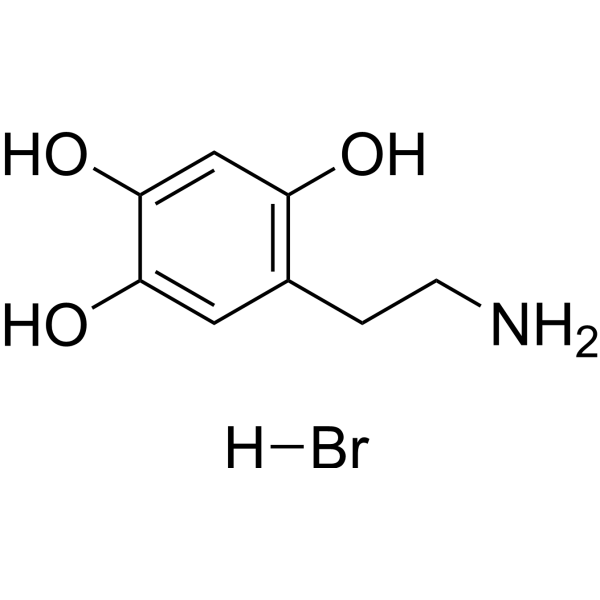
6-hydroxydopamine hydrobromide; 6-OHDA hydrobromide
|
Dopamine Receptor
Autophagy
Mitophagy
COX
PGE synthase
Interleukin Related
p38 MAPK
Apoptosis
Caspase
|
Neurological Disease
Cancer
|
|
Oxidopamine (6-OHDA) hydrobromide is an antagonist of the neurotransmitter dopamine. Oxidopamine hydrobromide is a widely used neurotoxin and selectively destroys dopaminergic neurons. Oxidopamine hydrobromide promotes COX-2 activation, leading to PGE2 synthesis and pro-inflammatory cytokine IL-1β secretion. Oxidopamine hydrobromide can be used for the research of Parkinson’s disease (PD), attention-deficit hyperactivity disorder (ADHD), and Lesch-Nyhan syndrome .
|
-
-
- HY-B1081
-
|
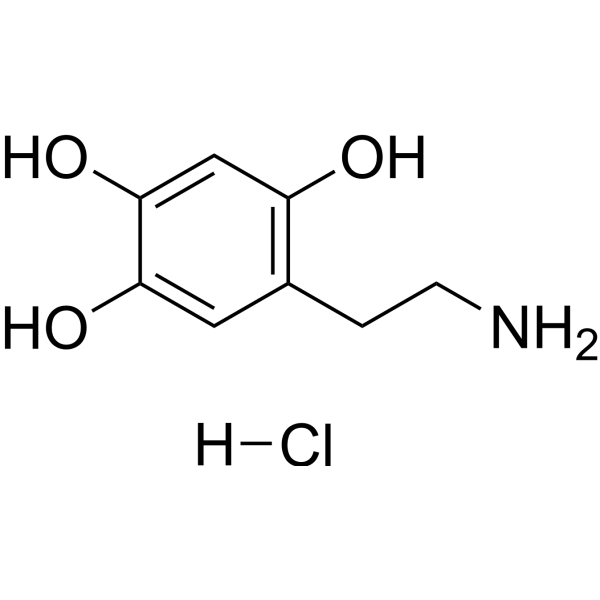
6-hydroxydopamine Hydrochloride
|
Dopamine Receptor
Autophagy
Mitophagy
COX
PGE synthase
Interleukin Related
p38 MAPK
Apoptosis
Caspase
|
Neurological Disease
Cancer
|
|
Oxidopamine (6-OHDA) hydrochloride is an antagonist of the neurotransmitter dopamine. Oxidopamine hydrochloride is a widely used neurotoxin and selectively destroys dopaminergic neurons. Oxidopamine hydrochloride promotes COX-2 activation, leading to PGE2 synthesis and pro-inflammatory cytokine IL-1β secretion. Oxidopamine hydrochloride can be used for the research of Parkinson’s disease (PD), attention-deficit hyperactivity disorder (ADHD), and Lesch-Nyhan syndrome .
|
-
-
- HY-17365
-
-
-
- HY-125586
-
|
|
DNA/RNA Synthesis
ADC Payload
|
Cancer
|
|
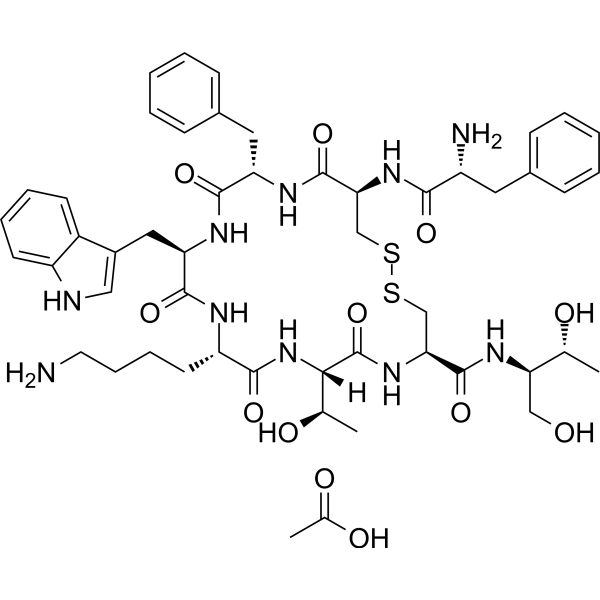
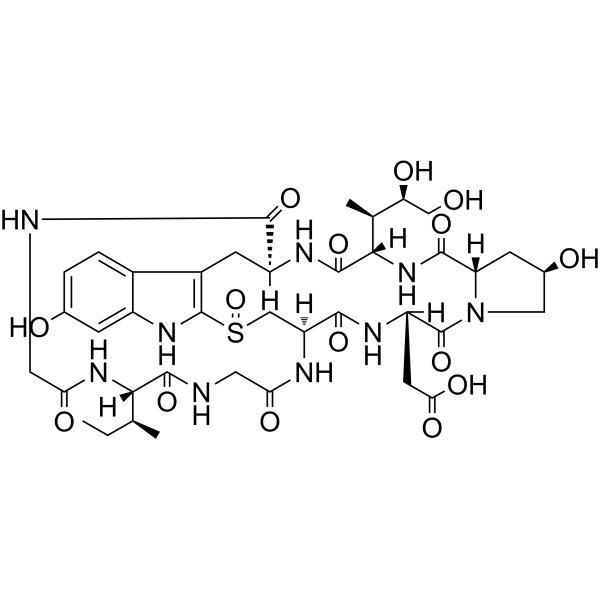
β-Amanitin is a cyclic peptide toxin in the poisonous Amanita phalloides mushroom. β-Amanitin inhibits inhibits eukaryotic RNA polymerase II and III. β-Amanitin inhibits protein synthesis. β-Amanitin can be used as a cytotoxic component of antibody-drug conjugates (ADCs) .
|
-
-
- HY-107343
-
|
Ethyl docosahexaenoate
|
COX
|
Neurological Disease
Metabolic Disease
|
|
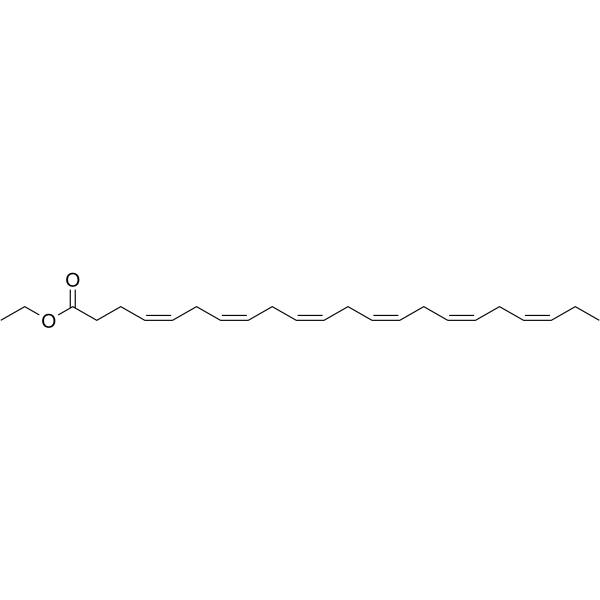
Docosahexaenoic acid ethyl ester (Ethyl docosahexaenoate) is a 90% concentrated ethyl ester of docosahexaenoic acid manufactured from the microalgal oil. Docosahexaenoic acid ethyl ester enhances 6-hydroxydopamine-induced neuronal damage by induction of lipid peroxidation in mouse striatum. Docosahexaenoic acid (DHA) is a key component of the cell membrane, and its peroxidation is inducible due to the double-bond chemical structure. Docosahexaenoic acid has neuroprotective effects .
|
-
-
- HY-108038
-
|
|
nAChR
|
Neurological Disease
|
|
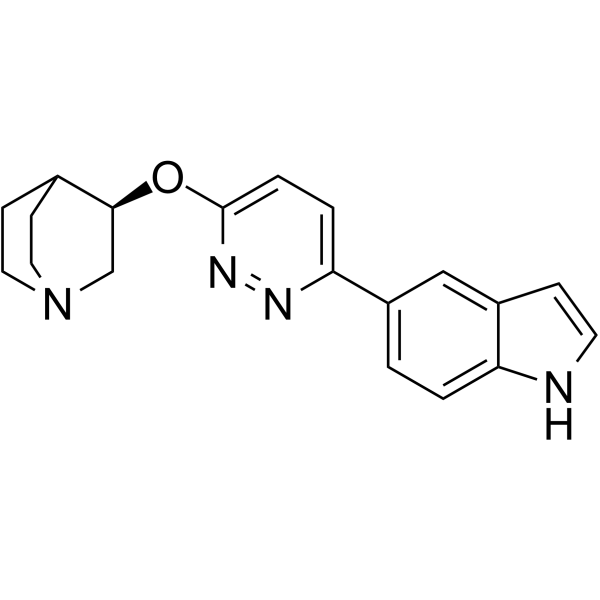
ABT-107 is a selective α7 neuronal nicotinic receptor agonist. ABT-107 protects against nigrostriatal damage in rats with unilateral 6-hydroxydopamine lesions .
|
-
-
- HY-P10447
-
|
Fengycin IX; SNA-60-367-3
|
Phospholipase
Fungal
|
Infection
|
|
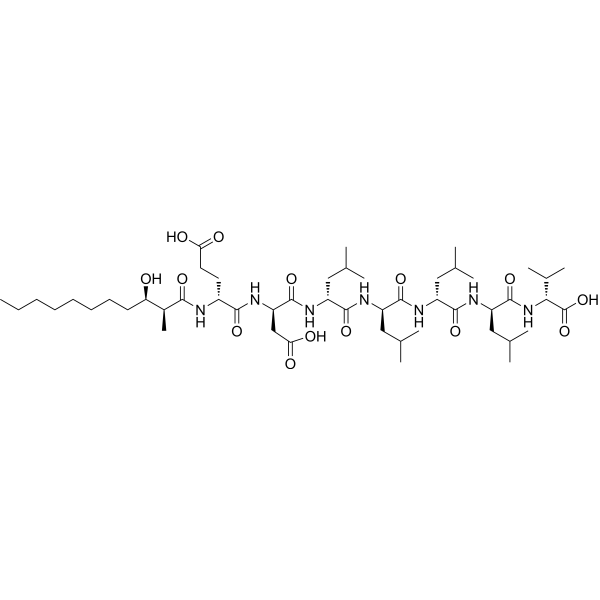
Plipastatin A1 (Fengycin IX; SNA-60-367-3) is a lipopeptide with phospholipase A2 inhibitory activity. Plipastatin A1 inhibits conidial germination of Botrytis cinerea in vitro and reduces the incidence of gray mold on tomato leaves. Plipastatin A1 is applicable to research related to gray mold [1][2].
|
-
-
- HY-107343R
-
|
Ethyl docosahexaenoate (Standard)
|
Endogenous Metabolite
Reference Standards
|
Neurological Disease
Metabolic Disease
|
|
Docosahexaenoic acid ethyl ester (Standard) is the analytical standard of Docosahexaenoic acid ethyl ester. This product is intended for research and analytical applications. Docosahexaenoic acid ethyl ester (Ethyl docosahexaenoate) is a 90% concentrated ethyl ester of docosahexaenoic acid manufactured from the microalgal oil. Docosahexaenoic acid ethyl ester enhances 6-hydroxydopamine-induced neuronal damage by induction of lipid peroxidation in mouse striatum. Docosahexaenoic acid (DHA) is a key component of the cell membrane, and its peroxidation is inducible due to the double-bond chemical structure. Docosahexaenoic acid has neuroprotective effects .
|
-
-
- HY-P3100
-
|
|
Parasite
|
Infection
|
|
Orfamide A is a major metabolite of insecticidal biosurfactant in Pseudomonas sp. F6 and has aphidicidal activity. Orfamide A can be used for aphid control in organic agriculture. Orfamide A exhibits dose-dependent mortality against aphids with an LC50 value of 34.5 μg/mL .
|
-
-
- HY-P11124
-
|
|
Apoptosis
PKC
Keap1-Nrf2
Heme Oxygenase (HO)
Drug Derivative
|
Neurological Disease
|
|
MGF24 is a modified protease-resistant MGF derivative. MGF24 protects dopaminergic neurons from 6-Hydroxydopamine (6-OHDA) (HY-113028)-induced apoptosis by inducing Heme oxygenase-1 (HO-1). MGF24 activates PKC-ε, which in turn activates Nrf2, up-regulating HO-1. MGF24 has neuroprotective activity and reduces myocardial infarct size in sheep models of myocardial ischemia. MGF24 can be used for neurological diseases like stroke, nerve injury and amyotrophic lateral sclerosis research .
|
-
-
- HY-N10277
-
|
|
Others
|
Neurological Disease
|
|
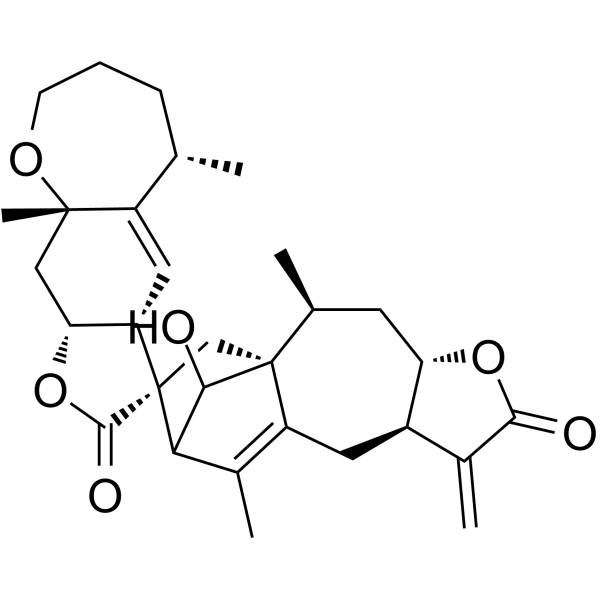
Inubritannolide A displays slight strong neuroprotective potency against different types of neuronal cells mediated by various inducers including H2O2, 6-hydroxydopamine (6-OHDA), and lipopolysaccharide (LPS).
|
-
-
- HY-118064
-
|
LY-368975
|
Dopamine Receptor
|
Neurological Disease
|
|
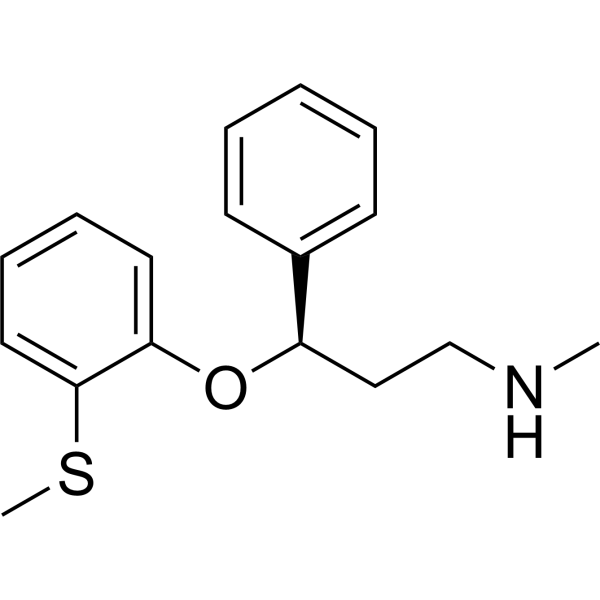
(R)-Thionisoxetine is a potent and selective inhibitor of central and peripheral norepinephrine (NE) uptake. (R)-thionisoxetine prevented hypothalamic NE depletion by 6-hydroxydopamine with an ED50 of 0.21 mg/kg. (R)-Thionisoxetine can be used for the research of a variety of diseases including depression and urinary incontinence .
|
-
-
- HY-158104
-
|
|
ATF6
|
Others
|
|
LPPM-8 is a ligand of Med25 and an inhibitor of Med25 protein-protein interactions (PPIs). LPPM-8 engages Med25 through interaction with the H2 face of its Activator Interaction Domain and stabilizes full-length protein in the cellular proteome. LPPM-8 is an orthosteric inhibitor of H2-binding transcriptional activators (such as ATF6a). LPPM-8 can be used for studying Med25 and Mediator complex biology .
|
-
-
- HY-116202
-
|
|
Keap1-Nrf2
Reactive Oxygen Species (ROS)
|
Neurological Disease
|
|
PACA is an enhancer of nerve growth factor-induced neurite outgrowth, enhancing nerve growth factor (NGF)-induced neurite outgrowth and attenuating 6-hydroxydopamine (6-OHDA)-induced toxicity by activating the Nrf2/HO-1 pathway. PACA has neuroprotective and neurogenic activities. PACA can be used to improve dopaminergic neuron loss and motor dysfunction in MPTP mouse models of Parkinson's disease and MPP +-induced neurons .
|
-
-
- HY-118064A
-
|
LY-368975 hydrochloride
|
Monoamine Transporter
|
Neurological Disease
|
|
(R)-Thionisoxetine hydrochloride (LY-368975 hydrochloride) is a potent and selective central and peripheral norepinephrine (NE) uptake inhibitor. (R)-Thionisoxetine hydrochloride prevents 6-hydroxydopamine-induced hypothalamic NE depletion with an ED50 of 0.21 mg/kg. (R)-Thionisoxetine hydrochloride can be used in the study of a variety of diseases, including depression and urinary incontinence .
|
-
-
- HY-105973
-
|
BRL 14342
|
Serotonin Transporter
|
Neurological Disease
|
|
Clemeprol (BRL 14342) is an orally active Noradrenaline (NA) and 5-HT uptake blocker. Clemeprol inhibits 6-
Hydroxydopamine (HY-B1081)-induced depletion of brain NA. Clemeprol exerts a dose-dependent inhibition of Reserpine (HY-N0480)-induced hypothermia. Clemeprol can be used in the research of depression .
|
-
-
- HY-183798
-
|
|
Cholinesterase (ChE)
Monoamine Oxidase
Interleukin Related
|
Neurological Disease
|
|
BChE/MAO-B-IN-6 is a dual inhibitor with inhibitory activity against both butyrylcholinesterase (BChE) and monoamine oxidase B (MAO B), with an IC50 of 557 nM against BChE and an IC50 of 142 nM against MAO B. BChE/MAO-B-IN-6 reduces IL-6 release from stimulated microglia and antagonizes 6-hydroxydopamine (HY-B1081) toxicity in neuroblastoma cells. BChE/MAO-B-IN-6 can be used in the research of neurodegenerative diseases .
|
-
-
- HY-107343S
-
|
Ethyl docosahexaenoate-d5
|
Isotope-Labeled Compounds
|
Neurological Disease
Metabolic Disease
|
|
Docosahexaenoic acid ethyl ester-d5 is the deuterium labeled Docosahexaenoic acid ethyl ester. Docosahexaenoic acid ethyl ester (Ethyl docosahexaenoate) is a 90% concentrated ethyl ester of docosahexaenoic acid manufactured from the microalgal oil. Docosahexaenoic acid ethyl ester enhances 6-hydroxydopamine-induced neuronal damage by induction of lipid peroxidation in mouse striatum. Docosahexaenoic acid (DHA) is a key component of the cell membrane, and its peroxidation is inducible due to the double-bond chemical structure. Docosahexaenoic acid has neuroprotective effects .
|
-
-
- HY-107343S1
-
|
Ethyl docosahexaenoate-d5-1
|
Isotope-Labeled Compounds
|
Others
|
|
Docosahexaenoic acid ethyl ester-d5-1 is the deuterium labeled Docosahexaenoic acid ethyl ester. Docosahexaenoic acid ethyl ester (Ethyl docosahexaenoate) is a 90% concentrated ethyl ester of docosahexaenoic acid manufactured from the microalgal oil. Docosahexaenoic acid ethyl ester enhances 6-hydroxydopamine-induced neuronal damage by induction of lipid peroxidation in mouse striatum. Docosahexaenoic acid (DHA) is a key component of the cell membrane, and its peroxidation is inducible due to the double-bond chemical structure. Docosahexaenoic acid has neuroprotective effects .
|
-
-
- HY-158205
-
|
4-Hydroperoxy-2-decenoic acid ethyl ester
|
Reactive Oxygen Species (ROS)
HDAC
SOD
|
Inflammation/Immunology
Cancer
|
|
HPO-DAEE (4-Hydroperoxy-2-decenoic acid ethyl ester) elicits nuclear accumulation of Nrf2 and activated antioxidant response element (ARE). HPO-DAEE induces antioxidant genes upregulation (eg: HO-1) through Nrf2-ARE signaling. HPO-DAEE induces reactive oxygen species generation. HPO-DAEE also inhibits histone deacetylase and upregulate expression of extracellular superoxide dismutase via histone acetylation. HPO-DAEE protects against 6-hydroxydopamine-induced cell death via activation of Nrf2-ARE and eIF2α-ATF4 pathways .
|
-
-
- HY-N7675A
-
|
|
Others
|
Metabolic Disease
|
|
(2R)-Flavanomarein is a predominant flavonoid of Coreopsis tinctoria Nutt with protective effects against diabetic nephropathy. (2R)-Flavanomarein has good antioxidative, antidiabetic, antihypertensive and anti-hyperlipidemic activities .
|
-
-
- HY-W686216
-
|
|
Dopamine Receptor
|
Neurological Disease
|
|
VK-28 is a blood-brain barrier-permeable iron chelator. VK-28 inhibits mitochondrial membrane lipid peroxidation and the iron-dependent generation of reactive hydroxyl radicals. VK-28 exhibits neuroprotective activity and protects rats against 6-OHDA-induced striatal dopaminergic damage. VK-28 can be used in studies related to Parkinson's disease .
|
-
-
- HY-P11504
-
|
|
Biochemical Assay Reagents
|
Others
|
|
Fmoc-Lys-Gly-Dopa-OH is a tripeptide. Fmoc-Lys-Gly-Dopa-OH forms coacervates in aqueous solution via phase separation. Fmoc-Lys-Gly-Dopa-OH coacervates, with the assistance of Fe 3+, provide a viable material to engineer the surface of mammalian cells .
|
-
-
- HY-P11783
-
|
|
Fungal
|
Infection
|
|
Surfactin C2 is a lipopeptide produced by Bacillus subtilis A18 with antifungal activity. Surfactin C2 acts against Heterobasidion annosum and Heterobasidion parviporum. Surfactin C2 exerts its activity mainly through membrane‑active effects to disrupt fungal cell structures and inhibit mycelial growth. Surfactin C2 can be used for the research of butt rot and root rot of conifers .
|
-
-
- HY-P2209
-
|
Daechuine S27; N-Demethylamphibine H
|
Parasite
Phosphodiesterase (PDE)
|
Infection
|
|
Nummularine B (Daechuine S27; N-Demethylamphibine H) is an anti-parasite agent. Nummularine B inhibits calmodulin-dependent phosphodiesterase activity with an IC50 of 16.8 μM. Nummularine B inhibits the growth of Plasmodium and Leishmania donovani in vitro. Nummularine B inhibits the calmodulin-dependent activity of actomyosin Ca 2+-ATPase. Nummularine B is applicable to research related to malaria and visceral leishmaniasis .
|
-
-
- HY-P4948
-
|
|
Biochemical Assay Reagents
|
Others
|
|
Coumarin-phalloidin is a kind of phalloidin labeled with Coumarin (HY-N0709). Coumarin-phalloidin is a new type of actin probe that can be used for triple immunofluorescence microscopic observation of the cell skeleton .
|
-
-
- HY-17365
-
-
- HY-125586
-
|
|
DNA/RNA Synthesis
ADC Payload
|
Cancer
|
|
β-Amanitin is a cyclic peptide toxin in the poisonous Amanita phalloides mushroom. β-Amanitin inhibits inhibits eukaryotic RNA polymerase II and III. β-Amanitin inhibits protein synthesis. β-Amanitin can be used as a cytotoxic component of antibody-drug conjugates (ADCs) .
|
-
- HY-105055
-
|
|
ペプチド
|
Cancer
|
|
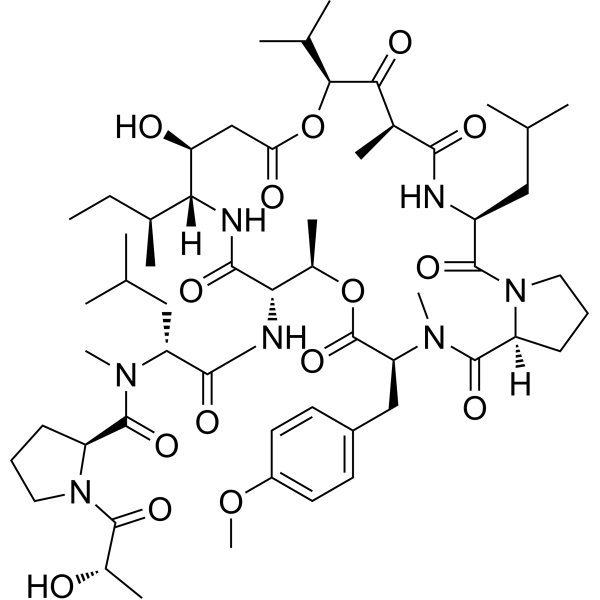
Didemnin B is a depsipeptide extracted from the marine tunicate Trididemnin cyanophorum. Didemnin B can be used for the research of cancer .
|
-
- HY-P10447
-
|
Fengycin IX; SNA-60-367-3
|
Phospholipase
Fungal
|
Infection
|
|
Plipastatin A1 (Fengycin IX; SNA-60-367-3) is a lipopeptide with phospholipase A2 inhibitory activity. Plipastatin A1 inhibits conidial germination of Botrytis cinerea in vitro and reduces the incidence of gray mold on tomato leaves. Plipastatin A1 is applicable to research related to gray mold [1][2].
|
-
- HY-P4755
-
|
|
ペプチド
|
Others
|
|
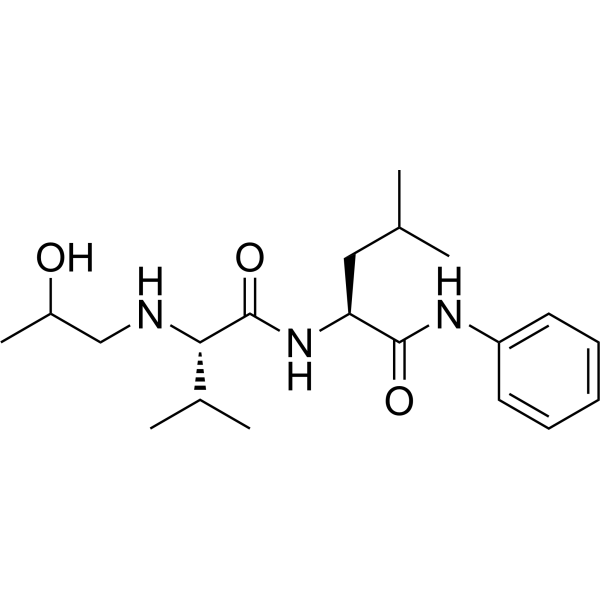
N-((RS)-2-Hydroxy-propyl)-Val-Leu-anilide is a polypeptide that can be found by peptide screening. Peptide screening is a research tool that pools active peptides primarily by immunoassay. Peptide screening can be used for protein interaction, functional analysis, epitope screening, especially in the field of agent research and development .
|
-
- HY-P3100
-
|
|
Parasite
|
Infection
|
|
Orfamide A is a major metabolite of insecticidal biosurfactant in Pseudomonas sp. F6 and has aphidicidal activity. Orfamide A can be used for aphid control in organic agriculture. Orfamide A exhibits dose-dependent mortality against aphids with an LC50 value of 34.5 μg/mL .
|
-
- HY-125357
-
|
|
ペプチド
|
Metabolic Disease
|
|
Ternatin (compound 2) is a cyclic heptapeptides that can be isolated from mushroom Coliorus versicolor. Ternatin inhibits fat-accumulation with an IC50 of 0.027 μM in 3T3-L1 adipocytes .
|
-
- HY-P11124
-
|
|
Apoptosis
PKC
Keap1-Nrf2
Heme Oxygenase (HO)
Drug Derivative
|
Neurological Disease
|
|
MGF24 is a modified protease-resistant MGF derivative. MGF24 protects dopaminergic neurons from 6-Hydroxydopamine (6-OHDA) (HY-113028)-induced apoptosis by inducing Heme oxygenase-1 (HO-1). MGF24 activates PKC-ε, which in turn activates Nrf2, up-regulating HO-1. MGF24 has neuroprotective activity and reduces myocardial infarct size in sheep models of myocardial ischemia. MGF24 can be used for neurological diseases like stroke, nerve injury and amyotrophic lateral sclerosis research .
|
-
- HY-158104
-
|
|
ATF6
|
Others
|
|
LPPM-8 is a ligand of Med25 and an inhibitor of Med25 protein-protein interactions (PPIs). LPPM-8 engages Med25 through interaction with the H2 face of its Activator Interaction Domain and stabilizes full-length protein in the cellular proteome. LPPM-8 is an orthosteric inhibitor of H2-binding transcriptional activators (such as ATF6a). LPPM-8 can be used for studying Med25 and Mediator complex biology .
|
-
- HY-P11504
-
|
|
Biochemical Assay Reagents
|
Others
|
|
Fmoc-Lys-Gly-Dopa-OH is a tripeptide. Fmoc-Lys-Gly-Dopa-OH forms coacervates in aqueous solution via phase separation. Fmoc-Lys-Gly-Dopa-OH coacervates, with the assistance of Fe 3+, provide a viable material to engineer the surface of mammalian cells .
|
-
- HY-P11783
-
|
|
Fungal
|
Infection
|
|
Surfactin C2 is a lipopeptide produced by Bacillus subtilis A18 with antifungal activity. Surfactin C2 acts against Heterobasidion annosum and Heterobasidion parviporum. Surfactin C2 exerts its activity mainly through membrane‑active effects to disrupt fungal cell structures and inhibit mycelial growth. Surfactin C2 can be used for the research of butt rot and root rot of conifers .
|
-
- HY-P2209
-
|
Daechuine S27; N-Demethylamphibine H
|
Parasite
Phosphodiesterase (PDE)
|
Infection
|
|
Nummularine B (Daechuine S27; N-Demethylamphibine H) is an anti-parasite agent. Nummularine B inhibits calmodulin-dependent phosphodiesterase activity with an IC50 of 16.8 μM. Nummularine B inhibits the growth of Plasmodium and Leishmania donovani in vitro. Nummularine B inhibits the calmodulin-dependent activity of actomyosin Ca 2+-ATPase. Nummularine B is applicable to research related to malaria and visceral leishmaniasis .
|
-
- HY-P4948
-
|
|
Biochemical Assay Reagents
|
Others
|
|
Coumarin-phalloidin is a kind of phalloidin labeled with Coumarin (HY-N0709). Coumarin-phalloidin is a new type of actin probe that can be used for triple immunofluorescence microscopic observation of the cell skeleton .
|
| 製品番号 |
製品名 |
Category |
Target |
構造式 |
-
- HY-107343S
-
|
|
|
Docosahexaenoic acid ethyl ester-d5 is the deuterium labeled Docosahexaenoic acid ethyl ester. Docosahexaenoic acid ethyl ester (Ethyl docosahexaenoate) is a 90% concentrated ethyl ester of docosahexaenoic acid manufactured from the microalgal oil. Docosahexaenoic acid ethyl ester enhances 6-hydroxydopamine-induced neuronal damage by induction of lipid peroxidation in mouse striatum. Docosahexaenoic acid (DHA) is a key component of the cell membrane, and its peroxidation is inducible due to the double-bond chemical structure. Docosahexaenoic acid has neuroprotective effects .
|
-
-
- HY-107343S1
-
|
|
|
Docosahexaenoic acid ethyl ester-d5-1 is the deuterium labeled Docosahexaenoic acid ethyl ester. Docosahexaenoic acid ethyl ester (Ethyl docosahexaenoate) is a 90% concentrated ethyl ester of docosahexaenoic acid manufactured from the microalgal oil. Docosahexaenoic acid ethyl ester enhances 6-hydroxydopamine-induced neuronal damage by induction of lipid peroxidation in mouse striatum. Docosahexaenoic acid (DHA) is a key component of the cell membrane, and its peroxidation is inducible due to the double-bond chemical structure. Docosahexaenoic acid has neuroprotective effects .
|
-
入力情報は安全に管理されます. ※ 必須入力項目.
Inquiry Information
- 製品名:
- 製品番号:
- 数量:
- MCE 日本正規代理店:

