1. Search Result
Search Result
Results for "

9-PAHSA

" in MedChemExpress (MCE) Product Catalog:

10

Inhibitors & Agonists

2

Natural
Products

5

Isotope-Labeled Compounds

Cat. No. Product Name Target Research Areas Chemical Structure
  • HY-120657

    CGRP Receptor NF-κB Neurological Disease Metabolic Disease Inflammation/Immunology
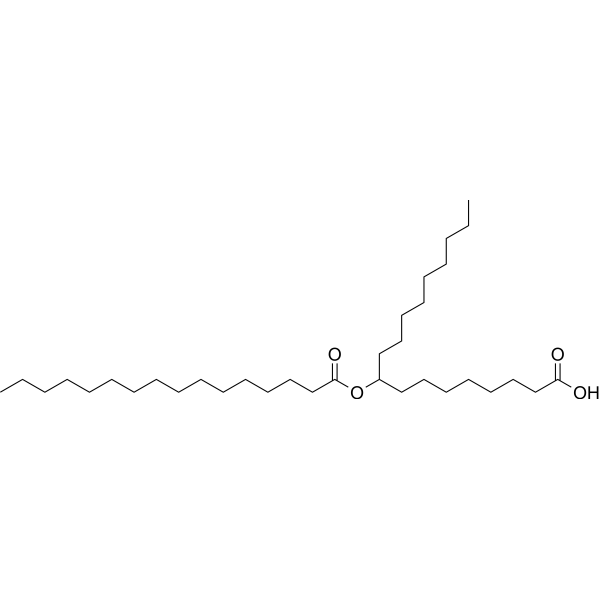
    9-PAHSA is an orally active endogenous GPR120 agonist (EC50=18 μM). 9-PAHSA significantly inhibits LPS-induced inflammatory responses by blocking the NF-κB pathway. 9-PAHSA induces adipocyte browning, enhances glucose uptake and reduces lipid accumulation, while improving mitochondrial function and the survival rate of steatotic hepatocytes. In terms of neuroprotection, 9-PAHSA regulates the expression of REST and BDNF in the prefrontal cortex of diabetic mice, and effectively prevents spatial working memory deficits and abnormal social behaviors. 9-PAHSA does not directly regulate insulin secretion or improve systemic insulin sensitivity, and possesses specific anti-inflammatory, metabolic regulatory and neuroprotective properties. 9-PAHSA can be used in the research of diabetes-related cognitive impairment, obesity and non-alcoholic fatty liver disease .
    9-PAHSA
  • HY-120657R

    Reference Standards CGRP Receptor NF-κB Cardiovascular Disease Inflammation/Immunology
    Flumethrin (Standard) is the analytical standard of Flumethrin. This product is intended for research and analytical applications. 9-PAHSA is an orally active endogenous GPR120 agonist (EC50=18 μM). 9-PAHSA significantly inhibits LPS-induced inflammatory responses by blocking the NF-κB pathway. 9-PAHSA induces adipocyte browning, enhances glucose uptake and reduces lipid accumulation, while improving mitochondrial function and the survival rate of steatotic hepatocytes. In terms of neuroprotection, 9-PAHSA regulates the expression of REST and BDNF in the prefrontal cortex of diabetic mice, and effectively prevents spatial working memory deficits and abnormal social behaviors. 9-PAHSA does not directly regulate insulin secretion or improve systemic insulin sensitivity, and possesses specific anti-inflammatory, metabolic regulatory and neuroprotective properties. 9-PAHSA can be used in the research of diabetes-related cognitive impairment, obesity and non-alcoholic fatty liver disease .
    9-PAHSA (Standard)
  • HY-W770410

    Isotope-Labeled Compounds CGRP Receptor NF-κB Others
    9-PAHSA- 13C4 is 13C-labeled 9-PAHSA. 9-PAHSAis an orally active endogenous GPR120 agonist (EC50=18 μM). 9-PAHSAsignificantly inhibits LPS-induced inflammatory responses by blocking the NF-κB pathway. 9-PAHSAinduces adipocyte browning, enhances glucose uptake and reduces lipid accumulation, while improving mitochondrial function and the survival rate of steatotic hepatocytes. In terms of neuroprotection, 9-PAHSAregulates the expression of REST and BDNF in the prefrontal cortex of diabetic mice, and effectively prevents spatial working memory deficits and abnormal social behaviors. 9-PAHSAdoes not directly regulate insulin secretion or improve systemic insulin sensitivity, and possesses specific anti-inflammatory, metabolic regulatory and neuroprotective properties. 9-PAHSAcan be used in the research of diabetes-related cognitive impairment, obesity and non-alcoholic fatty liver disease .
    9-PAHSA-13C4
  • HY-120657S

    Isotope-Labeled Compounds CGRP Receptor NF-κB Others
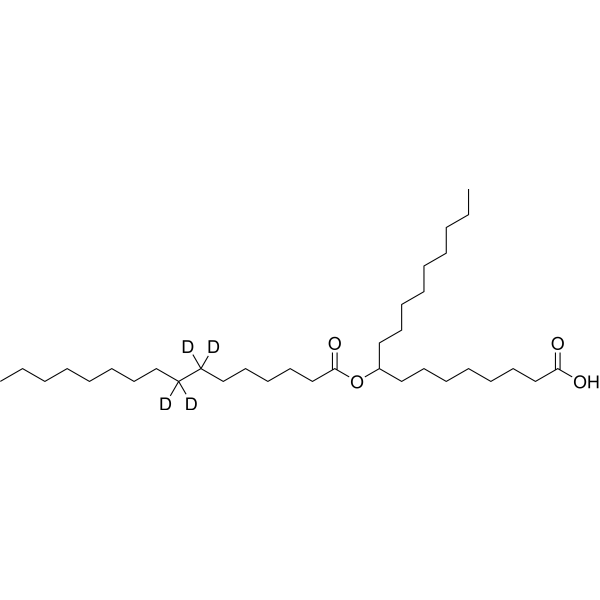
    9-PAHSA-d4 is the deuterium labeled 9-PAHSA. 9-PAHSA is an orally active endogenous GPR120 agonist (EC50=18 μM). 9-PAHSA significantly inhibits LPS-induced inflammatory responses by blocking the NF-κB pathway. 9-PAHSA induces adipocyte browning, enhances glucose uptake and reduces lipid accumulation, while improving mitochondrial function and the survival rate of steatotic hepatocytes. In terms of neuroprotection, 9-PAHSA regulates the expression of REST and BDNF in the prefrontal cortex of diabetic mice, and effectively prevents spatial working memory deficits and abnormal social behaviors. 9-PAHSA does not directly regulate insulin secretion or improve systemic insulin sensitivity, and possesses specific anti-inflammatory, metabolic regulatory and neuroprotective properties. 9-PAHSA can be used in the research of diabetes-related cognitive impairment, obesity and non-alcoholic fatty liver disease .
    9-PAHSA-d4
  • HY-144026S

    CGRP Receptor NF-κB Inflammation/Immunology
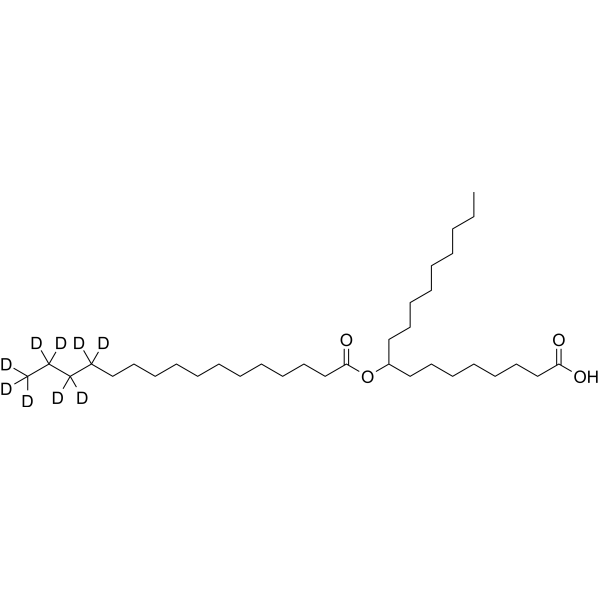
    9-PAHSA-d9 is the deuterium labeled 9-PAHSA (HY-120657). 9-PAHSA is an orally active endogenous GPR120 agonist (EC50=18 μM). 9-PAHSA significantly inhibits LPS-induced inflammatory responses by blocking the NF-κB pathway. 9-PAHSA induces adipocyte browning, enhances glucose uptake and reduces lipid accumulation, while improving mitochondrial function and the survival rate of steatotic hepatocytes. In terms of neuroprotection, 9-PAHSA regulates the expression of REST and BDNF in the prefrontal cortex of diabetic mice, and effectively prevents spatial working memory deficits and abnormal social behaviors. 9-PAHSA does not directly regulate insulin secretion or improve systemic insulin sensitivity, and possesses specific anti-inflammatory, metabolic regulatory and neuroprotective properties. 9-PAHSA can be used in the research of diabetes-related cognitive impairment, obesity and non-alcoholic fatty liver disease .
    9-PAHSA-d9
  • HY-120657S1

    Isotope-Labeled Compounds CGRP Receptor NF-κB Others
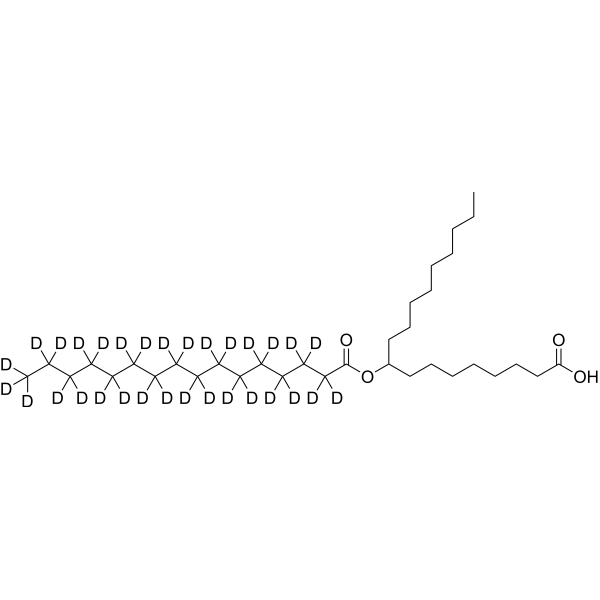
    9-PAHSA-d31 is the deuterium labeled 9-PAHSA. 9-PAHSA is an orally active endogenous GPR120 agonist (EC50=18 μM). 9-PAHSA significantly inhibits LPS-induced inflammatory responses by blocking the NF-κB pathway. 9-PAHSA induces adipocyte browning, enhances glucose uptake and reduces lipid accumulation, while improving mitochondrial function and the survival rate of steatotic hepatocytes. In terms of neuroprotection, 9-PAHSA regulates the expression of REST and BDNF in the prefrontal cortex of diabetic mice, and effectively prevents spatial working memory deficits and abnormal social behaviors. 9-PAHSA does not directly regulate insulin secretion or improve systemic insulin sensitivity, and possesses specific anti-inflammatory, metabolic regulatory and neuroprotective properties. 9-PAHSA can be used in the research of diabetes-related cognitive impairment, obesity and non-alcoholic fatty liver disease .
    9-PAHSA-d31
  • HY-173547

    TG(16:0/9-PAHSA/18:1)

    Endogenous Metabolite Metabolic Disease
    1-Palmitoyl-2-9-pahsa-3-oleoyl-sn-glycerol is a PAHSA-containing compound. 1-Palmitoyl-2-9-pahsa-3-oleoyl-sn-glycerol can be used in the research of adipose tissue .
    1-Palmitoyl-2-9-pahsa-3-oleoyl-sn-glycerol
  • HY-124281

    NF-κB Akt Autophagy PI3K Others
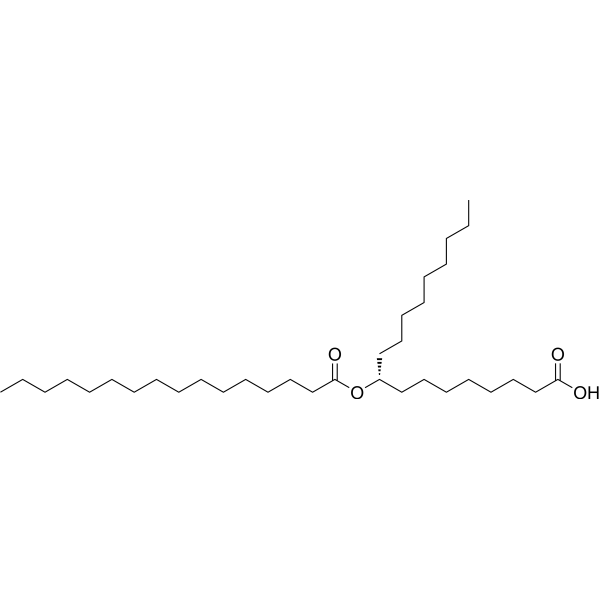
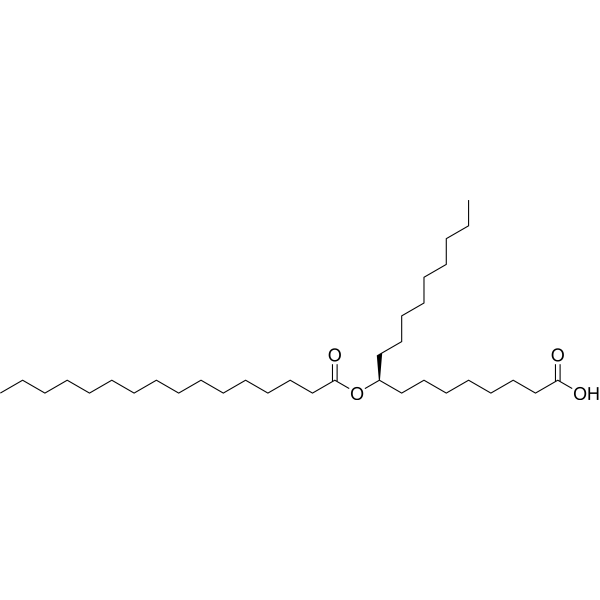
    9(R)-PAHSA is a R-enantiomer of 9-PAHSA. 9-PAHSA is an orally available anti-inflammatory lipid that lowers blood sugar and reduces inflammation .
    9(R)-PAHSA
  • HY-124281A

    Drug Isomer NF-κB Others
    9(S)-PAHSA is a S-enantiomer of 9-PAHSA. 9-PAHSA is an orally available anti-inflammatory lipid that lowers blood sugar and reduces inflammation .
    9(S)-PAHSA
  • HY-144024S

    Biochemical Assay Reagents Isotope-Labeled Compounds Metabolic Disease Inflammation/Immunology
    5-PAHSA-d9 is the deuterium labeled 5-PAHSA (HY-116193). 5-PAHSA is a kind of anti-inflammatory and antidiabetic lipokines that connect glucose and lipid metabolism .
    5-PAHSA-d9

Inquiry Online

Your information is safe with us. * Required Fields.

Salutation


Country or Region *

Applicant Name *


Organization Name *

Department *


Email Address *


Product Name *

Cat. No.


Requested quantity *

Phone Number *


Remarks

Inquiry Online

Inquiry Information

Product Name:
Cat. No.:
Quantity:
MCE Japan Authorized Agent:

