



1. Search Result
Search Result
Results for "

ACTH release

" in MedChemExpress (MCE) Product Catalog:

27

Inhibitors & Agonists

18

Peptides

1

Isotope-Labeled Compounds

Cat. No. Product Name Target Research Area
  • HY-P0060

    Tetracosactrin; ACTH(1–24)

    CRFR Melanocortin Receptor Neurological Disease Inflammation/Immunology
    Tetracosactide (Tetracosactrin) is an analogue of adrenocorticotrophic hormone (ACTH). Tetracosactide is the agonist for melanocortin-4 receptor (MC4R) that activates human MC4R with an EC50 of 0.65 nM. Tetracosactide can stimulate the release of corticosteroids such as cortisol from the adrenal gland. Tetracosactide is currently used for the research of ulcerative colitis and Crohn's disease, juvenile/adult rheumatoid arthritis and osteoarthrosis .
  • HY-P0060A

    Tetracosactrin acetate; ACTH(1–24) acetate

    CRFR Melanocortin Receptor Neurological Disease Inflammation/Immunology
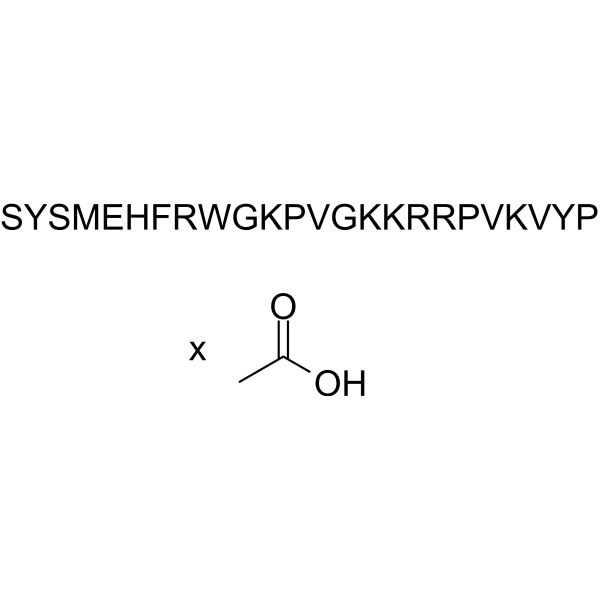
    Tetracosactide acetate (Tetracosactrin acetate ) is the acetate salt form of Tetracosactide (HY-P0060). Tetracosactide acetate is an analogue of adrenocorticotrophic hormone (ACTH). Tetracosactide acetate is the agonist for melanocortin-4 receptor (MC4R) that activates human MC4R with an EC50 of 0.65 nM. Tetracosactide acetate can stimulate the release of corticosteroids such as cortisol from the adrenal gland. Tetracosactide acetate is currently used for the research of ulcerative colitis and Crohn's disease, juvenile/adult rheumatoid arthritis and osteoarthrosis .
  • HY-P3538

    CRH (Sheep)

    Peptides Neurological Disease
    Corticotropin-releasing factor (CRH) (Sheep) is a brain-penetrant hypothalamic releasing factor and a peptide hormone with analgesic and arousal-inducing activity. Corticotropin-releasing factor (Sheep) mediates stress effects, including stress-induced analgesia. Corticotropin-releasing factor (Sheep) increases wakefulness, reduces slow wave sleep, alters EEG frequency content, stimulates ACTH and β-endorphin release, activates locomotor activity. Corticotropin-releasing factor (Sheep) can be used for the research of neurological disease .
  • HY-P1298A

    CRFR Cardiovascular Disease Neurological Disease Endocrinology
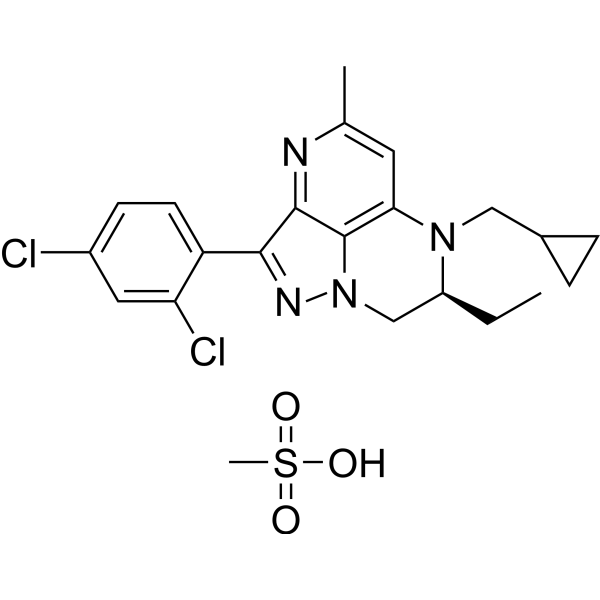
    Sauvagine TFA, a 40-amino-acid neuropeptide from the skin of the frog, is a mammalian CRF agonist. Sauvagine TFA is effective at releasing ACTH from rat pituitary cells. Sauvagine TFA possesses a number of pharmacological actions on diuresis, the cardiovascular system and endocrine glands .
  • HY-P2281A

    Atrial natriuretic peptide (1-28) TFA

    Endogenous Metabolite Cardiovascular Disease Metabolic Disease
    Atrial natriuretic factor (1-28) (human, porcine) TFA exhibits blood pressure lowering activity by increasing sodium and urine excretion. Atrial natriuretic factor (1-28) (human, porcine) TFA inhibits the release of pituitary adrenocorticotropic hormone (ACTH) and beta-endorphin through inhibition of pro-opiomelanocortin (POMC) expression. Atrial natriuretic factor (1-28) (human, porcine) TFA increases cGMP levels in RMIC cells with an IC50 of 1.2 nM .
  • HY-P1558A

    Adrenocorticotropic Hormone (11-24) acetate

    Melanocortin Receptor Neurological Disease
    ACTH (11-24) (acetate) is an adrenocorticotropic hormone (ACTH) receptor antagonist. ACTH (11-24) is a fragment of adrenocorticotropic and induces cortisol release. ACTH (11-24) can be used for the research of central nervous system .
  • HY-P1558

    Adrenocorticotropic Hormone (11-24)

    Melanocortin Receptor Neurological Disease
    ACTH (11-24) is an adrenocorticotropic hormone (ACTH) receptor antagonist. ACTH (11-24) is a fragment of adrenocorticotropic and induces cortisol release. ACTH (11-24) can be used for the research of central nervous system .
  • HY-P1245

    Neuropeptide NPFF (human)

    CRFR Others
    Neuropeptide SF human augments paraventricular corticotrophin-releasing hormone (CRH) release and increases adrenocorticotropic hormone (ACTH) and corticosterone levels in the plasma. Neuropeptide SF human play a physiologic role in the regulation of such circadian functions as the activity of motor centers and the HPA axis, through the release of CRH .
  • HY-P1298

    CRFR Cardiovascular Disease Neurological Disease Endocrinology
    Sauvagine, a 40-amino-acid neuropeptide from the skin of the frog, is a mammalian CRF agonist. Sauvagine is effective at releasing ACTH from rat pituitary cells. Sauvagine possesses a number of pharmacological actions on diuresis, the cardiovascular system and endocrine glands .
  • HY-P4786

    Androgen Receptor Neurological Disease Metabolic Disease
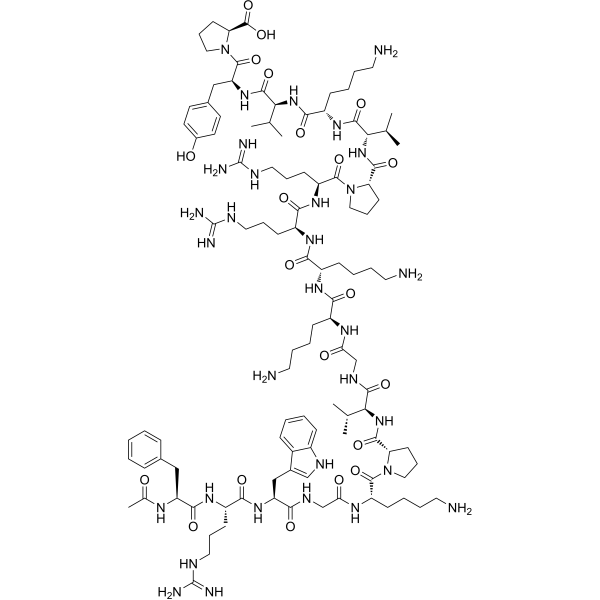
    Acetyl-ACTH (7-24) (human, bovine, rat) causes a marked decrease of ACTH-evoked corticosterone and aldosterone release .
  • HY-P3687

    CRFR Endocrinology
    [Tyr0] Corticotropin Releasing Factor, ovine is a corticotropin releasing factor/hormone isolated from ovine. Corticotropin releasing factor (CRF) is a hypothalamic hormone, stimulates the release of adrenocorticotropic hormone (ACTH) and of β-endorphin .
  • HY-P3683

    CRFR Endocrinology
    a-Helical Corticotropin Releasing Factor (12-41) is a 30 amino acids long, α-helical analogue of corticotropin releasing factor/hormone. Corticotropin releasing factor (CRF) is a hypothalamic hormone, which stimulates the secretion of adrenocorticotrophic hormone (ACTH). a-Helical Corticotropin Releasing Factor (12-41) would suppress the stimulatory effect .
  • HY-P3685

    CRFR Endocrinology
    [Met(O)21] Corticotropin Releasing Factor, ovine is a corticotropin releasing factor isolated from ovine hypothalamic extracts. Corticotropin releasing factor (CRF) is a hypothalamic hormone, which stimulates the secretion of adrenocorticotrophic hormone (ACTH) .
  • HY-P3489

    Melanocortin Receptor Endocrinology
    β-Corticotropin (swine) is a synthetic form of the peptide hormone corticotropin (ACTH). β-Corticotropin stimulates steroid release .
  • HY-P1245A

    Neuropeptide NPFF (human) acetate

    CRFR Others
    Neuropeptide SF (human) acetate augments paraventricular corticotrophin-releasing hormone (CRH) release and increases adrenocorticotropic hormone (ACTH) and corticosterone levels in the plasma. Neuropeptide SF (human) acetate play a physiologic role in the regulation of such circadian functions as the activity of motor centers and the HPA axis, through the release of CRH .
  • HY-P4012

    Vasopressin Receptor Endocrinology
    [Asu1,6-Arg8]Vasopressin is an vasopressin agonist which potentiates cyclic AMP accumulation and ACTH release induced by corticotropin-releasing factor (CRF) in rat anterior pituitary cells in culture .
  • HY-P3684

    CRFR Endocrinology
    [DPro5] Corticotropin Releasing Factor, human, rat is a selective R2 agonist of corticotropin releasing factor/hormone. Corticotropin releasing factor (CRF) is a hypothalamic hormone, stimulates the release of adrenocorticotropic hormone (ACTH) and of β-endorphin. [DPro5] Corticotropin Releasing Factor, human, rat fails to cause the typical anxiogenic effect, but modulates learning and memory processes in rat .
  • HY-P2281

    Atrial natriuretic peptide (1-28)

    Endogenous Metabolite Cardiovascular Disease Metabolic Disease
    Atrial natriuretic factor (1-28) (human, porcine) exhibits blood pressure lowering activity by increasing sodium and urine excretion. Atrial natriuretic factor (1-28) (human, porcine) inhibits the release of pituitary adrenocorticotropic hormone (ACTH) and beta-endorphin through inhibition of pro-opiomelanocortin (POMC) expression. Atrial natriuretic factor (1-28) (human, porcine) increases cGMP levels in RMIC cells with an IC50 of 1.2 nM .

Inquiry Online

Your information is safe with us. * Required Fields.

Salutation


Country or Region *

Applicant Name *


Organization Name *

Department *


Email Address *


Product Name *

Cat. No.


Requested quantity *

Phone Number *


Remarks

Inquiry Online

Inquiry Information

Product Name:
Cat. No.:
Quantity:
MCE Japan Authorized Agent: