



Tetracosactide acetate

Based on 1 Customer Validation
Tetracosactide acetate (Tetracosactrin acetate ) is the acetate salt form of Tetracosactide (HY-P0060). Tetracosactide acetate is an analogue of adrenocorticotrophic hormone (ACTH). Tetracosactide acetate is the agonist for melanocortin-4 receptor (MC4R) that activates human MC4R with an EC50 of 0.65 nM. Tetracosactide acetate can stimulate the release of corticosteroids such as cortisol from the adrenal gland. Tetracosactide acetate is currently used for the research of ulcerative colitis and Crohn's disease, juvenile/adult rheumatoid arthritis and osteoarthrosis.
For research use only. We do not sell to patients.
- Purity : 99.35%
- CAS No.: 60189-34-6
- Formula: C136H210N40O31S.xC2H4O2
-
Storage:
Sealed storage, away from moisture and light, under nitrogen.
Powder -80°C, 2 years , -20°C, 1 year* In solvent : -80°C, 6 months; -20°C, 1 month (sealed storage, away from moisture and light, under nitrogen)

To place orders, for customer services and technical support, please contact: MedChemExpress USA
Tel: 609-228-6898 E-mail: [email protected] [email protected]


-
 Biological Activity
-
Chemical Information
-
Solvent & Solubility
- Protocols
- Purity & Documentation
- References
-
 Help & FAQs


-
HY-P1296
Urocortin, ratCRFR Agonist -
HY-P3019
Urocortin III (human)CRF-R2 Activator -
HY-W539944
Argipressin acetateVasopressin Receptor Agonist -
HY-103377
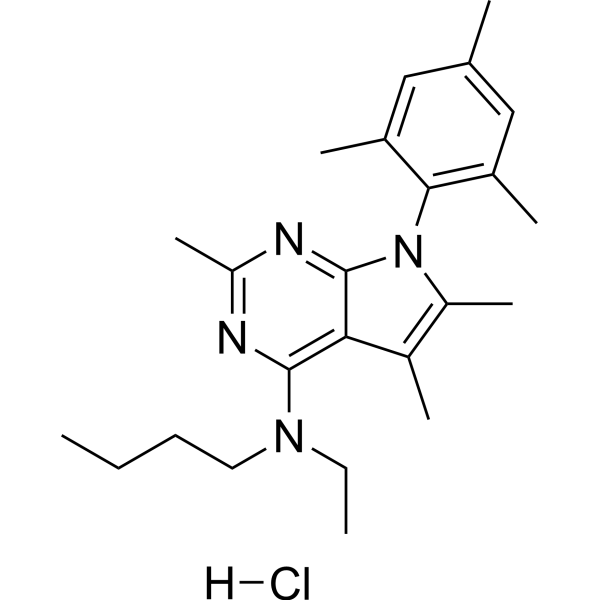
Antalarmin hydrochlorideCRHR1 Antagonist -
HY-P1295
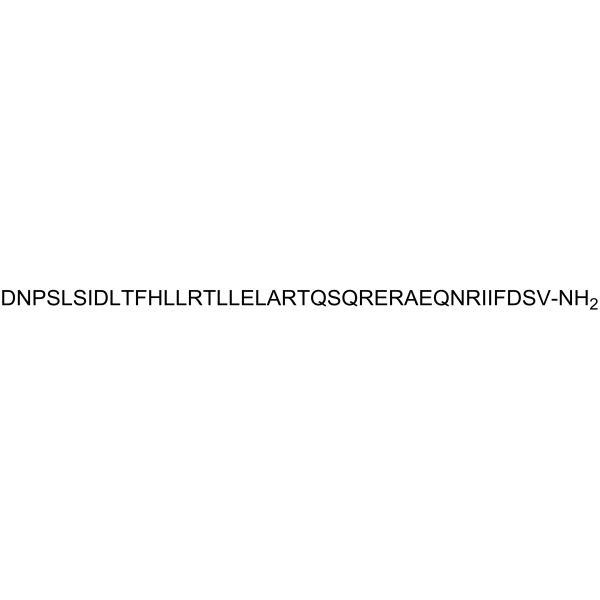
Urocortin, humanCRF Receptor Agonist -

HY-W341962
HalometasoneLTB4 Inhibitor -

HY-P0084A
Cyclic somatostatin acetatePeptide -

HY-P3176
Motilin, human, porcineGastrointestinal Hormone -
HY-113603
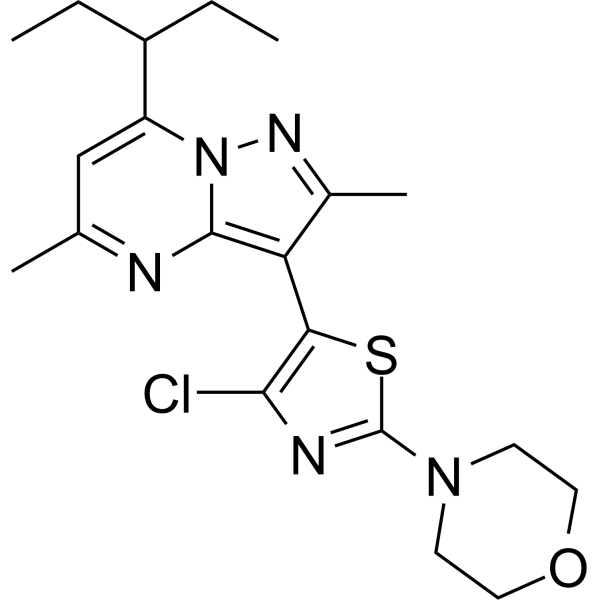
TildacerfontCRF1 Receptor Antagonist -
HY-112255
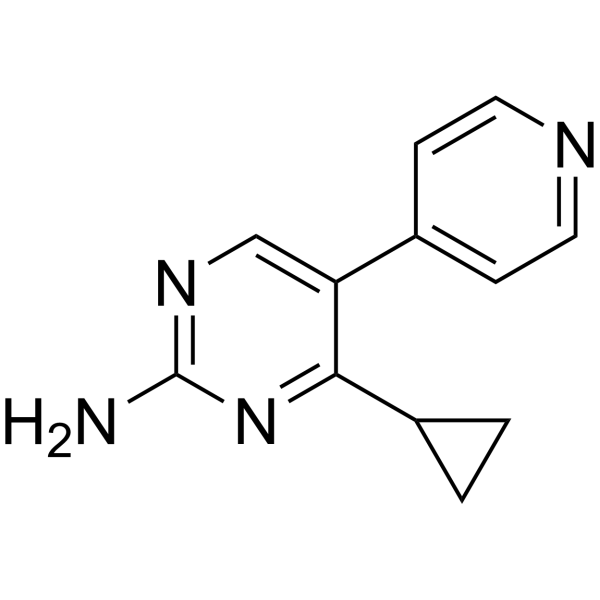
J9Dexamethasone Resistance Reverser -

HY-103377R
Antalarmin hydrochloride (Standard)CRHR1 Antagonist -
HY-103376
NBI-27914 hydrochlorideCRF1 Receptor Antagonist


Biological Activity
Description
IC50 & Target
[3]|
MC4R 0.65 nM (EC50) |
In Vitro
Tetracosactide (11 nM, 3-60 h) promotes the protein synthesis in rats/mice adrenal slices, promotes the secretion of cortisol, 11-deoxycorticosterone, and aldosterone[4].
MedChemExpress (MCE) has not independently confirmed the accuracy of these methods. They are for reference only. Further protocols information, click here.
In Vivo
MedChemExpress (MCE) has not independently confirmed the accuracy of these methods. They are for reference only.
-
Animal Model:Rabbits spinal cord IR injury models[2]
-
Dosage:0.5 mg/kg
-
Administration:iv, single dose
-
Result:Reduced MDA, XO, MPO, caspase-3 in tissue and serum, inproved the levels of CAT.


Chemical Information
-
CAS No. 60189-34-6
-
Appearance Solid
-
Formula C136H210N40O31S.xC2H4O2
-
Color White to off-white
-
Synonyms
Tetracosactrin acetate; ACTH(1–24) acetate
-
Sequence Shortening
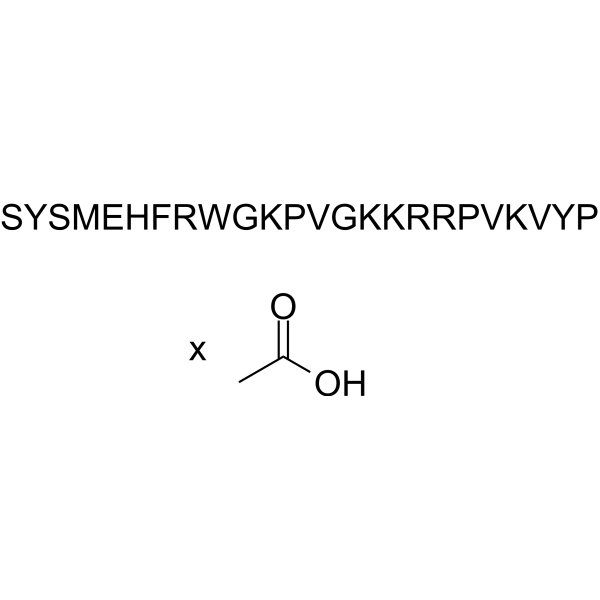
SYSMEHFRWGKPVGKKRRPVKVYP
-
Shipping
Room temperature in continental US; may vary elsewhere.
-
Storage
Sealed storage, away from moisture and light, under nitrogen
Powder -80°C 2 years -20°C 1 year * In solvent : -80°C, 6 months; -20°C, 1 month (sealed storage, away from moisture and light, under nitrogen)


Solvent & Solubility
In Vitro:
H2O : ≥ 100 mg/mL
* "≥" means soluble, but saturation unknown.
In Vivo:
For the following dissolution methods, please prepare the working solution directly:
It is recommended to prepare fresh solutions and use them promptly within a short period of time.
The percentages shown for the solvents indicate their volumetric ratio in the final prepared solution. If precipitation or phase separation occurs during preparation, heat and/or sonication can be used to aid dissolution.
Add each solvent one by one: PBS
Solubility: ≥ 50 mg/mL; Clear solution

Protocols
-
Collagen-Induced Arthritis
Collagen-induced arthritis (CIA) is an autoimmune murine model of rheumatoid arthritis in which immunization with type II collagen (CII) emulsified in an adjuvant induces a T cell- and autoantibody-driven inflammatory arthritis characterized by synovial hyperplasia, immune cell infiltration, and joint destruction. The model typically relies on genetically susceptible mouse strains (e. g. , DBA/1) and reproduces key features of human rheumatoid arthritis, including anti-collagen immune responses and progressive joint inflammation. Disease onset generally occurs within ~3-4 weeks after immunization, depending on antigen/adjuvant combinations and protocol variation. The immunopathology is driven by adaptive immune activation against CII, leading to systemic and local joint inflammation mediated by pro-inflammatory cytokines and effector immune cells, making CIA a standard preclinical platform for evaluating immunomodulatory and anti-arthritic interventions.
-
Research Protocol for Endocrine Diseases
Endocrine diseases often arise from disrupted hormone production, hormone signaling, or target-tissue responsiveness; for diabetes-focused endocrine disease models, insulin signaling regulates glucose uptake, hepatic glucose output, lipid metabolism, and β-cell compensation. Type 2 diabetes develops through interacting defects in insulin resistance, β-cell dysfunction, adipose inflammation, hepatic glucose overproduction, altered incretin signaling, and ectopic lipid metabolism. A major unresolved question is whether endocrine dysfunction is driven primarily by target-tissue insulin resistance, intrinsic β-cell failure, immune/inflammatory stress, or combined multi-organ failure that differs by disease stage.
-
DSS-Induced Colitis
Dextran sulfate sodium (DSS)-induced colitis is generated by administering DSS in mouse drinking water, producing epithelial injury, barrier disruption, weight loss, diarrhea, fecal blood, colon shortening, histologic mucosal damage, and inflammatory mediator changes; the model is mainly used to study acute or chronic intestinal inflammation resembling selected features of ulcerative colitis. DSS injury is interpreted through clinical and tissue readouts rather than a single molecular endpoint: daily body weight, stool consistency, and bleeding are combined into a disease activity index, while colon length, histology, cytokines, myeloperoxidase activity, intestinal permeability, and tight-junction markers provide complementary measures of inflammation and barrier damage.
-
TNBS-Induced Colitis
TNBS-induced colitis is produced by intrarectal delivery of 2,4,6-trinitrobenzene sulfonic acid in ethanol, where ethanol disrupts the mucosal barrier and TNBS haptenates colonic proteins, generating immune-mediated colonic inflammation with weight loss, diarrhea, ulceration, transmural injury, inflammatory-cell infiltration, and cytokine responses. The model is used as an experimental intestinal inflammation model with Crohn’s disease–like features, especially when Th1-type responses, IL-12–dependent inflammation, chronic relapsing inflammation, or fibrosis-related endpoints are studied.


Purity & Documentation
-
Data Sheet (271 KB)
-
SDS (557 KB)
- English - EN (557 KB)
- Français - FR (557 KB)
- Deutsch - DE (557 KB)
- Norwegian - NO (557 KB)
- Español - ES (557 KB)
- Swedish - SV (557 KB)
- Italian - IT (557 KB)
- Korean - KR (557 KB)
- Portuguese - PT (557 KB)
-
Handling Instructions (2659 KB)
References
[2]. Kertmen H, et al., Comparative effects of methylprednisolone and tetracosactide (ACTH1-24) on ischemia/reperfusion injury of the rabbit spinal cord. Arch Med Sci. 2018 Oct;14(6):1459-1470. [Content Brief]
[3]. Haslach EM, et al., Identification of tetrapeptides from a mixture based positional scanning library that can restore nM full agonist function of the L106P, I69T, I102S, A219V, C271Y, and C271R human melanocortin-4 polymorphic receptors (hMC4Rs). J Med Chem. 2014 Jun 12;57(11):4615-28. [Content Brief]
[4]. Lindhe O, et al., Irreversible binding and adrenocorticolytic activity of the DDT metabolite 3-methylsulfonyl-DDE examined in tissue-slice culture. Environ Health Perspect. 2001 Feb;109(2):105-10. [Content Brief]

Calculators
Concentration (start) × Volume (start) = Concentration (final) × Volume (final)


Tetracosactide acetate Related Classifications
HY-P0060A Related Classifications
 Powered by Bioz