1. Search Result
Search Result
Results for "

ALK degrader

" in MedChemExpress (MCE) Product Catalog:
Cat. No. Product Name Target Research Areas Chemical Structure
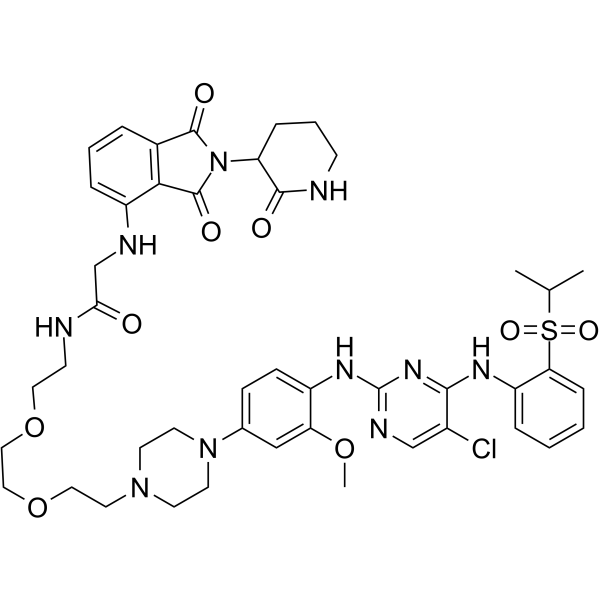
  • HY-112155
    MS4078
    4 Publications Verification

    PROTACs Anaplastic lymphoma kinase (ALK) Cancer
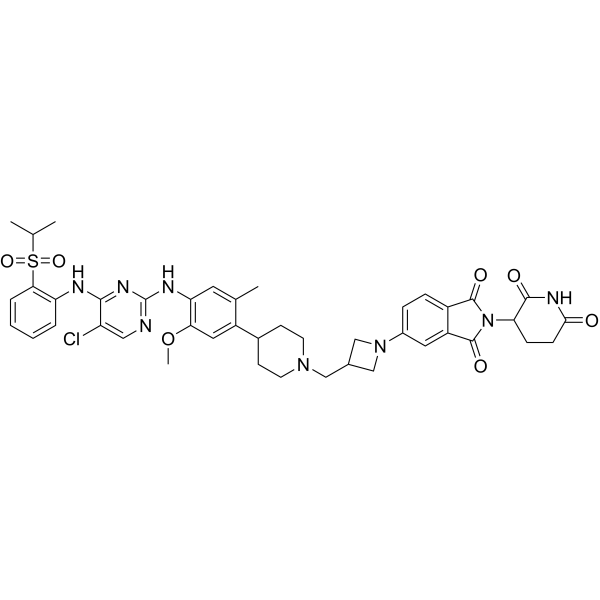
    MS4078 is an anaplastic lymphoma kinase (ALK) PROTAC (degrader) based on Cereblon ligand, with a Kd of 19?nM for binding affinity to ALK .
    MS4078
  • HY-153386

    Anaplastic lymphoma kinase (ALK) Cancer
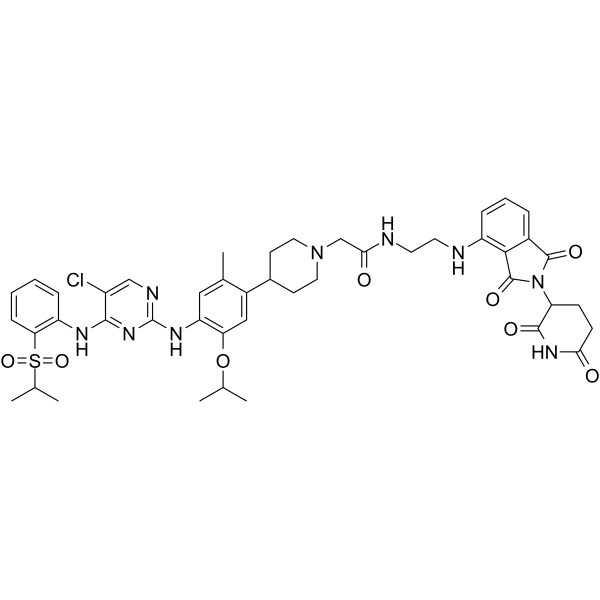
    CPD-1224 is an orally effective ALK inhibitor, a derivative of an ALK inhibitor that connects to the cereblon ligand. CPD-1224 targets the EML4-ALK oncogenic fusion protein and degrades both ALK and the mutant forms L1196M/G1202R. CPD-1224 can slow down tumor growth .
    CPD-1224
  • HY-112156

    PROTACs Anaplastic lymphoma kinase (ALK) Cancer
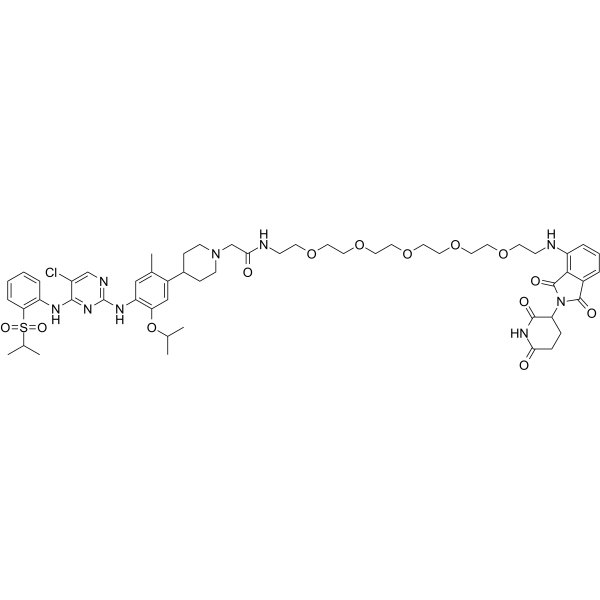
    MS4077 is an anaplastic lymphoma kinase (ALK) PROTAC (degrader) based on Cereblon ligand, with a Kd of 37 nM for binding affinity to ALK .
    MS4077
  • HY-123919
    TL13-112
    2 Publications Verification

    PROTACs Anaplastic lymphoma kinase (ALK) Cancer
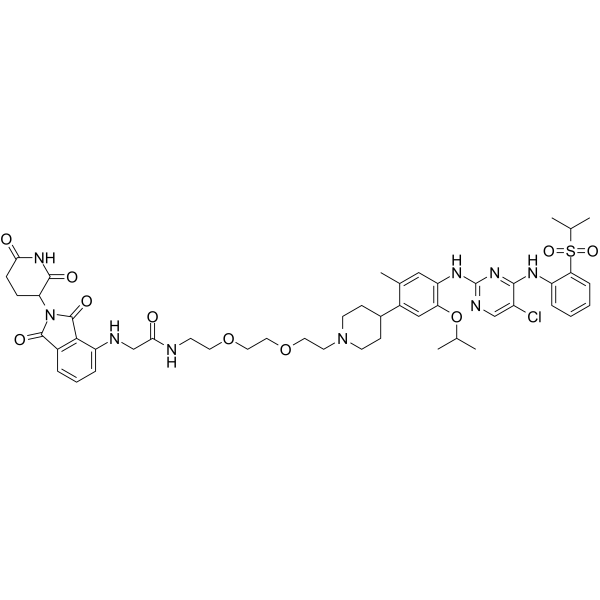
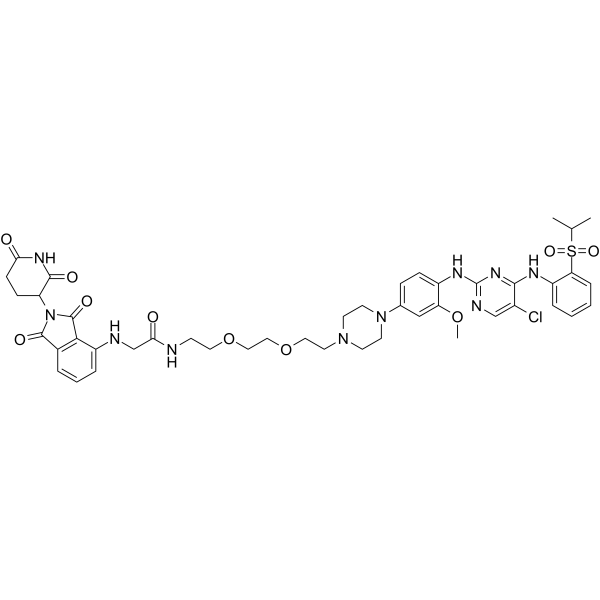
    TL13-112 is a potent and selective ALK-PROTAC degrader and inhibits ALK activity with an IC50 value of 0.14 nM. TL13-112 also prompts the degradation of additional kinases including Aurora A, FER, PTK2 and RPS6KA1 with IC50 values of 8550 nM, 42.4 nM, 25.4 nM, and 677 nM, respectively. TL13-112 is comprised of the conjugation of Ceritinib?(HY-15656) and the Cereblon ligand of Pomalidomide (HY-10984) .
    TL13-112
  • HY-122582

    PROTACs Anaplastic lymphoma kinase (ALK) Cancer
    TL13-12 is a potent and selective ALK-PROTAC degrader and inhibits ALK activity with an IC50 value of 0.69 nM. TL13-12 also prompts the degradation of additional kinases including Aurora A, FER, PTK2, and RPS6KA1 with IC50 values of 13.5 nM, 5.74 nM, 18.4 nM, and 65 nM, respectively. TL13-12 is comprised of the conjugation of TAE684 (HY-10192) and the Cereblon ligand of Pomalidomide (HY-10984) .
    TL13-12
  • HY-160506

    PROTACs c-Met/HGFR Apoptosis Cancer
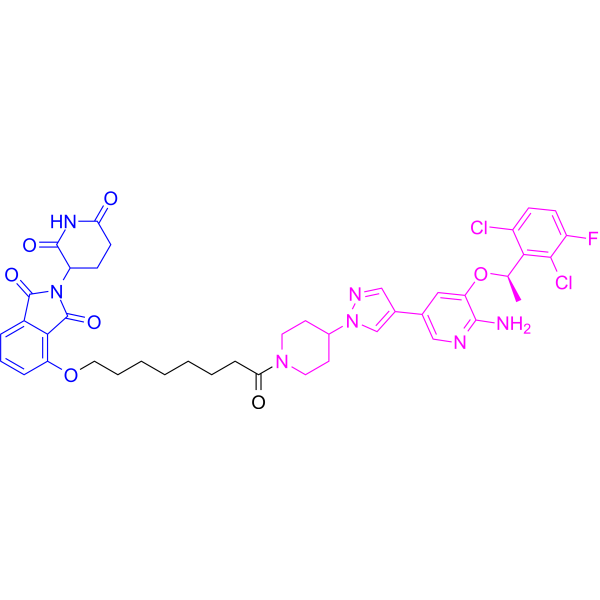
    PRO-6E is an oral active PROTAC based on Cereblon ligand, and induces the degradation of MET with maximum degradation of 81.9% at 1 μM in MKN-45 cells. PRO-6E inhibits tumor growth in vivo and in vitro. PRO-6E induces cell apoptosis and induces cell arrest (Sturcture Note:(Blue: Cereblon ligand (HY-103596), Black: linker;Pink: ALK/c-Met inhibitor Crizotinib (HY-50878)) .
    PRO-6E
  • HY-171825

    PROTACs Anaplastic lymphoma kinase (ALK) Cancer
    SIAIS001 is a CRBN-dependent ALK PROTAC degrader with a DC50 of 3.9 nM. SIAIS001 induces ALK protein degradation via the ubiquitin-proteasome system. SIAIS001 induces G1/S phase cell cycle arrest and inhibits proliferation of cancer cells. SIAIS001 can be used for the research of anaplastic large-cell lymphomas .
    SIAIS001
  • HY-174368

    Pro-BA

    PROTACs Apoptosis Anaplastic lymphoma kinase (ALK) Cancer
    PROTAC EML4-ALK Degrader-2 (Pro-BA) is a selective and orally active linker-free EML4-ALK PROTAC degrader with the DC50 of 74 nM in H1322 cells (T1/2 = 8 h). PROTAC EML4-ALK Degrader-2 relies on GID4 and proteasome pathways to promote ubiquitination of target proteins, leading to cell apoptosis. PROTAC EML4-ALK Degrader-2 can be used for research on cancer. (Pink: EML4-ALK Ligand (HY-40114); Blue: GID4 Ligand (HY-150908))
    PROTAC EML4-ALK Degrader-1
  • HY-147219A

    PROTACs Anaplastic lymphoma kinase (ALK) EGFR Apoptosis Cancer
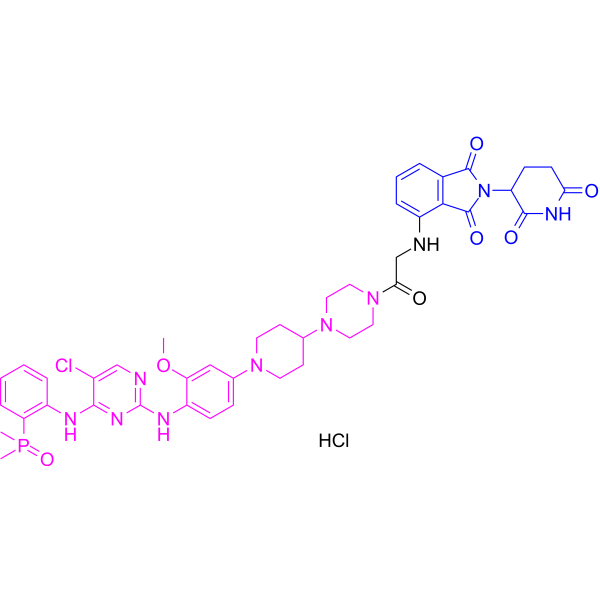
    SIAIS164018 hydrochloride is a PROTAC-based ALK and EGFR degrader, with IC50 value of 2.5 nM and 6.6 nM for ALK and ALK G1202R, respectively. SIAIS164018 hydrochloride strongly inhibits cancer cells migration and invasion, causes G1 cell cycle arrest and induces apoptosis. SIAIS164018 hydrochloride exhibits better property than Brigatinib (HY-12857) .
    SIAIS164018 hydrochloride
  • HY-175849

    HyT Anaplastic lymphoma kinase (ALK) Apoptosis STAT Cancer
    ALK degrader 1 is a potent, hydrophobic tag (HyT)-based degrader that induces ubiquitin-proteasome system (UPS)-dependent EML4-ALK degradation (DC50 = 0.13 μM). ALK degrader 1 demonstrates potent ALK degradation and antiproliferative effects in ALK-dependent cell lines, while showing minimal cytotoxicity in ALK fusion-negative cells. ALK degrader 1 triggers cell cycle arrest at the G0/G1 phase and stimulates apoptosis. ALK degrader 1 not only facilitates efficient degradation of the ALK protein but also disrupts key downstream effectors, including the STAT3 signaling axis. ALK degrader 1 mediates robust EML4-ALK degradation in vivo. ALK degrader 1 can be used for ALK-related diseases research .
    ALK degrader 1
  • HY-W754809

    Ligands for Target Protein for PROTAC Anaplastic lymphoma kinase (ALK) Cancer
    ALK ligand-1 is a ALK ligand that can be used for synthesis of PROTAC ALK degrader-4 (HY-175527) .
    ALK ligand-1
  • HY-175527

    HyT Anaplastic lymphoma kinase (ALK) Apoptosis Cancer
    ALK degrader 2 is an orally active ALK degrader that degrades EML4-ALK levels (DC50 = 8 nM) and nucleophosmin (NPM)-ALK protein levels (DC50 = 102 nM). ALK degrader 2 mediates ALK degradation via the Hsp70 chaperone system and ubiquitin-proteasome pathway. ALK degrader 2 induces significant S-phase cell cycle arrest and apoptosis in H3122 cells. ALK degrader 2 shows anti-tumor activity in mice bearing H3122 xenografts. ALK degrader 2 can be used for the study of non-small cell lung cancer (NSCLC). (Pink: ALK ligand (HY-W754809), Blue: Hyt (HY-W013021), Black: Linker (HY-Y1760), ALK ligand-linker conjugate (HY-175528)) .
    ALK degrader 2
  • HY-161749

    PROTACs Anaplastic lymphoma kinase (ALK) Cancer
    PROTAC ALK degrader-1 (compound B1) is an ALK degrader based on PROTACs, with the DC50 of 26 nM in H3122 EML4-ALK. PROTAC ALK degrader-1 can be used to synthesis PROTAC ALK degrader-2 (HY-161750) with superior bioavailability .
    PROTAC ALK degrader-1
  • HY-147219

    PROTACs Anaplastic lymphoma kinase (ALK) EGFR Apoptosis Cancer
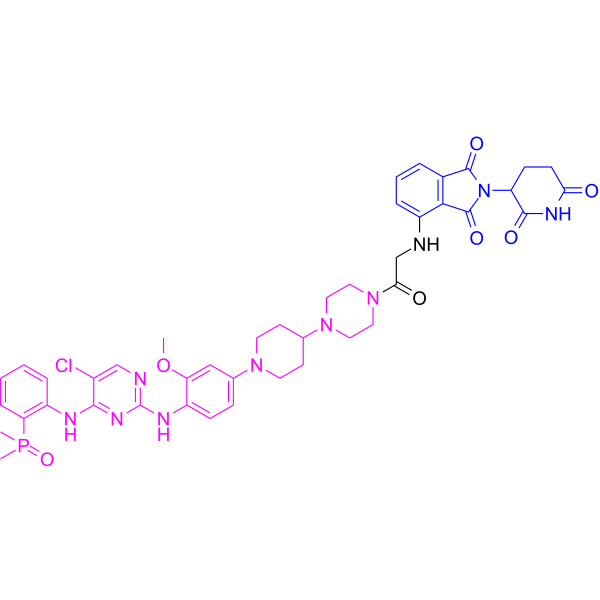
    SIAIS164018 is a PROTAC-based ALK and EGFR degrader, with IC50 value of 2.5 nM and 6.6 nM for ALK and ALK G1202R, respectively. SIAIS164018 strongly inhibits cancer cells migration and invasion, causes G1 cell cycle arrest and induces apoptosis. SIAIS164018 exhibits better property than Brigatinib (HY-12857) .
    SIAIS164018
  • HY-168551

    PROTACs Anaplastic lymphoma kinase (ALK) Cancer
    PROTAC ALK degrader-3 (4B) is an orally active ALK degrader based on PROTACs, which can effectively induce persistent degradation of ALK fusion protein in Karpas 299 cells and strong inhibition of downstream pathways,IC50 is 119.33 nM. PROTAC ALK degrader-3 exhibits antitumor activity. (Structure Note: PINK, ALK Inhibitor (HY-15656); Blue, E3 (HY-W023573); Black, linker (HY-168552)) .
    PROTAC ALK degrader-3
  • HY-174315

    PROTACs Anaplastic lymphoma kinase (ALK) Akt ERK Cancer
    WZH-17-002 is a WZH-15-125-based ALK PROTAC degrader with a DC50 of 25 nM. WZH-17-002 enhances activities against Lorlatinib (HY-12215)-resistant ALK compound mutations. WZH-17-002 significantly reduces drug resistance in ALK-fusion non-small cell lung cancer (NSCLC) and inhibits tumor growth in EML4-ALK G1202R/L1196 M xenograft mice model . Pink: ALK ligand (HY-174314); Blue: CRBN ligase ligand (HY-14658); Black: linker (HY-174316)
    WZH-17-002
  • HY-136194

    Anaplastic lymphoma kinase (ALK) Cancer
    TL13-22 is a negative control for TL13-12 (HY-122582) and a potent ALK inhibitor with an IC50 of 0.54 nM. TL13-22 does not degrade ALK in cells .
    TL13-22
  • HY-161750

    PROTACs Anaplastic lymphoma kinase (ALK) Cancer
    PROTAC ALK degrader-2 (B1-PEG) is an ALK degrader based on PROTACs, with the DC50 of 45 nM in H3122 EML4-ALK DC50 (GSH+). PROTAC ALK degrader-2, through PEGylation, is engineered to self-organize into micelles in water and releases its active form in response to the tumor-specific high GSH environment .
    PROTAC ALK degrader-2
  • HY-177945

    Gal-MS99

    PROTACs Anaplastic lymphoma kinase (ALK) Cancer
    MS99-β-Gal (Gal-MS99) is a galactose-modified NPM-ALK PROTAC degrader. MS99-β-Gal is only hydrolyzed by SA-β-gal and esterase in senescent cancer cells, releasing MS99, which specifically degrades the NPM-ALK fusion protein. MS99-β-Gal shows an IC50 of 454.8 nM for aging Karpas 299 cells, significantly lower than that of normal Karpas 299 cells (IC50 = 2.162 μM). MS99-β-Gal can be used for the research of cancer .
    MS99-β-Gal
  • HY-175271

    PROTACs Trk Receptor ERK Cancer
    JWJ-01-378 is a selective TRK PROTAC degrader. JWJ-01-378 efficiently degrades WT TRK and TPM3-TRKA fusion proteins and inhibits downstream pERK signaling, while showing limited efficacy against TRK inhibitor resistant mutants and ALK fusions. JWJ-01-378 potently suppresses cancer cell proliferation .Pink: TRK ligand (HY-160520); Blue: CRBN ligase ligand (HY-103596); Black: linker
    JWJ-01-378
  • HY-182057

    HyT Anaplastic lymphoma kinase (ALK) Cancer
    ALK degrader 4 is a ALK HyT degrader with an IC50 of 0.74 nM. ALK degrader 4 inhibits ALK kinase activity, increases the solvent-accessible surface area of hydrophobic residues near the ALK binding pocket, promotes ALK to form a partially unfolded conformation, and induces proteasomal degradation of ALK. ALK degrader 4 inhibits cancer cell proliferation. ALK degrader 4 can be used in research related to non-small cell lung cancer (ALK ligand: Brigatinib (HY-12857); hydrophobic tag: Norbornene (HY-W013021)) .
    ALK degrader 4
  • HY-182087

    HyT Anaplastic lymphoma kinase (ALK) Cancer
    ALK degrader 3 is a ALK HyT degrader with an IC50 of 1.2 nM. ALK degrader 3 inhibits ALK kinase activity, increases the solvent-accessible surface area of hydrophobic residues near the ALK binding pocket, promotes ALK to form a partially unfolded conformation, and drives ALK degradation via the proteasomal pathway. ALK degrader 3 inhibits the proliferation of tumor cells. ALK degrader 3 can be used for the research of non-small cell lung cancer. (ALK ligand: Brigatinib (HY-12857); hydrophobic tag: Tetraasterane (HY-W1139353)) .
    ALK degrader 3
  • HY-180956

    PROTACs Anaplastic lymphoma kinase (ALK) STAT Cancer
    PROTAC ALK degrader-5 (Compound 17) is an efficient ALK PROTAC degrader, with its inhibitory effects on EML4-ALK and NPM-ALK being 27.4 nM and 116.5 nM respectively. PROTAC ALK degrader-5 exhibits potent anti-proliferative activity against H3122 and Karpas 299. PROTAC ALK degrader-5 effectively inhibits the phosphorylation of ALK and STAT3. PROTAC ALK degrader-5 can be used for the study of ALK-driven malignant tumors, such as human non-small cell lung cancer and anaplastic large cell lymphoma .
    PROTAC ALK degrader-5
  • HY-179732

    PROTACs Anaplastic lymphoma kinase (ALK) IGF-1R ERK STAT Cancer
    PROTAC ALK degrader-4 (Compound B8) is an ALK PROTAC degrader with a DC50 of 445.25 nM. PROTAC ALK degrader-4 exhibits excellent anti-proliferative activity against NCI-H2228 and NCI-H3122. PROTAC ALK degrader-4 leads to a significant downregulation of 390 proteins, including IGF-1R and its downstream proteins such as ERK1/2 and STAT3. PROTAC ALK degrader-4 can be used for research on lung adenocarcinoma. (Pink: ALK ligand (HY-15656); Blue: CRBN ligand (HY-179733); Black: linker) .
    PROTAC ALK degrader-4
  • HY-175528

    Target Protein Ligand-Linker Conjugates Anaplastic lymphoma kinase (ALK) Cancer
    ALK ligand-Linker Conjugate 1 is a ALK ligand-linker conjugate that can be used for synthesis of PROTAC ALK degrader-4 (HY-175527) .
    ALK ligand-Linker Conjugate 1
  • HY-170592

    Anaplastic lymphoma kinase (ALK) Cancer
    dALK-3 is an anaplastic lymphoma kinase (ALK) degrader. dALK-3 can effectively induce EML4-ALK degradation with a DC50 of 0.182 μM. dALK-3 has good anti-proliferation activity against H3122 cells and can be used in the study of cancer .
    dALK-3
  • HY-183785

    PROTACs Anaplastic lymphoma kinase (ALK) Inflammation/Immunology
    PROTAC ALK5 Degrader-1 is a selective ALK5 PROTAC degrader. PROTAC ALK5 Degrader-1 induces ALK5 degradation via ALK5 ATP-binding pocket engagement, CRBN recruitment, and the ubiquitin-proteasome system.PROTAC ALK5 Degrader-1 inhibits ALK5 downstream signaling. PROTAC ALK5 Degrader-1 can be used for the research of pulmonary fibrosis .
    PROTAC ALK5 Degrader-1
  • HY-136195

    Anaplastic lymphoma kinase (ALK) Cancer
    TL13-110 is a negative control for TL13-112 (HY-123919) and a potent ALK inhibitor with an IC50 of 0.34 nM. TL13-110 does not degrade ALK in cells .
    TL13-110
  • HY-146022

    PROTACs Anaplastic lymphoma kinase (ALK) Cancer
    SIAIS117 is a potent Brigatinib-PROTAC degrader. SIAIS117 is a ALK PROTAC based on Brigatinib and VHL-1 conjunction. SIAIS117 can degrade ALK G1202R point mutation effectively. SIAIS117 blocks the growth of SR and H2228 cancer cell lines. SIAIS117 has the potentially anti-proliferation ability of small cell lung cancer .
    SIAIS117
  • HY-180972

    PROTACs Anaplastic lymphoma kinase (ALK) Cancer
    PROTAC EML4-ALK Degrader-2 is an EML4-ALK PROTAC degrader. PROTAC EML4-ALK Degrader-2 shows potent selective inhibitory activity to ALK with an IC50 of 1.6 nM. PROTAC EML4-ALK exhibits selectivity over IGF1R, INSR, FLT3, and FGFR2. PROTAC EML4-ALK Degrader-2 shows anti-cancer activities both in vitro and vivo. PROTAC EML4-ALK Degrader-2 can be used for non-small cell lung cancer (NSLC), liver lung and cervical cancer research .
    PROTAC EML4-ALK Degrader-2
  • HY-W1139353

    HyT Cancer
    Tetraasterane is a hydrophobic tag that promotes the degradation of ALK protein. Tetraasterane can be used for synthesis of ALK degrader 3 (HY-182087) .
    Tetraasterane
  • HY-183441

    Ligands for Target Protein for PROTAC Anaplastic lymphoma kinase (ALK) Inflammation/Immunology
    ALK5 ligand-1 (a31's ALK5 ligand) is a ligand of Anaplastic lymphoma kinase ALK5 with higher selectivity for ALK5 than for ALK4. ALK5 ligand-1 can be used to synthesize PROTAC degraders targeting ALK5. ALK5 PROTACs induce ALK5 degradation dependent on the ubiquitin-proteasome system and exert antifibrotic activity. ALK5 ligand-1 can be used in studies of pulmonary fibrosis .
    ALK5 ligand-1
  • HY-183116

    Molecular Glues Anaplastic lymphoma kinase (ALK) Cancer
    TRI-611 is a brain-penetrant, orally active molecular glue degrader targeting ALK. TRI-611 engages ALK via a distal degron, forms a ternary complex with CRBN, triggers ALK polyubiquitination and degradation, including TKI-resistant ALK fusion proteins. TRI-611 inhibits ALK downstream signaling pathways, induces anti-proliferative effects in ALK-positive cancer cells. TRI-611 induces regression of ALK-positive non-small cell lung cancer tumors in preclinical xenograft models. TRI-611 can be used for the research of ALK-positive non-small cell lung cancer, including TKI-refractory tumors and central nervous system metastases .
    TRI-611
  • HY-183718

    PROTACs Anaplastic lymphoma kinase (ALK) Neurological Disease Cancer
    M4K3250 is a selective ALK2 PROTAC degrader with a pDC50 of 7.9. M4K3250 induces the formation of a ternary complex between ALK2 and the E3 ubiquitin ligase CRBN, thereby causing ALK2 degradation and inhibiting ALK2 activity. M4K3250 exhibits cytotoxicity in glioblastoma cells. M4K3250 can be used in studies related to glioblastoma .
    M4K3250
  • HY-183442

    Target Protein Ligand-Linker Conjugates Anaplastic lymphoma kinase (ALK) Inflammation/Immunology
    ALK5 ligand-1-amine-C2-piperazine-C4-OH is a conjugate of a ligand targeting ALK5 and a PROTAC linker. ALK5 ligand-1-amine-C2-piperazine-C4-OH can be used to synthesize the PROTAC degrader (a31). ALK5 PROTACs induce UPS-dependent and selective degradation of ALK5 over ALK4. ALK5 ligand-1-amine-C2-piperazine-C4-OH can be applied to research on pulmonary fibrosis .
    ALK5 ligand-1-amine-C2-piperazine-C4-OH
  • HY-180970

    PROTACs Anaplastic lymphoma kinase (ALK) Cancer
    TD-004 is a potent ALK PROTAC degrader. TD-004 exhibits anti-ALK inhibitory activity with an IC50 of 0.11 µM and selectively inhibits the proliferation of SU-DHL-1 and H3122 cells (ALK-positive cancer cells) with IC50s of 0.058 µM and 0.28 µM, respectively. TD-004 induces degradation of ALK fusion proteins (NPM-ALK and EML4-ALK) via recruitment of the VHL E3 ligase and the proteasome pathway. TD-004 demonstrates significant tumor growth inhibition with a favorable safety profile in vivo. TD-004 can be used for the research of anaplastic large cell lymphoma and non-small cell lung cancer .
    TD-004
  • HY-179733

    Ligands for E3 Ligase Cancer
    CRBN ligand-191 is an E3 ligand that can be used for the synthesis of PROTACs, such as PROTAC ALK degrader-4 (HY-179732) .
    CRBN ligand-191
  • HY-183717

    Cancer
    M4K3233 is a selective ALK2 PROTAC degrader with a pDC50 of 7.3 and a pIC50 of 6.6. M4K3233 recruits CRBN to form a ternary complex with ALK2, mediating ALK2 degradation via the proteasomal and lysosomal pathways. M4K3233 induces moderate downregulation of RIPK2 and significant downregulation of SIK3 in mammalian cells. M4K3233 is applicable to research related to glioblastoma .
    M4K3233
  • HY-180965

    PROTACs Anaplastic lymphoma kinase (ALK) EGFR Apoptosis Cancer
    Pro-PEG3-BA is an EML4-ALK/EGFR PROTAC degrader, degrading EML4 ALK and EGFR mutant (L858R/T790M) with DC 50 values of 0.42 and 13.50 μM, respectively. Pro-PEG3-BA hinders proliferation and induces cell cycle arrest and apoptosis of NSCLC cells in vitro. Pro-PEG3-BA shows safety profile and decreases EML4-ALK protein via rewiring the ubiquitin- proteasome system in vivo. Pro-PEG3-BA can be used for non-small cell lung cancer research .
    Pro-PEG3-BA
  • HY-180966

    PROTACs EGFR Cancer
    Gly-PEG3-BA is an EML4-ALK PROTAC degrader. Gly-PEG3-BA effectively reduces EML4-ALK with a DC50 value of 0.50 μM in H3122 (EML4-ALK) cells. Gly-PEG3-BA effectively reduces EGFR mutant (L858R/T790M) levels with a DC50 of 20.15 μM in H1975 (EGER-L858R/T790M) cells. Gly-PEG3-BA exerts potent antiproliferation activity in H3122 (EML4-ALK) and H1975 (EGER-L858R/T790M) cells with IC50s value of 0.84 and 20.74 μM. Gly-PEG3-BA can be used for non-small lung cancer research .
    Gly-PEG3-BA
  • HY-180964

    PROTACs Anaplastic lymphoma kinase (ALK) EGFR Cancer
    Lys-PEG3-BA is an EML4-ALK/EGFR PROTAC degrader with DC50 values of 1.32 and 19.66 μM for H3122 (EML4-ALK) and H1975 (EGFR-L858R/T790M) cells, respectively. Lys-PEG3-BA hinders proliferation via rewiring the ubiquitin- proteasome system in vitro. Lys-PEG3-BA can be used for non-small cell lung cancer research .
    Lys-PEG3-BA
  • HY-183440

    PROTAC Linkers Inflammation/Immunology
    Amine-C2-piperazine-C4-OH is a flexible alkyl linker component that can be used in the synthesis of PROTAC ALK5 Degrader-1 (HY-183785). Amine-C2-piperazine-C4-OH can be applied to the research of pulmonary fibrosis .
    Amine-C2-piperazine-C4-OH
  • HY-179735

    Ligands for E3 Ligase Cancer
    CRBN ligand-192 is an E3 ligand that can be used for the synthesis of PROTACs, such as PROTAC BRD4 Degrader-41 (HY-179734). PROTAC BRD4 Degrader-41 is a potent BRD4 PROTAC degrader with anti-cancer activity .
    CRBN ligand-192

Inquiry Online

Your information is safe with us. * Required Fields.

Salutation


Country or Region *

Applicant Name *


Organization Name *

Department *


Email Address *


Product Name *

Cat. No.


Requested quantity *

Phone Number *


Remarks

Inquiry Online

Inquiry Information

Product Name:
Cat. No.:
Quantity:
MCE Japan Authorized Agent:

