Search Result
Results for "
ALS Inhibitor
" in MedChemExpress (MCE) Product Catalog:
5
Isotope-Labeled Compounds
| Cat. No. |
Product Name |
Target |
Research Areas |
Chemical Structure |
-
- HY-14774
-
|
AAD1566; NUZ-001
|
mTOR
Parasite
nAChR
Autophagy
|
Infection
Neurological Disease
Cancer
|
|
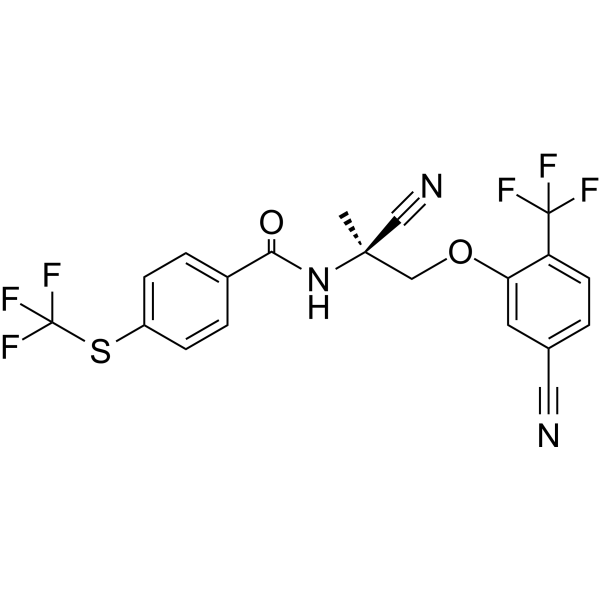
Monepantel (AAD1566, NUZ-001), an antiparasitic agent, is an orally active mTOR inhibitor. Monepantel triggers autophagy through the deactivation of mTOR/p70S6K signalling pathway. Monepantel is a positive allosteric modulator of a nematode-specific clade of nAChR subunits. Monepantel can be used for the study of amyotrophic lateral sclerosis (ALS) and ovarian cancer .
|
-
-
- HY-114332
-
|
|
MAP3K
JNK
|
Neurological Disease
Metabolic Disease
|
|
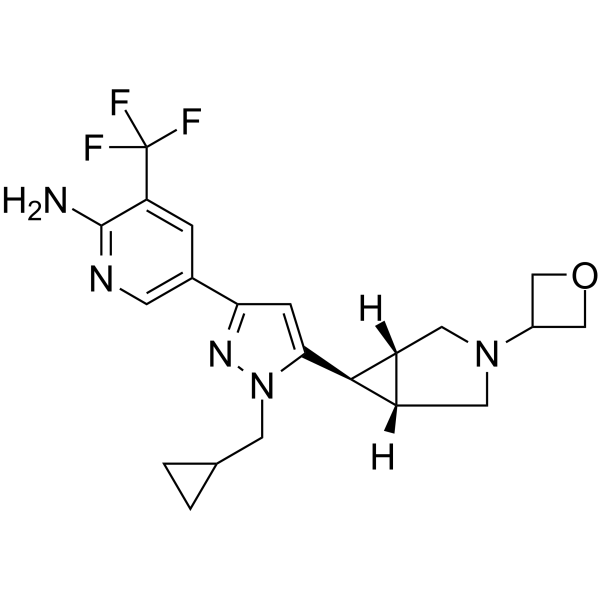
GNE-8505 is an orally active, blood-brain barrier-permeable selective dual leucine zipper kinase (DLK) inhibitor. GNE-8505 has an IC50 of 0.144 μM for pJNK, and EC50 of 0.457 μM for DRG. GNE-8505 inhibits the DLK/JNK pathway, reduces stress-induced c-Jun phosphorylation levels, decreases neuronal death and suppresses axonal degeneration. GNE-8505 reduces phosphorylated c-Jun levels in the retina, spinal cord and brain tissues of mice. GNE-8505 is applicable to research related to Alzheimer's disease and amyotrophic lateral sclerosis (ALS) .
|
-
-
- HY-B1876
-
|
|
Environmental Pollutants
Acetolactate Synthase (ALS)
|
Others
|
|
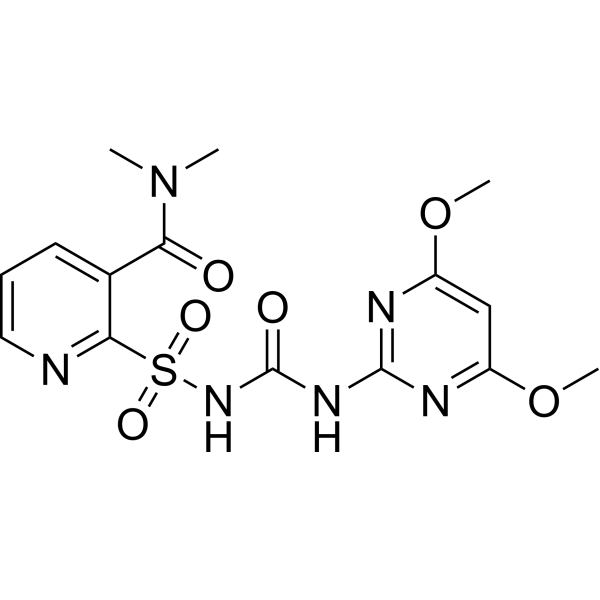
Nicosulfuron is efficient, harmless, antifungal and selective herbicide belonging to the sulfonylurea family. Nicosulfuron is also a photosynthetic system inhibitor and inhibits acetolactate synthase (ALS) enzyme activity. Nicosulfuron degradation by Plectosphaerella cucumerina AR1 is glucose concentration dependent in planktonic lifestyle. Nicosulfuron enhances the glycolysis pathway and tricarboxylic acid cycle to improve the adaptability of sweet maize. Nicosulfuron reduces the synthesis of branched-chain amino acids (BCAAs), which is proming for maize cultivation .
|
-
-
- HY-12983
-
|
|
RSV
|
Infection
|
|
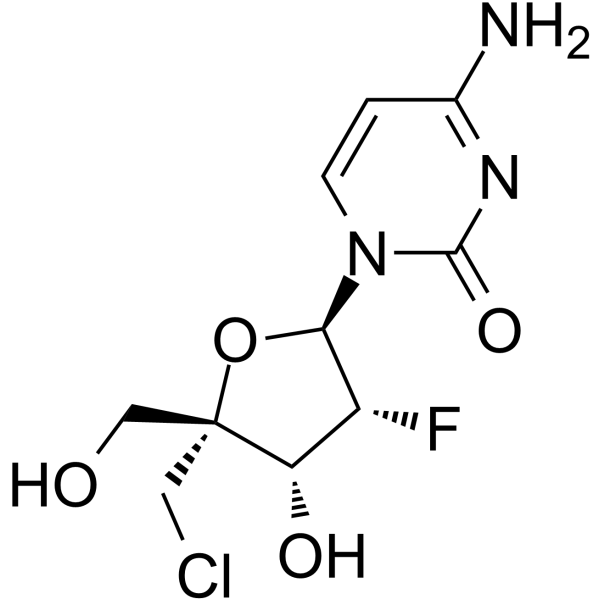
ALS-8112 is a potent and selective respiratory syncytial virus (RSV) polymerase inhibitor. The 5'-triphosphate form of ALS-8112 inhibits RSV polymerase with an IC50 of 0.02 μM.
|
-
-
- HY-B1847
-
-
-
- HY-100427
-
|
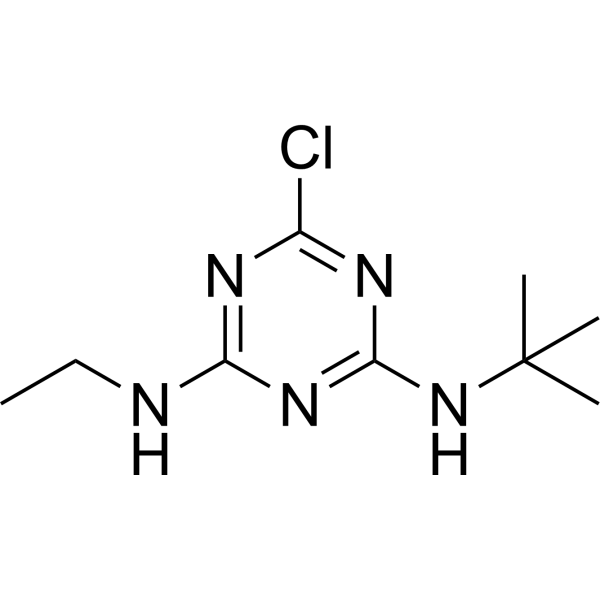
CL29926; (±)-Imazamox
|
Environmental Pollutants
Acetolactate Synthase (ALS)
|
Others
|
|
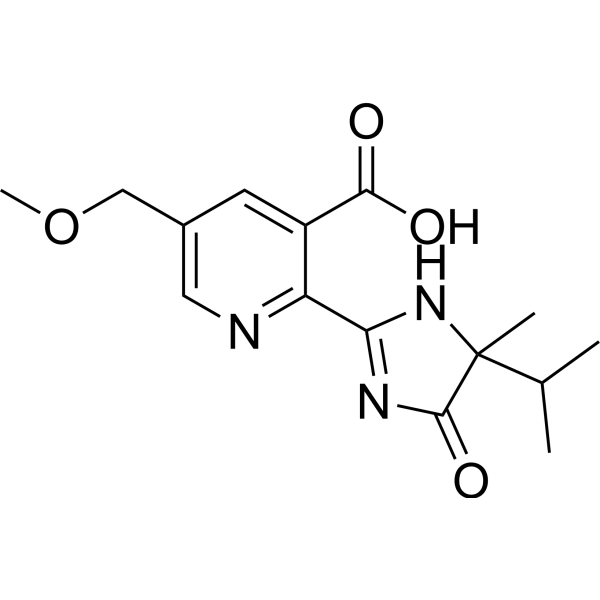
Imazamox (CL29926) is a systemic herbicide that inhibits the production of acetolactate synthase (ALS) in plants with high selectivity, high activity, safety and broadspectrum activity, which would then inhibit plant growth and ultimately lead to plant death .
|
-
-
- HY-144425
-
|
|
NEKs
|
Inflammation/Immunology
|
|
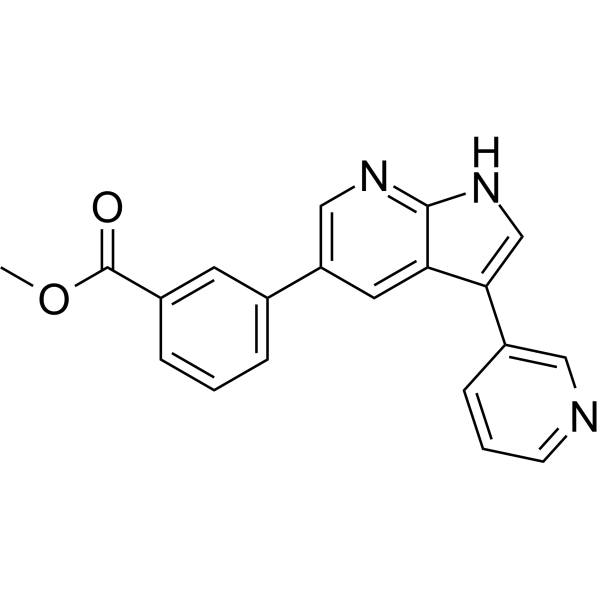
BSc5367 is a potent Nek1 inhibitor with an IC50 of 11.5 nM. NIMA-related protein kinase Nek1 is crucially involved in cell cycle regulation, DNA repair and microtubule regulation and dysfunctions of Nek1 play key roles in amyotrophic lateral sclerosis (ALS), polycystic kidney disease (PKD) and several types of radiotherapy resistant cancer .
|
-
-
- HY-B0869A
-
|
|
Environmental Pollutants
SOD
Acetolactate Synthase (ALS)
Herbicide
|
Metabolic Disease
|
|
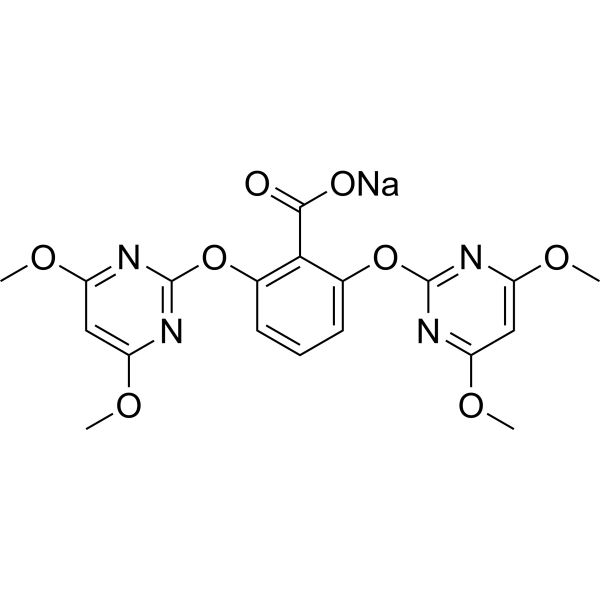
Bispyribac sodium is a selective, orally active, systemic and post-emergence herbicide. Bispyribac sodium reduces SOD levels and inhibits ALS activity. Bispyribac sodium blocks the biosynthesis of branched-chain amino acids, resulting in growth retardation, chlorosis and necrosis of weeds. Bispyribac sodium exerts herbicidal activity against grass, sedge and broadleaf weeds in rice fields. Bispyribac sodium is hepatotoxic and genotoxic .
|
-
-
- HY-W040206
-
|
|
Environmental Pollutants
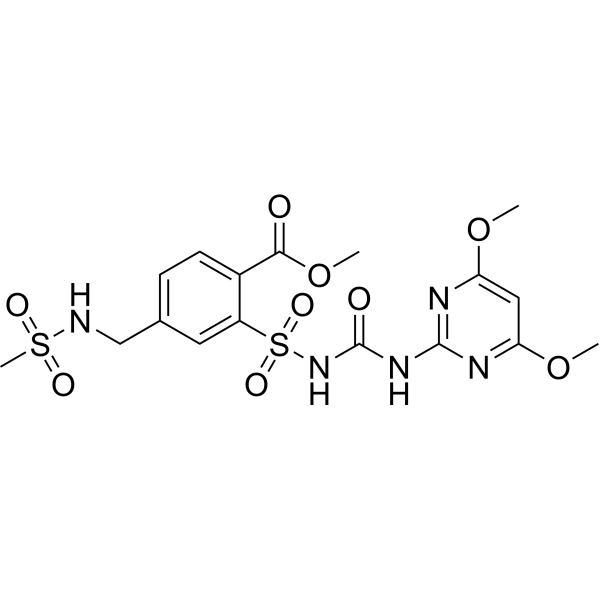
Acetolactate Synthase (ALS)
Herbicide
|
Others
|
|
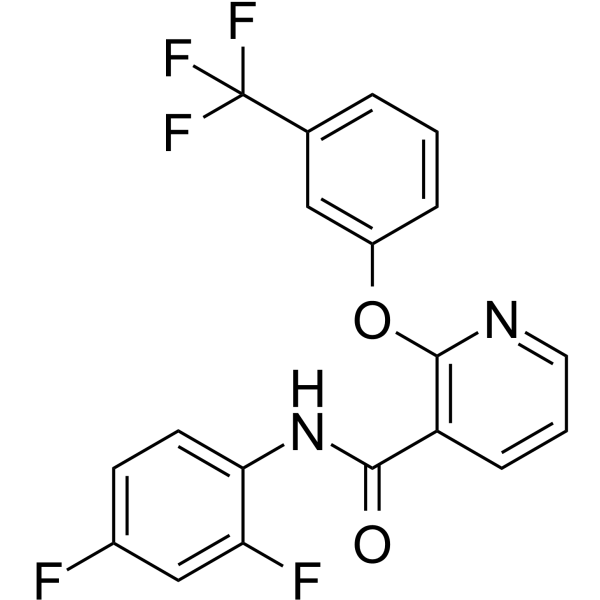
Diflufenican is a Herbicide. Diflufenican inhibits phytoene desaturase (PDS) in the carotenoid synthesis pathway. Diflufenican suppresses the production of PDS, blocks carotenoid biosynthesis, thereby inducing chlorophyll destruction and cell membrane rupture, and ultimately causes the death of broadleaf weeds. The combination of Diflufenican and Flufenacet can be used to control Lolium rigidum populations resistant to ALS/ACCase .
|
-
-
- HY-168972
-
|
Prostetin/12k
|
MAP4K
Mixed Lineage Kinase
|
Neurological Disease
Inflammation/Immunology
|
|
Famlasertib is a potent, brain-penetrant MAP4K inhibitor with IC50s value of 0.3 nM, 23.7 nM, and 44.7 nM for HGK (MAP4K4), MLK3, and MLK1, respectively. Famlasertib shows motor neuron protection and anti-inflammatory properties. Famlasertib can be used for the study of amyotrophic lateral sclerosis (ALS) .
|
-
-
- HY-12983A
-
|
ALS-008176; ALS-8176
|
RSV
|
Infection
|
|
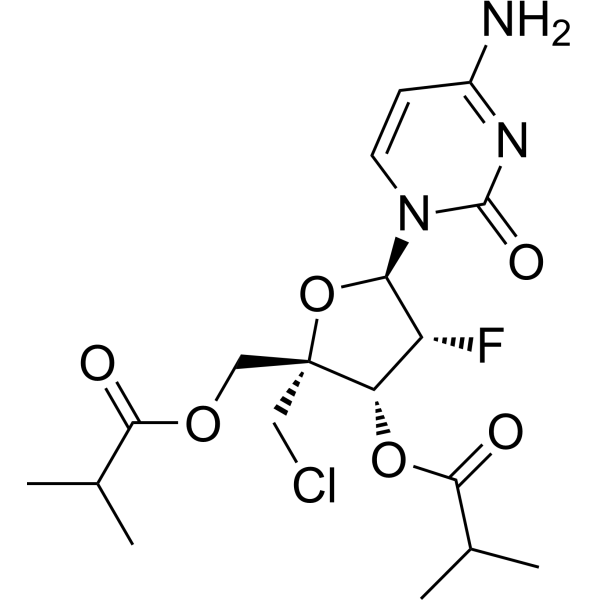
Lumicitabine (ALS-008176) is an inhibitor of the respiratory syncytial virus (RSV) polymerase.
|
-
-
- HY-125999
-
|
|
Reactive Oxygen Species (ROS)
|
Neurological Disease
|
|
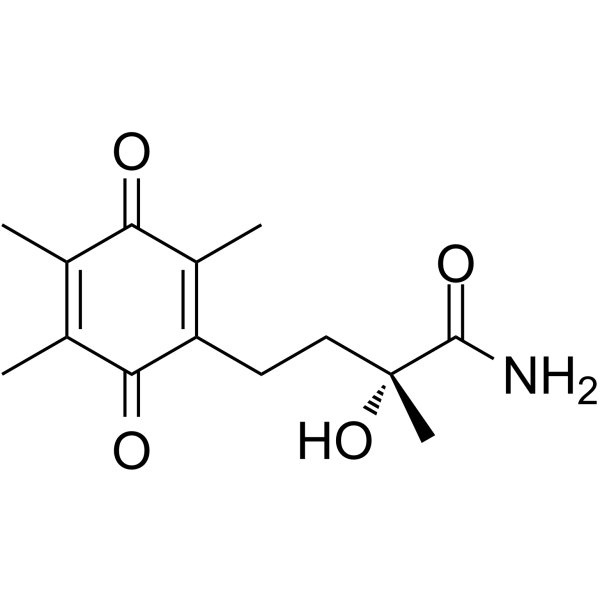
EPI-589, a quinone derivative, is a safe and well tolerated oxidoreductase enzyme inhibitor and a free radical scavenger, with blood-brain barrier permeable and orally available. EPI-589 is a redox-active neuroprotectant that effectively delays the symptoms of motor neuron disease in wobbler mice. EPI-589 can be used in amyotrophic lateral sclerosis (ALS) research .
|
-
-
- HY-126987
-
-
-
- HY-148629
-
|
|
JNK
|
Neurological Disease
|
|
GDC-0134 (RG6000) is a modulator targeting dual leucine zipper kinase (DLK) that can cross the blood-brain barrier. By inhibiting the kinase activity of DLK, GDC-0134 blocks the activation of the downstream JNK signaling pathway, suppresses DLK-dependent retrograde signal transduction of axon-to-soma degeneration, and exerts neuroprotective activity. GDC-0134 reduces TDP-43 protein aggregation and decreases the degree of neuromuscular junction denervation in motor neurons. GDC-0134 can be used in the research of amyotrophic lateral sclerosis (ALS), Alzheimer's disease and other DLK-related neurodegenerative diseases .
|
-
-
- HY-W611371
-
|
|
TRP Channel
iGluR
|
Neurological Disease
|
|
FP802 is an orally active potent TwinF interface inhibitor that disrupts and detoxifies the NMDAR/TRPM4 death complex. FP802 exerts powerful neuroprotective effects in the 5xFAD mouse model of Alzheimer’s disease (AD) by preventing cognitive decline, preserving neuronal structural integrity, reducing amyloid-β plaque formation, and mitigating mitochondrial pathology . FP802 stops loss of motor neurons, reduces serum neurofilament light chain (NfL) levels, improves motor performance, and extends life in a mouse model of amyotrophic lateral sclerosis (ALS). FP802 can be used for AD and ALS research .
|
-
-
- HY-B1852
-
|
|
Bacterial
Fungal
|
Infection
|
|
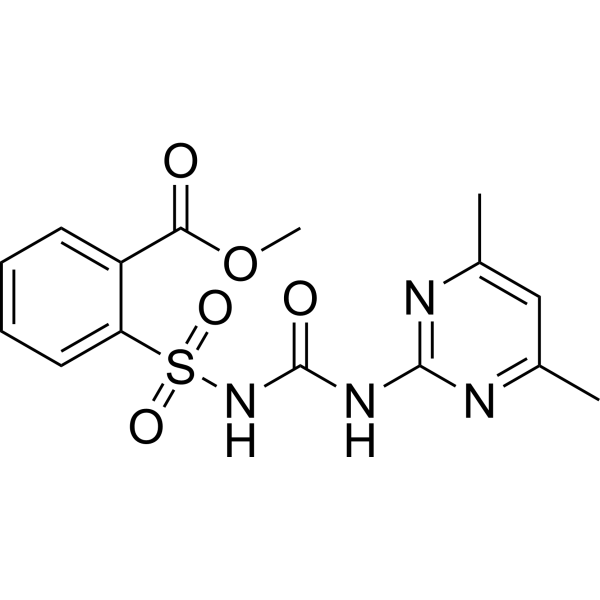
Sulfometuron-methyl is a herbicide and also a powerful inhibitor of the enzyme acetolactate synthase (ALS). It exhibits antibacterial and antifungal activities, capable of inhibiting the activity of Salmonella. typhimurium ALS II and Escherichia. coli ALS III .
|
-
-
- HY-153019
-
|
|
SOD
|
Neurological Disease
|
|
NUCC-0000323 is a potent superoxide dismutase 1 (SOD1) inhibitor. NUCC-0000323 inhibits SOD1 expression. NUCC-0000323 can be used in research of amyotrophic lateral sclerosis (ALS) .
|
-
-
- HY-172967
-
|
|
Toll-like Receptor (TLR)
|
Neurological Disease
|
|
SARM1-IN-5 (compound 1-23-a) is a SARM1 inhibitor. SARM1-IN-5 can be used in the study of axonal degeneration related diseases such as Alzheimer’s disease, Parkinson’s disease, amyotrophic lateral sclerosis (ALS), and multiple sclerosis (MS) .
|
-
-
- HY-123982
-
|
|
SOD
|
Neurological Disease
|
|
SOD1-Derlin-1 inhibitor-2 (compound 56-59) is an inhibitor of SOD1-Derlin-1 interaction. SOD1-Derlin-1 inhibitor-2 attenuates the interactions between Derlin-1 and SOD1 mut. SOD1-Derlin-1 inhibitor-2 can be used for the research of amyotrophic lateral sclerosis (ALS) .
|
-
-
- HY-B1876S
-
|
|
Acetolactate Synthase (ALS)
|
Others
|
|
Nicosulfuron-d6 is the deuterium labeled Nicosulfuron . Nicosulfuron is a selective herbicide belonging to the sulfonylurea family. Nicosulfuron is commonly used as a post-emergence herbicide to protect maize crops from weeds. Nicosulfuron inhibits acetolactate synthase (ALS) enzyme activity .
|
-
-
- HY-100427R
-
|
CL29926 (Standard); (±)-Imazamox (Standard)
|
Reference Standards
Acetolactate Synthase (ALS)
|
Others
|
|
Imazamox (Standard) is the analytical standard of Imazamox. This product is intended for research and analytical applications. Imazamox (CL29926) is a systemic herbicide that inhibits the production of acetolactate synthase (ALS) in plants with high selectivity, high activity, safety and broadspectrum activity, which would then inhibit plant growth and ultimately lead to plant death .
|
-
-
- HY-178732
-
-
-
- HY-P3709
-
|
|
p62
E1/E2/E3 Enzyme
|
Neurological Disease
|
|
TRAF6 peptide is a specific TRAF6-p62 inhibitor. TRAF6 peptide potently abrogates NGF-dependent TrkA ubiquitination. TRAF6 peptide has good research potential in neurological diseases such as alzheimer's disease (AD), parkinson's, ALS, head trauma, epilepsy and stroke .
|
-
-
- HY-W611371A
-
|
|
TRP Channel
iGluR
|
Neurological Disease
|
|
FP802 dihydrochloride is an orally active potent TwinF interface inhibitor that disrupts and detoxifies the NMDAR/TRPM4 death complex. FP802 dihydrochloride exerts powerful neuroprotective effects in the 5xFAD mouse model of Alzheimer’s disease (AD) by preventing cognitive decline, preserving neuronal structural integrity, reducing amyloid-β plaque formation, and mitigating mitochondrial pathology . FP802 dihydrochloride stops loss of motor neurons, reduces serum neurofilament light chain (NfL) levels, improves motor performance, and extends life in a mouse model of amyotrophic lateral sclerosis (ALS) . FP802 dihydrochloride can be used for AD and ALS research .
|
-
-
- HY-B1845
-
|
|
Environmental Pollutants
Herbicide
|
Others
|
|
Florasulam is a targeted post-emergent herbicide belonging to the triazolopyrimidine sulfonanilide class, which functions by inhibiting acetolactate synthase (ALS) in plants. Located in the chloroplasts, ALS plays a crucial role in the biosynthesis of branched-chain amino acids. When Florasulam inhibits ALS, it disrupts plant cell division, reduces growth, and ultimately leads to plant death.
|
-
-
- HY-121727
-
|
AE 1887196; BCS-BX60309
|
Acetolactate Synthase (ALS)
|
Others
|
|
Triafamone (AE 1887196) is a paddy field pre-emergence and post-emergence sulfonamide herbicide. Triafamone weeds by
inhibiting the acetolactate synthase (ALS) enzyme, thereby blocking the biosynthesis of branched-chain amino acids .
|
-
-
- HY-W422402
-
|
|
Acetolactate Synthase (ALS)
Herbicide
|
Others
|
|
Foramsulfuron is a postemergence herbicide used for selective control of grass and some broadleaved weeds in maize (Zea mays L.). Foramsulfuron is a sulfonylurea herbicide that exerts its herbicidal activity by inhibiting acetolactate synthase (ALS), a key enzyme in the biosynthesis of branched chain amino acids .
|
-
-
- HY-B1876R
-
|
|
Reference Standards
Acetolactate Synthase (ALS)
|
Others
|
|
Nicosulfuron (Standard) is the analytical standard of Nicosulfuron. This product is intended for research and analytical applications. Nicosulfuron is a selective herbicide belonging to the sulfonylurea family. Nicosulfuron is commonly used as a post-emergence herbicide to protect maize crops from weeds. Nicosulfuron inhibits acetolactate synthase (ALS) enzyme activity .
|
-
-
- HY-P3709A
-
|
|
p62
E1/E2/E3 Enzyme
|
Neurological Disease
|
|
TRAF6 peptide TFA is a specific TRAF6-p62 inhibitor. TRAF6 peptide TFA potently abrogates NGF-dependent TrkA ubiquitination. TRAF6 peptide TFA has good research potential in neurological diseases such as alzheimer's disease (AD), parkinson's, ALS, head trauma, epilepsy and stroke .
|
-
-
- HY-114898
-
|
|
Mitochondrial Metabolism
|
Cardiovascular Disease
Neurological Disease
|
|
ML404 (Compound 38) is an inhibitor of the mitochondrial permeability transition pore (mtPTP), which can suppress mitochondrial swelling (EC50=4.9 nM) and only disrupts mitochondrial coupling (an adverse effect) at concentrations > 100 μM. ML404 can be utilized in research related to multiple sclerosis (MS), amyotrophic lateral sclerosis (ALS), Alzheimer's disease (AD), muscular dystrophies (MD), myocardial infarction, and stroke .
|
-
-
- HY-179533
-
|
|
SOD
|
Neurological Disease
|
|
SOD1-aggregation-IN-1 (compound 20) is a potent SOD aggregation inhibitor. SOD1-aggregation-IN-1 inhibits MG132 (HY-13259)-induced mutant SOD1 intracellular aggregation in PC12-SOD1 G85R YFP cells with an EC50 of 2.63 μM. SOD1-aggregation-IN-1 can be used for amyotrophic lateral sclerosis (ALS) research .
|
-
-
- HY-146527
-
|
|
Bcr-Abl
|
Neurological Disease
Cancer
|
|
c-ABL-IN-2 is a potent inhibitor of c-Abl. Activation of c-Abl has been implicated in various diseases, notably cancer. c-ABL-IN-2 has the potential for the research of neurodegenerative diseases (amyotrophic lateral sclerosis (ALS) and Parkinson’s disease (PD) and cancer (extracted from patent WO2020260871A1, compound 25) . c-ABL-IN-2 is a click chemistry reagent, it contains an Alkyne group and can undergo copper-catalyzed azide-alkyne cycloaddition (CuAAc) with molecules containing Azide groups.
|
-
-
- HY-B1852R
-
|
|
Bacterial
Reference Standards
Fungal
|
Infection
|
|
Sulfometuron-methyl (Standard) is the analytical standard of Sulfometuron-methyl. This product is intended for research and analytical applications. Sulfometuron-methyl is a herbicide and also a powerful inhibitor of the enzyme acetolactate synthase (ALS). It exhibits antibacterial and antifungal activities, capable of inhibiting the activity of Salmonella. typhimurium ALS II and Escherichia. coli ALS III .
|
-
-
- HY-B1845R
-
|
|
Endogenous Metabolite
Reference Standards
|
Others
|
|
Florasulam (Standard) is the analytical standard of Florasulam. This product is intended for research and analytical applications. Florasulam is a targeted post-emergent herbicide belonging to the triazolopyrimidine sulfonanilide class, which functions by inhibiting acetolactate synthase (ALS) in plants. Located in the chloroplasts, ALS plays a crucial role in the biosynthesis of branched-chain amino acids. When Florasulam inhibits ALS, it disrupts plant cell division, reduces growth, and ultimately leads to plant death.
|
-
-
- HY-W662572
-
|
|
Acetolactate Synthase (ALS)
|
Others
|
|
Pyroxsulam is a selective, foliar-applied acetolactate synthase (ALS)-inhibiting herbicide. Pyroxsulam can be used for the study of grassy weed management in winter wheat systems .
|
-
-
- HY-112785
-
|
|
Herbicide
Acetolactate Synthase (ALS)
|
Others
|
|
Pyriftalid is one of the most commonly used herbicides that inhibits the synthesis of acetyl lactate synthase (ALS). Pyriftalid is mainly used to prevent poaceae weeds and some broadleaf weeds in paddy fields .
|
-
-
- HY-B1847S1
-
-
-
- HY-162303
-
|
|
Monoamine Oxidase
|
Neurological Disease
|
|
C175-0062 is a monoamine oxidase B (MAO-B) inhibitor. C175-0062 can be used for the research of neurodegenerative disorders, including Parkinson's disease (PD), Alzheimer’s disease (AD), and amyotrophic lateral sclerosis (ALS) .
|
-
-
- HY-126987R
-
|
|
Acetolactate Synthase (ALS)
Reference Standards
|
Others
|
|
Mesosulfuron-methyl (Standard) is the analytical standard of Mesosulfuron-methyl. This product is intended for research and analytical applications. Mesosulfuron-methyl is a sulfonylurea herbicide that inhibits acetolactate synthase (ALS) and is used in research for post-emergence control of ryegrass and Avena spp. (wild oat) in wheat fields .
|
-
-
- HY-B1847R
-
|
|
Reference Standards
Herbicide
Acetolactate Synthase (ALS)
|
Others
|
|
Terbuthylazine (Standard) is the analytical standard of Terbuthylazine (HY-B1847). This product is intended for research and analytical applications. Terbuthylazine is an inhibitor of acetolactate syntase (ALS), is a selective herbicide. Terbuthylazine blocks electron transport in photosystem II via interaction with the D1-protein.
|
-
-
- HY-100427S
-
|
CL29926-13C,d3; (±)-Imazamox-13C,d3
|
Acetolactate Synthase (ALS)
Isotope-Labeled Compounds
|
Others
|
|
Imazamox- 13C,d3 is the 13C- and deuterium labeled Imazamox. Imazamox (CL29926) is a systemic herbicide that inhibits the production of acetolactate synthase (ALS) in plants with high selectivity, high activity, safety and broadspectrum activity, which would then inhibit plant growth and ultimately lead to plant death .
|
-
-
- HY-168269
-
|
|
JAK
|
Cancer
|
|
Tyk2-IN-20 (Example 289) is a potent Tyk2 inhibitor with an IC50 of <5 nM. Tyk2-IN-20 als inhibits JAK1, JAK2, and JAK3 with IIC50 values of <100 nM. Tyk2-IN-20 can be used for the study of inflammatory diseases .
|
-
-
- HY-N2707
-
|
|
Reactive Oxygen Species (ROS)
|
Neurological Disease
Cancer
|
|
6-Deoxyjacareubin is a natural xanthone, that can be isolated from the leaves of Vismia latifolia. 6-Deoxyjacareubin protects against non-apoptotic cell death by inhibiting ROS production. 6-Deoxyjacareubin ameliorates neurodegeneration in a mouse model of familial amyotrophic lateral sclerosis (ALS) .
|
-
-
- HY-112785R
-
|
|
Reference Standards
Herbicide
Acetolactate Synthase (ALS)
|
Others
|
|
Pyriftalid (Standard) is the analytical standard of Pyriftalid (HY-112785). This product is intended for research and analytical applications. Pyriftalid is one of the most commonly used herbicides that inhibits the synthesis of acetyl lactate synthase (ALS). Pyriftalid is mainly used to prevent poaceae weeds and some broadleaf weeds in paddy fields .
|
-
-
- HY-114270
-
|
|
GSK-3
|
Neurological Disease
|
|
JGK-263 is an orally active Glycogen synthase kinase-3β (GSK-3β) inhibitor. JGK-263 exhibits neuroprotective effect and can improve motor function. JGK-263 can be used for the research of neurological disease, such as amyotrophic lateral sclerosis (ALS) .
|
-
-
- HY-W422402R
-
|
|
Reference Standards
Acetolactate Synthase (ALS)
|
Others
|
|
Foramsulfuron (Standard) is the analytical standard of Foramsulfuron. This product is intended for research and analytical applications. Foramsulfuron is a postemergence herbicide used for selective control of grass and some broadleaved weeds in maize (Zea mays L.). Foramsulfuron is a sulfonylurea herbicide that exerts its herbicidal activity by inhibiting acetolactate synthase (ALS), a key enzyme in the biosynthesis of branched chain amino acids .
|
-
-
- HY-146528
-
|
|
Bcr-Abl
|
Neurological Disease
Cancer
|
|
c-ABL-IN-3 is a potent inhibitor of c-Abl. Activation of c-Abl has been implicated in various diseases, notably cancer. c-ABL-IN-3 has the potential for the research of neurodegenerative diseases (amyotrophic lateral sclerosis (ALS) and Parkinson’s disease (PD) and cancer (extracted from patent WO2021048567A1, compound 50) .
|
-
-
- HY-W721637
-
|
|
Isotope-Labeled Compounds
Acetolactate Synthase (ALS)
|
Others
|
|
Foramsulfuron-d6-1 is the deuterium labeled Foramsulfuron (HY-W422402). Foramsulfuron is a postemergence herbicide used for selective control of grass and some broadleaved weeds in maize (Zea mays L.). Foramsulfuron is a sulfonylurea herbicide that exerts its herbicidal activity by inhibiting acetolactate synthase (ALS), a key enzyme in the biosynthesis of branched chain amino acids .
|
-
-
- HY-146530
-
|
|
Bcr-Abl
|
Neurological Disease
Cancer
|
|
c-ABL-IN-4 is a potent inhibitor of c-Abl. Activation of c-Abl has been implicated in various diseases, notably cancer. c-ABL-IN-4 has the potential for the research of neurodegenerative diseases (amyotrophic lateral sclerosis (ALS) and Parkinson’s disease (PD) and cancer (extracted from patent WO2021048567A1, compound 54) .
|
-
-
- HY-145294
-
|
|
ROCK
|
Neurological Disease
|
|
ROCK2-IN-5 (compound 1d) is a hybrid compound containing structural fragments of the Rho kinase inhibitor fasudil and the NRF2 inducers caffeic and ferulic acids. ROCK2-IN-5 has good multitarget profile and good tolerability. ROCK2-IN-5 has the potential for thr research of Amyotrophic lateral sclerosis (ALS) with a SOD1 mutation .
|
-
- HY-B0869AR
-
|
|
Reference Standards
Acetolactate Synthase (ALS)
SOD
|
Metabolic Disease
|
|
Bispyribac (sodium) (Standard) is the analytical standard of Bispyribac sodium (HY-B0869A). This product is intended for research and analytical applications. Bispyribac sodium is a selective, orally active, systemic and post-emergence herbicide. Bispyribac sodium reduces SOD levels and inhibits ALS activity. Bispyribac sodium blocks the biosynthesis of branched-chain amino acids, resulting in growth retardation, chlorosis and necrosis of weeds. Bispyribac sodium exerts herbicidal activity against grass, sedge and broadleaf weeds in rice fields. Bispyribac sodium is hepatotoxic and genotoxic .
|
-
- HY-162922
-
|
|
MAP4K
JNK
|
Neurological Disease
|
|
MAP4K4-IN-6 (Compound 15f) is a MAP4K4 inhibitor (IC50: 80 nM). MAP4K4-IN-6 reduces the c-Jun phosphorylation. MAP4K4-IN-6 has neuroprotective effects. MAP4K4-IN-6 increases the viability of motor neurons. MAP4K4-IN-6 can be used for research of Amyotrophic lateral sclerosis (ALS) .
|
-
- HY-135713
-
|
|
Herbicide
Acetolactate Synthase (ALS)
Fungal
|
Infection
|
|
Penoxsulam is an acetolactate synthase (ALS) inhibitor herbicide. Penoxsulam inhibits Candida auris acetohydroxyacid synthase (AHAS) with a Ki value of <32 nM. Penoxsulam can be used for postemergence control of annual grasses, sedges, and broadleaf weeds in rice culture. Penoxsulam can be used for the study of Candida auris infections .
|
-
- HY-12983B
-
|
|
Drug Metabolite
DNA/RNA Synthesis
|
Infection
|
|
ALS-8112-TP is the 5'-triphosphate metabolite of ALS-8112 (HY-12983). ALS-8112-TP is a potent, selective and competitive respiratory syncytial virus (RSV) RNA polymerase inhibitor, with selectivity against polymerases from host or viruses unrelated to RSV such as hepatitis C virus (HCV). ALS-8112-TP can be efficiently recognized by the recombinant RSV polymerase complex, causing chain termination of RNA synthesis. ALS-8112-TP can be used for RSV-infection research .
|
-
- HY-125945
-
|
|
Herbicide
|
Others
|
|
Monosulfuron is a potent herbicide agent. Monosulfuron is an acetolactate synthase (ALS) inhibitor with an IC50 of 32 nmol/L against CAU 3138 .
|
-
- HY-W753723
-
|
|
Herbicide
HPPD
|
Others
|
|
Biscarfentrazone is a HPPD-inhibiting herbicide for wheat fields, which can effectively control ALS-resistant broadleaf weeds and is safe to wheat .
|
-
- HY-W708945
-
|
|
Herbicide
Acetolactate Synthase (ALS)
|
Others
|
|
Metazosulfuron is an acetolactate synthase (ALS)-inhibiting herbicide. Metazosulfuron provides complete control of pondweed (Potamogeton nodosus) and prevents its regrowth in transplanted rice ecosystems. Metazosulfuron contributes to increased rough rice grain .
|
-
- HY-125945R
-
|
|
Herbicide
Reference Standards
|
Others
|
|
Monosulfuron (Standard) is the analytical standard of Monosulfuron. This product is intended for research and analytical applications. Monosulfuron is a potent herbicide agent. Monosulfuron is an acetolactate synthase (ALS) inhibitor with an IC50 of 32 nmol/L against CAU 3138 .
|
-
- HY-B1847S
-
-
- HY-W721333
-
|
|
Herbicide
Acetolactate Synthase (ALS)
|
Others
|
|
Pyrimisulfan is a potent acetolactate synthase (ALS) inhibitor and a broad‑spectrum herbicide. Pyrimisulfan selectively inhibits plant acetolactate synthase. Pyrimisulfan controls a wide spectrum of paddy weeds including annual grasses, sedges, broadleaf weeds, and sulfonylurea‑resistant biotypes pre‑ and postemergence, with long residual activity and excellent rice safety. Pyrimisulfan can be used for research on paddy herbicides .
|
-
- HY-172967A
-
|
|
Toll-like Receptor (TLR)
|
Neurological Disease
Inflammation/Immunology
|
|
(R)-SARM1-IN-5 is the (R)-enantiomer of SARM1-IN-5 (HY-172967). SARM1-IN-5 (compound 1-23-a) is a SARM1 inhibitor. SARM1-IN-5 can be used in the study of axonal degeneration related diseases such as Alzheimer’s disease, Parkinson’s disease, amyotrophic lateral sclerosis (ALS), and multiple sclerosis (MS) .
|
-
- HY-175699
-
|
|
Fungal
|
Infection
|
|
Antimicrobial agent-42 (Compound 6j) is an antimicrobial agent. Antimicrobial agent-42 interacts with key amino acids such as Lys59 and Ser170 within the ALS3 protein, crucial for the binding of host peptides. Antimicrobial agent-42 significantly inhibits Candida albicans biofilm formation and reduces planktonic cells aggregation and hyphal formation. Antimicrobial agent-42 has an antifungal activity, promising for fungal infections reseach .
|
-
- HY-182304
-
|
|
Amyloid-β
α-synuclein
Amylin Receptor
Tau Protein
SOD
|
Neurological Disease
|
|
CLR01 sodium is a blood-brain barrier-permeable anti-aggregation agent. CLR01 sodium inhibits the de novo aggregation of Amyloid-β 40/42, α-synuclein, IAPP, tau protein and SOD1. CLR01 sodium reduces amyloid plaque burden in the cortex of triple-transgenic mice and improves the memory and motor abilities of these mice. CLR01 sodium can be used in research related to Alzheimer's disease, Parkinson's disease, and amyotrophic lateral sclerosis (ALS) .
|
-
- HY-W040279
-
|
|
Herbicide
Acetolactate Synthase (ALS)
|
Others
|
|
Prosulfuron is a fluorinated sulfonylurea herbicide with a reported acute oral LD50 of 546 mg/kg in female rats. Prosulfuron acts by inhibiting acetolactate synthase (ALS) to block the biosynthesis of branched-chain amino acids (valine, leucine and isoleucine) in plants, thereby suppressing weed growth. Prosulfuron may disrupt the soil microbial community balance in alkaline soils with minimal chemical degradation. Prosulfuron has low toxicity to humans and mammals, and can be used for the research of broadleaf weed control in maize and sweet corn .
|
-
-
-
HY-L010
-
|
|
1,063 compounds
|
|
MAPK families play an important role in complex cellular programs like proliferation, differentiation, development, transformation, and apoptosis. In mammalian cells, four MAPK families have been clearly characterized: ERK1/2, C-Jun N-terminal kinse/stress-activated protein kinase (JNK/SAPK) , p38 kinase and ERK5. They respond to different signals. Each MAPK-related cascade consists of three enzymes that are activated in series: a MAPK kinase kinase (MAPKKK), a MAPK kinase (MAPKK) and a MAP kinase (MAPK). MAPK signaling pathways has been implicated in the development of many human diseases including Alzheimer's disease (AD), Parkinson's disease (PD), amyotrophic lateral sclerosis (ALS) and various types of cancers.
MCE designs a unique collection of 1,063 MAPK signaling pathway inhibitors that act as a useful tool for MAPK-related drug screening and disease research.
|
| Cat. No. |
Product Name |
Target |
Research Area |
-
- HY-P3709
-
|
|
p62
E1/E2/E3 Enzyme
|
Neurological Disease
|
|
TRAF6 peptide is a specific TRAF6-p62 inhibitor. TRAF6 peptide potently abrogates NGF-dependent TrkA ubiquitination. TRAF6 peptide has good research potential in neurological diseases such as alzheimer's disease (AD), parkinson's, ALS, head trauma, epilepsy and stroke .
|
-
- HY-P3709A
-
|
|
p62
E1/E2/E3 Enzyme
|
Neurological Disease
|
|
TRAF6 peptide TFA is a specific TRAF6-p62 inhibitor. TRAF6 peptide TFA potently abrogates NGF-dependent TrkA ubiquitination. TRAF6 peptide TFA has good research potential in neurological diseases such as alzheimer's disease (AD), parkinson's, ALS, head trauma, epilepsy and stroke .
|
| Cat. No. |
Product Name |
Category |
Target |
Chemical Structure |
| Cat. No. |
Product Name |
Chemical Structure |
-
- HY-B1876S
-
|
|
|
Nicosulfuron-d6 is the deuterium labeled Nicosulfuron . Nicosulfuron is a selective herbicide belonging to the sulfonylurea family. Nicosulfuron is commonly used as a post-emergence herbicide to protect maize crops from weeds. Nicosulfuron inhibits acetolactate synthase (ALS) enzyme activity .
|
-
-
- HY-B1847S1
-
|
|
|
Terbuthylazine-d5 is the deuterium labeled Terbuthylazine (HY-B1847) . Terbuthylazine is an inhibitor of acetolactate syntase (ALS), is a selective herbicide. Terbuthylazine blocks electron transport in photosystem II via interaction with the D1-protein.
|
-
-
- HY-100427S
-
|
|
|
Imazamox- 13C,d3 is the 13C- and deuterium labeled Imazamox. Imazamox (CL29926) is a systemic herbicide that inhibits the production of acetolactate synthase (ALS) in plants with high selectivity, high activity, safety and broadspectrum activity, which would then inhibit plant growth and ultimately lead to plant death .
|
-
-
- HY-W721637
-
|
|
|
Foramsulfuron-d6-1 is the deuterium labeled Foramsulfuron (HY-W422402). Foramsulfuron is a postemergence herbicide used for selective control of grass and some broadleaved weeds in maize (Zea mays L.). Foramsulfuron is a sulfonylurea herbicide that exerts its herbicidal activity by inhibiting acetolactate synthase (ALS), a key enzyme in the biosynthesis of branched chain amino acids .
|
-
-
- HY-B1847S
-
|
|
|
Terbuthylazine-d9 is the deuterium labeled Terbuthylazine (HY-B1847). Terbuthylazine is an inhibitor of acetolactate syntase (ALS), is a selective herbicide. Terbuthylazine blocks electron transport in photosystem II via interaction with the D1-protein.
|
-
Your information is safe with us. * Required Fields.
Inquiry Information
- Product Name:
- Cat. No.:
- Quantity:
- MCE Japan Authorized Agent:

