

15 Results for "

AM ester form

" in MedChemExpress (MCE) Product Catalog:
Products (15)

15 Results for "AM ester form" in MCE Product Catalog:

10
10 Publications Verification
Cat. No.: HY-D0973
CAS No.: 99590-86-0
Synonyms: EGTA Acetoxymethyl ester
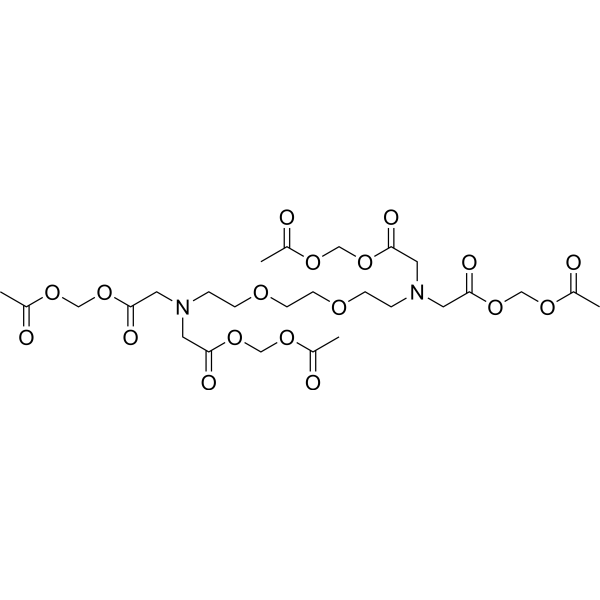
EGTA-AM is a membrane permeable form of EGTA, can be passively loaded into cells to generate intracellular EGTA; EGTA-AM is also a Ca 2+ chelator with slow chelating dynamics.
loading...
    loading...
2
2 Cited Publications
Cat. No.: HY-D1746
CAS No.: 162303-59-5
Synonyms: EDTA acetoxymethyl ester; EthylenediAMinetetraacetic acid acetoxymethyl ester
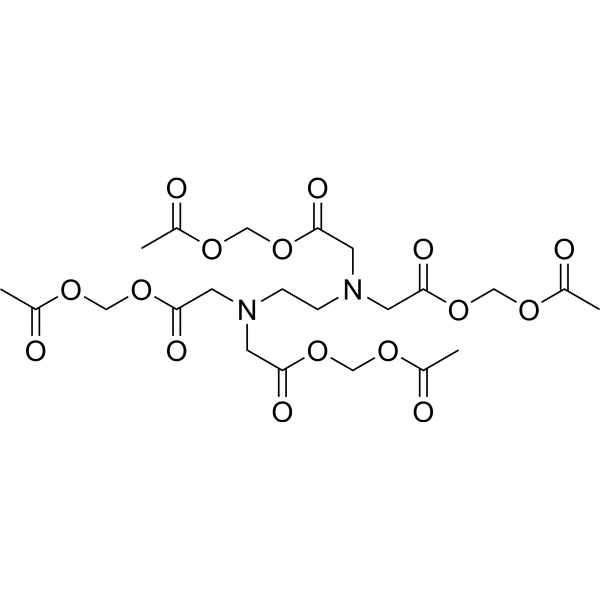
EDTA-AM (ethylenediaminetetraacetic acid, acetoxymethyl ester) is the membrane-permeant form of the metal chelator EDTA (HY-Y0682). Live cells passively load EDTA-AM by incubating with EDTA-AM. Once internalized, cytoplasmic esterase decomposes AM esters, releasing the active ligand EDTA, which isolates metal ions within the cell. EDTA-AM induces an arrest of mitotic progression and chromosome decondensation .
loading...
    loading...
1
1 Cited Publications
Cat. No.: HY-101898
CAS No.: 112926-02-0
Purity:  96%
Synonyms: Indo-1 Acetoxymethyl ester
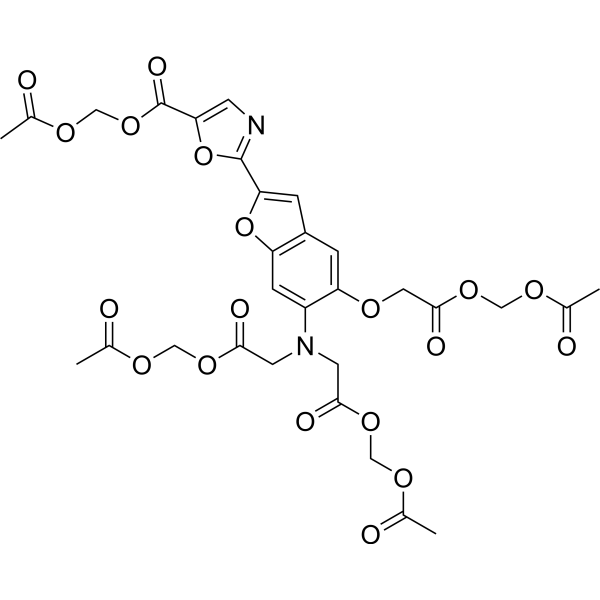
Calcium is an important part of the human body, usually in the form of calcium, a large number of bones and teeth of the human body, a small amount of blood and tissues. MCE calcium ion detection probe can specifically identify intracellular calcium ions, with high sensitivity, low cytotoxicity, increased AM acetylmethyl ester can enter the cell well, after being sheared by the intracellular esterase stay in the cell to bind to calcium ions, produce strong fluorescence, in addition, Mag-indo-1/AM and Mag-Fluo-4 AM at a certain concentration (usually 5 mM) can effectively identify intracellular magnesium ions .
loading...
    loading...
Cat. No.: HY-126220
CAS No.: 1372642-77-7
Target:  

Fluorescent Dye

Research Areas:  

Others

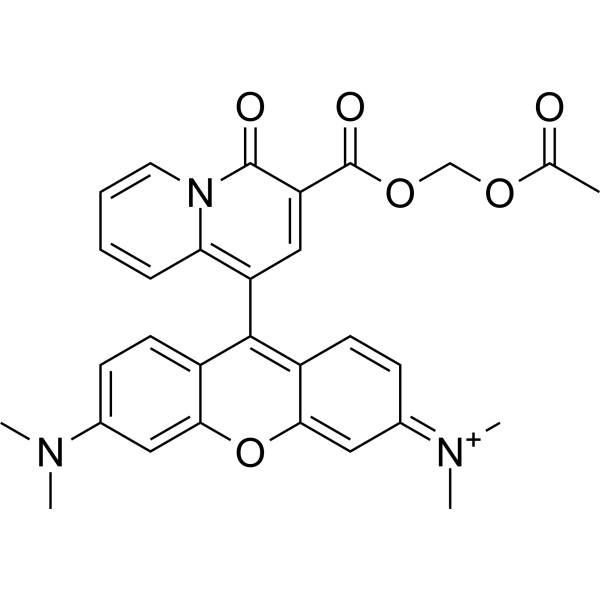
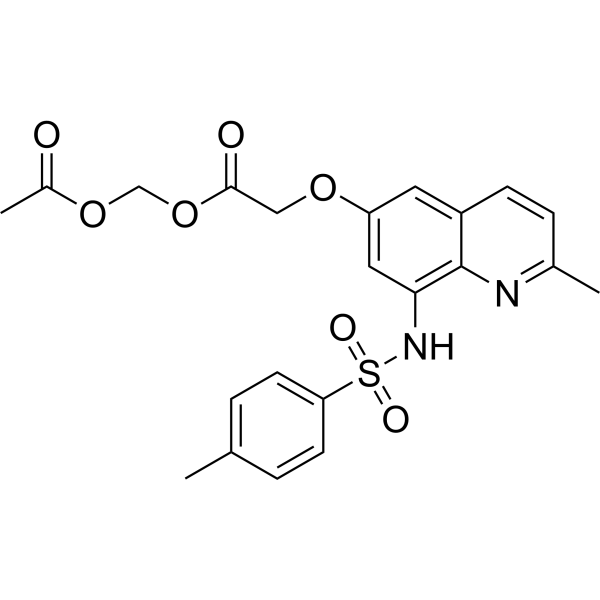
KMG-301AM is the acetoxy methyl esterified form of KMG-301. KMG-301AM successfully accumulates in mitochondria and then it is hydrolyzed to KMG-301. KMG-301 is an Mg 2+-selective fluorescent probe functional in mitochondria in intact cells. Since the mitochondrial membrane is impermeable to KMG-301, it is not released upon depolarization of the mitochondrial membrane potential. KMG-301 can indicate changes in mitochondrial Mg2+ concentration and shows Mg 2+ transport across the mitochondrial membrane in the early phases of a cellular model .
loading...
    loading...
Cat. No.: HY-126220A
CAS No.: 1372642-78-8
Purity:  95.02%
Target:  

Fluorescent Dye

Research Areas:  

Others

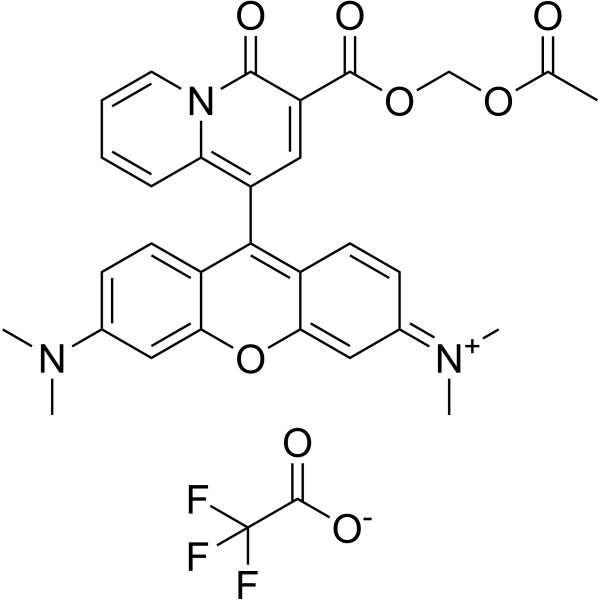
KMG-301AM TFA is the acetoxy methyl esterified form of KMG-301. KMG-301AM TFA successfully accumulates in mitochondria and then it is hydrolyzed to KMG-301. KMG-301 is an Mg 2+-selective fluorescent probe functional in mitochondria in intact cells. Since the mitochondrial membrane is impermeable to KMG-301, it is not released upon depolarization of the mitochondrial membrane potential. KMG-301 can indicate changes in mitochondrial Mg2+ concentration and shows Mg 2+ transport across the mitochondrial membrane in the early phases of a cellular model .
loading...
    loading...
Cat. No.: HY-134345
CAS No.: 272445-72-4
Synonyms: 8-(4-Chlorophenylthio)-cGMP-AM
Target:  

PKG

Research Areas:  

Neurological Disease

8-pCPT-cGMP-AM (8-(4-Chlorophenylthio)-cGMP-AM) is a highly membrane permeable prodrug of the PKG agonist 8-pCPT-cGMP, which increases the membrane permeability of cGMP and is converted to its active form by esterase hydrolysis within the cell, thereby activating PKG. 8-pCPT-cGMP-AM can be used to explore the role of cGMP signaling in neural plasticity and memory formation .
loading...
    loading...
Cat. No.: HY-D1441
CAS No.: 181530-16-5
Target:  

Fluorescent Dye

Research Areas:  

Others

Zinquin AM ester is an AM ester form of Zinquin. Zinquin, a fluorescent dye, is a commonly used sensor for cellular Zn 2+ status .
loading...
    loading...
Cat. No.: HY-D1701
CAS No.: 130100-20-8
Calcium is an important part of the human body, usually in the form of calcium, a large number of bones and teeth of the human body, a small amount of blood and tissues. MCE calcium ion detection probe can specifically identify intracellular calcium ions, with high sensitivity, low cytotoxicity, increased AM acetylmethyl ester can enter the cell well, after being sheared by the intracellular esterase stay in the cell to bind to calcium ions, produce strong fluorescence, in addition, Mag-indo-1/AM and Mag-Fluo-4 AM at a certain concentration (usually 5 mM) can effectively identify intracellular magnesium ions .
loading...
    loading...
Cat. No.: HY-103336
CAS No.: 1186195-59-4
Synonyms: T1117
Research Areas:  

Cardiovascular Disease

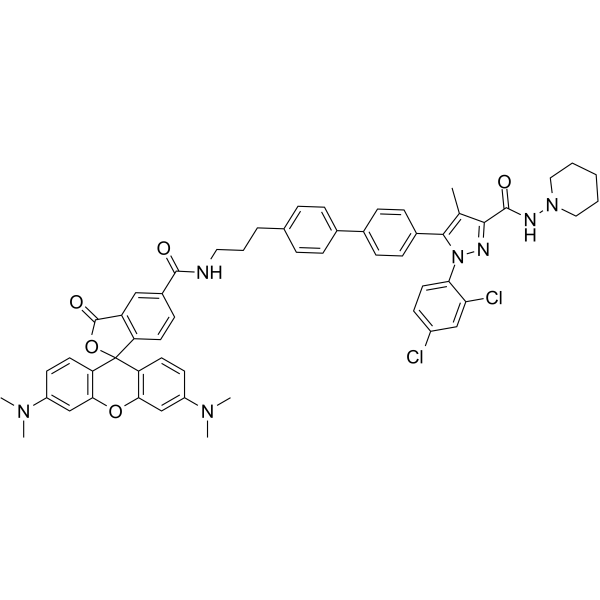
Tocrifluor 1117 (T1117), a fluorescent form of the cannabinoid CB1 receptor antagonist AM251 (HY-15443), is a selective fluorescent GPR55 ligand. Tocrifluor 1117 is a potent tool for identifying the cellular location of cannabinoid receptors (including GPR55 in living tissues) (Ex/Em=543/590 nm) .
loading...
    loading...
Cat. No.: HY-D1636
CAS No.: 124251-83-8
Target:  

Fluorescent Dye

Research Areas:  

Others

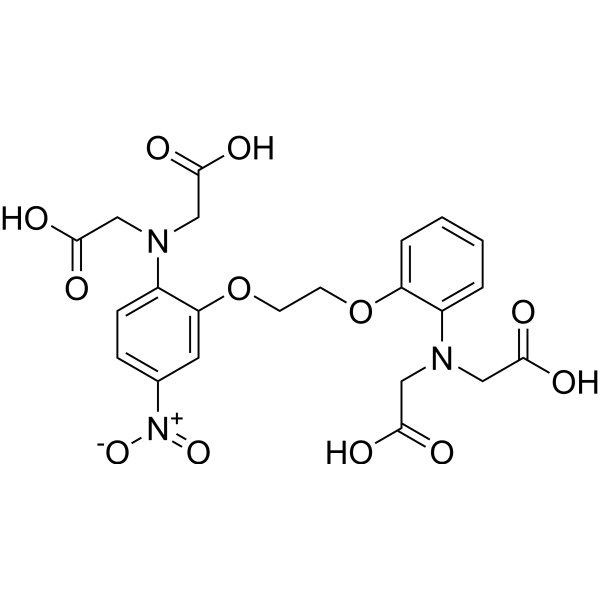
5-Nitro BAPTA is a calcium chelator, combinded with 2-Me-substituted TM ( as a fluorescent moiety), can be used to form a red fluorescent probe (CaTM-2 AM), for imaging of cytoplasmic Ca 2+ in cultured living cells. 5-Nitro BAPTA is a building block used in the synthesis of Ca 2+ specific chelators, Ca 2+ buffers, and fluorescent Ca 2+ indicators .
loading...
    loading...
Cat. No.: HY-D1637
CAS No.: 172646-43-4
Target:  

Fluorescent Dye

Research Areas:  

Others

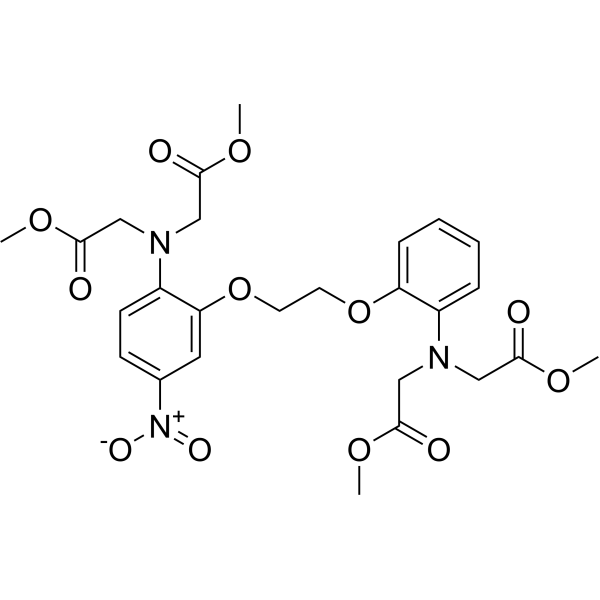
5-Nitro BAPTA tetramethyl ester is a calcium chelator. 5-Nitro BAPTA tetramethyl ester involves in the two-photon probe synthesis, and is used for real-time imaging of intracellular calcium ions, calcium waves monitoring at a depth of 100-300 μm in liver tissues for 1100-4000 s. 5-Nitro BAPTA tetramethyl ester, together with fluorescent compound 2-Me-substituted TM, can be used to form a red fluorescent probe (CaTM-2 AM) .
loading...
    loading...
Cat. No.: HY-164985A
Target:  

DNA/RNA Synthesis

Research Areas:  

Others

m3227G(5)ppp(5')Am triammonium is the triammonium salt form of m3227G(5)ppp(5')Am (HY-164985). m3227G(5)ppp(5')Am is a specific mRNA molecule structure, which is composed of a 3227-methylguanine (m3227G) cap, a triphosphate group and a 2'-O-methyladenosine. Am is a reversible modification located on the first coding nucleotide near the 5' cap of mRNA, that can affect the stability of mRNA .
loading...
    loading...
Cat. No.: HY-164986A
Target:  

DNA/RNA Synthesis

Research Areas:  

Others

m3227G(5)ppp(5')m6Am triammonium is the triammonium salt form of m3227G(5)ppp(5')m6Am (HY-164986). m3227G(5)ppp(5')m6Am triammonium is a specific mRNA molecule structure, which is composed of a 3227-methylguanine (m3227G) cap, a triphosphate group and a N6,2'-O-dimethyladenosine. m6Am is a reversible modification located on the first coding nucleotide near the 5' cap of mRNA, that can affect the stability of mRNA .
loading...
    loading...
Cat. No.: HY-161062
Target:  

EAAT

Research Areas:  

Neurological Disease

TAOA AM Ester trimethyl lock is a high-affinity fluorescent prodrug-like inhibitor of the excitatory amino acid transporter (EAAT). It can penetrate the cell membrane and be activated by hydrolysis by endogenous cell esterases to form active EAAT inhibitors. TAOA AM Ester trimethyl lock can be used to study neurodegeneration and neuronal cell death .
loading...
    loading...
Cat. No.: HY-126565
CAS No.: 75956-68-2
Research Areas:  

Others

Licam-C is a promising radiological decontaminant agent. Acting as a chelating agent, LICAM-C forms stable complexes with radioactive elements such as Plutonium (Pu) and Americium (Am). Licam-C is employed in research addressing the remediation of radioactive nucleotide contamination .
loading...
    loading...
  • 1

