
1. Search Result
Search Result
Results for "

Acid secretion-IN-1

" in MedChemExpress (MCE) Product Catalog:

19

Inhibitors & Agonists

7

Peptides

1

Isotope-Labeled Compounds

1

Click Chemistry

Cat. No. Product Name Target Research Areas Chemical Structure
  • HY-116429
    Maresin 1
    Maximum Cited Publications
    6 Publications Verification

    Reactive Oxygen Species (ROS) Inflammation/Immunology
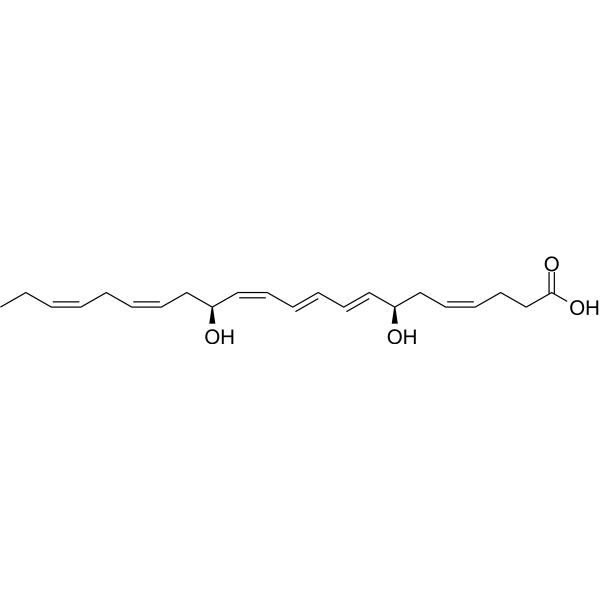
    Maresin 1, produced by human Mφs from endogenous docosahexaenoic acid (DHA) and a specialized proresolving mediator, stimulates intracellular [Ca 2+] and secretion. Maresin 1 possesses anti-inflammatory activity .
    Maresin 1
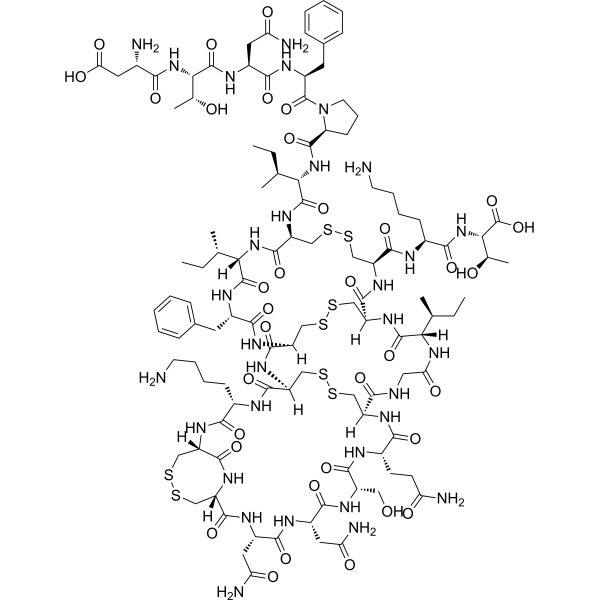
  • HY-P4373A
    Hepcidin-1 (mouse) TFA
    1 Publications Verification

    Cathepsin MMP Inflammation/Immunology
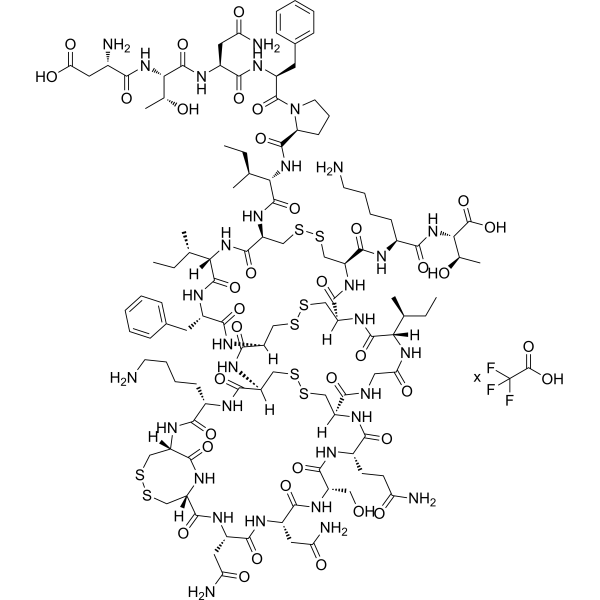
    Hepcidin-1 (mouse) TFA is an endogenous peptide hormone involved in the regulation of iron homeostasis. Hepcidin-1 (mouse) TFA upregulates mRNA levels of TRAP, cathepsin K, and MMP-9 and increases TRAP-5b protein secretion. Hepcidin-1 (mouse) TFA downregulates the level of FPN1 protein and increases intracellular iron. Hepcidin-1 (mouse) TFA facilitates osteoclast differentiation .
    Hepcidin-1 (mouse) TFA
  • HY-P2416

    Rat GastrIN-17

    Cholecystokinin Receptor Endocrinology
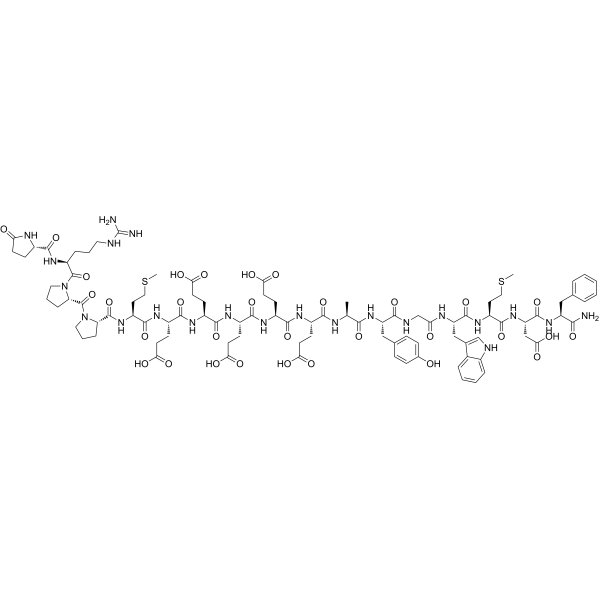
    Gastrin I, rat (Rat Gastrin-17) is a peptide hormone, can stimulate gastric acid secretion potently .
    Gastrin I, rat
  • HY-129746

    Apoptosis Cancer
    Arylquin 1, a prostate-apoptosis-response-4 (Par-4) secretagogue, targets vimentin to induce Par-4 secretion. Arylquin 1 induces non-apoptotic cell death in cancer cells through the induction of lysosomal membrane permeabilization (LMP) .
    Arylquin 1
  • HY-P4373

    Cathepsin MMP Metabolic Disease
    Hepcidin-1 (mouse) is an endogenous peptide hormone involved in the regulation of iron homeostasis. Hepcidin-1 (mouse) upregulates mRNA levels of TRAP, cathepsin K, and MMP-9 and increases TRAP-5b protein secretion. Hepcidin-1 (mouse) downregulates the level of FPN1 protein and increases intracellular iron. Hepcidin-1 (mouse) facilitates osteoclast differentiation .
    Hepcidin-1 (mouse)
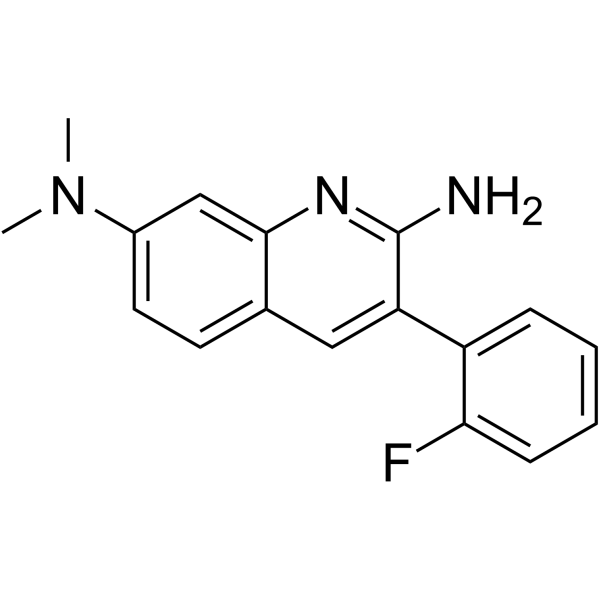
  • HY-136301

    Drug Intermediate Inflammation/Immunology
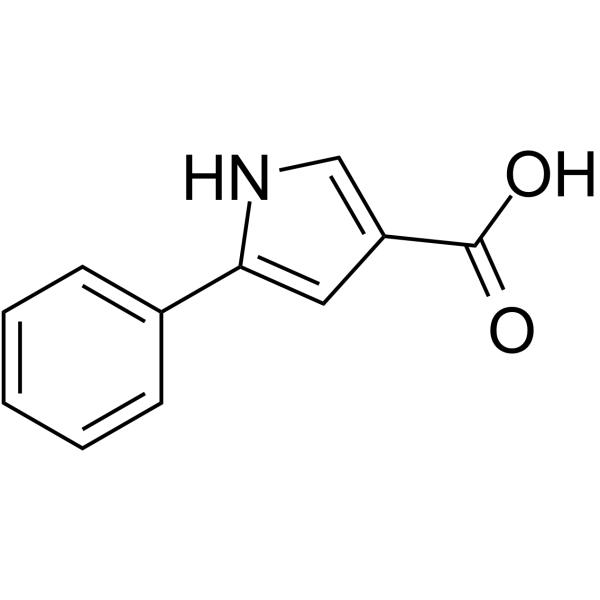
    Acid secretion-IN-1 is a polycyclic compound extracted from patent WO2018024188A1, Compound Example 17.4. Acid secretion-IN-1 is synthesized and used in the IDO inhibitor synthetic experiment .
    Acid secretion-IN-1
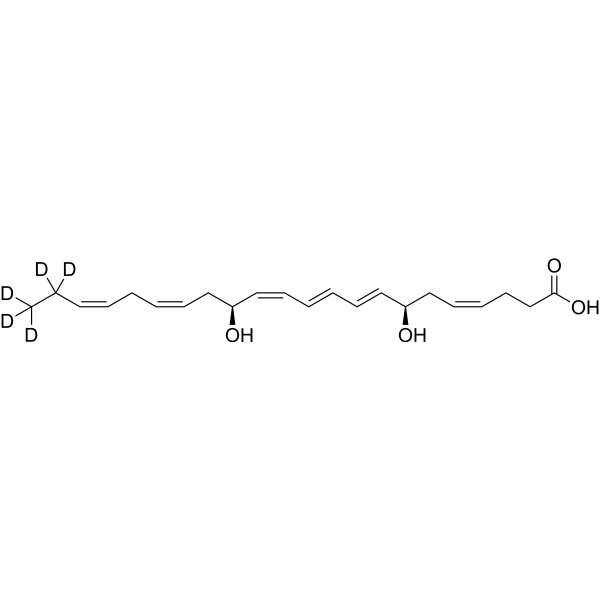
  • HY-116429S

    Isotope-Labeled Compounds Reactive Oxygen Species (ROS) Inflammation/Immunology
    Maresin 1-d5 is the deuterium labeled Maresin 1. Maresin 1, produced by human Mφs from endogenous docosahexaenoic acid (DHA) and a specialized proresolving mediator, stimulates intracellular [Ca2+] and secretion. Maresin 1 possesses anti-inflammatory activity .
    Maresin 1-d5
  • HY-P10302

    GLP Receptor Insulin Receptor Metabolic Disease
    GLP-1R/GIPR AgonIST-1 is a double-receptor agonist for GLP-1 (glucagon-like peptide-1) and GIP (glucose-dependent insulin releasing peptide). GLP-1R/GIPR agonist-1 lowers blood sugar by mimicking the action of endogenous hormones GLP-1 and GIP, enhancing insulin secretion while inhibiting glucagon secretion. GLP-1R/GIPR agonist-1 can be used in the study of metabolic diseases such as diabetes, obesity, and non-alcoholic steatohepatitis (NASH) .
    GLP-1R/GIPR agonist-1
  • HY-172535

    Lipase Inflammation/Immunology Cancer
    Lipid OA2 dihydrochloride is an ionizable cationic lipid that can be used to prepare single-component lipid nanoparticles for siRNA delivery. Lipid OA2 dihydrochloride can effectively deliver SOCS1-siRNA to dendritic cells, silence the SOCS1 gene, and enhance their antigen-presenting ability and pro-inflammatory factor secretion capacity .
    Lipid OA2 dihydrochloride
  • HY-179214

    Glycosidase Amyloid-β NF-κB Interleukin Related Neurological Disease
    DEL-C1 is a CHI3L1 inhibitor. DEL-C1 can restore the ability to clear Amyloid-β and repair lysosomal function of astrocytes. DEL-C1 can inhibit NF-κB signaling and IL-6 secretion. DEL-C1 can be used for the researches of inflammation and neurological disease, such as Alzheimer's disease .
    DEL-C1
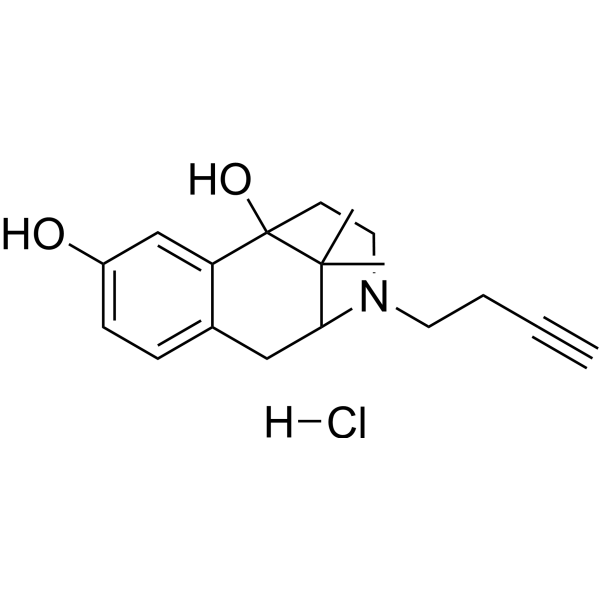
  • HY-U00334

    Biochemical Assay Reagents Neurological Disease
    LH secretion antagonist 1 is an antagonist of luteinising hormone secretion, and may be used as an analgesic. LH secretion antagonist 1 is a click chemistry reagent, it contains an Alkyne group and can undergo copper-catalyzed azide-alkyne cycloaddition (CuAAc) with molecules containing Azide groups.
    LH secretion antagonist 1
  • HY-178492

    TRP Channel Neurological Disease Metabolic Disease
    TRPA1 agonist-2 (Compound 4B) is an orally active and highly selective TRPA1 channel agonist. TRPA1 agonist-2 triggers calcium influx and stimulates GLP-1 secretion. TRPA1 agonist-2 is promising for research of diabetes, obesity, and related neurodegenerative diseases .
    TRPA1 agonist-2
  • HY-P10826

    PD-1/PD-L1 Cancer
    PD-1/PD-L1 inhibitory peptide C8 is inhibits PD-1/PD-L1 interaction, promotes the activation of CD8+ and CD4+ T cells, and increases the IFN-γ secretion. PD-1/PD-L1 inhibitory peptide C8 exhibits antitumor efficacy in mouse model .
    PD-1/PD-L1 inhibitory peptide C8
  • HY-W009934R

    α-Phenyl-2-pyridINeacetonitrile (Standard)

    Drug Metabolite Reference Standards Endocrinology
    2-Phenyl-2-(2-pyridyl)acetonitrile (Standard) is the analytical standard of 2-Phenyl-2-(2-pyridyl)acetonitrile. This product is intended for research and analytical applications. 2-Phenyl-2-(2-pyridyl)acetonitrile is the major metabolite of SC 15396 metabolized by the supernatant fraction of rat liver homogenate. SC 15396 is an antigastrin that inhibits gastric secretion[1].
    2-Phenyl-2-(2-pyridyl)acetonitrile (Standard)
  • HY-179111

    MAP4K Interleukin Related Cancer
    HPK1-IN-64 is a potent, selective, and orally active HPK1 inhibitor with an IC50 value of 1.9 nM. HPK1-IN-64 exhibits selectivity exceeding 100-fold, 80-fold, 300-fold, and 350-fold against off-target kinases such as GLK, MAP4K5, TBK1, and TNIK, respectively. HPK1-IN-64 inhibits SLP76 protein phosphorylation and IL-2 secretion. HPK1-IN-64 may be used in cancer research, such as for colorectal cancer .
    HPK1-IN-64
  • HY-116748

    PDI Phosphatase
    (±)-trans-1,2-Bis(2-mercaptoacetamido)cyclohexane is a small-molecule dithiol catalyst with a low thiol pKa value (8.3) and high reduction potential (-0.24 V), capable of mimicking PDI activity. It catalyzes the activation of scrambled ribonuclease A (scrambled ribonuclease A) and promotes the formation of native disulfide bonds, thereby significantly enhancing protein folding efficiency. Adding (±)-trans-1,2-Bis(2-mercaptoacetamido)cyclohexane to the culture medium of Saccharomyces cerevisiae can increase the secretion of exogenously expressed Schizosaccharomyces pombe acid phosphatase by more than threefold. (±)-trans-1,2-Bis(2-mercaptoacetamido)cyclohexane holds great potential for applications in protein production and secretion research .
    (±)-trans-1,2-Bis(2-mercaptoacetamido)cyclohexane
  • HY-P11790

    C-Tag peptide

    Biochemical Assay Reagents Infection
    EPEA tag peptide (C-Tag peptide) is an epitope tag peptide. EPEA tag peptide enables elution of the SpaP EPEA complex. EPEA tag peptide is applicable to research related to bacterial type III secretion systems .
    EPEA tag peptide
  • HY-182047

    PD-1/PD-L1 Cancer
    PD-1/PD-L1-IN-61 is a PD-1/PD-L1 interaction inhibitor with a human IC50 of 5.3 nM. PD-1/PD-L1-IN-61 embeds into the hydrophobic pocket at the PD-L1 dimer interface, stabilizing binding through hydrogen bonds and π-π stacking with PD-L1 residues. PD-1/PD-L1-IN-61 acts as an immune activator, enhances immune-killing activity of peripheral blood mononuclear cells against cancer cells, restores T-cell immune function, and promotes IFN-γ secretion. PD-1/PD-L1-IN-61 can be used for the research of triple-negative breast cancer .
    PD-1/PD-L1-IN-61
  • HY-W017087

    NOD-like Receptor (NLR) Caspase Interleukin Related Infection Metabolic Disease
    1,2,4-Trimethoxybenzene is an orally active NLRP3 selective inhibitor. 1,2,4-Trimethoxybenzene can markedly suppress Nigericin (HY-127019) or ATP (HY-B2176)-induced NLRP3 inflammasome activation, thus decreasing caspase-1 activation and IL-1β secretion. 1,2,4-Trimethoxybenzene specifically inhibits the activation of NLRP3 inflammasome without affecting absent in melanoma 2 (AIM2) inflammasome activation. 1,2,4-Trimethoxybenzene inhibits oligomerization of the apoptosis-associated speck-like protein containing a CARD (ASC) and protein-protein interaction between NLRP3 and ASC, thus blocking NLRP3 inflammasome assembly. 1,2,4-Trimethoxybenzene can be used for the study of experimental autoimmune encephalomyelitis (EAE), multiple sclerosis, and type 2 diabetes .
    1,2,4-Trimethoxybenzene

Inquiry Online

Your information is safe with us. * Required Fields.

Salutation


Country or Region *

Applicant Name *


Organization Name *

Department *


Email Address *


Product Name *

Cat. No.


Requested quantity *

Phone Number *


Remarks

Inquiry Online

Inquiry Information

Product Name:
Cat. No.:
Quantity:
MCE Japan Authorized Agent:

