
1. Search Result
Search Result
Results for "

C6 Ceramide

" in MedChemExpress (MCE) Product Catalog:

36

Inhibitors & Agonists

7

Fluorescent Dye

8

Peptides

2

Natural
Products

3

Isotope-Labeled Compounds

1

Click Chemistry

Cat. No. Product Name Target Research Areas Chemical Structure
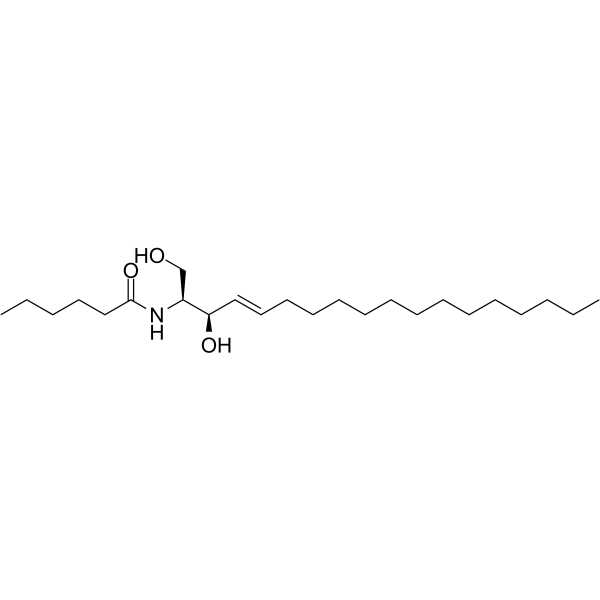
  • HY-19542
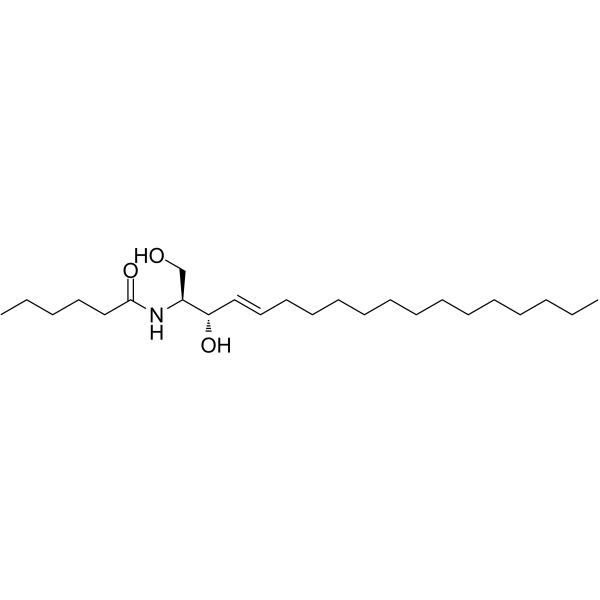
    C6 Ceramide
    3 Publications Verification

    C6-Cer; N-Hexanoylsphingosine

    Apoptosis Cancer
    C6 Ceramide (C6-Cer) is a short-chain, cell-permeable ceramide pathway activator with anticancer activity. C6 Ceramide-mediated miR-29b expression participates in the progression of multiple myeloma through suppressing the proliferation, migration and angiogenesis of endothelial cells by targeting Akt signal pathway. C6 Ceramide exhibits multiple anti-cancer properties including cell cycle arrest, Apoptosis, inhibition of tumor growth and enhances the effects of chemotherapy in drug-resistant cancer cells. C6-ceramide can be used as an adjuvant for chemotherapeutic agents, to enhance anti-tumor effects .
    C6 Ceramide
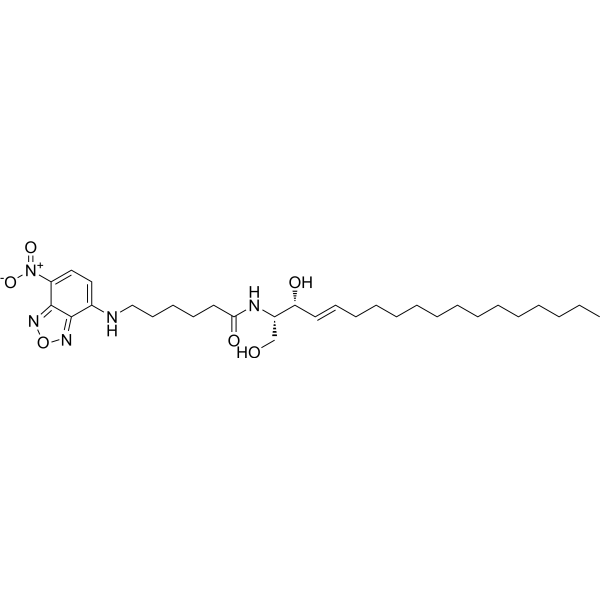
  • HY-W356116

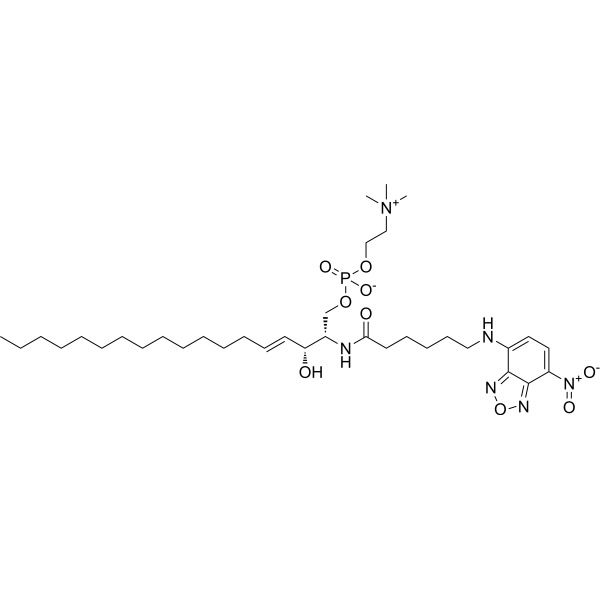
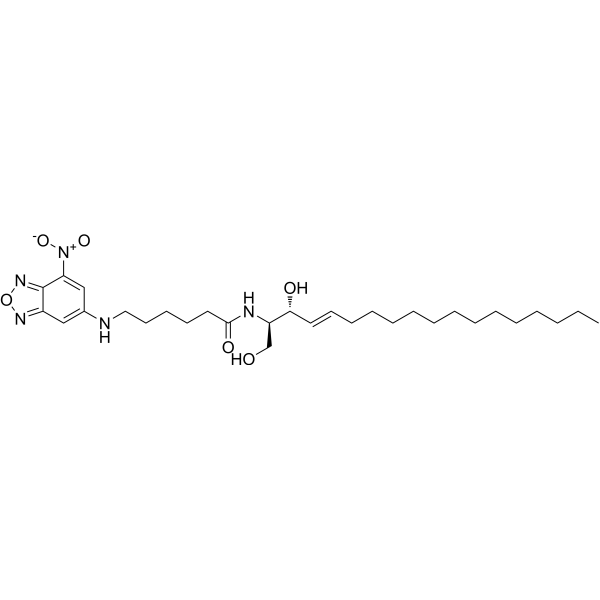
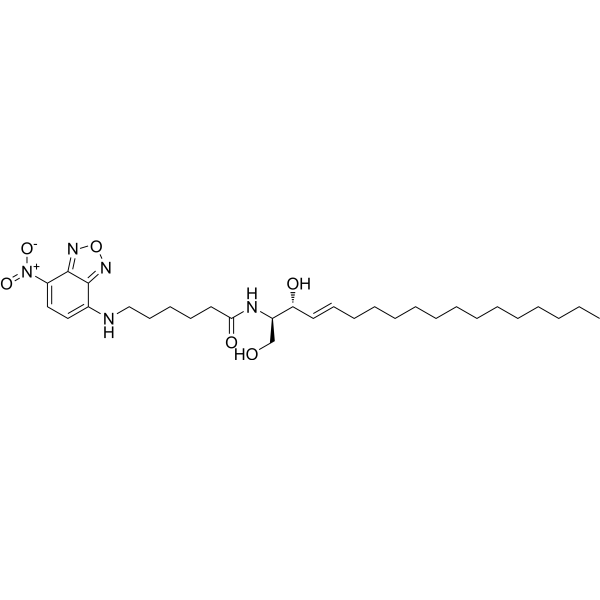
    Nbd-Ceramide

    Fluorescent Dye Others
    C6 NBD Ceramide is a Golgi apparatus fluorescent probe with cell membrane permeability. C6 NBD Ceramide can be used for fast and convenient green fluorescent labeling of Golgi in living and fixed cells, and can be used to observe changes in Golgi morphology in living cells (Ex=466 nm, Em=536 nm). C6-NBD-ceramide is metabolized to fluorescent sphingomyelin and glucosylceramide, can be used for the study of sphingolipid transport and metabolic mechanism .
    C6 NBD Ceramide
  • HY-P4070

    Insulin Receptor Metabolic Disease
    Insulin icodec is an Insulin (HY-P0035) analog that strongly but reversibly binds to albumin. Insulin icodec has long plasma half-life. Insulin icodec modulates insulin receptor activity, controls blood glucose levels, reduces HbA1c levels, and binds reversibly to human serum albumin. Insulin icodec can be used for the research of type 2 diabetes mellitus .
    Insulin icodec
  • HY-P1103
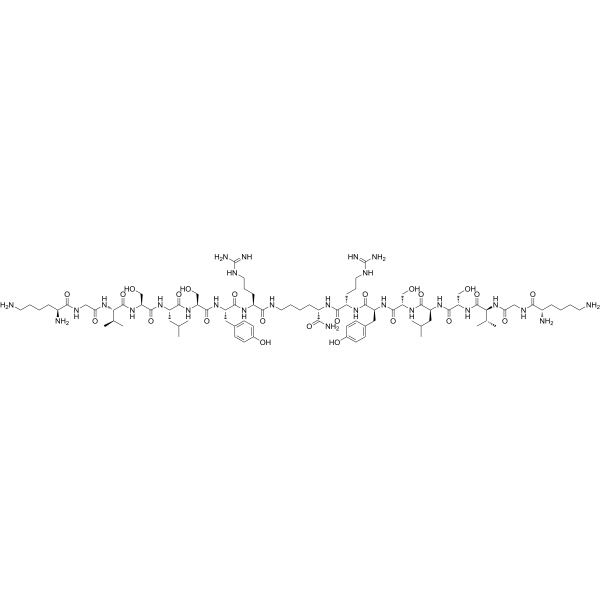
    CTCE-9908
    1 Publications Verification

    CXCR Cancer
    CTCE-9908 is a potent and selective CXCR4 antagonist. CTCE-9908 induces mitotic catastrophe, cytotoxicity and inhibits migration in CXCR4-expressing ovarian cancer cells .
    CTCE-9908
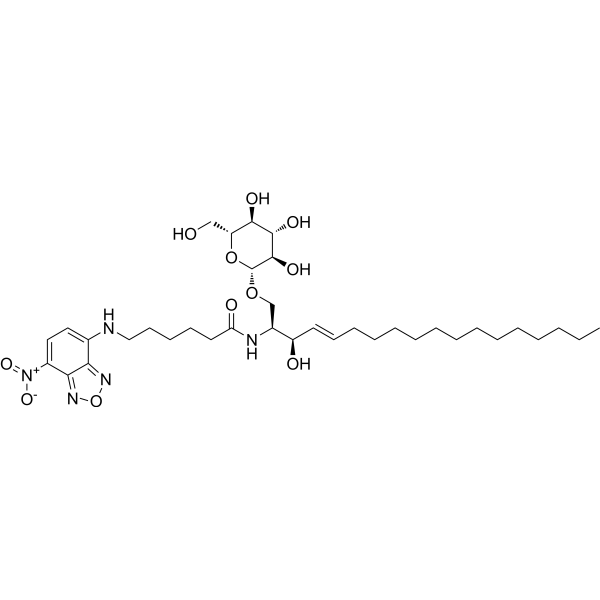
  • HY-W356117

    Fluorescent Dye Others
    C6 NBD Glucosylceramide is a glucosylceramide fluorescent derivative (Ex=466 nm, Em=535 nm). C6 NBD Glucosylceramide can be used to study the metabolism and internalization of glucosylceramide and also for the determination of glucosyl ceramide synthase activity .
    C6 NBD Glucosylceramide
  • HY-D1574

    Fluorescent Dye Others
    C6 NBD Sphingomyelin is a fluorescent short-chain analogue of Sphingomyelin (HY-113498). Chlamydia trachomatis acquires C6 NBD Sphingomyelin endogenously synthesizes from C6-NBD-ceramide and transportes to the chlamydial inclusion. C6 NBD Sphingomyelin can incorporate into the plasma membrane .
    C6 NBD Sphingomyelin
  • HY-19542S1

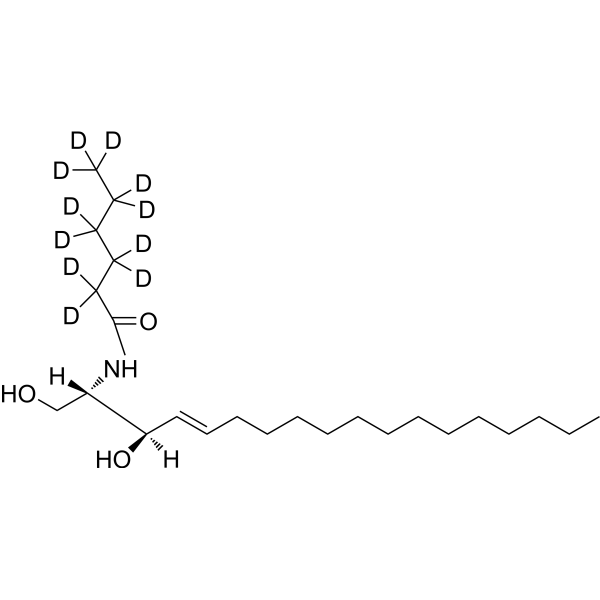
    C6-Cer-d11; N-Hexanoylsphingosine-d11

    Apoptosis Isotope-Labeled Compounds Cancer
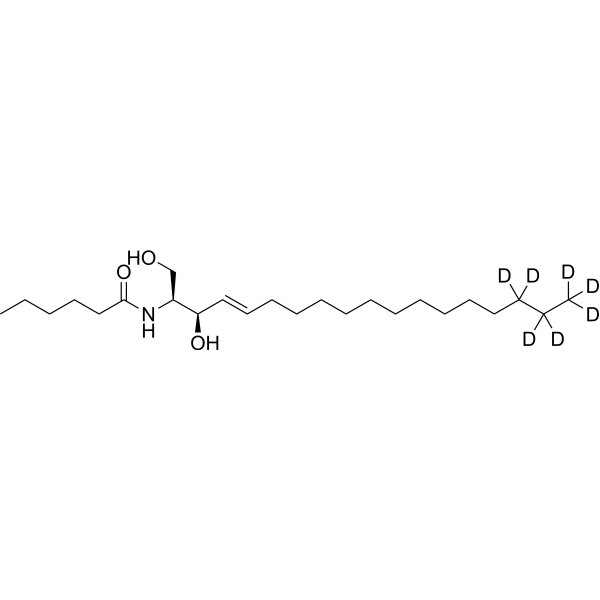
    C6 Ceramide-d11 is deuterated labeled C6 Ceramide (HY-19542). C6-ceramide, a ceramide pathway activator, shows activity against a variety of cancer cell lines. C6-ceramide can be used as an adjuvant for chemotherapeutic agents, to enhance anti-tumor effects .
    C6 Ceramide-d11
  • HY-139062

    C6 Ceramide (d18:1/6:0) Urea; Cer(d18:1/6:0) Urea; D-erythro-Urea-C6-Ceramide

    Apoptosis Ceramidase Autophagy β-catenin Cancer
    C6 Urea Ceramide (Cer(d18:1/6:0) Urea) is an inhibitor of neutral ceramidase. C6 Urea Ceramide increases total ceramide levels in wild-type mouse embryonic fibroblasts (MEFs) and HT-29 colon cancer cells. C6 Urea Ceramide (5-10 μM) inhibits proliferation of HT-29 cells and induces apoptosis and autophagy, but is not toxic to non-cancerous cells. C6 Urea Ceramide decreases total and phosphorylated β-catenin levels in HT-29 and HCT116 cells, and induces colocalization of β-catenin with the 20S proteasome. C6 Urea Ceramide (1.25, 2.5, and 5 mg/kg) reduced tumor growth and increased C16, C18, C20, and C24 ceramide levels in tumor tissues in the HT-29 mouse xenograft model.
    C6 Urea Ceramide
  • HY-D1749

    Fluorescent Dye Others
    C6 NBD L-threo-ceramide is a cell-permeable analog of ceramides that is tagged with a fluorescent group C6 nitrobenzoxadiazole (C6 NBD). It is rapidly transferred between liposomes, labels the Golgi apparatus, and is metabolized to C6 NBD sphingomyelin in BHK cells and V79 fibroblasts.
    C6 NBD L-threo-ceramide
  • HY-116609

    Interleukin Related Inflammation/Immunology
    C6 L-threo Ceramide is a bioactive sphingolipid and cell-permeable analog of naturally occurring ceramides . C6 L-threo Ceramide significantly inhibits IL-4 production in T cells. Anti-allergic agents .
    C6 L-threo Ceramide
  • HY-147178

    Fluorescent Dye Others
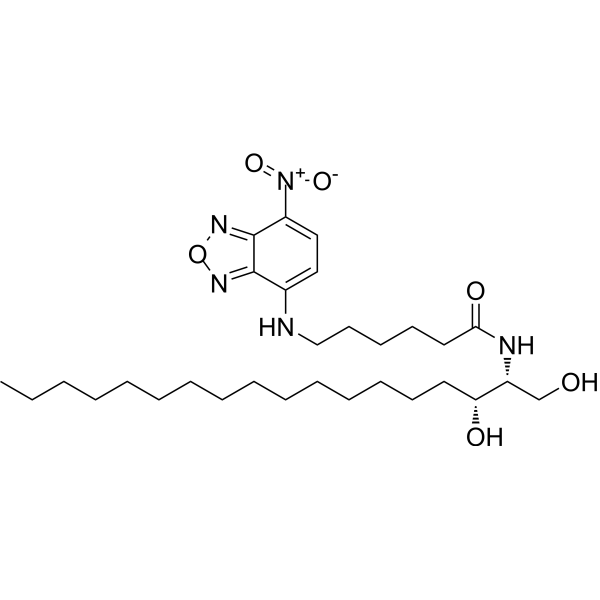
    C-6 NBD-dihydro-Ceramide is a membrane-permeable ceramides. C-6 NBD-dihydro-Ceramide is a biologically active fluorescent analog of short chain .
    C-6 NBD-dihydro-Ceramide
  • HY-D1573

    Fluorescent Dye Others
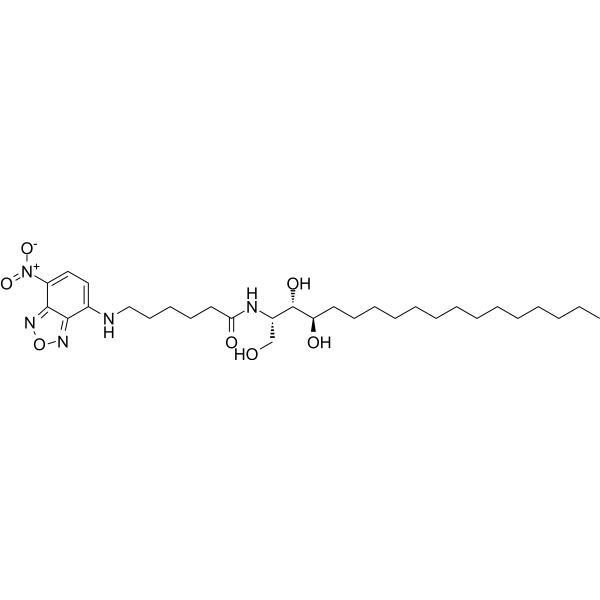
    C6 NBD Phytoceramide is a fluorescently labeled short-chain ceramide analog that can be recognized by mammalian GlcCer synthase (GCS) .
    C6 NBD Phytoceramide
  • HY-116585

    Liposome Interleukin Related Neurological Disease
    C6 D-Threo Ceramide (d18:1/6:0) is a bioactive sphingolipid and cell-permeable analog of ceramides. C6 D-Threo Ceramide (d18:1/6:0) enhances IL-4 production induced by Phorbol 12-myristate 13-acetate (HY-18739) in EL4 T cells .
    C6 D-Threo Ceramide (d18:1/6:0)
  • HY-N15946

    Biochemical Assay Reagents Others
    Photoclick C6 ceramide is a clickable sphingolipid.
    Photoclick C6 ceramide
  • HY-D1576

    Fluorescent Dye Others
    C6 NBD L-threo-dihydroceramide is a dihydro-ceramide isomer labeled with a fluorescent group C6 nitrobenzoxadiazole (C6 NBD), can be used to detect ceramide.
    C6 NBD L-threo-dihydroceramide
  • HY-19542S

    Isotope-Labeled Compounds Apoptosis Cancer
    Ceramide C6-d7 is the deuterium labeled Ceramide C6. Ceramide C6, a Ceramide pathway activator, is an exogenous short-chain ceramide which can induce apoptosis of multiple cancer cells .
    Ceramide C6-d7
  • HY-173541

    C6 Dihydro Ceramide (m18:0/6:0)

    Drug Derivative Metabolic Disease
    C6 Dihydro 1-deoxyceramide (m18:0/6:0) (C6 Dihydro ceramide (m18:0/6:0)) is an analog of ceramide .
    C6 Dihydro 1-deoxyceramide (m18:0/6:0)
  • HY-N16325

    Fluorescent Dye Others
    Golgi-laurdan, a derivative of Laurdan (HY-D0080), is a fluorescent probe. Golgi-Laurdanmimics the structure NBD C6 Ceramide that can be used for the study of the Golgi apparatus .
    Golgi-laurdan
  • HY-176102

    N-Hexanoyl-D-erythro-sphingosine alkyne

    Biochemical Assay Reagents Others
    C6 Ceramide (d18:1/6:0) alkyne is an ω-alkyne derivative of C6 ceramide. The terminal alkyne group can be used in click chemistry reactions to tag C6 ceramide with fluorescent or biotinylated labels, allowing the analysis of the metabolism and biological activity of C6 ceramide.
    C6 Ceramide (d18:1/6:0) alkyne
  • HY-172666F

    Biotin Ceramide (d18:0/6:0)

    Fluorescent Dye Neurological Disease
    C6 Biotin dihydro ceramide is an affinity probe that allows C6 dihydro ceramide to be detected or immobilized through interaction with the biotin ligand.
    C6 Biotin dihydro ceramide (d18:0/6:0)
  • HY-W590666

    C6-dihydro-Ceramide (N-hexanoyl-)

    Biochemical Assay Reagents Metabolic Disease
    N-Hexanoyldihydrosphingosine (C6-dihydro-Ceramide (N-hexanoyl-)) is an ester product.
    N-Hexanoyldihydrosphingosine
  • HY-179812

    Others Metabolic Disease
    C6 Ceramide-1,3-cyclic-phosphate (d18:1/6:0) (ammonium) is a ceramide.
    C6 Ceramide-1,3-cyclic-phosphate (d18:1/6:0) ammonium
  • HY-19542A

    L-Ceramide-C6

    Biochemical Assay Reagents Metabolic Disease
    N-Hexanoyl-L-erythro-sphingosine (L-Ceramide-C6) is an ester product.
    N-Hexanoyl-L-erythro-sphingosine
  • HY-165087

    N-Hexanoyl-biotin-D-erythro-sphingosine

    Biochemical Assay Reagents Others
    C6 Biotin ceramide (d18:1/6:0) is a biotin-labeled ceramide.
    C6 Biotin ceramide (d18:1/6:0)
  • HY-W590539

    Bacterial Infection
    ω-azido-C6 Ceramide reduces the membrane potential, and exhibits antibacterial activity against Neisseria, with MIC of 2 µg/ml for N. meningitidis MC58 and N. gonorrhoeae FA1090 .
    ω-azido-C6 Ceramide
  • HY-176816

    C6:0 Ceramide (m18:1/6:0); Cer(m18:1/6:0); C6:0 1-DeoxyCeramide

    Endogenous Metabolite Others
    C6 1-Deoxyceramide (m18:1/6:0) (C6:0 Ceramide (m18:1/6:0)) is a short-chain atypical ceramide .
    C6 1-Deoxyceramide (m18:1/6:0)
  • HY-W766368

    C6-Cer-13C2,d2; N-Hexanoylsphingosine-13C2,d2

    Isotope-Labeled Compounds Apoptosis Cancer
    C6 Ceramide- 13C2,d2 (C6-Cer- 13C2,d2) is the deuterium labeled and 13C-labeled C6 Ceramide (HY-19542). C6 Ceramide (C6-Cer) is a short-chain, cell-permeable ceramide pathway activator with anticancer activity. C6 Ceramide-mediated miR-29b expression participates in the progression of multiple myeloma through suppressing the proliferation, migration and angiogenesis of endothelial cells by targeting Akt signal pathway. C6 Ceramide exhibits multiple anti-cancer properties including cell cycle arrest, Apoptosis, inhibition of tumor growth and enhances the effects of chemotherapy in drug-resistant cancer cells. C6-ceramide can be used as an adjuvant for chemotherapeutic agents, to enhance anti-tumor effects .
    C6 Ceramide-13C2,d2
  • HY-145517

    Apoptosis Neurological Disease
    C6-Phytoceramide is a cell-permeable analog of Phytoceramide. C6-Phytoceramide induces higher levels of apoptosis than C6-Ceramide (HY-19542) in neuroblastoma cells .
    C6-Phytoceramide
  • HY-176818

    Ceramide (m18:1(14Z)/6:0); C6 Ceramide (m18:1(14Z)/6:0); Cer(m18:1(14Z)/6:0)

    Endogenous Metabolite Others
    C6 1-Deoxyceramide (m18:1(14Z)/6:0) (Ceramide (m18:1(14Z)/6:0)) is a short-chain ceramide containing a 1-Deoxysphingosine (m18:1(14Z)) (HY-139261) .
    C6 1-Deoxyceramide (m18:1(14Z)/6:0)
  • HY-P1103A

    CXCR Cancer
    CTCE-9908 TFA is a potent and selective CXCR4 antagonist. CTCE-9908 TFA induces mitotic catastrophe, cytotoxicity and inhibits migration in CXCR4-expressing ovarian cancer cells .
    CTCE-9908 TFA
  • HY-P4757

    Parasite Others
    N1-Glutathionyl-spermidine disulfide is a substrate of trypanothione reductase .
    N1-Glutathionyl-spermidine disulfide
  • HY-P11293

    Melanocortin Receptor Cancer
    DOTA-GGNle-CycMSHhex is a melanocortin-1 receptor (MC1R)-targeting peptide that can be radionuclide-labeled for melanoma imaging .
    DOTA-GGNle-CycMSHhex
  • HY-P1321

    1229U91; GW1229

    Neuropeptide Y Receptor Neurological Disease
    GR231118, an analogue of the C-terminus of neuropeptide Y, is a potent , competitive and relative seletive antagonist at human neuropeptide Y Y receptor with a pKi of 10.4. GR231118 a potent agonist at the human neuropeptide Y Y4 receptor (pEC50=8.6; pKi=9.6) and a weak agonist at the human and rat neuropeptide YY2 and Y5 receptors. GR231118 also has high affinity for the mouse neuropeptide Y Y6 receptor (pKi= 8.8) .
    GR231118
  • HY-175133

    Biotin Ceramide (t18:0/6:0)

    Fluorescent Dye Others
    C6 Biotin phytoceramide (t18:0/6:0) is an affinity probe that allows C6 phytoceramide to be detected or immobilized through interaction with the biotin ligand .
    C6 Biotin phytoceramide (t18:0/6:0)
  • HY-P1321A

    1229U91 TFA; GW1229 TFA

    Neuropeptide Y Receptor Neurological Disease
    GR231118 TFA, an analogue of the C-terminus of neuropeptide Y, is a potent , competitive and relative seletive antagonist at human neuropeptide YY receptor with a pKi of 10.4. GR231118 a potent agonist at the human neuropeptide YY4 receptor (pEC50=8.6; pKi=9.6) and a weak agonist at the human and rat neuropeptide Y Y2 and Y5 receptors. GR231118 also has high affinity for the mouse neuropeptide YY6 receptor (pKi= 8.8) .
    GR231118 TFA
  • HY-P11480

    Trk Receptor Neurological Disease
    TrkA/NGF-IN-1 (Peptide 19) is an inhibitor of protein-protein interactions between TrkA and NGF (IC50: 21 nM for human TrkA in PathHunter assay). TrkA/NGF-IN-1 shows an analgesic effect in a rat incisional pain model .
    TrkA/NGF-IN-1

Inquiry Online

Your information is safe with us. * Required Fields.

Salutation


Country or Region *

Applicant Name *


Organization Name *

Department *


Email Address *


Product Name *

Cat. No.


Requested quantity *

Phone Number *


Remarks

Inquiry Online

Inquiry Information

Product Name:
Cat. No.:
Quantity:
MCE Japan Authorized Agent:

