
1. Search Result
Search Result
Results for "

CA1 neuron

" in MedChemExpress (MCE) Product Catalog:

15

Inhibitors & Agonists

2

Peptides

2

Natural
Products

1

Isotope-Labeled Compounds

Cat. No. Product Name Target Research Areas Chemical Structure
  • HY-N2183
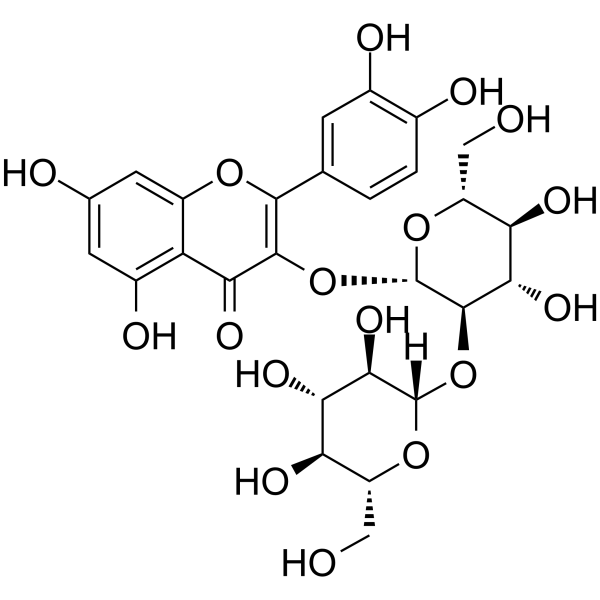
    Baimaside
    3 Publications Verification

    Quercetin 3-O-sophoroside

    SARS-CoV Infection Neurological Disease
    Baimaside (Quercetin 3-O-sophoroside) is a flavonoid cholinergic function modulator that binds to SARS-CoV-2-related targets. Baimaside regulates the expression of cholinergic system-related proteins and acetylcholine levels, improves scopolamine-induced learning and memory impairment, protects hippocampal neurons, inhibits pollen protein fluorescence, and protects pollen DNA. Its biosynthesis is regulated by multiple enzymes. Baimaside is completely absorbed in rats, undergoes phase Ⅱ metabolism and gut microbiota decomposition, and inhibits the invasion and proliferation of SARS-CoV-2 and its variants, making it suitable for research related to Alzheimer's disease and COVID-19 .
    Baimaside
  • HY-157786

    Sodium Channel Neurological Disease
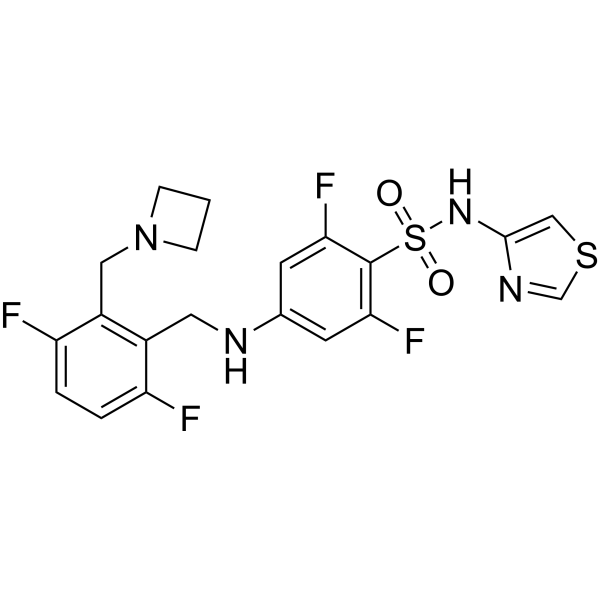
    XPC-5462 is a selective NaV1.6/1.2 inhibitor, with an IC50 of 0.0103 μM against hNaV1.6, 0.0137 μM against mNaV1.6, and 0.0109 μM against hNaV1.2. XPC-5462 significantly reduces epileptiform discharges. XPC-5462 is applicable for epilepsy-related research .
    XPC-5462
  • HY-P1387

    Amyloid-β Apoptosis Neurological Disease
    β-Amyloid (1-40) (rat) is a rat form of the amyloid β-peptide, which accumulates as an insoluble extracellular deposit around neurons, giving rise to the senile plaques associated with Alzheimer's disease (AD). β-Amyloid (1-40) (rat) increases 45Ca 2+ influx, induces neurodegeneration in the rat hippocampal neurons of the CA1 subfield. β-Amyloid (1-40) (rat) induces apoptosis. β-Amyloid (1-40) (rat) can be used for the research of Alzheimer's disease .
    β-Amyloid (1-40) (rat)
  • HY-106784A

    Fungal Apoptosis Neurological Disease
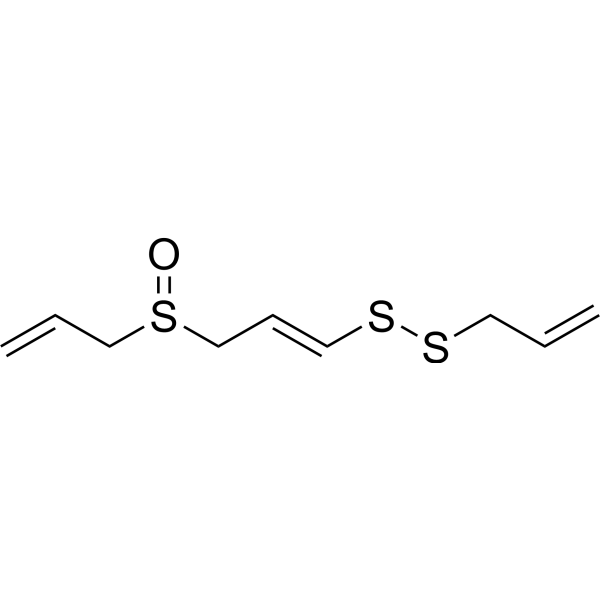
    (E)-Ajoene is a oxygenated ajoene and organosulfur compound, which can be acquired via allicin decomposing. The polysulfides from garlic can be converted by human red blood cells into hydrogen sulfide (H2S) and allyl glutathione. (E)-Ajoene has been proved to show neuroprotective effects against ischemic damage. (E)-Ajoene is orally active to inhibit lipid peroxidation. (E)-Ajoene increases the number of cresyl violet-positive neurons and decreases the number of reactive gliosis in the CA1 region .
    (E)-Ajoene
  • HY-136980

    Asp-Glu

    Endogenous Metabolite Neurological Disease
    Aspartylglutamate (Asp-Glu) is a dipeptide that exhibits excitatory activity, as it has been shown to depolarize CA1 pyramidal neurons and increase conductance in response to stimulation. Aspartylglutamate selectively binds to certain glutamate receptors and demonstrates potent effects in specific regions of the hippocampus, particularly in the stratum radiatum where it enhances excitatory neurotransmission.
    Aspartylglutamate
  • HY-P4397

    Oxytocin Receptor Endocrinology
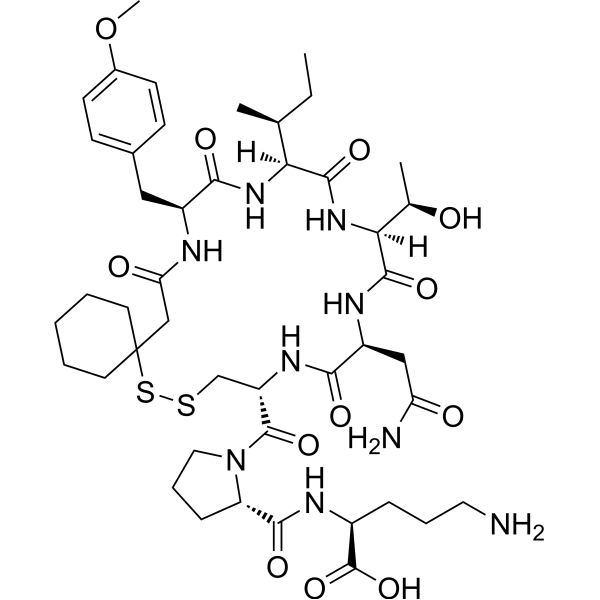
    (d(CH2)51,Tyr(Me)2,Thr4,Orn8,des-Gly-NH29)-Vasotocin, an oxytocin receptor antagonist, abolishes oxytocin-enhanced inhibitory postsynaptic currents in CA1 pyramidal neurons .
    (d(CH2)51,Tyr(Me)2,Thr4,Orn8,des-Gly-NH29)-Vasotocin
  • HY-106865

    Dopamine Receptor Adrenergic Receptor Cardiovascular Disease
    Mivazerol is a selective α2-adrenoceptor agonist. Mivazerol decreases the spontaneous release of serotonin (5-HT) and significantly inhibits the immobilization stress-induced enhancement of norepinephrine (NE), dopamine (DA) and dihydroxyphenylacetic acid (DOPAC). Mivazerol inhibits intrathecal release of glutamate evoked by halothane withdrawal in rats, and exerts neuroprotective effects in forebrain ischemia rats. Mivazerol can be used for myocardial ischemia research .
    Mivazerol
  • HY-103502
    CGP7930
    1 Publications Verification

    GABA Receptor Neurological Disease
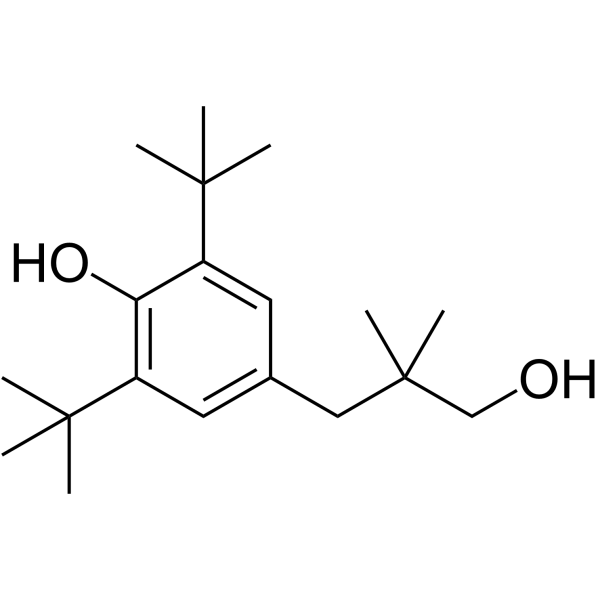
    CGP7930 (3-(3’,5’-Di-tert-butyl-4’-hydroxy) phenyl-2, 2-dimethylpropanol) is a positive metabotropic GABAB receptor allosteric modulator. CGP7930 enhances the inhibitory effect of l-baclofen on the oscillatory activity of cultured cortical neurons .
    CGP7930
  • HY-100843

    Others Neurological Disease
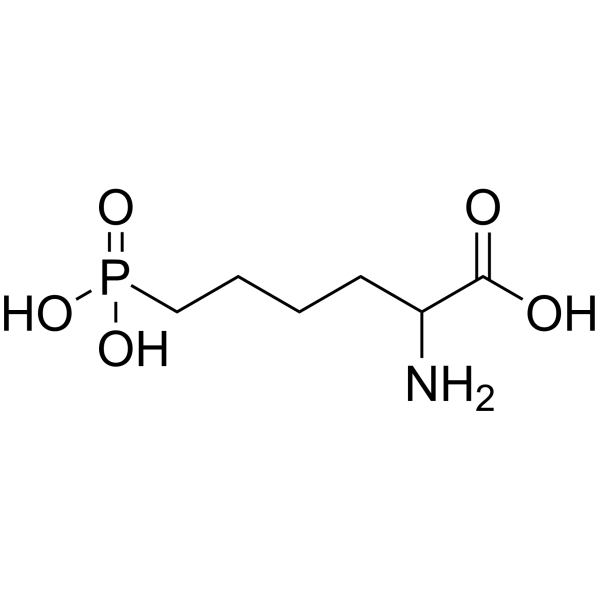
    L-AP6 is a selective agonist for a quisqualate-sensitized site in hippocampal CA1 pyramidal neurons .
    L-AP6
  • HY-139145

    Trimethylopropane phosphate

    GABA Receptor Neurological Disease
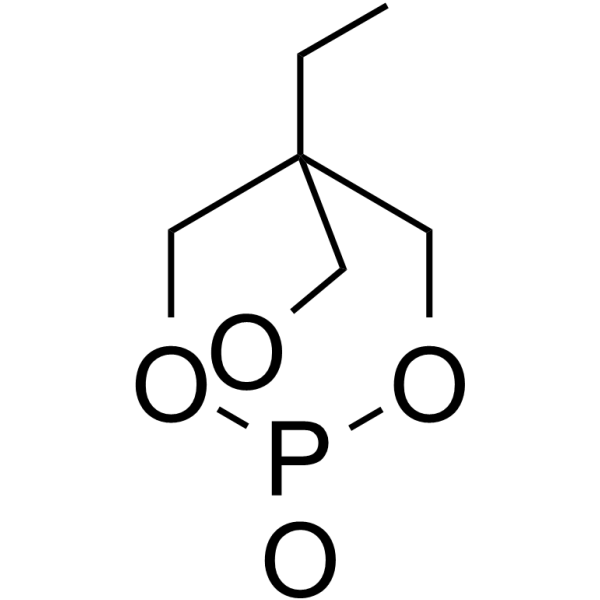
    Etbicyphat (Trimethylopropane phosphate) is a potent GABA(A) receptors competitive antagonist. Etbicyphat induces epileptiform activities in hippocampal CA1 neurons, and binds to the GABA(A)-benzodiazepine receptors .
    Etbicyphat
  • HY-139145S

    Trimethylopropane phosphate-13C3

    GABA Receptor Neurological Disease
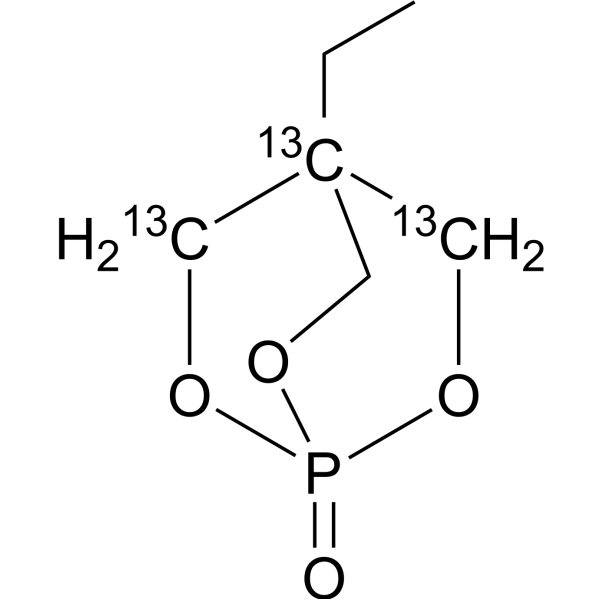
    Etbicyphat- 13C3 is the 13C labeled Etbicyphat (HY-139145). Etbicyphat is a potent GABA(A) receptors competitive antagonist. Etbicyphat induces epileptiform activities in hippocampal CA1 neurons, and binds to the GABA(A)-benzodiazepine receptors .
    Etbicyphat-13C3
  • HY-117578

    Endogenous Metabolite Neurological Disease
    KB 5666 is a benzoxazine derivative with lipid peroxidation inhibitory activity. KB 5666 showed protective effects against post-ischemic neuronal death. KB 5666 effectively protected CA1 neurons when injected 5 minutes before or immediately after ischemia. KB 5666 also showed a dose-dependent protective effect when injected within 1 hour after ischemia. KB 5666 effectively prevented the significant decrease in microtubule-associated protein 2 immunoreactivity within the dendritic field of CA1 pyramidal cells. KB 5666 prevented the decrease in [3H]PDBu binding activity in different layers of the CA1 region after ischemia. The application of KB 5666 showed the ability to improve the cellular and functional consequences of ischemia .
    KB 5666
  • HY-116431

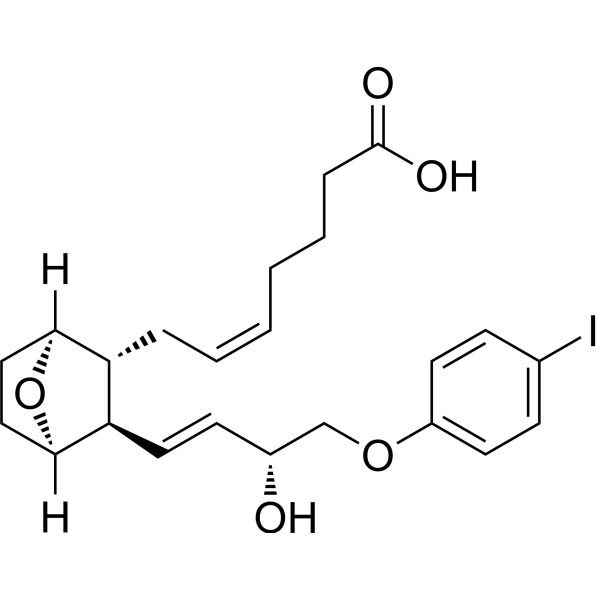
    Prostaglandin Receptor Cardiovascular Disease Neurological Disease
    I-BOP is an agonist for thromboxane A2 receptor (TP) with a KD of 0.61 nM. I-BOP promotes proliferation through activation of PI3K pathway in vascular smooth muscle . I-BOP dose-dependently biphasicly affects the excitatory postsynaptic potential (e.p.s.p.) in hippocampal neurons .
    I-BOP
  • HY-182548

    GABA Receptor Sodium Channel iGluR Cardiovascular Disease Neurological Disease
    BTS 72664 is a broad-spectrum, non-sedating, orally effective anticonvulsant. Its anticonvulsant effect mainly arises from enhancing GABAA receptor (GABAA receptor)-mediated chloride channel currents, while it exerts weak blocking effects on Na + channels (Ki = 350 μM) and NMDA receptors (NMDA receptor) (IC50 = 43 μM). BTS 72664 prevents the elevation of extracellular glutamate, glycine and serine concentrations in neurons, reduces cerebral infarct size, promotes functional recovery, prevents multiple types of epileptic seizures, and has low sedative potential. BTS 72664 can be used for the research of epilepsy, stroke and migraine .
    BTS 72664
  • HY-183101

    iGluR NADPH Oxidase Neurological Disease
    AMPAR modulator-12 is a blood-brain barrier-permeable AMPAR positive allosteric modulator. AMPAR modulator-12 reduces NOX-1 expression, enhances AMPAR-mediated currents, promotes excitatory postsynaptic transmission and restores AMPAR function. AMPAR modulator-12 enhances excitatory and inhibitory synaptic transmission, reduces burst firing in the lateral habenula after withdrawal, and produces rapid and sustained antidepressant-like effects. AMPAR modulator-12 is applicable for the research of depression .
    AMPAR modulator-12

Inquiry Online

Your information is safe with us. * Required Fields.

Salutation


Country or Region *

Applicant Name *


Organization Name *

Department *


Email Address *


Product Name *

Cat. No.


Requested quantity *

Phone Number *


Remarks

Inquiry Online

Inquiry Information

Product Name:
Cat. No.:
Quantity:
MCE Japan Authorized Agent:

