1. Search Result
Search Result
Results for "

CDK-IN-19

" in MedChemExpress (MCE) Product Catalog:

15

Inhibitors & Agonists

1

Fluorescent Dyes

1

Biochemical Assay Reagents

1

GMP Molecules

Cat. No. Product Name Target Research Areas Chemical Structure
  • HY-126675A
    AS2863619
    5+ Cited Publications

    CDK STAT Inflammation/Immunology
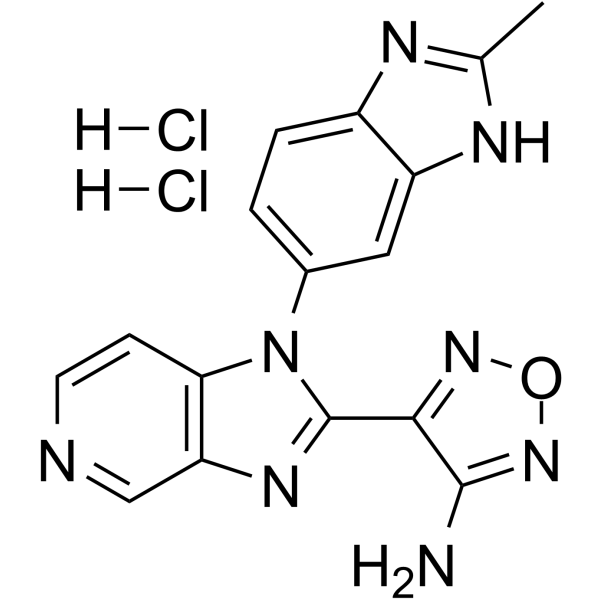
    AS2863619 enables conversion of antigen-specific effector/memory T cells into Foxp3 + regulatory T (Treg) cells for the treatment of various immunological diseases. AS2863619 is a potent, orally active cyclin-dependent kinase 8 (CDK8) and CDK19 inhibitor with IC50s of 0.61 nM and 4.28 nM, respectively. STAT5 activation enhanced by AS2863619 inhibition of CDK8/19, which consequently activates the Foxp3 gene .
    AS2863619
  • HY-101800
    Senexin B
    2 Publications Verification

    SNX2-1-165; BCD-115

    CDK Cancer
    Senexin B (SNX2-1-165; BCD-115) is a potent, highly water-soluble and bioavailable CDK8/19 inhibitor, with Kds of 140 nM for CDK8 and 80 nM for CDK19.
    Senexin B
  • HY-15681
    Senexin A
    Maximum Cited Publications
    9 Publications Verification

    CDK Cancer
    Senexin A is an inhibitor of CDK8/19 (IC50: 280 nM, CDK8) and an inhibitor downstream of p21 transcription. It only inhibits p21-induced transcription but does not inhibit other biological effects of p21. Senexin A inhibits CMV-GFP induction as well as the p21 stimulatory activity of the consensus NF-κB-dependent promoters .
    Senexin A
  • HY-139875
    JH-XVI-178
    1 Publications Verification

    CDK Cancer
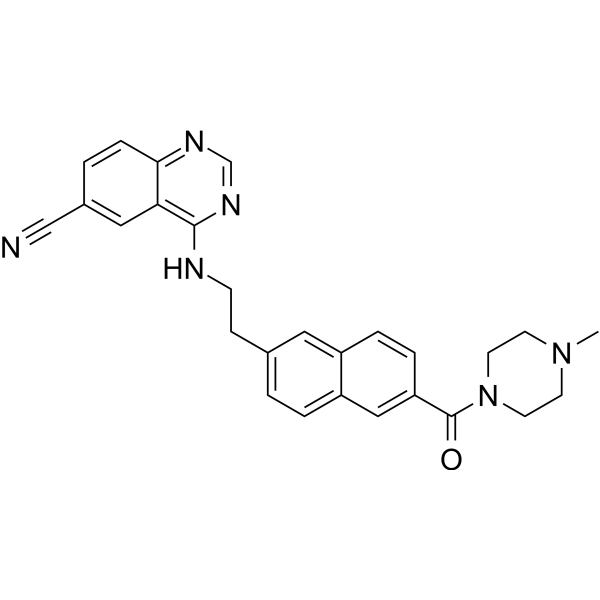
    JH-XVI-178 is a highly efficient and selective CDK8/19 inhibitor, with IC50 values of 1 and 2 nM for CDK8 and CDK19, respectively. JH-XVI-178 has a low clearance rate and moderate oral pharmacokinetic properties .
    JH-XVI-178
  • HY-111427

    CDK Cancer
    CDK8/19-IN-1 is a potent, selective and oral bioavailable CDK8/19 dual inhibitor, with IC50s of 0.46 nM, 0.99 nM and 270 nM for CDK8, CDK19 and CDK9, respectively.
    CDK8/19-IN-1
  • HY-143889

    CDK Cancer
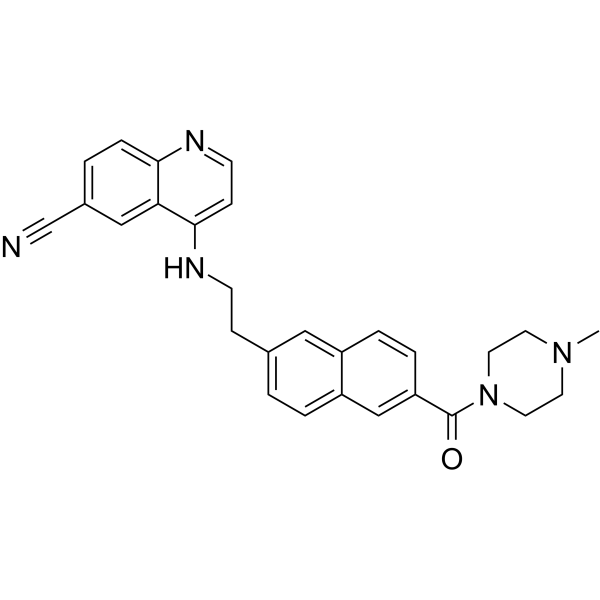
    Senexin C is a selective and orally active CDK8/19 inhibitor. Senexin C shows a strong tumor-enrichment pharmacokinetic (PK) profile and tumor-pharmacodynamic (PD) marker responses. Senexin C inhibits the growth of MV4-11 leukemia cells with good tolerability .
    Senexin C
  • HY-126675
    AS2863619 free base
    5+ Cited Publications

    CDK STAT Inflammation/Immunology
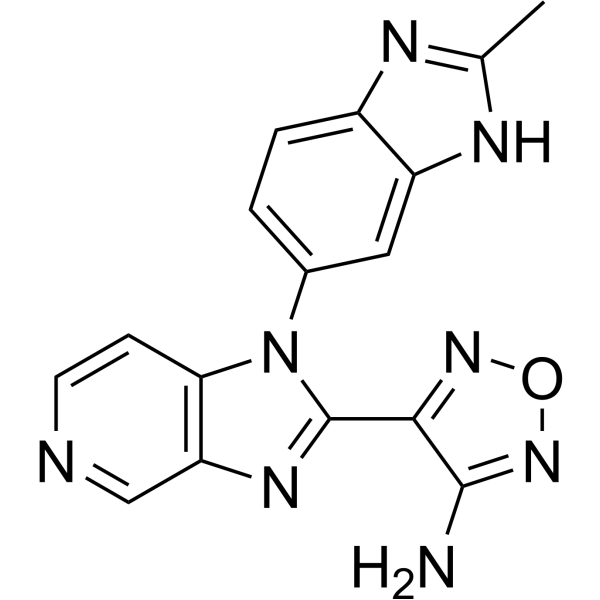
    AS2863619 free base enables conversion of antigen-specific effector/memory T cells into Foxp3 + regulatory T (Treg) cells for the treatment of various immunological diseases. AS2863619 free base is a potent, orally active cyclin-dependent kinase 8 (CDK8) and CDK19 inhibitor with IC50s of 0.61 nM and 4.28 nM, respectively. STAT5 activation enhanced by AS2863619 free base inhibition of CDK8/19, which consequently activates the Foxp3 gene .
    AS2863619 free base
  • HY-175729

    CDK Cancer
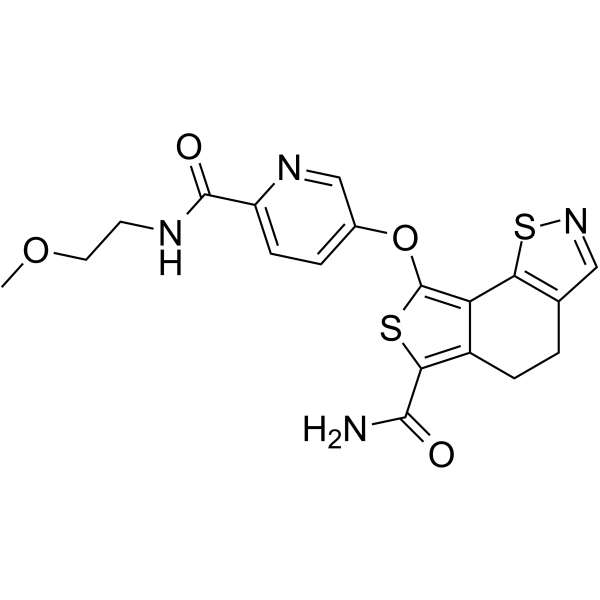
    Cyclin A/B RxL-IN-1 is a inhibitor targeting the Cyclin A/B RxL interaction at the hydrophobic patch (HP). Cyclin A/B RxL-IN-1 inhibits Cyclin A with an IC50 of 0.12 μM. Cyclin A/B RxL-IN-1 demonstrates antitumor efficacy in mouse cell line-derived xenograft (CDX) models. CDK-IN-19 can be used for the study of E2F-driven cancers such as small-cell lung cancer (SCLC) .
    Cyclin A/B RxL-IN-1
  • HY-N10379

    Akt mTOR Apoptosis Reactive Oxygen Species (ROS) CDK Ras HSP VEGFR TNF Receptor Interleukin Related Inflammation/Immunology
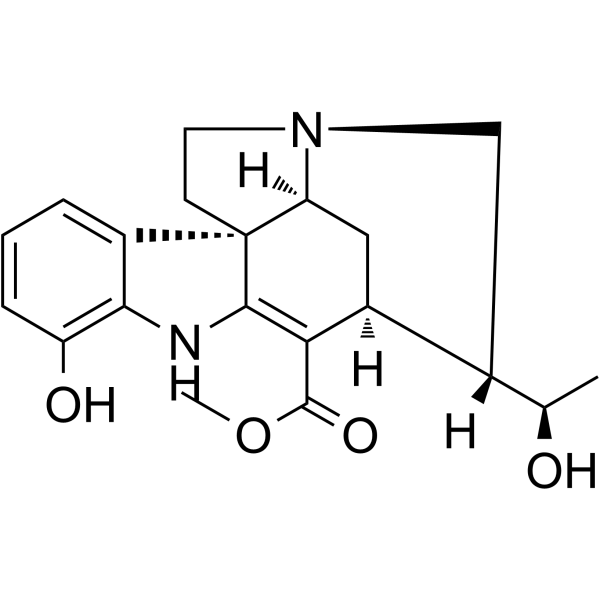
    19-epi-Scholaricine is an orally active indole alkaloid. 19-epi-Scholaricine downregulates the expression of profibrotic/apoptotic proteins (HRAS, HSP90AA1, KDR) and upregulates the expression of cell cycle-related protein (CDK2). 19-epi-Scholaricine suppresses ROS production and reduces the release of inflammatory mediators, thereby attenuating podocyte apoptosis, renal inflammation and oxidative stress by inhibiting AKT/mTOR. 19-epi-Scholaricine can be used in the research of chronic glomerulonephritis and membranous nephropathy .
    19-epi-Scholaricine
  • HY-17679

    CDK Cancer
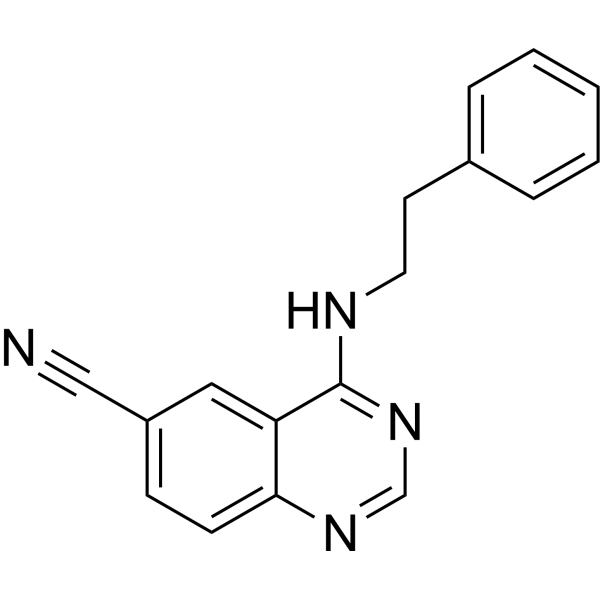
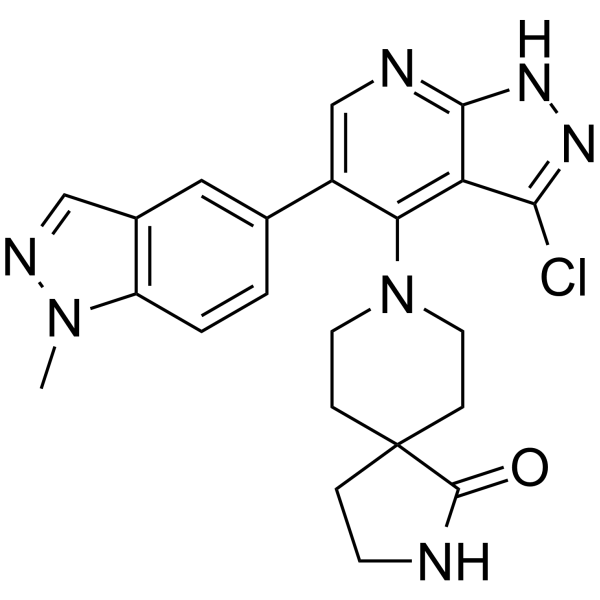
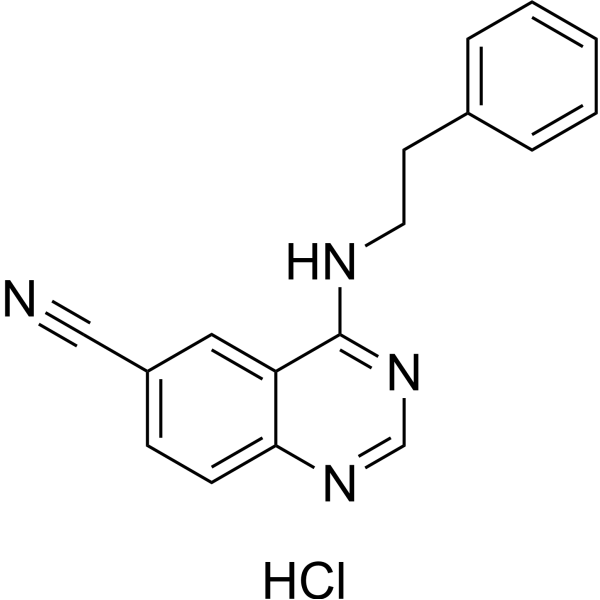
    CDK-IN-19 (Compound example 67.2) is a CDK inhibitor. CDK-IN-19 can be used for research of cancer .
    CDK-IN-19
  • HY-158377

    CDK STAT Cancer
    CDK8/19-IN-2 (compound 12) is an orally active and potent cyclin-dependent kinase 8/19 (CDK8 and CDK19) inhibitor, with IC50 values of 2.08 and 2.49 nM, respectively. CDK8/19-IN-2 can be used for acute myeloid leukemia (AML), breast cancer, and lymphoma research .
    CDK8/19-IN-2
  • HY-168846

    CDK Inflammation/Immunology
    CDK8/19-IN-3 (compound 3-7) is a potent and selective CDK8 and CDK19 inhibitor. CDK8/19-IN-3 upregulates IL-10 levels. CDK8/19-IN-3 has the potential for the research of inflammatory bowel disease (IBD) .
    CDK8/19-IN-3
  • HY-15681A

    CDK Cancer
    Senexin A hydrochloride is an inhibitor of CDK8/19 (IC50: 280 nM, CDK8) and an inhibitor downstream of p21 transcription. It only inhibits p21-induced transcription but does not inhibit other biological effects of p21. Senexin A hydrochloride inhibits CMV-GFP induction as well as the p21 stimulatory activity of the consensus NF-κB-dependent promoters .
    Senexin A hydrochloride
  • HY-101800R

    SNX2-1-165 (Standard); BCD-115 (Standard)

    Reference Standards CDK Cancer
    Senexin B (Standard) (SNX2-1-165 (Standard)) is the analytical standard of Senexin B (HY-101800). This product is intended for research and analytical applications. Senexin B (SNX2-1-165; BCD-115) is a potent, highly water-soluble and bioavailable CDK8/19 inhibitor, with Kds of 140 nM for CDK8 and 80 nM for CDK19.
    Senexin B (Standard)
  • HY-126675G

    CDK TGF-beta/Smad Apoptosis Inflammation/Immunology
    AS2863619 GMP is AS2863619 (HY-126675) produced by using GMP guidelines. GMP small molecules works appropriately as an auxiliary reagent for cell therapy manufacture. AS2863619 is an orally active CDK8/19 inhibitor that also inhibits BMP2, MDA5 and RIG-I receptors. AS2863619 targets Stat5a-CDK8/19 to promote the differentiation of CD4 + T cells into regulatory T cells and induce FOXP3 expression, thereby restoring immune homeostasis and establishing transplant immune tolerance. AS2863619 also enhances the BMP2/SMAD signaling pathway to promote osteogenic differentiation and inhibit adipogenic differentiation. AS2863619 exerts osteoprotective effects by alleviating inflammation-induced impairment of osteogenic function and inducing neutrophil apoptosis (apoptosis). AS2863619 can be applied to research in related fields such as periodontitis-induced bone defects .
    AS2863619

Inquiry Online

Your information is safe with us. * Required Fields.

Salutation


Country or Region *

Applicant Name *


Organization Name *

Department *


Email Address *


Product Name *

Cat. No.


Requested quantity *

Phone Number *


Remarks

Inquiry Online

Inquiry Information

Product Name:
Cat. No.:
Quantity:
MCE Japan Authorized Agent:

