1. Search Result
Search Result
Results for "

Centrosome

" in MedChemExpress (MCE) Product Catalog:

22

阻害剤およびアゴニスト

1

生化学アッセイ試薬

2

ペプチド

1

天然物

6

抗体

1

クリックケミストリー

1

オリゴヌクレオチド

製品番号 製品名 Target 研究分野 構造式
  • HY-145967
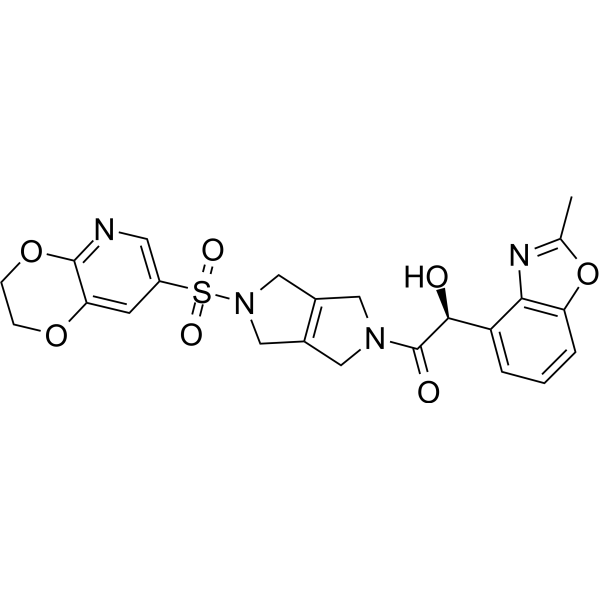
    FT709
    1 Publications Verification

    Deubiquitinase Mitosis Cancer
    FT709 is a potent and selective USP9X inhibitor, an IC50 of 82 nM. USP9X has been linked with centrosome function, chromosome alignment during mitosis, EGF receptor degradation, chemo-sensitization, and circadian rhythms .
    FT709
  • HY-W286743
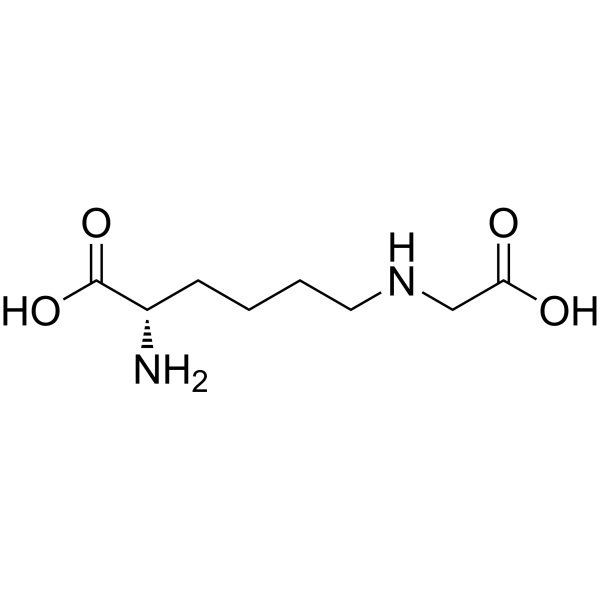
    Nε-(Carboxymethyl)-L-lysine
    1 Publications Verification

    CML; N6-(Carboxymethyl)-L-lysine; Nε-(1-Carboxymethyl)-L-lysine

    Polo-like Kinase (PLK) ERK NF-κB Cancer
    Nε-(Carboxymethyl)-L-lysine (CML) is an orally active advanced glycation end product. Nε-(Carboxymethyl)-L-lysine upregulates the expression of PLK1 and CEP20, and induces the activation of RAGE and ERK/NFκB. Nε-(Carboxymethyl)-L-lysine drives centrosome amplification. Nε-(Carboxymethyl)-L-lysine induces malignant transformation of hepatocytes and promotes the development of hepatocellular carcinoma. Nε-(Carboxymethyl)-L-lysine induces epithelial-mesenchymal transition in osteosarcoma cells and enhances their migration and invasion properties .
    Nε-(Carboxymethyl)-L-lysine
  • HY-138084

    Separase Mitosis Cancer
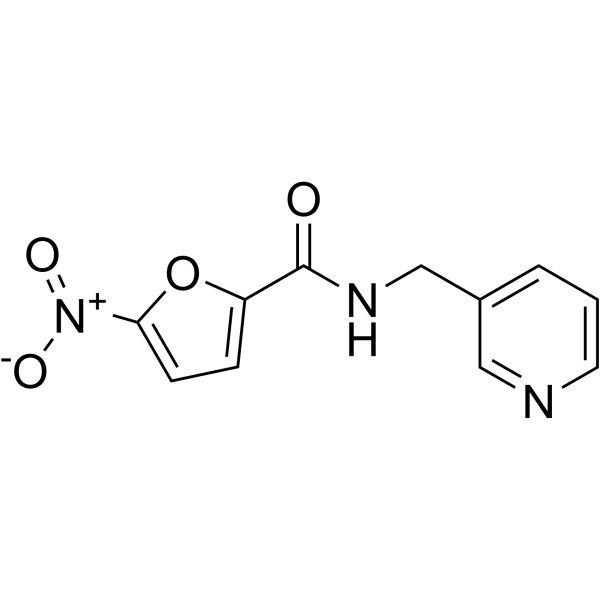
    SIC5-6 is a potent Separase inhibitor. Separase, a large cysteine protease, involves in chromosome segregation during mitosis and meiosis, DNA damage repair, centrosome disengagement and duplication, spindle stabilization and elongation. Separase is highly overexpressed in many solid cancers, serves as an attractive chemotherapeutic target .
    SIC5-6
  • HY-114302
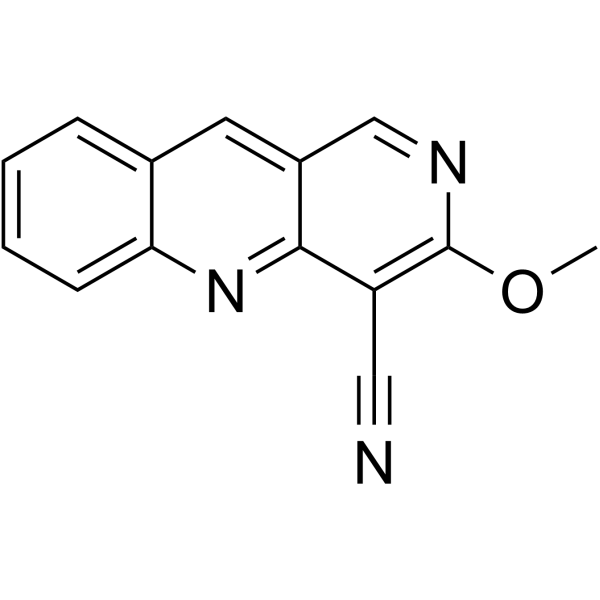
    CCB02
    1 Publications Verification

    Microtubule/Tubulin Cancer
    CCB02 is a selective CPAP-tubulin interaction inhibitor, binding to tubulin and competing for the CPAP binding site of β-tubulin, with an IC50 of 689 nM, and shows potent anti-tumor activity. CCB02 shows no inhibition on the cell cycle- and centrosome-related kinases, or the phosphorylation status of Aurora A, Plk1, Plk2, CDK2, and CHK1 .
    CCB02
  • HY-W199190

    DNA/RNA Synthesis Cancer
    2-CEES is a mustard gas analog forms only DNA monoadducts. 2-CEES induces centrosome amplification in human and mouse cells. 2-CEES induces centrosome amplification and chromosome instability .
    2-CEES
  • HY-149075

    Salt-inducible Kinase (SIK) Cancer
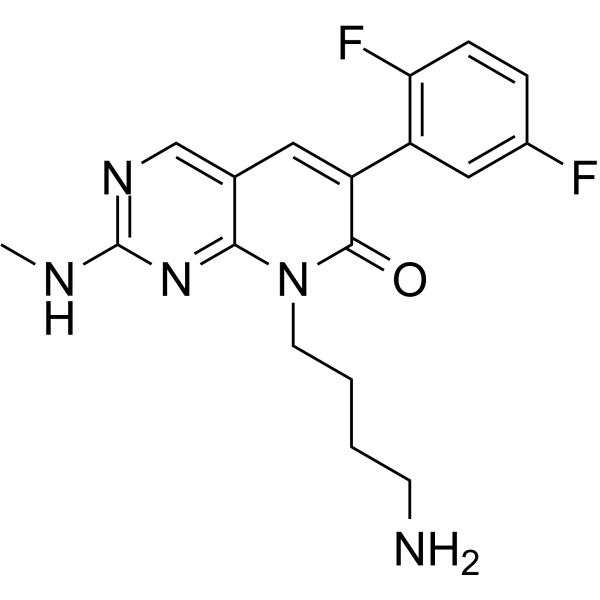
    MR22 is a potent pan-SIK (salt-inducible kinase) inhibitor. MR22 no longer exhibits activity on STE group kinases and displays excellent selectivity in a representative kinase panel. MR22-dependent SIK inhibition led to centrosome dissociation and subsequent cell-cycle arrest in ovarian cancer cells .
    MR22
  • HY-P11118A

    CAPture peptide, biotin-CCDC61 (334-366) TFA

    Biochemical Assay Reagents Others
    Biotinylated CCDC61 peptide (CAPture peptide, biotin-CCDC61 (334-366)) TFA is a biotinylated peptide derived from the centrosomal protein CCDC61. Biotinylated CCDC61 peptide TFA specifically isolates intact centrosomes .
    Biotinylated CCDC61 peptide TFA
  • HY-149085

    RAR/RXR Cancer
    XS-060 is a potent anticancer agent and RXRα antagonist. XS-060 significantly induces RXRα-dependent mitotic arrest by inhibiting pRXRα-PLK1 interaction. XS-060 inhibits p-RXRα interaction with PLK1 but has no effect on RXRα heterodimerization with RARγ. XS-060 inhibits the in situ interaction between p-RXRα and PLK1 at the centrosome .
    XS-060
  • HY-N11128

    Kinesin Cancer
    Solidagonic acid is an acidic bitter principle that can be found in the root and rhizomes of Solidago altissima L. Solidagonic acid binds HSET/KIFC1, restores growth in HSET-overproducing fission yeast cells and reverts mitotic spindles from monopolar to bipolar morphology. Solidagonic acid can be used for the research of breast adenocarcinoma .
    Solidagonic acid
  • HY-120284

    Microtubule/Tubulin Cancer
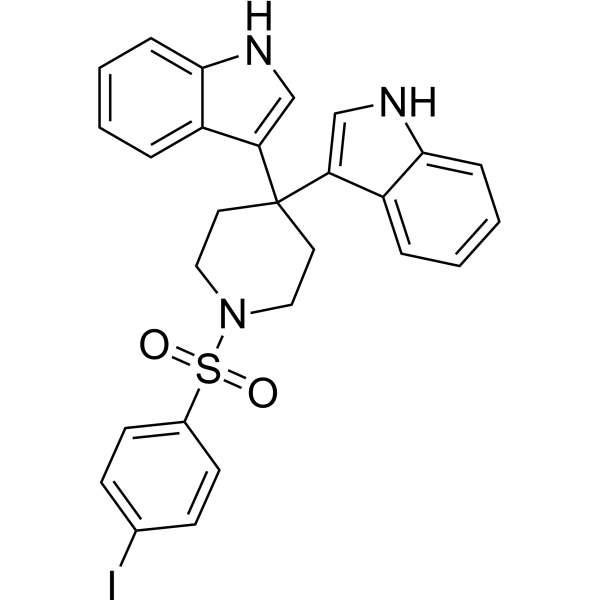
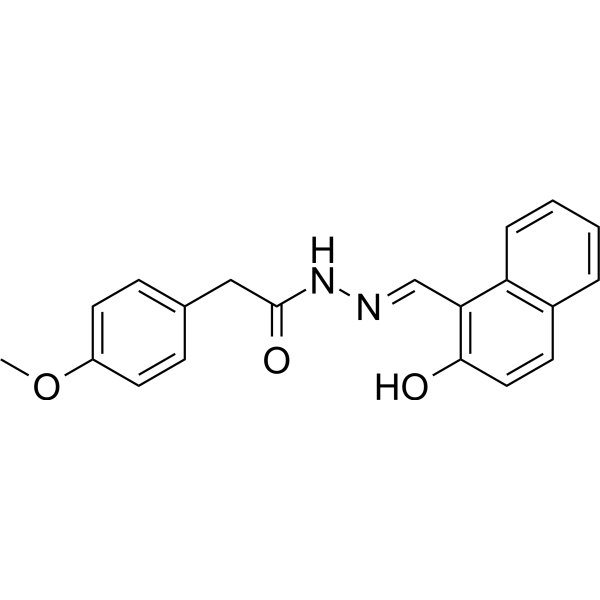
    CCCI-01 is a centrosome clustering inhibitor. CCCI-01 has selective effects on cancer. CCCI-01 can be used for the research of non-cross-resistant anti-cancer agents with blocking centrosome clustering .
    CCCI-01
  • HY-100847

    PARP Cancer
    AZ0108 is an inhibitor for poly ADP-ribose polymerase (PARP), which inhibits PARP1, PARP2, PARP3, PARP6, TNKS1, TNKS2, with IC50s of <0.03, <0.03, 2.8, 0.083, 3.2, >3 μM, respectively. AZ0108 prevents centrosome clustering with an EC50 of 0.053 μM, and exhibits cytotoxicity in cell OCI-LY-19 with GI50 of 0.017 μM. AZ0108 exhibits good in vivo pharmacokinetic characters in rat/mouse models .
    AZ0108
  • HY-146146

    KAA

    Kinesin Cancer
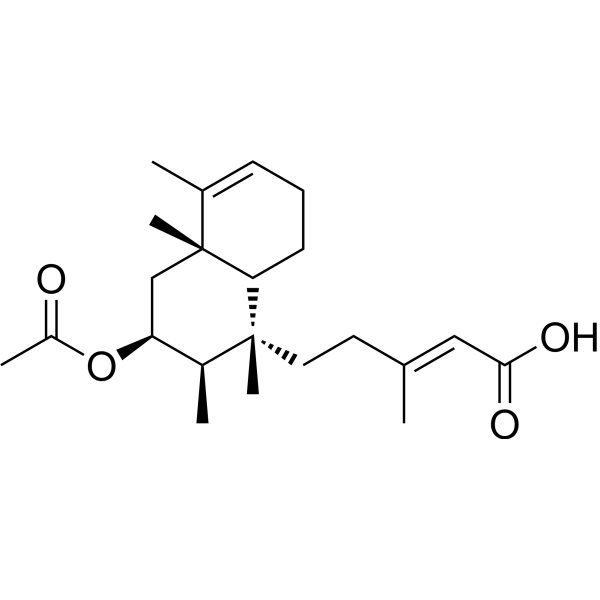
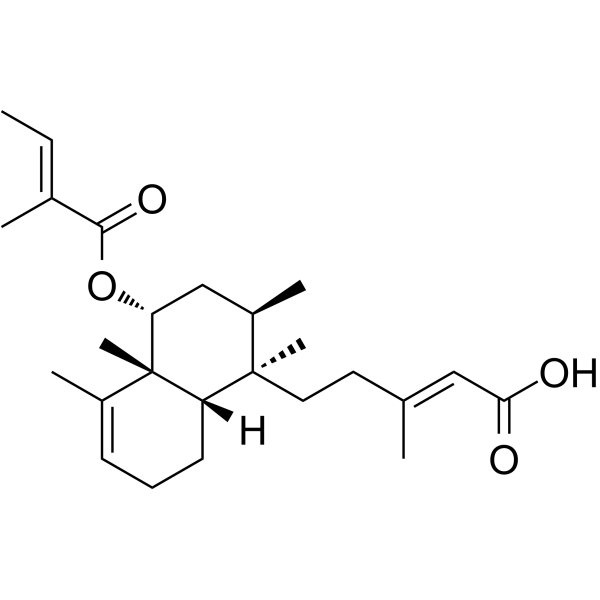
    Kolavenic acid analog (KAA) is an anticancer agent. Kolavenic acid analog shows strong activity against HSET-overproducing yeast cells. Kolavenic acid analog inhibits centrosome clustering in human cancer cells containing high HSET levels and supernumerary centrosomes .
    Kolavenic acid analog
  • HY-P11118

    CAPture peptide, biotin-CCDC61 (334-366)

    Biochemical Assay Reagents Others
    Biotinylated CCDC61 peptide (CAPture peptide, biotin-CCDC61 (334-366)) is a biotinylated peptide derived from the centrosomal protein CCDC61. Biotinylated CCDC61 peptide specifically isolates intact centrosomes .
    Biotinylated CCDC61 peptide
  • HY-124519

    Cent-1

    Microtubule/Tubulin Cancer
    Centmitor-1 (Cent-1) is a mitotic arrest inducer. Centmitor-1 modulates microtubule plus-ends and reduced microtubule dynamics. In cells, Centmitor-1 causes mitotic arrest characterized by chromosome alignment defects, multipolar spindles, centrosome fragmentation, and activated spindle assembly checkpoint .
    Centmitor-1
  • HY-174563

    mRNA Cancer
    Human OLA1 mRNA encodes the human Obg like ATPase 1 (OLA1) protein, a member of the GTPase protein family. OLA1 interacts with breast cancer-associated gene 1 (BRCA1) and BRCA1-associated RING domain protein (BARD1), and is involved in centrosome regulation.
    Human OLA1 mRNA
  • HY-186208

    Aurora Kinase Cancer
    TACC3-IN-3 is a TACC3 inhibitor. TACC3 is a scaffold protein that is highly expressed in various tumors and regulates microtubule/centrosome stability via phosphorylation by Aurora A. TACC3-IN-3 inhibits the proliferation of triple-negative breast cancer cells. TACC3-IN-3 is applicable to triple-negative breast cancer research .\n
    TACC3-IN-3
  • HY-186210

    Aurora Kinase Cancer
    TACC3-IN-5 (Compound 35) is a TACC3 inhibitor. TACC3 is a scaffold protein that is highly expressed in various tumors and regulates microtubule/centrosome stability via phosphorylation by Aurora A. TACC3-IN-5 inhibits the proliferation of triple-negative breast cancer cells. TACC3-IN-5 is applicable for triple-negative breast cancer research .
    TACC3-IN-5
  • HY-186209

    Aurora Kinase Cancer
    TACC3-IN-4 is a TACC3 inhibitor. TACC3 is a scaffold protein that is highly expressed in various tumors and regulates microtubule/centrosome stability via phosphorylation by Aurora A. TACC3-IN-4 inhibits the proliferation of triple-negative breast cancer cells. TACC3-IN-4 can be used for triple-negative breast cancer research .
    TACC3-IN-4
  • HY-104023

    Polo-like Kinase (PLK) Cancer
    ZK-Thiazolidinone is an ATP-competitive Polo-like kinase 1 (Plk1) inhibitor with an IC50 of 19 nM. ZK-Thiazolidinone inhibits tumor cell proliferation, induces cell cycle arrest and typical mitotic defects. ZK-Thiazolidinone impairs the recruitment of γ-tubulin and Aurora A kinase to centrosomes, resulting in failure of bipolar spindle maintenance and sister chromatid arm cohesion.\nZK-Thiazolidinone is applicable for cancer research .
    ZK-Thiazolidinone
  • HY-165369

    Aurora Kinase Cancer
    IBPR002 is an inhibitor of Aurora kinase A and Aurora kinase B, with IC50 values of 41 nM and 17 nM, respectively. IBPR002 disrupts the nucleation and bundling of kinetochore microtubules, impairs the bipolarity of mitotic spindles, and promotes the binding of non-phosphorylated hepatoma up-regulated protein (HURP) to microtubules derived from the mother centrosome. IBPR002 reduces tumorigenesis levels in a colorectal cancer xenograft model using athymic nude mice. IBPR002 is applicable for research related to colorectal cancer .
    IBPR002
  • HY-183628

    2-(4-Morpholinoanilino-6-[(2-exo-norbornyl) amino)-purine

    STAT Endocrinology Cancer
    MEAP (2-(4-Morpholinoanilino-6-[(2-exo-norbornyl) amino)-purine) is a NEDD9-STAT3 modulator. MEAP disrupts NEDD9-STAT3 interaction, driving STAT3 Y705 dephosphorylation. MEAP induces G2/M phase arrest. MEAP can be used for the research of anaplastic thyroid cancer .
    MEAP
  • HY-112500

    SPL-B

    Microtubule/Tubulin Neurological Disease
    Spindlactone B (SPL-B) is a TACC3 inhibitor. Spindlactone B reduces the level of acetylated Microtubules. Spindlactone B can be used in the research of neurological diseases .
    Spindlactone B

オンラインお問い合わせ

入力情報は安全に管理されます. 必須入力項目.

タイトル


国或いは地域 *

お名前 *


組纖名 *

デパートメント *


メールアドレス *


製品名 *

製品番号


カスタマ需要量 *

電話番号 *


必ず会社名を記載ください。個人への返信は行いません。

備考

バルクお問い合わせ

Inquiry Information

製品名:
製品番号:
数量:
MCE 日本正規代理店:

