



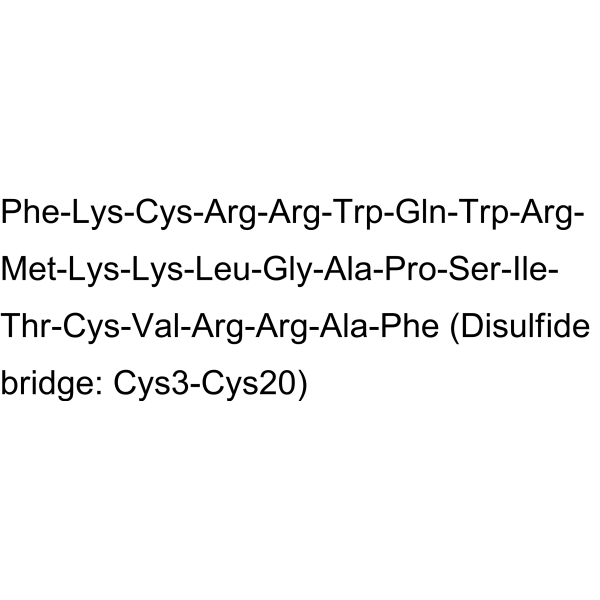

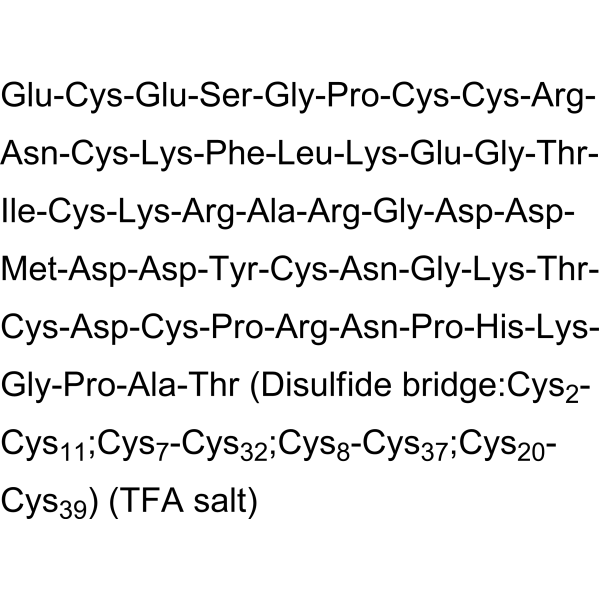
85 Results for "

Cys39

" in MedChemExpress (MCE) Product Catalog:
Products (85)

85 Results for "Cys39" in MCE Product Catalog:

25
25 Publications Verification
Cat. No.: HY-P0028
CAS No.: 17466-45-4
Target:  

Fluorescent Dye

Research Areas:  

Others

Phalloidin is a mushroom-derived toxin which can be used to label F-actin of the cytoskeleton with fluorochrome .
loading...
    loading...
10
10 Cited Publications
Cat. No.: HY-P0202
CAS No.: 117399-94-7
Synonyms: ET-1 (swine, human)
Endothelin 1 (swine, human) (ET-1) is a synthetic peptide with the sequence of human and swine Endothelin 1, which is a potent endogenous vasoconstrictor. Endothelin 1 acts through two types of receptors ETA and ETB .
loading...
    loading...
10
10 Cited Publications
Cat. No.: HY-P0202A
CAS No.: 394693-38-0
Synonyms: ET-1 (swine, human) TFA
Target:  

Endothelin Receptor

Research Areas:  

Cardiovascular Disease

Endothelin 1 (swine, human) (ET-1) TFA is a synthetic peptide with the sequence of human and swine Endothelin 1, which is a potent endogenous vasoconstrictor. Endothelin 1 TFA acts through two types of receptors ETA and ETB .
loading...
    loading...
9
9 Cited Publications
Cat. No.: HY-P1264
CAS No.: 11032-79-4
Target:  

nAChR

Research Areas:  

Neurological Disease

α-Bungarotoxin is a competitive antagonist at nicotinic acetylcholine receptors (nAChRs). α-Bungarotoxin, a selective α7 receptor blocker, blocks α7 currents with an IC50 of 1.6 nM and has no effects on α3β4 currents at concentrations up to 3 μM .
loading...
    loading...
7
7 Cited Publications
Cat. No.: HY-P1411
CAS No.: 880107-52-8
Synonyms: PcTx1; Psalmopoeus cambridgei toxin-1
Research Areas:  

Neurological Disease Cancer

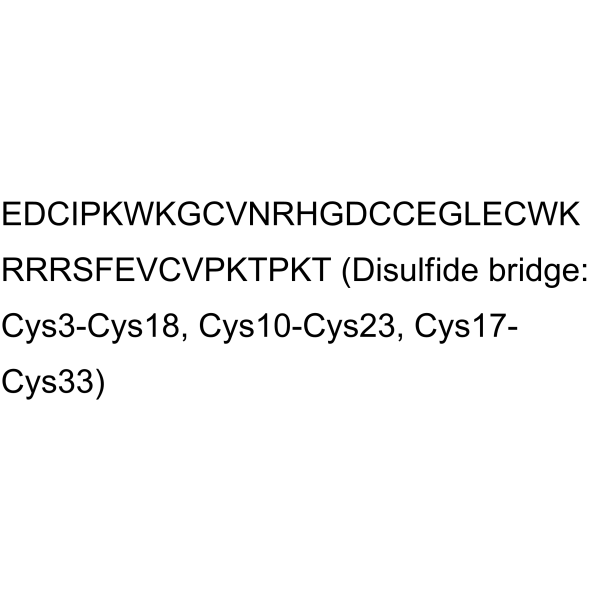
Psalmotoxin 1 (PcTx1) is a protein toxin that can bind at subunit-subunit interfaces of acid-sensing ion channel 1a (ASIC1a). Psalmotoxin 1 is a potent and slective ASIC1a inhibitor (IC50: 0.9 nM) by increasing the apparent affinity for H + of ASIC1a. Psalmotoxin 1 can induce cell apoptosis, also inhibits cell migration, proferliration and invasion of cancer cells. Psalmotoxin 1 can be used in the research of cancers, or neurological disease .
loading...
    loading...
7
7 Cited Publications
Cat. No.: HY-P1411A
Synonyms: PcTx1 TFA; Psalmopoeus cambridgei toxin-1 TFA
Research Areas:  

Neurological Disease Cancer

Psalmotoxin 1 (PcTx1) TFA is a protein toxin that can bind at subunit-subunit interfaces of acid-sensing ion channel 1a (ASIC1a). Psalmotoxin 1 TFA is a potent and slective ASIC1a inhibitor (IC50: 0.9 nM) by increasing the apparent affinity for H + of ASIC1a. Psalmotoxin 1 TFA can induce cell apoptosis, also inhibits cell migration, proferliration and invasion of cancer cells. Psalmotoxin 1 TFA can be used in the research of cancers, or neurological disease .
loading...
    loading...
3
3 Cited Publications
Cat. No.: HY-P1275
CAS No.: 910044-56-3
Target:  

Potassium Channel

Research Areas:  

Cardiovascular Disease

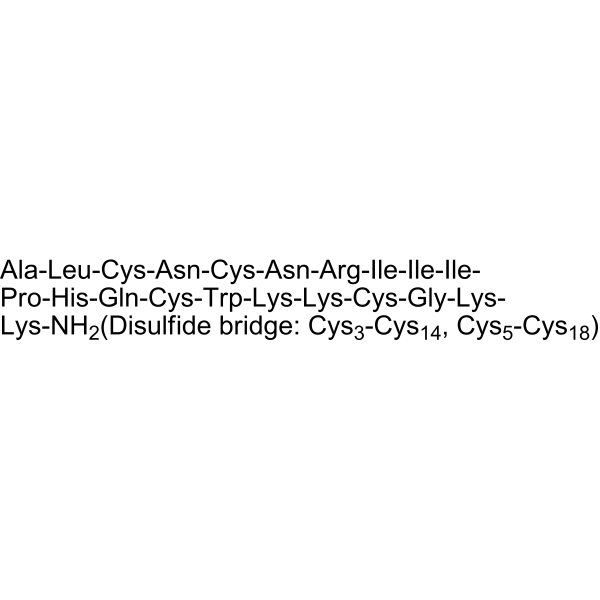
Tertiapin-Q is a highly selective blocker of GIRK1/4 heterodimer and ROMK1 (Kir1.1).
loading...
    loading...
2
2 Cited Publications
Cat. No.: HY-108814A
Purity:  97.69%
Synonyms: DX-88 TFA
Target:  

Kallikrein

Research Areas:  

Cardiovascular Disease

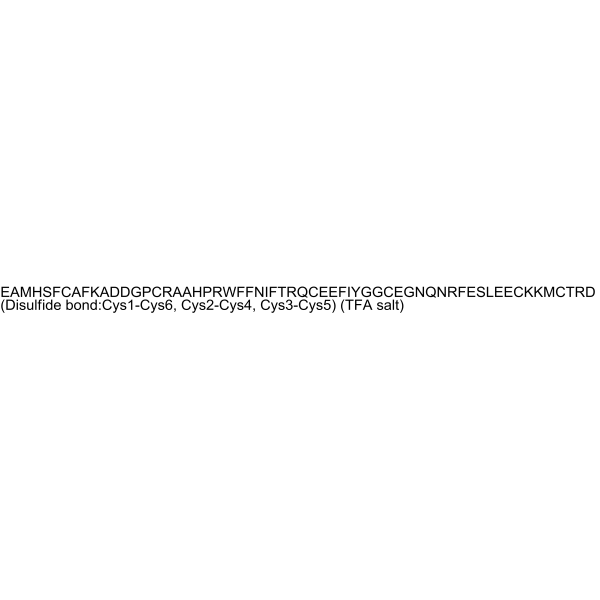
Ecallantide (DX-88) TFA is a specific recombinant plasma kallikrein inhibitor. Ecallantide inhibits the production of bradykinin. Ecallantide may be used to prevent acute attacks of angioedema .
loading...
    loading...
1
1 Cited Publications
Cat. No.: HY-P0204A
Synonyms: Endothelin 3 (Rat,Human) TFA
Research Areas:  

Neurological Disease

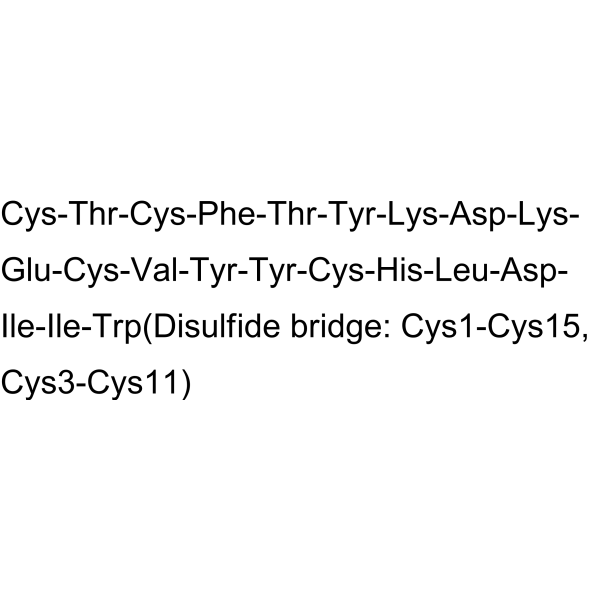
Endothelin-3, human, mouse, rabbit, rat TFA (Endothelin 3 (Rat,Human) TFA) is an adhesion stimulant. Endothelin-3, human, mouse, rabbit, rat TFA stimulates the adhesion of enteric neural crest cells to various ECM components. Endothelin-3, human, mouse, rabbit, rat TFA plays an important role in the maintenance and self-renewal of intestinal progenitor cells, participates in the migration of enteric neural crest cells, and helps maintain a suitable environment for the colonization of enteric neural crest cells. Endothelin-3, human, mouse, rabbit, rat TFA acts synergistically with the β1-integrin signaling pathway during enteric nervous system development. Endothelin-3, human, mouse, rabbit, rat TFA can be used in studies related to distal aganglionosis .
loading...
    loading...
1
1 Cited Publications
Cat. No.: HY-P0204
CAS No.: 117399-93-6
Synonyms: Endothelin 3 (Rat,Human)
Research Areas:  

Neurological Disease

Endothelin-3, human, mouse, rabbit, rat (Endothelin 3 (Rat,Human)) is an adhesion stimulant. Endothelin-3, human, mouse, rabbit, rat stimulates the adhesion of enteric neural crest cells to various ECM components. Endothelin-3, human, mouse, rabbit, rat plays an important role in the maintenance and self-renewal of intestinal progenitor cells, participates in the migration of enteric neural crest cells, and helps maintain a suitable environment for the colonization of enteric neural crest cells. Endothelin-3, human, mouse, rabbit, rat acts synergistically with the β1-integrin signaling pathway during enteric nervous system development. Endothelin-3, human, mouse, rabbit, rat can be used in studies related to distal aganglionosis .
loading...
    loading...
1
1 Cited Publications
Cat. No.: HY-P2171A
Target:  

Peptides

Research Areas:  

Inflammation/Immunology

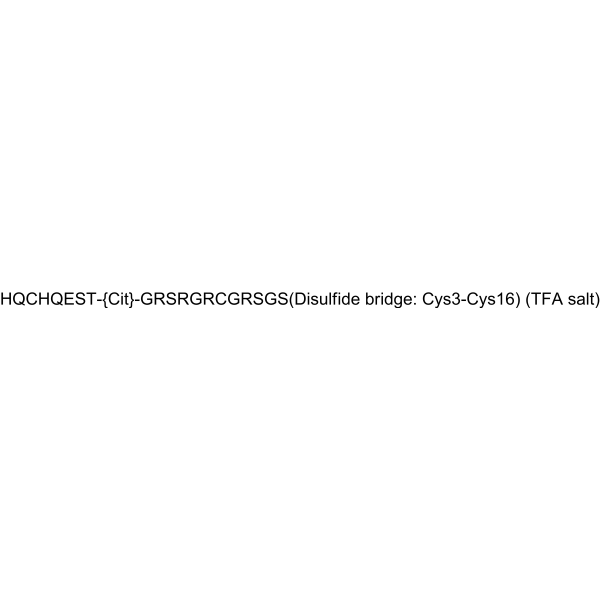
CCP peptide TFA is a synthetic cyclic citrullinated peptide (CCP) and used as the substrate for detecting anti-CCP antibodies serologically. CCP peptide TFA functions as a target for autoantibodies with a very high specificity for rheumatoid arthritis (RA) .
loading...
    loading...
Cat. No.: HY-P3503
CAS No.: 1480724-61-5
Synonyms: BMN 111
Target:  

FGFR

Research Areas:  

Others

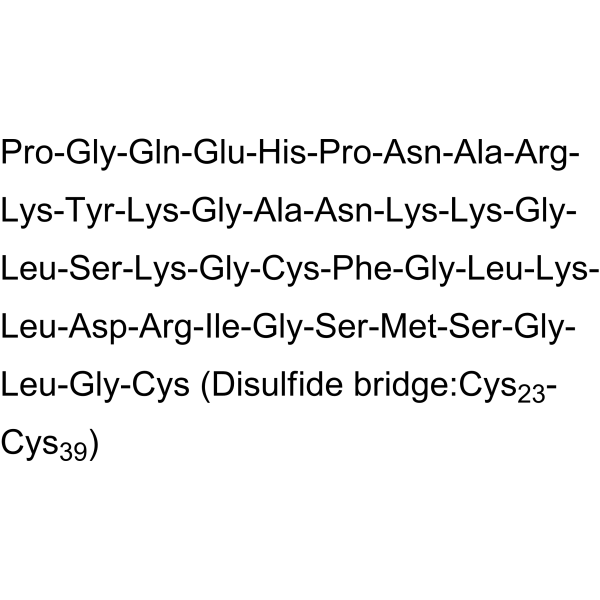
Vosoritide (BMN 111) is a modified recombinant CNP (C-type natriuretic peptide) analogue, binds to NPR-B (natriuretic peptide receptor type B) and reduces the activity of FGFR3 (fibroblast growth factor receptor 3). Vosoritide can be used in achondroplasia and dwarfism research .
loading...
    loading...
Cat. No.: HY-P0084
CAS No.: 38916-34-6
Synonyms: SRIF-14; Somatostatin-14
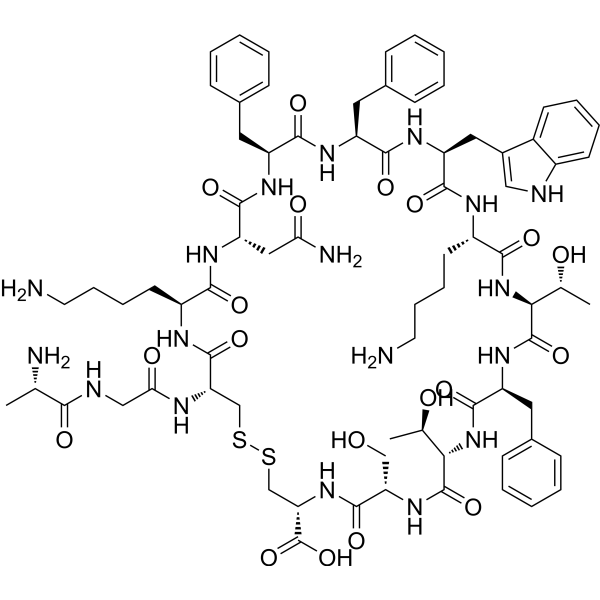
Cyclic somatostatin (SRIF-14) is a growth hormone-release inhibiting factor used in the research of severe, acute hemorrhages of gastroduodenal ulcers. Cyclic somatostatin is a neuropeptide co-stored with acetylcholine in the cardiac parasympathetic innervation, exerts influences directly on contraction of ventricular cardiomyocytes. Cyclic somatostatin inhibits the contractile response of isoprenaline with an IC50 value of 13 nM. Cyclic somatostatin can be used for the research of cardiovascular disease .
loading...
    loading...
Cat. No.: HY-P3503A
Synonyms: BMN 111 acetate
Target:  

FGFR

Research Areas:  

Others

Vosoritide (BMN 111) acetate is a natriuretic peptide receptor 2 (NPR2) agonist that acts on the proliferation and differentiation of chondrocytes to promote bone growth .
loading...
    loading...
Cat. No.: HY-P1264F
Target:  

nAChR

Research Areas:  

Neurological Disease

FITC-labeled α-Bungarotoxin is FITC-conjugated α-Bungarotoxin (HY-P1264). α-Bungarotoxin acts as a competitive antagonist of nicotinic acetylcholine receptors (nAChRs) .
loading...
    loading...
Cat. No.: HY-P2469
CAS No.: 1816939-52-2
Synonyms: BNP-45, mouse
Brain Natriuretic Peptide-45, mouse (BNP-45, mouse) is a 45-amino-acid peptide derived from the mouse BNP prohormone, which exhibits natriuretic, diuretic, and vasoactive effects. Brain Natriuretic Peptide-45, mouse contains all amino acid residues deemed critical for the biological activity of natriuretic peptides. Brain Natriuretic Peptide-45, mouse possesses hypotensive and diuretic activities .
loading...
    loading...
Cat. No.: HY-P1189
CAS No.: 154303-05-6
Echistatin is a naturally derived RGD-containing snake venom peptide. Echistatin exhibits an IC50 of 0.6 nM against mouse αvβ3 integrin, and acts as an antagonist against αvβ3, αII3, α5β1 integrins, pp125 FAK and paxillin. Echistatin reduces the phosphorylation of pp125 FAK and paxillin, inhibits the autophosphorylation and kinase activity of pp125 FAK, and weakens its binding to pp60src and paxillin. Echistatin disrupts the actin cytoskeleton and focal adhesions, induces melanoma cell detachment from fibronectin, and regulates cell adhesion and motility. Echistatin inhibits osteoclast maturation and migration, bone resorption, platelet aggregation, bone loss, as well as adhesion and metastasis of Lewis lung cancer cells; it also increases the number of osteoclasts and bone coverage area in mice with secondary hyperparathyroidism. Echistatin can be used in research related to melanoma, lung cancer and secondary hyperparathyroidism .
loading...
    loading...
Cat. No.: HY-P1791
CAS No.: 146897-68-9
Synonyms: Lactoferricin B; Lfcin B
Target:  

Bacterial Fungal Apoptosis

Research Areas:  

Infection Cancer

Lactoferrin 17-41 (Lactoferricin B), a peptide corresponding to residues 17-41 of bovine lactoferrin, has antimicrobial activity against a wide range of microorganisms, including Gram-positive and Gramnegative bacteria, viruses, protozoa, and fungi. Lactoferrin 17-41 has antitumor activities .
loading...
    loading...
Cat. No.: HY-P3561A
Target:  

Melanocortin Receptor

Research Areas:  

Neurological Disease

Agouti-related Protein (AGRP) (83-132) Amide (human) TFA is a fragment of agouti-related protein (AGRP) which is a protein found in abundance in the arcuate nucleus of the hypothalamus. AgRP primarily acts as an inverse agonist for the melanocortin-4 receptor (MC4R) to increase food intake .
loading...
    loading...
Cat. No.: HY-P1189A
Echistatin TFA is a naturally derived RGD-containing snake venom peptide. Echistatin TFA exhibits an IC50 of 0.6 nM against mouse αvβ3 integrin, and acts as an antagonist against αvβ3, αII3, α5β1 integrins, pp125 FAK and paxillin. Echistatin TFA reduces the phosphorylation of pp125 FAK and paxillin, inhibits the autophosphorylation and kinase activity of pp125 FAK, and weakens its binding to pp60src and paxillin. Echistatin TFA disrupts the actin cytoskeleton and focal adhesions, induces melanoma cell detachment from fibronectin, and regulates cell adhesion and motility. Echistatin TFA inhibits osteoclast maturation and migration, bone resorption, platelet aggregation, bone loss, as well as adhesion and metastasis of Lewis lung cancer cells; it also increases the number of osteoclasts and bone coverage area in mice with secondary hyperparathyroidism. Echistatin TFA can be used in research related to melanoma, lung cancer and secondary hyperparathyroidism .
loading...
    loading...

