




Scientific Reviews
Product Guides
Blogs
Topics
Targeted therapy! The Capetin Prize winning "Click Chemistry" can be used like this!Targeted therapy! The Nobel Prize winning "Click Chemistry" can be used like this!2025-02-06



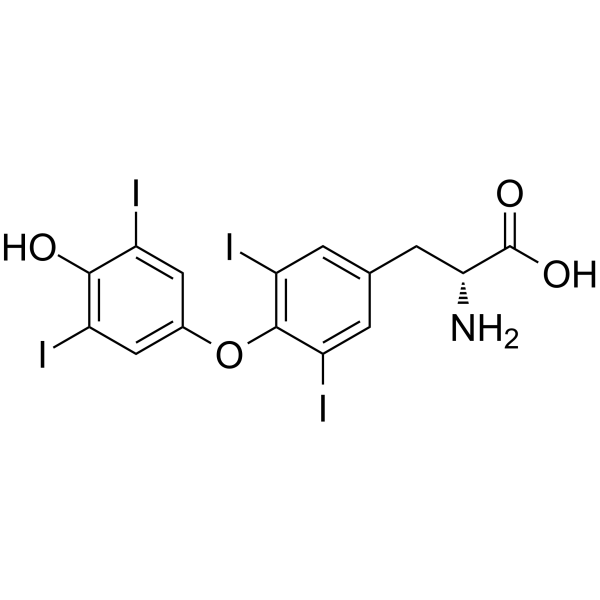
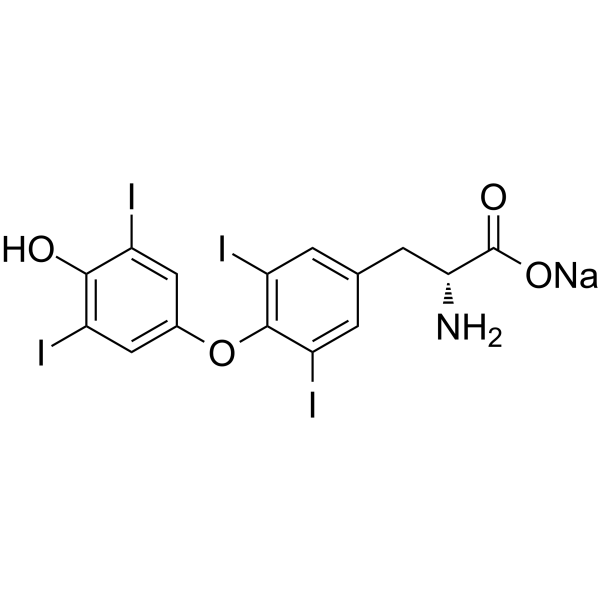
4 Results for "D-Thyroxine" in MCE Product Catalog:
Hormones are a class of biologically active substances secreted by endocrine gland cells, which are transported through the circulatory system to various parts of the body, and precisely act on specific target organs or cells, playing a crucial role in regulating the growth, development, metabolism, and reproduction of organisms. The mechanisms of hormone action are diverse and complex. Some hormones (such as corticosteroids, vitamin D, and thyroid hormones) can enter the cell interior and interact with receptors in the nucleus, thereby regulating gene expression and affecting cell function. Other hormones (such as growth hormone and thyrotropin-releasing hormone) bind directly to receptors on the cell surface, exerting their effects by regulating enzyme activity or influencing the state of ion channels. Additionally, hormones play a key role in the study of endocrine and metabolic diseases, and are closely related to the development of diseases such as diabetes and thyroid diseases.
MCE has included 86 human hormone compounds, which is of great significance for the study of human metabolic pathways, and can also be used to build a metabonomics database.

Scientific Reviews
Product Guides
Blogs
Topics
Targeted therapy! The Capetin Prize winning "Click Chemistry" can be used like this!Targeted therapy! The Nobel Prize winning "Click Chemistry" can be used like this!2025-02-06
Protocols
Targeted therapy! The Capetin Prize winning "Click Chemistry" can be used like this!Targeted therapy! The Nobel Prize winning "Click Chemistry" can be used like this!2025-02-06



