16 Results for "

G2/M progression

" in MedChemExpress (MCE) Product Catalog:
Products (16)

16 Results for "G2/M progression" in MCE Product Catalog:

3
3 Cited Publications
Cat. No.: HY-100789
CAS No.: 1312471-39-8
Purity:  99.90%
Research Areas:  

Cancer

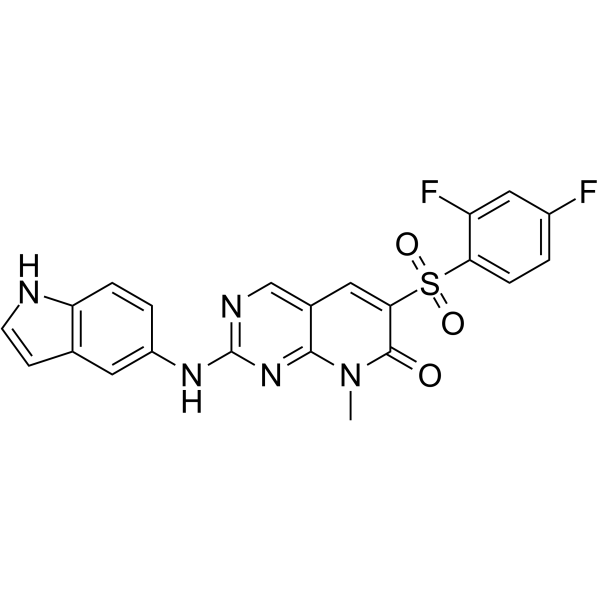
ON1231320 is a highly specific polo like kinase 2 (PLK2) inhibitor with an IC50 of 0.31 μM. ON1231320 blocks tumor cell cycle progression in the G2/M phase in mitosis, causing apoptotic cell death. ON1231320, an arylsulfonyl pyrido-pyrimidinone, has antitumor activity .
loading...
    loading...
3
3 Cited Publications
Cat. No.: HY-139604
CAS No.: 2623158-64-3
Purity:  99.56%
Target:  

MARK Apoptosis

Research Areas:  

Cancer

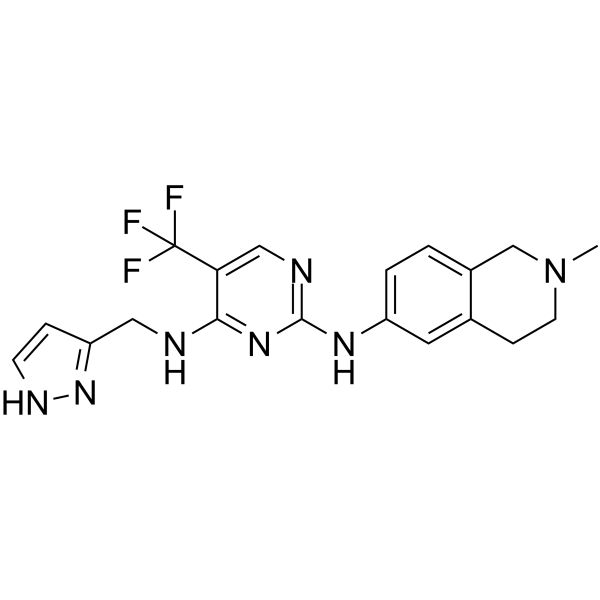
PCC0208017 is a microtubule affinity regulating kinases (MARK3/MARK4) inhibitor with IC50s of 1.8 and 2.01 nM, respectively. PCC0208017 has much lower inhibitory activity against MARK1 and MARK2, with IC50s of 31.4 and 33.7 nM, respectively. PCC0208017 suppresses glioma progression in vitro and in vivo. PCC0208017 disrupts microtubule dynamics and induces G2/M phase cell cycle arrest and cell apoptosis. PCC0208017 demonstrates robust antitumor activity in vivo and displays good BBB permeability .
loading...
    loading...
2
2 Cited Publications
Cat. No.: HY-N2369
CAS No.: 476-32-4
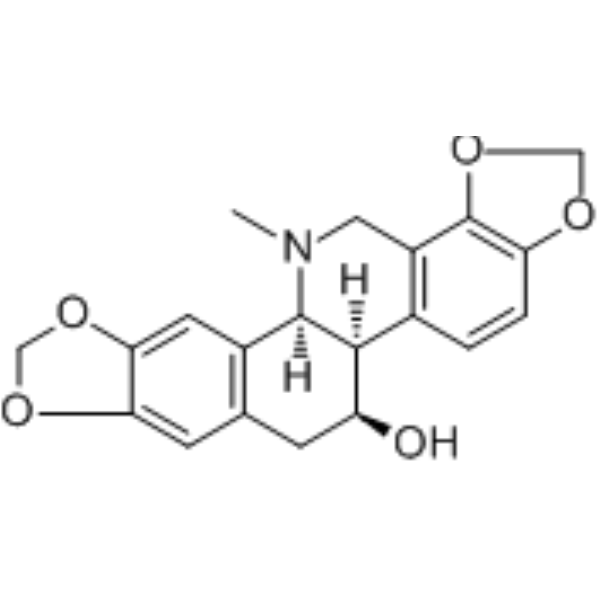
Chelidonine, an isoquinoline alkaloid, can be isolated from Chelidonium majus L.. Chelidonine causes G2/M arrest and induces caspase-dependent and caspase-independent apoptosis, and prevents cell cycle progression of stem cells in Dugesia japonica. Chelidonine has cytotoxic activity against melanoma cell lines. with anticancer and antiviral activity .
loading...
    loading...
1
1 Cited Publications
Cat. No.: HY-150147
CAS No.: 2758364-02-0
Purity:  99.83%
Target:  

RAD51 Apoptosis

Research Areas:  

Cancer

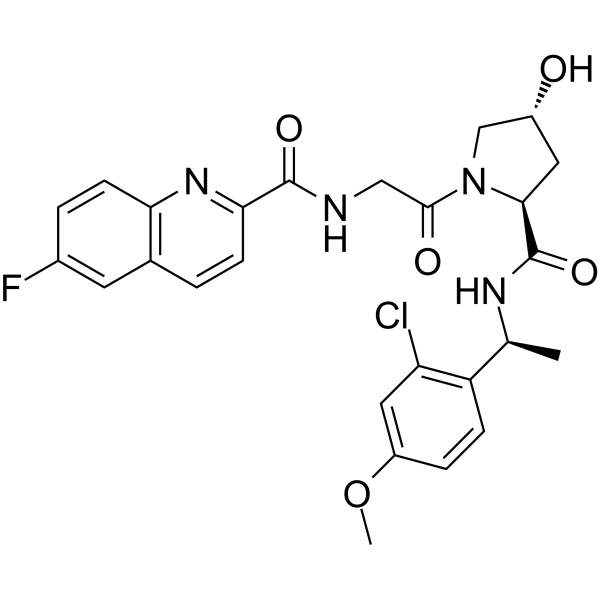
CAM833 is a potent orthosteric inhibitor of the interaction between BRCA2 and RAD51 with a Kd of 366 nM against the ChimRAD51 protein. CAM833 also inhibits RAD51 oligomerization. CAM833 increases the progression of G2/M-arrested cells into apoptosis .
loading...
    loading...
Cat. No.: HY-145601
CAS No.: 2230490-29-4
Purity:  98.45%
Synonyms: TT 00420
Target:  

Aurora Kinase FGFR VEGFR

Research Areas:  

Cancer

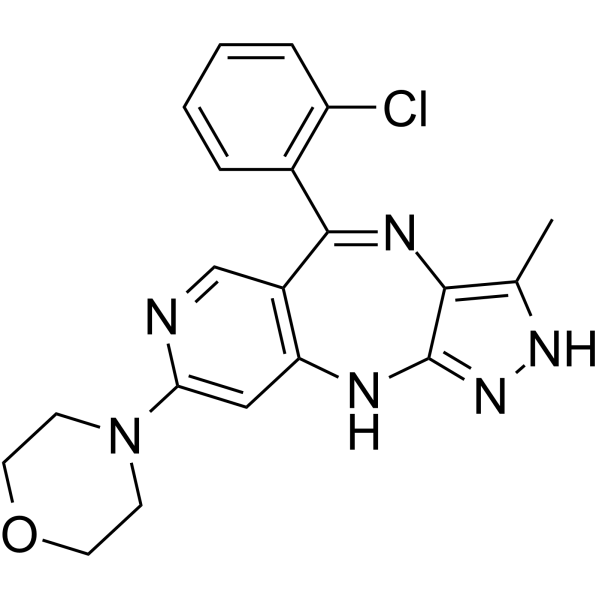
Tinengotinib (TT00420) is an orally active, spectrally selective small molecule kinase inhibitor targeting Aurora A/B (IC50=1.2-3.3 nM), FGFR1/2/3 (IC50=1.5-3.5 nM), VEGFRs, JAK1/2 and CSF1R. Tinengotinib blocks Aurora kinase-mediated cell cycle progression (inducing G2/M arrest), inhibits FGFR/JNK-JUN signaling pathway and activates MEK/ERK-dependent apoptotic pathway. Tinengotinib has the activity of anti-tumor proliferation, inducing apoptosis, inhibiting angiogenesis and regulating tumor microenvironment. Tinengotinib can be used in the study of triple-negative breast cancer (TNBC), gallbladder cancer and tumor immune microenvironment .
loading...
    loading...
Cat. No.: HY-157764
CAS No.: 2925916-30-7
Research Areas:  

Cancer

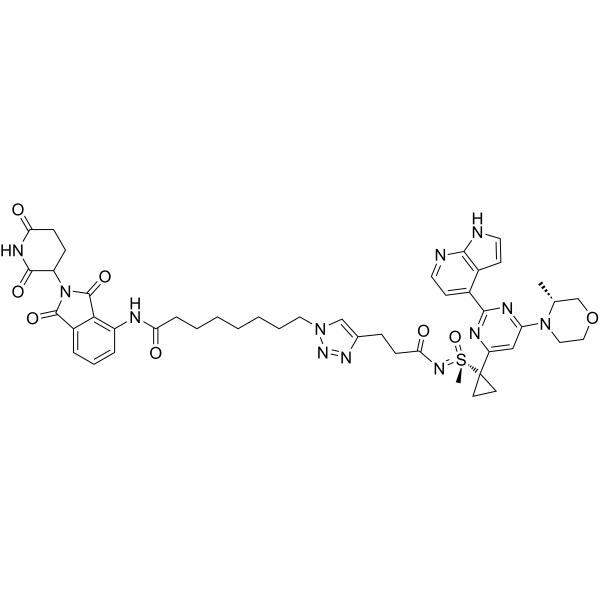
PROTAC ATR degrader-1 is a ATR PROTAC degrader. PROTAC ATR degrader-1 promotes ubiquitination and degradation of ATR. PROTAC ATR degrader-1 facilitates the progression of cells through the G2/M phase, thereby impairing DNA repair and inducing Apoptosis. PROTAC ATR degrader-1 exerts anticancer effects against colorectal cancer either alone or in combination with Cisplatin (HY-17394). PROTAC ATR degrader-1 can be used in research related to colorectal cancer .
loading...
    loading...
Cat. No.: HY-143328
CAS No.: 2585561-49-3
Research Areas:  

Cancer

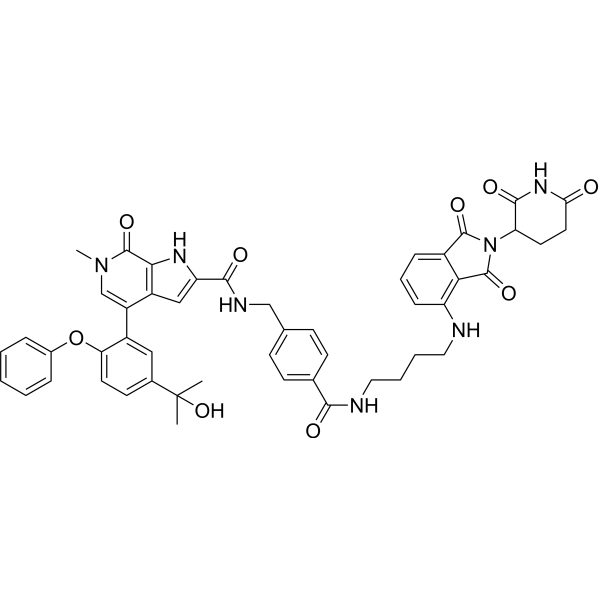
PROTAC BRD4 Degrader-17 (compound 13i) is a potent PROTAC BRD4 Degrader, with IC50 values of 29.54 nM (BRD4 (BD1)) and 3.82 nM (BRD4 (BD2)). PROTAC BRD4 Degrader-17 significantly attenuates G2/M progression associated Cyclin B1 expression. PROTAC BRD4 Degrader-17 significantly induces apoptosis in MV-4-11 cells .
loading...
    loading...
Cat. No.: HY-N2369R
CAS No.: 476-32-4
Chelidonine (Standard) is the analytical standard of Chelidonine. This product is intended for research and analytical applications. Chelidonine, an isoquinoline alkaloid, can be isolated from Chelidonium majus L.. Chelidonine causes G2/M arrest and induces caspase-dependent and caspase-independent apoptosis, and prevents cell cycle progression of stem cells in Dugesia japonica. Chelidonine has cytotoxic activity against melanoma cell lines. with anticancer and antiviral activity .
loading...
    loading...
Cat. No.: HY-178944
Research Areas:  

Cancer

CDC25-IN-1 (Compound D11b) is a potent inhibitor of cell division cycle 25 (CDC25) phosphatase. CDC25-IN-1 exerts strong inhibitory effects on leukemia and colorectal cancer cells. CDC25-IN-1 blocks CDC25 mediated CDK1 Tyr15 dephosphorylation, delays G2/M progression, and induces caspase-dependent apoptosis with DNA damage. CDC25-IN-1 can be used for researches of leukemia and colorectal cancer .
loading...
    loading...
Cat. No.: HY-N10394
CAS No.: 2408641-10-9
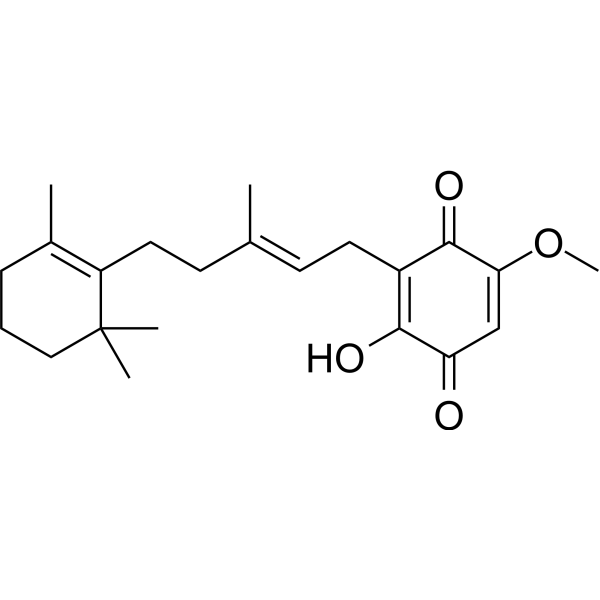
Metachromins X is a sesquiterpene quinone that arrests the cell cycle progression of HeLa/Fucci2 cells at S/G2/M phase .
loading...
    loading...
Cat. No.: HY-163356
CAS No.: 2361303-91-3
Research Areas:  

Cancer

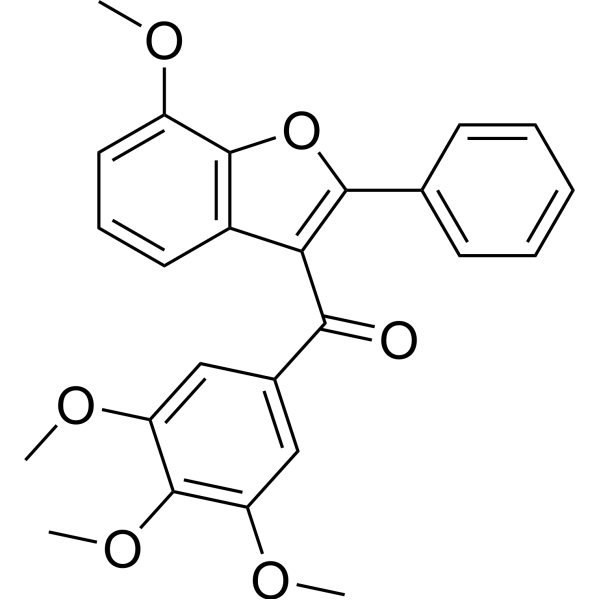
Tubulin polymerization-IN-60 (BF3) is a tubulin polymerization inhibitor with anticancer activity. Tubulin polymerization-IN-60 (BF3) belongs to the colchicine binding site inhibitors (CBSIs) and disturbs cell cycle progression leading to G2/M arrest and apoptosis .
loading...
    loading...
Cat. No.: HY-N2369A
CAS No.: 4312-31-6
Research Areas:  

Infection Cancer

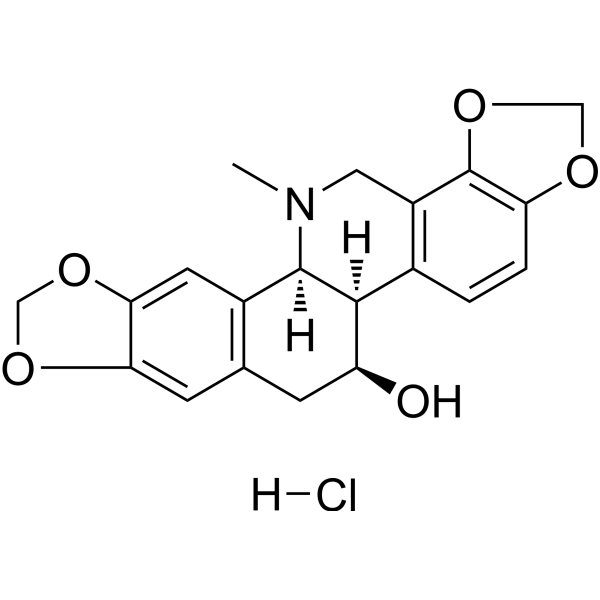
Chelidonine (hydrochloride) is the hydrochloride form of Chelidonine (HY-N2369).Chelidonine, an isoquinoline alkaloid, can be isolated from Chelidonium majus L. Chelidonine causes G2/M arrest and induces caspase-dependent and caspase-independent apoptosis, and prevents cell cycle progression of stem cells in Dugesia japonica. Chelidonine has cytotoxic activity against melanoma cell lines. with anticancer and antiviral activity .
loading...
    loading...
Cat. No.: HY-143660
CAS No.: 1428341-65-4
Research Areas:  

Cancer

LG308 is a novel synthetic compound with antimicrotubule activity. LG308 induces mitotic phase arrest and inhibits G2/M progression significantly which is associated with the upregulation of cyclin B1 and mitotic marker MPM-2 and the dephosphorylation of cdc2. LG308 also induces apoptosis and cell death. LG308 significantly suppresses tumor growth. LG308 with antimitotic activity has the potential for the research of prostate cancer .
loading...
    loading...
Cat. No.: HY-168739
CAS No.: 2413582-45-1
Topoisomerase I inhibitor 17 (Compound 7h) is a Topoisomerase I (Top1) inhibitor. Topoisomerase I inhibitor 17 reduces DDX5 and reverses the locking of Top1 activity by DDX5. Topoisomerase I inhibitor 17 induces Top1-mediated DNA damage and promotes reactive oxygen species (ROS) production. Topoisomerase I inhibitor 17 induces Apoptosis (reduces antiapoptotic proteins XIAP, Bcl-2, Survivin and up-regulates pro-apoptotic proteins Bax, γH2AX). Topoisomerase I inhibitor 17 also blocks the progression of the G2/M checkpoint and induces cell cycle arrest. Topoisomerase I inhibitor 17 significantly inhibits colony formation and cell migration in colorectal cancer cells. Topoisomerase I inhibitor 17 effectively reduces tumors in human PDX tumor mice .
loading...
    loading...
Cat. No.: HY-100789R
CAS No.: 1312471-39-8
ON1231320 (Standard) is the analytical standard of ON1231320 (HY-100789). This product is intended for research and analytical applications. ON1231320 is a highly specific polo like kinase 2 (PLK2) inhibitor with an IC50 of 0.31 μM. ON1231320 blocks tumor cell cycle progression in the G2/M phase in mitosis, causing apoptotic cell death. ON1231320, an arylsulfonyl pyrido-pyrimidinone, has antitumor activity .
loading...
    loading...
Cat. No.: HY-118447
CAS No.: 443913-79-9
Target:  

CDK Survivin

Research Areas:  

Cancer

RO0505124 is a selective CDK4 inhibitor with an IC50 of 20 nM. RO0505124 reversibly binds the ATP pocket of the kinase. RO0505124 induces G1 phase arrest in cancer cells via reduced retinoblastoma protein (Rb) phosphorylation, blocking S phase progression. RO0505124 exhibits anti-proliferative activity against various cancer cells. RO0505124 delays mitosis, induces aberrant mitosis with lagging chromosomes, driving mitotic slippage and formation of multinucleated or micronucleated cells. RO0505124 inhibits G2/M phase accumulation of survivin and borealin. RO0505124 can be used for the research of cancer .
loading...
    loading...
  • 1

