34 Results for "

G9a/GLP

" in MedChemExpress (MCE) Product Catalog:
Products (34)

34 Results for "G9a/GLP" in MCE Product Catalog:

27
27 Publications Verification
Art. -Nr.: HY-10587
CAS. Nr.: 935693-62-2
Reinheit:  98.44%
Forschungsgebiete:  

Cancer

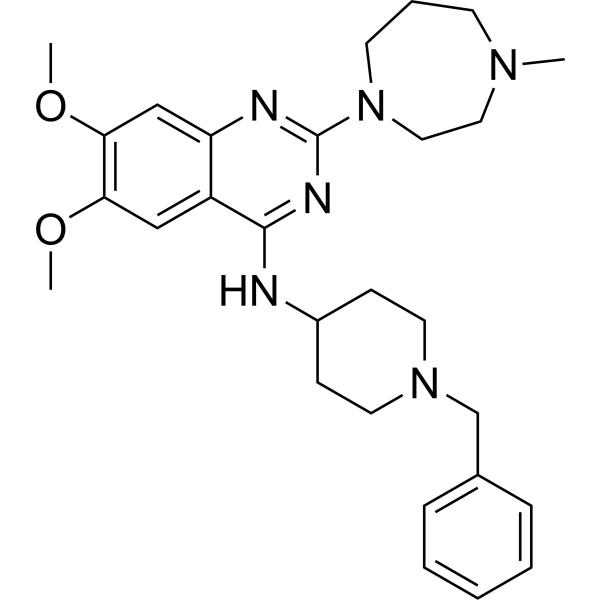
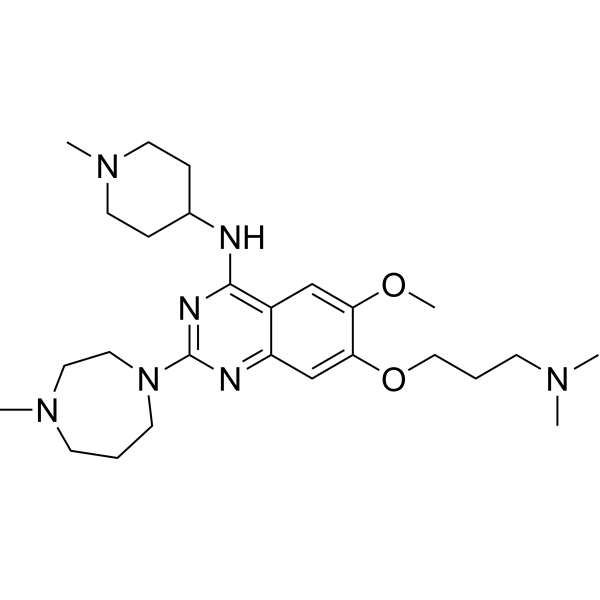
BIX-01294 is a reversible and highly selective G9a and GLP Histone Methyltransferase inhibitor, with IC50s of of 1.7 μM and 0.9 μM, respectively. BIX-01294 inhibits G9a/GLP by competing for binding with the amino acids N-terminal of the substrate lysine residue. BIX-01294, a (1H-1,4-diazepin-1-yl)-quinazolin-4-yl amine derivative, induces necroptosis and autophagy. BIX-01294 has antitumor activity in recurrent tumor cells .
loading...
    loading...
27
27 Publications Verification
Art. -Nr.: HY-13980
CAS. Nr.: 1481677-78-4
Reinheit:  99.92%
Forschungsgebiete:  

Cancer

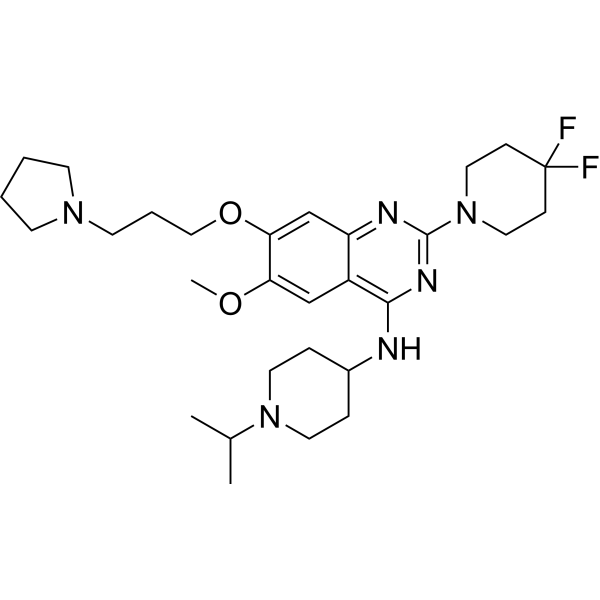
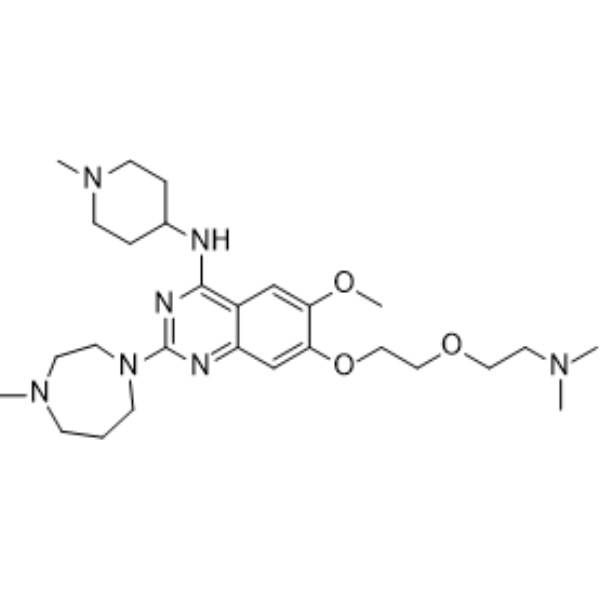
UNC0642, a chemical probe, is a potent and selective lysine methyltransferases G9a and GLP inhibitor, with an IC50 of <2.5 nM for G9a.
loading...
    loading...
27
27 Publications Verification
Art. -Nr.: HY-108239
CAS. Nr.: 1392399-03-9
Forschungsgebiete:  

Cancer

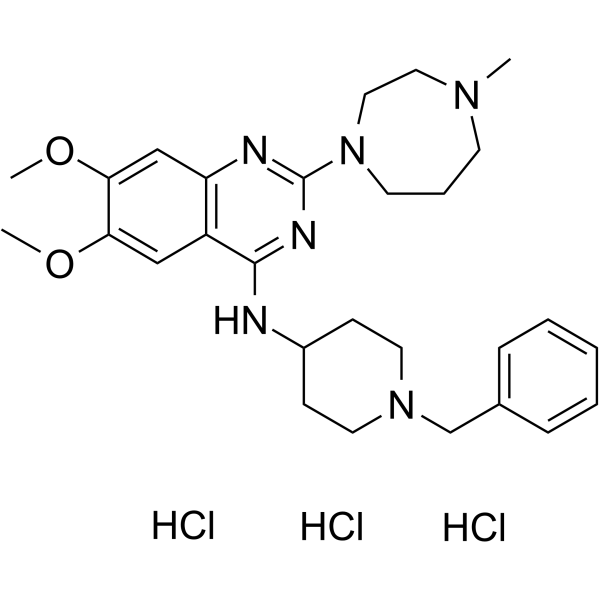
BIX-01294 trihydrochloride is a reversible and highly selective G9a and GLP Histone Methyltransferase inhibitor, with IC50s of of 1.7 μM and 0.9 μM, respectively. BIX-01294 trihydrochloride inhibits G9a/GLP by competing for binding with the amino acids N-terminal of the substrate lysine residue. BIX-01294 trihydrochloride, a (1H-1,4-diazepin-1-yl)-quinazolin-4-yl amine derivative, induces necroptosis and autophagy. BIX-01294 trihydrochloride has antitumor activity in recurrent tumor cells .
loading...
    loading...
12
12 Cited Publications
Art. -Nr.: HY-15273
CAS. Nr.: 1255580-76-7
Reinheit:  99.48%
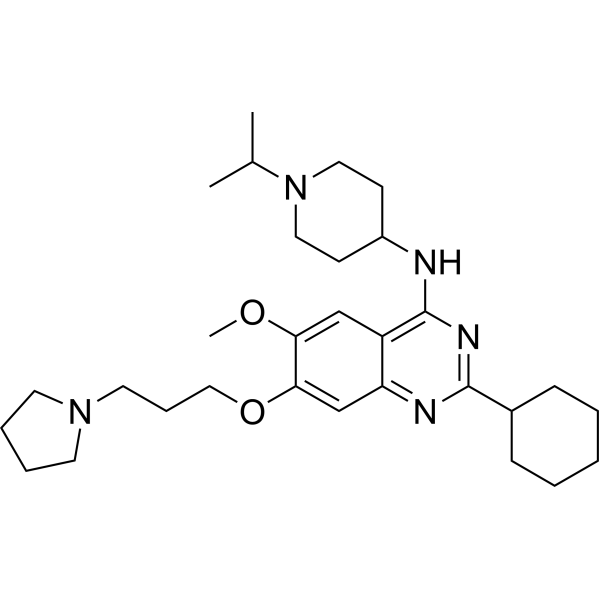
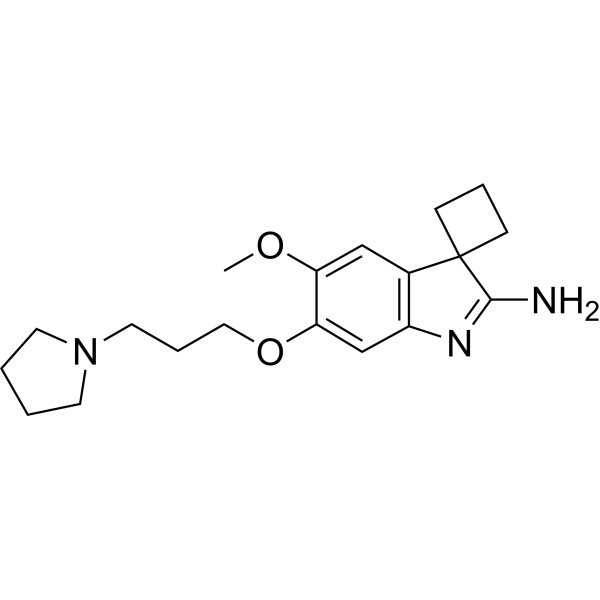
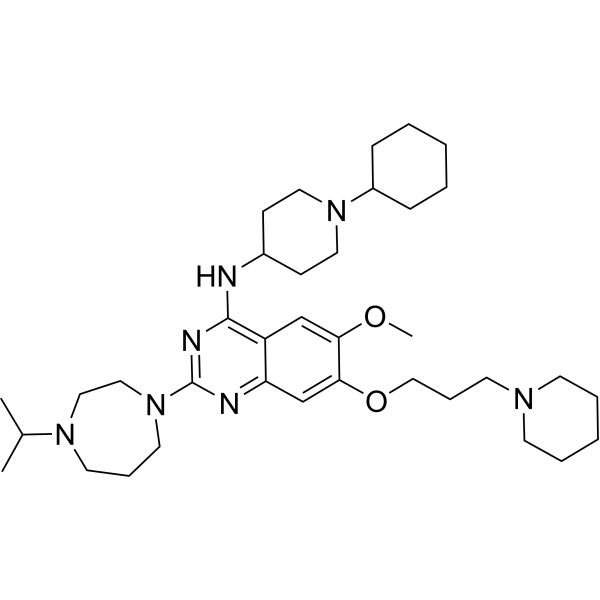
UNC0638, a chemical probe, selectively inhibits G9a and GLP histone methyltransferases with IC50 of 15 nM and 19 nM, respectively. UNC0638 inhibits TNBC cell invasion and migration in vitro. UNC0638 is also an inhibitor of EHMT1/2 and induces fetal hemoglobin (HbF) expression in human erythroid progenitor cell culture. In addition, UNC0638 has anti-FMDV (foot-and-mouth disease virus) and anti-VSV (vesicular stomatitis virus) activities, with excellent potency and selectivity against multiple epigenetic and non-epigenetic targets .
loading...
    loading...
7
7 Cited Publications
Art. -Nr.: HY-12583
CAS. Nr.: 1527503-11-2
Reinheit:  98.01%
Forschungsgebiete:  

Cancer

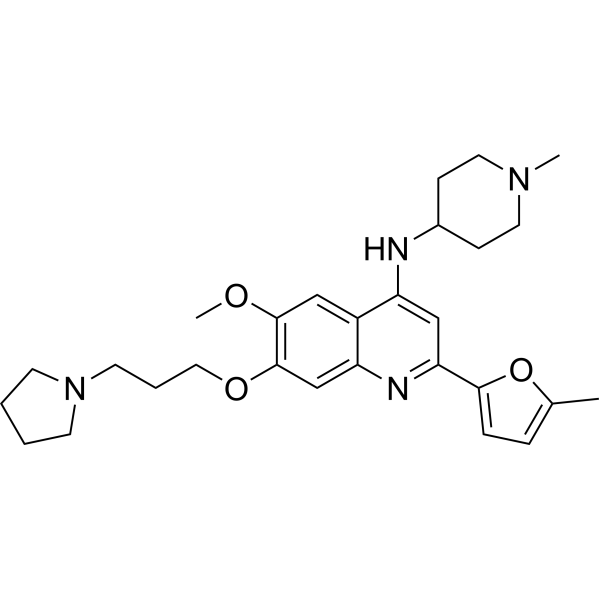
A-366, a chemical probe, is a potent, highly selective, peptide-competitive histone methyltransferase G9a inhibitor with IC50s of 3.3 and 38 nM for G9a and GLP (EHMT1), respectively. A-366 shows >1000-fold selectivity over 21 other methyltransferases. A-366 is also a potent, nanomolar inhibitor of the Spindlin1-H3K4me3-interaction (IC50=182.6 nM). A-366 displays high affinity at human histamine H3 receptor (Ki=17 nM) and shows subtype selectivity among subsets of the histaminergic and dopaminergic receptor families .
loading...
    loading...
3
3 Cited Publications
Art. -Nr.: HY-101925
CAS. Nr.: 1846570-31-7
Reinheit:  98.70%
CM-272 is a first-in-class, potent, selective, substrate-competitive and reversible dual G9a/DNA methyltransferases (DNMTs) inhibitor with antitumor activities. CM-272 inhibits G9a, DNMT1, DNMT3A, DNMT3B and GLP with IC50s of 8 nM, 382 nM, 85 nM, 1200 nM and 2 nM, respectively. CM-272 inhibits cell proliferation and promotes apoptosis, inducing IFN-stimulated genes and immunogenic cell death .
loading...
    loading...
2
2 Cited Publications
Art. -Nr.: HY-10929
CAS. Nr.: 1197196-48-7
Reinheit:  98.85%
Forschungsgebiete:  

Cancer

UNC0224 is a potent and selective histone methyltransferase G9a inhibitor with a Ki of 2.6 nM, an IC50 of 15 nM and a Kd of 23 nM. UNC0224 also potently inhibits b>GLP with assay-dependent IC50 values of 20-58 nM. UNC0224 is inactive against SET7/9, SET8/PreSET7, PRMT3 and JMJD2E .
loading...
    loading...
2
2 Cited Publications
Art. -Nr.: HY-10930
CAS. Nr.: 1238673-32-9
Reinheit:  99.91%
Forschungsgebiete:  

Cancer

UNC0321 is a potent and selective histone methyltransferase G9a inhibitor with a Ki of 63 pM and with assay-dependent IC50 values of 6-9 nM. UNC0321 also inhibits GLP with assay-dependent IC50 values of 15-23 nM. UNC0321 has anti-apoptotic activity and has potential application in diabetic vascular complications .
loading...
    loading...
1
1 Cited Publications
Art. -Nr.: HY-13807
CAS. Nr.: 1320288-17-2
Reinheit:  99.38%
Forschungsgebiete:  

Cancer

UNC0646 is a potent and selective histone methyltransferase G9a inhibitor with an IC50 of 6 nM. UNC0646 is also a potent GLP inhibitor (IC50 <15 nM) and highly selective for G9a/GLP over SETD7, SUV39H2, SETD8 and PRMT3. UNC0646 reduces H3K9me2 levels in MDA-MB-231 cells with an IC50 of 26 nM .
loading...
    loading...
Art. -Nr.: HY-162362
CAS. Nr.: 3060730-06-2
Target:  

PROTACs GLP Receptor

Forschungsgebiete:  

Cancer

MS8709 (compound 10), a potential anticancer therapeutic, is a first-in-class G9a/GLP PROTAC degrader. MS8709 is based on G9a/GLP inhibitor UNC0642 and recruits the von Hippel Lindau (VHL) E3 ligase (Red: G9a/GLP inhibitor UNC0642; Blue: VHL ligand; Black: linker) .
loading...
    loading...
Art. -Nr.: HY-178065
Forschungsgebiete:  

Cancer

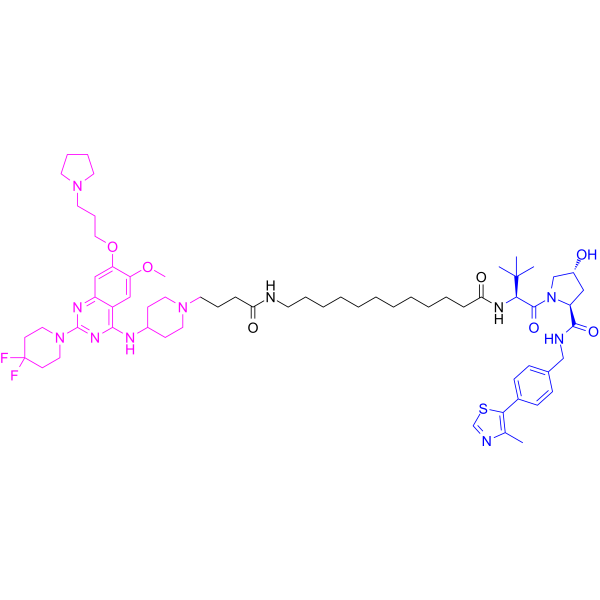
PROTAC G9a/GLP degrader 1 is a G9a/GLP PROTAC degrader with DC50s of 336 nM (G9a) and 988 nM (GLP). PROTAC G9a/GLP degrader 1 exhibits inhibitory activity against G9a with an IC50 of 98 nM. PROTAC G9a/GLP degrader 1 effectively inhibits the migration of breast cancer MCF-7 cells without inhibiting cell proliferation. PROTAC G9a/GLP degrader 1 can be used for the study of breast cancer (Pink: G9a/GLP ligand (HY-152775); Blue: VHL ligand (HY-125845); Black: Linker (HY-140468)) .
loading...
    loading...
Art. -Nr.: HY-162749A
Forschungsgebiete:  

Cancer

G9D-4 TFA is a G9a PROTAC degrader. G9D-4 TFA induces G9a degradation, reduces H3K9me2 levels, and prevents GLP interference via the CRBN ternary complex, proteasome and ubiquitin-like modification-dependent pathways. G9D-4 TFA exerts antiproliferative activity and induces Apoptosis in pancreatic cancer cells. G9D-4 TFA can be used for research on pancreatic cancer .
loading...
    loading...
Art. -Nr.: HY-120444
CAS. Nr.: 1197196-63-6
Reinheit:  99.79%
Forschungsgebiete:  

Cancer

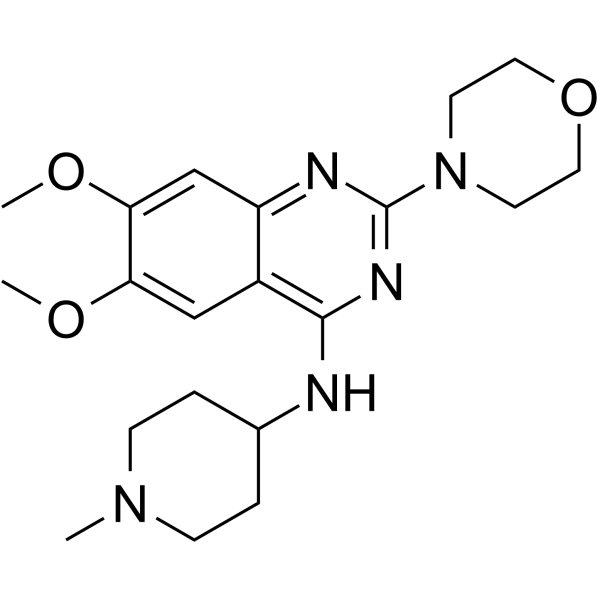
MS0124 is a potent selective G9a-like protein (GLP) inhibitor with IC50 values of 13±4 nM and 440±63 nM for GLP and G9a,respectively .
loading...
    loading...
Art. -Nr.: HY-150510
CAS. Nr.: 2866408-21-9
Forschungsgebiete:  

Neurological Disease Cancer

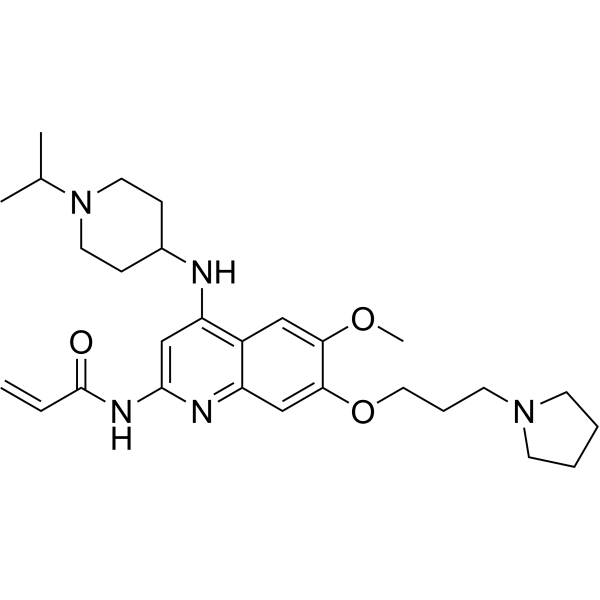
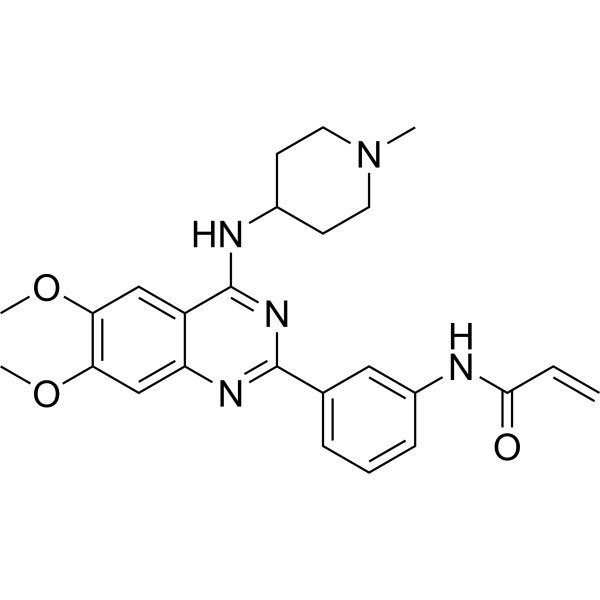
MS8511 is a selective G9a/GLP covalent irreversible inhibitor by targeting a cysteine residue at the substrate binding site, with IC50 values of 100 nM (G9a) and 140 nM (GLP), and Kd values of 44 nM (G9a) and 46 nM (GLP). MS8511 reduces the cellular H3K9me2 level and enhances antiproliferation activity. MS8511 can be used for the research of several types of cancers including brain, breast, ovarian, lung, bladder, melanoma, colorectal cancer, and other disease such as Alzheimer’s disease (AD), sickle cell disease, Prader−Willi syndrome (PWS) .
loading...
    loading...
Art. -Nr.: HY-170805
CAS. Nr.: 1327276-39-0
Target:  

Choline Kinase

Forschungsgebiete:  

Cancer

UNC0737 is an orthosteric choline kinase inhibitor. UNC0737 is also a poor inhibitor of G9a (IC50 = 5000 nM) and GLP (IC50 > 10000 nM) in the SAHH-coupled assays .
loading...
    loading...
Art. -Nr.: HY-162749
CAS. Nr.: 3097803-96-5
Forschungsgebiete:  

Cancer

G9D-4 is a G9a PROTAC degrader. G9D-4 induces G9a degradation, reduces H3K9me2 levels, and prevents GLP interference via the CRBN ternary complex, proteasome and ubiquitin-like modification-dependent pathways. G9D-4 exerts antiproliferative activity and induces Apoptosis in pancreatic cancer cells. G9D-4 can be used for research on pancreatic cancer .
loading...
    loading...
Art. -Nr.: HY-161759
CAS. Nr.: 3107476-89-8
Forschungsgebiete:  

Endocrinology Cancer

MS152 is an orally active, blood-brain barrier penetrant inhibitor of EHMT2/G9a and EHMT1/GLP, with IC50s of 76 nM and 126 nM, repsectively. MS152 reduces H3K9me2 levels and reactivates maternally silenced Prader-Willi syndrome (PWS) genes. MS152 significantly improves perinatal lethality and growth retardation in mouse models, and is applicable to research related to Prader-Willi syndrome .
loading...
    loading...
Art. -Nr.: HY-156285
CAS. Nr.: 3053365-82-2
Reinheit:  98.74%
Forschungsgebiete:  

Cancer

ZZM-1220 is a histone lysine methyltransferase G9a/GLP covalent inhibitor with IC50s of of 458 nM and 924 nM, respectively. ZZM-1220 inhibits H3K9me2 in cells and significantly induces apoptosis of triple-negative breast cancer (TNBC) cells and blocks the cell cycle in the G2/M phase .
loading...
    loading...
Art. -Nr.: HY-150510A
CAS. Nr.: 3031788-28-7
Reinheit:  ≥98.0%
Forschungsgebiete:  

Neurological Disease Cancer

MS8511 (hydrochloride) is a selective G9a/GLP covalent irreversible inhibitor by targeting a cysteine residue at the substrate binding site, with IC50 values of 100 nM (G9a) and 140 nM (GLP), and Kd values of 44 nM (G9a) and 46 nM (GLP). MS8511 (hydrochloride) reduces the cellular H3K9me2 level and enhances antiproliferation activity. MS8511 (hydrochloride) can be used for the research of several types of cancers including brain, breast, ovarian, lung, bladder, melanoma, colorectal cancer, and other disease such as Alzheimer’s disease (AD), sickle cell disease, Prader−Willi syndrome (PWS) .
loading...
    loading...
Art. -Nr.: HY-176036
CAS. Nr.: 3070323-06-4
MS1262 is a blood-brain barrier-permeable, selective inhibitor of histone methyltransferases G9a (EHMT2) and GLP (EHMT1), with an IC50 of 19 nM and a Kd of 74 nM against G9a, and an IC50 of 6 nM and a Kd of 19 nM against GLP. MS1262 reduces the dimethylation level of histone H3 lysine 9 and decreases the size of plaques. MS1262 restores hippocampal long-term potentiation (LTP) and miniature excitatory postsynaptic current (sEPSC) frequency, ameliorates spatial memory deficits, and reverses anxiety-like and depression-like behaviors in AD model mice. MS1262 reverses the expression/phosphorylation levels of early AD biomarkers, providing support for stage-specific diagnosis of AD. MS1262 reduces the risk of thrombus rupture. MS1262 can be used in research related to Alzheimer's disease, colorectal cancer, and triple-negative breast cancer .
loading...
    loading...

