





1. Search Result
Search Result
Results for "

GLP-1r

" in MedChemExpress (MCE) Product Catalog:

144

Inhibitors & Agonists

1

Fluorescent Dyes

52

Peptides

2

Inhibitory Antibodies

1

Natural
Products

8

Recombinant Proteins

4

Isotope-Labeled Compounds

1

Antibodies

3

Oligonucleotides

Targets Recommended:
Cat. No. Product Name Target Research Areas Chemical Structure
  • HY-114118
    Semaglutide
    Maximum Cited Publications
    35 Publications Verification

    GLP Receptor Insulin Receptor α-synuclein Apoptosis p38 MAPK Autophagy Bcl-2 Family Neurological Disease Metabolic Disease Cancer
    Semaglutide is a long-acting, selective, competitive GLP-1R agonist that can penetrate the blood-brain barrier. After activating GLP-1R, Semaglutide promotes insulin secretion, inhibits gastric emptying and appetite, and at the same time enhances autophagy, inhibits oxidative stress and apoptosis. Semaglutide also regulates mitochondrial function and lipid metabolism (such as reducing de novo lipogenesis in the liver). Semaglutide has activities such as lowering blood sugar, reducing weight, neuroprotection (such as improving motor function in Parkinson's disease models, reducing α-synuclein aggregation) and improving hepatic steatosis. Semaglutide can be used for the study of neurodegenerative diseases and liver diseases such as type 2 diabetes, obesity, Parkinson's disease, metabolic associated fatty liver disease (MASLD), and cancer [1] .
    Semaglutide
  • HY-P3506
    Retatrutide
    3 Publications Verification

    LY3437943

    GCGR GLP Receptor Metabolic Disease
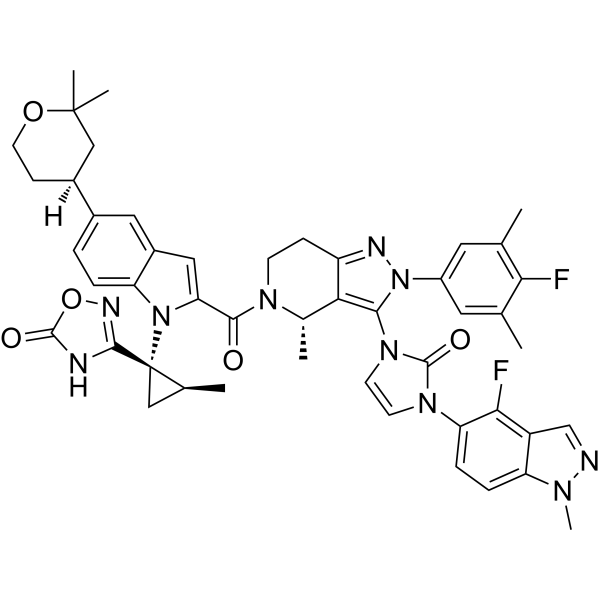
    Retatrutide (LY3437943) is a triple agonist peptide of the glucagon receptor (GCGR), glucosedependent insulinotropic polypeptide receptor (GIPR), and glucagon-like peptide-1 receptor (GLP-1R). Retatrutide binds human GCGR, GIPR, and GLP-1R with EC50 values of 5.79, 0.0643 and 0.775 nM, respectively. Retatrutide can be used for the research of obesity [1].
    Retatrutide
  • HY-112185
    Orforglipron
    1 Publications Verification

    LY3502970; GLP-1 receptor agonist 1

    GCGR Metabolic Disease Inflammation/Immunology
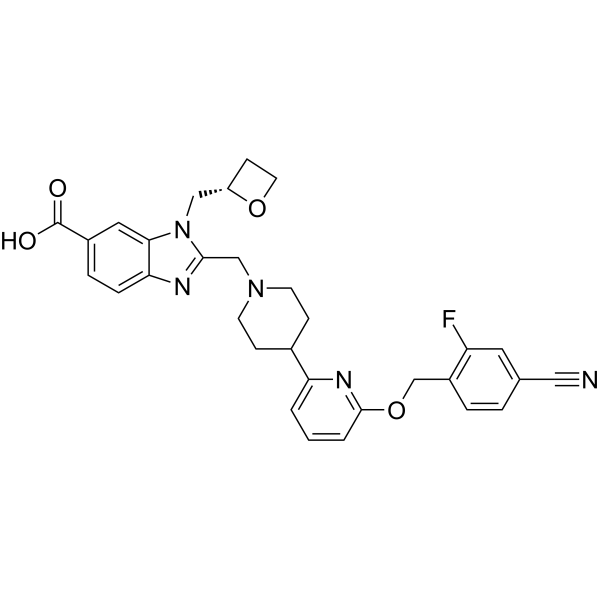
    Orforglipron (LY3502970) (Compound 67) is an orally active agonist for Glucagon-like peptide-1 receptor (GLP-1R), which exhibits potency in ameliorates the type 2 diabete [1].
    Orforglipron
  • HY-125824
    Danuglipron
    4 Publications Verification

    PF-06882961

    GCGR Metabolic Disease
    Danuglipron (PF-06882961) is an orally active glucagon-like peptide-1 receptor (GLP-1R) agonist. Danuglipron has the potential for type 2 diabetes research [1] .
    Danuglipron
  • HY-P3375

    IBI-362; LY-3305677; OXM-3

    GCGR GLP Receptor Metabolic Disease
    Mazdutide (IBI-362; LY-3305677) is a long-acting synthetic oxyntomodulin analog. Mazdutide is also a co-agonist of glucagon-like peptide (GLP-1R) and glucagon receptor (GCGR). Mazdutide binds human and mouse GCGR (Ki: 17.7 nM and 15.9 nM, respectively) and GLP-1R (Ki: 28.6 nM and 25.1 nM, respectively) and stimulates insulin secretion from mouse islets (EC50: 5.2 nM). Mazdutide is used in studies of obesity and type 2 diabetes (T2D) [1] .
    Mazdutide
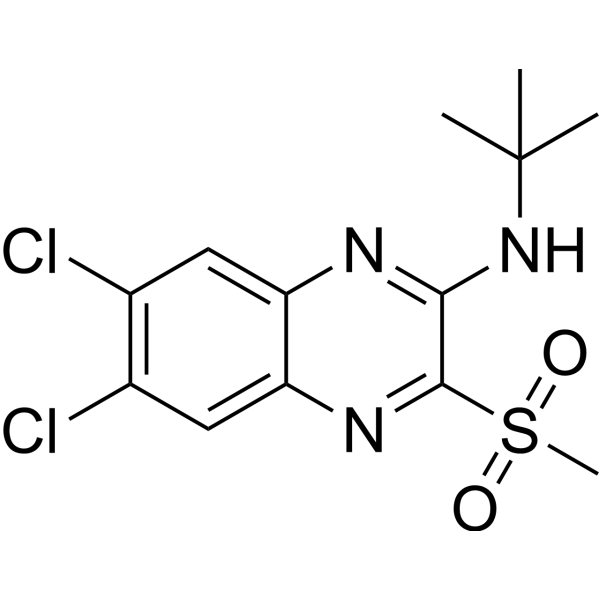
  • HY-121835

    GCGR Metabolic Disease
    GLP-1R agonist 2 (compound 2) is an effective GLP-1R agonist that exerts its activating effect by forming hydrogen bonds with the Tyr42, Cys71, and Ser84 residues of GLP-1R. GLP-1R agonist 2 has the potential for research in metabolic diseases such as type 2 diabetes and obesity [1].
    GLP-1R agonist 2
  • HY-114118B
    Semaglutide acetate
    Maximum Cited Publications
    35 Publications Verification

    GLP Receptor Insulin Receptor α-synuclein Apoptosis p38 MAPK Autophagy Bcl-2 Family Neurological Disease Metabolic Disease Cancer
    Semaglutide acetate is a long-acting, selective, competitive GLP-1R agonist that can penetrate the blood-brain barrier. After activating GLP-1R, Semaglutide acetate promotes insulin secretion, inhibits gastric emptying and appetite, and at the same time enhances autophagy, inhibits oxidative stress and apoptosis. Semaglutide acetate also regulates mitochondrial function and lipid metabolism (such as reducing de novo lipogenesis in the liver). Semaglutide acetate has activities such as lowering blood sugar, reducing weight, neuroprotection (such as improving motor function in Parkinson's disease models, reducing α-synuclein aggregation) and improving hepatic steatosis. Semaglutide acetate can be used for the study of neurodegenerative diseases and liver diseases such as type 2 diabetes, obesity, Parkinson's disease, metabolic associated fatty liver disease (MASLD), and cancer [1] .
    Semaglutide acetate
  • HY-101116
    GLP-1R Antagonist 1
    5 Publications Verification

    GCGR Metabolic Disease
    GLP-1R Antagonist 1 (compound 5d) is an orally active, CNS penetrant and non-competitive antagonist of glucagon-like peptide 1 receptor (GLP-1R), with an IC50 of 650 nM [1].
    GLP-1R Antagonist 1
  • HY-160734

    GSBR-1290

    GLP Receptor Metabolic Disease
    Aleniglipron (GSBR-1290) is an orally active glucagon-like peptide-1 receptor (GLP-1R) agonist, with an EC50 value of less than 0.1 nM in HDB cell lines in cAMP stimulation assays. Aleniglipron selectively activates the Gαs-cAMP signaling pathway of GLP-1R without β-arrestin recruitment. Aleniglipron induces insulin release, promotes glucose clearance, reduces food intake and decreases body weight. Aleniglipron is applicable to research related to type 2 diabetes and obesity [1] .
    Aleniglipron
  • HY-153865

    PF-07081532

    GLP Receptor Metabolic Disease
    Lotiglipron (PF-07081532) is an orally active GLP-1R agonist. Lotiglipron reduces glucose and body weight, and can be used for research of Type 2 diabetes mellitus (T2DM) [1].
    Lotiglipron
  • HY-177295

    LY3549492

    GLP Receptor Phosphodiesterase (PDE) Neurological Disease Metabolic Disease Inflammation/Immunology Cancer
    Naperiglipron (LY3549492) is an orally active Glucagon-like peptide 1 receptor (GLP-1R) agonist with an EC50 of 1.14 nM for hGLP-1R. Naperiglipron significantly decreases the level of blood glucose in GLP-1R knock-in mouse models. Naperiglipron inhibits PDE10A1 enzyme activity (IC50: 7.43 μM) with a weak hERG inhibitory activity. Naperiglipron can be used for type II diabetes mellitus (T2DM) and obesity research [1].
    Naperiglipron
  • HY-P10736

    GCGR Metabolic Disease
    AMG133 peptide payload is a GLP-1 analog agonist peptide. AMG133 peptide potently activates GLP-1R, and exhibits weight loss and metabolic improvement activities. AMG133 peptide payload can be used for the synthesis of AMG 133 (HY-164535) [1].
    AMG133 peptide payload
  • HY-175701

    RO7795081; RG6652

    Arrestin GLP Receptor Metabolic Disease
    CT-996 is an orally active GLP-1RA agonist with an EC50 of 0.49 nM. CT-996 reduces the recruitment of β-arrestin and the internalization of GLP-1R. CT-996 suppresses postprandial blood glucose in mice expressing human GLP-1 receptors and enhances glucose-stimulated insulin secretion (GSIS) in obese monkeys during intravenous glucose challenge. CT-996 can be used for the research of type 2 diabetes (T2D) and obesity [1] .
    CT-996
  • HY-P3506A
    Retatrutide TFA
    3 Publications Verification

    LY3437943 TFA

    GLP Receptor GCGR Metabolic Disease
    Retatrutide (LY3437943) TFA is a triple agonist peptide of the glucagon receptor (GCGR), glucosedependent insulinotropic polypeptide receptor (GIPR), and glucagon-like peptide-1 receptor (GLP-1R). Retatrutide TFA binds human GCGR, GIPR, and GLP-1R with EC50 values of 5.79, 0.0643 and 0.775 nM, respectively. Retatrutide TFA can be used for the research of obesity [1].
    Retatrutide TFA
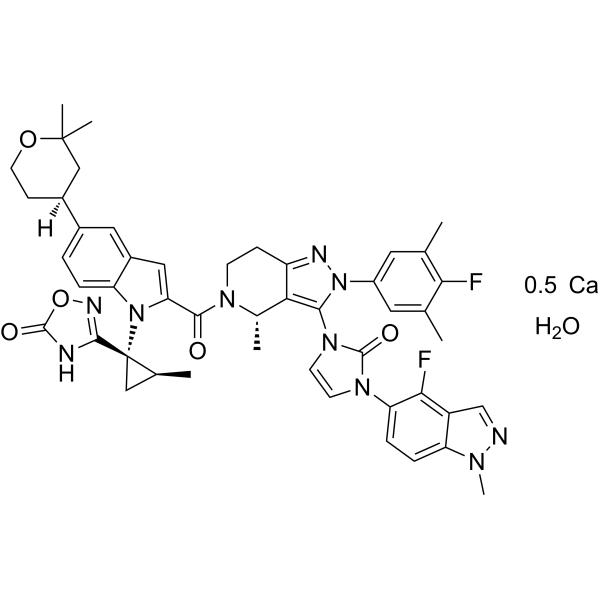
  • HY-112185A
    Orforglipron hemicalcium hydrate
    1 Publications Verification

    LY3502970 hemicalcium hydrate; GLP-1 receptor agonist 1 hemicalcium hydrate

    GCGR Metabolic Disease Inflammation/Immunology
    Orforglipron hemicalcium hydrate (LY3502970 hemicalcium hydrate; GLP-1 receptor agonist 1 hemicalcium hydrate) is the calcium salt hydrate form of Orforglipron (HY-112185). Orforglipron is an orally active agonist for Glucagon-like peptide-1 receptor (GLP-1R), which exhibits potency in ameliorating the type 2 diabete [1].
    Orforglipron hemicalcium hydrate
  • HY-P3375A

    IBI-362 TFA; LY-3305677 TFA; OXM-3 TFA

    GCGR GLP Receptor Metabolic Disease
    Mazdutide (IBI-362; LY-3305677) TFA is a long-acting synthetic oxyntomodulin analog. Mazdutide is also a co-agonist of glucagon-like peptide (GLP-1R) and glucagon receptor (GCGR). Mazdutide TFA binds human and mouse GCGR (Ki: 17.7 nM and 15.9 nM, respectively) and GLP-1R (Ki: 28.6 nM and 25.1 nM, respectively) and stimulates insulin secretion from mouse islets (EC50: 5.2 nM). Mazdutide TFA is used in studies of obesity and type 2 diabetes (T2D) [1] .
    Mazdutide TFA
  • HY-P10302A

    GLP Receptor Metabolic Disease Inflammation/Immunology
    GLP-1R/GIPR agonist-1 sodium is a dual GLP-1/GIP receptor agonist, with an EC50 of 0.57 nM for GLP-1R and an EC50 of 0.75 nM for GIPR. GLP-1R/GIPR agonist-1 sodium reduces food intake, inhibits weight gain, repairs islet damage, improves glucose tolerance, regulates serum lipid and liver enzyme levels, ameliorates hepatic vacuolization, reduces hepatic fat accumulation, delays the progression of hepatic fibrosis, and exhibits long-lasting hypoglycemic activity. GLP-1R/GIPR agonist-1 sodium can be used in research related to type 2 diabetes, obesity, and non-alcoholic steatohepatitis [1].
    GLP-1R/GIPR agonist-1 (soduim)
  • HY-153193

    GLP Receptor Molecular Glues Metabolic Disease
    LSN3160440 is an allosteric modulator of GLP-1R, which acts as a protein–protein interaction (PPI) stabilizer or molecular glue to assist in the adhesion of inactive GLP-1 (9-36) NH2 on GLP-1R [1] .
    LSN3160440
  • HY-144034

    GLP Receptor Metabolic Disease
    GLP-1R agonist 3 is a potent agonist of GLP-1R. GLP-1R agonist 3 is a thickened imidazole derivative compound. Glucagon-like peptide-1 (GLP-1) is an intestinal hypoglycemic hormone secreted by L-cells in the lower gastrointestinal tract. GLP-1R agonist 3 has the potential for the research of diabetes (extracted from patent WO2021197464A1, compound 1) [1].
    GLP-1R agonist 3
  • HY-145458

    GLP-1 receptor agonist 9

    GLP Receptor Metabolic Disease
    PF-06954522 is a glucagon-like peptide-1 receptor (GLP-1R) agonist. PF-06954522 is applicable to research related to type 2 diabetes [1].
    PF-06954522
  • HY-112679

    GCGR Inflammation/Immunology
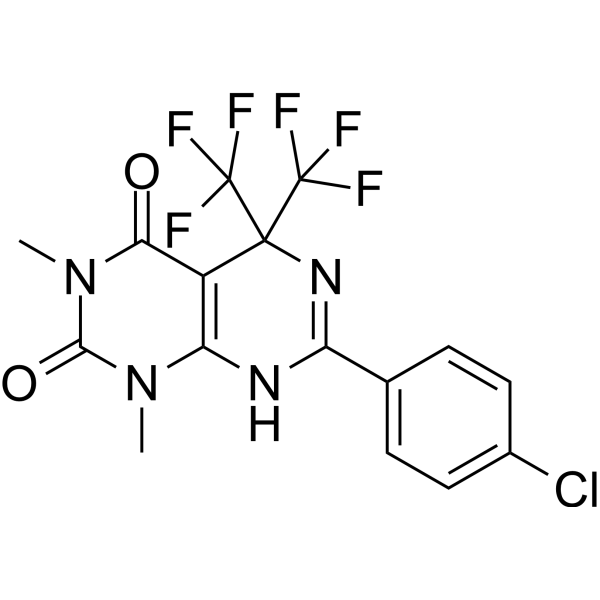
    GLP-1 receptor agonist 2 is a glucagon-like peptide-1 receptor (GLP-1R) agonist [1].
    GLP-1 receptor agonist 2
  • HY-141840

    GCGR Metabolic Disease
    GLP-1R modulator C5 is an allosteric modulator enhancing GLP-1 binding to GLP-1R via a transmembrane site (EC50 1.59 ± 0.53 μM).
    GLP-1R modulator C5
  • HY-142162

    GCGR Metabolic Disease
    LSN3318839 is an orally active positive modulator of the glucagon-like peptide-1 receptor (GLP-1R). LSN3318839 can increase the secretion of insulin and has the effect of lowering blood sugar [1].
    LSN3318839
  • HY-P10929

    Drug Intermediate Others
    Fmoc-Lys(tBuO-Ara-Glu(AEEA-AEEA)-OtBu)-OH is a drug intermediate in the synthesis of Tirzepatide. Tirzepatide is a dual glucose-dependent insulinotropic peptide (GIP) and glucagon-like peptide-1 receptor (GLP-1R) agonist [1].
    Fmoc-Lys(tBuO-Ara-Glu(AEEA-AEEA)-OtBu)-OH
  • HY-116819

    GCGR Neurological Disease Metabolic Disease
    VU0453379 is a blood-brain barrier permeable GLP-1R positive allosteric modulator (PAM) with an EC50 value of 1.3 μM. VU0453379 potentiates the actions of endogenous GLP-1 and synthetic peptide agonists, and promotes GLP-1 receptor internalization. VU0453379 stimulates insulin secretion from primary mouse islets. VU0453379 enhances the function of endogenous GLP-1R and reverses catalepsy in animal models. VU0453379 is useful for research on Parkinson's disease and type 2 diabetes [1].
    VU0453379
  • HY-124803

    GCGR Metabolic Disease
    GPCR modulator-1 is a negative allosteric modulator of the GLP-1 receptor (GLP-1R). GPCR modulator-1 can be used for the study of type 2 diabetes [1].
    GPCR modulator-1
  • HY-141842

    GCGR Metabolic Disease
    GLP-1R modulator L7-028 is an allosteric modulator enhancing GLP-1 binding to GLP-1R via a transmembrane site (EC50 11.01 ± 2.73 μM).
    GLP-1R modulator L7-028
  • HY-145412

    GLP Receptor Metabolic Disease
    GLP-1 receptor agonist 7 (Compound 130b) is a potent agonist of glucagon-like peptide-1 (GLP-1). GLP-1 receptor agonist 7 generates cAMP under the mediation of GLP-1R with an EC50 of ≤ 0.2 nM. GLP-1 receptor agonist 7 can be used to study diseases related to the GLP-1 receptor (particularly type 2 diabetes) [1].
    GLP-1 receptor agonist 7
  • HY-143312

    GLP Receptor Metabolic Disease Inflammation/Immunology
    V-0219 is an orally active glucagon-like peptide-1 receptor (GLP-1R) positive allosteric modulator. V-0219 potentiates GLP-1R stimulation, and enhances GLP-1-induced cAMP production and insulin secretion. V-0219 potentiates glucose-dependent insulin secretion. V-0219 improves glucose handling in normal and diabetic rodents. V-0219 can be used for the research of obesity-associated diabetes [1].
    V-0219
  • HY-147625

    GLP Receptor Metabolic Disease
    GLP-1R agonist 12 (Compound 123) is an agonist of glucagon-like peptide-1 receptors (GLP-1R). GLP-1R agonist 12 can be used for diabetes research [1].
    GLP-1R agonist 12
  • HY-141839

    GCGR Metabolic Disease
    GLP-1R modulator C16 is an allosteric modulator enhancing GLP-1 binding to GLP-1R via a transmembrane site (EC50 8.43 ± 3.82 μM).
    GLP-1R modulator C16
  • HY-148212

    GCGR Cardiovascular Disease Metabolic Disease
    GLP-1R agonist 17 (Compound example 232) is a GLP-1 receptor agonist. GLP-1R agonist 17 shows excellent agonism on a GLP-1 receptor. GLP-1R agonist 17 can be used for the research of cardiovascular metabolic diseases [1].
    GLP-1R agonist 17
  • HY-P990013

    Glutazumab; GMA-102; GMA-105

    GCGR Metabolic Disease
    Gulgafafusp alfa is a human IgG2κ antibody targeting the glucagon-like peptide 1 receptor GLP1R [1].
    Gulgafafusp alfa
  • HY-P10019

    NLY01

    GCGR Neurological Disease Inflammation/Immunology
    Pegsebrenatide (NLY01) is a blood-brain barrier-penetrant GLP-1R agonist. Pegsebrenatide alleviates retinal inflammation and neuronal death secondary to ocular hypertension . Pegsebrenatide significantly delays onset and reduces disease severity in experimental autoimmune encephalomyelitis . Pegsebrenatide inhibits the formation of A1 reactive astrocytes in nerve cells and reduces the loss of retinal ganglion cells and dopaminergic neurons. Pegsebrenatide exerts neuroprotective effects in a mouse model of Parkinson's disease by directly preventing microglia-mediated conversion of astrocytes to the A1 neurotoxic phenotype. Pegsebrenatide can be used for research on glaucoma, Parkinson's disease, and multiple sclerosis [1] .
    Pegsebrenatide
  • HY-144035

    GCGR Metabolic Disease Inflammation/Immunology
    GLP-1R agonist 4 is a glucagon-like peptide-1 (GLP-1) receptor agonist. GLP-1 is an intestinal hypoglycemic hormone secreted by L-cells in the lower gastrointestinal tract. GLP-1R agonist 4 can be used for the research of type 2 diabetes mellitus, obesity, non-alcoholic steatohepatitis, insulin resistance and etc [1].
    GLP-1R agonist 4
  • HY-178769

    GLP Receptor Metabolic Disease
    GLP-1R agonist 36 (Compound 53) is a GLP-1R agonist with a total of four isomers. GLP-1R agonist 36 can be used for the studies of diabetes and obesity.
    GLP-1R agonist 36
  • HY-143312A

    GLP Receptor Metabolic Disease Inflammation/Immunology
    V-0219 hydrochloride is an orally active glucagon-like peptide-1 receptor (GLP-1R) positive allosteric modulator. V-0219 hydrochloride potentiates GLP-1R stimulation, and enhances GLP-1-induced cAMP production and insulin secretion. V-0219 hydrochloride potentiates glucose-dependent insulin secretion. V-0219 hydrochloride improves glucose handling in normal and diabetic rodents. V-0219 hydrochloride can be used for the research of obesity-associated diabetes [1].
    V-0219 hydrochloride
  • HY-P10716

    GLP Receptor Metabolic Disease
    Exendin-P5 is a selective agonist that targets the GLP-1R. Exendin-P5 promotes rapid activation of G proteins by transient interactions with the transmembrane domain of GLP-1R, enhancing its potency in G protein-mediated signaling and accelerating cAMP production. This mechanism suggests the potential application of Exendin-P5 in the study of metabolic diseases [1].
    Exendin-P5
  • HY-RS05490

    Small Interfering RNA (siRNA) Others

    GLP1R Human Pre-designed siRNA Set A contains three designed siRNAs for GLP1R gene (Human), as well as a negative control, a positive control, and a FAM-labeled negative control.

    GLP1R Human Pre-designed siRNA Set A
    GLP1R Human Pre-designed siRNA Set A
  • HY-178768

    GLP Receptor Metabolic Disease
    GLP-1R agonist 35 (Compound 111-2) is a GLP-1R agonist with an EC50 of 0-10 nM. GLP-1R agonist 36 can be used for the studies of diabetes and obesity [1].
    GLP-1R agonist 35
  • HY-P991099

    GCGR Metabolic Disease
    Anti-GLP1R Antibody is a human antibody expressed in CHO cells, targeting GLP1R. Anti-GLP1R Antibody can be referenced as Human IgG1 kappa, Isotype Control (HY-P99001).
    Anti-GLP1R Antibody
  • HY-RS16631

    Small Interfering RNA (siRNA) Others

    Glp1r Mouse Pre-designed siRNA Set A contains three designed siRNAs for Glp1r gene (Mouse), as well as a negative control, a positive control, and a FAM-labeled negative control.

    Glp1r Mouse Pre-designed siRNA Set A
    Glp1r Mouse Pre-designed siRNA Set A
  • HY-147628

    GLP Receptor Metabolic Disease
    GLP-1R agonist 15 (Compound 101) is a GLP-1 receptor agonist [1].
    GLP-1R agonist 15
  • HY-147623

    GLP Receptor Metabolic Disease
    GLP-1R agonist 10 (Compound 109a) is a GLP-1 agonist with an EC50 of 0.051 nM [1].
    GLP-1R agonist 10
  • HY-161915

    GLP Receptor Metabolic Disease
    GLP-1R agonist 23 (Example 376) is a GLP-1R agonist with an EC50 of 0.056 nM. GLP-1R agonist 23 can be used in diabetes research [1].
    GLP-1R agonist 23
  • HY-144033

    GCGR Metabolic Disease
    GLP-1R agonist 1 is a potent agonist of GLP-1R. GLP-1R agonist 1 is a thickened imidazole derivative compound. Glucagon-like peptide-1 (GLP-1) is an intestinal hypoglycemic hormone secreted by L-cells in the lower gastrointestinal tract. GLP-1R agonist 1 has the potential for the research of diabetes (extracted from patent WO2021197464A1, compound 4) [1].
    GLP-1R agonist 1
  • HY-171850

    GLP Receptor Metabolic Disease Inflammation/Immunology
    GLP-1R modulator-1 (Compound 384) is an orally active, potent selective glucagon-like peptide-1 receptor (GLP-1R) agonist. GLP-1R modulator-1 activates G-protein coupled signaling, elevates intracellular cAMP levels, promotes insulin secretion, delays gastric emptying and suppresses appetite. GLP-1R modulator-1 is promising for research of type 2 diabetes, obesity, and non-alcoholic steatohepatitis (NASH) [1].
    GLP-1R modulator-1
  • HY-176770

    GLP Receptor Metabolic Disease
    GLP-1R agonist 34 (Compound 1) is an orally active small molecule glucagon-like peptide-1 receptor (GLP-1R) agonist. GLP-1R agonist 34 promotes insulin secretion, inhibits glucagon release, and delays gastric emptying, thereby effectively lowering blood glucose levels. GLP-1R agonist 34 is promising for research of metabolic diseases, including type 2 diabetes, obesity, and non-alcoholic steatohepatitis (NASH) [1].
    GLP-1R agonist 34
  • HY-171851

    GCGR Metabolic Disease
    GLP-1R agonist 32 (Compound 111) is an orally active and highly potent GLP-1R agonist with an EC50 value of 0.017 nM. GLP-1R agonist 32 exerts glucose-regulating activity by activating GLP-1R to stimulate cAMP production, promoting insulin secretion, inhibiting glucagon release, and delaying gastric emptying. GLP-1R agonist 32 is promising for research of type 2 diabetes, obesity, and related metabolic disorders [1].
    GLP-1R agonist 32
  • HY-176493

    GLP Receptor Cardiovascular Disease Metabolic Disease
    GLP-1R agonist 33 (Compound 224) is a GLP-1 receptor agonist. GLP-1R agonist 33 has the potential to study diabetes, obesity and non-alcoholic fatty liver disease (NAFLD) [1].
    GLP-1R agonist 33

Inquiry Online

Your information is safe with us. * Required Fields.

Salutation


Country or Region *

Applicant Name *


Organization Name *

Department *


Email Address *


Product Name *

Cat. No.


Requested quantity *

Phone Number *


Remarks

Inquiry Online

Inquiry Information

Product Name:
Cat. No.:
Quantity:
MCE Japan Authorized Agent:

