4 Results for "

GYKI52466

" in MedChemExpress (MCE) Product Catalog:
Products (4)

4 Results for "GYKI52466" in MCE Product Catalog:

Cat. No.: HY-103234
CAS No.: 102771-26-6
Target:  

iGluR

Research Areas:  

Neurological Disease

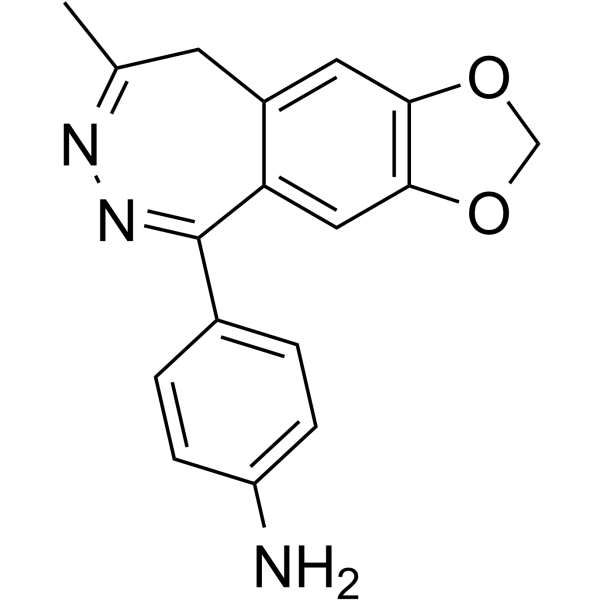
GYKI 52466 is an orally active, highly selective and noncompetitive AMPA/kainate receptor antagonist with the IC50 values of 7.5 and 11μM, respectively. GYKI 52466 has good blood brain barrier permeability and anticonvulsant effect. GYKI 52466 can be used in Parkinson's disease research .
loading...
    loading...
Cat. No.: HY-103234A
CAS No.: 2319722-40-0
Purity:  99.75%
Target:  

iGluR

Research Areas:  

Neurological Disease

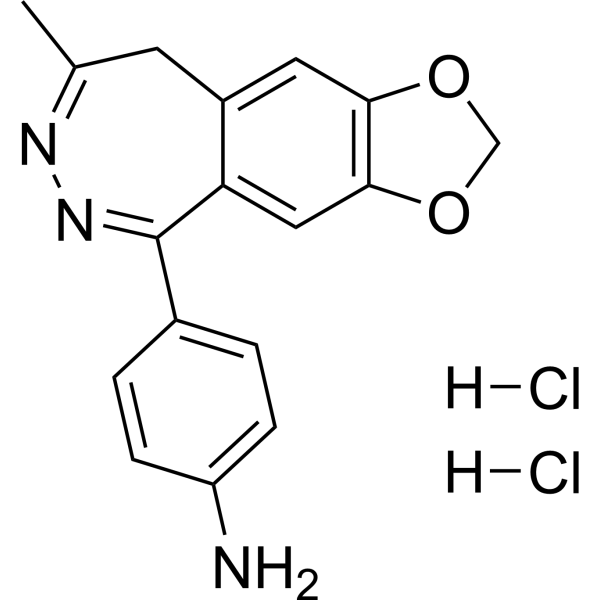
GYKI 52466 dihydrochloride is an orally active, highly selective and noncompetitive AMPA/kainate receptor antagonist with the IC50 values of 7.5 and 11μM, respectively. GYKI 52466 dihydrochloride has good blood brain barrier permeability and anticonvulsant effect. GYKI 52466 dihydrochloride can be used in Parkinson's disease research .
loading...
    loading...
Cat. No.: HY-103234AR
CAS No.: 2319722-40-0
Research Areas:  

Neurological Disease

GYKI 52466 (dihydrochloride) (Standard) is the analytical standard of GYKI 52466 (dihydrochloride). This product is intended for research and analytical applications. GYKI 52466 dihydrochloride is an orally active, highly selective and noncompetitive AMPA/kainate receptor antagonist with the IC50 values of 7.5 and 11μM, respectively. GYKI 52466 dihydrochloride has good blood brain barrier permeability and anticonvulsant effect. GYKI 52466 dihydrochloride can be used in Parkinson's disease research .
loading...
    loading...
Cat. No.: HY-103234B
CAS No.: 192065-56-8
Target:  

iGluR

Research Areas:  

Neurological Disease

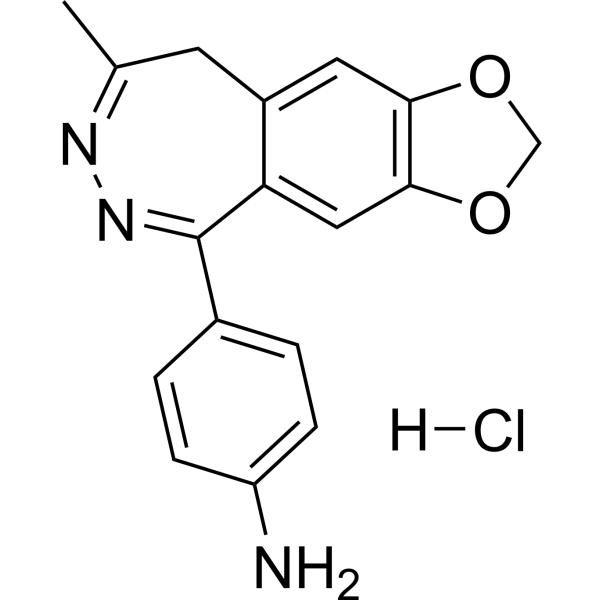
GYKI 52466 hydrochloride is an orally active, highly selective and noncompetitive AMPA/kainate receptor antagonist with the IC50 values of 7.5 and 11μM, respectively. GYKI 52466 hydrochloride has good blood brain barrier permeability and anticonvulsant effect. GYKI 52466 hydrochloride can be used in Parkinson's disease research .
loading...
    loading...

