16 Results for "

Glutamic acid binding

" in MedChemExpress (MCE) Product Catalog:
Products (16)

16 Results for "Glutamic acid binding" in MCE Product Catalog:

5
5 Cited Publications
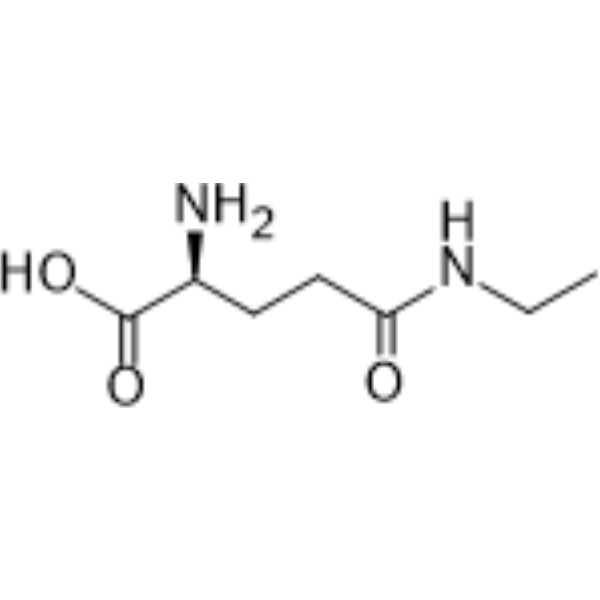
Cat. No.: HY-15121
CAS No.: 3081-61-6
Purity:  99.67%
Synonyms: L-Glutamic acid γ-ethyl amide; Nγ-Ethyl-L-glutamine
L-Theanine (L-Glutamic Acid γ-ethyl amide) is a non-protein amino acid contained in green tea leaves, which blocks the binding of L-glutamic acid to glutamate receptors in the brain, and with neuroprotective, anticancer and anti-oxidative activities. L-Theanine can pass through the blood–brain barrier and is orally active .
loading...
    loading...
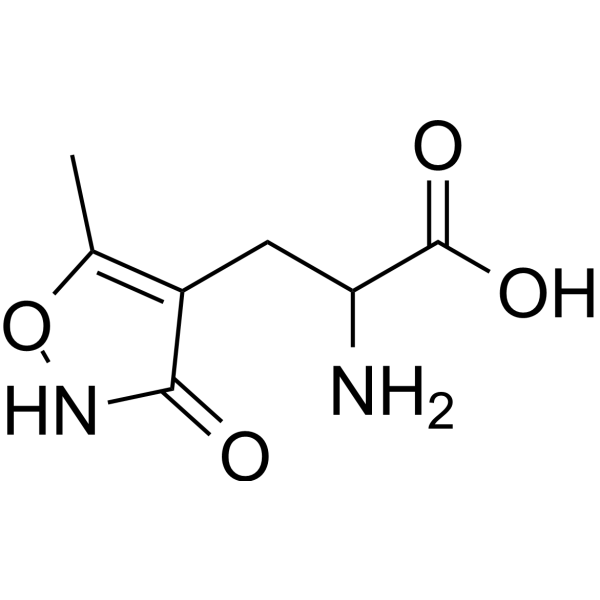
Cat. No.: HY-100815B
CAS No.: 77521-29-0
Purity:  99.82%
Synonyms: (±)-AMPA
Target:  

iGluR

Research Areas:  

Neurological Disease

(RS)-AMPA ((±)-AMPA) is a glutamate analogue and a potent and selective excitatory neurotransmitter L-glutamic acid agonist. (RS)-AMPA does not interfere with binding sites for kainic acid or NMDA receptors .
loading...
    loading...
Cat. No.: HY-15121R
CAS No.: 3081-61-6
Synonyms: L-Glutamic acid γ-ethyl amide (Standard); Nγ-Ethyl-L-glutamine (Standard)
L-Theanine (Standard) is the analytical standard of L-Theanine. This product is intended for research and analytical applications. L-Theanine (L-Glutamic Acid γ-ethyl amide) is a non-protein amino acid contained in green tea leaves, which blocks the binding of L-glutamic acid to glutamate receptors in the brain, and with neuroprotective, anticancer and anti-oxidative activities. L-Theanine can pass through the blood–brain barrier and is orally active .
loading...
    loading...
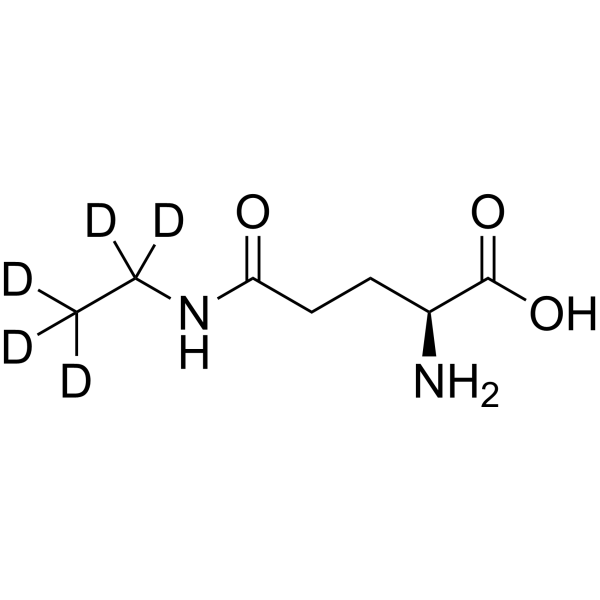
Cat. No.: HY-15121S
CAS No.: 1217451-85-8
Purity:  99%
Synonyms: L-Glutamic acid γ-ethyl amide-d5; Nγ-Ethyl-L-glutamine-d5
L-Theanine-d5 is the deuterium labeled L-Theanine. L-Theanine (L-Glutamic Acid γ-ethyl amide)is a non-protein amino acid contained in green tea leaves, which blocks the binding of L-glutamic acid to glutamate receptors in the brain, and with neuroprotective and anti-oxidative activities. L-Theanine causes anti-stress effects via the inhibition of cortical neuron excitation by oral intake .
loading...
    loading...
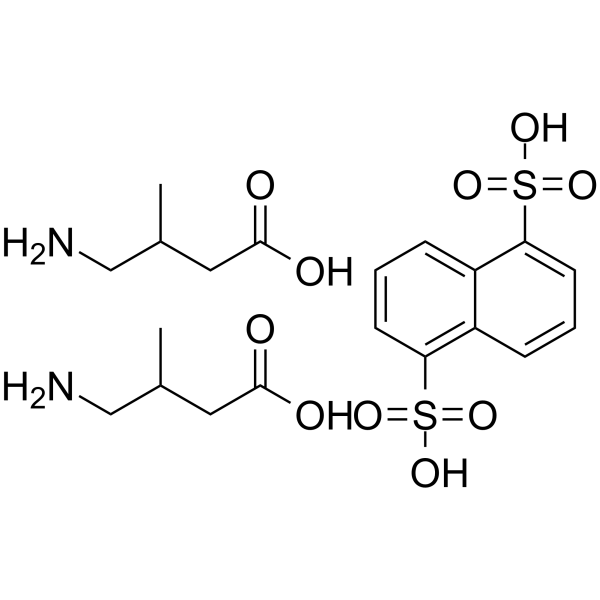
Cat. No.: HY-115685
CAS No.: 1216629-00-3
Purity:  99.86%
Target:  

GABA Receptor

Research Areas:  

Neurological Disease

3-Methyl-GABA is a potent GABA aminotransferase activator. 3-Methyl-GABA can fit the binding pocket of GABAA receptor (GABAaR). 3-Methyl-GABA can activate L-glutamic acid decarboxylase (GAD). 3-Methyl-GABA has anticonvulsant activity .
loading...
    loading...
Cat. No.: HY-15121S1
Synonyms: L-Glutamic acid γ-ethyl amide-13C2,15N2; Nγ-Ethyl-L-glutamine-13C2,15N2
L-Theanine- 13C2, 15N2 (L-Glutamic Acid γ-ethyl amide- 13C2, 15N2) is the 13C- and 15N-labeled L-Theanine (HY-15121). L-Theanine (L-Glutamic Acid γ-ethyl amide) is a non-protein amino acid contained in green tea leaves, which blocks the binding of L-glutamic acid to glutamate receptors in the brain, and with neuroprotective, anticancer and anti-oxidative activities. L-Theanine can pass through the blood–brain barrier and is orally active.
loading...
    loading...
Cat. No.: HY-W013781
CAS No.: 13574-13-5
Research Areas:  

Others

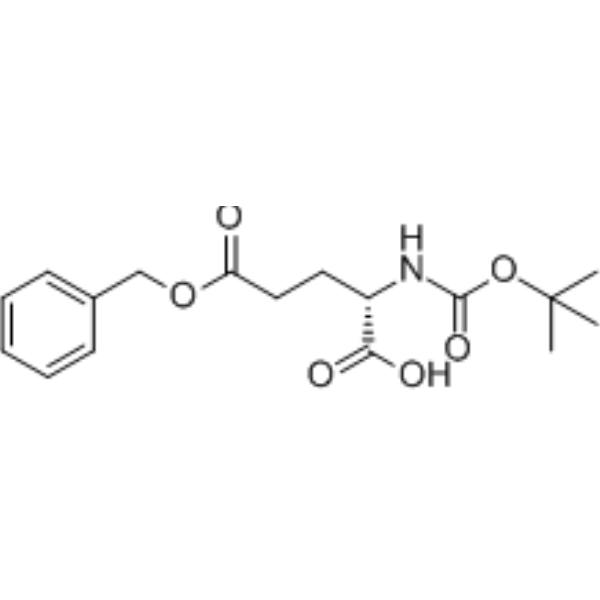
Boc-Glu(OBzl)-OH (Compound 9) is a glutamic acid derivative commonly used in Boc SPPS. Glutamic acid residues increase the hydrophilicity of the polypeptide and play an important structural and receptor binding role .
loading...
    loading...
Cat. No.: HY-100815C
CAS No.: 171259-81-7
Purity:  99.50%
Synonyms: (±)-AMPA hydrobromide
Target:  

iGluR

Research Areas:  

Neurological Disease

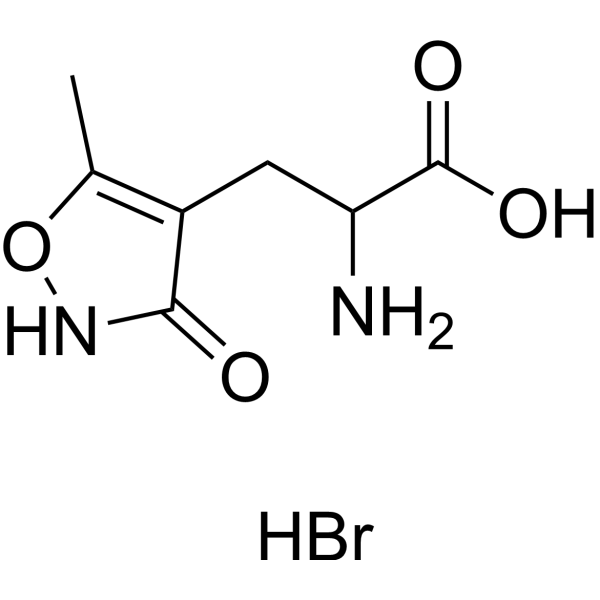
(RS)-AMPA hydrobromide ((±)-AMPA hydrobromide) is a glutamate analogue and a potent and selective excitatory neurotransmitter L-glutamic acid agonist. (RS)-AMPA hydrobromide does not interfere with binding sites for kainic acid or NMDA receptors .
loading...
    loading...
Cat. No.: HY-100821
CAS No.: 111872-98-1
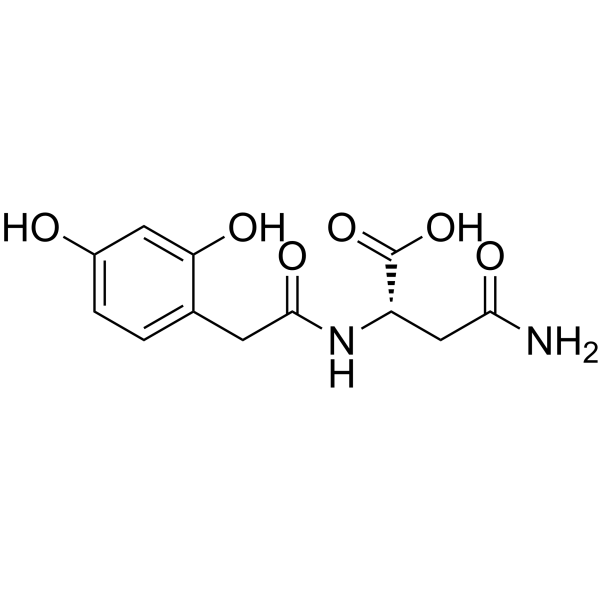
2,4-Dihydroxyphenylacetylasparagine is a potent and selective antagonist of glutamate. 2,4-Dihydroxyphenylacetylasparagine inhibits glutamate binding to rat brain synaptic membranes .
loading...
    loading...
Cat. No.: HY-100815D
CAS No.: 76463-67-7
Purity:  99.90%
Synonyms: (±)-AMPA monohydrate
Target:  

iGluR

Research Areas:  

Neurological Disease

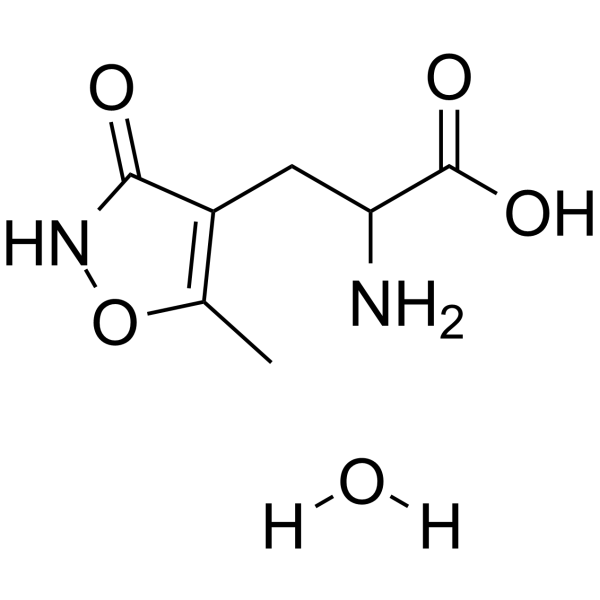
(RS)-AMPA monohydrate ((±)-AMPA monohydrate) is a glutamate analogue and a potent and selective excitatory neurotransmitter L-glutamic acid agonist. (RS)-AMPA monohydrate does not interfere with binding sites for kainic acid or NMDA receptors .
loading...
    loading...
Cat. No.: HY-100815E
CAS No.: 2922283-04-1
Synonyms: (±)-AMPA hydrochloride
Target:  

iGluR

Research Areas:  

Neurological Disease

(RS)-AMPA hydrochloride ((±)-AMPA hydrochloride) is a glutamate analogue and a potent and selective excitatory neurotransmitter L-glutamic acid agonist. (RS)-AMPA hydrochloride hydrobromide does not interfere with binding sites for kainic acid or NMDA receptors .
loading...
    loading...
Cat. No.: HY-100815BR
CAS No.: 77521-29-0
Synonyms: (±)-AMPA (Standard)
Research Areas:  

Neurological Disease

(RS)-AMPA (Standard) is the analytical standard of (RS)-AMPA. This product is intended for research and analytical applications. (RS)-AMPA ((±)-AMPA) is a glutamate analogue and a potent and selective excitatory neurotransmitter L-glutamic acid agonist. (RS)-AMPA does not interfere with binding sites for kainic acid or NMDA receptors .
loading...
    loading...
Cat. No.: HY-P5305A
Target:  

GABA Receptor

Research Areas:  

Metabolic Disease

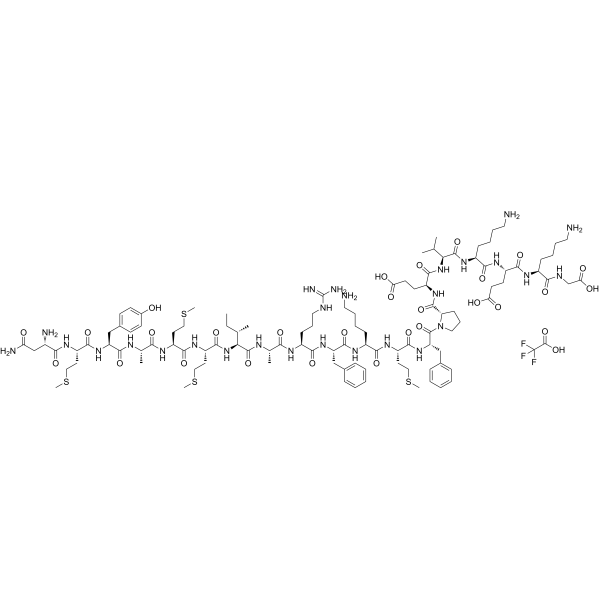
GAD65(247-266) epitope TFA is the T cell epitopes of islet antigens,binding to I-A g7 (type I diabetes-associated molecule) competitively with poor affinity. GAD65 refers to Glutamic Acid Decarboxylase 65,involved in the conversion of glutamate to gamma-aminobutyric acid (GABA) .
loading...
    loading...
Cat. No.: HY-P5471
CAS No.: 204060-45-7
Synonyms: [Leu27]-Melan-A, MART-1 (26-35)
Target:  

Peptides

Research Areas:  

Others

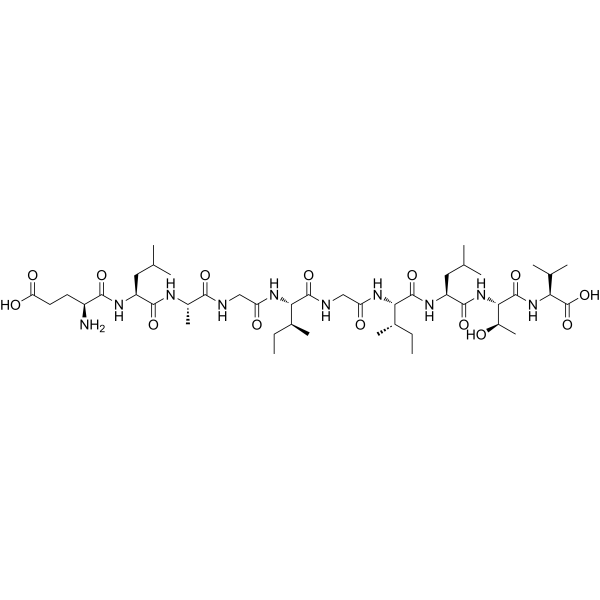
Melan-A/MART-1 analog ([Leu27]-Melan-A, MART-1 (26-35)) is a biological active peptide. (This Melan-A (26-35) analog, Leu substituted for Ala at position 27, shows better HLA-A*0201 binding properties as well as better immunogenicity and antigenicity than the natural Melan-A (26-35).Pyroglutamyl (pGlu) peptides may spontaneously form when either Glutamine (Q) or Glutamic acid (E) is located at the sequence N-terminus. The conversion of Q or E to pGlu is a natural occurrence and in general it is believed that the hydrophobic γ-lactam ring of pGlu may play a role in peptide stability against gastrointestinal proteases. Pyroglutamyl peptides are therefore considered a normal subset of such peptides and are included as part of the peptide purity during HPLC analysis.)
loading...
    loading...
Cat. No.: HY-LD004
14 million compounds

DEL technology enables the simultaneous screening of millions or billions of compounds in a single tube by covalently linking each small molecule with a unique DNA sequence. Traditional DEL screening primarily focuses on identifying non-covalent binding molecules, where interactions with the target are reversible. In contrast, DNA‑encoded covalent library is an ultra‑high‑throughput screening library developed on the basis of conventional DNA‑encoded library technology. It incorporates controllable electrophilic covalent warheads capable of forming irreversible covalent bonds with amino acid residues at the active sites of target proteins, including Cys, Lys, Ser, Tyr, and others. This covalent binding enhances binding affinity, prolongs residence time at the target site, and has the potential to overcome challenges associated with traditional non-covalent inhibitors, such as drug resistance or off-target effects.

Each compound in the library contains both a binding domain and an electrophilic warhead. It first recognizes and binds to the target through non covalent interactions, and then forms a stable covalent bond with key amino acid residues to achieve irreversible inhibition. This library is specifically designed for the discovery of potent, long lasting, and highly selective covalent inhibitors, particularly for undruggable targets such as kinases, GPCRs, proteases, and mutant oncoproteins. Each molecule is uniquely labeled with a DNA barcode for molecular identification and sequencing decoding.

This library is an advanced and highly diverse collection, consists of 35 independent sub-libraries with a total scaleof 14 million compounds, It incorporates over 14 experimentally validated covalent warheads capable of targeting cysteine, lysine, arginine, aspartic acid and glutamic acid. This library is constructed with diverse drug like core scaffolds and integrated controllable covalent warheads, it features structural diversity, reaction spec

Cat. No.: HY-P85630
Synonyms: AATM_HUMAN; AL022787; Aspartate aminotransferase; Aspartate aminotransferase 2; Aspartate aminotransferase, mitochondrial; ASPATA; FABP 1; FABP pm; FABP-1; FABPpm; Fatty acid binding protein; Fatty acid-binding protein; FLJ40994; Glutamate oxaloacetate transaminase 2; Glutamate oxaloacetate transaminase 2, mitochondrial; Glutamate oxaloacetate transaminase, mitochondrial; Glutamic oxaloacetic transaminase 2, mitochondrial; aspartate aminotransferase 2; Got 2; GOT2; KAT4; KATIV; Kynurenine aminotransferase IV; mAspAT; MGC102129; MGC115763; mitAAT; mitochondrial; Mitochondrial aspartate aminotransferase; OTTMUSP00000017748; Plasma membrane fatty acid binding protein; Plasma membrane-associated fatty acid-binding protein; Transaminase A.

Host:  

Mouse

Application:  

WB

Reactivity:  

Human, Mouse

loading...
    loading...
  • 1

