1. Search Result
Search Result
Results for "

HDAC3 Inhibitor

" in MedChemExpress (MCE) Product Catalog:

148

Inhibitors & Agonists

1

Fluorescent Dye

2

Biochemical Assay Reagents

2

Peptides

4

Natural
Products

2

Isotope-Labeled Compounds

1

Oligonucleotides

Targets Recommended:
Cat. No. Product Name Target Research Areas Chemical Structure
  • HY-10221
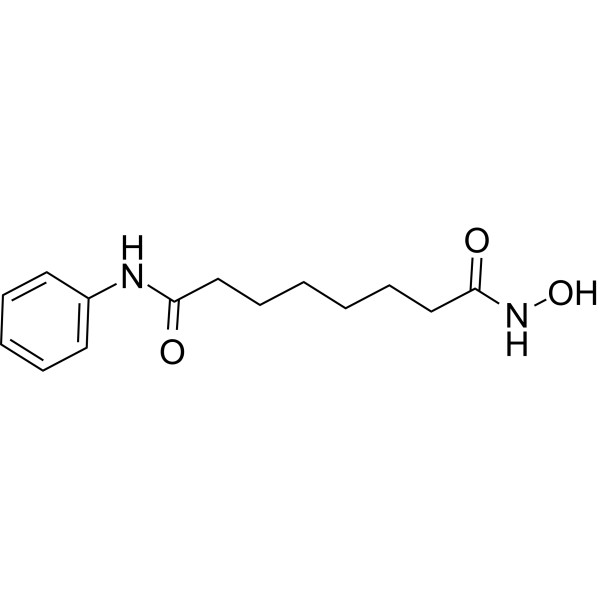
    Vorinostat
    Maximum Cited Publications
    159 Publications Verification

    SAHA; Suberoylanilide hydroxamic acid

    HDAC Autophagy Mitophagy Filovirus Apoptosis HPV Infection Cancer
    Vorinostat (SAHA) is a potent and orally active pan-inhibitor of HDAC1, HDAC2 and HDAC3 (Class I), HDAC6 and HDAC7 (Class II) and HDAC11 (Class IV), with ID50 values of 10 nM and 20 nM for HDAC1 and HDAC3, respectively. Vorinostat induces cell apoptosis . Vorinostat is also an effective inhibitor of human papillomaviruse (HPV)-18 DNA amplification .
    Vorinostat
  • HY-12163
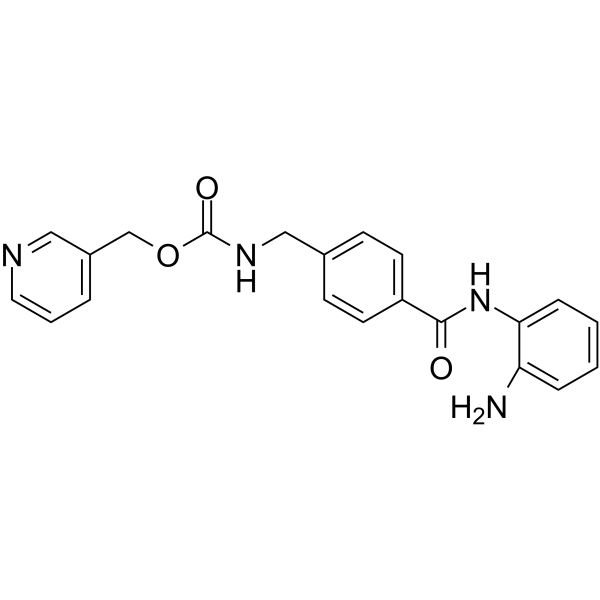
    Entinostat
    85+ Cited Publications

    MS-275; SNDX-275

    HDAC Autophagy Apoptosis Cancer
    Entinostat is an oral and selective class I HDAC inhibitor, with IC50s of 243 nM, 453 nM, and 248 nM for HDAC1, HDAC2, and HDAC3, respectively.
    Entinostat
  • HY-13909
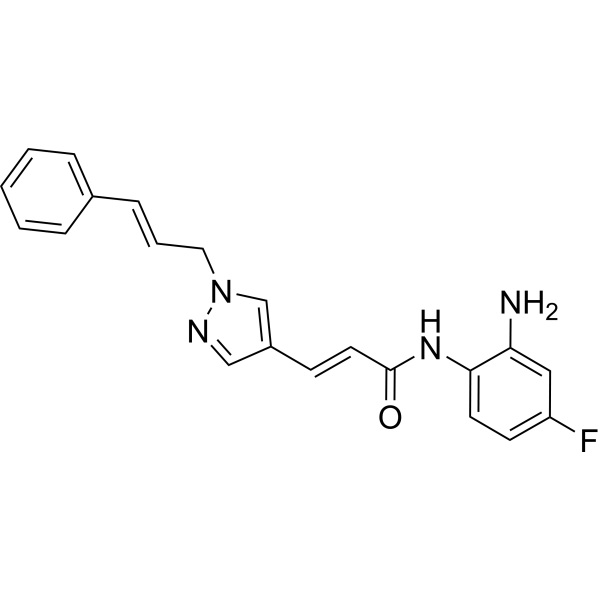
    RGFP966
    50+ Cited Publications

    HDAC Cancer
    RGFP966 is a highly selective HDAC3 inhibitor with an IC50 of 80 nM and shows no inhibition to other HDACs at concentrations up to 15 μM. RGFP966 can penetrate the blood brain barrier (BBB).
    RGFP966
  • HY-16026
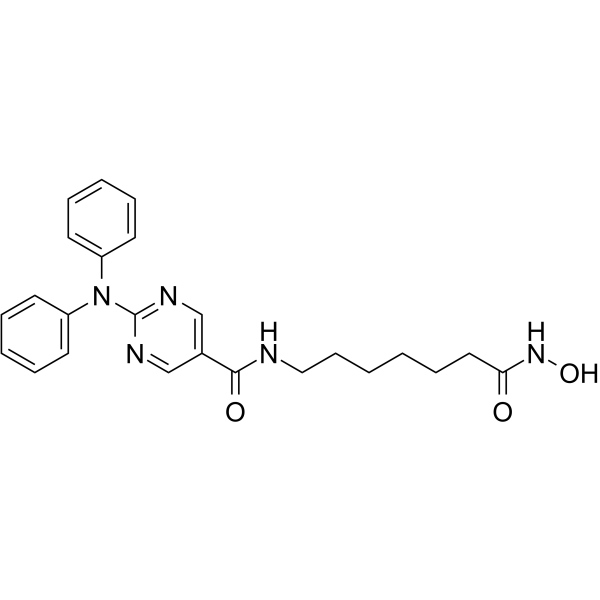
    Ricolinostat
    40+ Cited Publications

    ACY-1215; Rocilinostat

    HDAC Apoptosis Cancer
    Ricolinostat (ACY-1215) is a potent and selective HDAC6 inhibitor, with an IC50 of 5 nM. ACY-1215 also inhibits HDAC1, HDAC2, and HDAC3 with IC50s of 58, 48, and 51 nM, respectively.
    Ricolinostat
  • HY-14842
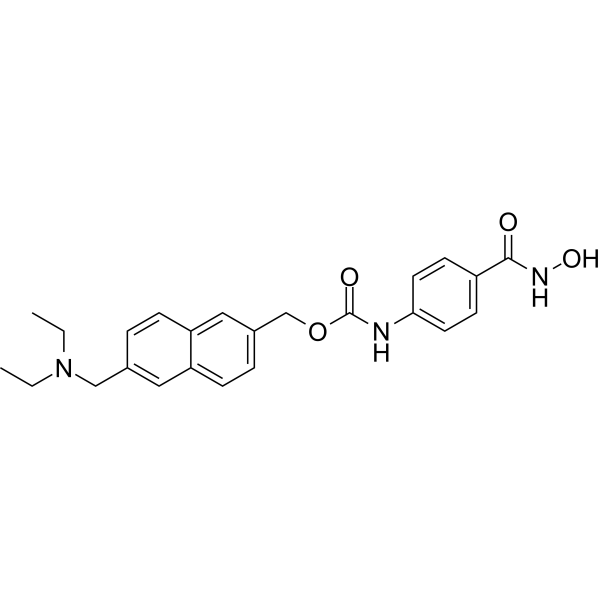
    Givinostat
    10+ Cited Publications

    ITF-2357

    HDAC Inflammation/Immunology Cancer
    Givinostat (ITF-2357) is a HDAC inhibitor with an IC50 of 198 and 157 nM for HDAC1 and HDAC3, respectively. Givinostat can be used for Duchenne muscular dystrophy (DMD) research. Givinostat can penetrate the blood-brain barrier (BBB) .
    Givinostat
  • HY-12164
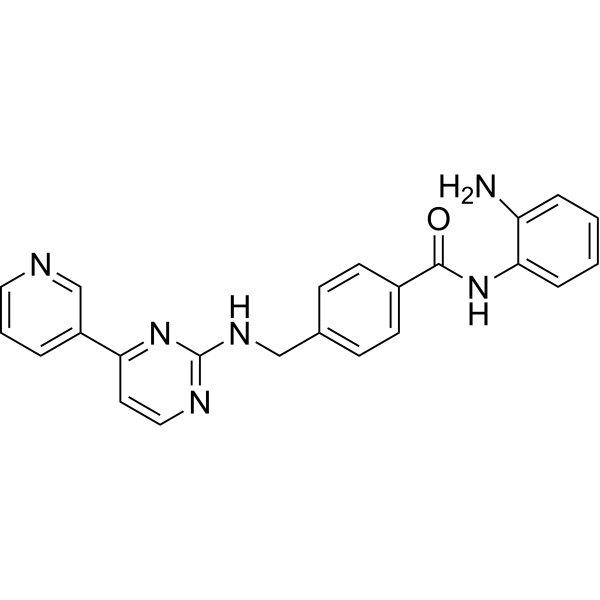
    Mocetinostat
    20+ Cited Publications

    MGCD0103

    HDAC Autophagy Apoptosis Cancer
    Mocetinostat (MGCD0103) is a potent, orally active and isotype-selective HDAC (Class I/IV) inhibitor with IC50s of 0.15, 0.29, 1.66 and 0.59 μM for HDAC1, HDAC2, HDAC3 and HDAC11, respectively. Mocetinostat shows no inhibition on HDAC4, HDAC5, HDAC6, HDAC7, or HDAC8.
    Mocetinostat
  • HY-13522
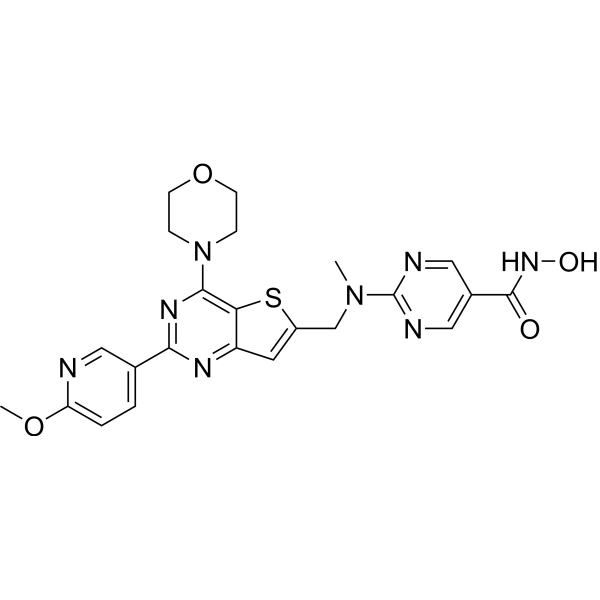
    Fimepinostat
    10+ Cited Publications

    CUDC-907

    PI3K HDAC Apoptosis Cancer
    Fimepinostat (CUDC-907) potently inhibits class I PI3Ks as well as classes I and II HDAC enzymes with an IC50 of 19/54/39 nM and 1.7/5.0/1.8/2.8 nM for PI3Kα/PI3Kβ/PI3Kδ and HDAC1/HDAC2/HDAC3/HDAC10 , respectively.
    Fimepinostat
  • HY-14842B

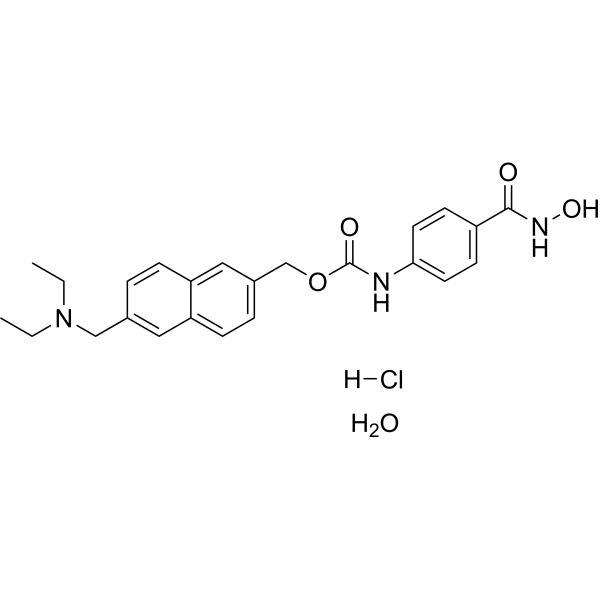
    ITF-2357 hydrochloride monohydrate

    HDAC Infection Neurological Disease Inflammation/Immunology Cancer
    Givinostat hydrochloride monohydrate (ITF-2357 hydrochloride monohydrate) is a HDAC inhibitor with an IC50 of 198 and 157 nM for HDAC1 and HDAC3, respectively. Givinostat hydrochloride monohydrate can penetrate the blood-brain barrier (BBB) .
    Givinostat hydrochloride monohydrate
  • HY-15994
    Citarinostat
    3 Publications Verification

    ACY241

    HDAC Cancer
    Citarinostat (ACY241) is a second generation potent, orally active and high-selective HDAC6 inhibitor with an IC50 of 2.6 nM (IC50s of 35 nM, 45 nM, 46 nM and 137 nM for HDAC1, HDAC2, HDAC3 and HDAC8, respectively). Citarinostat has anticancer effects .
    Citarinostat
  • HY-125771

    18:0 Lyso-PC; LPC(18:0)

    Endogenous Metabolite HDAC STAT Apoptosis Cancer
    1-Stearoyl-sn-glycero-3-phosphocholine is a lysophosphatidylcholine that inhibits HDAC3 activity and phosphorylation of STAT3 in K562 cells. 1-Stearoyl-sn-glycero-3-phosphocholine induces apoptosis and exhibits anticancer activity in chronic myelogenous leukemia (CML) K562 cells .
    1-Stearoyl-sn-glycero-3-phosphocholine
  • HY-16425
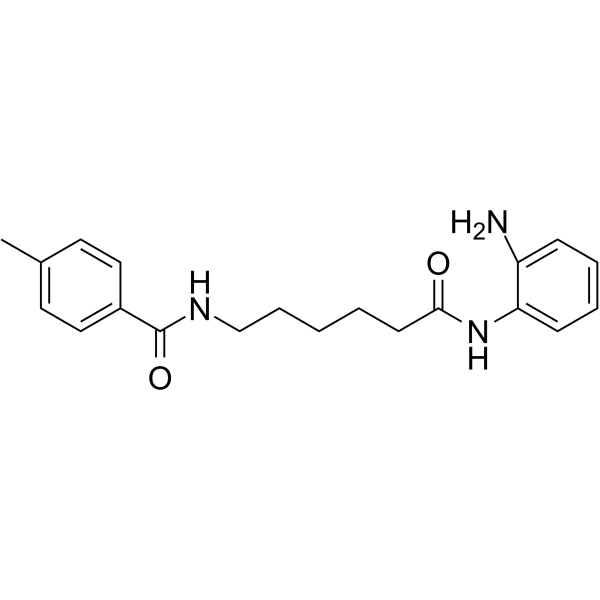
    RG2833
    10+ Cited Publications

    RGFP109

    HDAC Cancer
    RG2833 is a brain-penetrant HDAC inhibitor with IC50s of 60 nM and 50 nM for HDAC1 and HDAC3, respectively. The Ki values for HDAC1 and HDAC3 are 32 and 5 nM, respectively .
    RG2833
  • HY-14718
    Resminostat
    4 Publications Verification

    RAS2410; 4SC-201

    HDAC Cancer
    Resminostat (RAS2410; 4SC-201) is a potent inhibitor of HDAC1, HDAC3 and HDAC6, with mean IC50 values of 42.5, 50.1, 71.8 nM, respectively, and shows less potent activities against HDAC8, with an IC50 of 877 nM.
    Resminostat
  • HY-16012A
    Domatinostat
    3 Publications Verification

    4SC-202 free base

    HDAC Apoptosis Cancer
    Domatinostat (4SC-202 free base) is a selective class I HDAC inhibitor with IC50 of 1.20 μM, 1.12 μM, and 0.57 μM for HDAC1, HDAC2, and HDAC3, respectively. It also displays inhibitory activity against Lysine specific demethylase 1 (LSD1).
    Domatinostat
  • HY-19618
    BRD3308
    1 Publications Verification

    HDAC HIV Apoptosis Infection Metabolic Disease
    BRD3308 is a highly selective HDAC3 inhibitor with an IC50 of 54 nM. BRD3308 is 23-fold selectivity for HDAC3 over HDAC1 (IC50 of 1.26 μM) or HDAC2 (IC50 of 1.34 μM). BRD3308 suppresses pancreatic β-cell apoptosis induced by inflammatory cytokines or glucolipotoxic stress, and increases functional insulin release. BRD3308 activates HIV-1 transcription and disrupts HIV-1 latency .
    BRD3308
  • HY-14718A
    Resminostat hydrochloride
    4 Publications Verification

    RAS2410 hydrochloride; 4SC-201 hydrochloride

    HDAC Cancer
    Resminostat hydrochloride is a potent inhibitor of HDAC1, HDAC3 and HDAC6, with mean IC50 values of 42.5, 50.1, 71.8 nM, respectively, and shows less potent activities against HDAC8, with an IC50 of 877 nM.
    Resminostat hydrochloride
  • HY-19327
    ACY-738
    5 Publications Verification

    HDAC Cancer
    ACY-738 is a potent, selective and orally-bioavailable HDAC6 inhibitor, with an IC50 of 1.7 nM; ACY-738 also inhibits HDAC1, HDAC2, and HDAC3, with IC50s of 94, 128, and 218 nM.
    ACY-738
  • HY-N0071

    Isoguanosine

    FLT3 HDAC Cancer
    Crotonoside is isolated from Chinese medicinal herb, Croton. Crotonoside inhibits FLT3 and HDAC3/6, exhibits selective inhibition in acute myeloid leukemia (AML) cells. Crotonoside could be a promising new lead compound for the research of AML .
    Crotonoside
  • HY-111400

    HDAC Cancer
    SR-4370 is an inhibitor of HDAC, with IC50s of 0.13 μM, 0.58 μM, 0.006 μM, 2.3 μM, and 3.4 μM for HDAC1, HDAC2, HDAC3, HDAC8, and HDAC6, respectively.
    SR-4370
  • HY-18613
    CAY10603
    5+ Cited Publications

    BML-281

    HDAC Cancer
    CAY10603 (BML-281) is a potent and selective HDAC6 inhibitor, with an IC50 of 2 pM; CAY10603 (BML-281) also inhibits HDAC1, HDAC2, HDAC3, HDAC8, HDAC10, with IC50s of 271, 252, 0.42, 6851, 90.7 nM.
    CAY10603
  • HY-16012
    Domatinostat tosylate
    3 Publications Verification

    4SC-202

    HDAC Apoptosis Cancer
    Domatinostat tosylate (4SC-202) is a selective class I HDAC inhibitor with IC50 of 1.20 μM, 1.12 μM, and 0.57 μM for HDAC1, HDAC2, and HDAC3, respectively. It also displays inhibitory activity against Lysine specific demethylase 1 (LSD1).
    Domatinostat tosylate
  • HY-14842A
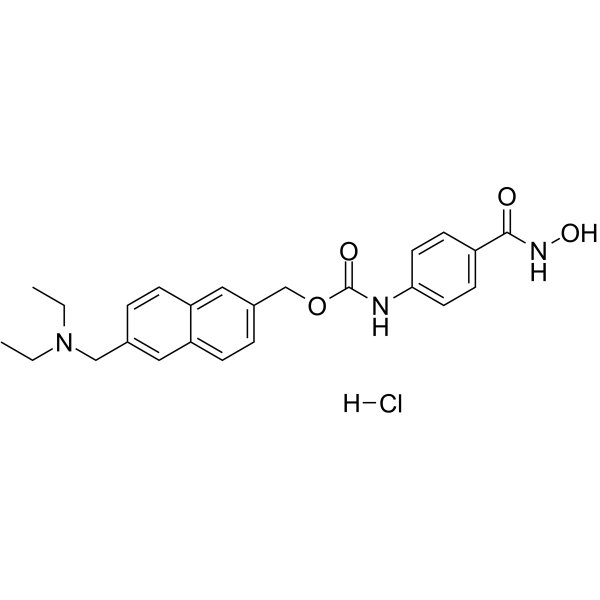
    Givinostat hydrochloride
    10+ Cited Publications

    ITF-2357 hydrochloride

    HDAC Inflammation/Immunology Cancer
    Givinostat (ITF-2357) hydrochloride is a HDAC inhibitor with an IC50 of 198 and 157 nM for HDAC1 and HDAC3, respectively. Givinostat hydrochloride can penetrate the blood-brain barrier (BBB). .
    Givinostat hydrochloride
  • HY-100748
    Zabadinostat
    3 Publications Verification

    CXD101

    HDAC Cancer
    Zabadinostat (CXD101) is a potent, selective and orally active class I HDAC inhibitor with IC50s of 63 nM, 570 nM and 550 nM for HDAC1, HDAC2 and HDAC3, respectively. Zabadinostat has no activity against HDAC class II. Zabadinostat has antitumor activity .
    Zabadinostat
  • HY-101780
    Tinostamustine
    4 Publications Verification

    EDO-S101; NL-101

    HDAC Cancer
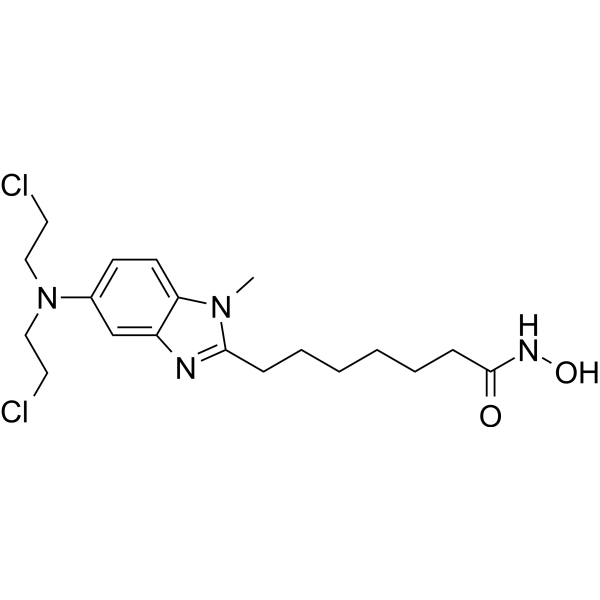
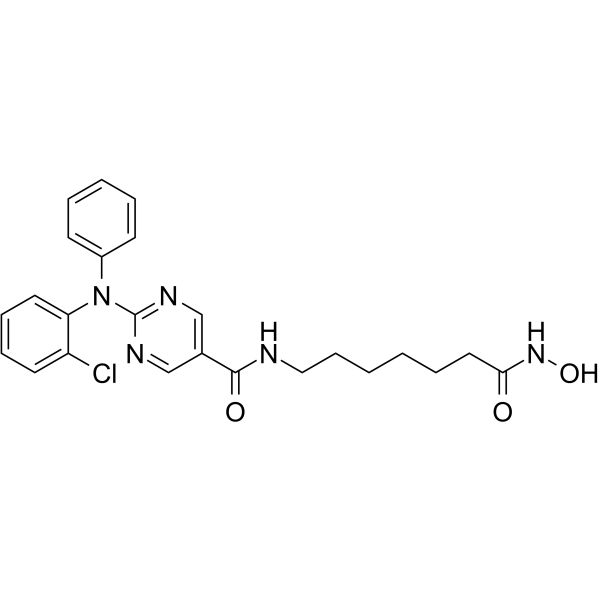
    Tinostamustine (EDO-S101) is a pan HDAC inhibitor; inhibits HDAC6, HDAC1, HDAC2 and HDAC3 with IC50 values of 6 nM, 9 nM, 9 nM and 25 nM, respectively .
    Tinostamustine
  • HY-13267
    Droxinostat
    3 Publications Verification

    NS 41080

    HDAC Apoptosis Cancer
    Droxinostat (NS 41080) is a histone deacetylase (HDAC) inhibitor. Droxinostat selectively inhibits HDAC3, HDAC6, and HDAC8 with IC50 values of 16.9 μM, 2.47 μM, and 1.46 μM, respectively. Droxinostat can be used for the research of hepatocellular carcinoma (HCC) .
    Droxinostat
  • HY-18700
    BRD73954
    4 Publications Verification

    HDAC Cancer
    BRD73954 is a potent HDAC inhibitor and selectively inhibiting both HDAC6 and HDAC8 with IC50 values of 0.0036, 0.12, 9, 12, 23 µM for HDAC6, HDAC8, HDAC2, HDAC1 and HDAC3, respectively. BRD73954 decreases the levels of HDAC6, associated with upregulation of Ac-Tubulin .
    BRD73954
  • HY-100384
    NKL 22
    1 Publications Verification

    HDAC Neurological Disease Cancer
    NKL 22 is a potent and selective inhibitor of histone deacetylases (HDAC), with IC50 values of 199 and 69 nM for HDAC1 and HDAC3, respectively. NKL 22 can reverse abnormal expression of HD‑related genes and restore the levels of key genes including Ppp1r1b in Huntington's disease transgenic mice. NKL 22 can be used for the researches of Huntington's disease and cancer .
    NKL 22
  • HY-18712
    BG45
    4 Publications Verification

    HDAC Apoptosis Caspase Cancer
    BG45 is a potent HDAC3 inhibitor with IC50 values of 0.289, 2, 2.2 and ﹥20 μM for HDAC3, HDAC1, HDAC2 and HDAC6, respectively. BG45 selectively targets multiple myeloma (MM) cells and induces caspase-dependent apoptosis .
    BG45
  • HY-W019710

    HDAC Neurological Disease
    (E,E)-RGFP966 is a selective and CNS permeable HDAC3 inhibitor that can be used for the research of Huntington’s disease .
    (E,E)-RGFP966
  • HY-10221R

    SAHA (Standard); Suberoylanilide hydroxamic acid (Standard)

    Reference Standards HDAC Autophagy Mitophagy Filovirus Apoptosis HPV Infection Cancer
    Vorinostat (Standard) is the analytical standard of Vorinostat. This product is intended for research and analytical applications. Vorinostat (SAHA) is a potent and orally active pan-inhibitor of HDAC1, HDAC2 and HDAC3 (Class I), HDAC6 and HDAC7 (Class II) and HDAC11 (Class IV), with ID50 values of 10 nM and 20 nM for HDAC1 and HDAC3, respectively. Vorinostat induces cell apoptosis . Vorinostat is also an effective inhibitor of human papillomaviruse (HPV)-18 DNA amplification .
    Vorinostat (Standard)
  • HY-164782

    HDAC Neurological Disease Metabolic Disease Cancer
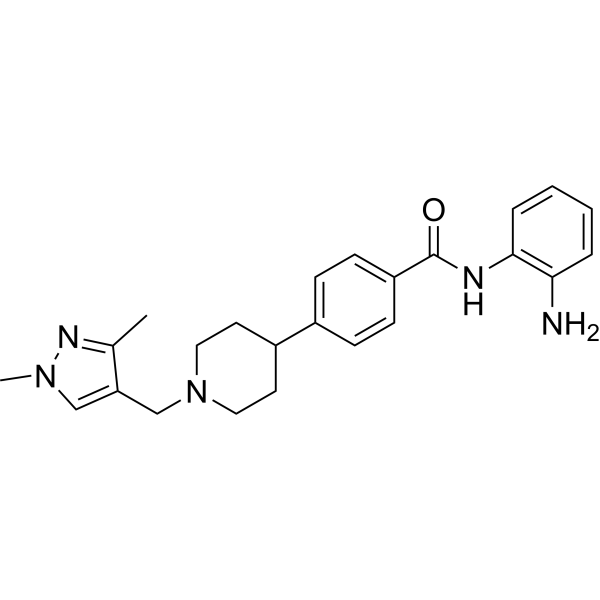
    PT3 is a selective inhibitor of HDAC3 with an IC50 value of 0.25 μM. PT3 exhibits good brain penetration ability and bioavailability upon oral administration. PT3 can be used in the research of Alzheimer’s disease .
    PT3
  • HY-114483
    AES-135
    1 Publications Verification

    HDAC Cancer
    AES-135, a hydroxamic acid-based pan-HDAC inhibitor, prolongs survival in an orthotopic mouse model of pancreatic cancer. AES-135 inhibits HDAC3, HDAC6, HDAC8, and HDAC11 with IC50s ranging from 190-1100 nM .
    AES-135
  • HY-110264

    HDAC Apoptosis Neurological Disease Cancer
    MI-192 is a selective HDAC2 and HDAC3 inhibitor with IC50s of 30 nM and 16 nM, respectively. MI-192 is more selective for HDAC2/3 than other HDAC isomers.MI-192 induces myeloid leukaemic cells apoptosis. Anticaner and neuroprotective activities .
    MI-192
  • HY-W009776

    Suberohydroxamic acid; SBHA

    HDAC Apoptosis Cancer
    Suberoyl bis-hydroxamic acid (Suberohydroxamic acid; SBHA) is a competitive and cell-permeable HDAC1 and HDAC3 inhibitor with ID50 values of 0.25 μM and 0.30 μM, respectively .Suberoyl bis-hydroxamic acid renders MM cells susceptible to apoptosis and facilitates the mitochondrial apoptotic pathways .Suberoyl bis-hydroxamic acid can be used for the study of medullary thyroid carcinoma (MTC) .
    Suberoyl bis-hydroxamic acid
  • HY-123295

    HDAC Infection Cancer
    HDAC3-IN-T247 is a potent and selective HDAC3 (histone deacetylase 3) inhibitor, with an IC50 of 0.24 µM. HDAC3-IN-T247 induces a selective increase of NF-κB acetylation in HCT116 cells. HDAC3-IN-T247 shows anticancer and antiviral activity. HDAC3-IN-T247 inhibits growth of cancer cells, and activates HIV gene expression in latent HIV-infected cells .
    HDAC3-IN-T247
  • HY-156096

    HDAC Histone Methyltransferase Caspase Apoptosis DNA/RNA Synthesis Cancer
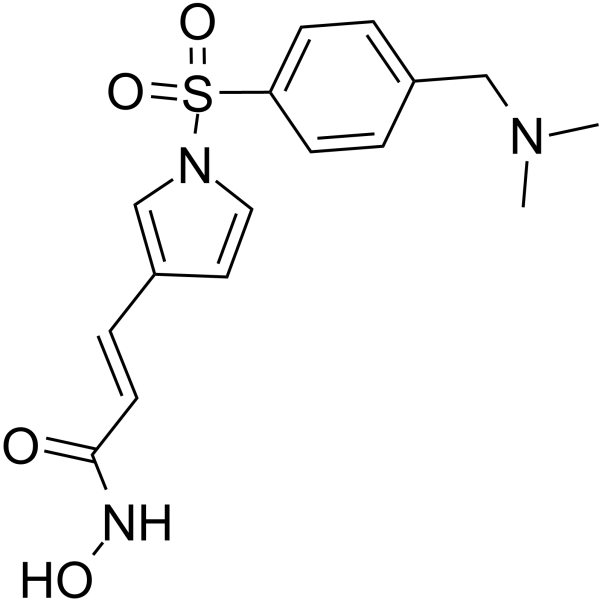
    HDAC3-IN-2 (compound 4i) is a pyrazinyl hydrazide-based HDAC3 inhibitor (IC50: 14 nM) that efficiently targets triple-negative breast cancer cells. HDAC3-IN-2 is cytotoxic with an IC50 of 0.55 μM against 4T1 and an IC50 of 0.74 μM against MDA-MB-231. HDAC3-IN-2 has anti-tumor efficacy in vivo in tumor-bearing mouse models, selectively increasing the acetylation levels of H3K9, H3K27 and H4K12, increasing the contents of apoptosis-related caspase-3, caspase-7 and cytochrome c, and reducing Proliferation-related Bcl-2, CD44, EGFR, and Ki-67 levels .
    HDAC3-IN-2
  • HY-102083

    HDAC Neurological Disease
    BRD4884 is a potent and brain-penetrant HDAC inhibitor with IC50 values of 29 nM, 62 nM, and 1090 nM for HDAC1, HDAC2, and HDAC3, respectively. BRD4884 can be used for the study of cognitive impairment .
    BRD4884
  • HY-152174

    HDAC Cancer
    HDAC-IN-52 is a pyridine-containing HDAC inhibitor, with IC50s of 0.189, 0.227, 0.440 and 0.446 μM for HDAC1, HDAC2, HDAC3, and HDAC10, respectively. HDAC-IN-52 can be used for the research of cancer .
    HDAC-IN-52
  • HY-149669

    PI3K HDAC Apoptosis Cancer
    PH14 is a dual PI3K/HDAC inhibitor with IC50 values of 20.3 nM and 24.5 nM for PI3Kα and HDAC3, respectively. PH14 has antiproliferative activity and also induces apoptosis in Jeko-1 cells. PH14 can be used in cancer research, such as lymphoma .
    PH14
  • HY-117374
    HDAC3-IN-1
    1 Publications Verification

    HDAC Cancer
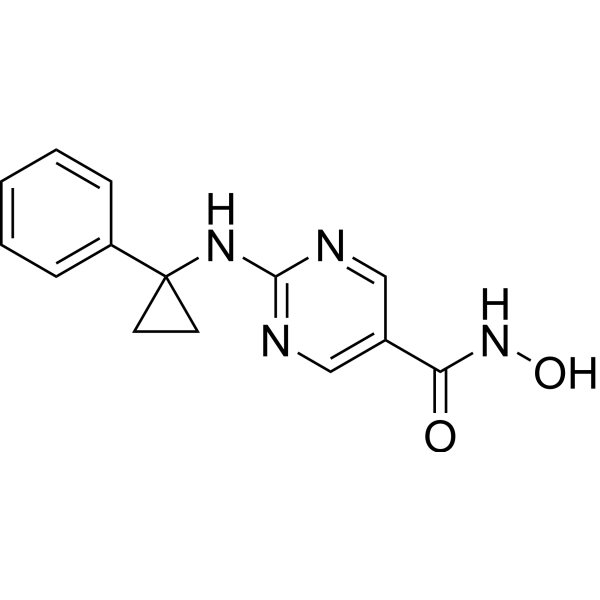
    HDAC3-IN-1 (compound 5) is a potent and selective HDAC3 inhibitor, with an IC50 of 5.96 nM .
    HDAC3-IN-1
  • HY-12163S

    MS-275-d4; SNDX-275-d4

    Apoptosis Autophagy HDAC Cancer
    Entinostat-d4 is the deuterium labeled Entinostat . Entinostat is an oral and selective class I HDAC inhibitor, with IC50s of 243 nM, 453 nM, and 248 nM for HDAC1, HDAC2, and HDAC3, respectively .
    Entinostat-d4
  • HY-162086

    HDAC Cancer
    HDAC-IN-68 (Compound 29) is a potent HDAC inhibitor that disrupts microtubule structure and inhibits tumor growth. HDAC-IN-68 significantly inhibits class I HDACs (HDAC1, HDAC2, HDAC3) with IC50 values of 5.1, 11.5 and 8.8 nM, respectively .
    HDAC-IN-68
  • HY-161050

    HDAC Apoptosis Cancer
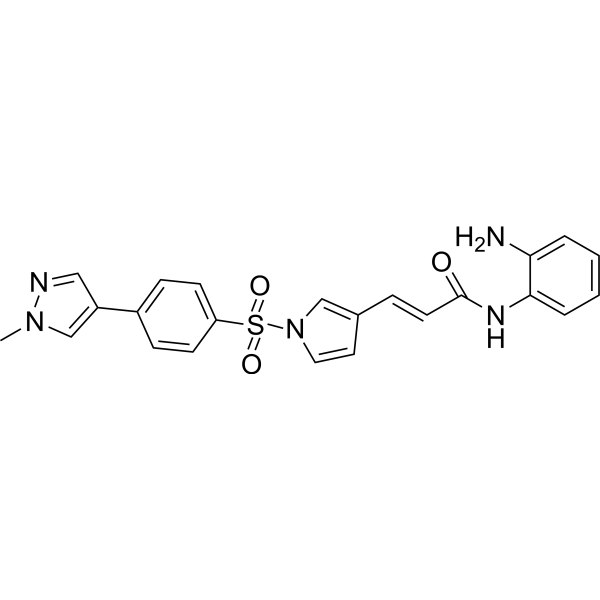
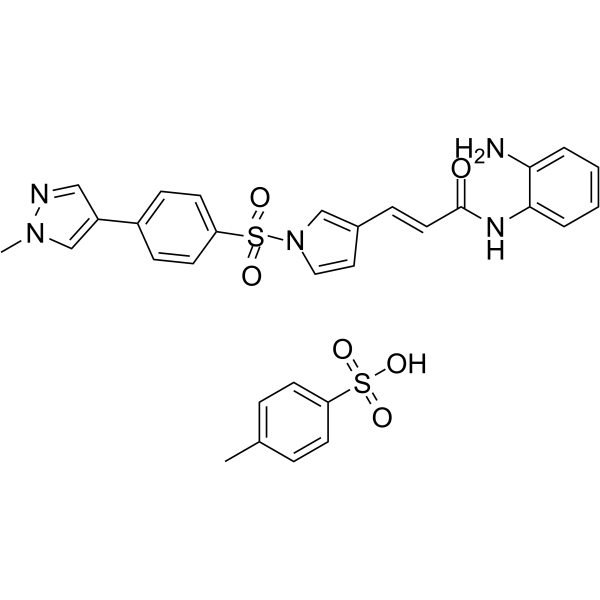
    YSR734 (Compound 21) is a covalent HDAC inhibitor with IC50 values of 110 nM, 154 nM, and 143 nM for HDAC1, HDAC2, and HDAC3, respectively. YSR734 can induce apoptosis in leukemia cells. YSR734 can induce myoblast differentiation and is used in the study of Duchenne muscular dystrophy .
    YSR734
  • HY-153358A

    HDAC Cancer
    (S)-TNG260 is an isomer of TNG260 (HY-153358). TNG260 is a CoREST selective deacetylase (CoreDAC) inhibitor. TNG260 inhibits HDAC1 with 10-fold selectivity over HDAC3. TNG260 causes HDAC1 inhibition and reverses anti-PD1 resistance driven by STK11 deletion. TNG260 reduces intratumoral infiltration of neutrophils. TNG260 exhibits immune-mediated cell killing.
    (S)-TNG260
  • HY-149819

    HDAC CDK Cancer
    CDK/HDAC-IN-3 is an orally active HDACs/CDKs dual inhibitor. CDK/HDAC-IN-3 has potent and selective inhibition of CDK9, CDK12, CDK13, HDAC1, HDAC2 and HDAC3 with IC50 values of 98.32 nM, 98.85 nM, 100 nM, 62.12 nM, 93.28nM and 82.87 nM. CDK/HDAC-IN-3 can be used for the acute myeloid leukemia (AML) .
    CDK/HDAC-IN-3
  • HY-115412

    SAHA-d5; Suberoylanilide hydroxamic acid-d5

    HDAC Autophagy Mitophagy Filovirus Apoptosis HPV Infection Cancer
    Vorinostat-d5 (SAHA-d5) is the deuterium labeled Vorinostat. Vorinostat (SAHA) is a potent and orally active pan-inhibitor of HDAC1, HDAC2 and HDAC3 (Class I), HDAC7 (Class II) and HDAC11 (Class IV), with ID50 values of 10 nM and 20 nM for HDAC1 and HDAC3, respectively. Vorinostat induces cell apoptosis . Vorinostat is also an effective inhibitor of human papillomaviruse (HPV)-18 DNA amplification .
    Vorinostat-d5
  • HY-159172

    HDAC Cancer
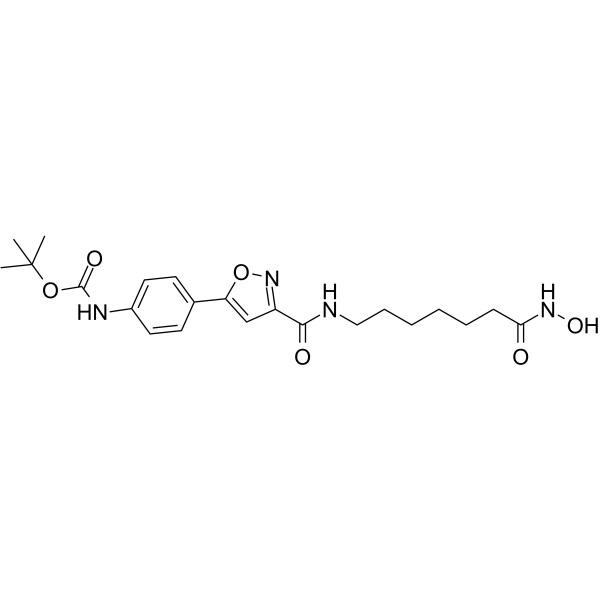
    HDAC3-IN-4 is a selective and orally active HDAC3 inhibitor with an IC50 of 89 nM. HDAC3-IN-4 induces the degradation of PD-L1 by regulating cathepsin B (CTSB) in the lysosomes, with a DC50 of 5.7 μM. HDAC3-IN-4 shows better selectivity for HDAC3 over HDAC1, HDAC6, HDAC7, and HDAC8 .
    HDAC3-IN-4
  • HY-14842R

    ITF-2357 (Standard)

    HDAC Reference Standards Inflammation/Immunology Cancer
    Givinostat (Standard) is the analytical standard of Givinostat. This product is intended for research and analytical applications. Givinostat (ITF-2357) is a HDAC inhibitor with an IC50 of 198 and 157 nM for HDAC1 and HDAC3, respectively. Givinostat can be used for Duchenne muscular dystrophy (DMD) research .
    Givinostat (Standard)
  • HY-155840

    HDAC Apoptosis Cancer
    KH16 is a potent and low nanomolar HDAC inhibitor. KH16 is against class I HDACs HDAC1, HDAC2, and HDAC3, with IC50 values ranging from 6 to 34 nM. KH16 induces cell apoptosis and is against tumor cells with various gene expression patterns .
    KH16
  • HY-114548

    Guanylate Cyclase Infection
    Ebselen oxide, the selenone analogue of Ebselen, covalently modifies diguanylate cyclase (DGC) to inhibit c-di-GMP-receptor interactions and reduces DGC activity. Ebselen oxide also inhibits alginate production (IC50=14 μM) by Pseudomonas aeruginosa. Ebselen oxide inhibits HDAC1, HDAC3, HDAC4, HDAC5, HDAC6, HDAC7, HDAC8, and HDAC9 (IC50 ranging from 0.2 to 4.7 μM) .
    Ebselen oxide
  • HY-162769

    HDAC Apoptosis Cancer
    HDAC3-IN-5 (9c) is a HDAC3 selective inhibitor, with IC50 values of 4.2 nM, 1629 nM and 298.2 nM for HDAC3, HDAC2, HDAC1, respectively. HDAC3-IN-5 (9c) can effectively induce apoptosisin MV4-11 cells in vitro and reduce the expression of anti-apoptotic proteins, the development of HDAC3 selective inhibitors may serve as a potential lead compound to reverse Venetoclax resistance .
    HDAC3-IN-5

Inquiry Online

Your information is safe with us. * Required Fields.

Salutation


Country or Region *

Applicant Name *


Organization Name *

Department *


Email Address *


Product Name *

Cat. No.


Requested quantity *

Phone Number *


Remarks

Inquiry Online

Inquiry Information

Product Name:
Cat. No.:
Quantity:
MCE Japan Authorized Agent:

