



Resminostat
Based on 6 publication(s) in Google Scholar
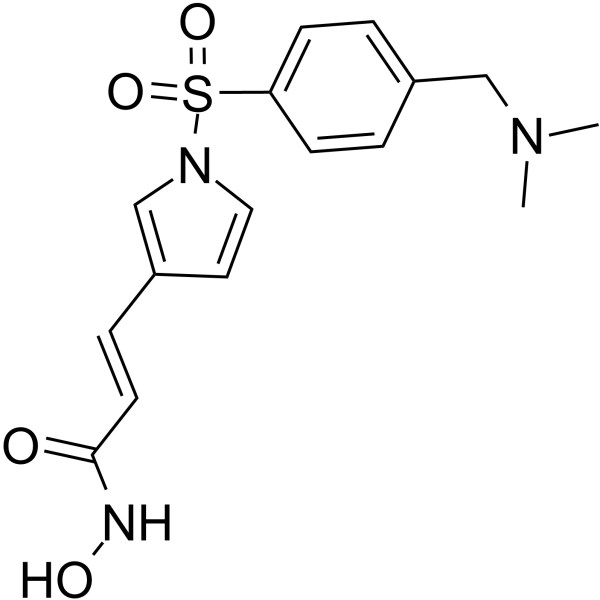
Resminostat (RAS2410; 4SC-201) is a potent inhibitor of HDAC1, HDAC3 and HDAC6, with mean IC50 values of 42.5, 50.1, 71.8 nM, respectively, and shows less potent activities against HDAC8, with an IC50 of 877 nM.
For research use only. We do not sell to patients.
- Purity : 99.44%
- CAS No.: 864814-88-0
- Formula: C16H19N3O4S
- Molecular Weight:349.40
-
Storage:Powder -20°C, 3 years , 4°C, 2 years ; In solvent -80°C, 6 months , -20°C, 1 month

To place orders, for customer services and technical support, please contact: MedChemExpress USA
Tel: 609-228-6898 E-mail: [email protected] [email protected]


-
 Biological Activity
-
Chemical Information
-
Solvent & Solubility
- Purity & Documentation
- References
-
 Help & FAQs


-
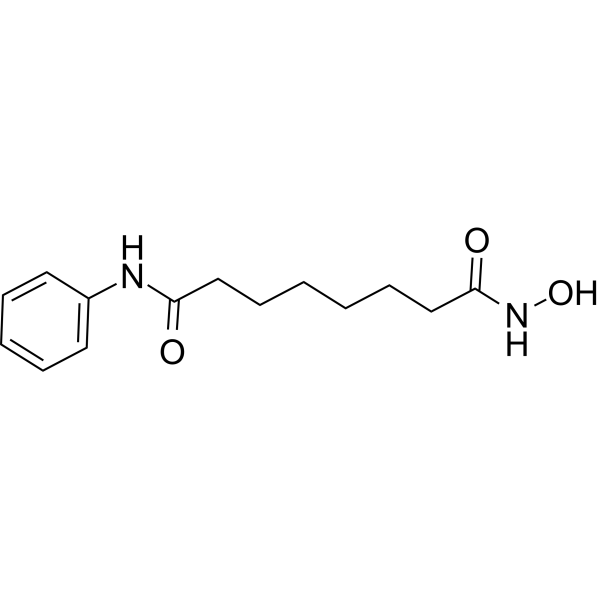
HY-10221
VorinostatHDAC Inhibitor -
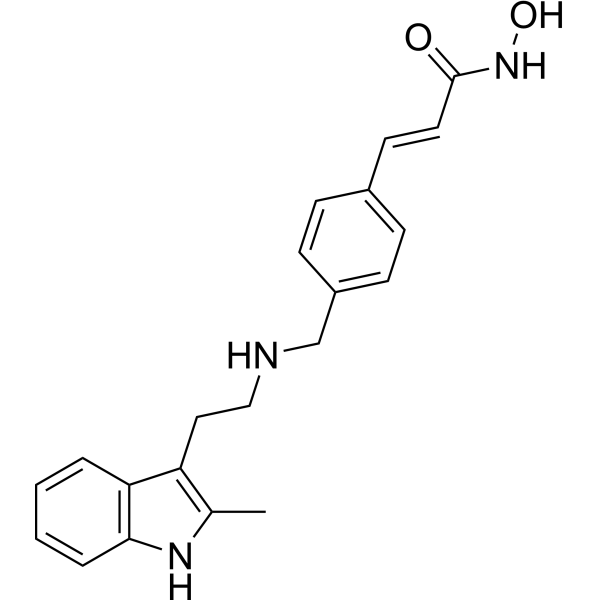
HY-10224
PanobinostatHDAC Inhibitor -
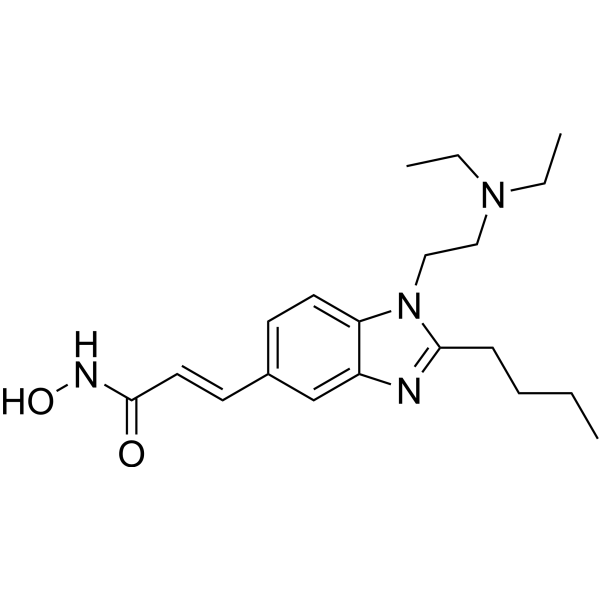
HY-13322
PracinostatHDAC/MBLAC2 Inhibitor -
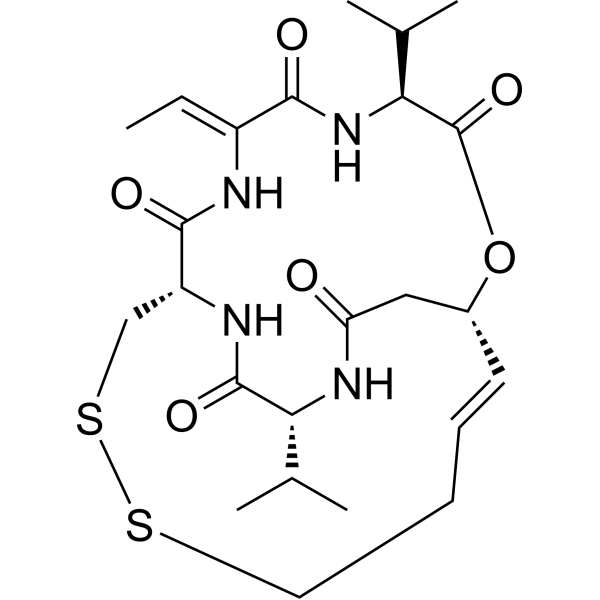
HY-15149
RomidepsinHDAC Inhibitor -
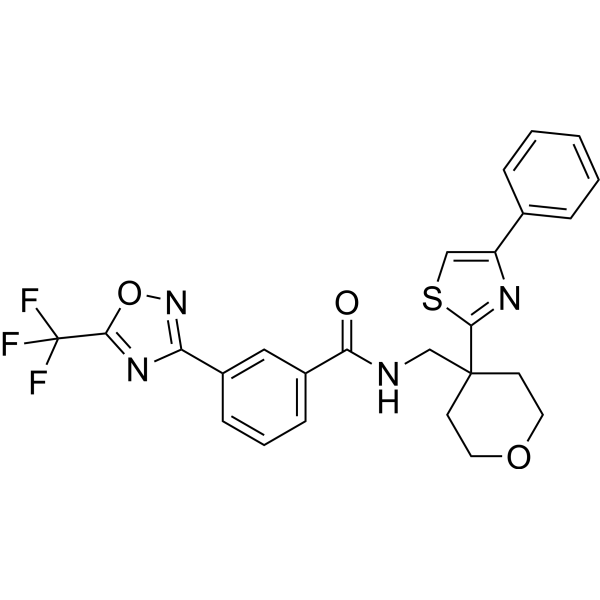
HY-18360
TMP269HDACIIa Inhibitor -
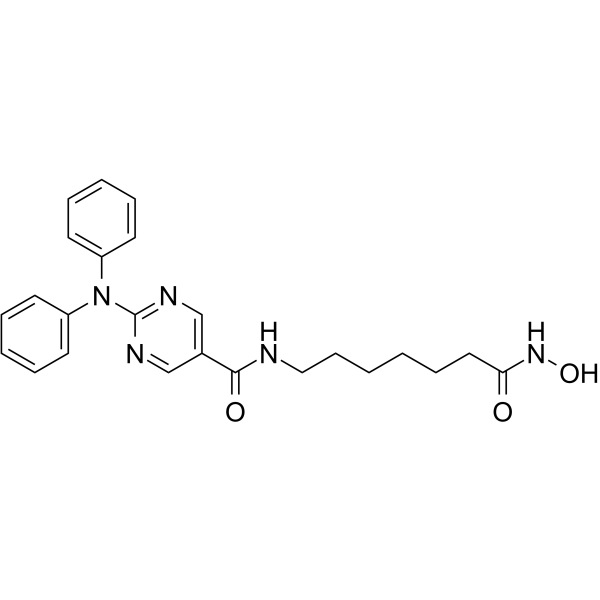
HY-16026
RicolinostatHDAC6 Inhibitor -
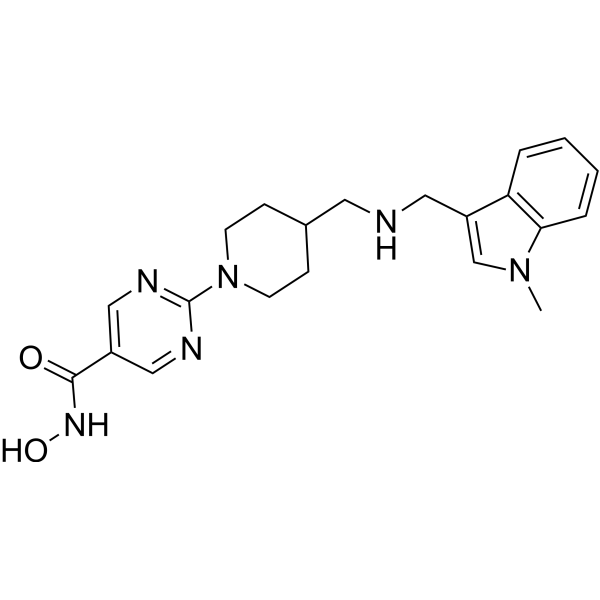
HY-15433
QuisinostatPan-HDAC Inhibitor -
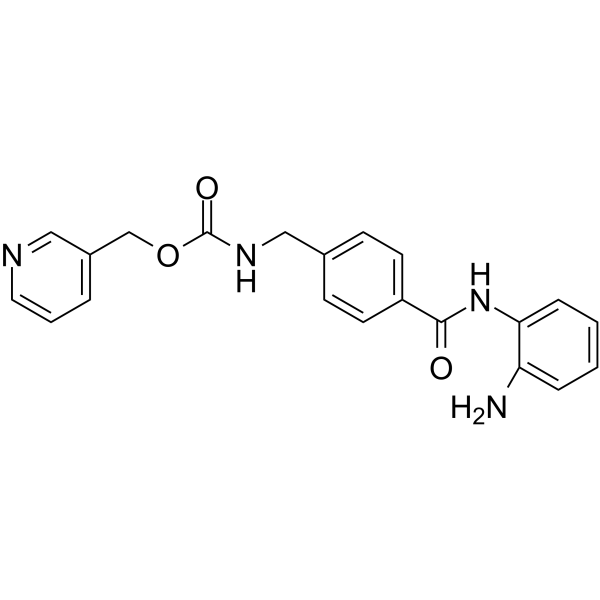
HY-12163
EntinostatHDAC Class I Inhibitor -
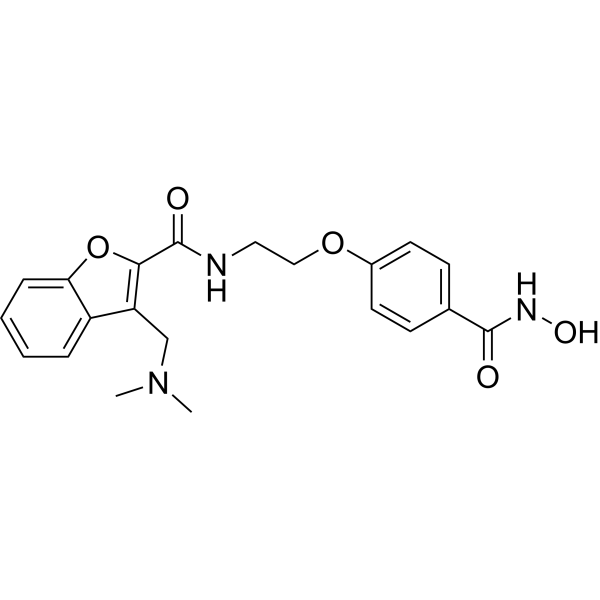
HY-10990
AbexinostatHDAC/MBLAC2 Inhibitor -
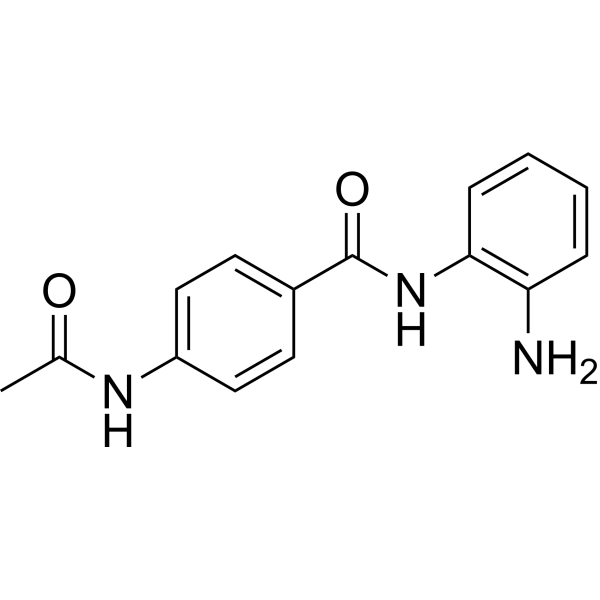
HY-50934
TacedinalineHDAC Inhibitor -
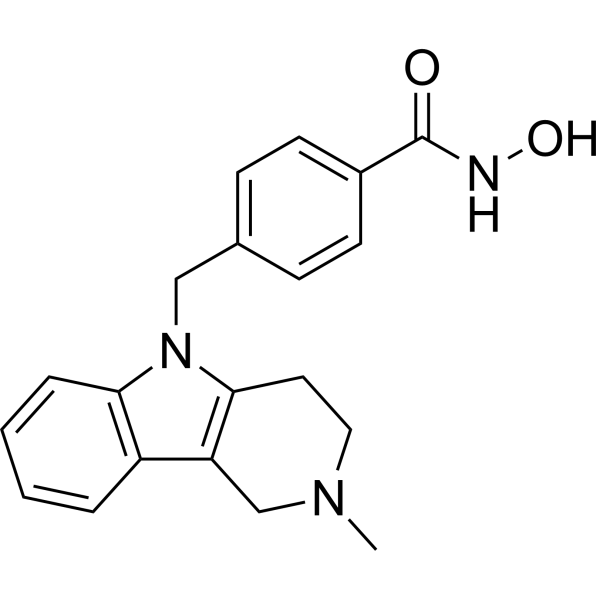
HY-13271A
Tubastatin AHDAC6 Inhibitor -
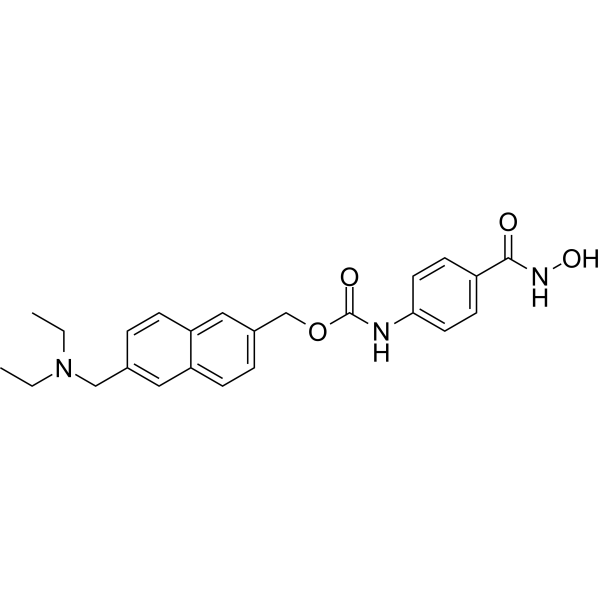
HY-14842
GivinostatHDAC Inhibitor
Publications Citing Use of MedChemExpress (MCE) Resminostat
More

Biological Activity
Description
IC50 & Target
[1]|
HDAC1 42.5 nM (IC50) |
HDAC3 50.1 nM (IC50) |
HDAC6 71.8 nM (IC50) |
HDAC8 877 nM (IC50) |
In Vitro
Resminostat (RAS2410; 4SC-201; 5 μM) induces histone acetylation in myeloma cells. Resminostat hydrochloride displays a substrate competitive binding mode with a mean Ki value of 27 nM. Resminostat hydrochloride (5 μM) induces histone hyperacetylation in myeloma cells. Resminostat inhibits cell growth, induces apoptosis and inhibits MM cell proliferation. Resminostat (5 μM) also modulates expression of bcl-2 family proteins and inhibits Akt pathway signalling downstream of Akt. Resminostat exerts synergistic activity against myeloma cells when combined with common and new anti-myeloma agents[1].
Resminostat inhibits cell growth in head and neck squamous cell carcinoma cell lines, with IC50s ranging from 0.775 μM to 1.572 μM (IC50 for SCC25: 0.775 μM; CAL27: 1.572 μM; and FaDu: 0.899 μM). Resminostat (1.25 and 2.5 μM) has a synergistic effect with irradiation on HNSCC cell lines. Resminostat in combination with cisplatin induces a downregulation of survivin. However, Resminostat shows no effect on Mcl-1 and p-AKT expression[2].
Resminostat reduces viability of HCC cells with the co-treatment of AZD-2014, with IC50s ranging from 0.89 ± 0.12 μM to 0.07 ± 0.01 μM[3].
MedChemExpress (MCE) has not independently confirmed the accuracy of these methods. They are for reference only.
Clinical Trial
| NCT Number | Sponsor | Condition | Start Date |
Phase

|
|---|---|---|---|---|
| NCT01329991 | Plexxikon| | 2011-05 | PHASE1 |


Chemical Information
-
CAS No. 864814-88-0
-
Appearance Solid
-
Molecular Weight 349.40
-
Formula C16H19N3O4S
-
Color Off-white to light yellow
-
SMILES
O=C(NO)/C=C/C1=CN(S(=O)(C2=CC=C(CN(C)C)C=C2)=O)C=C1
-
Synonyms
RAS2410; 4SC-201
-
Shipping
Room temperature in continental US; may vary elsewhere.
-
Storage
Powder -20°C 3 years 4°C 2 years In solvent -80°C 6 months -20°C 1 month


Publications (6)
-
Journal Impact Factor
-
Most Recent
-
Acta Pharmacol Sin
2022 Feb;43(2):457-469. PMID: 33850273 -
Antioxidants (Basel)
A Novel SIRT1 Activator Hydroxygenkwanin Alleviates Osteoporosis by Inhibiting Ferroptosis and Lactylation in Skeletal Stem/Progenitor Cells. [Abstract]2026 May 12;15(5):612. PMID: 42193234 -
-
-
-
Methods Mol Biol
2018:1711:351-398. PMID: 29344898


Solvent & Solubility
In Vitro:
DMSO : 100 mg/mL (286.20 mM; Need ultrasonic; Hygroscopic DMSO has a significant impact on the solubility of product, please use newly opened DMSO)
Please refer to the solubility information to select the appropriate solvent. Once prepared, please aliquot and store the solution to prevent product inactivation from repeated freeze-thaw cycles.
Storage method and period of stock solution: -80°C, 6 months; -20°C, 1 month. When stored at -80°C, please use it within 6 months. When stored at -20°C, please use it within 1 month.
Please refer to the solubility information to select the appropriate solvent. Once prepared, please aliquot and store the solution to prevent product inactivation from repeated freeze-thaw cycles.
Storage method and period of stock solution: -80°C, 6 months; -20°C, 1 month. When stored at -80°C, please use it within 6 months. When stored at -20°C, please use it within 1 month.
Concentration (start) × Volume (start) = Concentration (final) × Volume (final)
In Vivo:
Select the appropriate dissolution method based on your experimental animal and administration route.
- For the following dissolution methods, please ensure to first prepare a clear stock solution using an In Vitro approach and then sequentially add co-solvents:
- To ensure reliable experimental results, the clarified stock solution can be appropriately stored based on storage conditions. As for the working solution for In Vivo experiments, it is recommended to prepare freshly and use it on the same day.
- The percentages shown for the solvents indicate their volumetric ratio in the final prepared solution. If precipitation or phase separation occurs during preparation, heat and/or sonication can be used to aid dissolution.
Add each solvent one by one: 10% DMSO 40% PEG300 5% Tween-80 45% Saline
Solubility: ≥ 5 mg/mL (14.31 mM); Clear solution
This protocol yields a clear solution of ≥ 5 mg/mL (saturation unknown).
Taking 1 mL working solution as an example, add 100 μL DMSO stock solution (50.0 mg/mL) to 400 μL PEG300, and mix evenly; then add 50 μL Tween-80 and mix evenly; then add 450 μL Saline to adjust the volume to 1 mL.
Preparation of Saline: Dissolve 0.9 g sodium chloride in ddH₂O and dilute to 100 mL to obtain a clear Saline solution.
Add each solvent one by one: 10% DMSO 90% (20% SBE-β-CD in Saline)
Solubility: ≥ 5 mg/mL (14.31 mM); Clear solution
This protocol yields a clear solution of ≥ 5 mg/mL (saturation unknown).
Taking 1 mL working solution as an example, add 100 μL DMSO stock solution (50.0 mg/mL) to 900 μL 20% SBE-β-CD in Saline, and mix evenly.
Preparation of 20% SBE-β-CD in Saline (4°C, storage for one week): 2 g SBE-β-CD powder is dissolved in 10 mL Saline, completely dissolve until clear.
In Vivo Dissolution Calculator
Please enter the basic information of animal experiments:
-
-
-
-
Recommended: Prepare an additional quantity of animals to account for potential losses during experiments.
Please enter your animal formula composition:
-
%DMSO +
Recommended: Keep the proportion of DMSO in working solution below 2% if your animal is weak.
-
%+
-
+%Tween-80 + +
-
%Saline +
The co-solvents required include: DMSO, . All of co-solvents are available by MedChemExpress (MCE). , Tween 80. All of co-solvents are available by MedChemExpress (MCE).
Working solution concentration: 0.22 mg/mL
Method for preparing stock solution: mg drug dissolved in μL DMSO. Stock solution concentration: mg/mL.
1. Take μL DMSO stock solution;
2. Add μL .
μL , mix evenly;
3. Then add μL Tween 80, mix evenly;
4. Then add μL
Please ensure that the stock solution in the first step is dissolved to a clear state, and add co-solvents in sequence. You can use ultrasonic heating (ultrasonic cleaner, recommended frequency 20-40 kHz), vortexing, etc. to assist dissolution.


Purity & Documentation
-
Data Sheet (284 KB)
-
SDS (396 KB)
- English - EN (396 KB)
- Français - FR (396 KB)
- Deutsch - DE (396 KB)
- Norwegian - NO (396 KB)
- Español - ES (396 KB)
- Swedish - SV (396 KB)
- Italian - IT (396 KB)
- Korean - KR (396 KB)
- Portuguese - PT (396 KB)
-
Handling Instructions (2659 KB)
References
[1]. Mandl-Weber S, et al. The novel inhibitor of histone deacetylase resminostat (RAS2410) inhibits proliferation and induces apoptosis in multiple myeloma (MM) cells. Br J Haematol. 2010 May;149(4):518-28. [Content Brief]
[2]. Enzenhofer E, et al. Effect of the histone deacetylase inhibitor resminostat on head and neck squamous cell carcinoma cell lines. Head Neck. 2017 May;39(5):900-907. [Content Brief]
[3]. Peng X, et al. mTOR inhibition sensitizes human hepatocellular carcinoma cells to resminostat. Biochem Biophys Res Commun. 2016 Sep 2;477(4):556-562. [Content Brief]


Complete Stock Solution Preparation Table
Please refer to the solubility information to select the appropriate solvent. Once prepared, please aliquot and store the solution to prevent product inactivation from repeated freeze-thaw cycles.
Storage method and period of stock solution: -80°C, 6 months; -20°C, 1 month. When stored at -80°C, please use it within 6 months. When stored at -20°C, please use it within 1 month.
| Optional Solvent | Concentration Solvent Mass | 1 mg | 5 mg | 10 mg | 25 mg |
|---|---|---|---|---|---|
| DMSO | 1 mM | 2.8620 mL | 14.3102 mL | 28.6205 mL | 71.5512 mL |
| 5 mM | 0.5724 mL | 2.8620 mL | 5.7241 mL | 14.3102 mL | |
| 10 mM | 0.2862 mL | 1.4310 mL | 2.8620 mL | 7.1551 mL | |
| 15 mM | 0.1908 mL | 0.9540 mL | 1.9080 mL | 4.7701 mL | |
| 20 mM | 0.1431 mL | 0.7155 mL | 1.4310 mL | 3.5776 mL | |
| 25 mM | 0.1145 mL | 0.5724 mL | 1.1448 mL | 2.8620 mL | |
| 30 mM | 0.0954 mL | 0.4770 mL | 0.9540 mL | 2.3850 mL | |
| 40 mM | 0.0716 mL | 0.3578 mL | 0.7155 mL | 1.7888 mL | |
| 50 mM | 0.0572 mL | 0.2862 mL | 0.5724 mL | 1.4310 mL | |
| 60 mM | 0.0477 mL | 0.2385 mL | 0.4770 mL | 1.1925 mL | |
| 80 mM | 0.0358 mL | 0.1789 mL | 0.3578 mL | 0.8944 mL | |
| 100 mM | 0.0286 mL | 0.1431 mL | 0.2862 mL | 0.7155 mL |


Resminostat Related Classifications
HY-14718 Related Classifications
 Powered by Bioz