34 Results for "

HaCaT+cells

" in MedChemExpress (MCE) Product Catalog:
Products (34)

34 Results for "HaCaT+cells" in MCE Product Catalog:

34
34 Publications Verification
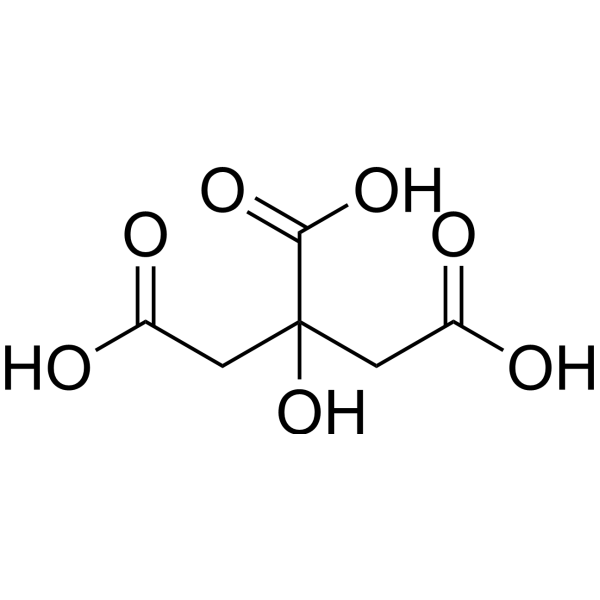
Cat. No.: HY-N1428
CAS No.: 77-92-9
Citric acid is a natural preservative and food tartness enhancer. Citric acid induces apoptosis and cell cycle arrest at G2/M phase and S phase in HaCaT cells. Citric acid cause oxidative damage of the liver by means of the decrease of antioxidative enzyme activities. Citric acid is also an acidulant, emulsifier, sequestrant and buffering agent widely used across many industries .
11
11 Cited Publications
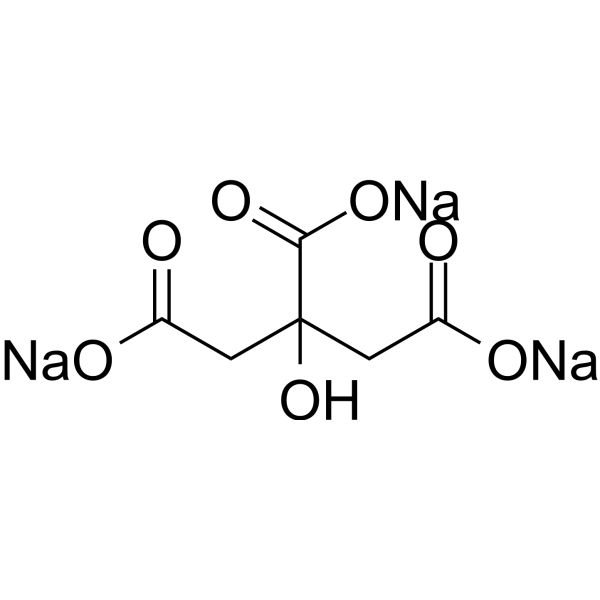
Cat. No.: HY-B2201
CAS No.: 68-04-2
Synonyms: Sodium citrate; Trisodium citrate anhydrous
Citric acid trisodium (Sodium citrate) is a natural preservative and food tartness enhancer. Citric acid trisodium induces apoptosis and cell cycle arrest at G2/M phase and S phase in HaCaT cells. Citric acid trisodium cause oxidative damage of the liver by means of the decrease of antioxidative enzyme activities. Citric acid trisodium is also an acidulant, emulsifier, sequestrant and buffering agent widely used across many industries .
11
11 Cited Publications
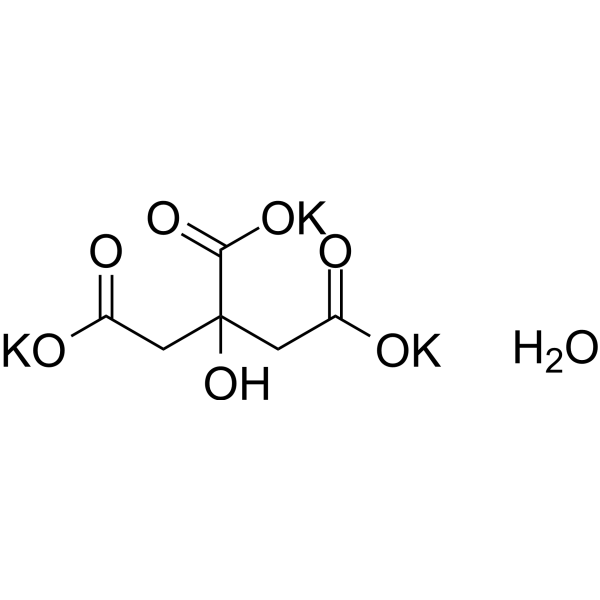
Cat. No.: HY-W009156
CAS No.: 6100-05-6
Synonyms: Potassium citrate monohydrate
Citric acid tripotassium hydrate (Potassium citrate monohydrate) is a natural preservative and food tartness enhancer. Citric acid tripotassium hydrate induces apoptosis and cell cycle arrest at G2/M phase and S phase in HaCaT cells. Citric acid tripotassium hydrate cause oxidative damage of the liver by means of the decrease of antioxidative enzyme activities. Citric acid tripotassium hydrate is also an acidulant, emulsifier, sequestrant and buffering agent widely used across many industries .
11
11 Cited Publications
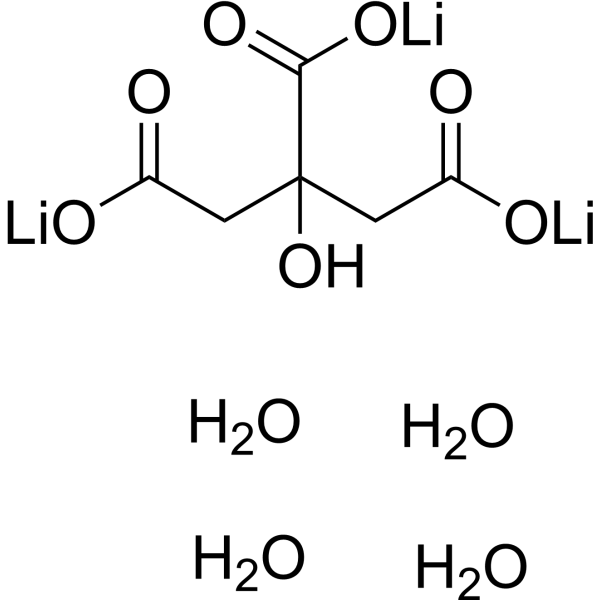
Cat. No.: HY-B1295
CAS No.: 6080-58-6
Synonyms: Litarex tetrahydrate
Lithium citrate (Litarex) tetrahydrate is a natural preservative and food tartness enhancer. Lithium citrate tetrahydrate induces apoptosis and cell cycle arrest at G2/M phase and S phase in HaCaT cells. Lithium citrate tetrahydrate cause oxidative damage of the liver by means of the decrease of antioxidative enzyme activities. Lithium citrate tetrahydrate is also an acidulant, emulsifier, sequestrant and buffering agent widely used across many industries .
8
8 Cited Publications
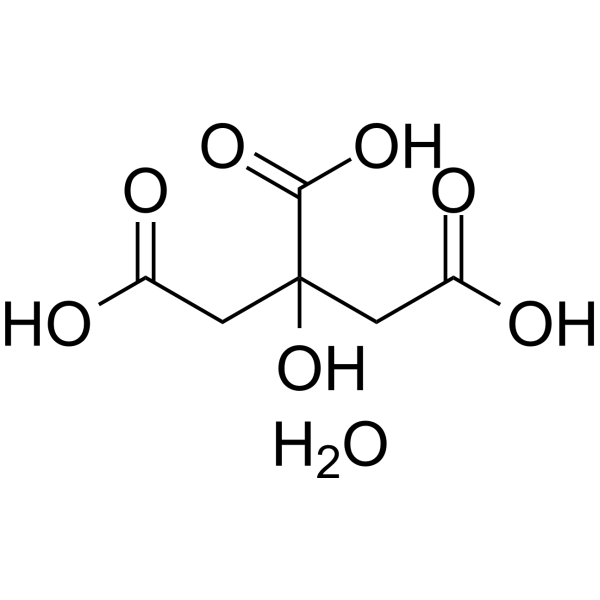
Cat. No.: HY-N1428A
CAS No.: 5949-29-1
Citric acid monohydrate is a natural preservative and food tartness enhancer. Citric acid monohydrate induces apoptosis and cell cycle arrest at G2/M phase and S phase in HaCaT cells. Citric acid monohydrate cause oxidative damage of the liver by means of the decrease of antioxidative enzyme activities. Citric acid monohydrate is also an acidulant, emulsifier, sequestrant and buffering agent widely used across many industries .
8
8 Cited Publications
Cat. No.: HY-N1428R
CAS No.: 77-92-9
Citric acid (Standard) is the analytical standard of Citric acid (HY-N1428). This product is intended for research and analytical applications. Citric acid is a natural preservative and food tartness enhancer. Citric acid induces apoptosis and cell cycle arrest at G2/M phase and S phase in HaCaT cells. Citric acid cause oxidative damage of the liver by means of the decrease of antioxidative enzyme activities. Citric acid is also an acidulant, emulsifier, sequestrant and buffering agent widely used across many industries .
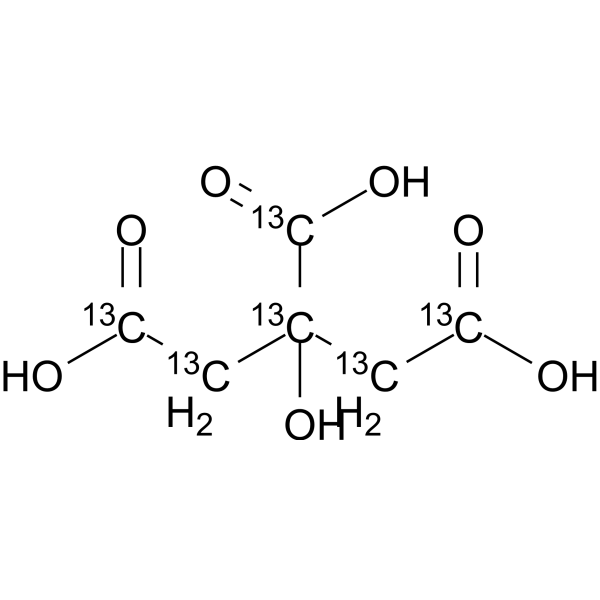
Cat. No.: HY-N1428S1
CAS No.: 287389-42-8
Citric acid- 13C6 is the 13C-labeled Citric acid (HY-N1428). Citric acid is a natural preservative and food tartness enhancer. Citric acid induces apoptosis and cell cycle arrest at G2/M phase and S phase in HaCaT cells. Citric acid cause oxidative damage of the liver by means of the decrease of antioxidative enzyme activities. Citric acid is also an acidulant, emulsifier, sequestrant and buffering agent widely used across many industries .
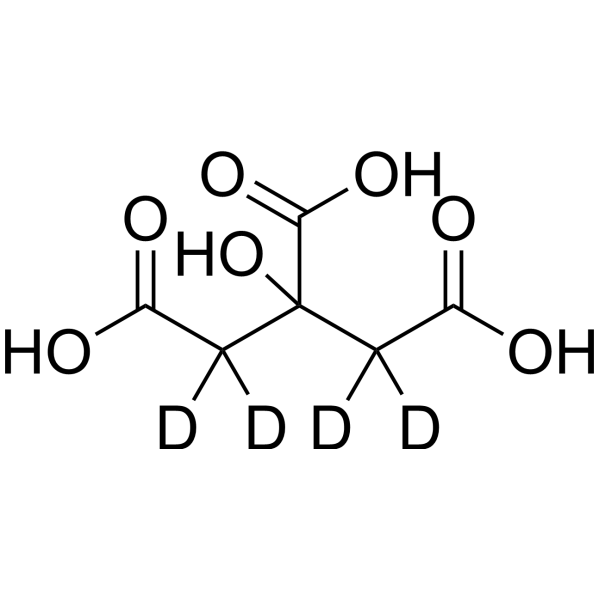
Cat. No.: HY-N1428S
CAS No.: 147664-83-3
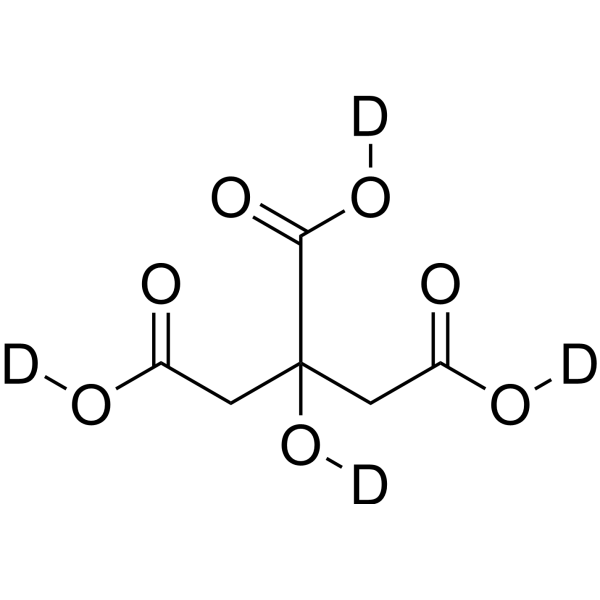
Citric acid-d4 is the deuterium labeled Citric acid (HY-N1428). Citric acid is a natural preservative and food tartness enhancer. Citric acid induces apoptosis and cell cycle arrest at G2/M phase and S phase in HaCaT cells. Citric acid cause oxidative damage of the liver by means of the decrease of antioxidative enzyme activities. Citric acid is also an acidulant, emulsifier, sequestrant and buffering agent widely used across many industries .
Cat. No.: HY-N1428CA
CAS No.: 3522-50-7
Ferric citrate, suitable for cell culture is a natural preservative and food tartness enhancer. Ferric citrate, suitable for cell culture induces apoptosis and cell cycle arrest at G2/M phase and S phase in HaCaT cells. Ferric citrate, suitable for cell culture causes oxidative damage of the liver by means of the decrease of antioxidative enzyme activities. Ferric citrate, suitable for cell culture is also an acidulant, emulsifier, sequestrant and buffering agent widely used across many industries .
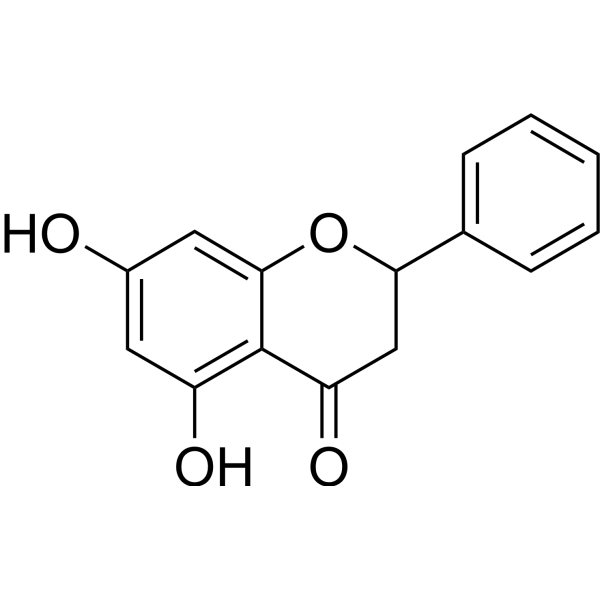
Cat. No.: HY-N2540
CAS No.: 68745-38-0
Synonyms: (±)-5,7-Dihydroxyflavanone; NSC 43318
(±)-Pinocembrin ((±)-5,7-Dihydroxyflavanone) is a GPR120 ligand able to promote wound healing in HaCaT cell line .
Cat. No.: HY-P2663
CAS No.: 757942-88-4
Target:  

TNF Receptor

Research Areas:  

Metabolic Disease

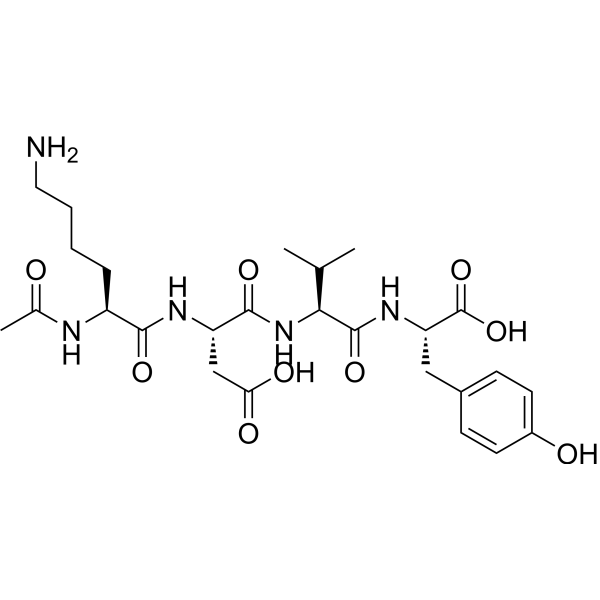
Acetyl tetrapeptide-2 is a bio-active peptide that exhibits anti-aging activity. Acetyl tetrapeptide-2 can reduce loss of thymic factors. Acetyl tetrapeptide-2 can increase the stiffness of HaCaT cells. Acetyl tetrapeptide-2 is a stimulator of structural skin elements including collagen and elastin .
Cat. No.: HY-W008606
CAS No.: 18996-35-5
Synonyms: Citric acid monosodium salt
Sodium citrate monobasic (Citric acid monosodium salt) is a natural preservative and food tartness enhancer. Sodium citrate monobasic induces apoptosis and cell cycle arrest at G2/M phase and S phase in HaCaT cells. Sodium citrate monobasic cause oxidative damage of the liver by means of the decrease of antioxidative enzyme activities. Sodium citrate monobasic is also an acidulant, emulsifier, sequestrant and buffering agent widely used across many industries .
Cat. No.: HY-N1428S3
CAS No.: 302912-06-7
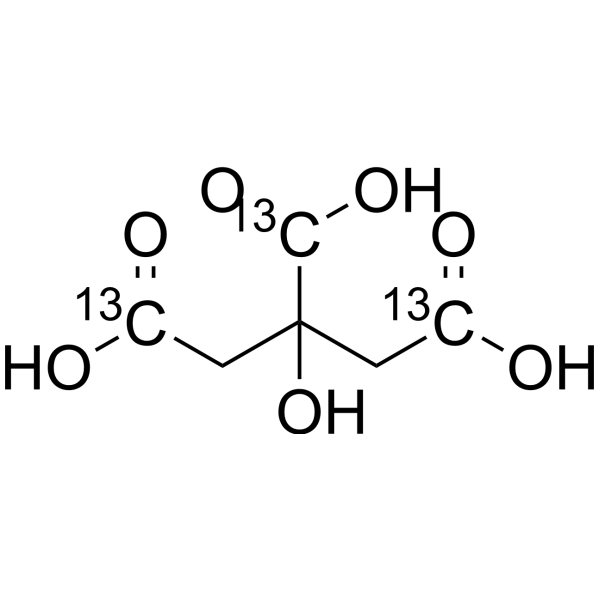
Citric acid- 13C3 is the 13C-labeled Citric acid (HY-N1428). Citric acid is a natural preservative and food tartness enhancer. Citric acid induces apoptosis and cell cycle arrest at G2/M phase and S phase in HaCaT cells. Citric acid cause oxidative damage of the liver by means of the decrease of antioxidative enzyme activities. Citric acid is also an acidulant, emulsifier, sequestrant and buffering agent widely used across many industries .
Cat. No.: HY-W014684
CAS No.: 80-54-6
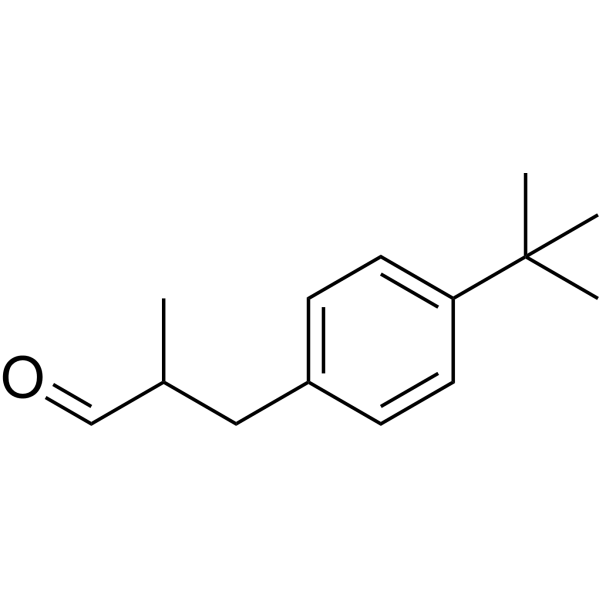
Lilial is a widely used synthetic fragrance and ester in consumer products. Lilial possesses estrogenic activity in vitro. Lilial can induce a toxic effect on mitochondria that causes a decrease in the viability of HaCaT cells. Lilial can increase NRF2 protein level in vitro. Lilial is able to target respiratory chain complexes, inhibit complexes I and II of the electron transport chain, increase the generation of reactive oxygen species, and decrease the level of intracellular ATP. Lilial can induce systemic toxicity in vivo. Lilial induces significant DNA strand breaks .
Cat. No.: HY-138875
CAS No.: 13018-48-9
Purity:  99.90%
Tetraacetylphytosphingosine is a sphingolipid metabolite produced by phytosphingosine acetylation. Tetraacetylphytosphingosine exerts its inhibitory action on angiogenesis through the inhibition of MAPK activation and intracellular calcium increase . Tetraacetylphytosphingosine induces apoptosis in HaCaT cells .
Cat. No.: HY-169118
CAS No.: 152367-54-9
Target:  

TNF Receptor

Research Areas:  

Inflammation/Immunology

EGR-1-IN-2 (compound 2) is an EGR-1 inhibitor with anti-inflammatory activity. EGR-1-IN-2 inhibits the formation of EGR-1-DNA complexes induced by TNF-α in HaCaT cells .
Cat. No.: HY-N1428S2
CAS No.: 224054-26-6
Citric acid- 13C2 is the 13C-labeled Citric acid (HY-N1428). Citric acid is a natural preservative and food tartness enhancer. Citric acid induces apoptosis and cell cycle arrest at G2/M phase and S phase in HaCaT cells. Citric acid cause oxidative damage of the liver by means of the decrease of antioxidative enzyme activities. Citric acid is also an acidulant, emulsifier, sequestrant and buffering agent widely used across many industries .
Cat. No.: HY-N1428S6
Citric acid-d4-1 is deuterated labeled Citric acid (HY-N1428). Citric acid is a natural preservative and food tartness enhancer. Citric acid induces apoptosis and cell cycle arrest at G2/M phase and S phase in HaCaT cells. Citric acid cause oxidative damage of the liver by means of the decrease of antioxidative enzyme activities. Citric acid is also an acidulant, emulsifier, sequestrant and buffering agent widely used across many industries .
Cat. No.: HY-W127841
CAS No.: 121633-50-9
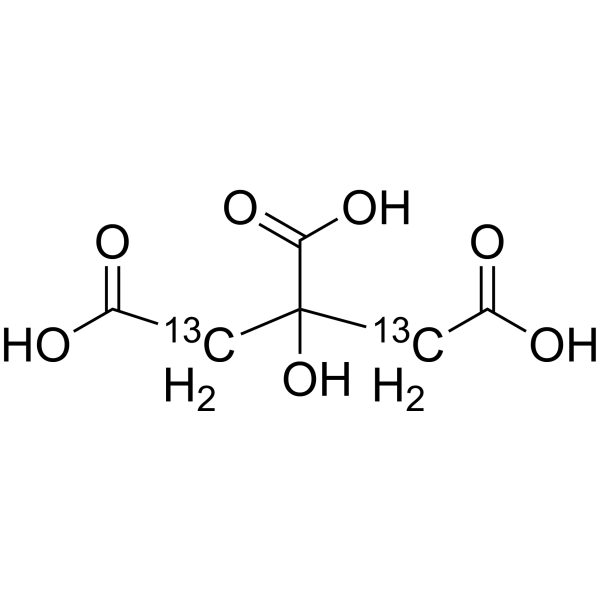
Citric acid-2,4- 13C2 is the 13C-labeled Citric acid (HY-N1428). Citric acid is a natural preservative and food tartness enhancer. Citric acid induces apoptosis and cell cycle arrest at G2/M phase and S phase in HaCaT cells. Citric acid cause oxidative damage of the liver by means of the decrease of antioxidative enzyme activities. Citric acid is also an acidulant, emulsifier, sequestrant and buffering agent widely used across many industries .
Cat. No.: HY-W014684R
CAS No.: 80-54-6
Lilial (Standard) is the analytical standard of Lilial. This product is intended for research and analytical applications. Lilial is a widely used synthetic fragrance and ester in consumer products. Lilial possesses estrogenic activity in vitro. Lilial can induce a toxic effect on mitochondria that causes a decrease in the viability of HaCaT cells. Lilial can increase NRF2 protein level in vitro. Lilial is able to target respiratory chain complexes, inhibit complexes I and II of the electron transport chain, increase the generation of reactive oxygen species, and decrease the level of intracellular ATP. Lilial can induce systemic toxicity in vivo. Lilial induces significant DNA strand breaks .

