



5949-29-1
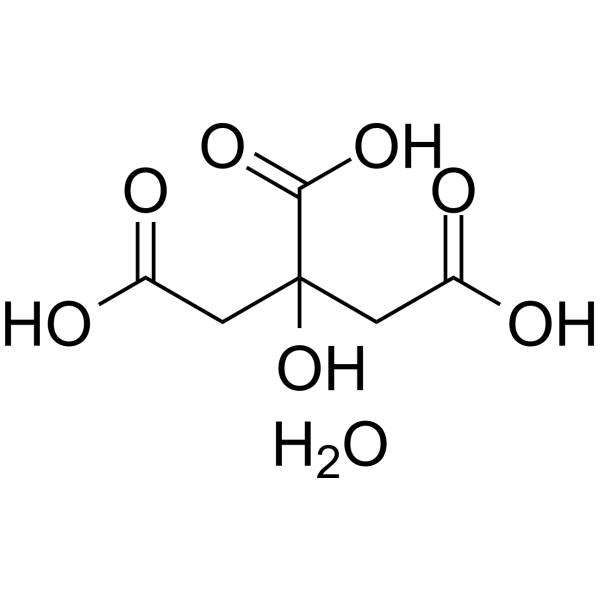
Chemical Structure
Citric acid monohydrate
- CAS No.: 5949-29-1
- Formula:C6H10O8
- Molecular Weight:210.14
IUPAC Name: 2-hydroxypropane-1,2,3-tricarboxylic acid hydrate
InChIKey: YASYEJJMZJALEJ-UHFFFAOYSA-N
SMILES: O=C(CC(C(O)=O)(O)CC(O)=O)O.O
Biological Activity: Citric acid monohydrate is a natural preservative and food tartness enhancer. Citric acid monohydrate induces apoptosis and cell cycle arrest at G2/M phase and S phase in HaCaT cells. Citric acid monohydrate cause oxidative damage of the liver by means of the decrease of antioxidative enzyme activities. Citric acid monohydrate is also an acidulant, emulsifier, sequestrant and buffering agent widely used across many industries[1][2][3][4].
| Cat. No. | Product Name | Purity | Description | Pricing | |||||||||||||||||||
|---|---|---|---|---|---|---|---|---|---|---|---|---|---|---|---|---|---|---|---|---|---|---|---|
|
|
Citric acid monohydrate | 98.0% | Citric acid monohydrate is a natural preservative and food tartness enhancer. Citric acid monohydrate induces apoptosis and cell cycle arrest at G2/M phase and S phase in HaCaT cells. Citric acid monohydrate cause oxidative damage of the liver by means of the decrease of antioxidative enzyme activities. Citric acid monohydrate is also an acidulant, emulsifier, sequestrant and buffering agent widely used across many industries. | ||||||||||||||||||||
|
loading...
/
|
|||||||||||||||||||||||
|
|
Citric acid monohydrate (Standard) | 99.7% | Citric acid monohydrate (Standard) is the analytical standard of Citric acid monohydrate (HY-N1428A). This product is intended for research and analytical applications. Citric acid monohydrate is a natural preservative and food tartness enhancer. Citric acid monohydrate induces apoptosis and cell cycle arrest at G2/M phase and S phase in HaCaT cells. Citric acid monohydrate cause oxidative damage of the liver by means of the decrease of antioxidative enzyme activities. Citric acid monohydrate is also an acidulant, emulsifier, sequestrant and buffering agent widely used across many industries. | ||||||||||||||||||||
|
loading...
/
|
|||||||||||||||||||||||
-
Similarity Score 0.97
 HY-B2200Calcium citrate tetrahydrate, 99%
-
Similarity Score 0.97
 HY-W115798Trimagnesium dicitrate nonahydrate, 99%
-
Similarity Score 0.97
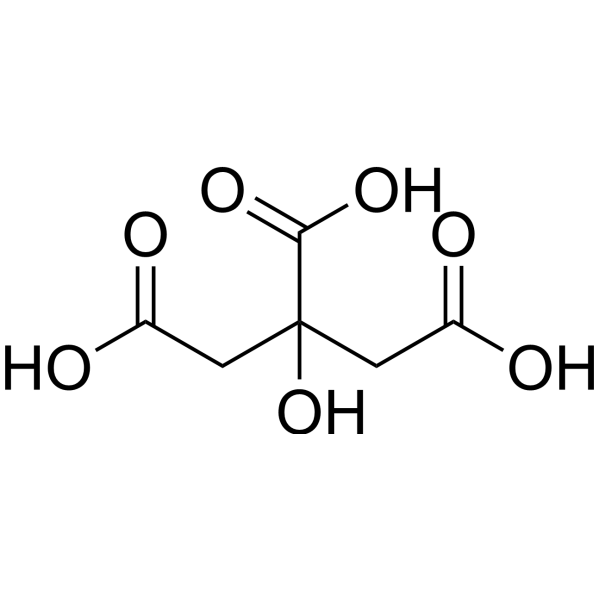 HY-N1428Citric acid
-
Similarity Score 0.97
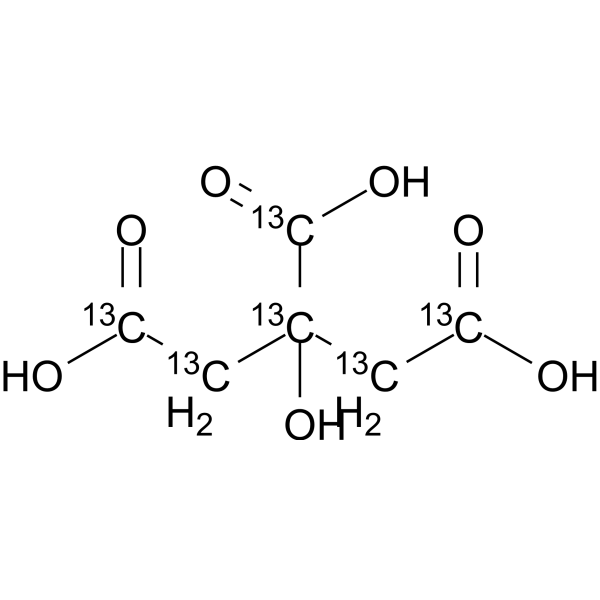 HY-N1428S1Citric acid-13C6
-
Similarity Score 0.97
 HY-N1428S2Citric acid-13C2
-
Similarity Score 0.97
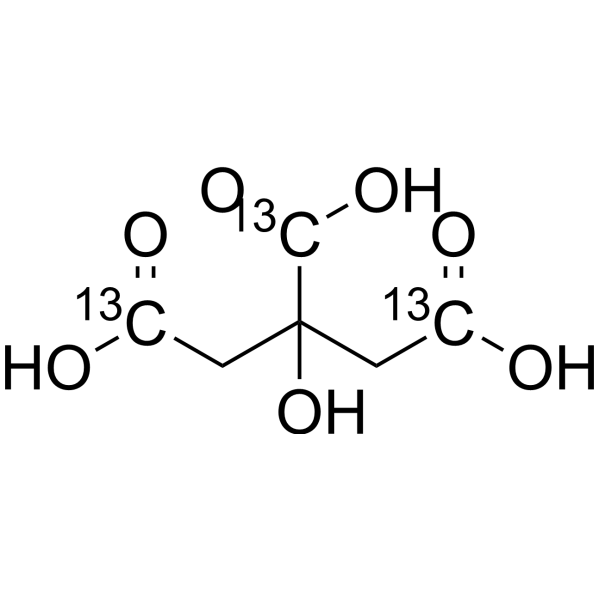 HY-N1428S3Citric acid-13C3
-
Similarity Score 0.97
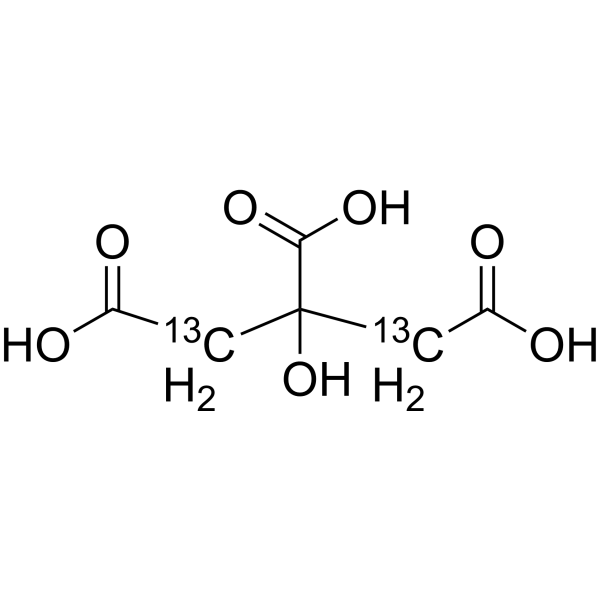 HY-W127841Citric acid-2,4-13C2
-
Similarity Score 0.96
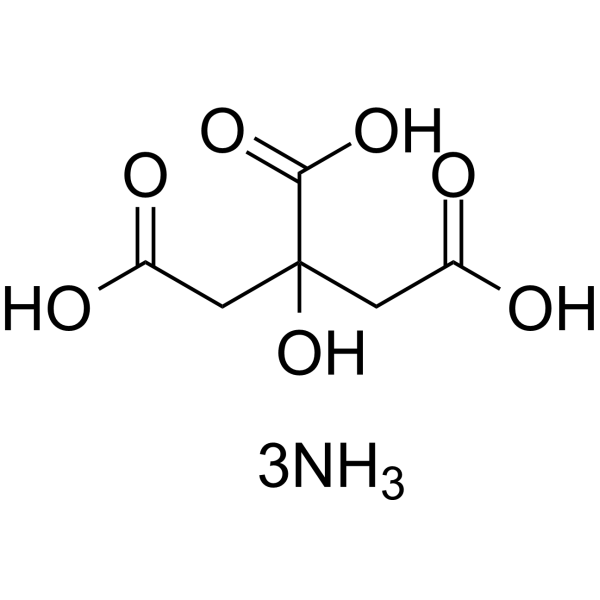 HY-B1529ACitric acid triammonium
-
Similarity Score 0.96
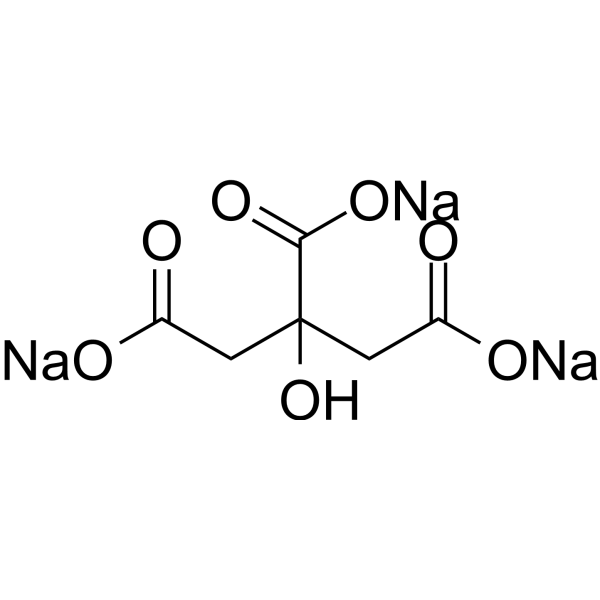 HY-B2201Citric acid trisodium
-

Explore the MedChemAI to find more analogs


References
- [1]. Chen X, et al. Study on injury effect of food additive citric acid on liver tissue in mice. Cytotechnology. 2014 Mar;66(2):275-82. [Content Brief]
- [2]. Chen X, Lv Q, Liu Y, Deng W. Effects of the food additive, citric acid, on kidney cells of mice. Biotech Histochem. 2015 Jan;90(1):38-44. [Content Brief]
- [3]. Ying TH, et al. Citric acid induces cell-cycle arrest and apoptosis of human immortalized keratinocyte cell line (HaCaT) via caspase- and mitochondrial-dependent signaling pathways. Anticancer Res. 2013 Oct;33(10):4411-20. [Content Brief]
- [4]. Ciriminna R, et al. Citric acid: emerging applications of key biotechnology industrial product. Chem Cent J. 2017 Mar 8;11:22. [Content Brief]



