
1. Search Result
Search Result
Pathways Recommended: Stem Cell/Wnt Cell Cycle/DNA Damage
Results for "

IMR-32 cell

" in MedChemExpress (MCE) Product Catalog:

22

Inhibitors & Agonists

1

Peptides

2

Natural
Products

Cat. No. Product Name Target Research Areas Chemical Structure
  • HY-157396

    Aurora Kinase Apoptosis Caspase Cancer
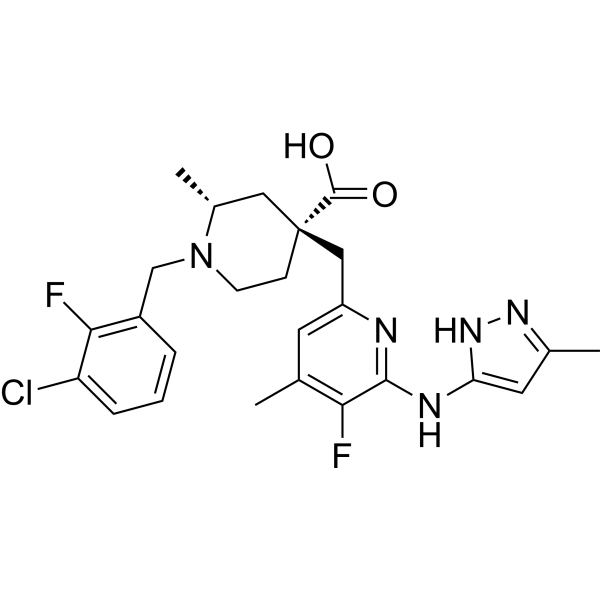
    JAB-2485 is an orally active and selective Aurora kinase A (AURKA) inhibitor with an IC50 value of 0.327 nM. JAB-2485 exhibits inhibitory activity against various tumor cell lines such as neuroblastoma, triple-negative breast cancer, small cell lung cancer, and epithelial ovarian cancer. JAB-2485 can induce cell cycle arrest and apoptosis in tumor cells. JAB-2485 has antitumor activity .
    JAB-2485
  • HY-171770

    PROTACs Aurora Kinase AAK1 Cyclin G-associated Kinase (GAK) Mps1 FAK Cancer
    dAurAB5 is a dual Aurora-A (DC50 = 8.8 nM) and Aurora-B (DC50 = 6.1 nM) PROTAC degrader. dAurAB5 induces degradation of Aurora-A and Aurora-B, reduces N-Myc levels, and decreases viability in IMR32 neuroblastoma cells. dAurAB5 downregulates the levels of AAK1, PTK2, GAK, and TTK. dAurAB5 can be used to study cancers such as neuroblastoma. (Pink: TTK ligand 2: HY-168542, Blue: Thalidomide-O-COOH: HY-103597, Black: 6-Aminocaproic acid: HY-B0236) .
    dAurAB5
  • HY-100321

    MCHR1 (GPR24) Potassium Channel Metabolic Disease Endocrinology
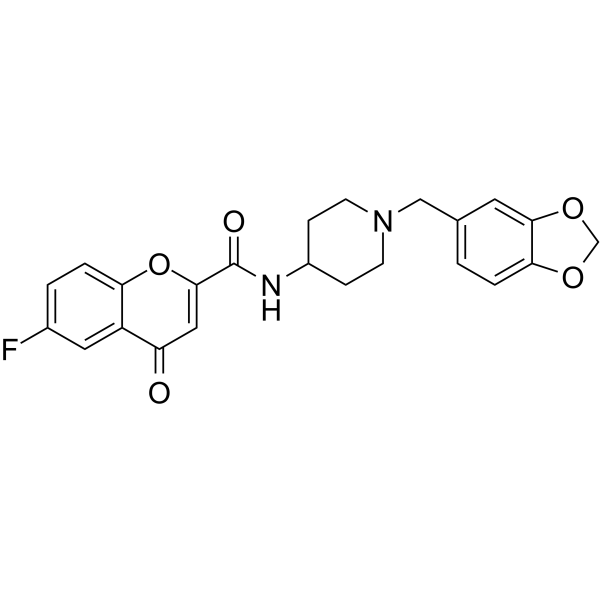
    MCHR1 antagonist 2 is an antagonist of melanin concentrating hormone receptor 1, with an IC50 of 65 nM; MCHR1 antagonist 2 also inhibits hERG, with an IC50 of 4.0 nM in IMR-32 cells .
    MCHR1 antagonist 2
  • HY-171769

    PROTACs Aurora Kinase Cancer
    dAurAB2 is a dual-degrading PROTAC that potently degrades Aurora-A and Aurora-B with DC50s of 59 nM and 39 nM, respectively. dAurAB2 reduces N-Myc levels in MYCN-amplified IMR32 neuroblastoma cells. dAurAB2 can be used for the study of neuroblastoma. (Pink, Aurora ligand (HY-10804); Blue, E3 ligand: (HY-103597); Black, linker (HY-W105740)) .
    dAurAB2
  • HY-W011762

    Apoptosis Cancer
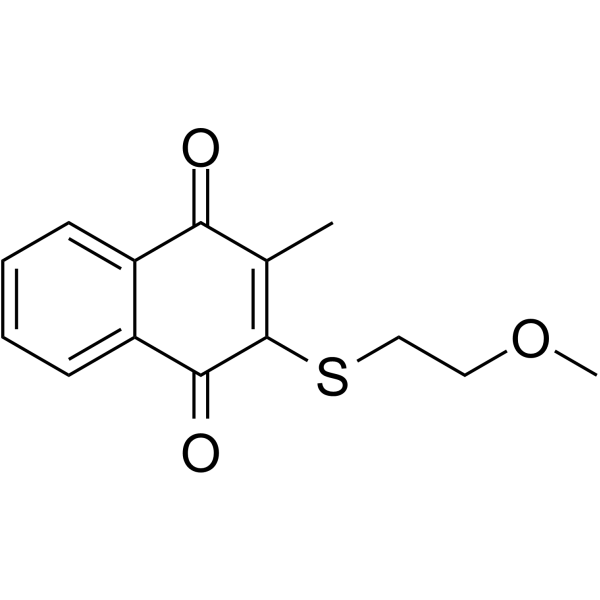
    VK3-OCH3 is a potent antitumor agent. VK3-OCH3 shows cytotoxicity for neuroblastoma cell lines and low cytotoxicity for normal cell lines. VK3-OCH3 induces apoptosis and cell cycle arrest at G2/M phase in IMR-32 cells. VK3-OCH3 shows antitumor activity .
    VK3-OCH3
  • HY-136479

    Sirtuin Cancer
    F0911-7667 is a SIRT1 activator that induces autophagic cell death in U87MG and T98G cells by activating the AMPK-mTOR-ULK complex. CWR tripeptide was also identified as a SIRT1 activator that reduced p53 acetylation in IMR32 neuroblastoma cells and protected cells from cell death induced by Aβ fragments .
    F0911-7667
  • HY-172609

    Phosphatase Apoptosis MDM-2/p53 Caspase Metabolic Disease Cancer
    SL-176 is a PPM1D (Wip1) inhibitor. SL-176 inhibits lipid droplet formation, downregulates the mRNA and protein expression of PPARγ and C/EBPα, and blocks adipocyte differentiation. SL-176 induces G2/M cell cycle arrest, apoptosis and inhibits cell proliferation in breast cancer cells overexpressing PPM1D, and activates components of the p53 pathway. SL-176 suppresses tumor growth in a zebrafish model of neuroblastoma. SL-176 is applicable to research related to obesity, breast cancer and neuroblastoma .
    SL-176
  • HY-N10890

    Others Cancer
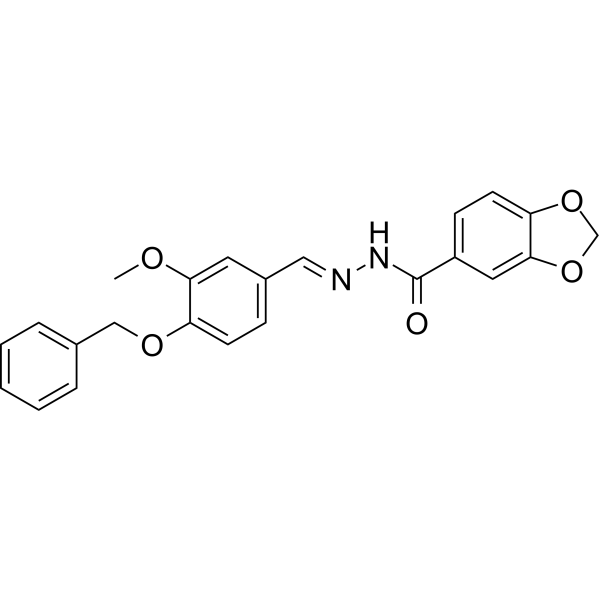
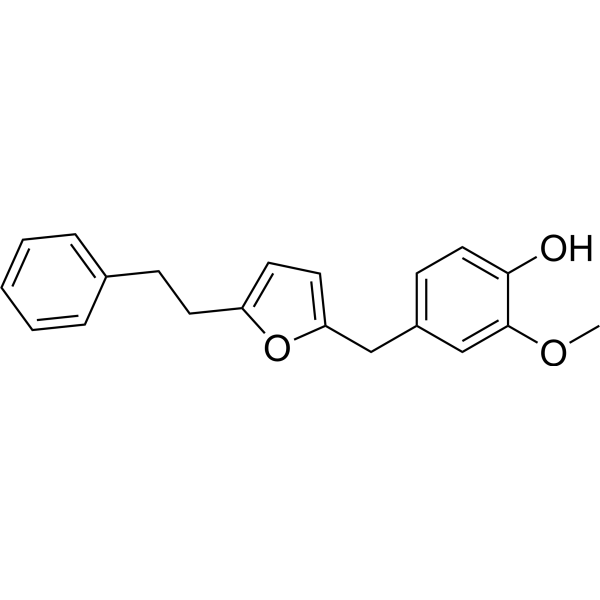
    Alpinoid D, a diarylheptanoid, can be isolated from the MeOH extract from the rhizomes of Alpinia officinarum Hance. Alpinoid D shows cytotoxic effect against IMR-32 human neuroblastoma cell line .
    Alpinoid D
  • HY-103472
    FPR-A14
    1 Publications Verification

    Formyl Peptide Receptor (FPR) Neurological Disease
    FPR-A14 is a potent formyl peptide receptor (FPR) agonist. FPR-A14 is a potent activator of neutrophil Ca 2+ mobilization and chemotaxis with EC50s of 630 nM and 42 nM, respectively. FPR-A14 induces cell differentiation .
    FPR-A14
  • HY-176734

    Polo-like Kinase (PLK) Cancer
    CZL-S092 is a PLK4 inhibitor with an IC50 value of 0.9 nM and excellent selectivity over other PLK4 family members (PLK1, PLK2, and PLK3). CZL-S092 exhibits anti-neuroblastoma activity in vitro (IMR-32 cells, IC50 = 1.143 μM). CZL-S092 inhibits cell migration and halts the cell cycle and induces apoptosis. CZL-S092 can be used in studies of various cancers including neuroblastoma cancer .
    CZL-S092
  • HY-133011

    nAChR Neurological Disease
    nAChR agonist 1 is a potent, blood-brain-barrier-permeable, and orally active allosteric modulator of α7 nicotinic acetylcholine receptor (α7 nAChR). nAChR agonist 1 has the EC50 of 0.32 μM in a Ca 2+ mobilization assay (PNU-282987-induced, FLIPR based) in human IMR-32 neuroblastoma cells that endogenously express α7 nAChR. nAChR agonist 1 can be develpoped for the treatment of Alzheimer’s disease .
    nAChR agonist 1
  • HY-179149

    Polo-like Kinase (PLK) Apoptosis Cancer
    PLK4-IN-6 (compound C05) is an PLK4 inhibitor (IC50 < 0.1 nM). PLK4-IN-6 has anti proliferative activity against various tumor cells, such as IMR-32 (IC50 = 0.948 μM), MCF-7 (IC50 = 0.979 μM), H460 (IC50 = 1.679 μM) cells. PLK4-IN-6 can significantly induce cell apoptosis and block the cell cycle. PLK4-IN-6 can be used for research on various types of cancer .
    PLK4-IN-6
  • HY-N15215

    Enterovirus Influenza Virus RSV HSV Infection Cancer
    Antiviral agent 64 (Compound 12) is a diarylheptanoid that can be isolated from Alpinia officinarum. Antiviral agent 64 exhibits cytotoxicity in human neuroblastoma cell IMR-32 with an IC50 of 0.23 μM. Antiviral agent 64 exhibits antiviral efficacy, that inhibits RSV, poliovirus, measles virus, HSV-1, and influenza virus H1N1, with EC50 of 13.3, 3.7, 6.3, 5.7, and <10 μg/mL, respectively .
    Antiviral agent 64
  • HY-111839

    CRABP-II ligand 1

    Ligands for Target Protein for PROTAC Cancer
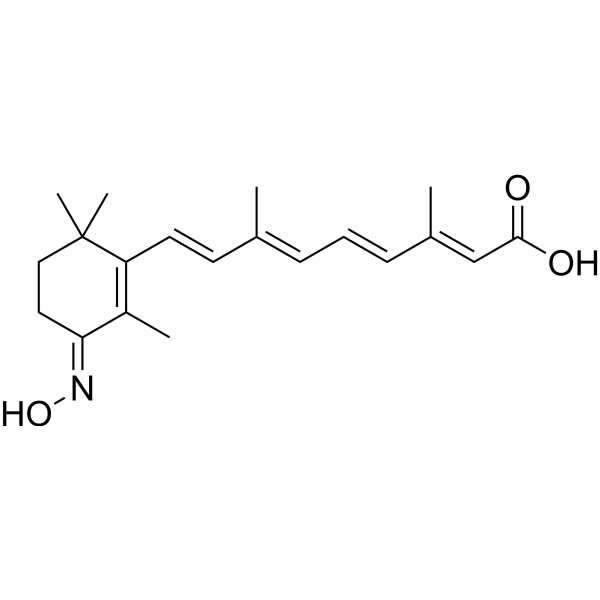
    ATRA-hydroxyimino (CRABP-II ligand 1), the Retinoic acid (ATRA)-based moiety, binds to cIAP1 ligand (Bestatin) via a linker to form SNIPER to degrade CRABP-II in IMR-32 cells .
    ATRA-hydroxyimino
  • HY-118974

    Calcium Channel Neurological Disease Cancer
    PD-151307 is an N-type calcium channel antagonist with significant inhibitory effects in IMR-32 human neuroblastoma cells, exhibiting an IC50 of 0.32 µM. PD-151307 can be used in research related to cancer therapy, anticonvulsants, and neuropathic pain .
    PD-151307
  • HY-P3275

    Aβ(17-40)

    Amyloid-β Neurological Disease
    β-Amyloid (17-40) (Aβ(17-40)) is a fragment of Amyloid-β peptide that has shown neurotoxic activities in SH-SY5Y and IMR-32 cells. β-Amyloid (17-40) can be used for the research of neurological disease .
    β-Amyloid (17-40)
  • HY-W011762R

    Apoptosis Reference Standards Cancer
    Fluoxetine (hydrochloride) (Standard) is the analytical standard of Fluoxetine (hydrochloride). This product is intended for research and analytical applications. Fluoxetine hydrochloride (LY 110140) is an antidepressant and a selective serotonin reuptake inhibitor.
    VK3-OCH3 (Standard)
  • HY-107736

    Quinone Reductase Keap1-Nrf2 Inflammation/Immunology Cancer
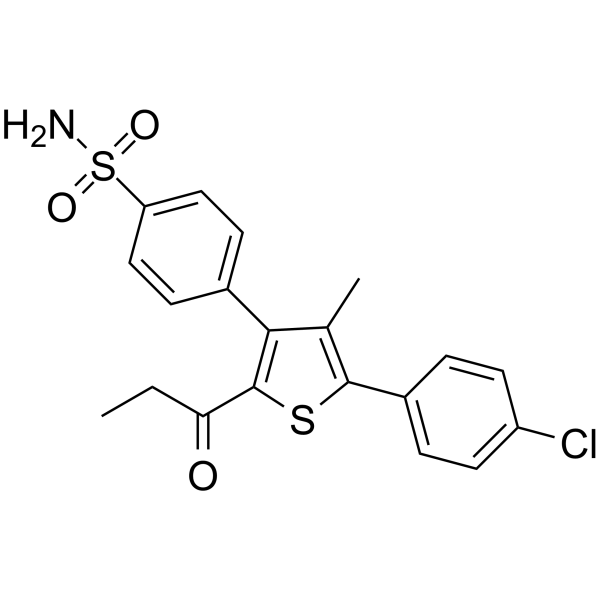
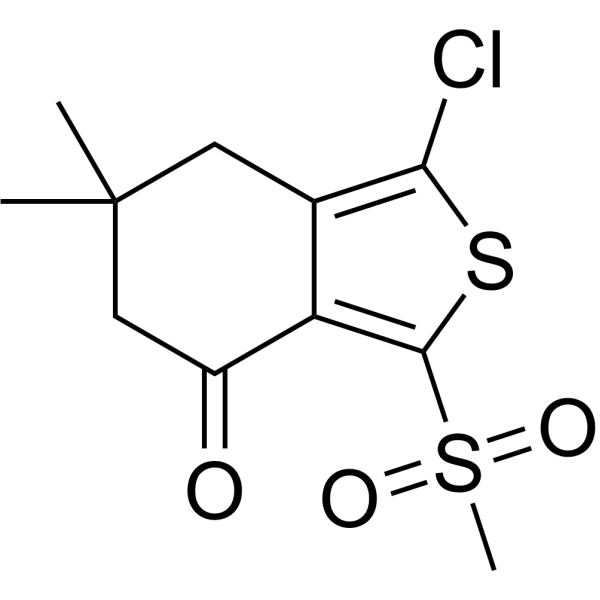
    AI-3 is a potent ARE (antioxidant response element) activator. AI-3 increases the NQO1 at the transcript levels and protein expression levels. AI-3 has the potential for the research of oxidative stress related diseases .
    AI-3
  • HY-103472R

    Reference Standards Formyl Peptide Receptor (FPR) Neurological Disease
    FPR-A14 (Standard) is the analytical standard of FPR-A14 (HY-103472). This product is intended for research and analytical applications. FPR-A14 is a potent formyl peptide receptor (FPR) agonist. FPR-A14 is a potent activator of neutrophil Ca2+ mobilization and chemotaxis with EC50s of 630 nM and 42 nM, respectively. FPR-A14 induces cell differentiation .
    FPR-A14 (Standard)
  • HY-120679A

    NSC 697887 sodium

    Topoisomerase Neurological Disease Cancer
    XK469 (NSC 697887) sodium is a quinoxaline-based topoisomerase II inhibitor. XK469 sodium exhibits antiproliferative activity against neuroblastoma cells. XK469 sodium can be used in the research of neuroblastoma .
    XK469 sodium
  • HY-181911

    Drug-Linker Conjugates for ADC NAMPT Neurological Disease
    L2-FK866 is an ADC payload-linker conjugate (Drug-linker conjugate for ADC). L2-FK866 contains the ADC linker (Val-Cit-p-aminobenzyl) and the NAMPT inhibitor FK866 (HY-50876). L2-FK866 can be conjugated with Dinutuximab (HY-P9933) to form an ADC. L2-FK866 is applicable to neuroblastoma research .
    L2-FK866
  • HY-182351

    Calcium Channel Neurological Disease
    ONO-2921 is an orally active and selective N-type calcium channel blocker. ONO-2921 functionally blocks N-type calcium channels. ONO-2921 reduces paw withdrawal responses during persistent nociception and hyperalgesia to heat in neuropathic pain models. ONO-2921 can be used for research on neuropathic pain and nociceptive pain .
    ONO-2921

Inquiry Online

Your information is safe with us. * Required Fields.

Salutation


Country or Region *

Applicant Name *


Organization Name *

Department *


Email Address *


Product Name *

Cat. No.


Requested quantity *

Phone Number *


Remarks

Inquiry Online

Inquiry Information

Product Name:
Cat. No.:
Quantity:
MCE Japan Authorized Agent:

