Search Result
Results for "
JQ1
" in MedChemExpress (MCE) Product Catalog:
| Cat. No. |
Product Name |
Target |
Research Areas |
Chemical Structure |
-
- HY-13030
-
-
-
- HY-78695
-
-
-
- HY-112789
-
|
|
Epigenetic Reader Domain
|
Cancer
|
|
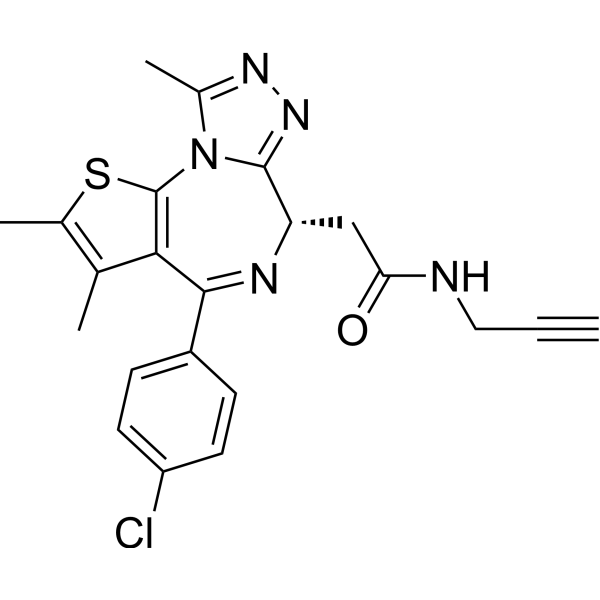
(+)-JQ1 PA is a derivative of the Bromodomain and extra-terminal (BET) inhibitor JQ1, with an IC50 of 10.4 nM. (+)-JQ1 PA is a click chemistry reagent, it contains an Alkyne group and can undergo copper-catalyzed azide-alkyne cycloaddition (CuAAc) with molecules containing Azide groups.
|
-
-
- HY-101838
-
|
|
PROTACs
Epigenetic Reader Domain
|
Cancer
|
|
dBET1 is a PROTAC connected by ligands for Cereblon and BRD4 with an EC50 of 430 nM. dBET1 is a PROTAC that composes of (+)-JQ1 (HY-13030) linked to NSC 527179 (HY-14658) with a linker [1].
|
-
-
- HY-13030A
-
|
|
Epigenetic Reader Domain
|
Cancer
|
|
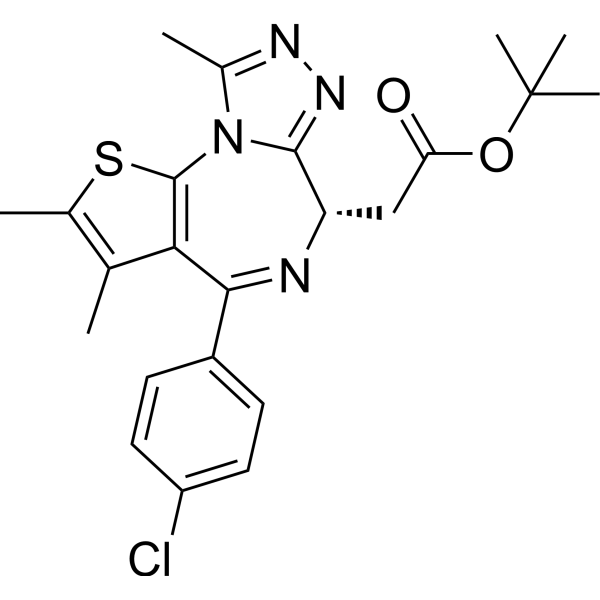
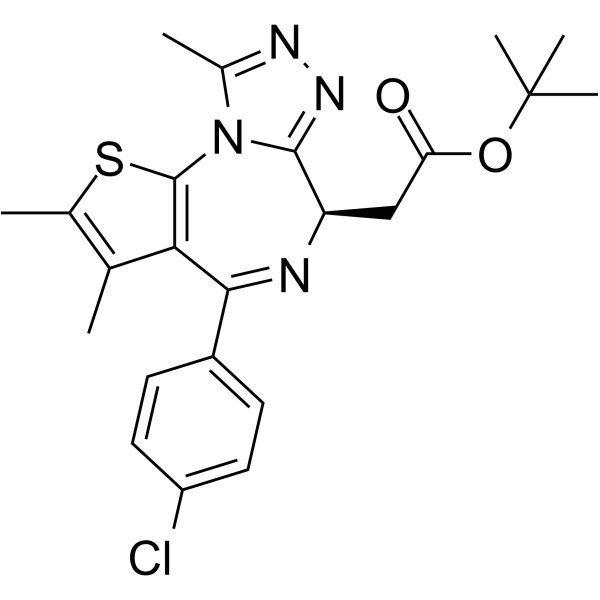
(R)-(-)-JQ1 Enantiomer is the stereoisomer of (+)-JQ1. (+)-JQ1 potently decreases expression of both BRD4 target genes, whereas (R)-(-)-JQ1 Enantiomer has no effect.
|
-
-
- HY-145667
-
|
Biotin-JQ1
|
Epigenetic Reader Domain
|
Cancer
|
|
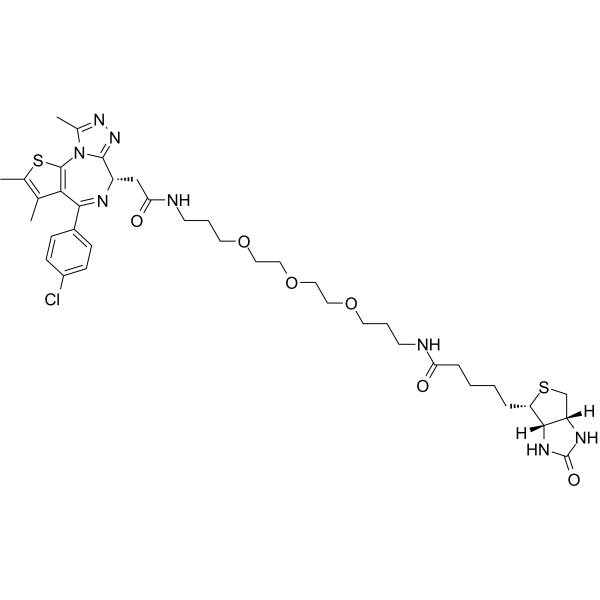
Biotinylated-JQ1 (Biotin-JQ1) is a biotinylated derivative of JQ1 with high affinity for the bromodomain of BRD4. Biotinylated-JQ1 inhibits MM1.S multiple myeloma cells proliferation with the EC50 of 0.4 μM [1].
|
-
-
- HY-156214
-
|
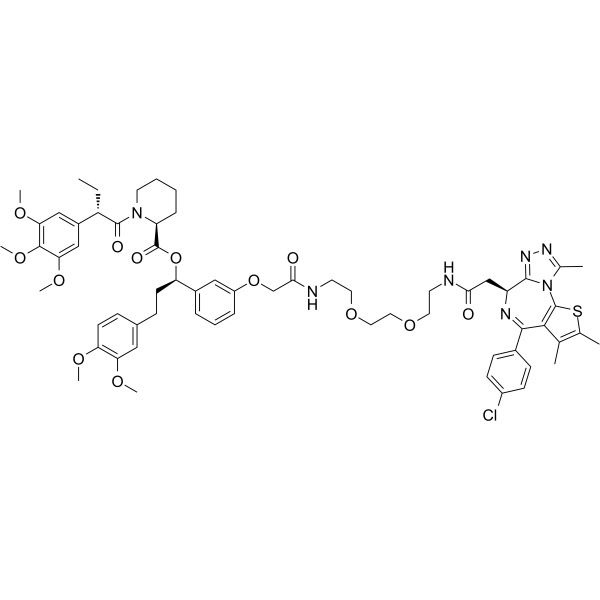
AP1867-PEG2-JQ1; AP-PEG2-JQ1
|
Epigenetic Reader Domain
|
Others
|
|
NICE-01 (AP1867-PEG2-JQ1; AP-PEG2-JQ1) is a bifunctional compound that bind to proteins in separate cellular compartments that can induce nuclear import of cytosolic cargoes, using nuclear-localized bromodomain-containing protein 4 (BRD4) as a “carrier” for co-import and nuclear trapping of cytosolic proteins [1].
|
-
-
- HY-W007545
-
|
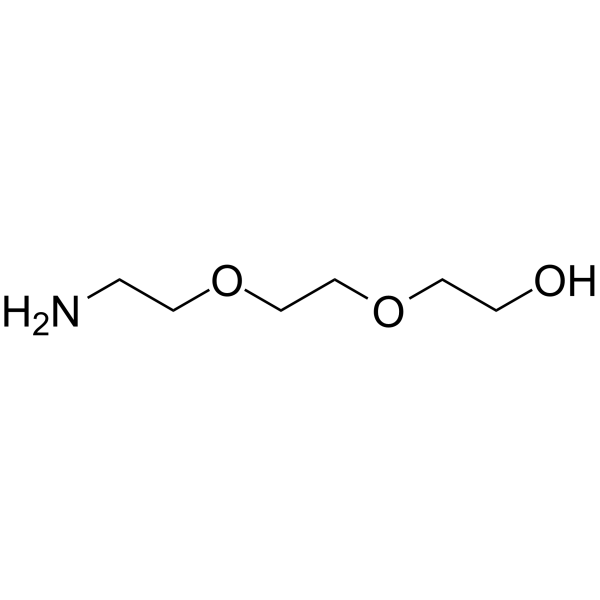
PROTAC Linker 35
|
PROTAC Linkers
|
Cancer
|
|
NH2-PEG3 (PROTAC Linker 35) is a PROTAC linker, which belongs to a polyethylene glycol (PEG) linker. NH2-PEG3 (PROTAC Linker 35) can be used in the synthesis of the PROTAC (β-NF-JQ1) [1].
|
-
-
- HY-114407
-
|
|
PROTACs
Epigenetic Reader Domain
|
Cancer
|
|
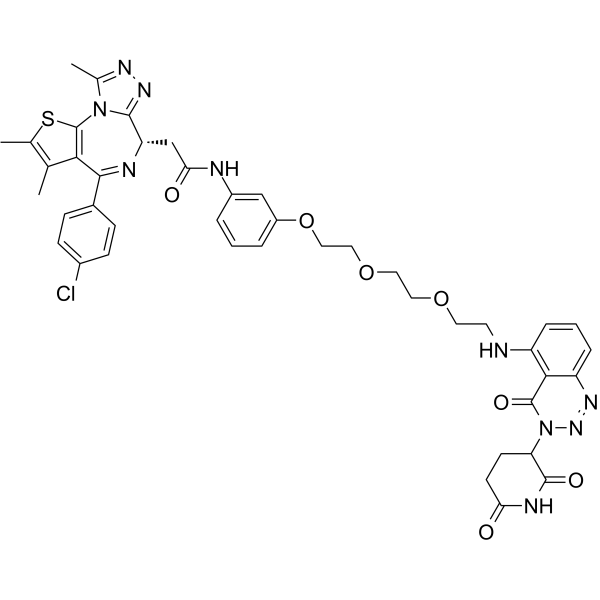
TD-428 is a PROTAC connected by ligands for Cereblon and BRD4. TD-428 is a highly specific BRD4 degrader with a DC50 of 0.32 nM [1]. TD-428 is a BET PROTAC, which comprises TD-106 (a CRBN ligand) linked to JQ1 (a BET inhibitor). TD-428 efficiently induce BET protein degradation [1].
|
-
-
- HY-129917
-
|
|
PROTACs
Epigenetic Reader Domain
|
Cancer
|
|
KB02-JQ1 is a highly selective and PROTAC-based BRD4 degrader (molecular glue), but does not degrade BRD2 or BRD3. KB02-JQ1 promotes BRD4 degradation by covalently modifying DCAF16 (E3 ligase) and can improve the durability of protein degradation in biological systems. JQ1 binds ubiquitin E3 ligase ligand KB02 via a linker to form KB02-JQ1 [1].
|
-
-
- HY-111875
-
|
|
SNIPERs
PROTACs
Epigenetic Reader Domain
|
Cancer
|
|
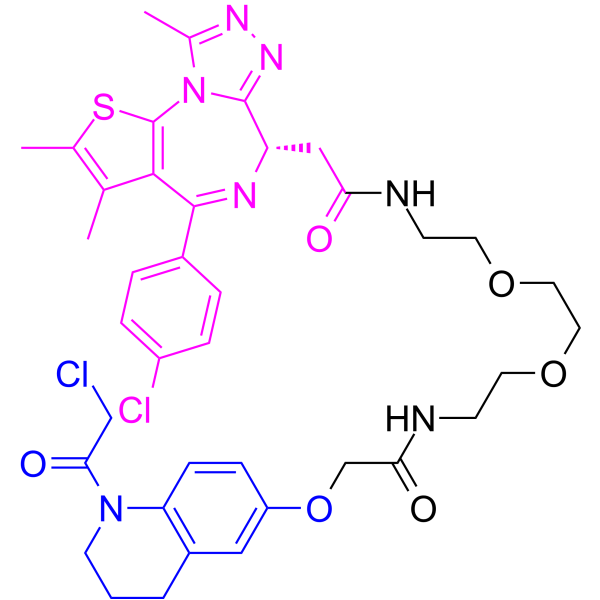
SNIPER(BRD)-1 is a SNIPER degrader of BRD4, cIAP1 and XIAP. SNIPER(BRD)-1 has IC50 values of 6.8 nM, 17 nM and 49 nM for cIAP1, cIAP2 and XIAP, respectively. SNIPER(BRD)-1 can be used for cancer research [1]. (Blue: LCL161 (HY-15518); Black: linker (HY-W008005); Pink: (+)-JQ-1 (HY-13030))
|
-
-
- HY-174995
-
-
-
- HY-148864
-
|
|
Epigenetic Reader Domain
|
Cancer
|
|
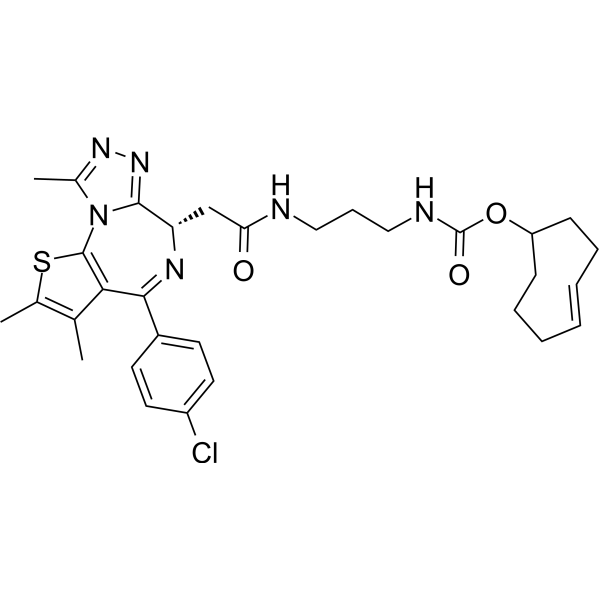
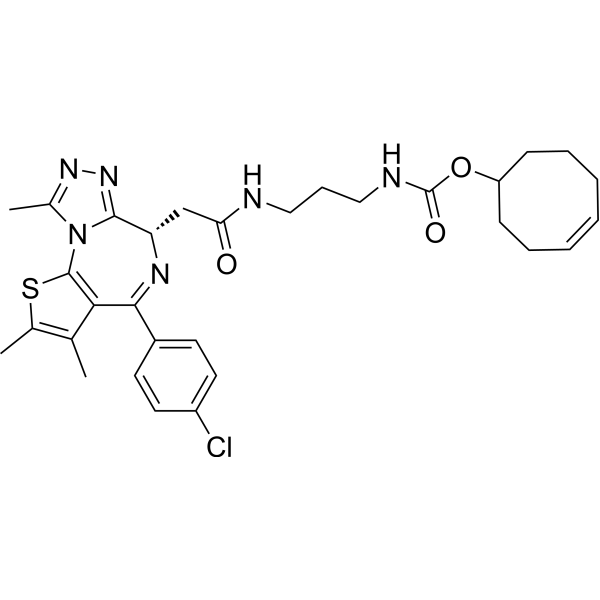
JQ1-TCO is the double bond E configuration of JQ1-TCO (HY-148864A). JQ1-TCO is a derivative of JQ1 (HY-13030), an inhibitor of BET. JQ1-TCO is suitable for click chemistry and can be used as molecular probes in vitro and in vivo [1] .
|
-
-
- HY-147046
-
-
-
- HY-131385
-
|
|
Ligands for E3 Ligase
|
Cancer
|
|
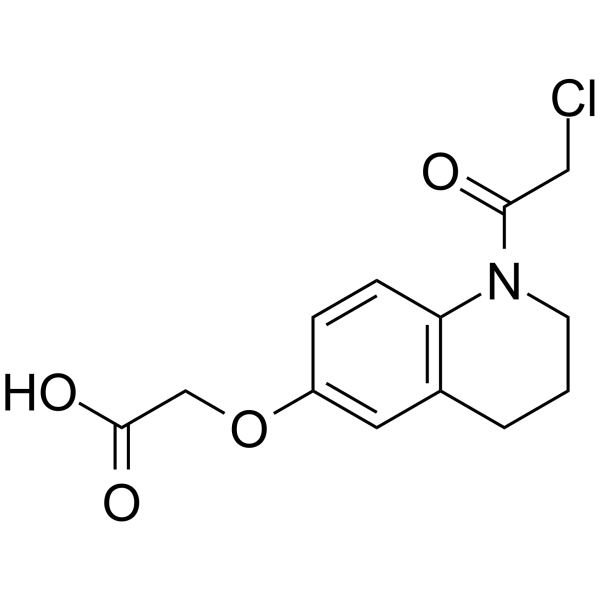
KB02-COOH is a fragment of synthesis of ubiquitin E3 ligase ligand KB02. KB02 can be used in the synthesis of PROTAC, such as KB02-JQ1 (HY-129917) and KB02-SLF (HY-129610) [1].
|
-
-
- HY-130256
-
|
|
PROTACs
Epigenetic Reader Domain
|
Cancer
|
|
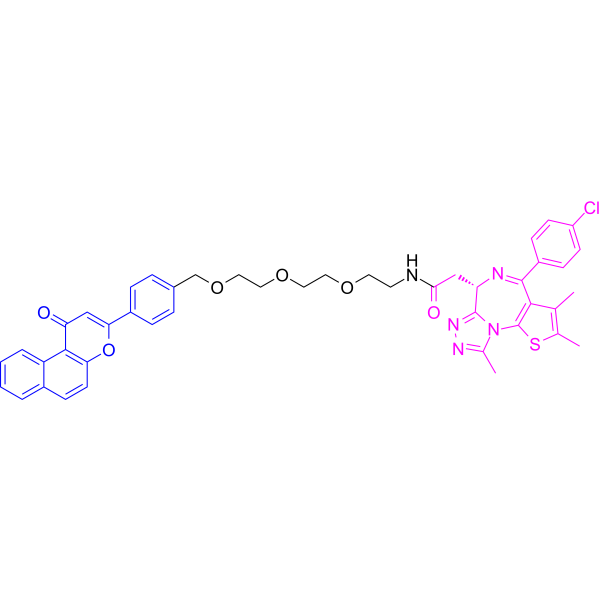
β-NF-JQ1 is a PROTAC that recruits Aryl Hydrocarbon Receptor E3 ligase to target proteins. β-NF-JQ1 is directed against bromodomain-containing (BRD) proteins using β-NF as an AhR ligand, induces the interaction of AhR and BRD proteins, and displays effective anticancer activity that correlated with protein knockdown activity [1].
|
-
-
- HY-169150
-
-
-
- HY-153385
-
|
|
Molecular Glues
Epigenetic Reader Domain
|
Cancer
|
|
TMX1 is a covalent, selective BRD4 molecular glue degrader. TMX1 binds to the JQ1-binding site of BRD4BD2, forms covalent bonds with Cys58 of DCAF16 and Cys87 of GAK in a BRD4BD2-dependent template-assisted manner, stabilizes the BRD4-TMX1-DCAF16 ternary complex, and promotes the ubiquitination of BRD4 via the CRL4DCAF16 ubiquitin ligase complex. TMX1 induces selective degradation of BRD4, mild degradation of BRD2 and BRD3, as well as DCAF16-dependent cytotoxicity [1] .
|
-
-
- HY-148864A
-
|
JQ1-CCO
|
Epigenetic Reader Domain
|
Cancer
|
|
(Z)-JQ1-TCO is a derivative of JQ1 (HY-13030), an inhibitor of BET. (Z)-JQ1-TCO is suitable for click chemistry and can be used as molecular probes in vitro and in vivo [1] .
|
-
-
- HY-111976
-
-
-
- HY-158764
-
|
|
PROTACs
Epigenetic Reader Domain
|
Cancer
|
|
PROTAC BET Degrader-12 (Compound 8b) is a PROTAC degrader for bromodomain and extra-terminal domain (BET)-containing proteins, which degrades the BRD3 and BRD4 in a DCAF11-dependent manner. PROTAC BET Degrader-12 inhibits cell viability of KBM7 with a DC50 of 305.2 nM. (Pink: ligand for target protein (+)-JQ-1 (HY-13030); Black: linker (HY-159077); Blue: ligand for E3 ligase (HY-159076)) [1]
|
-
-
- HY-168936
-
|
|
PROTACs
Epigenetic Reader Domain
Apoptosis
|
Cancer
|
|
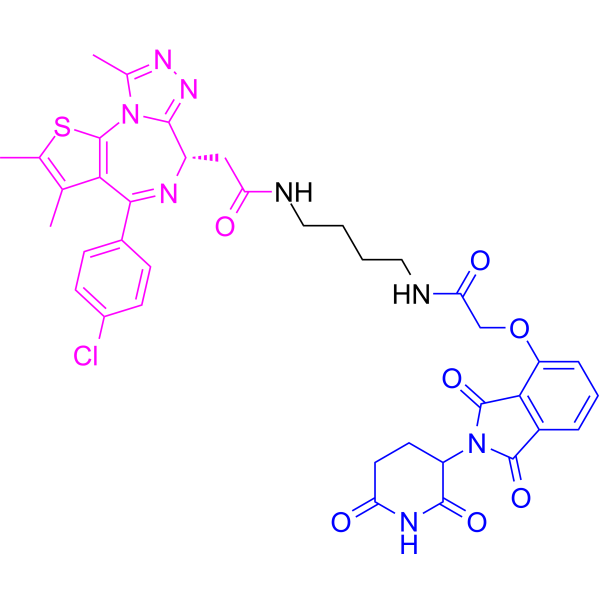
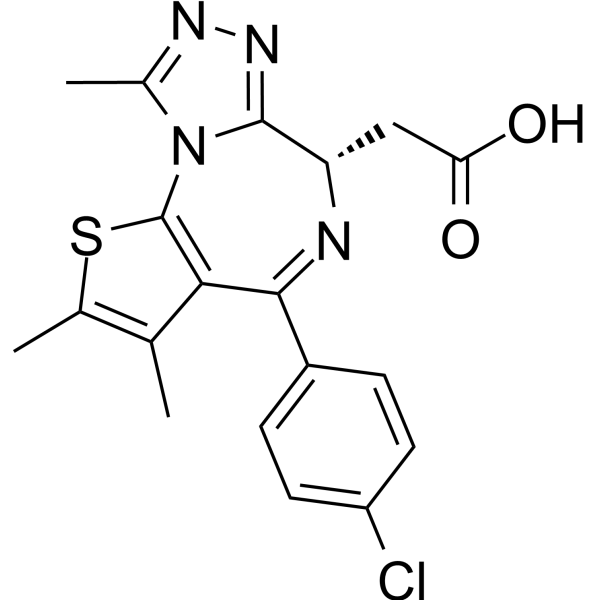
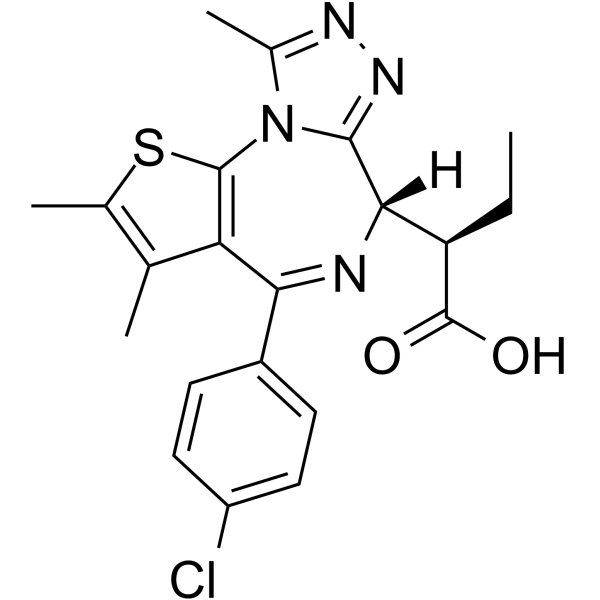
DP-15 is the degrader for GSPT1 and BRD4 with DC50s of 5.25 nM and 0.48 nM. DP-15 exhibits anti-proliferative activity of AML cells and NHL cells with an IC50 of nanomolar levels, arrests the cell cycle at G1 phase, and induces apoptosis in MOLM13. DP-15 exhibits anti-leukemia activity in MOLM-13 xenograft mouse models [1]. (Pink: ligand for target protein JQ-1 carboxylic acid (HY-78695); Black: linker (HY-W262798); Blue: ligand for E3 ligase Cereblon Thalidomide-5-OH (HY-23095))
|
-
-
- HY-169369
-
|
XJZ-06-462
|
MDM-2/p53
Apoptosis
|
Cancer
|
|
TRAP-1 (XJZ-06-462) is a non-covalent regulated induced proximity targeting chimera (RIPTAC) with JQ-1 carboxylic acid (HY-78695) as its target protein ligand. TRAP-1 forms a ternary complex with p53 Y220C and BRD4, potently activates p53 transcription, and inhibits the growth and proliferation of tumor cells. TRAP-1 upregulates p21 and other p53 target genes in pancreatic cell lines carrying p53 Y220C, and induces cellular senescence and apoptosis. TRAP-1 can be used in cancer research involving p53 Y220C-carrying tumors [1].
|
-
-
- HY-101460
-
|
|
E3 Ligase Ligand-Linker Conjugates
Drug Derivative
|
Cancer
|
|
Tz-Thalidomide is a tetrazine-tagged Thalidomide (HY-14658), an E3 ligase ligand. Tz-Thalidomide self-assembles with TCO-labeled target protein inhibitors, forming a CLIP-TAC (targeted protein degradation chimera) via click chemistry. This chimera recruits the E3 ubiquitin ligase CRBN to the target protein, thereby inducing ubiquitination and subsequent degradation of the target protein. When used in combination with JQ1-TCO (HY-148864), Tz-Thalidomide induces concentration-dependent degradation of BRD4 in cells. When combined with ERK-targeting protein inhibitors, Tz-Thalidomide induces degradation of ERK1/2 in cells. Tz-Thalidomide can be used in cancer-related research [1].
|
-
-
- HY-176391
-
-
-
- HY-100696
-
|
|
Epigenetic Reader Domain
|
Cancer
|
|
PNZ5 is a potent and isoxazole-based pan-BET inhibitor with high selectivity and potency similar to the well-established (+)-JQ1, with a KD of 5.43 nM for BRD4(1) [1].
|
-
-
- HY-137075
-
-
-
- HY-156774
-
|
|
PROTACs
Epigenetic Reader Domain
|
Others
|
|
CCW 28-3 is a PROTAC-based BRD4 degrader in a proteasome- and RNF4-dependent manner (Pink: JQ-1 (carboxylic acid) (HY-78695); Black: linker (HY-170384); Blue: RNF4 ligand CCW16 (HY-143346)) [1].
|
-
-
- HY-169358
-
|
|
PROTACs
Epigenetic Reader Domain
|
Cancer
|
|
L134 is a potent PROTAC BRD4 degrader with a DC50 value of 7.36 nM. L134 mediates the degradation of BRD4 via the ubiquitin-proteasome system in a DCAF11-dependent manner (Blue: JQ-1 (carboxylic acid) (HY-78695), Black: linker (HY-W004640); Pink: E3 ligase ligand, L321 (HY-169359)) [1].
|
-
-
- HY-169150A
-
-
-
- HY-132991
-
ML 2-14
1 Publications Verification
|
PROTACs
Epigenetic Reader Domain
|
Cancer
|
|
ML 2-14 is a PROTAC targeting BRD4 with a C4 alkyl linker. ML 2-14 consists of the E3 ligase ligand EN219 (HY-115715) (bule part), the target protein ligand JQ-1 (HY-13030) (red part), and the PROTAC linker (balck part). ML 2-14 can effectively degrade BRD4 in 231MFP breast cancer cells, and this effect can be reversed by the proteasome inhibitor Bortezomib (HY-10227) and the E1 activase inhibitor TAK-243 (HY-100487) [1].
|
-
-
- HY-161125
-
|
|
Drug Metabolite
|
Others
|
|
(+)-JQ1-OH is the major metabolite of (+)-JQ1(HY-13030). (+)-JQ-1 (JQ1) is a potent, specific, and reversible BET bromodomain inhibitor, with IC50s of 77 and 33 nM for the first and second bromodomain (BRD4(1/2)). (+)-JQ-1 also activates autophagy [1].
|
-
-
- HY-111823
-
|
VHL ligand 6
|
Ligands for E3 Ligase
|
Cancer
|
|
VH032 thiol (VHL ligand 6) is a VHL ligand, which binds to pan-BET inhibitor JQ1 via a linker to form PROTAC [1].
|
-
-
- HY-131633A
-
|
|
Epigenetic Reader Domain
|
Cancer
|
|
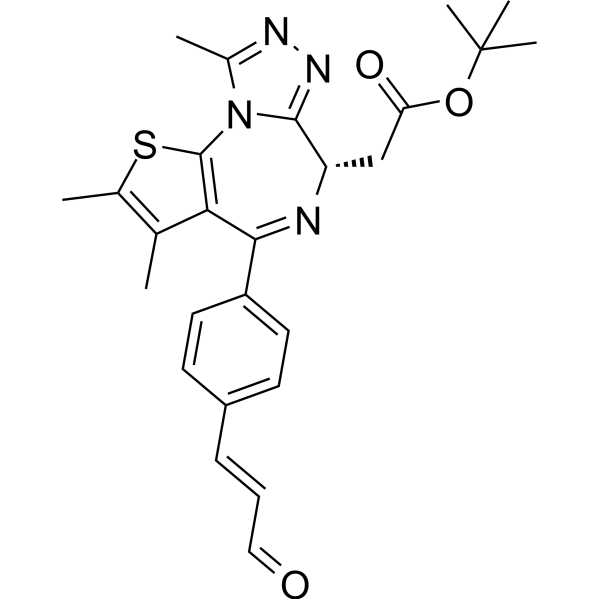
(+)-JQ-1-aldehyde is the aldehyde form of (+)-JQ1. (+)-JQ-1-aldehyde can be uesd as a precursor to synthesize PROTACs, which targets BET bromodomains [1].
|
-
-
- HY-169082
-
|
|
E3 Ligase Ligand-Linker Conjugates
|
Cancer
|
|
JQ-1 (carboxylic acid)-NH-C2-NH-COOH is a conjugate of E3 ligase ligand and linker (E3 Ligase Ligand-Linker Conjugates), which is composed of JQ-1 carboxylic acid (HY-78695) and the corresponding linker: (2-Aminoethyl)carbamic acid (HY-W398806). JQ-1 (carboxylic acid)-NH-C2-NH-COOH can be used as a Cereblon ligand to recruit CRBN protein and as a key intermediate for the synthesis of complete PROTACs molecules [1].
|
-
-
- HY-178510
-
|
|
PROTACs
Epigenetic Reader Domain
|
Cancer
|
|
JQ1-S(GlcNAc)Cq is a sugar-coated BRD4 PROTAC degrader. JQ1-S(GlcNAc)Cq can inhibit the formation of the ternary complex between CRBN and BRD4(BD1/BD2). JQ1-S(GlcNAc)Cq can be used for the research of cancer [1]. (Structure Note: Pink: BRD4 ligand (HY-78695); Blue: CRBN ligand (HY-178514); Black: linker (HY-W105727); BRD4 ligand-Linker: (HY-178519))
|
-
-
- HY-172126
-
-
-
- HY-170900
-
|
|
PROTACs
Epigenetic Reader Domain
|
Cancer
|
|
SJ44236 is the PROTAC degrader for BET that degrades BRD2 (DC50 = 0.127 nM), BRD3 and BRD4. SJ44236 exhibits cytotoxicity in cell MV4-11 and HD-MB03 with IC50s of 0.12 nM and 0.92 nM. SJ44236 downregulates the expression of c-Myc, upregulates the expression of p53. SJ44236 exhibits a good orally bioavailability of 45% in mice [1]. (Pink: ligand for target protein JQ-1 carboxylic acid (HY-78695); Black: linker (HY-W012935); Blue: ligand for E3 ligase Cereblon E3 ligase Ligand 54 (HY-W890189))
|
-
-
- HY-181847
-
|
|
Drug Derivative
|
Others
|
|
JQ-1 (carboxylic acid)-NHS is an ester derivative of (+)-JQ-1 (HY-13030). JQ-1 (carboxylic acid)-NHS serves as a negative control [1].
|
-
-
- HY-178519
-
|
|
Target Protein Ligand-Linker Conjugates
|
Cancer
|
|
JQ-1 (carboxylic acid)-NH-C8-COOH is a synthetic target protein ligand-conjugate linker, which can be used to synthesize JQ1-S(GlcNAc)Cq (HY-178510). JQ1-S(GlcNAc)Cq is a potent Sugar-Coated PROTAC bifunctional degrader with anti-tumor activity [1].
|
-
-
- HY-176724
-
|
|
Epigenetic Reader Domain
Reactive Oxygen Species (ROS)
HIF/HIF Prolyl-Hydroxylase
|
Cancer
|
|
ZnPc-O3-JQ1 is a light-triggered BRD4 degrader. Under illumination, ZnPc-O3-JQ1 generates reactive oxygen species (ROS) that degrades BRD4. The degradation of BRD4 results in downregulation of HIF-1α, thereby counteracting the photodynamic therapy (PDT) resistance induced by tumor hypoxia. ZnPc-O3-JQ1 exhibits both Type I and Type II PDT mechanisms. The structure of ZnPc-O3-JQ1 consists of three parts: BRD4 ligand (HY-78695); Linker (HY-W040165); Photosensitizer (HY-176725) [1].
|
-
-
- HY-161769
-
|
|
PROTACs
Epigenetic Reader Domain
Apoptosis
|
Cancer
|
|
HL435 is a heterobifunctional molecule that degrades BRD4 by linking to JQ1, with DC50 of 11.9 nM and 21.9 nM, in MDA-MB-231 and MCF-7 cells, respectively. HL435 inhibits the proliferation of MDA-MB-231, MCF-7, 22Rv1 and A549, arrests the cell cycle and induces apoptosis. HL435 exhibits antitumor activity in mouse model. (Pink: ligand for target protein JQ-1 (HY-78695); Black: linker (HY-W004640); blue: ligand for E3 ligase HL389 (HY-161770)) [1]
|
-
-
- HY-170453
-
|
|
Epigenetic Reader Domain
|
Cancer
|
|
iHAC is an inhibitor HSP90-anchoring chimera, that covalently binds BRD4 ligand (+)-JQ-1 to HSP90, and inhibits the proliferation of cancer cells. iHAC activates the anti-tumor immune response, inhibits the recurrence and metastasis of 4T1 breast cancer in mouse models [1].
|
-
-
- HY-179589
-
|
|
Target Protein Ligand-Linker Conjugates
Epigenetic Reader Domain
|
Cancer
|
|
JQ-1 (carboxylic acid)-amine-PEG8-cyanogen is a Target Protein Ligand-Linker Conjugate that incorporates a ligand for BRD4 (HY-78695) and a PROTAC linker, which recruits E3 ligases. JQ-1 (carboxylic acid)-amine-PEG8-cyanogen can be used for the synthesis of PROTAC BET Degrader-14 (HY-179588 ) [1].
|
-
-
- HY-169081
-
|
|
PROTACs
Molecular Glues
|
Others
|
|
QS-57 is a PROTAC targeting BRD4. QS-57 can be used as a 14-3-3 molecular glue. (Red: EN171 (HY-W1005067), black: (2-Aminoethyl) carbamic acid (HY-W398806), Blue: JQ-1 (carboxylic acid) (HY-78695)) [1].
|
-
-
- HY-162835
-
|
|
PROTACs
Epigenetic Reader Domain
|
Cancer
|
|
PROTAC SMARCA2/4-degrader-28 (PROTAC 1) is a PROTAC-based partial degrader of SMARCA2 and SMARCA4(Bliue: CRL2 VHL ligand (S,R,S)-AHPC (HY-125845); Black: linker (HY-159680); Pink: a SMARCA-BD ligand (+)-JQ-1 (HY-13030)) [1].
|
-
-
- HY-175179
-
|
|
Epigenetic Reader Domain
E1/E2/E3 Enzyme
|
Cancer
|
|
LO-3-61, a JQ-1 (HY-13030) analog bearing a truncated fumaramide handle, is a PROTAC (proteolysis-targeting chimeras)-like BRD4 degrader. LO-3-61 degrades both the long and short isoforms of BRD4 CUL4DcAr16-dependently in cells. LO-3-61 shows selectivity for BRD3 and BRD4 degradation in MDA-MB-231 cells [1].
|
-
-
- HY-172562
-
|
|
PROTACs
Epigenetic Reader Domain
|
Cancer
|
|
BTR2004 is a selective BET family (BRD2/3/4) protein PROTAC degrader. BTR2004 forms a ternary complex with BRD proteins and KLHL20, inducing ubiquitination and proteasomal degradation through the UPS pathway. BTR2004 is promising for research of PC3 prostate cancer and MDA-MB-231 breast cancer cell lines. Pink: (+)-JQ1-OH (HY-161125); Blue: BTR2000 (HY-172563); Black: Linker (HY-W015236) [1] .
|
-
-
- HY-19541A
-
|
|
Epigenetic Reader Domain
|
Cancer
|
|
I-CBP112 hydrochloride is a selective inhibitor of CBP/P300 that directly binds their bromodomains (Kds = 142 and 625 nM, respectively). I-CBP112 significantly reduces the leukemia-initiating potential of MLL-AF9(+) acute myeloid leukemia cells in a dose-dependent manner in vitro and in vivo. I-CBP112 increases the cytotoxic activity of BET bromodomain inhibitor JQ1 as well as doxorubicin [1].
|
-
-
- HY-169355
-
|
|
PROTACs
Epigenetic Reader Domain
|
Cancer
|
|
TrimTAC1 is a TRIM21-based PROTAC targeting BRD4. TrimTAC1 selectively degrads NUP98 FG-mEGFP-BRD4 BD2 nuclear condensates. TrimTAC1 does not degrade soluble mEGFP-BRD4 BD2 in A549 cells. (Pink: target protein ligand (+)-JQ-1 (HY-13030); Blue:E3 ligase ligand Acepromazine-OTs (HY-169356); Black: PROTAC linker (HY-W088456); E3 ligase ligand + linker: HY-169357) [1].
|
-
- HY-168634
-
|
|
PROTACs
Epigenetic Reader Domain
|
Cancer
|
|
SJ46421 is a (+)-JQ-1 (HY-13030) based KLHDC2-BRD3 PROTAC protein degrader. SJ46421 induces cooperative ternary complexes with KLHDC2 and BRD3BD2, with an IC50 of 7.8 nM. SJ46421 selectively inhibits KLHDC2 substrate ubiquitylation. SJ46421 promotes polyubiquitylation of the BD2 domain from BRD2, BRD3, or BRD4. SJ46421 possesses poor cell permeability. (Pink: ligand for target protein (HY-13030); Black: linker (HY-20797); Blue: E3 ligase ligand (HY-168536)) [1].
|
-
- HY-153574
-
|
pArg-JQ1
|
PROTACs
Epigenetic Reader Domain
|
Infection
|
|
BI01826025 (pArg-JQ1) is a bromodomain1 of BRDT (BRDTBD1) PROTAC degrader. BI01826025 can be used for testing the regulatory effect of ClpC2 on the ClpC1P1P2 protease [1].
|
-
- HY-155222
-
|
|
Epigenetic Reader Domain
HDAC
|
Cancer
|
|
TW9 is a potent dual inhibitor simultaneously targeting BET and HDAC proteins with KDs of 0.069 μM, 0.231 μM for BRD4(1), BRD4(2), and an IC50 of 0.29 μM for HDAC1, respectively. TW9 is a newly generated adduct of the BET inhibitor (+)-JQ1 (HY-13030) and class I HDAC inhibitor CI994 (HY-50934). TW9 shows high potency in suppressing tumor growth in pancreatic ductal adenocarcinoma (PDAC). TW9 improves the efficacy of the chemotherapeutic agent Gemcitabine (HY-17026) [1].
|
-
- HY-153573
-
|
dCym-JQ1
|
PROTACs
Epigenetic Reader Domain
|
Infection
|
|
SRG-II-19F (dCym-JQ1) is a bromodomain1 of BRDT (BRDTBD1) PROTAC degrader. SRG-II-19F can be used for testing the regulatory effect of ClpC2 on the ClpC1P1P2 protease [1].
|
-
- HY-W1124386
-
|
SNAP-DBCO
|
Drug Intermediate
Drug Derivative
|
Cancer
|
|
BG-DBCO is a DBCO-conjugated Benzylguanine. BG-DBCO, SNAP-E3 fusion protein and Ligand-N3 form a protein complex. BG-DBCO is conjugated with JQ1-N3-C10 to obtain BG-JQ1. BG-JQ1, administered together with SIAH1-SN mRNA, effectively inhibits the growth of small cell carcinoma of the adrenocortical gland [1].
|
-
- HY-176725
-
-
- HY-D3393
-
|
|
Fluorescent Dye
Epigenetic Reader Domain
|
Cancer
|
|
JQ1-FITC TFA is a BRD4-binding fluorescent tracer. JQ1-FITC TFA binds to BRD4 BD1, BD2, recombinant bromodomains, and endogenous BRD4 in cell lysates. JQ1-FITC TFA can be used for the research of breast cancer and cancer (Ex/Em = 495/525 nm) [1] .
|
-
- HY-183575
-
|
|
PROTACs
Epigenetic Reader Domain
|
Cancer
|
|
JQ1-JX5 is a DCAF16-based BRD4 PROTAC degrader. JQ1-JX5 covalently modifies Cys58 of DCAF16, promotes ternary complex formation with BRD4, enables BRD4 ubiquitination and proteasomal degradation. JQ1-JX5 induces time-dependent degradation of BRD4 long and short isoforms in AGS cells with DC50 of 43.97 and 16.77 nM. JQ1-JX5 can be used for the research of cancer, such as acute myeloid leukemia [1].
|
-
- HY-157592
-
-
- HY-176390
-
|
|
PROTAC Linkers
|
Others
|
|
Adamantan-C-amide-PEG2-C2-amine (Compound 8) is a PEG-based PROTAC linker that can be used in the synthesis of PROTACs, such as PROTAC β-NF-JQ1 (HY-130256) [1].
|
-
- HY-159973
-
|
|
Ligands for E3 Ligase
|
Cancer
|
|
Me-SJ46411 is an E3 ubiquitin ligase ligand, which can be used for the synthesis of PROTAC molecules. For example, Me-SJ46411 combined with PROTAC linker Boc-Piperazine-OH (HY-20797) and target protein ligand (+)-JQ-1 (HY-13030) can be used to synthesize the selective BRD3 PROTAC degrader SJ46420 (HY-168635). [1].
|
-
- HY-130842
-
|
β-NF-CH2-Br
|
E3 Ligase Ligand-Linker Conjugates
|
Cancer
|
|
β-Naphthoflavone-CH2-Br (β-NF-CH2-Br) is an arylhydrocarbon receptor (AhR) ligand. β-Naphthoflavone-CH2-Br can be used to synthesize the PROTAC β-NF-JQ1(HY-130256) [1].
|
-
- HY-170808
-
|
|
PROTACs
Epigenetic Reader Domain
|
Cancer
|
|
PROTAC BRD4 Degrader-28 (Compound 4) is a PROTAC degrader targeting BRD4. PROTAC BRD4 Degrader-28 is promising for research of cancers (Pink: target protein ligand JQ-1 (carboxylic acid) (HY-78695); Black+ Blue: E3 ubiquitin ligase ligand-Linker conjugate Thalidomide-O-amido-C3-NH2 (HY-115560)) [1].
|
-
- HY-176726
-
|
|
Reactive Oxygen Species (ROS)
|
Cancer
|
|
ZnPc-amide-PEG3-C2-NH2 is a photosensitizer-linker conjugate which consists of ZnPcPs (HY-176725) and a linker (HY-W040165). ZnPc-amide-PEG3-C2-NH2 can be used to synthesize the photo-activated BRD4 degrader pZnPc-O3-JQ1 (HY-176724) [1].
|
-
- HY-159974
-
|
|
E3 Ligase Ligand-Linker Conjugates
|
Cancer
|
|
Me-SJ46411-PEG1-Piperazine-Boc is a conjugate of E3 ubiquitin ligase and PROTAC linker, which can be used for the synthesis of PROTAC molecules. For example, Me-SJ46411-PEG1-Piperazine-Boc combined with target protein ligand (+)-JQ-1 (HY-13030) can be used to synthesize the selective BRD3 PROTAC degrader SJ46420 (HY-168635). [1].
|
-
- HY-168646
-
|
|
Ligands for E3 Ligase
Molecular Glues
|
Cancer
|
|
SJ46411-Br is one of CRL2 KLHDC2 targeting Ligands for E3 Ligase. SJ46411-Br can bind to KLHDC2 to form a complex to promote cooperative homologous selective ternary complex formation. SJ46411-Br can be coupled to BET ligand JQ1 (HY-13030) through PROTAC linker to synthesize corresponding PROTACs [1].
|
-
- HY-130269
-
|
β-NF-CH2-OH
|
E3 Ligase Ligand-Linker Conjugates
|
Cancer
|
|
β-Naphthoflavone-CH2-OH (β-NF-CH2-OH) is a ligand for arylhydrocarbon receptor (AhR) E3 ligase. β-Naphthoflavone-CH2-OH can be connected to the ligand for protein by a linker to form PROTACs or SNIPERs (e.g., β-naphthoflavone-JQ1) that recruit the AhR E3 ligase complex by incorporating AhR ligands into chimeric molecules. PROTACs are inducers of ubiquitination-mediated degradation of cancer-promoting proteins [1].
|
-
- HY-179587
-
|
|
PROTAC Linkers
|
Cancer
|
|
JQ-1 (carboxylic acid)-amine-PEG8-cyanogen is a PEG-based PROTAC linker that can be used in the synthesis of PROTACs [1].
|
-
- HY-159777
-
-
- HY-157591
-
-
- HY-183825
-
|
|
Epigenetic Reader Domain
c-Myc
|
Cancer
|
|
Eleven-Nineteen-Leukemia Protein IN-4 is a ENL YEATS domain inhibitor with an IC50 of 62.0 nM and a Kd of 100.4 nM. Eleven-Nineteen-Leukemia Protein IN-4 downregulates MYC expression and inhibits cancer cell growth; it exerts a synergistic effect with the bromodomain inhibitor JQ-1 (HY-13030). Eleven-Nineteen-Leukemia Protein IN-4 can be used in the research of acute myeloid leukemia [1].
|
-
- HY-101838R
-
|
|
Reference Standards
PROTACs
Epigenetic Reader Domain
|
Cancer
|
|
dBET1 (Standard) is the analytical standard of dBET1 (HY-101838). This product is intended for research and analytical applications. dBET1 is a PROTAC connected by ligands for Cereblon and BRD4 with an EC50 of 430 nM. dBET1 is a PROTAC that composes of (+)-JQ1 (HY-13030) linked to NSC 527179 (HY-14658) with a linker [1].
|
-
- HY-155891
-
|
|
Epigenetic Reader Domain
|
Cancer
|
|
BET-IN-18 (Compound 3) is a pan-BET bromodomain small-molecule inhibitor, with Ki values of 0.69 μM and 0.37 μM, and Kd values of 1.6 μM and 8.4 μM against BrdT (1) and Brd4 (1) bromodomains, respectively. BET-IN-18 potently and competitively inhibits the binding of the known BET inhibitor (+)-JQ1 (HY-13030) to Brd4 (1) and BrdT (1), with IC50 values of 1.0 μM and 2.3 μM, respectively. BET-IN-18 also competitively inhibits the binding of acetylated histone substrates to Brd4 (1) (IC50 = 0.90 μM). BET-IN-18 can be used in the research of multiple myeloma [1].
|
-
- HY-181500
-
|
|
Target Protein Ligand-Linker Conjugates
FKBP
|
Cancer
|
|
AP1867-NH-PEG3-acid (Compound S15) is a Target Protein Ligand-Linker Conjugate that contains the FKBP12 F36V ligand AP1867 (HY-114434) and a PROTAC linker, and recruits E3 ligase. JQ-1-Azidopropylamine is available for the synthesis of PROTAC RAFKBP12 (HY-181498) [1].
|
-
- HY-181757
-
-
| Cat. No. |
Product Name |
Type |
-
- HY-W1124386
-
|
SNAP-DBCO
|
Fluorescent Dyes
|
|
BG-DBCO is a DBCO-conjugated Benzylguanine. BG-DBCO, SNAP-E3 fusion protein and Ligand-N3 form a protein complex. BG-DBCO is conjugated with JQ1-N3-C10 to obtain BG-JQ1. BG-JQ1, administered together with SIAH1-SN mRNA, effectively inhibits the growth of small cell carcinoma of the adrenocortical gland [1].
|
-
- HY-D3393
-
|
|
Fluorescent Dyes
|
|
JQ1-FITC TFA is a BRD4-binding fluorescent tracer. JQ1-FITC TFA binds to BRD4 BD1, BD2, recombinant bromodomains, and endogenous BRD4 in cell lysates. JQ1-FITC TFA can be used for the research of breast cancer and cancer (Ex/Em = 495/525 nm) [1] .
|
| Cat. No. |
Product Name |
|
Classification |
-
- HY-112789
-
|
|
|
Alkynes
|
|
(+)-JQ1 PA is a derivative of the Bromodomain and extra-terminal (BET) inhibitor JQ1, with an IC50 of 10.4 nM. (+)-JQ1 PA is a click chemistry reagent, it contains an Alkyne group and can undergo copper-catalyzed azide-alkyne cycloaddition (CuAAc) with molecules containing Azide groups.
|
-
- HY-174995
-
|
|
|
Azide
|
|
JQ-1-Azidopropylamine is an Target Protein Ligand-Linker Conjugate that incorporates a ligand for BRD4 (HY-78695) and a PROTAC linker (HY-151862), which recruits E3 ligases. JQ-1-Azidopropylamine can be used for synthesis of PROTAC JY-21 (HY-174975) [1].
|
-
- HY-101460
-
|
|
|
Tetrazine
|
|
Tz-Thalidomide is a tetrazine-tagged Thalidomide (HY-14658), an E3 ligase ligand. Tz-Thalidomide self-assembles with TCO-labeled target protein inhibitors, forming a CLIP-TAC (targeted protein degradation chimera) via click chemistry. This chimera recruits the E3 ubiquitin ligase CRBN to the target protein, thereby inducing ubiquitination and subsequent degradation of the target protein. When used in combination with JQ1-TCO (HY-148864), Tz-Thalidomide induces concentration-dependent degradation of BRD4 in cells. When combined with ERK-targeting protein inhibitors, Tz-Thalidomide induces degradation of ERK1/2 in cells. Tz-Thalidomide can be used in cancer-related research [1].
|
-
- HY-159777
-
|
|
|
Alkynes
|
|
CPI-203-PEG5-Alkyne is a conjugate of target protein ligase and linker. CPI-203-PEG5-Alkyne can be used for synthesis of PROTAC BRD4-DCAF1 degrader-1 (HY-169151) [1].
|
Your information is safe with us. * Required Fields.
Inquiry Information
- Product Name:
- Cat. No.:
- Quantity:
- MCE Japan Authorized Agent:

