

Search Result
Results for "
MASLD
" in MedChemExpress (MCE) Product Catalog:
3
Isotope-Labeled Compounds
| Cat. No. |
Product Name |
Target |
Research Areas |
Chemical Structure |
-
- HY-114118
-
Semaglutide
Maximum Cited Publications
35 Publications Verification
|
GLP Receptor
Insulin Receptor
α-synuclein
Apoptosis
p38 MAPK
Autophagy
Bcl-2 Family
|
Neurological Disease
Metabolic Disease
Cancer
|
|
Semaglutide is a long-acting, selective, competitive GLP-1R agonist that can penetrate the blood-brain barrier. After activating GLP-1R, Semaglutide promotes insulin secretion, inhibits gastric emptying and appetite, and at the same time enhances autophagy, inhibits oxidative stress and apoptosis. Semaglutide also regulates mitochondrial function and lipid metabolism (such as reducing de novo lipogenesis in the liver). Semaglutide has activities such as lowering blood sugar, reducing weight, neuroprotection (such as improving motor function in Parkinson's disease models, reducing α-synuclein aggregation) and improving hepatic steatosis. Semaglutide can be used for the study of neurodegenerative diseases and liver diseases such as type 2 diabetes, obesity, Parkinson's disease, metabolic associated fatty liver disease (MASLD), and cancer .
|
-
-
- HY-114118B
-
|
|
GLP Receptor
Insulin Receptor
α-synuclein
Apoptosis
p38 MAPK
Autophagy
Bcl-2 Family
|
Neurological Disease
Metabolic Disease
Cancer
|
|
Semaglutide acetate is a long-acting, selective, competitive GLP-1R agonist that can penetrate the blood-brain barrier. After activating GLP-1R, Semaglutide acetate promotes insulin secretion, inhibits gastric emptying and appetite, and at the same time enhances autophagy, inhibits oxidative stress and apoptosis. Semaglutide acetate also regulates mitochondrial function and lipid metabolism (such as reducing de novo lipogenesis in the liver). Semaglutide acetate has activities such as lowering blood sugar, reducing weight, neuroprotection (such as improving motor function in Parkinson's disease models, reducing α-synuclein aggregation) and improving hepatic steatosis. Semaglutide acetate can be used for the study of neurodegenerative diseases and liver diseases such as type 2 diabetes, obesity, Parkinson's disease, metabolic associated fatty liver disease (MASLD), and cancer .
|
-
-
- HY-114118A
-
|
|
GLP Receptor
Insulin Receptor
α-synuclein
Apoptosis
p38 MAPK
Autophagy
Bcl-2 Family
|
Neurological Disease
Metabolic Disease
Cancer
|
|
Semaglutide TFA is a long-acting, selective, competitive GLP-1R agonist that can penetrate the blood-brain barrier. After activating GLP-1R, Semaglutide TFA promotes insulin secretion, inhibits gastric emptying and appetite, and at the same time enhances autophagy, inhibits oxidative stress and apoptosis. Semaglutide TFA also regulates mitochondrial function and lipid metabolism (such as reducing de novo lipogenesis in the liver). Semaglutide TFA has activities such as lowering blood sugar, reducing weight, neuroprotection (such as improving motor function in Parkinson's disease models, reducing α-synuclein aggregation) and improving hepatic steatosis. Semaglutide TFA can be used for the study of neurodegenerative diseases and liver diseases such as type 2 diabetes, obesity, Parkinson's disease, metabolic associated fatty liver disease (MASLD), and cancer .
|
-
-
- HY-P11274A
-
|
Amycretin sodium; NN 9487 sodium
|
Amylin Receptor
Insulin Receptor
GCGR
|
Metabolic Disease
|
Zenagamtide (Amycretin; NN 9487) sodium is an orally active, blood-brain barrier permeable triple agonist that targets GLP-1, amylin (Amylin Receptor) and calcitonin receptor (Calcitonin Receptor). Zenagamtide sodium is a single peptide consisting of 68 amino acids that can target brain regions regulating food intake, significantly suppress appetite and reduce energy intake. Therefore, Zenagamtide sodium improves body weight, waist circumference, glycated hemoglobin and lipid profile, and also alleviates the histological features of metabolic dysfunction-associated steatotic liver disease (MASLD) and enhances insulin sensitivity. Zenagamtide sodium may cause transient increases in heart rate and fluctuations in serum calcium levels, but it is an important compound for the study of overweight, obesity, insulin resistance and related metabolic diseases .
|
-
-
- HY-114118CP
-
|
|
GLP Receptor
Insulin Receptor
α-synuclein
Apoptosis
p38 MAPK
Autophagy
Bcl-2 Family
|
Neurological Disease
Metabolic Disease
Cancer
|
|
Semaglutide (crude) is the crude form of Semaglutide (HY-114118). Semaglutide is a long-acting, selective, competitive GLP-1R agonist that can penetrate the blood-brain barrier. After activating GLP-1R, Semaglutide promotes insulin secretion, inhibits gastric emptying and appetite, and at the same time enhances Autophagy, inhibits oxidative stress and Apoptosis. Semaglutide also regulates mitochondrial function and lipid metabolism (such as reducing de novo lipogenesis in the liver). Semaglutide has activities such as lowering blood sugar, reducing weight, neuroprotection (such as improving motor function in Parkinson's disease models, reducing α-synuclein aggregation) and improving hepatic steatosis. Semaglutide can be used for the study of neurodegenerative diseases and liver diseases such as type 2 diabetes, obesity, Parkinson's disease, metabolic associated fatty liver disease (MASLD), and cancer .
|
-
-
- HY-114118S3
-
|
|
Isotope-Labeled Compounds
GLP Receptor
Insulin Receptor
α-synuclein
Apoptosis
p38 MAPK
Autophagy
Bcl-2 Family
|
Metabolic Disease
|
|
Semaglutide- 13C6, 15N TFA is the 13C- and 15N-labeled Semaglutide TFA (HY-114118A). Semaglutide TFA is a long-acting, selective, competitive GLP-1R agonist that can penetrate the blood-brain barrier. After activating GLP-1R, Semaglutide TFA promotes insulin secretion, inhibits gastric emptying and appetite, and at the same time enhances autophagy, inhibits oxidative stress and apoptosis. Semaglutide TFA also regulates mitochondrial function and lipid metabolism (such as reducing de novo lipogenesis in the liver). Semaglutide TFA has activities such as lowering blood sugar, reducing weight, neuroprotection (such as improving motor function in Parkinson's disease models, reducing α-synuclein aggregation) and improving hepatic steatosis. Semaglutide TFA can be used for the study of neurodegenerative diseases and liver diseases such as type 2 diabetes, obesity, Parkinson's disease, metabolic associated fatty liver disease (MASLD), and cancer .
|
-
-
- HY-N0818
-
|
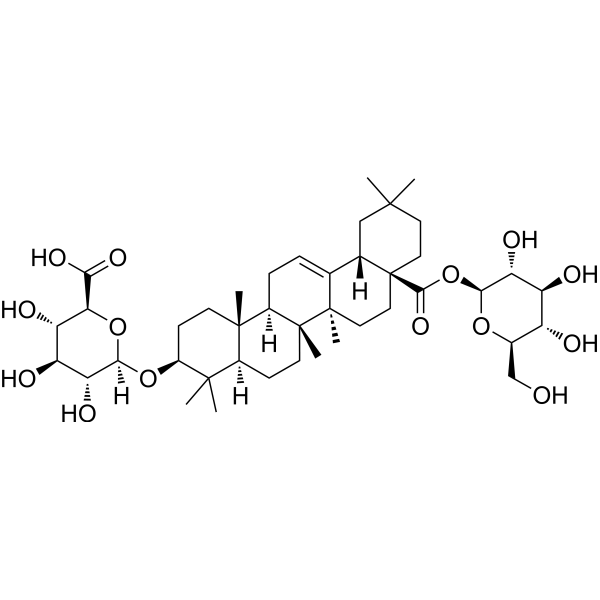
Calenduloside F
|
Keap1-Nrf2
|
Infection
Metabolic Disease
Endocrinology
Cancer
|
|
Chikusetsusaponin IVa is an orally active protein kinase activator. Chikusetsusaponin IVa binds to YAP with a KD value of 0.388 mM. Chikusetsusaponin IVa reduces inflammatory mediators (IL-6, IL-10, COX-2) expression, NO production, promotes ROS generation, induces Apoptosis, inhibits MAPK, TAZ, and regulates Nrf2, JAK/STAT. Chikusetsusaponin Iva has anti-H9N2 AIV and anti-endometrial cancer activities. Chikusetsusaponin Iva shows anti-inflammatory, hepatoprotective and osteoprotective effects .
|
-
-
- HY-P11274
-
|
Amycretin; NN 9487
|
Amylin Receptor
GCGR
Insulin Receptor
|
Metabolic Disease
|
Zenagamtide (Amycretin; NN 9487) is an orally active, blood-brain barrier permeable triple agonist that targets GLP-1, amylin (Amylin Receptor) and calcitonin receptor (Calcitonin Receptor). Zenagamtide is a single peptide consisting of 68 amino acids that can target brain regions regulating food intake, significantly suppress appetite and reduce energy intake. Therefore, Zenagamtide improves body weight, waist circumference, glycated hemoglobin and lipid profile, and also alleviates the histological features of metabolic dysfunction-associated steatotic liver disease (MASLD) and enhances insulin sensitivity. Zenagamtide may cause transient increases in heart rate and fluctuations in serum calcium levels, but it is an important compound for the study of overweight, obesity, insulin resistance and related metabolic diseases .
|
-
-
- HY-114118S1
-
|
|
Isotope-Labeled Compounds
GLP Receptor
Insulin Receptor
α-synuclein
Apoptosis
p38 MAPK
Autophagy
Bcl-2 Family
|
Neurological Disease
Metabolic Disease
Cancer
|
|
Semaglutide-d8 tetraTFA is the deuterium labeled Semaglutide (HY-114118). Semaglutide is a long-acting, selective, competitive GLP-1R agonist that can penetrate the blood-brain barrier. After activating GLP-1R, Semaglutide promotes insulin secretion, inhibits gastric emptying and appetite, and at the same time enhances autophagy, inhibits oxidative stress and apoptosis. Semaglutide also regulates mitochondrial function and lipid metabolism (such as reducing de novo lipogenesis in the liver). Semaglutide has activities such as lowering blood sugar, reducing weight, neuroprotection (such as improving motor function in Parkinson's disease models, reducing α-synuclein aggregation) and improving hepatic steatosis. Semaglutide can be used for the study of neurodegenerative diseases and liver diseases such as type 2 diabetes, obesity, Parkinson's disease, metabolic associated fatty liver disease (MASLD), and cancer .
|
-
-
- HY-114118S
-
|
|
Isotope-Labeled Compounds
GLP Receptor
Insulin Receptor
α-synuclein
Apoptosis
p38 MAPK
Autophagy
Bcl-2 Family
|
Neurological Disease
Metabolic Disease
Cancer
|
|
Semaglutide-d8 is the deuterium labeled Semaglutide (HY-114118). Semaglutide is a long-acting, selective, competitive GLP-1R agonist that can penetrate the blood-brain barrier. After activating GLP-1R, Semaglutide promotes insulin secretion, inhibits gastric emptying and appetite, and at the same time enhances autophagy, inhibits oxidative stress and apoptosis. Semaglutide also regulates mitochondrial function and lipid metabolism (such as reducing de novo lipogenesis in the liver). Semaglutide has activities such as lowering blood sugar, reducing weight, neuroprotection (such as improving motor function in Parkinson's disease models, reducing α-synuclein aggregation) and improving hepatic steatosis. Semaglutide can be used for the study of neurodegenerative diseases and liver diseases such as type 2 diabetes, obesity, Parkinson's disease, metabolic associated fatty liver disease (MASLD), and cancer .
|
-
-
- HY-161247
-
|
|
5-HT Receptor
|
Metabolic Disease
|
|
5HT2A antagonist 2 is an orally active, selective antagonist for 5HT2A with IC50 of 14 nM. 5-HT2A antagonist 2 exhibits good chemical, hepatocyte, and plasma stability, without significant cytotoxicity in cell lines VERO, HFL-1, L929, NIH3T3, CHO-K1 .
|
-
-
- HY-172157
-
|
|
HDAC
AMPK
|
Metabolic Disease
|
|
HDAC11-IN-2 (compound B6) is a high selective Histone Deacetylase 11 (HDAC11) inhibitor. HDAC11-IN-2 inhibits HDAC11 and HDAC8 with IC50s of 51.1 ×10 -3 μM and 5 μM, respectively. HDAC11-IN-2 inhibits denovolipogenesis (DNL) and promotes fatty acid oxidation, thus mitigating hepaticlipid accumulation and pathological symptoms in MASLD mice. HDAC11-IN-2 enhances the phosphorylation of AMPKα1 at Thr172 through the inhibition of HDAC11, consequently modulating DNL and fatty acid oxidation in the liver .
|
-
-
- HY-172661
-
|
|
Thyroid Hormone Receptor
Interleukin Related
LDLR
|
Infection
Metabolic Disease
|
|
KYLO-0603 is an orally active, selective THR-β agonist (EC50 : 31.07 nM). KYLO-0603 has significant activity in lowering serum cholesterol and low-density lipoprotein cholesterol. KYLO-0603 upregulates the expression of THR-regulated genes (including iodothyronine deiodinase 1 (Dio1), malic enzyme 1 (Me1), and thyroid hormone response (Thrsp) gene) and inhibits the expression of inflammatory and fibrotic genes (low-density lipoprotein receptor (LDL-R) gene) by activating THR-β receptors. KYLO-0603 can be used to treat metabolic dysfunction-associated steatohepatitis (MASH) and liver fibrosis research .
|
-
-
- HY-173599
-
|
|
PNPLA3
|
Cancer
|
|
NUV-244 is a PNPLA3 I148M degrader. NUV-244 reduces PNPLA3 I148M levels on lipid droplets via BFAR-mediated ubiquitin-proteasome degradation .
|
-
-
- HY-179278
-
|
|
LXR
|
Cardiovascular Disease
Metabolic Disease
Endocrinology
|
|
LXR agonist 4 is a selective LXR inverse agonist with IC50 values of 7.6 (LXRα) and 2.9 μM (LXRβ), respectively. LXR agonist 4 exhibits selectivity over RORα and FXR. LXR agonist 4 robustly suppresses SREBP1c expression without altering ABCA1 or APOE. LXR agonist 4 displays antilipogenic properties and resolves fatty acid-induced steatosis. LXR agonist 4 can be used for the research of atherosclerosis and metabolic dysfunction-associated steatotic liver disease (MASLD) .
|
-
-
- HY-170571
-
|
|
Mitochondrial Metabolism
|
Metabolic Disease
Inflammation/Immunology
|
|
BE2647 is a selective inhibitor for mitochondrial pyruvate carrier (MPC) with an EC50 of 70 nM. BE2647 exhibits good metabolic stability in mouse liver microsomes. BE2647 can be used in research of metabolic diseases, non-alcoholic fatty liver disease (MASLD), or non-alcoholic steatohepatitis (MASH) .
|
-
-
- HY-172808
-
|
|
Cannabinoid Receptor
Cytochrome P450
|
Metabolic Disease
|
|
BNS808 is an orally active and selective cannabinoid-1 receptor (CB1R) antagonist (IC50 = 0.8 nM) with notable CB2R selectivity and minimal brain penetration. BNS808 is studied in research on obesity and its associated metabolic complications, such as metabolic dysfunctional-associated steatotic liver disease (MASLD). BNS808 has reduced free drug availability for CNS entry, enhancing safety and minimizing drug-drug interactions through high plasma binding .
|
-
-
- HY-183723
-
|
|
Dihydroceramide Desaturase 1 (DES1)
|
Metabolic Disease
|
|
GAA-4OH is a potent and irreversible dihydroceramide desaturase-1 (DES1) inhibitor with an IC50 of 0.6 μM and a Ki of 139.5 nM. GAA-4OH undergoes oxidation to form a reactive iminoquinone that covalently blocks DES1’s catalytic cavity, causing permanent enzyme inactivation. GAA-4OH modulates sphingolipid balance by reducing ceramide-to-dihydroceramide ratios in liver tissue. GAA-4OH improves liver steatosis, inflammation, fibrosis, and reduces pro-inflammatory and pro-fibrogenic gene expression. GAA-4OH can be used for the research of metabolic dysfunction-associated steatotic liver disease (MASLD) .
|
-
-
- HY-181564
-
|
|
Acyltransferase
|
Metabolic Disease
|
|
MGAT2-IN-7 (compound 27Q) is a substituted benzenesulfonamide compound and also a monoacylglycerol acyltransferase 2 (MGAT2) inhibitor. MGAT2-IN-7 is used for research on obesity and metabolic dysfunction-associated steatotic liver disease (MASLD) .
|
-
-
- HY-180921
-
|
|
Ketohexokinase
|
Metabolic Disease
Endocrinology
|
|
GS-1291269 is a potent and neutral ketohexokinase (KHK) inhibitor, with IC50s of 0.38 and 2.1 nM against KHK-C and KHK-A, respectively. GS-1291269 demonstrates liver and kidney fructose-1-phosphate (F1P) reduction in a fructose challenge model in rats. GS-1291269 can be used for kidney disease and metabolic-dysfunction-associated steatotic liver disease (MASLD) research .
|
-
-
- HY-114118C
-
|
|
GLP Receptor
Insulin Receptor
α-synuclein
Apoptosis
p38 MAPK
Autophagy
Bcl-2 Family
|
Neurological Disease
Metabolic Disease
Cancer
|
|
Semaglutide sodium is a long-acting, selective, competitive GLP-1R agonist that can penetrate the blood-brain barrier. After activating GLP-1R, Semaglutide sodium promotes insulin secretion, inhibits gastric emptying and appetite, and at the same time enhances autophagy, inhibits oxidative stress and apoptosis. Semaglutide sodium also regulates mitochondrial function and lipid metabolism (such as reducing de novo lipogenesis in the liver). Semaglutide sodium has activities such as lowering blood sugar, reducing weight, neuroprotection (such as improving motor function in Parkinson's disease models, reducing α-synuclein aggregation) and improving hepatic steatosis. Semaglutide sodium can be used for the study of neurodegenerative diseases and liver diseases such as type 2 diabetes, obesity, Parkinson's disease, metabolic associated fatty liver disease (MASLD), and cancer .
|
-
| Cat. No. |
Product Name |
Target |
Research Area |
-
- HY-114118
-
Semaglutide
Maximum Cited Publications
35 Publications Verification
|
GLP Receptor
Insulin Receptor
α-synuclein
Apoptosis
p38 MAPK
Autophagy
Bcl-2 Family
|
Neurological Disease
Metabolic Disease
Cancer
|
|
Semaglutide is a long-acting, selective, competitive GLP-1R agonist that can penetrate the blood-brain barrier. After activating GLP-1R, Semaglutide promotes insulin secretion, inhibits gastric emptying and appetite, and at the same time enhances autophagy, inhibits oxidative stress and apoptosis. Semaglutide also regulates mitochondrial function and lipid metabolism (such as reducing de novo lipogenesis in the liver). Semaglutide has activities such as lowering blood sugar, reducing weight, neuroprotection (such as improving motor function in Parkinson's disease models, reducing α-synuclein aggregation) and improving hepatic steatosis. Semaglutide can be used for the study of neurodegenerative diseases and liver diseases such as type 2 diabetes, obesity, Parkinson's disease, metabolic associated fatty liver disease (MASLD), and cancer .
|
-
- HY-114118B
-
|
|
GLP Receptor
Insulin Receptor
α-synuclein
Apoptosis
p38 MAPK
Autophagy
Bcl-2 Family
|
Neurological Disease
Metabolic Disease
Cancer
|
|
Semaglutide acetate is a long-acting, selective, competitive GLP-1R agonist that can penetrate the blood-brain barrier. After activating GLP-1R, Semaglutide acetate promotes insulin secretion, inhibits gastric emptying and appetite, and at the same time enhances autophagy, inhibits oxidative stress and apoptosis. Semaglutide acetate also regulates mitochondrial function and lipid metabolism (such as reducing de novo lipogenesis in the liver). Semaglutide acetate has activities such as lowering blood sugar, reducing weight, neuroprotection (such as improving motor function in Parkinson's disease models, reducing α-synuclein aggregation) and improving hepatic steatosis. Semaglutide acetate can be used for the study of neurodegenerative diseases and liver diseases such as type 2 diabetes, obesity, Parkinson's disease, metabolic associated fatty liver disease (MASLD), and cancer .
|
-
- HY-114118A
-
|
|
GLP Receptor
Insulin Receptor
α-synuclein
Apoptosis
p38 MAPK
Autophagy
Bcl-2 Family
|
Neurological Disease
Metabolic Disease
Cancer
|
|
Semaglutide TFA is a long-acting, selective, competitive GLP-1R agonist that can penetrate the blood-brain barrier. After activating GLP-1R, Semaglutide TFA promotes insulin secretion, inhibits gastric emptying and appetite, and at the same time enhances autophagy, inhibits oxidative stress and apoptosis. Semaglutide TFA also regulates mitochondrial function and lipid metabolism (such as reducing de novo lipogenesis in the liver). Semaglutide TFA has activities such as lowering blood sugar, reducing weight, neuroprotection (such as improving motor function in Parkinson's disease models, reducing α-synuclein aggregation) and improving hepatic steatosis. Semaglutide TFA can be used for the study of neurodegenerative diseases and liver diseases such as type 2 diabetes, obesity, Parkinson's disease, metabolic associated fatty liver disease (MASLD), and cancer .
|
-
- HY-P11274A
-
|
Amycretin sodium; NN 9487 sodium
|
Amylin Receptor
Insulin Receptor
GCGR
|
Metabolic Disease
|
Zenagamtide (Amycretin; NN 9487) sodium is an orally active, blood-brain barrier permeable triple agonist that targets GLP-1, amylin (Amylin Receptor) and calcitonin receptor (Calcitonin Receptor). Zenagamtide sodium is a single peptide consisting of 68 amino acids that can target brain regions regulating food intake, significantly suppress appetite and reduce energy intake. Therefore, Zenagamtide sodium improves body weight, waist circumference, glycated hemoglobin and lipid profile, and also alleviates the histological features of metabolic dysfunction-associated steatotic liver disease (MASLD) and enhances insulin sensitivity. Zenagamtide sodium may cause transient increases in heart rate and fluctuations in serum calcium levels, but it is an important compound for the study of overweight, obesity, insulin resistance and related metabolic diseases .
|
-
- HY-114118CP
-
|
|
GLP Receptor
Insulin Receptor
α-synuclein
Apoptosis
p38 MAPK
Autophagy
Bcl-2 Family
|
Neurological Disease
Metabolic Disease
Cancer
|
|
Semaglutide (crude) is the crude form of Semaglutide (HY-114118). Semaglutide is a long-acting, selective, competitive GLP-1R agonist that can penetrate the blood-brain barrier. After activating GLP-1R, Semaglutide promotes insulin secretion, inhibits gastric emptying and appetite, and at the same time enhances Autophagy, inhibits oxidative stress and Apoptosis. Semaglutide also regulates mitochondrial function and lipid metabolism (such as reducing de novo lipogenesis in the liver). Semaglutide has activities such as lowering blood sugar, reducing weight, neuroprotection (such as improving motor function in Parkinson's disease models, reducing α-synuclein aggregation) and improving hepatic steatosis. Semaglutide can be used for the study of neurodegenerative diseases and liver diseases such as type 2 diabetes, obesity, Parkinson's disease, metabolic associated fatty liver disease (MASLD), and cancer .
|
-
- HY-P11274
-
|
Amycretin; NN 9487
|
Amylin Receptor
GCGR
Insulin Receptor
|
Metabolic Disease
|
Zenagamtide (Amycretin; NN 9487) is an orally active, blood-brain barrier permeable triple agonist that targets GLP-1, amylin (Amylin Receptor) and calcitonin receptor (Calcitonin Receptor). Zenagamtide is a single peptide consisting of 68 amino acids that can target brain regions regulating food intake, significantly suppress appetite and reduce energy intake. Therefore, Zenagamtide improves body weight, waist circumference, glycated hemoglobin and lipid profile, and also alleviates the histological features of metabolic dysfunction-associated steatotic liver disease (MASLD) and enhances insulin sensitivity. Zenagamtide may cause transient increases in heart rate and fluctuations in serum calcium levels, but it is an important compound for the study of overweight, obesity, insulin resistance and related metabolic diseases .
|
-
- HY-114118S1
-
|
|
Isotope-Labeled Compounds
GLP Receptor
Insulin Receptor
α-synuclein
Apoptosis
p38 MAPK
Autophagy
Bcl-2 Family
|
Neurological Disease
Metabolic Disease
Cancer
|
|
Semaglutide-d8 tetraTFA is the deuterium labeled Semaglutide (HY-114118). Semaglutide is a long-acting, selective, competitive GLP-1R agonist that can penetrate the blood-brain barrier. After activating GLP-1R, Semaglutide promotes insulin secretion, inhibits gastric emptying and appetite, and at the same time enhances autophagy, inhibits oxidative stress and apoptosis. Semaglutide also regulates mitochondrial function and lipid metabolism (such as reducing de novo lipogenesis in the liver). Semaglutide has activities such as lowering blood sugar, reducing weight, neuroprotection (such as improving motor function in Parkinson's disease models, reducing α-synuclein aggregation) and improving hepatic steatosis. Semaglutide can be used for the study of neurodegenerative diseases and liver diseases such as type 2 diabetes, obesity, Parkinson's disease, metabolic associated fatty liver disease (MASLD), and cancer .
|
-
- HY-114118S
-
|
|
Isotope-Labeled Compounds
GLP Receptor
Insulin Receptor
α-synuclein
Apoptosis
p38 MAPK
Autophagy
Bcl-2 Family
|
Neurological Disease
Metabolic Disease
Cancer
|
|
Semaglutide-d8 is the deuterium labeled Semaglutide (HY-114118). Semaglutide is a long-acting, selective, competitive GLP-1R agonist that can penetrate the blood-brain barrier. After activating GLP-1R, Semaglutide promotes insulin secretion, inhibits gastric emptying and appetite, and at the same time enhances autophagy, inhibits oxidative stress and apoptosis. Semaglutide also regulates mitochondrial function and lipid metabolism (such as reducing de novo lipogenesis in the liver). Semaglutide has activities such as lowering blood sugar, reducing weight, neuroprotection (such as improving motor function in Parkinson's disease models, reducing α-synuclein aggregation) and improving hepatic steatosis. Semaglutide can be used for the study of neurodegenerative diseases and liver diseases such as type 2 diabetes, obesity, Parkinson's disease, metabolic associated fatty liver disease (MASLD), and cancer .
|
-
- HY-114118C
-
|
|
GLP Receptor
Insulin Receptor
α-synuclein
Apoptosis
p38 MAPK
Autophagy
Bcl-2 Family
|
Neurological Disease
Metabolic Disease
Cancer
|
|
Semaglutide sodium is a long-acting, selective, competitive GLP-1R agonist that can penetrate the blood-brain barrier. After activating GLP-1R, Semaglutide sodium promotes insulin secretion, inhibits gastric emptying and appetite, and at the same time enhances autophagy, inhibits oxidative stress and apoptosis. Semaglutide sodium also regulates mitochondrial function and lipid metabolism (such as reducing de novo lipogenesis in the liver). Semaglutide sodium has activities such as lowering blood sugar, reducing weight, neuroprotection (such as improving motor function in Parkinson's disease models, reducing α-synuclein aggregation) and improving hepatic steatosis. Semaglutide sodium can be used for the study of neurodegenerative diseases and liver diseases such as type 2 diabetes, obesity, Parkinson's disease, metabolic associated fatty liver disease (MASLD), and cancer .
|
| Cat. No. |
Product Name |
Category |
Target |
Chemical Structure |
-
- HY-N0818
-
|
Calenduloside F
|
Triterpenes
Classification of Application Fields
Terpenoids
Other Diseases
Amaranthaceae
Plants
Alternanthera philoxeroides (Mart.) Griseb.
Disease Research Fields
Source Classification
|
Keap1-Nrf2
|
|
Chikusetsusaponin IVa is an orally active protein kinase activator. Chikusetsusaponin IVa binds to YAP with a KD value of 0.388 mM. Chikusetsusaponin IVa reduces inflammatory mediators (IL-6, IL-10, COX-2) expression, NO production, promotes ROS generation, induces Apoptosis, inhibits MAPK, TAZ, and regulates Nrf2, JAK/STAT. Chikusetsusaponin Iva has anti-H9N2 AIV and anti-endometrial cancer activities. Chikusetsusaponin Iva shows anti-inflammatory, hepatoprotective and osteoprotective effects .
|
-
| Cat. No. |
Product Name |
Chemical Structure |
-
- HY-114118S3
-
|
|
|
Semaglutide- 13C6, 15N TFA is the 13C- and 15N-labeled Semaglutide TFA (HY-114118A). Semaglutide TFA is a long-acting, selective, competitive GLP-1R agonist that can penetrate the blood-brain barrier. After activating GLP-1R, Semaglutide TFA promotes insulin secretion, inhibits gastric emptying and appetite, and at the same time enhances autophagy, inhibits oxidative stress and apoptosis. Semaglutide TFA also regulates mitochondrial function and lipid metabolism (such as reducing de novo lipogenesis in the liver). Semaglutide TFA has activities such as lowering blood sugar, reducing weight, neuroprotection (such as improving motor function in Parkinson's disease models, reducing α-synuclein aggregation) and improving hepatic steatosis. Semaglutide TFA can be used for the study of neurodegenerative diseases and liver diseases such as type 2 diabetes, obesity, Parkinson's disease, metabolic associated fatty liver disease (MASLD), and cancer .
|
-
-
- HY-114118S1
-
|
|
|
Semaglutide-d8 tetraTFA is the deuterium labeled Semaglutide (HY-114118). Semaglutide is a long-acting, selective, competitive GLP-1R agonist that can penetrate the blood-brain barrier. After activating GLP-1R, Semaglutide promotes insulin secretion, inhibits gastric emptying and appetite, and at the same time enhances autophagy, inhibits oxidative stress and apoptosis. Semaglutide also regulates mitochondrial function and lipid metabolism (such as reducing de novo lipogenesis in the liver). Semaglutide has activities such as lowering blood sugar, reducing weight, neuroprotection (such as improving motor function in Parkinson's disease models, reducing α-synuclein aggregation) and improving hepatic steatosis. Semaglutide can be used for the study of neurodegenerative diseases and liver diseases such as type 2 diabetes, obesity, Parkinson's disease, metabolic associated fatty liver disease (MASLD), and cancer .
|
-
-
- HY-114118S
-
|
|
|
Semaglutide-d8 is the deuterium labeled Semaglutide (HY-114118). Semaglutide is a long-acting, selective, competitive GLP-1R agonist that can penetrate the blood-brain barrier. After activating GLP-1R, Semaglutide promotes insulin secretion, inhibits gastric emptying and appetite, and at the same time enhances autophagy, inhibits oxidative stress and apoptosis. Semaglutide also regulates mitochondrial function and lipid metabolism (such as reducing de novo lipogenesis in the liver). Semaglutide has activities such as lowering blood sugar, reducing weight, neuroprotection (such as improving motor function in Parkinson's disease models, reducing α-synuclein aggregation) and improving hepatic steatosis. Semaglutide can be used for the study of neurodegenerative diseases and liver diseases such as type 2 diabetes, obesity, Parkinson's disease, metabolic associated fatty liver disease (MASLD), and cancer .
|
-
Your information is safe with us. * Required Fields.
Inquiry Information
- Product Name:
- Cat. No.:
- Quantity:
- MCE Japan Authorized Agent:

