



Semaglutide sodium
Based on 50 publication(s) in Google Scholar
Semaglutide sodium is a long-acting, selective, competitive GLP-1R agonist that can penetrate the blood-brain barrier. After activating GLP-1R, Semaglutide sodium promotes insulin secretion, inhibits gastric emptying and appetite, and at the same time enhances autophagy, inhibits oxidative stress and apoptosis. Semaglutide sodium also regulates mitochondrial function and lipid metabolism (such as reducing de novo lipogenesis in the liver). Semaglutide sodium has activities such as lowering blood sugar, reducing weight, neuroprotection (such as improving motor function in Parkinson's disease models, reducing α-synuclein aggregation) and improving hepatic steatosis. Semaglutide sodium can be used for the study of neurodegenerative diseases and liver diseases such as type 2 diabetes, obesity, Parkinson's disease, metabolic associated fatty liver disease (MASLD), and cancer.
For research use only. We do not sell to patients.
- CAS No.: 2924330-56-1
- Formula: C187H291N45O59·xNa
- Molecular Weight:4113.58 (free base)
-
Storage:
Please store the product under the recommended conditions in the Certificate of Analysis.


To place orders, for customer services and technical support, please contact: MedChemExpress USA
Tel: 609-228-6898 E-mail: [email protected] [email protected]


-
 Biological Activity
-
Chemical Information
- Protocols
- Purity & Documentation
- References
-
 Help & FAQs


Publications Citing Use of MedChemExpress (MCE) Semaglutide sodium
More- J Adv Res. 2026 Feb 12:S2090-1232(26)00137-2. [Abstract]
- Metabolism. 2025 Oct 13:156414. [Abstract]
- Adv Sci (Weinh). 2025 Aug 28:e17664. [Abstract]
- Cell Rep Med. 2026 Jul 7;7(7).
- Cell Rep Med. 2026 Jun 18:102875. [Abstract]
- Mater Today Bio. 2026 May 14:38:103231. [Abstract]
- J Orthop Translat. 2026 Jun 23;59:101166. [Abstract]
- Int J Mol Med. 2026 Jan;57(1):25. [Abstract]
- Int J Mol Med. 2021 Dec;48(6):219. [Abstract]
- Free Radic Biol Med. 2026 Jul:250:352-369. [Abstract]
- Free Radic Biol Med. 2026 Jun:249:138-151. [Abstract]
- ACS Appl Mater Interfaces. 2026 Jun 10;18(22):31046-31060. [Abstract]
- Cell Prolif. 2025 Aug 27:e70118. [Abstract]
- Drug Des Devel Ther. 2026 May 22:20:599539. [Abstract]
- Diabetes Obes Metab. 2026 Jan 20. [Abstract]
- Drug Des Devel Ther. 2024 Nov 30:18:5485-5500. [Abstract]
- Eur J Pharmacol. 2026 Jan 12:1011:178459. [Abstract]
- Acta Physiol. 2025 Dec 7;242(1):e70141.
- Int J Mol Sci. 2026 Jun 26;27(13):5775.
- Int J Obes. 2026 Feb 21. [Abstract]
- Mol Med Rep. 2025 May;31(5):111. [Abstract]
- J Lipid Res. 2025 Feb;66(2):100736. [Abstract]
- J Physiol. 2026 Apr 3. [Abstract]
- Bioconjug Chem. 2025 Dec 22. [Abstract]
- Curr Issues Mol Biol. 2026 Jun 30;48(7):675.
- J Chromatogr A. 2026 Sep 27:1785:467292.
- Diabetes Metab Syndr Obes. 2025 Apr 1:18:969-983. [Abstract]
- Mol Biol Rep. 2025 Nov 4;53(1):44. [Abstract]
- Surgery. 2025 Mar:179:108943. [Abstract]
- Microcirculation. 2026 Jul;33(5):e70070. [Abstract]
- Int J Gen Med. 2026 Feb 18:19:564902. [Abstract]
- Chem Pharm Bull. 2024;72(7):658-663. [Abstract]
- bioRxiv. 2026 Jul 23.
- bioRxiv. 2026 Jun 8:2026.06.03.729910. [Abstract]
- bioRxiv. 2026 Apr 8:2026.04.07.716956. [Abstract]
- bioRxiv. 2025 Dec 27:2025.12.26.696603. [Abstract]
- bioRxiv. 2025 Nov 13.
- bioRxiv. 2025 Nov 18:2025.05.09.653092. [Abstract]
- bioRxiv. 2025 Aug 31.
- Explor Endocr Metab Dis. 2025 Jun 24;2:101433.
- Res Sq. 2025 May 25.
- bioRxiv. 2025 April 15.
- NPJ Metab Health Dis. 2025;3(1):10. [Abstract]
- Patent. US12233110.
- Patent. US12233111.
- Patent. US12233112.
- bioRxiv. 2025 Jan 10.
- Patent. US20240366602A1.
- bioRxiv. 2024 Apr 3.
- bioRxiv. 2023 Jul 19.
 Customer Validation & Images

-
Cell Proliferation/Viability Assay
-
WB
-
IF
-
WB
-
RT-PCR
All α-synuclein Isoforms
More

Biological Activity
Description
In Vitro
1. Anti-Aβ25-35 injury experiment:
Semaglutide (1-100 nM; 24 h) sodium significantly increases the survival rate of SH-SY5Y cells, increases the expression of autophagy-related proteins such as LC3II, Atg7, Beclin-1 and P62, inhibits Bax and upregulated Bcl-2, and protectes neurons by enhancing autophagy, inhibiting apoptosis[1][2].
2. Oral squamous cell carcinoma (OSCC) cell experiment:
Semaglutide (5-40 μM; 48 h) sodium dose-dependently inhibits the proliferation, migration and invasion of Cal27 and HSC4 cells, upregulates E-cadherin and downregulates Vimentin, activates the P38 MAPK signaling pathway (increased p-P38 expression), and induces cell apoptosis[3].
MedChemExpress (MCE) has not independently confirmed the accuracy of these methods. They are for reference only. Further protocols information, click here.
-
Cell Line:SH-SY5Y human neuroblastoma cells
-
Concentration:0, 1, 10, 100 nM
-
Incubation Time:24 h
-
Result:Cell Viability: Significantly increased cell survival rate in a dose-dependent manner, reversing Aβ25-35-induced cytotoxicity.
WB (Western Blot): Upregulated autophagy markers (LC3II, Atg7, Beclin-1, P62) and anti-apoptotic protein Bcl-2, while downregulating pro-apoptotic protein Bax.
In Vivo
Oral squamous cell carcinoma (OSCC) xenograft model
Semaglutide (3 μmol/kg; subcutaneous injection; 3 times a week; 3 weeks) sodium significantly inhibits the growth of tumor volume in nude mouse oral squamous cell carcinoma (OSCC) xenograft model, downregulates proliferation markers Ki67 and PCNA, upregulates pro-apoptotic protein Bax and downregulates anti-apoptotic protein Bcl-xL, and induces tumor cell apoptosis by activating the P38 MAPK pathway[3].
Chronic MPTP-induced Parkinson's disease model
Semaglutide (25 nmol/kg; intraperitoneal injection; once every 2 days; 30 days) sodium improves the chronic MPTP-induced Parkinson's disease model in mice and its motor dysfunction, increases the number of nigral tyrosine (TH)-positive neurons, reduces α-synuclein aggregation and glial activation, and reduces the level of oxidative stress marker 4-HNE[4].
Metabolic dysfunction-associated fatty liver disease (MASLD) model
Semaglutide (25 μg/kg/week + 100 μg/kg/week; subcutaneous injection; once a week; 11 weeks) sodium reduces body weight, blood glucose and serum liver enzymes (ALT, AST, AP), reduces hepatic triglyceride deposition, improves hepatic steatosis and hepatocyte ballooning, and downregulates the de novo lipogenesis markers Acaca and Scd1 in the mouse metabolic dysfunction-associated fatty liver disease (MASLD) model[5].
MedChemExpress (MCE) has not independently confirmed the accuracy of these methods. They are for reference only.


Chemical Information
-
CAS No. 2924330-56-1
-
Molecular Weight 4113.58 (free base)
-
Formula C187H291N45O59·xNa
-
Sequence
His-{Aib}-Glu-Gly-Thr-Phe-Thr-Ser-Asp-Val-Ser-Ser-Tyr-Leu-Glu-Gly-Gln-Ala-Ala-{C18 diacid-γ-Glu-(AEEA)2-Lys}-Glu-Phe-Ile-Ala-Trp-Leu-Val-Arg-Gly-Arg-Gly
-
Sequence Shortening
H-{Aib}-EGTFTSDVSSYLEGQAA-{C18 diacid-γ-Glu-(AEEA)2-Lys}-EFIAWLVRGRG
-
Shipping
Room temperature in continental US; may vary elsewhere.
-
Storage
Please store the product under the recommended conditions in the Certificate of Analysis.


Publications (50)
-
Journal Impact Factor
-
Most Recent
-
J Adv Res
A novel GIPR/GLP-1R dual agonist improves systemic metabolism through differentially regulating inflammation and lipid metabolism in obesity. [Abstract]2026 Feb 12:S2090-1232(26)00137-2. PMID: 41690462 -
Metabolism
A melanocortin 4- and glucagon-like peptide 1 receptor multiple agonist for the treatment of diabetes and obesity. [Abstract]2025 Oct 13:156414. PMID: 41093057 -
Adv Sci (Weinh)
The GLP1R Agonist Semaglutide Inhibits Reactive Astrocytes and Enhances the Efficacy of Neural Stem Cell Transplantation Therapy in Parkinson's Disease Mice. [Abstract]2025 Aug 28:e17664. PMID: 40874950 -
-
Cell Rep Med
2026 Jun 18:102875. PMID: 42314683 -
Mater Today Bio
Met@MPDA rejuvenates BMSC energy metabolism to promote bone regeneration in semaglutide-treated obese periodontitis. [Abstract]2026 May 14:38:103231. PMID: 42182879 -
J Orthop Translat
Semaglutide alleviates osteoarthritis independent of weight loss via GLP-1R-mediated activation of autophagy through AKT/mTOR inhibition. [Abstract]2026 Jun 23;59:101166. PMID: 42381999 -
Int J Mol Med
Synergistic effects of Akebia saponin D and Semaglutide on diabetic nephropathy and osteoporosis via the Klotho‑p53 signaling axis. [Abstract]2026 Jan;57(1):25. PMID: 41268608 -
Int J Mol Med
Semaglutide attenuates seizure severity and ameliorates cognitive dysfunction by blocking the NLR family pyrin domain containing 3 inflammasome in pentylenetetrazole‑kindled mice. [Abstract]2021 Dec;48(6):219. PMID: 34676876
Semaglutide sodium purchased from MedChemExpress. Usage Cited in: Int J Mol Med. 2021 Dec;48(6):219. [Abstract]
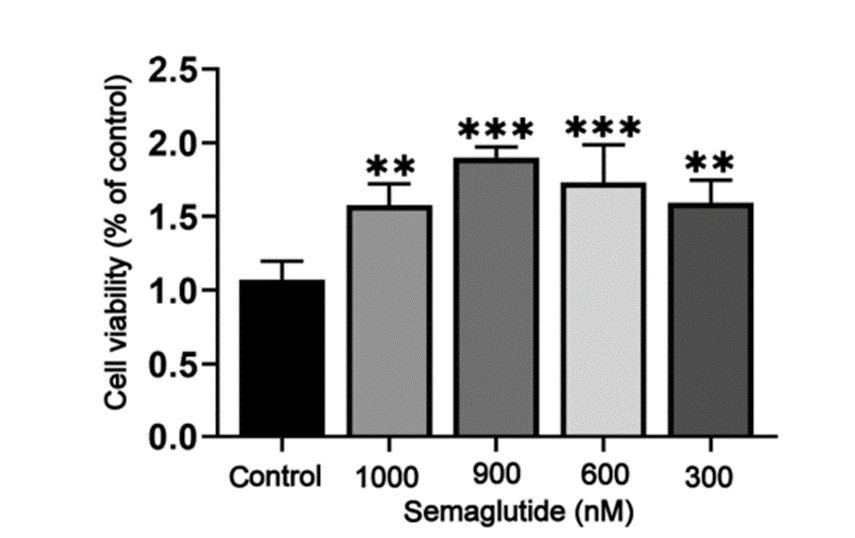
Proliferation of BV2 cells treated with Semaglutide at different concentrations (300, 600, 900 and 1,000 nM) was assessed using Cell Counting Kit‑8 analysis.
Semaglutide sodium purchased from MedChemExpress. Usage Cited in: Int J Mol Med. 2021 Dec;48(6):219. [Abstract]
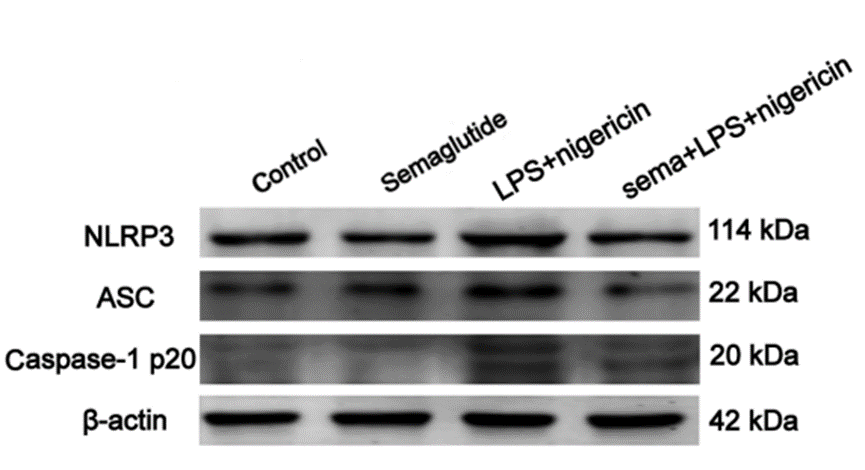
Representative WB images in different BV2 cell groups with Semaglutide (900 nM,20 h).
Semaglutide sodium purchased from MedChemExpress. Usage Cited in: Int J Mol Med. 2021 Dec;48(6):219. [Abstract]
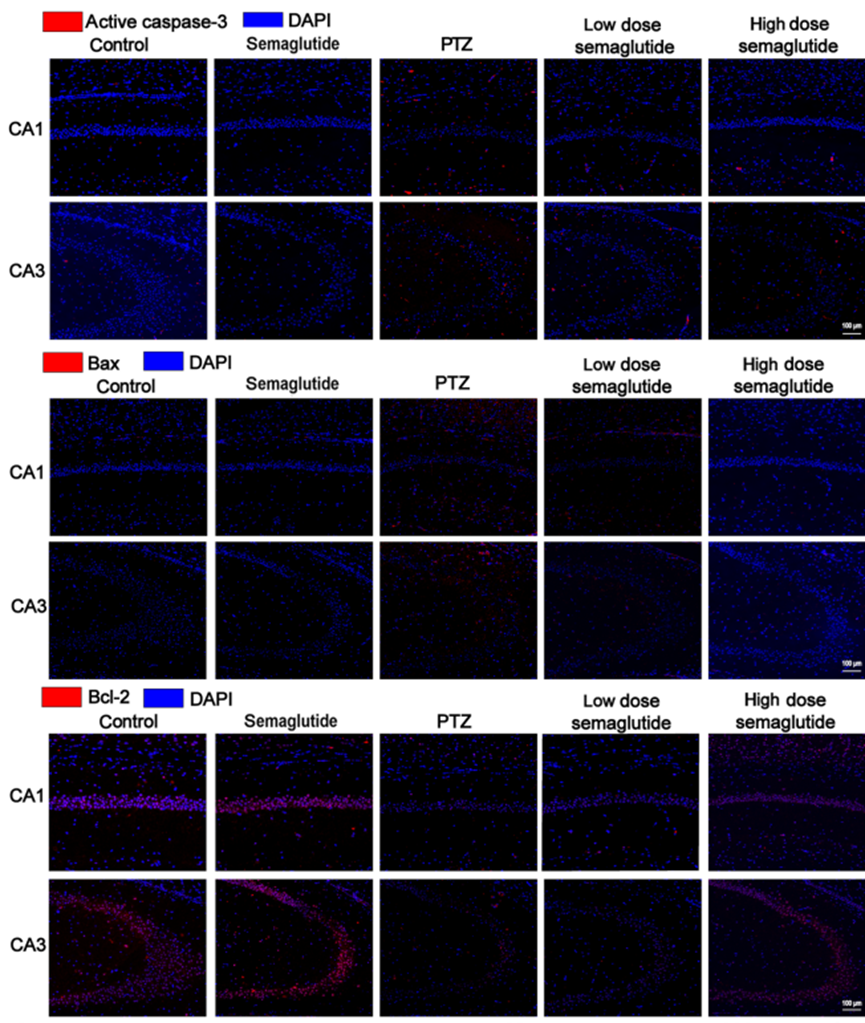
Semaglutide (10 and 25 nM/kg; ip.; single dose) decreased the fluorescence intensity of caspase‑3, Bax and Bcl-2 in the CA1 and CA3 regions.
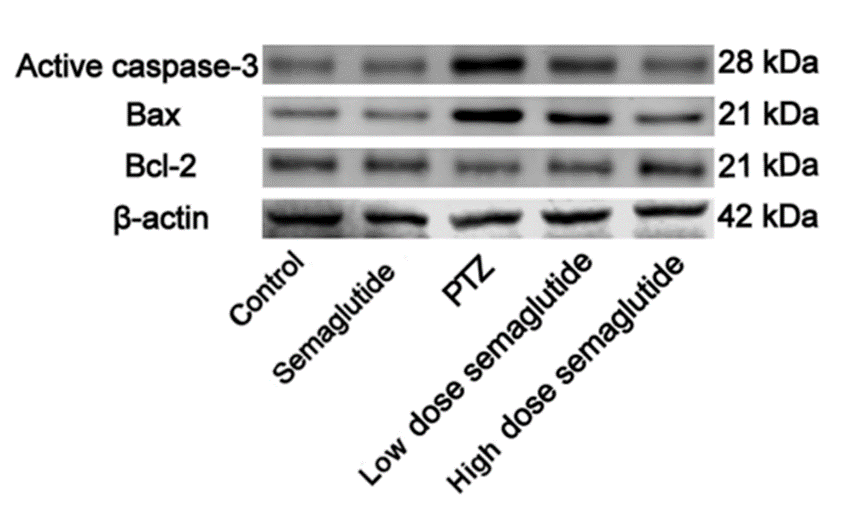
Semaglutide sodium purchased from MedChemExpress. Usage Cited in: Int J Mol Med. 2021 Dec;48(6):219. [Abstract]
Western blot showing that 10 and 25 nM/kg Semaglutide, i.p, reduced the band intensity of active caspase‑3 and increased the Bcl‑2/Bax ratio.
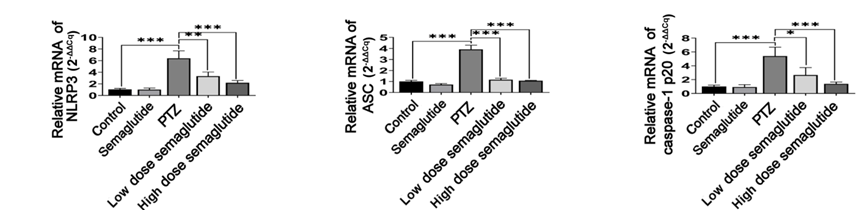
Semaglutide sodium purchased from MedChemExpress. Usage Cited in: Int J Mol Med. 2021 Dec;48(6):219. [Abstract]
Semaglutide (10-25 nM/kg; i.p.; single dose) reduced the mRNA levels of NLRP3, ASC and caspase-1 p20.
-
Free Radic Biol Med
Semaglutide ameliorates aortic endothelial cell dysfunction in sarcopenia through the SIRT1/cGAS-STING signaling axis. [Abstract]2026 Jul:250:352-369. PMID: 41951015 -
Free Radic Biol Med
Semaglutide alleviates age-related dry eye disease by restoring lacrimal gland structure and function. [Abstract]2026 Jun:249:138-151. PMID: 41812831 -
ACS Appl Mater Interfaces
2026 Jun 10;18(22):31046-31060. PMID: 42198918 -
Cell Prolif
Development of NAFLD-Specific Human Liver Organoid Models on a Microengineered Array Chip for Semaglutide Efficacy Evaluation. [Abstract]2025 Aug 27:e70118. PMID: 40873114 -
Drug Des Devel Ther
Semaglutide Inhibits Osteoblast Ferroptosis Induced by Diabetic Periodontitis via Modulating the Wnt5a/Ror2/p38 MAPK Signaling Pathway. [Abstract]2026 May 22:20:599539. PMID: 42206237 -
Diabetes Obes Metab
Efsubaglutide Alfa attenuates metabolic dysfunction-associated steatohepatitis in mice with improvements in second harmonic generation-derived fibrosis features. [Abstract]2026 Jan 20. PMID: 41555840 -
Drug Des Devel Ther
Cardiometabolic Modulation by Semaglutide Contributes to Cardioprotection in Rats with Myocardial Infarction. [Abstract]2024 Nov 30:18:5485-5500. PMID: 39640291 -
Eur J Pharmacol
GLP-1RA partially alleviates obesity-induced reproductive dysfunction driven by the interplay mechanisms of inflammation and metabolic dysregulation via the SIRT-associated pathway. [Abstract]2026 Jan 12:1011:178459. PMID: 41380824 -
-
-
Int J Obes
Efficacy of GLP-1 analog peptides, semaglutide, tirzepatide, and retatrutide on MC4R deficient obesity and their comparison. [Abstract]2026 Feb 21. PMID: 41723268 -
Mol Med Rep
Semaglutide enhances PINK1/Parkin‑dependent mitophagy in hypoxia/reoxygenation‑induced cardiomyocyte injury. [Abstract]2025 May;31(5):111. PMID: 40017118 -
J Lipid Res
Microglial activation and hypothalamic structural plasticity in HFD obesity: insights from semaglutide and minocycline. [Abstract]2025 Feb;66(2):100736. PMID: 39724960 -
J Physiol
Sex-specific metabolic responses to glucagon receptor agonism and modulation of the FGF21-glucagon axis in female mice. [Abstract]2026 Apr 3. PMID: 41931110 -
Bioconjug Chem
Development of a Long-Acting and Stapled Dual Amylin and Calcitonin Receptor Agonist as Monotherapy and Combination with GLP-1R Agonists for the Treatment of Obesity. [Abstract]2025 Dec 22. PMID: 41429154 -
-
-
Diabetes Metab Syndr Obes
Opaganib Promotes Weight Loss and Suppresses High-Fat Diet-Induced Obesity and Glucose Intolerance. [Abstract]2025 Apr 1:18:969-983. PMID: 40191829 -
Mol Biol Rep
Targeting UBE2B-mediated U2AF1 degradation to alleviate endothelial dysfunction in renal ischemia-reperfusion injury: therapeutic potential of semaglutide. [Abstract]2025 Nov 4;53(1):44. PMID: 41186784 -
Surgery
GLP-1R agonist promotes proliferation of neuroendocrine neoplasm cells expressing GLP-1 receptors. [Abstract]2025 Mar:179:108943. PMID: 39665969 -
Microcirculation
GLP-1 Receptors Are Enriched in the Lymphatic Endothelium and Their Pharmacological Activation With Semaglutide Improves the Pumping Capacity of Lymphatic Vessels. [Abstract]2026 Jul;33(5):e70070. PMID: 42231627 -
Int J Gen Med
Evaluating Semaglutide's Protection in H/R - Injured AC16 Cardiomyocytes: Oxidative Stress, Inflammation, Apoptosis, and Autophagy Insights. [Abstract]2026 Feb 18:19:564902. PMID: 41737537 -
Chem Pharm Bull
The Application of Microsampling Disks in Circular Dichroism Spectroscopy for Peptide and Nucleic Acid Drugs. [Abstract]2024;72(7):658-663. PMID: 38987173 -
-
bioRxiv
Intestinal fructose metabolism drives unsaturated fat absorption and synergizes with GLP-1 receptor agonism to promote weight loss. [Abstract]2026 Jun 8:2026.06.03.729910. PMID: 42327235 -
bioRxiv
Engineered Lactate Catabolizing Probiotics Reveal Timescale Dependent Microbiome-Host Metabolic Coupling. [Abstract]2026 Apr 8:2026.04.07.716956. PMID: 41993390 -
bioRxiv
GLP-1R Agonism Directly Improves the Pumping Capacity of Murine Collecting Lymphatic Vessels. [Abstract]2025 Dec 27:2025.12.26.696603. PMID: 41509291 -
-
bioRxiv
Protease-Resistant Azapeptide GLP-1 Analogue Improves Metabolic Control in Diet-Induced Obesity. [Abstract]2025 Nov 18:2025.05.09.653092. PMID: 41278761 -
-
-
-
-
NPJ Metab Health Dis
Incretin triple agonist retatrutide (LY3437943) alleviates obesity-associated cancer progression. [Abstract]2025;3(1):10. PMID: 40094000 -
-
-
-
-
-
-

Protocols
-
Mitochondrial membrane-potential fluorescent assay
Mitochondrial membrane potential fluorescent assays estimate ΔΨm in living cells using lipophilic cationic dyes such as TMRM, TMRE, rhodamine 123, and JC-1, which accumulate in mitochondria according to membrane polarization; loss of signal after FCCP or CCCP treatment is interpreted as mitochondrial depolarization. TMRM/TMRE and rhodamine 123 are commonly used for semi-quantitative live-cell microscopy or flow cytometry, while JC-1 can report a shift from red aggregate fluorescence to green monomer fluorescence during depolarization; interpretation requires controls because dye concentration, quenching mode, cell type, dye efflux, and mitochondrial mass can affect fluorescence independently of ΔΨm.
-
Annexin V plus membrane-impermeant dye apoptosis staining
Annexin V-based apoptosis assays rely on the detection of phosphatidylserine (PS) externalization from the inner leaflet of the plasma membrane to the outer leaflet, an early biochemical hallmark of apoptosis. Fluorescently labeled Annexin V binds PS in a calcium-dependent manner, enabling identification of early apoptotic cells by flow cytometry or fluorescence microscopy. When combined with a membrane-impermeant DNA-binding dye (e. g. , propidium iodide), this approach allows discrimination between viable (Annexin V−/dye−), early apoptotic (Annexin V+/dye−), and late apoptotic or necrotic (Annexin V+/dye+) cell populations by assessing membrane integrity and PS exposure.
-
ROS/oxidative-stress fluorescent staining
ROS/oxidative-stress fluorescent staining uses cell-permeant fluorogenic probes that become fluorescent after oxidation inside cells or tissues; commonly used examples include DCFH-DA/DCFDA for broad cellular oxidant detection, DHE for superoxide-related signal detection, MitoSOX for mitochondrial superoxide-related signal detection, and CellROX probes for oxidative-stress-associated fluorescence readouts. The assay detects probe oxidation rather than a single ROS species unless the probe and analysis method have been chemically validated for that species. DCFH-DA enters cells, is deacetylated by intracellular esterases to DCFH, and produces fluorescent DCF after oxidation, so the readout is used as an operational measure of total cellular oxidative stress rather than a species-specific ROS measurement. DHE and MitoSOX can report superoxide-related oxidation, but red fluorescence alone can include non-specific ethidium-like oxidation products; HPLC or optimized spectral approaches are
-
Human Islet Cell Culture
The method of preserving islets in vitro, with purified reduced immunogenicity. The steps are islet isolation, islet cell purification, in vitro determination of islet function and islet cell culture.
-
Research Protocol for Metabolic Diseases
AMP-activated protein kinase, AMPK, is a conserved cellular energy sensor that responds to reduced cellular energy status and coordinates metabolism by increasing ATP-generating catabolic pathways while suppressing ATP-consuming anabolic processes. In metabolic disease research, the AMPK pathway is experimentally relevant because it regulates hepatic lipid synthesis, fatty acid oxidation, glucose production, skeletal-muscle glucose disposal, mTORC1-linked biosynthesis, autophagy, mitochondrial homeostasis, and whole-body energy balance. The central pathway logic is that energy stress, metformin, exercise-like stimulation, or direct AMPK activators increase AMPKα Thr172 phosphorylation and downstream substrate phosphorylation, including ACC and RAPTOR. Phosphorylation of ACC suppresses lipogenesis and supports fatty acid oxidation, whereas phosphorylation of RAPTOR suppresses mTORC1 signaling and links cellular energy status to growth and protein synthesis control. The pathway is linked
-
Liver Histomorphometry
Liver histomorphometry is a quantitative histological approach used to measure structural alterations in hepatic tissue, including parenchymal loss, steatosis, fibrosis, and vascular remodeling, by combining stained tissue section analysis with stereological or computerized image-based measurements. Classical morphometric frameworks quantify volume fractions of liver compartments and fibrotic regions using systematic sampling and image analysis, enabling objective comparison of pathological changes across experimental groups. These approaches are widely applied in liver cirrhosis and fibrosis studies to reduce subjectivity in histological scoring and improve reproducibility of tissue evaluation. Recent methodological advances integrate automated image analysis and radiomics-based extraction of histological features from standard liver stains (e. g. , H&E and fibrotic stains), enabling quantitative correlation between morphometric features and fibrosis stages in non-alcoholic fatty live
-
Apoptosis
Apoptosis, also called programmed cell death, is generally characterized by distinct morphological characteristics.
-
TUNEL staining for apoptotic DNA fragmentation
TUNEL staining detects DNA strand breaks by using terminal deoxynucleotidyl transferase to add labeled nucleotides to exposed 3′-OH DNA termini, generating either microscopic staining in fixed cells or tissue sections, or fluorescence/cytometric signal in cell suspensions. TUNEL positivity reflects DNA fragmentation but should not be interpreted alone as definitive apoptosis, because TUNEL can also label necrotic, autolytic, mechanically damaged, or DNA-repair-associated DNA breaks.
-
Research Protocol for Endocrine Diseases
Endocrine diseases often arise from disrupted hormone production, hormone signaling, or target-tissue responsiveness; for diabetes-focused endocrine disease models, insulin signaling regulates glucose uptake, hepatic glucose output, lipid metabolism, and β-cell compensation. Type 2 diabetes develops through interacting defects in insulin resistance, β-cell dysfunction, adipose inflammation, hepatic glucose overproduction, altered incretin signaling, and ectopic lipid metabolism. A major unresolved question is whether endocrine dysfunction is driven primarily by target-tissue insulin resistance, intrinsic β-cell failure, immune/inflammatory stress, or combined multi-organ failure that differs by disease stage.
-
Human pluripotent stem cell midbrain dopaminergic neuron differentiation
Human pluripotent stem cells are directed toward midbrain dopaminergic neurons by first inducing a neural floor-plate-like progenitor state, then patterning cells with ventralizing SHH signaling and midbrain/WNT-FGF cues, and finally maturing progenitors into neurons expressing dopaminergic markers such as TH, NURR1/NR4A2, PITX3, DAT/SLC6A3, VMAT2/SLC18A2, GIRK2/KCNJ6, FOXA2, LMX1A, and EN1. The main readouts are loss of pluripotency, acquisition of FOXA2+/LMX1A+ midbrain floor-plate progenitors, emergence of βIII-tubulin+/MAP2+ neurons, and production of TH+ dopaminergic neurons with molecular, dopamine-release, and electrophysiological features of midbrain dopaminergic identity.
-
Autophagy
Autophagy is a process in which eukaryotic cells use lysosomes to degrade their own cytoplasmic proteins and damaged organelles under the regulation of autophagy related gene (Atg). Microtubule-associated proteins light chain 3 (LC3) is recognized as autophagy marker, which transfers from cytoplasmic LC3 (LC3-I) to membrane type (LC3-II). LC3-II/I ratio could be detected by Western Blot and fluorescence microscopy.
-
Mitochondrial membrane-potential and mitochondrial mass staining
Mitochondrial membrane potential staining measures the electrochemical polarization across the mitochondrial inner membrane in live cells using lipophilic cationic fluorescent probes; early rhodamine-based work showed that selective mitochondrial dye accumulation is lost when the mitochondrial transmembrane potential is dissipated. JC-1 reports mitochondrial polarization by shifting from green monomer fluorescence to red J-aggregate fluorescence as dye concentration increases within energized mitochondria; therefore, the red/green fluorescence ratio is used as a relative readout of mitochondrial membrane potential. TMRE or TMRM staining provides a single-channel relative readout because these cationic rhodamine esters accumulate in polarized mitochondria, and lower fluorescence indicates reduced mitochondrial polarization when acquisition and dye-loading conditions are controlled. Mitochondrial mass staining is commonly performed with MitoTracker Green FM or related MitoTracker dyes as
-
Apoptosis Solutions
Apoptosis is a regulated, generally non-lytic cell-death pathway that removes unwanted, damaged, infected, or abnormal cells through coordinated morphological changes, caspase activation, DNA fragmentation, and membrane remodeling. The intrinsic apoptosis pathway is controlled mainly by mitochondrial outer membrane permeabilization, BCL-2 family proteins, cytochrome c release, apoptosome formation, caspase-9 activation, and downstream executioner caspase-3/7 activation. The extrinsic apoptosis pathway is initiated by death receptors such as Fas, TNFR, and TRAIL receptors, which recruit adaptor proteins and activate caspase-8 before engaging executioner caspases or mitochondrial amplification through BID cleavage. Apoptosis is linked to many phenotypes, including cancer cell killing, tissue homeostasis, immune regulation, neurodegeneration, infection response, and treatment-induced cytotoxicity; unresolved questions include how apoptosis interacts with necroptosis, pyroptosis, ferroptos
-
Lysosome and acidic-vesicle live-cell staining
Lysosome and acidic-vesicle live-cell staining detects acidic intracellular compartments by using membrane-permeant acidotropic probes that accumulate in low-pH vesicles, including lysosomes, late endosomes, autolysosomes, and acidic phagosomes. LysoTracker staining is commonly used as an intensity-based readout of acidic lysosomal compartment abundance or enlargement, while acridine orange produces green fluorescence in less concentrated compartments and red fluorescence after concentration-dependent accumulation in acidic vesicular organelles. Loss or reduction of acridine-orange red signal can be used as a readout of lysosomal membrane permeabilization or reduced acidic-vesicle integrity. This protocol is designed for live cultured cells and can be adapted for fluorescence microscopy, high-content imaging, plate-reader readout, or flow cytometry when the selected literature supports the readout. Because these dyes report acidotropic accumulation rather than lysosome identity alone,
-
Macroautophagy Solutions
Macroautophagy is a conserved lysosome-dependent degradation pathway in which cytoplasmic material is sequestered into double-membrane autophagosomes and delivered to lysosomes for degradation and recycling. The pathway supports cellular homeostasis during nutrient limitation, organelle stress, protein-aggregate accumulation, infection, differentiation, and tissue remodeling by coupling cargo sequestration, autophagosome maturation, lysosomal fusion, and degradation of cargo-derived macromolecules. The core molecular sequence includes initiation by nutrient- and stress-regulated autophagy machinery, autophagosome nucleation, LC3/ATG8-family conjugation to autophagosomal membranes, cargo selection through receptors such as SQSTM1/p62, autophagosome-lysosome fusion, and lysosomal degradation. LC3 was identified as a mammalian homolog of yeast Atg8 that localizes to autophagosomal membranes after processing, and p62/SQSTM1 was shown to connect ubiquitinated cargo with autophagic degradati


Purity & Documentation
References
[1]. Chang YF, et al. Semaglutide-mediated protection against Aβ correlated with enhancement of autophagy and inhibition of apotosis. J Clin Neurosci. 2020 Nov;81:234-239. [Content Brief]
[2]. Liu DX, et al. Semaglutide Protects against 6-OHDA Toxicity by Enhancing Autophagy and Inhibiting Oxidative Stress. Parkinsons Dis. 2022 Jul 13;2022:6813017. [Content Brief]
[3]. Wang C, et al. Semaglutide, a glucagon-like peptide-1 receptor agonist, inhibits oral squamous cell carcinoma growth through P38 MAPK signaling pathway. J Cancer Res Clin Oncol. 2025 Mar 7;151(3):103. [Content Brief]
[4]. Zhang L, et al. Semaglutide is Neuroprotective and Reduces α-Synuclein Levels in the Chronic MPTP Mouse Model of Parkinson's Disease. J Parkinsons Dis. 2019;9(1):157-171. [Content Brief]
[5]. Soto-Catalán M, et al. Semaglutide Improves Liver Steatosis and De Novo Lipogenesis Markers in Obese and Type-2-Diabetic Mice with Metabolic-Dysfunction-Associated Steatotic Liver Disease. Int J Mol Sci. 2024 Mar 4;25(5):2961. [Content Brief]

Calculators
Concentration (start) × Volume (start) = Concentration (final) × Volume (final)


Semaglutide sodium Related Classifications
HY-114118C Related Classifications
 Powered by Bioz